


News
Caldey still unsafe, survivors warn — despite Abbey’s reform claims

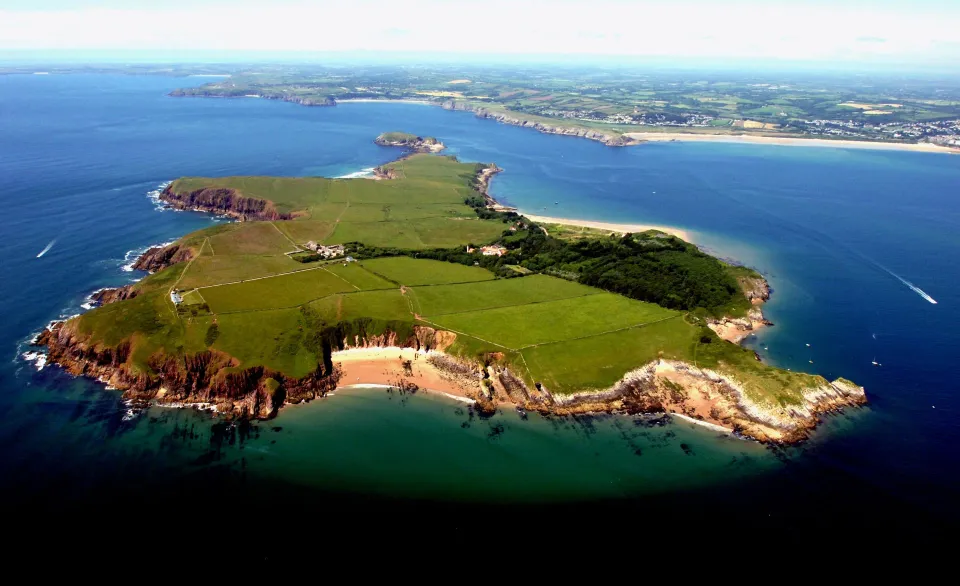
Survivors warn reforms are ‘on paper only’ as Caldey prepares for Easter crowds
CAMPAIGNERS say Caldey Island remains unsafe more than a year after an independent review into historic abuse, as survivors accuse church authorities and trustees of prioritising appearances over meaningful change.
The claims come as the island prepares to reopen to the public for Easter, when campaigners say thousands visitors could travel to the monastery island off Tenby.
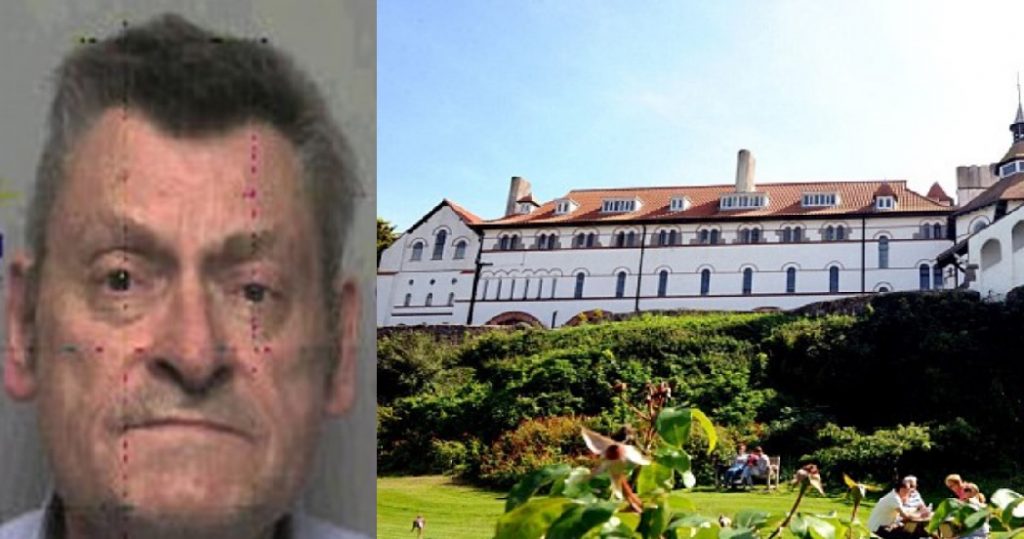
Caldey Abbey, long promoted as a place of peace, prayer and retreat, has been at the centre of serious safeguarding concerns for years. Survivors say abuse was enabled by isolation, secrecy and a culture in which those who spoke out were ignored, disbelieved or actively discouraged.
A long history of abuse
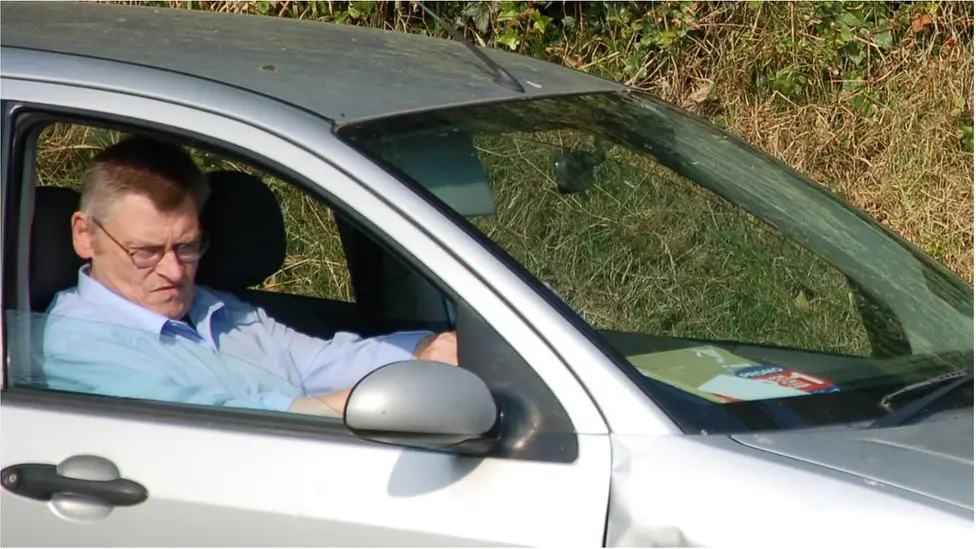
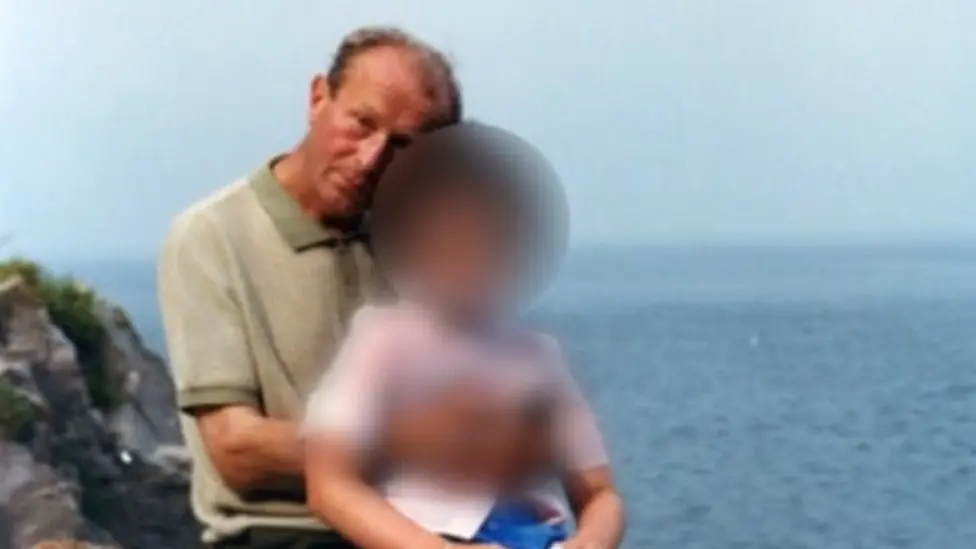
One of the most prominent cases involved sex offender and cleaning company boss Paul Ashton, who arrived on Caldey in 2003. Survivors say Ashton groomed families over several years, using access to children and trust built through the monastery community.
Natalie Roberts, who has spoken publicly about her experiences, previously described how Ashton ingratiated himself with her family, including rehoming her cat in an apparent attempt to get closer. Ashton was arrested in 2011 after being recognised from a “Most Wanted” television programme.

Campaigners say Ashton’s presence on the island for years, despite concerns being raised, is emblematic of deeper safeguarding failures.
Independent review and unfulfilled expectations
In response to growing pressure, Caldey Abbey commissioned an independent safeguarding review led by Jan Pickles OBE. The review was published in December 2024 and examined historical abuse and safeguarding arrangements on the island.
The review found that victims had been treated with cruelty, hostility and disbelief, and that safeguarding systems were inadequate. All recommendations were accepted by the Abbey’s trustees.
However, survivors now say little has changed in practice.
“On paper everything looks fine,” one campaigner said. “But nothing meaningful has changed for victims.”
Survivor accounts: abuse, compensation and silence
Rebecca Philippart, one of the survivors who contributed to the review, said she was abused for around five and a half years until 1987 and again in 1989 or 1990. She said her abuser was Father Thaddeus, who later died in 1992.
In 2018, Philippart received £9,500 in compensation, which she said was handled by Father Daniel, the abbot at the time. She said further disclosures and information emerged after that payment, but she has since been denied additional redress.


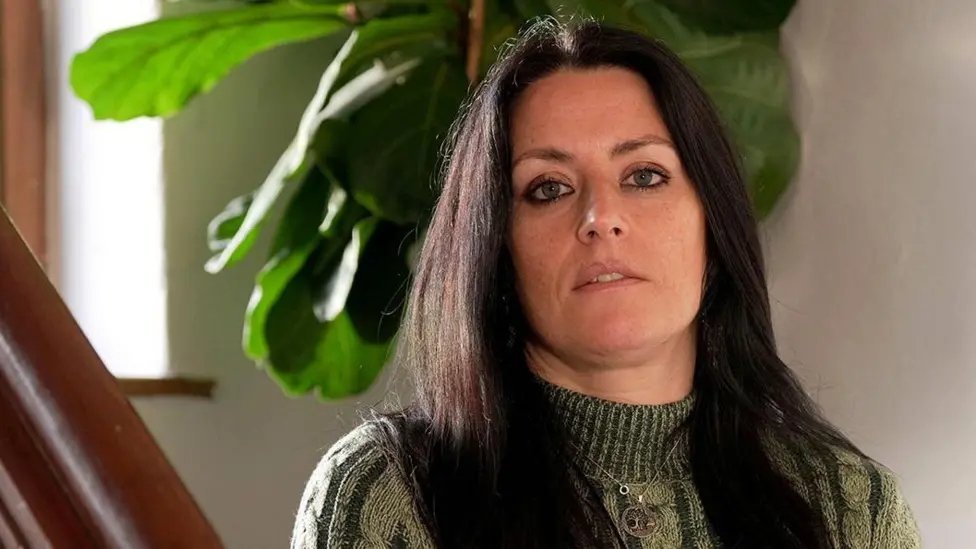
Her husband, Eduardo Ormeno, said both had attended numerous meetings with church authorities and trustees.
“No one has really looked at the wider issue,” he said. “There were paedophiles living there until October 2025. That has never been properly examined.”
Philippart said she attempted to contact island residents and workers but was met with what she described as a “wall of silence”.
“They said I was lying,” she said. “Even though what happened has now been proven.”
Campaigners allege that fear of losing homes or livelihoods has prevented people from speaking out. They claim some islanders and boatmen were aware of abuse but never came forward.
DBS checks and public-facing roles
One of the most contentious issues remains vetting.
Campaigners say monks have daily contact with visitors, guests and island residents, including entering cottages, mixing with families, providing sacraments and offering pastoral guidance. They argue this makes them public-facing and therefore subject to Enhanced DBS checks.
They claim that while DBS checks have now been completed for monks, only one monk, Father Yann, has undergone an Enhanced DBS check.
Caldey Abbey disputes that monks are public-facing in the sense required for Enhanced DBS checks and says appropriate vetting is in place.
Tenancy agreements and transparency
Another key recommendation of the Pickles review was greater transparency around island housing and tenancy agreements.
Campaigners say these agreements have still not been made public, leaving residents fearful of repercussions if they speak out.
“They are scared of losing their homes or their jobs,” one survivor said.
Abbey trustees: progress claimed, NDAs denied
In a detailed statement to The Herald, Caldey Abbey Charity said it takes safeguarding extremely seriously and recognises the profound harm caused by historical abuse.
The trustees confirmed that all recommendations from the Pickles review were accepted and are subject to ongoing oversight.
They said the Abbey was audited in June 2025 by the Catholic Safeguarding Standards Agency, with the report published in December 2025. The CSSA assessed Caldey as “results being achieved”, while noting the need for continued vigilance. A further audit is scheduled for 2027.
On compensation, trustees said ex-gratia payments are considered with legal advice in line with Charity Commission guidance, and that therapeutic support has been offered to those who came forward.
They denied the use of non-disclosure agreements to silence safeguarding concerns and said there are no NDAs involving island residents, contractors or boatmen linked to safeguarding matters. They also denied that properties on Caldey or in Tenby were provided as part of any settlement.
The Abbey provided links to safeguarding policies, the Pickles review, and audit documents on its website.
Regulators and church oversight
The Charity Commission confirmed it received historic safeguarding concerns relating to Caldey Abbey last year. After assessing the information and engaging with trustees, it provided regulatory advice and guidance but did not open a statutory inquiry.
The Commission said it would take seriously any concerns about misuse of NDAs or governance failures.
The Archdiocese of Cardiff-Menevia said Caldey Abbey is an independent charity under the Cistercian Order and that safeguarding oversight is supported nationally through the Religious Life Safeguarding Service and inspected by the Catholic Safeguarding Standards Agency.
It said Archbishop Mark had met survivors to offer pastoral and spiritual support and remained open to meeting anyone harmed within the Catholic Church.
Campaigners, however, allege that in private meetings the Archbishop expressed disgust and embarrassment at what had happened, but ultimately declined to intervene in governance or remove his blessing from the Abbey.
“Everyone points elsewhere”
Survivors say responsibility is continually deflected. The Abbey points to audits and policies. Regulators say they advised but did not escalate, and the Church says Caldey is independent.
“And in the middle are survivors who still don’t feel safe,” one campaigner said.
With Caldey reopening to the public for Easter, and tens of thousands of visitors expected, campaigners say the stakes could not be higher.
“We are not trying to tear anything down,” Natalie Roberts said. “We just want the truth acknowledged, accountability, and real safeguarding — not just words on paper.”
Local Authority ‘offered to assist’
In a lengthy statement sent to this newspaper, Pembrokeshire County Council’s said that its safeguarding role is set in statute (Social Services Well-being (Wales) Act 2014) and national guidance, the Wales Safeguarding Procedures, which set out the processes and expectations for responding to concerns of abuse and neglect.
Additionally, PCC said that the Authority’s safeguarding role is focused on any other specific statutory functions that may apply depending on the circumstances (for example, where PCC is commissioning services or has a direct role in a regulated activity).
It said: “There is no regulated activity on the Island i.e. care provision(s) or schools, thus no regulatory oversight as we would recognise it. PCC does not ‘regulate’ Caldey Island as an organisation simply because it is located within Pembrokeshire.
“The Caldey Act 1990 formally assigns Caldey Island to the district of South Pembrokeshire for the matters relating to local and parliamentary purposes and this Act also brings the Island under the jurisdiction of the Coroner and Health Board.
“PCC has not received any risk assessments, safeguarding plans or assurance documents connected to Caldey Islands reopening and visitor season. Responsibility for operational visitor safeguarding and site management rests with the body that operates Caldey Island’s visitor operations.
“The Council understands campaigners have raised concerns about safeguarding and visitor safety on Caldey Island and that they have sought assurance about implementation of the recommendations arising from the independent Caldey Abbey Review.
“Campaigners have been in touch with PCC Officers to share their frustrations, but no meetings have taken place to date.
“PCC has however offered to assist Caldey Abbey as is appropriate.”
If anyone has concerns about the welfare or safety of a child, young person or an adult at risk, PCC’s advice is to report it immediately to our Child Care Assessment Team: 01437 776444; Adult Safeguarding Team: 01437 776056 or Social Services Emergency Duty Team. In the event of immediate harm contact 999. PCC’s safeguarding guidance is clear: do not assume someone else will report; take positive action and report.

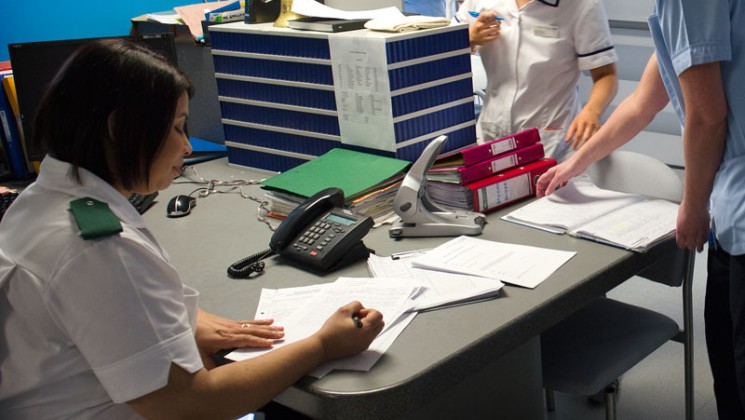
NEW NHS funding must be matched by proper workforce planning if it is to cut waiting lists and improve patient care, nursing leaders have warned.
The Royal College of Nursing Wales has responded to a Welsh Government announcement of an additional £145 million investment in NHS Wales.
The package includes £100 million in revenue funding to reduce waiting times, £25 million capital funding for new surgical and diagnostic hubs, and £20 million for essential maintenance across the NHS estate.
The Welsh Government says the investment is intended to increase capacity, speed up diagnosis and help more patients receive planned treatment more quickly.
Up to ten surgical and diagnostic hubs are expected to be developed across Wales over the next four years. These facilities are designed to carry out high-volume planned treatment and tests away from the day-to-day pressure of emergency hospital care.
But RCN Wales said the success of the plan would depend not only on buildings and equipment, but on having enough trained staff to run the services safely.
Nicola Williams, Executive Director of RCN Wales, said: “RCN Wales welcomes this additional investment in NHS Wales and the Welsh Government’s commitment to reducing waiting times and improving patient care and outcomes.
“Investment in surgical and diagnostic hubs, alongside funding for essential maintenance, has the potential to significantly improve our population’s health, reduce delays, improve experiences and increase NHS capacity.
“However, buildings and equipment alone will not reduce waiting lists. Delivering sustainable improvements depends on having the right, appropriately trained and skilled workforce in place, and nurses will play a pivotal role in the provision of safe, effective and efficient care.”
She said robust workforce modelling and planning would be “critically important” if the hubs were to achieve their ambitions.
The announcement comes as RCN Wales joins healthcare leaders, employers and government representatives at a Graduate Summit to discuss employment opportunities for this year’s nursing graduates.
RCN Wales said it welcomed the Welsh Government’s focus on the issue, but warned that newly qualified nurses had faced uncertainty about securing permanent employment despite continuing pressure across NHS services.

Ms Williams said: “Nursing staff are telling us consistently and across Wales that, despite there being no vacancies, there is insufficient staff to meet increasing patient complexity and demand.
“Nurses are going without breaks and feel most shifts that they are unable to give the care that patients need.
“It is therefore deeply concerning that newly qualified nurses have faced uncertainty about securing substantive employment.
“Wales cannot afford to lose the talent, skills and commitment of a generation of nursing graduates that our health and care services desperately need.”
RCN Wales said retaining newly qualified nurses was essential for the future sustainability of NHS and social care services.
The union also welcomed the Welsh Government’s commitment to strengthening primary and community care, but said any shift towards treating people closer to home must be matched by investment in the nursing workforce.
Ms Williams added: “Nurses are central to delivering care closer to home and helping people stay healthier for longer.
“Any shift in resources towards primary care must be matched by investment in the nursing workforce needed to deliver these ambitions.”
The key question for west Wales is whether any of the proposed surgical or diagnostic hubs will be located in the Hywel Dda area, and whether Pembrokeshire patients will see a direct benefit from the new funding.
No specific locations have yet been confirmed.
RCN Wales said it looked forward to working with the Welsh Government and health service partners to ensure the investment delivered lasting improvements for patients and supported the nursing workforce on which those improvements depend.

Party calls for UK to rejoin Single Market as Brexit anniversary approaches
THE LIBERAL DEMOCRATS have called for Britain to rebuild closer links with Europe, saying a return to the Single Market and Customs Union could help businesses, exporters and major energy projects in Pembrokeshire.
The party says its proposed “Growth and Defence Partnership” with the European Union would cut trade barriers, strengthen national security and help repair what it describes as the economic damage caused by Brexit.
The announcement comes ahead of the tenth anniversary of the 2016 referendum, which saw the UK vote to leave the EU.
For Pembrokeshire, the debate has particular relevance. The county’s economy is closely tied to agriculture, food production, tourism, ports, energy and international trade. Businesses exporting goods into Europe have faced additional paperwork and costs since Brexit, while major projects around Milford Haven, the Celtic Freeport and offshore wind are expected to depend heavily on international investment and cooperation.
Liberal Democrat leader Sir Ed Davey is expected to use a speech to the European Movement to call for immediate talks with the EU on a new deal.
The party wants the UK to join the Single Market through the European Economic Area, alongside countries such as Norway, Iceland and Liechtenstein. It is also calling for a new customs union with the EU.
The Liberal Democrats say this would remove many of the barriers currently faced by businesses trading with Europe.
Welsh Liberal Democrat Westminster spokesperson David Chadwick MP said Wales had been badly affected by Brexit.
He said: “Wales was one of the hardest hit parts of the UK by the failed Brexit experiment that was masterminded by the likes of Nigel Farage and Boris Johnson.
“We shouldn’t have to live with the bad deal they’ve lumped us with. People deserve far better than that.
“That’s why we are calling for a bold new deal with Europe to boost growth, create jobs and keep our country safe.”
The party is also calling for closer defence cooperation with European allies, including a new European Security Council and greater joint procurement.

Sir Ed is expected to argue that the threat from Vladimir Putin’s Russia, together with uncertainty over American foreign policy under Donald Trump, makes closer UK-European defence cooperation essential.
The proposals are likely to reopen political arguments over Brexit. Labour has so far ruled out rejoining the Single Market or Customs Union, while the Conservatives and Reform UK remain opposed to reversing Brexit.
But the Liberal Democrats say the economic case for closer European ties is now impossible to ignore.
For Pembrokeshire, the question is not only ideological. Farmers, food producers, hauliers, tourism businesses, port operators and energy companies all depend on smooth trading links, investment confidence and international cooperation.
Ten years after the referendum, the party says Britain must stop treating closer European cooperation as a taboo and start focusing on what would help communities, businesses and public services.
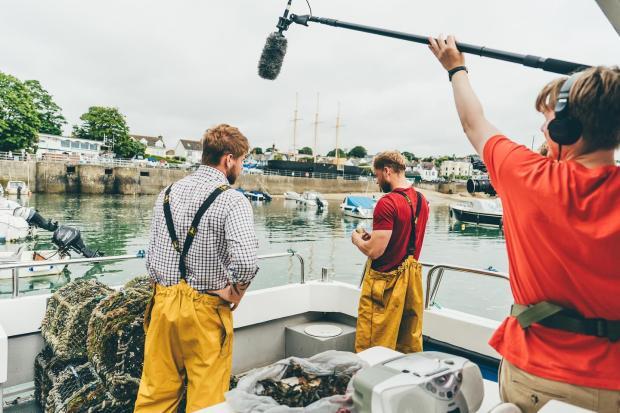
A PEMBROKESHIRE-made feature film is to receive its big-screen premiere next month in the very harbour where much of it was shot.
Near and Distant Things, written and directed by Saundersfoot filmmaker Emily Batty, will be shown outdoors at Saundersfoot Harbour on Saturday, July 18, as part of the Torch Theatre’s Sunset Cinema series.
The drama, filmed in summer 2025, tells the story of a grieving fisherman trying to support his daughter after she returns home, while experiencing dreamlike visions of his late wife.
The film makes strong use of the Saundersfoot landscape, with scenes filmed at the harbour, The Royal Oak pub, Monkstone Point and other familiar local locations.
Emily, 22, who grew up in Saundersfoot and recently graduated from the University of Oxford with a geography degree, has described the project as “a love letter to home”.
She said: “Watching a film set in Saundersfoot, with recognisable faces and locations on screen, in the heart of the harbour itself where we filmed many scenes, feels incredibly full-circle.
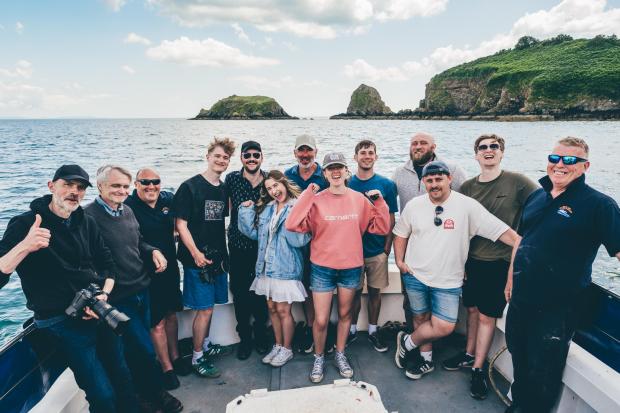
“I can’t wait to share that experience with people.”
The film was made with the support of a small team and a largely local cast and crew.
Emily said the production had only been possible because of the “incredible amount of local support” received during filming.
She also praised composer and sound designer Zach Worthington, whose work helped shape the atmosphere of the film.
She said: “The score and soundtrack feel so entangled with the landscape of home.
“It’s a little bit folk, a little bit Celtic, and rather emotional.”

Emily, who has written and directed the film under the name Emily Florence, said some of the ideas behind the film had been with her for several years.

She said: “Some of the images within the film have been in my head since I was 18.”
She added that Pembrokeshire remains a major source of inspiration for her future work.
“I have a couple of screenplays in the works – I never stop writing – and I’m looking to get agented,” she said.
“I’m excited to continue to tell stories, in whatever capacity that may be.
“I can say that Pembrokeshire is still my muse, and I don’t think I’m done telling stories about home.”
The outdoor screening will take place on the harbour decking, with gates opening at 6:00pm and the film beginning at 7:00pm.
The film is rated PG, but includes themes of bereavement, mental health, domestic abuse and references to suicide which some viewers may find upsetting.
Emily said she hoped the premiere would be a moment of shared pride for the village.
She said: “So many people helped bring this film to life.
“There’s something very special about sharing a story set in Saundersfoot, surrounded by the landscape that inspired it.”
Tickets are available through the Torch Theatre website, with advance booking recommended.



News12 hours ago
Brexit at 10: How Britain was sold a dream that cost us dearly
A decade after the referendum, the promised benefits remain hard to find while the economic costs are increasingly difficult to...

Crime13 hours ago
Worcestershire man jailed after violent attack on woman in Tenby
Defendant was already serving a suspended sentence when serious assault took place A WORCESTERSHIRE man has been jailed for more...


Climate15 hours ago
Offshore wind ‘could bring new generation of jobs to Milford Haven’
Pembrokeshire ports and Celtic Sea projects placed at centre of Wales’ green energy ambitions MILFORD HAVEN and Pembroke Dock could...

Community1 day ago
Police officer hailed hero after midnight sea rescue in Milford Haven
PC swam 100 metres offshore to save distressed woman heard calling for help in darkness A DYFED-POWYS POLICE officer has...


Local Government2 days ago
Security privately arranged by Mayor at Beating of the Bounds
HAVERFORDWEST TOWN COUNCIL has confirmed that security personnel seen at this year’s Beating of the Bounds were privately arranged and...

Business3 days ago
Celtic Freeport five-year plan puts Milford Haven at centre of green energy future
Strategy promises investment, skilled jobs and new supply chains, but major barriers remain over grid connections, planning and delivery THE...

Education3 days ago
Closure of Ysgol Clydau approved after emotional council debate
COUNCILLORS WARNED RURAL COMMUNITIES WILL REMEMBER DECISION PEMBROKESHIRE councillors have voted to close Ysgol Clydau following an emotional debate over...


Education3 days ago
Manorbier school closure process to continue after narrow council vote
Questions remain over insurance, rebuilding costs and possible legal action by Diocese PEMBROKESHIRE councillors have voted to press ahead with...

Community3 days ago
The father, son and daughter lifeguard trio saving lives in Pembrokeshire
A FATHER, son and daughter are preparing to help keep beachgoers safe on the Pembrokeshire coast this summer as part...


Charity3 days ago
Children turn to Childline as loneliness cases rise
CHILDREN and young people struggling with loneliness are increasingly turning to Childline for support, new figures show. The NSPCC-run service...
-
 Community3 days ago
Pembrokeshire Chess Club crowned Welsh champions
-
Local Government2 days ago
Security privately arranged by Mayor at Beating of the Bounds
-

 Crime7 days ago
Pembroke Dock teenager sentenced over train strangulation attack
-
 Education6 days ago
Diocese threatens legal action as Manorbier school closure battle intensifies
-

 Crime7 days ago
Man accused of six rapes including alleged Haverfordwest offence
-

 Crime1 day ago
Man wanted by court after failing to attend hearing over alleged shop thefts
-

 Local Government6 days ago
Taxi suspended after county-wide licensing checks
-

 Crime7 days ago
Brothers found guilty of causing death of Welsh dad in ‘reckless’ race