


Business
Pembroke Power Station marks 10,000th turbine start

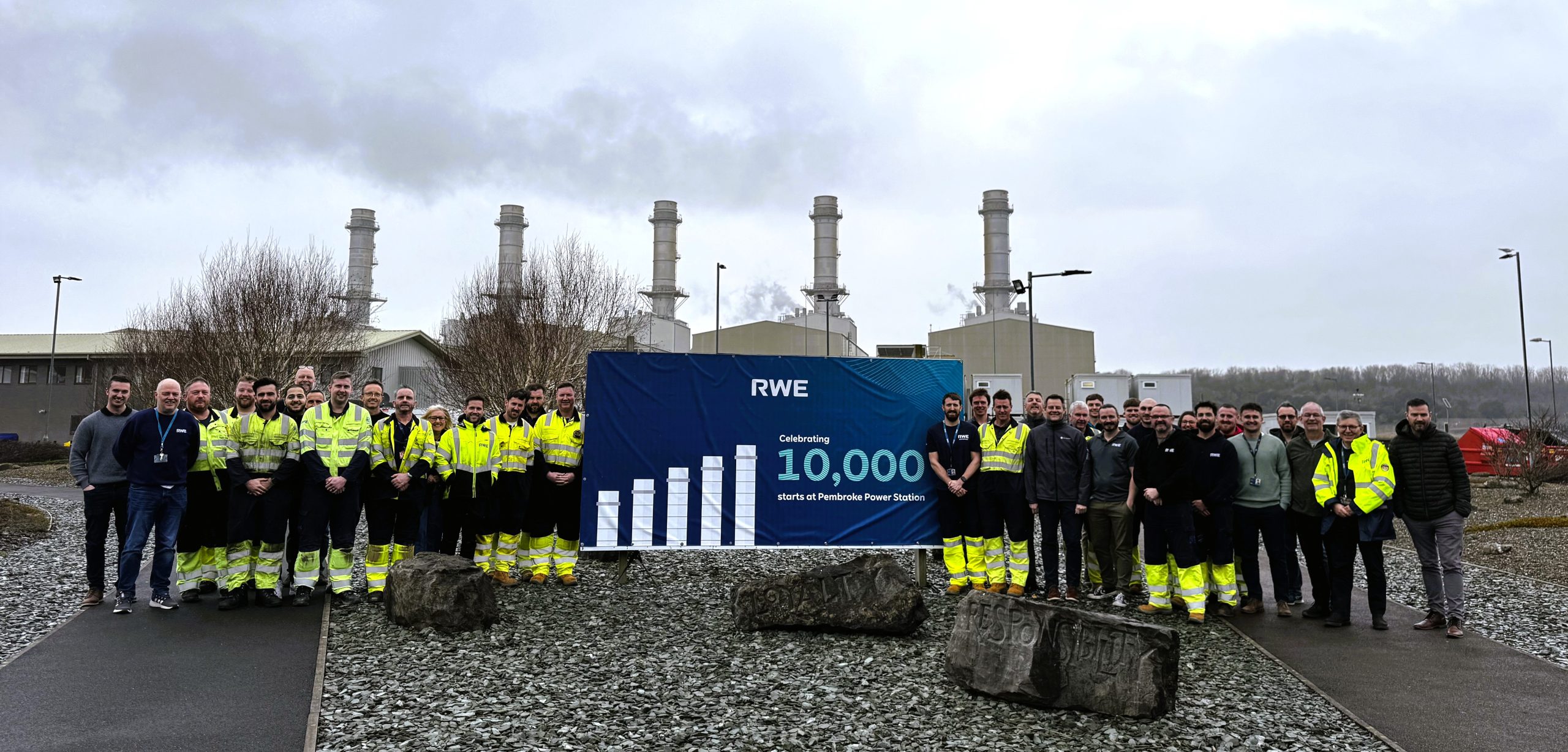
Milestone highlights growing importance of flexible gas generation as renewables expand
PEMBROKE POWER STATION has reached a major operational milestone after recording the 10,000th start of its combined cycle gas turbine (CCGT) units — underlining the plant’s continuing role in keeping the UK electricity system stable as renewable energy increases.
The RWE-owned power station, which opened in 2011, was originally designed to run almost continuously. However, as wind and solar generation have grown, the facility now operates far more flexibly, starting and stopping units to respond to changes in electricity demand and renewable output.
All five generating units now operate across multi-shift patterns, helping to balance the grid when renewable supply drops or when rapid increases in power are required.
Engineers at the site have also significantly improved performance over time. Start-up times have been reduced from around 70 minutes to just 41 minutes, allowing the station to respond more quickly to fluctuations in supply and demand. The units have also completed multiple major maintenance cycles while maintaining high reliability, including during the Covid-19 pandemic.
Gas-fired power remains a key part of Britain’s energy mix, providing what industry experts describe as “firm and flexible” generation capacity. While renewable sources are expected to supply the majority of electricity in the future, gas stations continue to provide backup and stability when renewable output is low or unpredictable.

Roland Long, RWE Pembroke Power Station Manager, said: “Reaching 10,000 unit starts is a proud moment for everyone at Pembroke. It highlights not just our operational capability but the vital contribution that flexible gas generation makes to the UK’s energy system.
“As the grid becomes increasingly driven by renewables, our ability to start quickly and run when needed ensures security of supply and reinforces Pembroke’s role as a dependable partner in the nation’s energy transition.”
The milestone reinforces the ongoing importance of flexible gas generation in supporting homes and businesses across the UK with secure and reliable electricity, particularly as the country continues to move towards lower-carbon energy sources.


Union warns UK trade concession could threaten Llanwern steelworks despite government promises to protect domestic production
FEARS have been raised for the future of one of Wales’s most strategically important steel plants after the UK Government granted India a significantly larger quota for tariff-free galvanised steel imports.
Union leaders and industry figures have warned that the decision could undermine Tata Steel UK’s Llanwern works near Newport, which produces around 600,000 tonnes of galvanised steel each year.
The plant supplies almost half of total UK demand for the material, which is widely used by the automotive and construction industries.
The warning comes just months after ministers unveiled a new strategy intended to protect British steelmaking from cheap overseas competition and increase the proportion of steel used in the UK that is produced domestically.
However, details of the new import arrangements show that India has been allocated a tariff-free quota of 125,000 tonnes for metallic-coated steel, commonly referred to within the industry as Category 4 steel.
India exported around 43,000 tonnes of the product to Britain last year, meaning the new allowance is almost three times that volume.
Trade deal concession
The Financial Times reported that the quota was increased during last-minute negotiations to secure the implementation of the UK-India free trade agreement.
According to the report, India had objected to proposals to reduce its steel allocations and warned that the trade agreement could be delayed unless its concerns were addressed.
The deal came into force on Wednesday, July 15, and has been promoted by ministers as a major economic opportunity for British exporters.

The UK Government estimates that the agreement could eventually increase bilateral trade by £25.5 billion a year and add £4.8 billion annually to the economy.
It includes lower Indian tariffs on products such as British whisky and vehicles, while reducing UK duties on Indian clothing, footwear and some food products.
However, steelworkers now fear that the price of securing those wider benefits could be paid by Welsh industry.

Threat to Llanwern
Llanwern specialises in producing high-quality galvanised steel, which is coated with zinc to protect it from corrosion.
Its products are used in vehicles, buildings and infrastructure, making the Newport site an important part of both the Welsh economy and Britain’s manufacturing supply chain.
Alasdair McDiarmid, assistant general secretary of the steelworkers’ union Community, said the import allowances could threaten the sustainability of the plant.
He described Llanwern as a crucial strategic facility supplying high-quality steel to the automotive and construction sectors.
The union said workers could already see imported steel coils accumulating at Newport docks and questioned why Llanwern appeared to have received less protection than other areas of the British steel industry.
No closure or job losses have been announced, but the warning will cause renewed concern in communities that have already experienced years of uncertainty surrounding the future of steelmaking in Wales.
Wider quotas also increased
The decision relating to India had wider consequences because international trading rules require comparable exporting countries to be treated equally.
South Korea has reportedly been allocated a Category 4 quota of 100,000 tonnes, while Vietnam has received an allowance of 175,000 tonnes.
Industry representatives are particularly concerned about material entering from Vietnam, amid claims that the country processes steel originating from China, where excess production has contributed to a global fall in prices.
The combined allowances could expose Llanwern to significantly more overseas competition in a market it currently plays a leading role in supplying.
One industry insider estimated that the new arrangements could cost British steel producers hundreds of millions of pounds in lost revenue.
Policy described as ‘baffling’
The decision appears to contrast sharply with the UK Government’s broader approach to steel imports.
Under measures that came into force on July 1, overall tariff-free steel import quotas were reduced by 51 per cent. Imports exceeding the allocated amounts are now subject to a 50 per cent tariff.
Ministers said the protections were required because of global overcapacity, which has allowed large volumes of cheaper steel to enter international markets and placed British producers under intense pressure.
UK crude steel production has fallen by more than half over the past decade, while high energy prices and ageing industrial infrastructure have further weakened the sector’s competitiveness.
Peter Brennan, director of trade at industry body UK Steel, said the government had taken the bold action required across most steel categories.
However, he described the effective liberalisation of Category 4 imports from countries outside the European Union as baffling.
Tata Steel UK has also expressed concern that the quotas for metallic-coated products remain too high and do not properly reflect conditions within the British market.
The company said effective trade protections were essential to maintaining domestic production, investment and commercially viable downstream operations.
Welsh steel under pressure
The latest dispute comes during a period of major change for the steel industry in Wales.
Traditional blast furnace production at Port Talbot has ended as Tata Steel develops a new electric arc furnace, supported by £500 million from the UK Government.
That transition resulted in the loss of thousands of jobs and left the future of the wider Welsh steel network dependent on the commercial success of remaining and modernised operations.
Llanwern is one of the most valuable downstream facilities in that network, producing finished steel for customers in sectors where reliability and quality are critical.
Critics argue that allowing additional volumes of competing galvanised steel into the country could weaken the business case for continued production and investment at the site.
They also question how the decision fits with the government’s stated ambition to rebuild industrial capacity, protect strategically important industries and reduce Britain’s dependence on overseas suppliers.
Government defends arrangements
The UK Government said the steel measure was intended to strike a balance between protecting domestic production and ensuring businesses had access to secure supplies.
A spokesperson said the final quotas followed extensive consultation with industry and promised that the arrangements would be reviewed after 12 months.
However, unions are likely to demand action well before that review if increased imports begin to affect orders or production at Llanwern.
The controversy leaves ministers facing difficult questions over whether the interests of Welsh steelworkers were sacrificed to secure a wider international trade agreement.
For communities across industrial south Wales, the concern is that another strategically important plant could be left exposed after years of promises that domestic steel production would finally receive stronger protection.


IMAGES of a new indoor market planned in Llanelli have been released along with details of a scheme Carmarthenshire County Council hopes will become a busy destination.
The plan is for 14 retail units on the ground floor of the Vaughan Street complex, 80 stalls on the first floor, and a central glass atrium above. There’d be bike racks and escalators and all toilets would be on the first floor.
Deliveries would be via Mincing Lane at the rear along with a few parking spaces close by.

Miriam Phillips, who runs a fruit and veg stall at the current market by St Elli Shopping Centre, said of the plans: “They look all right so far. It’s still early days.” She said traders had a meeting with council representatives about them last week.
Parvez Akhtar, of Parvez Fashions, said he was “totally against” the proposals and called on the council to upgrade the current market and focus on filling empty shops in Llanelli.
He felt the new market would be “very small” and deter people from visiting. “We need space and to display our products,” he said.
Fellow trader Gabor Hetesi, of IT repair business Gabe’s IT Repair, was optimistic about the plans but wondered about timescales and what the new rental arrangements would be. “The plans are looking good, it looks promising,” he said.
The council is asking for people’s views on the proposals by August 7 ahead of a full planning application being submitted.
A design and access statement about the project said the current market building with its multi-storey car park above dated from the 1970s and contained a material called reinforced autoclaved aerated concrete which is less durable than standard concrete and can fail when exposed to moisture.
It said the council undertook significant work in 2013 to maintain the building’s structural safety along with ongoing maintenance.
Options were explored such as distributing stalls and units throughout the town and reusing the existing site once the car park was demolished.
The council’s preferred option is a new-build market between 8-14 Vaughan Street extending a long way to the rear. Six of the ground-floor retail units would face onto Vaughan Street and the market’s total area would be 3,312sq m.

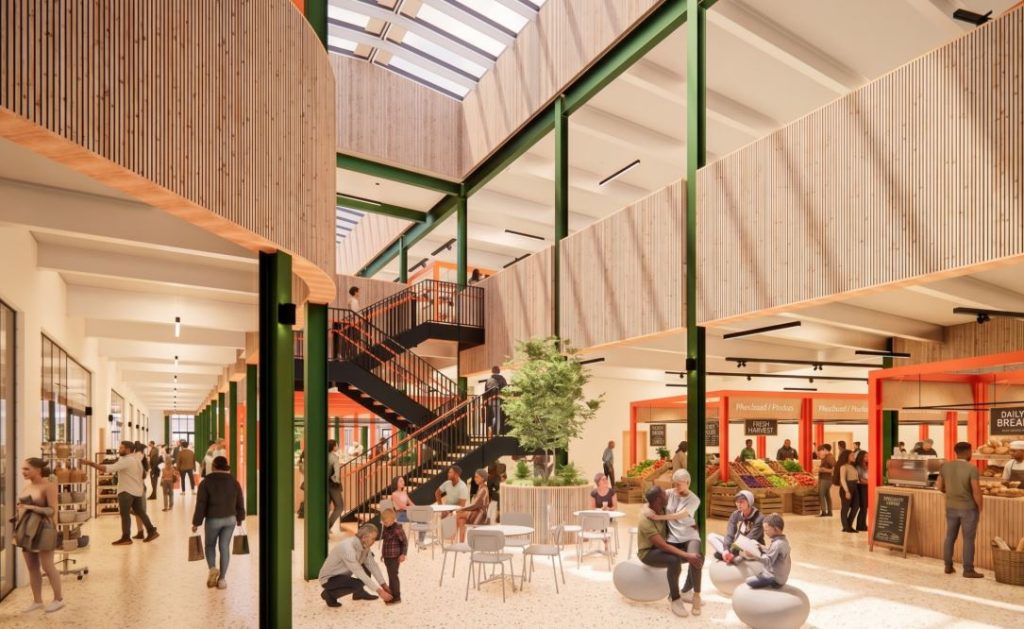
“Internally each floor has a distinct identity and character,” said the design and access statement.
“The internal route is deliberately meandering, encouraging visitors to explore past retail and market stalls.
“The first floor is more informal and accommodates the majority of market stalls. It also features a large café, visible from the entrance, which naturally draws visitors through the building and up to the first floor.”
It said the current market has 3,664sq m of floorspace featuring 17 retail units and 110 stalls.
Cllr Hazel Evans, deputy council leader and cabinet member for regeneration, leisure, culture, and tourism, said: “These proposals represent an exciting opportunity to create a modern new home for Llanelli Market and further strengthen Llanelli town centre.
“Through the pre-application consultation process we want to hear the views of residents, businesses, and stakeholders to help shape the proposals before a planning application is submitted.”
She added: “It is important to emphasise that Llanelli Market will remain open and continue trading throughout this process with any future relocation carefully planned to support traders and customers.
“Our ambition is to create a vibrant destination that supports traders, attracts visitors, and builds on Llanelli Market’s proud history at the heart of the community.”
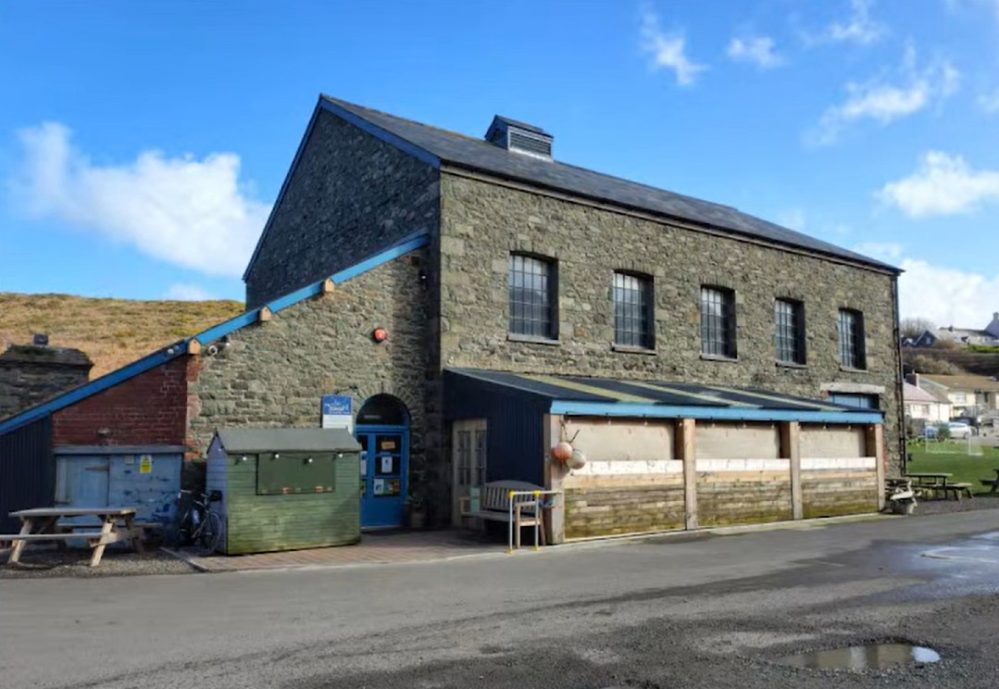
A CALL for works at a Pembrokeshire seaside tearoom, once the site of a Victorian brickworks machinery shed, has been given the go-ahead by national park planners.
In an application recommended for approval at the July meeting of Pembrokeshire Coast National Park’s development management committee, Caroline Jones sought permission to install solar panels to roof over an outside seating area at The Shed Tea Room, Porthgain.
The application, and a related listed building consent call, was for committee consideration as The Shed Tea Room forms part of Ty Mawr, a Grade-II-listed large stone-built former machinery shed owned by the national park itself.
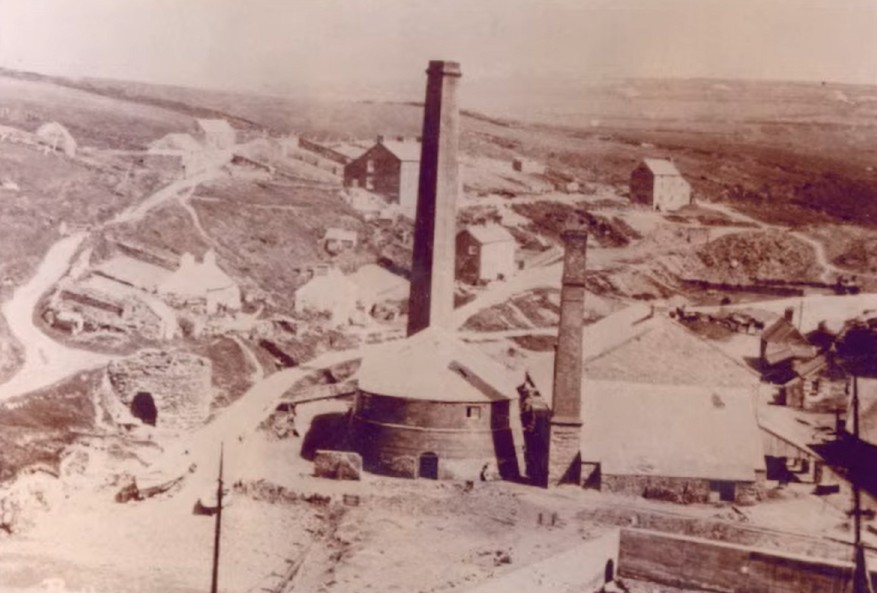
An officer report for members stated: “The Shed Tea Room is a lean-to structure at the west end of Ty-mawr, a Grade-II-listed large stone-built former machinery shed, built c. 1890 to serve Porthgain brickworks. The lean-to itself is built of a mixture of stone and brick, retaining the stump of the brickworks chimney.
“The Shed has been used for retail purposes since 1999, and as a tearoom and restaurant from 2001, after which roof-lights were inserted. The north-western section of the lean-to was incorporated after 2003, when the present timber windows were inserted.
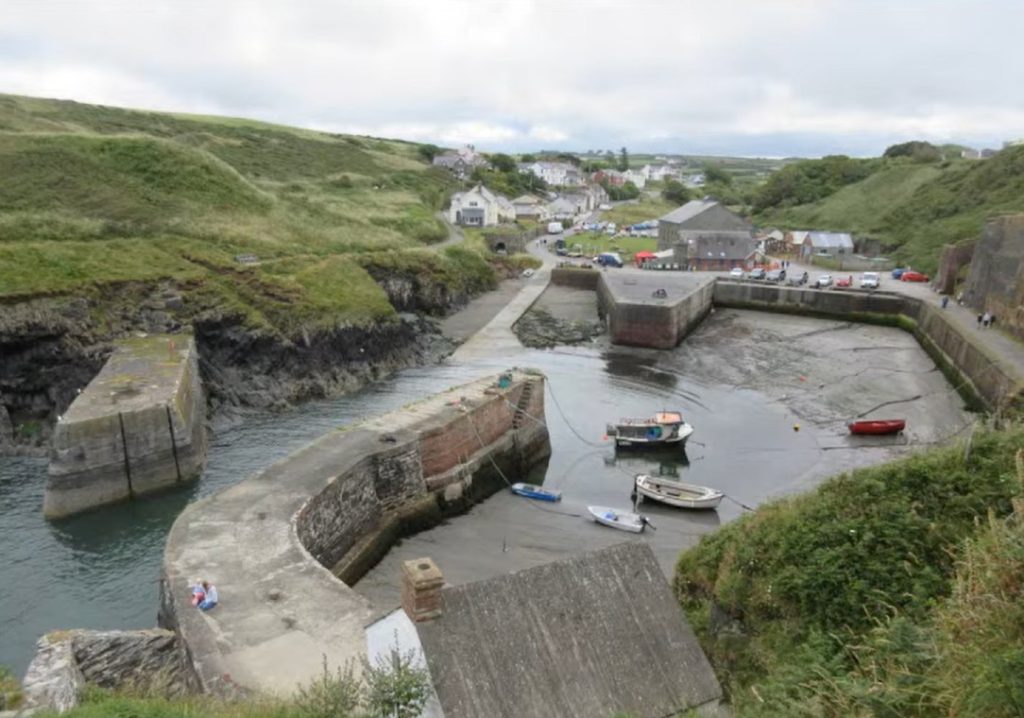
“After 2007, a lean-to scullery was added at the north end, alongside the chimney stump, with a small, fenced compound beyond. The south-western lean-to was added in 2024. The proposal comprises the addition of solar PV panels to the south-western lean-to. The panels – twelve in total – are all-black and frameless. The panels are configurated in a single block covering the majority of the roof, surface mounted on corrugated steel sheeting.
“The scheme is in keeping with the character of the listed building, and its setting in terms of design and form. As such, the application can be supported subject to conditions.”
The recommendation of approval was moved by Cllr Di Clements, and unanimously backed by members; the related listed building consent also moved by Cllr Clements, and again unanimously backed.



News9 hours ago
Andy Burnham set for No 10 as Wales awaits change
Incoming Prime Minister pledges to move power out of Westminster and deliver growth in every postcode, but questions remain over...


Health18 hours ago
Two new surgeons appointed as Hywel Dda admits orthopaedic waits remain too long
Health board says it is increasing capacity after figures revealed hip replacement patients waited an average of 64 weeks HYWEL...


Community1 day ago
84-year-old man rescued after falling overboard near Tenby
A MAYDAY call sparked a major nighttime rescue after an 84-year-old man fell from a tender and was swept towards...


Crime3 days ago
Jury hears final arguments in Milford Haven teacher stabbing trial
Defence says there was no motive or intention to kill as judge reviews competing accounts of classroom knife incident SPECIAL...
News3 days ago
Andy Burnham becomes Labour leader and prepares to enter No 10
Former Greater Manchester mayor promises an ‘unashamedly Labour’ government after completing extraordinary return to Westminster ANDY BURNHAM has been formally...


News3 days ago
Motorcyclist dies following collision near Narberth
Police appeal for witnesses and footage after fatal crash on B4313 at Redstone A MOTORCYCLIST has died following a collision...


Local Government4 days ago
Stepaside school saved as council abandons closure proposal
Governors welcome decision but maintain original plans were based on outdated information STEPASIDE Community Primary School will remain open after...

Crime4 days ago
Footballer given 200 hours’ unpaid work for eye-gouging assault during match
Magistrates heard Robert Hedley put an opposing player in a headlock before gouging at his eyes during a match in...


Community4 days ago
Tenby Summer Spectaculars brought to an end after harbour licence revoked
Round Table says it was willing to make major safety changes but could not secure the access controls needed to...

Local Government6 days ago
Catapult attacks suspected after wildlife deaths at Pembroke Mill Pond
Wildlife Crime Officers are investigating after the town council said around five animals showed signs of deliberate injury WILDLIFE found...
-
Community1 day ago
84-year-old man rescued after falling overboard near Tenby
-

 Crime2 days ago
Fears wildlife at Mill Pond beauty spot being targeted by catapults
-

 Business2 days ago
Seasonal campsite at former scrapyard approved by National Park planners
-

 Crime2 days ago
Drug-driver sent vehicles airborne in terrifying M4 collision
-

 Community2 days ago
Protests against removal of school’s VC status at County Hall
-
Health18 hours ago
Two new surgeons appointed as Hywel Dda admits orthopaedic waits remain too long
-

 Community2 days ago
Councillor say Stepaside should “never have been considered for closure”
-

 Local Government2 days ago
Call to help properties facing thousands in second homes tax bills