


Health
Hywel Dda warns of ‘significant pressure’ as A&E departments remain packed

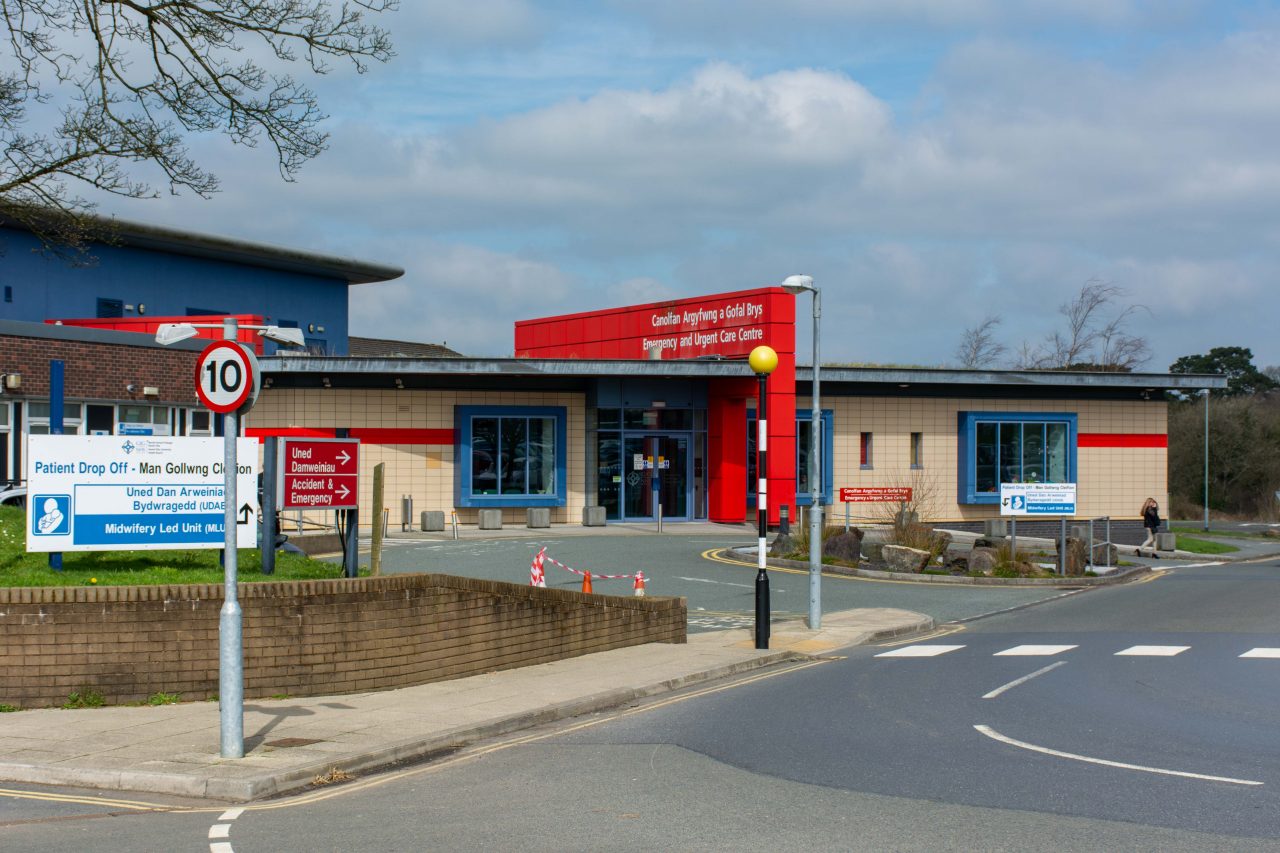
Patients urged to use NHS 111 as Withybush, Glangwili and Bronglais face continued strain
HYWEL DDA University Health Board has warned that its emergency departments remain under “significant pressure,” with particular concern at Withybush Hospital.
In a statement issued on Monday (Mar 2), the Health Board said A&E departments at Withybush, Glangwili and Bronglais hospitals were continuing to experience high demand.
Patients were urged to contact NHS 111 Wales for advice if they are unsure where to seek help, and to use community pharmacies and minor injury units for non life-threatening conditions.
The Health Board said: “Help us to help you get the right care in the right place.”
It added that those with serious or life-threatening emergencies should always call 999.

Delayed discharges impacting flow
The statement also highlighted pressures caused by delayed discharges, urging families to support relatives who are medically fit to leave hospital but are waiting for homecare or community health support.
Bed-blocking, often linked to shortages in social care packages, is widely acknowledged as a key factor in A&E overcrowding, as patients cannot be moved from emergency departments into inpatient wards.
When wards are full, ambulance handovers slow and patients can face long waits for assessment and treatment.
Withybush under particular strain
Withybush Hospital in Haverfordwest was singled out as being under “particular” pressure.
There were no signs yet that things were improving today (Tuesday).
The Health Board did not release figures for waiting times, ambulance delays, or bed occupancy rates in its statement.
However, it confirmed that demand remains high across west Wales.

Alternative services highlighted
The public were reminded that:
- NHS 111 Wales can provide 24-hour advice.
- Option 2 via 111 offers urgent mental health support.
- Community pharmacies can treat a range of common ailments without appointment.
- Minor injury units are available for non life-threatening issues.
The Health Board thanked residents for their support and cooperation during what it described as a challenging period.











Annual report, finances and patient experiences will be discussed during online meetings on July 30
THE WELSH AMBULANCE SERVICE is inviting members of the public to attend its Annual General Meeting and bi-monthly Board meeting later this month.
The AGM will be held online via Microsoft Teams on Thursday, July 30, from 9.30am until 10.45am.
Members of the Board will provide updates on the Trust’s performance and financial position, as well as discussing its annual report and accounts for 2025/26.
There will also be an opportunity for stakeholders and members of the public to submit questions.
Colin Dennis, Chair of the Welsh Ambulance Service, said: “Our AGM is an important opportunity to reflect on the achievements and progress of the past year and the impact these have had on our services.
“This includes transforming the way we deliver services to provide patients with the right advice and care, in the right place, every time.
“It also gives us the chance to look ahead, share our vision for the future and explain the actions we are taking to achieve it.”
Questions can be submitted during the AGM using the Microsoft Teams Q&A function.
Alternatively, questions can be sent in advance by emailing [email protected] before Wednesday, July 29.
The Trust’s bi-monthly Board meeting will take place immediately after the AGM, beginning at 11am.
During the meeting, Board members will hear the findings of the Good Governance Institute’s recent external review of the Trust Board’s effectiveness.
They will also hear from Lucy Burrows, whose young son lives with a range of physical and neurodiverse conditions.
Ms Burrows will speak about her family’s experience of the patient-centred care provided by an attending Emergency Medical Service crew.
An agenda for the Board meeting is expected to be published on the Welsh Ambulance Service’s website shortly.
Questions for the Board can also be submitted in advance by emailing [email protected] by Wednesday, July 29.
The Microsoft Teams links for both meetings will become active around ten minutes before each meeting begins.

Health board says it is increasing capacity after figures revealed hip replacement patients waited an average of 64 weeks
HYWEL DDA UNIVERSITY HEALTH BOARD has appointed two additional surgeons as part of efforts to reduce lengthy waits for orthopaedic treatment across west Wales.
The health board confirmed the appointments after figures revealed that patients undergoing elective hip replacement surgery waited an average of 450 days during the 2025/26 financial year.
That is equivalent to more than 64 weeks from referral to treatment.
As of May 28, 2026, a total of 1,608 patients were on Hywel Dda’s waiting list for hip replacement surgery.
Sixteen patients were also removed from the list during the financial year after deciding to undergo private treatment.
Responding to questions from The Herald, Gareth Cottrell, Deputy Chief Operating Officer at Hywel Dda University Health Board, acknowledged the effect prolonged waits were having on patients.
He said: “The current national delivery expectation for health boards in Wales is to treat orthopaedic patients within a maximum of 104 weeks from the point of referral to treatment.
“In recent years, waiting times for orthopaedic treatment in Hywel Dda have been among the lowest of any health board in Wales, but we recognise that waiting times remain too long and the impact these have on our patients while awaiting the treatment they need.”
The health board said it continued to maintain dedicated ward and theatre capacity for elective orthopaedic procedures at Prince Philip Hospital in Llanelli and Bronglais Hospital in Aberystwyth.
Day-case surgery is also being carried out at units across Hywel Dda’s hospital sites.
Mr Cottrell said: “We remain committed to improving waiting times and are working closely with our regional health board partners to maximise the treatment capacity we can offer patients across the wider South West Wales area.
“During the past year, we have appointed two additional surgeons to support our continuing efforts to reduce waiting times.”

The health board did not provide details of where the new surgeons would be based, how many additional operations they were expected to carry out or when patients would begin to see a significant reduction in waiting times.
Plans to expand orthopaedic capacity also formed part of Hywel Dda’s Clinical Services Plan consultation.
Mr Cottrell added: “Improving our orthopaedic services has also been a key part of our Clinical Services Plan that we consulted upon last year, with plans being developed to increase capacity and help more patients access the care they need.”
Hip replacements are commonly offered to patients suffering severe pain, stiffness and loss of mobility after other treatments, including physiotherapy, medication and injections, have failed to provide sufficient relief.
Lengthy waits can leave patients struggling with worsening pain, disturbed sleep and a loss of independence, while some may be forced to reduce their working hours or leave employment.
The waiting-time figures were obtained through a Freedom of Information request submitted by healthcare marketplace My Medical Gateway.
The company said the health board returned its response on June 8, 2026.

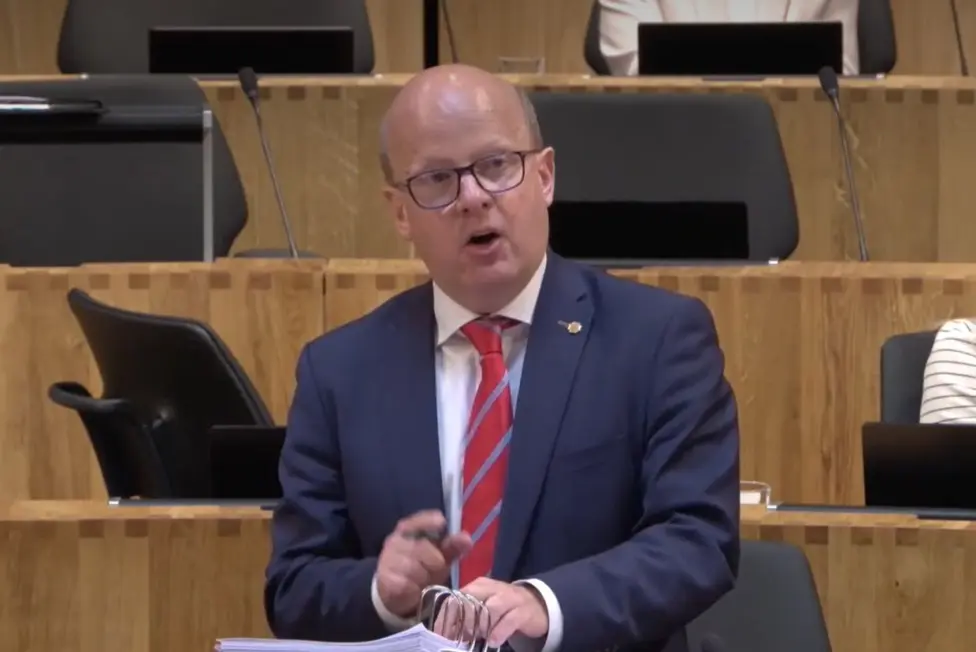
SENEDD Members clashed over plans to review Wales’ funding formula, following the Welsh Government’s defeat in its pursuit of change.
Constitution minister Dafydd Trystan Davies defended the Welsh Government’s stance amid Reform calls for the plans to be abandoned.
On Tuesday July 14, Reform’s Cai Parry-Jones said Plaid Cymru had experienced a “crushing defeat” last week when they were “refused” permission from the Senedd to argue for a different funding model for Wales.
He said: “Reform, with the support of Labour and the Conservatives, potentially saved £1.5 billion annually for the Welsh Government’s budget. You’re welcome.
“Now that the Senedd has spoken, will you abandon your plans to argue for a change for the funding model for Wales?”
Responding with a simple “no”, Dr Trystan Davies said: “What has become very clear in assessing the financial situation facing Wales is that we need fair funding for Wales and funding that reflects the needs of the population. Wales has nothing to fear from a review of that kind.”
Reform’s shadow finance and government efficiency minister pointed to Plaid’s manifesto promises – much of which Mr Parry-Jones described having “hinged on an optimistic change of the funding model”.
He said: “Now that the Senedd has rejected your calls to change the funding model, what changes have you made to your programme for government?”

Dr Trystan Davies responded: “I hope that colleagues across this Senedd will work to ensure that the Welsh Government and the public sector in Wales work at their most effective and that we, over the next four years, can identify more funding that can be invested in the priorities of the people, to support childcare, to support the economy, to support the health service.”
Huw Thomas – Labour’s spokesperson for finance and democracy – questioned the minister on Plaid’s funding formula review.
The former Cardiff Council leader revealed he had received a written response from local government minister Sian Gwenllian, who said that as part of the government’s funding formula review it is “reviewing the data on primary indicators” such as “those relating to deprivation and sparsity of population”.

Mr Thomas said there are “huge concerns” in parts of Wales that Plaid will “copy what Rishi Sunak did in England and redistribute funding via the funding formula away from poorer urban areas towards relatively wealthier rural ones.”

The Caerdydd Penarth MS asked the minister what issues he has identified in the “underlying data and indicators” that have prompted this review.
In response, Dr Trystan Davies said: “As with all official statistics, the government keeps a close eye on the accuracy and effectiveness of that data to ensure that they are clearly and accurately reflected in the formulas.
“The spokesperson himself [Mr Thomas] comes from Aberystwyth and he knows full well that there are areas of significant poverty in rural Wales as well as industrial Wales.”
He continued: “Setting those communities against each other is a disappointing approach from the spokesperson, I would suggest.”
Mr Thomas noted in response that he “didn’t hear” the minister share “what figures had pushed [him] to hold that review.”
Calls for a Welsh Covid inquiry came from both the Reform and Conservative benches in Tuesday’s plenary.
Following his questions on Plaid Cymru’s plans to argue for a change to the funding model for Wales, Mr Parry-Jones pressed the minister to confirm what actions his government will take to bring about a Welsh Covid review.
He said: “Responding to the Covid inquiry’s fifth report today, the First Minister rather vaguely said that Plaid remains committed to reviewing the Wales Covid response.
“In March, Plaid said it would hold a short, sharp and focused review of the Welsh Government’s Covid response, a far cry from the full-fat all-Wales inquiry Plaid previously called for for years, including during your 2024 manifesto.
“Now, following that u-turn, nobody knows what your review actually is – not when it’s happening, not for how long, not even what elements of the Covid response it would focus on.
“Surely, Minister, now is the time to make it clear to bereaved families what actions exactly your government is going to take.”
Dr Trystan Davies said the government is committed to conducting a Covid review. He said: “That’s what we said in our manifesto and that’s what we intend to do.
“I’m pleased to say that I have already been in correspondence with the Covid Bereaved Families on our intentions and hope to arrange a meeting with them soon, because it’s important that the voices of those who have suffered are part of that discussion and feed in to the work of government.”
Andrew RT Davies, Welsh Conservative MS for Pen-y-Bont Bro Morgannwg, also pressed the minister on his inquiry plans.

Mr Davies said it was “vital” the government “sticks to their commitment” and “enacts a Covid inquiry – not a review”.
He called on the minister to confirm that “the government’s thinking, whatever emerges, will be set up under the Inquiries Act 2005, which would compel witnesses to come before that inquiry and give evidence”.
Dr Trystan Davies reiterated that work is “progressing” on the government’s Covid review and noted he will be “liaising closely” with the bereaved families.
The Conservative MS thanked the minister for his “warm words” but described the response as of “little substance”.
Mr Davies said: “The reality is that we found out, with the Covid committee that was set up in the previous Senedd term, that unless witnesses were compelled to give evidence, that committee was thwarted in its endeavours to get to the truth.
“Today, for example, the Covid inquiry reports that, on the FFP3 respirator masks that we were told Wales was well stocked with prior to the Covid pandemic in its emergency allocation, there wasn’t a single mask in Wales available for the health service to use.
“These are the things we need to get to the core of as to what was not provided, what was mislaid, what was deliberately not ordered to save money, and what was not acted on on the emergency planning trials that were held prior to the Covid pandemic.”
He called on the Welsh Government to “stick to your guns, stick to your morals, stick to the votes that you made prior to the Senedd election and have a full-blown inquiry that gets to the truth and, ultimately, prepares Wales for any future pandemic.”
Responding, Dr Trystan Davies said: “Reading the most recent module report on Covid brings home the sobering impact of Covid right across this country.
“Those lessons must be learnt, and the review that we are committed to undertaking must have the ability to address those precise issues that you have set out and that is what we will seek to do.”



Crime18 hours ago
Man, 37, found dead following major police response in Pembroke Dock
Death not being treated as suspicious as police make statutory referral to IOPC following active investigation A 37-YEAR-OLD man has...


Community22 hours ago
Household Cavalry drum horse returns home to Pembrokeshire for final farewell
Dyfed Willa Rose, who became Major Juno and the first mare to serve as a Household Cavalry Drum Horse, was...

News2 days ago
Jo Stevens out as Welsh Secretary as Burnham reshapes government
Cardiff East MP repeatedly visited Pembrokeshire to champion clean energy jobs, but her successor inherits unresolved questions over Milford Haven’s...


Crime2 days ago
Teen cleared of attempted murder but guilty of GBH after Milford teacher stabbed
Jury returns 11-1 majority verdict on charge of causing grievous bodily harm with intent, with sentencing set for September 3...


Community2 days ago
French troops march through Fishguard as Britain’s last invasion returns to life
Battle scenes, cavalry displays and a surrender procession brought one of Pembrokeshire’s most extraordinary stories back to the streets MUSKET...


News2 days ago
Andy Burnham promises new politics as he enters Downing Street
New Prime Minister admits politicians have “not been good enough” as he sets out a ten-year plan for Britain and...

Health3 days ago
Two new surgeons appointed as Hywel Dda admits orthopaedic waits remain too long
Health board says it is increasing capacity after figures revealed hip replacement patients waited an average of 64 weeks HYWEL...


Community4 days ago
84-year-old man rescued after falling overboard near Tenby
A MAYDAY call sparked a major nighttime rescue after an 84-year-old man fell from a tender and was swept towards...

Crime5 days ago
Jury hears final arguments in Milford Haven teacher stabbing trial
Defence says there was no motive or intention to kill as judge reviews competing accounts of classroom knife incident SPECIAL...

News5 days ago
Andy Burnham becomes Labour leader and prepares to enter No 10
Former Greater Manchester mayor promises an ‘unashamedly Labour’ government after completing extraordinary return to Westminster ANDY BURNHAM has been formally...
-

 Health2 days ago
Welsh Ambulance Service invites public to AGM and Board meeting
-

 featured18 hours ago
From a father-and-son project to an award-winning campervan business
-
Crime2 days ago
Teen cleared of attempted murder but guilty of GBH after Milford teacher stabbed
-

 Crime2 days ago
What the Milford Haven School stabbing verdict really means
-
 Business2 days ago
Port appoints two new directors as energy and regeneration projects advance
-

 Entertainment2 days ago
Imperial Hotel announces four-day Bank Holiday celebration in Tenby
-
Community22 hours ago
Household Cavalry drum horse returns home to Pembrokeshire for final farewell
-

 Crime2 days ago
Hakin man jailed after driving while banned and over alcohol limit