


Farming
Farming Unions set out key Senedd election priorities

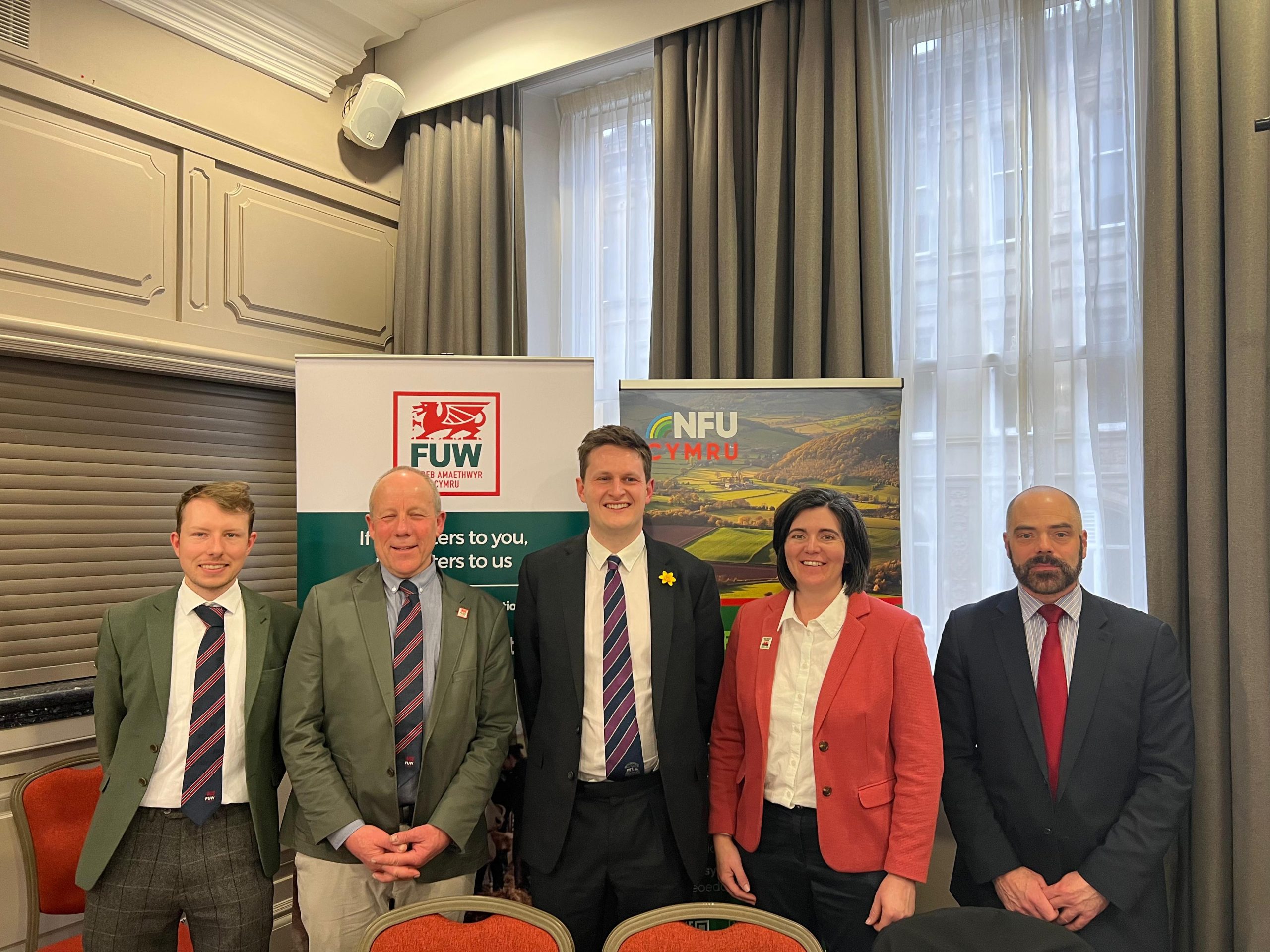
WALES’ two farming Unions, NFU Cymru and the Farmers’ Union of Wales (FUW) have used their joint fringe event at the Welsh Liberal Democrats’ spring conference in Cardiff, to set out some of their shared asks for the next Senedd and Welsh Government term to assembled delegates and politicians.
In the event chaired by Brecon and Radnor MP, David Chadwick, key messages from both Unions’ Senedd elections manifestos were communicated to the audience. Amongst these was the need for the SFS to provide stability for farmers in Wales, the necessity of fair and sufficient funding for Welsh agriculture, a genuinely comprehensive TB eradication strategy which combats the disease in all its sources, a risk-based and evidence-led approach to water quality, and a review of the regulatory burden faced by farmers.
With recent global events now placing additional financial pressures on the sector, NFU Cymru President Abi Reader said: “For well over a decade the amount of funding available to support Welsh farmers has remained cash-flat. Inflation has therefore made significant inroads into the real terms value of this funding, whilst farmers are also facing significant and rising costs associated with regulatory and environmental compliance. The unfolding conflict in the Middle East has underscored yet again the importance of ensuring that there is sufficient and secure funding available to support Welsh agriculture, and to ensure our farming families are able to carry on producing the food we need in a volatile world.”
Developing Abi’s comments further FUW President, Mr Ian Rickman said: “Had the agricultural budget kept pace with inflation it would now be well in excess of £500 million. We need the next Welsh Government to commit to an inflation adjusted, ring-fenced, multi-annual budget which matches our shared ambitions for the sustainable growth of the sector, with the majority of that funding directed towards stability, productivity, and efficiency gains on-farm.”
Delegates also heard from the Unions of how future uplifts to agricultural support funding in Wales are now subject to the Barnett formula, with both NFU Cymru and the FUW setting out their shared concerns about the disadvantage such an arrangement means for Wales. NFU Cymru President Abi Reader said: “When agriculture plays a more significant role in the national economy than in some other parts of the UK, we need to ensure that future uplifts to agricultural support fairly reflect the size and scale of the sector in Wales, rather than being tied to population size via the Barnett formula.”

There were also heartfelt thanks from both Presidents for the support of the Welsh Liberal Democrats during the 14-month battle with the UK Government over its inheritance tax changes. With Abi Reader commenting: “After a long, hard-fought campaign, a fantastic outcome was secured in December when we saw the threshold at which IHT kicks in raised significantly. Whilst the taxation of business assets as if they were personal wealth remains misguided, the adjustment of the thresholds upwards, combined with the transferability of the allowance now places most family farms in Wales outside the reach of this destructive tax and that is something to be welcomed.”
Bringing proceedings to a close Mr Rickman said: “Both Unions have today emphasised how fair and sustainable funding, evidence-based policymaking and regulatory reform will all be crucial to safeguarding the viability and long-term sustainability of Welsh agriculture.
On behalf of the FUW and NFU Cymru I want to say a big thank you to David Chadwick MP for chairing this afternoon’s session and to all those who came along, listened, and contributed to the discussion. Between now and May the 7th we look forward to continuing constructive engagement with all parties to ensure our shared asks are delivered for the benefit of our farmers, rural communities, and the wider Welsh economy.”


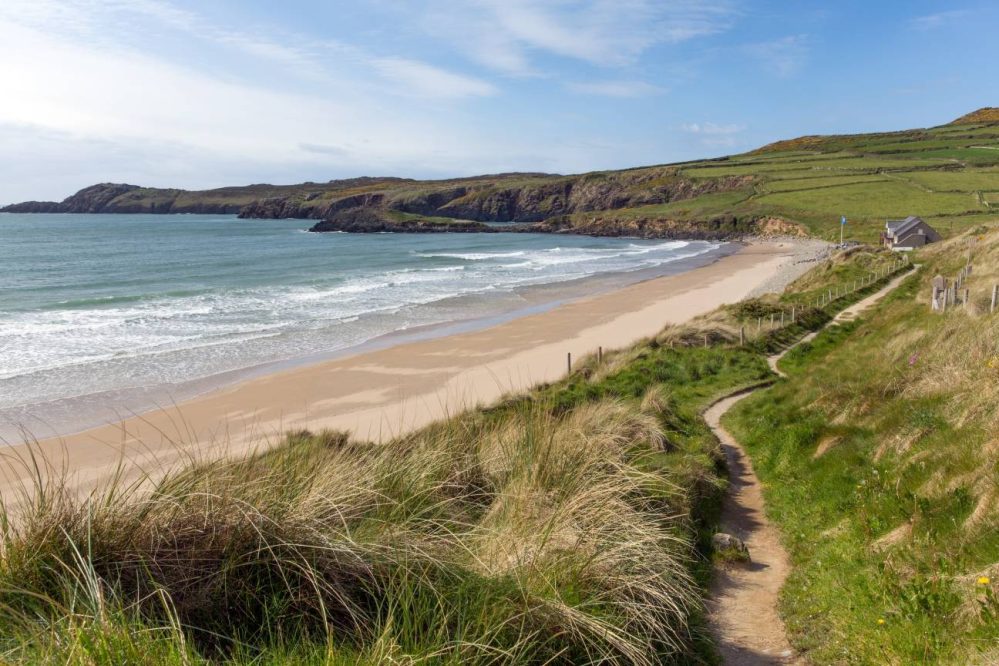
PLANS to convert historic farm buildings near north Pembrokeshire’s Whitesands beach for use as holiday accommodation have been given the go-ahead, but their use doesn’t have to be restricted to just that purpose.
In an application to Pembrokeshire Coast National Park, Matthew James of James Properties, through agent Harries Planning Design Management sought permission for the conversion of two derelict barns to two self-catering holiday accommodation units at Porthmawr Ganol, Whitesands, St Davids.
An officer report said: “The farmstead occupies a prominent position within a landscape characterised by open agricultural fields enclosed predominantly by traditional dry-stone walls, exposed coastal pasture and areas of heathland associated with Carn Llidi.”
It added: “The site lies within the Porthmawr Historic Landscape Character Area, an area recognised for its historic pattern of dispersed settlement, traditional farmsteads, dry-stone wall field boundaries and evidence of medieval and post-medieval agricultural activity.
“The retention and reuse of the existing buildings therefore has the potential to preserve an important element of the area’s historic landscape character whilst securing a viable long-term future for structures that would otherwise continue to deteriorate.”
It said that insufficient evidence had initially been submitted to demonstrate that the buildings were unsuitable for permanent residential conversion and only for self-catering accommodation and therefore an affordable housing contribution should be secured.
Policy would lead to a contribution of £36,400, the report said, but a financial viability assessment by the applicant “demonstrated that the development would not be viable if required to provide the full policy contribution,” the maximum contribution capable of being supported whilst maintaining viability was £12,641.
This reduced figure was accepted, the officer report saying: “Whilst this represents a reduced contribution when compared with the full policy requirement, the submitted viability evidence demonstrates that the development could not reasonably support the full contribution whilst remaining deliverable.
“In these circumstances, securing a reduced contribution is considered preferable to losing the opportunity to secure the restoration and beneficial reuse of the historic buildings.”

It stated that, with the affordable contribution, the scheme would not be limited to self-catering development only.
The application was conditionally approved by Park planners.

Hartt family members listed at Haverfordwest Magistrates’ Court over unpaid penalties linked to major cattle prosecution
TWO PEMBROKESHIRE farmers convicted in a major bovine tuberculosis-related cattle case are due back before the courts this week over unpaid financial penalties.
Henry Hartt, 66, of Ciffig, Whitland, and Edward William Henry Hartt, 48, of Llandewi Velfrey, are both listed to appear at Haverfordwest Magistrates’ Court on Thursday (June 11).
Court records show both men face proceedings relating to the non-payment of fines of £94,739.64 imposed on March 4, 2024. Separate applications to lodge committal warrants are also listed, relating to unpaid fines of £22,300 and £22,400 respectively.
The pair were among three members of the Hartt family sentenced at Swansea Crown Court in March 2024 following a major prosecution brought by Pembrokeshire County Council involving bovine TB controls.
The court heard that cattle known to have reacted to bovine tuberculosis tests were knowingly kept on-farm, while substitute animals were allegedly presented for slaughter instead.
At the time, Henry Hartt, Edward Hartt and Charles Hartt admitted a total of 12 cattle identification offences connected to Longford Farm, Clynderwen.
The case centred on failures to comply with bovine TB restrictions and cattle tracing rules designed to prevent the spread of the disease.
Each defendant was fined £24,000, while confiscation orders and prosecution costs running into hundreds of thousands of pounds were also imposed.
Thursday’s hearing is expected to deal with enforcement proceedings connected to the unpaid financial orders rather than the original criminal offences.
The Herald will be attending court.
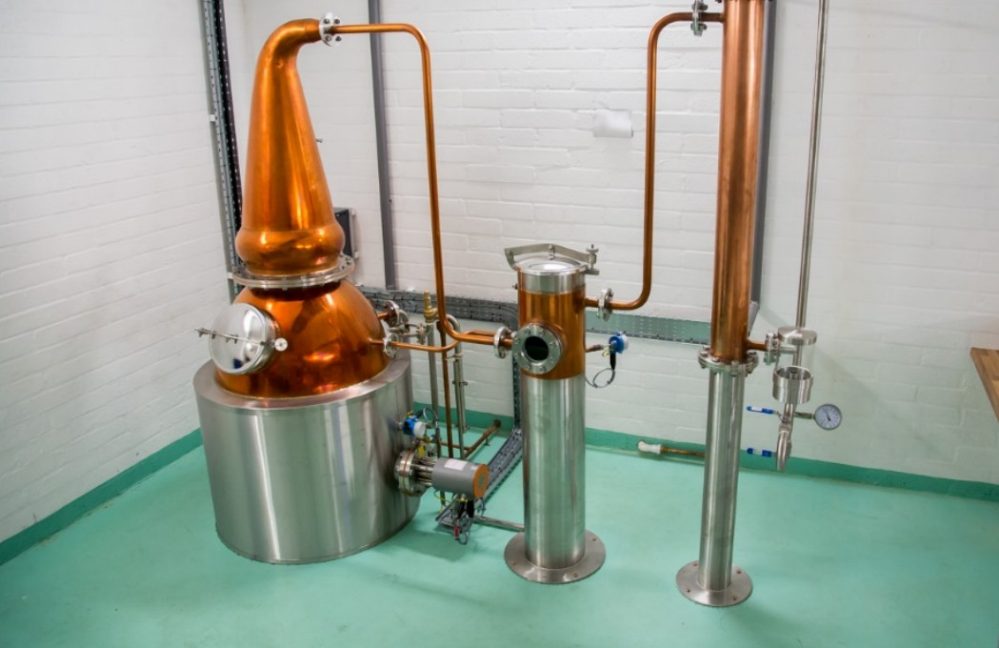
A CALL to keep a building which would partly be used a distillery at a Pembrokeshire farm which produces award-winning sheep milk-infused gin has been turned down by county planners.
In an application to Pembrokeshire County Council, Steven and Julie Ayers of Fifth Flock Spirits Ltd through agent Johnston Planning Ltd sought permission for the retention of a replacement building for farm diversification purposes incorporating a gin distillery with associated function/tasting room, reception area for farm businesses, including the distillery, a kennels and caravan site, along with offices and associated storage facilities at Nash Mountain Farm, Sardis.
Two previous similar 2024 and 2025 applications have been refused, the latest scheme removing some previous elements.
A supporting statement said the building would be used for farm diversification purposes for a number of established rural enterprises on the holding “but primarily in connection with Fifth Flock Spirits Ltd, a family run drinks company specializing in gin infused with milk derived from the resident flock at Nash Mountain”.

It said the 2023-erected building had replaced an earlier long-standing dilapidated farm building on the site, and is intended to play host to the three established farm enterprises which are run in conjunction with the main agricultural operation: Nash Mountain Kennels, Nash Mountain Caravan and Camping Site and primarily Fifth Flock Ltd.
It said internal works had yet to be completed, and, in addition to the retention of the building, the application also seeks permission for some external works which have not yet been carried out.
The statement said the Ayers family has farmed at 26ha Nash Mountain, which has a flock of 168 East Friesian sheep, for some five generations, the limited acreage meaning “the agricultural mainstay is not sufficient to sustain a viable business,” leading to the farm diversifications, with Fifth Flock the latest.
It said, in addition to the main farming operation, Nash Mountain also gains income from an on-site wind turbine, a caravan site, a boarding kennels with cattery, and Fifth Flock Ltd.
On the gin side, the statement says: “Fifth Flock Spirits Ltd Fifth Flock has operated from Nash Mountain since August 2025. It is at core currently a drinks enterprise based on the production of gin and rum infused with sheep’s milk, however, as set out in the accompanying business plan, the intention is to expand the offer into other sheep-based products to capitalise on the home flock.
“Since launching the enterprise has exceeded expectations with strong demand and accolades including A Taste of Pembrokeshire Award at the Pembrokeshire Food and Farming Awards in December 2025.
“Firth Flock currently source their gin from an independent distillery in Gorgeddan, Ceredigion however the intention, as reflected in this submission, is to develop the distilling element on-site and include it as part of an immersive visitor experience focussing on the home flock.
“Firth Flock has rapidly become a cornerstone of the enterprise at Nash Mountain and whilst the building at the centre of this proposal may have been premature there is a strong case for its retention as part of the overall rural enterprise on the holding.”

It adds that the Ayers are actively exploring diversification into other wool and sheep-based products.
The application was refused on the grounds including it was not demonstrated a countyside location was needed and there was not “sufficient evidence of a genuine and established rural enterprise necessitating the development,” adding: “In particular, the primary distilling process does not currently take place at the site and instead relies on off-site production, with only a future aspiration to relocate such activities.
“As a result, the proposal represents a speculative form of development that lacks a clear and direct functional link to the agricultural holding.”
It went on to say the scale of the proposals “introduces a level of intensity and built form more akin to a standalone commercial or tourism enterprise, rather than a modest farm diversification scheme”.



Education16 hours ago
Diocese threatens legal action as Manorbier school closure battle intensifies
Church says council could face judicial review over fire-hit school A BITTER row over the future of Manorbier Church in...


Health18 hours ago
Baby loss charity calls for urgent action after latest Wales figures published
Sands says Welsh Government must set clearer targets to reduce stillbirths and neonatal deaths A BABY loss charity has called...

Health19 hours ago
Cancer delays worsening as west Wales hospitals struggle to recruit specialists
Health board admits standards are difficult to meet as doctors warn of “extremely dangerous” shortages PATIENTS in west Wales are...


News21 hours ago
Rhun ap Iorwerth highlights first 25 days in office as First Minister
Plaid Cymru leader says government is moving quickly on NHS, farming and economic priorities FIRST MINISTER Rhun ap Iorwerth has...


Crime2 days ago
Man accused of six rapes including alleged Haverfordwest offence
A MAN has been sent to Crown Court accused of six rapes, including an alleged offence at a Haverfordwest campsite....


News2 days ago
Childcare row erupts as Plaid faces questions over costs and delivery
Opposition parties clash over flagship pledge as Senedd debate exposes growing divisions PLAID CYMRU’S flagship promise to create what it...


Crime3 days ago
Farmers fined in bovine TB scandal face fresh court action
Hartt family members listed at Haverfordwest Magistrates’ Court over unpaid penalties linked to major cattle prosecution TWO PEMBROKESHIRE farmers convicted...


Crime3 days ago
Pembrokeshire child killer stabbed to death in prison cell, murder trial hears
Kyle Bevan, jailed for the murder of Haverfordwest toddler Lola James, was allegedly stabbed 25 times and left ‘as if...


News3 days ago
Pendine cliff fall victim recovering after major emergency response
A 22-YEAR-OLD man who suffered serious injuries after falling from cliffs overlooking Pendine Beach is recovering well following emergency surgery....


Community3 days ago
Commissioner launches free course to help tackle ageism in Wales
A NEW free learning course has been launched to help people across Wales recognise and challenge ageism. The Older People’s...
-

 Crime7 days ago
Milford Haven man admits harassment and assault
-

 News7 days ago
Community appeal for privacy after serious emergency in Pendine
-

 Crime5 days ago
Sex offender in senior role at Tenby family hotel
-

 Crime4 days ago
Haverfordwest pair accused of £80,000 rogue trading frauds
-

 Community5 days ago
Forgotten wartime archive found in Pembroke Dock attic after 80 years
-

 Crime4 days ago
Families condemn failed appeal by paddleboard boss jailed over Haverfordwest tragedy
-
 Crime4 days ago
Knife blankets call as school staff face rising violence fears
-

 Community7 days ago
Founders Day hailed a success despite rising costs and extra security