


Finance
Haverfordwest savers encouraged to seek clarity ahead of ISA tax year end

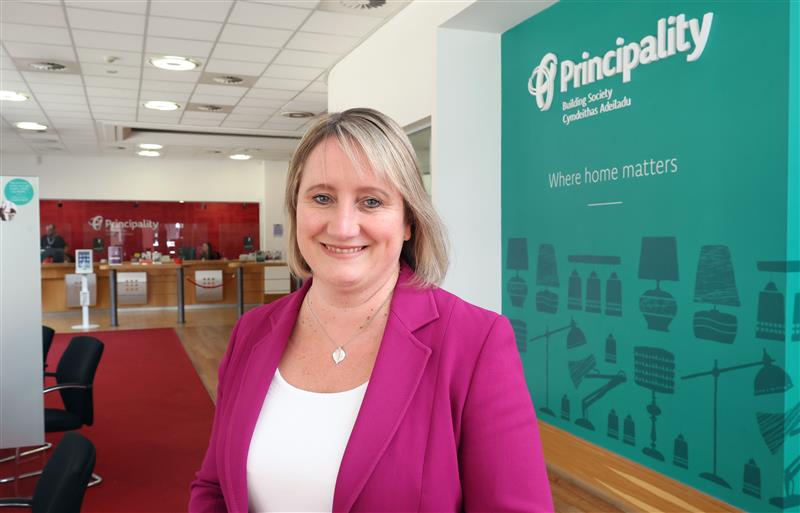
TWO in three savers say a fixed interest rate would give them greater peace of mind when planning their finances, according to new research from Principality Building Society*, as people in Haverfordwest are encouraged to review their savings ahead of the ISA tax year deadline.
The research, conducted with more than 1,500 people, also found that while many savers feel comfortable managing their money independently, a significant number still value the reassurance of speaking to someone when making important financial decisions.
Meanwhile, around one in six people mistakenly believe they must open a new ISA every tax year, highlighting ongoing confusion around how ISAs work. In many cases, particularly for variable savings products, savers may be able to continue paying into an existing ISA.
With the tax year end approaching, Principality Building Society is inviting Members and local savers to speak with colleagues at its High Street branch in Haverfordwest to better understand their options and make informed choices about how to use their ISA allowance.
The research also highlights the appeal of certainty when it comes to savings. Two in three savers say a fixed rate would give them peace of mind, reflecting the reassurance that comes from knowing exactly what return they will receive over a set period. Fixed rate Cash ISAs can provide that certainty, making it easier for some savers to plan ahead.

Vicky Wales, Chief Savings and Lending Officer at Principality Building Society, said: “ISA season can often feel busy and confusing, particularly against the backdrop of changes in the wider financial environment. Many people value the opportunity to talk through their options and feel confident they’re making the right decision.
Every saver’s situation is unique, so having a conversation can help people better understand their choices and how these align with their longer-term plans. Understanding the differences between savings products – including fixed and variable rates – can help savers make the most of their ISA allowance, and ensure their money is working in a way that suits their individual goals.”
Principality Building Society is encouraging anyone in Haverfordwest who would like to review their savings ahead of the tax year end to visit their local branch for a supportive conversation about their options, and how they can make the most of their savings.
Source: Principality Building Society’s own online community, Member Pulse, survey on Cash ISAs, March 2026 (total respondents: 1,544)


A RECORD number of families are using Tax-Free Childcare to cut the cost of childcare, HM Revenue and Customs has said.
The government paid almost £600m in top-up payments through the scheme in 2025-26, with 868,095 families now benefiting.
Tax-Free Childcare allows working parents to receive government support towards approved childcare for children aged 11 and under, or up to 16 if the child is disabled.
For every £8 paid into an online childcare account, the government adds £2. Parents can receive up to £500 every three months for each child, or £1,000 if the child is disabled.
This means families can save up to £2,000 a year per child, or £4,000 for a disabled child.
HMRC is encouraging parents to check whether they are eligible before the summer holidays, when childcare costs often rise.
HMRC’s Chief Customer Officer, Myrtle Lloyd said: “I’m so pleased these figures show more families than ever are using Tax-Free Childcare to save on their bills.
“£2,000 is not a small amount and it can make a real difference – especially with the childcare void of the summer holidays approaching.
“If you haven’t signed up yet, don’t miss out, go to GOV.UK to do it today.”
The scheme can be used to pay for approved childcare including childminders, before and after-school clubs, and holiday activity clubs. It can also help cover specialist equipment needed by a childcare provider for a disabled child.
Families may be eligible if they have a child aged 11 or under, or a disabled child aged up to 16, and if both parents — or a single parent — earn at least the equivalent of 16 hours a week at the National Minimum Wage or Living Wage.
Each parent must earn no more than £100,000 a year, and families cannot receive Tax-Free Childcare if they are also receiving Universal Credit or childcare vouchers.

Tax-Free Childcare can be used alongside free childcare hours, provided the family meets the eligibility rules.
Parents can check eligibility and apply through GOV.UK.

New plans aim to cut delays, reduce costs and stop house sales collapsing
THOUSANDS of homebuyers across Wales could save time and money under a major overhaul of the property-buying process announced by the UK Government.
The reforms are designed to tackle long-standing problems in the housing market, including lengthy delays, failed transactions and unexpected costs which can leave buyers and sellers out of pocket.
Ministers say the changes could reduce the average time taken to buy a home by around four weeks and save first-time buyers an average of £650.
Under the proposals, sellers and estate agents would be required to provide key information about a property when it is listed for sale. New “sales packs” would include details about a home’s condition, leasehold charges and the status of any buying chain.
The Government also plans to introduce earlier legally binding agreements between buyers and sellers to reduce the number of transactions which collapse late in the process.
A major part of the reforms will focus on replacing paper-based systems with digital property logbooks, electronic signatures, online identity checks and AI-assisted conveyancing.
Welsh Secretary Jo Stevens said: “Thousands of people across Wales will benefit from these reforms which will make buying a home faster, simpler and fairer.
“For too long the system has been difficult and complex. This government’s changes will save working people and families valuable time and money when they are buying their new home.”
Prime Minister Sir Keir Starmer said the current system leaves many families “in limbo” and makes home ownership more difficult than it should be.
Housing Secretary Steve Reed said buying or selling a home should not be “a drawn-out nightmare of delays, hidden costs, and failed deals.”
The Government says the reforms will be introduced in stages, with a new Code of Practice for property agents expected later this year.
From 2027, ministers plan to consult on mandatory qualifications for estate agents and the wider use of digital tools.

Legislation requiring sales packs, binding contracts and digital property information systems is expected before the end of the current Parliament.
MORE than 9,000 people across South East Wales are to receive tailored employment support under a £32.5m expansion of the UK Government’s Connect to Work programme.
The funding will support around 9,100 disabled people, people with health conditions, and those facing complex barriers to employment, helping them move into work or closer to the labour market by 2030.
The Department for Work and Pensions said the programme replaces a “one-size-fits-all” approach with intensive, personalised help built around each individual.
Support will be delivered by specialist employment advisers, who will meet people in accessible community settings, including GP surgeries, cafés, parks and community hubs.
The help available will include matching people with suitable jobs, CV writing, interview preparation, direct work with local employers, and continued support once someone has started a role.
Work and Pensions Secretary Pat McFadden said: “For too long, disabled people and those with health conditions in South East Wales and across the country were written off and denied the chance to work. This Government is changing that.
“Connect to Work is built on a simple belief: that with the right support, built around the individual, people can and do get into work.
“Today’s figures prove it. Thousands of people are now closer to working, earning and building better lives, and with South East Wales set to launch its support offer, this is just the beginning.”
The announcement comes as the first official statistics for Connect to Work show that 14,000 people across England and Wales have already received personalised support through the programme.
The DWP said 2.8 million people are currently out of work due to ill-health, and that Connect to Work forms part of a wider £3.5bn employment support package.
Councillor Peter Bradbury, Cardiff Council’s Cabinet Member for Employment and Inclusive Growth, said: “We are delighted that Connect to Work is being introduced across the South East Wales region; this is a significant opportunity to support our residents into sustainable employment while strengthening our local communities and economy.
“Delivery will commence shortly across the region, with further details, including start dates, available on the Cardiff Council website.”

The South East Wales funding follows earlier announcements for Connect to Work in South West Wales, Mid Wales and North Wales.



Community14 hours ago
Manorbier fire scandal: Council’s payout just £63,777 after school destroyed
PEMBROKESHIRE COUNTY COUNCIL has accepted an insurance settlement which leaves it with just £63,777.07 after the catastrophic fire which destroyed...


News23 hours ago
Bus overturns in major incident near Kidwelly
All passengers rescued as emergency services remain at scene A BUS overturned on the A484 between Kidwelly and Ferryside on...


Community2 days ago
Tenby Summer Spectacular cancelled amid council row over harbour access
Organisers say popular charity events cannot safely go ahead without clear powers to control crowds TENBY ROUND TABLE has announced...


News2 days ago
Motorcyclist dies after four-vehicle crash on A40 in Carmarthenshire
A MOTORCYCLIST has died following a four-vehicle collision on the A40 between St Clears and Whitland. Dyfed-Powys Police said the...


News2 days ago
Rhun ap Iorwerth urges new deal for Wales after Starmer quits
First Minister says next Prime Minister must focus on greater powers, fair funding and respect for Wales’ democratic mandate FIRST...


News2 days ago
How Labour’s landslide victory unravelled in just two years
Prime Minister announces resignation after losing support within his own party as Andy Burnham emerges as overwhelming favourite to take...


News3 days ago
Long Course Weekend set to bring thousands to Pembrokeshire
Three days of swimming, cycling and running will once again transform Tenby into one of the UK’s biggest endurance sporting...


Community3 days ago
The gentle giant behind the tattoos
Pembrokeshire security worker Josh Davies praised for professionalism, kindness and proving first impressions can be wrong JOSH Davies is hard...


Charity4 days ago
Toy Story fans fill charity toy box at Haverfordwest cinema
Donations pour in for SNAP Specialist Play as families embrace Toy Story 5 launch A TOY STORY-themed charity appeal at...


Community4 days ago
Lord Rhys emerges from the mist in St Davids
Giant puppet begins historic journey marking 850 years since the first Eisteddfod MIST swirled around St Davids Cathedral on Friday...
-

 Crime6 days ago
Milford Haven man jailed for breaching domestic violence protection order
-

 News6 days ago
Crash on Freeman’s Way causes school-run chaos across Haverfordwest
-

 Health4 days ago
Woman jailed assaults on police, harassment and XL Bully possession
-

 Crime4 days ago
Milford Haven woman spared jail despite string of shop thefts
-

 Crime6 days ago
Portfield Gate man faces careless driving allegation after Tufton crash
-
Community3 days ago
The gentle giant behind the tattoos
-

 Local Government6 days ago
Pembrokeshire faces accessible housing shortage as 403 people wait for homes
-

 News7 days ago
Brexit at 10: How Britain was sold a dream that cost us dearly