


News
Pressure builds as Labour ducks farming hustings

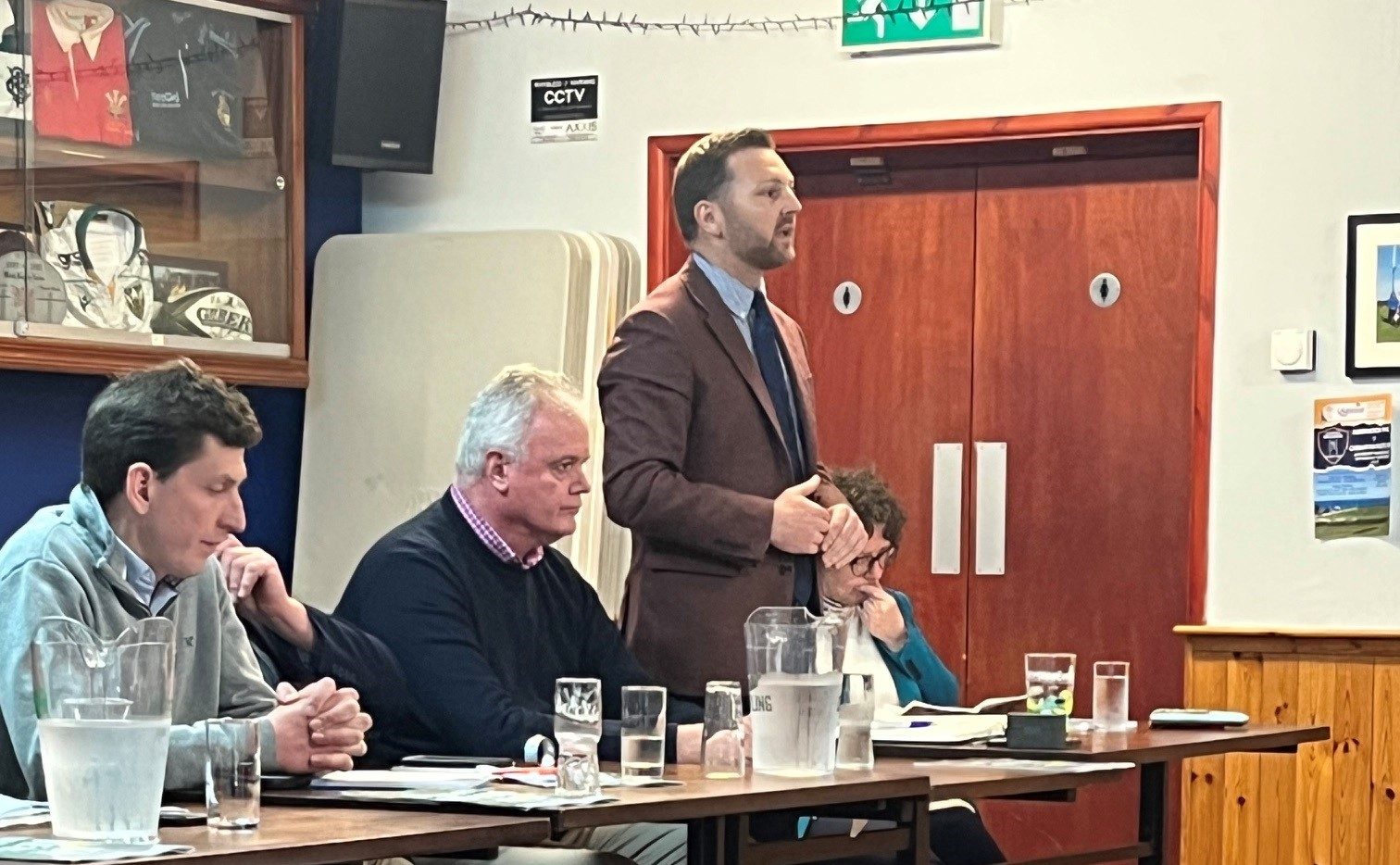
NOT one of Labour’s seven list candidates for the Ceredigion Penfro seat turned up for farming hustings in either Pembrokeshire or Ceredigion.
Local branches of the Farmers’ Union of Wales, NFU Cymru, and the Young Farmers’ Clubs hosted hustings in Aberaeron on April 14 and Haverfordwest on April 21. Labour has seven candidates standing on its list for the new constituency. They did not send a representative to either event.
Farming has been a central issue in the lead-up to the 2026 Senedd election in Ceredigion and Pembrokeshire. Candidates are facing intense scrutiny over policy, funding, and regulation.
It is likely that one of Labour’s candidates will find time to send a representative to a Green Community & Climate hustings. This event is organised by Friends of the Earth in Narberth this evening, Friday, April 24.
Agriculture and linked businesses are significant contributors to the local economy, especially in rural areas. Over the last Senedd term, Labour in Wales did very little to endear itself to farming communities. There has been widespread criticism of its alleged lack of interest in, or care for, rural Wales and the rural Welsh economy. Labour’s cause was not helped by the Labour Westminster government’s handling of inheritance tax and rural enterprise taxation issues.

The Westminster Government made a partial climbdown over the taxation changes. Despite the efforts of Labour’s Rural Affairs Minister Huw Irranca Davies to rebuild bridges with the farming community, farming and rural policy remain a weakness for Labour in Wales. Mr Irranca Davies’ task was not eased by the fact that his predecessor, Lesley Griffiths, had demolished those bridges.
There is considerable resentment across rural Wales about Labour’s perceived neglect. Polls suggest the Party will struggle in North and West Wales.
“GUTLESS” LABOUR “NOT BOTHERED” ABOUT RURAL WALES
Conservative candidate for Ceredigion Penfro, Samuel Kurtz, told The Herald: “It was a privilege to take part in these important hustings and to hear directly from farmers and young people about the challenges and opportunities facing our rural communities.
“As a Senedd Member, I have always stood on the side of farmers, and I am proud of that record. Farming is the silver thread running through our communities, economically, culturally and socially, and it must be protected and supported. That is something I understand not just politically but personally, as a farmer’s son.

“If re-elected, I look forward to continuing to champion Welsh agriculture and ensuring that our farmers have a friend they can depend on.
“It was, however, deeply disappointing that Labour could not be bothered to attend either the Ceredigion or Pembrokeshire farm hustings. That absence speaks volumes and demonstrates a clear disregard for rural Wales and the people whose livelihoods depend on agriculture.”
Liberal Democrat candidate Alistair Camerson said: “It was a good, lively debate. We covered many of the stresses our farmers and rural communities are facing. These include rising prices, government regulations, problems with the Sustainable Farming Scheme, and the mental health challenges facing farmers and those in the countryside.

“Labour should have been present to listen to the farmers and understand the real and devastating impact Welsh Government policies are having on our farming communities.”
A Reform UK spokesperson said: “Labour’s assault on our farming communities has been relentless.
“It’s little wonder Labour candidates don’t have the guts to face our farmers, given the party’s record.
“Reform will back our farmers, because they are the best in the world at what they do.”
Plaid Cymru’s lead candidate in Ceredigion Penfro, Elin Jones, told us: “In this area, farming hustings are an important event in the election calendar. Farmers are always keen to understand the details of manifesto promises and to hold politicians to account.
“It didn’t go down well that Labour failed to show twice. To miss one could be seen as careless, to miss two is an insult to the importance of farming to Ceredigion and Pembrokeshire.”
RENEWABLES DRIVE CAUSES LABOUR RURAL GRIEF
This week, the issue of renewable energy infrastructure being built on farmland came to a head.
Farmers across the Tywi and Teifi Valleys have complained about what they perceive as high-handed treatment by energy companies. They say employees of an energy company have entered their land without notice or consent, including farms subject to bTB restrictions. Large areas of the Pembrokeshire coast are set for significant windfarm developments.
The erection of pylons across Wales’s rural heartlands is a direct consequence of the Welsh and UK governments’ drive to meet their renewable energy generation and supply targets. The policy is putting further pressure on Labour’s vote share across Mid and West Wales. Labour in Wales’s stated position is to prefer underground cabling for new energy infrastructure projects where feasible.
Labour also says that while it supports undergrounding, the cost comparison with traditional pylons must be considered, and that energy companies should not be compelled to build all infrastructure underground on cost grounds. This policy position has not addressed the concerns of many farmers or some environmental and countryside campaigners, who are seeking a firmer commitment.
In a BBC explainer regarding the issue released earlier this week, the only vox pop in favour of pylons and turbines being placed in rural Wales came from a voter in Cardiff.
At the time of writing, a case is ongoing in the High Court in Cardiff. It aims to prevent energy company employees from entering farm properties without permission to conduct surveys for planned infrastructure. The energy companies claim they have the legal right to do so. However, in Westminster this week, the Energy Minister Michael Shanks confirmed that holding an Independent Distribution Network Operator licence does not automatically grant access to private land.



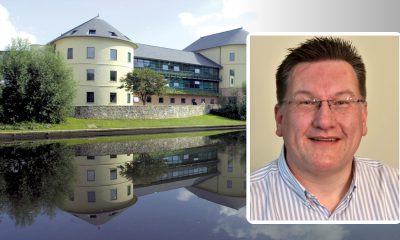








RESIDENTS are being asked to help shape the future of well-being in Pembrokeshire.
Pembrokeshire Public Services Board has launched its third Well-being Assessment and wants to hear from people who live or work in the county.
The assessment looks at what matters most to local communities, including issues affecting people’s quality of life now and in the years ahead.
It is a legal requirement under the Well-being of Future Generations (Wales) Act 2015.
The findings will help the Public Services Board decide what action is needed to improve well-being across Pembrokeshire.
The survey opened on Monday (Jun 1) and runs until Saturday, August 8, 2026.
It is being carried out jointly with Carmarthenshire and Ceredigion.
Residents can take part online at: https://online1.snapsurveys.com/Well-being_Assessment_2026
Photo caption: Have your say: Residents are being asked to help shape future well-being plans in Pembrokeshire.

Decision finds ‘no evidence’ of code breach as fallout continues from Dennison suspension
THE PUBLIC SERVICES OMBUDSMAN FOR WALES has concluded there is “no evidence” that Cllr Guy Woodham breached the Members’ Code of Conduct in relation to the long-running Imperial Hall planning dispute in Milford Haven.
The decision, issued on Wednesday (June 10), brings to an end a complaint made by Imperial Hall director Lee Bridges following the controversial Planning Delegation Panel meeting which considered whether the venue’s retrospective planning application should be referred to Pembrokeshire County Council’s Planning Committee.
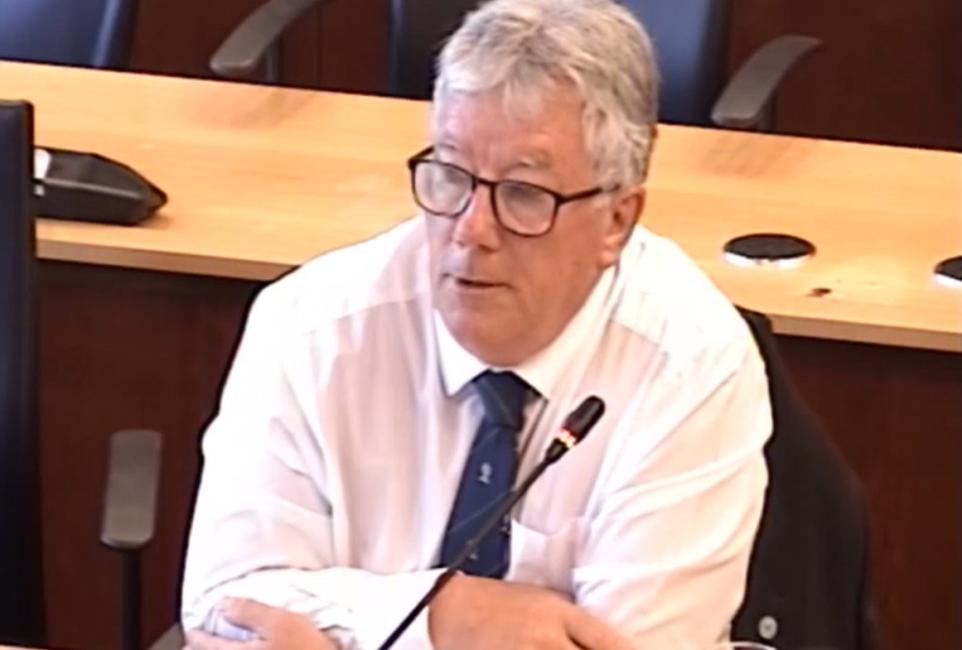
The ruling lands less than two weeks after Milford Haven councillor Alan Dennison was suspended for four months by Pembrokeshire County Council’s Standards Committee over his involvement in the same planning matter.
Complaint dismissed
The Ombudsman investigated allegations that Cllr Woodham had failed to declare personal and prejudicial interests while acting as Chair of the Planning Delegation Panel meeting on February 25, 2025.
The complaint also alleged Cllr Woodham had improperly used his position while participating in the panel’s consideration of whether the Imperial Hall application should be referred to councillors for determination.
However, after reviewing evidence, interviewing witnesses and viewing the webcast of the meeting, the Ombudsman concluded there was no evidence of wrongdoing.
The decision notice states: “The evidence did not suggest that the Member had a personal or prejudicial interest.”
It added there was no evidence the decision could reasonably be regarded as affecting Cllr Woodham’s wellbeing or financial position, or that of someone with whom he had a close personal association.
The Ombudsman therefore decided there was “no evidence of a breach of the Code.”
Why the complaint was made
The complaint had been made by Mr Bridges following the Planning Delegation Panel meeting, during which councillors declined a request to refer the Imperial Hall planning application to committee.
Mr Bridges had argued there were potential conflicts involving Cllr Woodham linked to community venues in Milford Haven and alleged competing interests connected to the local events sector.
Those concerns later formed part of wider criticism voiced publicly by both Mr Bridges and Cllr Dennison.

Last week, following the Standards Committee ruling against him, Cllr Dennison claimed Cllr Woodham had chaired the panel “with full awareness of the potential repercussions” for Mr Bridges’ business and alleged competing interests had not been properly declared.
Ombudsman draws distinction
The Ombudsman’s findings appear to draw a clear distinction between the Woodham complaint and the circumstances which led to the sanction against Cllr Dennison.
In Cllr Dennison’s case, the Standards Committee concluded he had personal and prejudicial interests arising from a combination of factors, including his previous directorship of Imperial Hall Limited, a financial loan to the business during Covid, involvement with the Masonic Hall company, social links with Mr Bridges and prior advice from the Monitoring Officer warning him not to become involved.
The committee found Cllr Dennison had acted as an “advocate and champion” for the application by drafting and signing paperwork to seek committee determination on behalf of local member Cllr Terry Davies.
By contrast, the Ombudsman concluded the evidence in the Woodham matter did not establish either a sufficiently close personal association or a financial or personal interest requiring declaration.
Bridges sought consistency
Only days before the Ombudsman’s decision, Mr Bridges had written to the Ombudsman questioning whether his complaint concerning Cllr Woodham was being afforded the same level of scrutiny as the Dennison case.
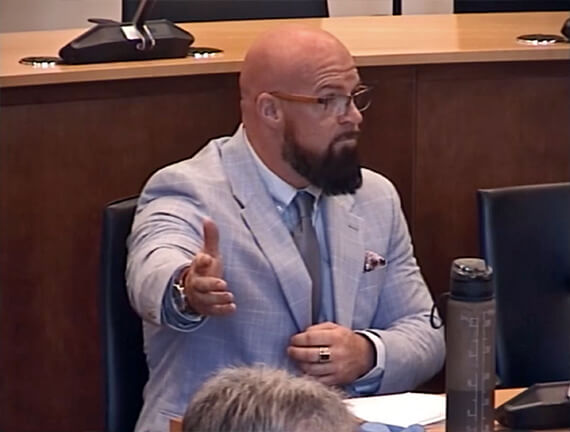
He argued that allegations involving participation in decision-making processes should be treated consistently.
In response, the Ombudsman told Mr Bridges that all complaints are assessed under the same two-stage process and determined on their own merits.
The decision notice issued today confirms the Ombudsman has now completed that assessment and found no breach.
Wider fallout continues
The Imperial Hall planning dispute has become one of the most politically charged local controversies in Milford Haven in recent years.
The original dispute concerned retrospective engineering works linked to an external dining area at the Hamilton Terrace venue.
Planning officers ultimately refused the application, while a later appeal to Welsh Government inspectors was unsuccessful.
Cllr Dennison has vowed to appeal his four-month suspension, insisting he did nothing wrong and arguing he merely signed paperwork “pp” on behalf of Cllr Terry Davies after being asked to assist.
Speaking after the Standards Committee hearing, he described the process as unfair and politically motivated.
Pembrokeshire County Council and Cllr Guy Woodham have been contacted for comment.

MORE than 720,000 adults in Wales are now living with poor mental health, according to a major new report which warns the nation continues to record the highest levels of psychological distress in the UK.
New analysis released by the Mental Health Foundation on Wednesday (June 10) found that an additional 278,000 adults in Wales are experiencing poor mental health compared to 2009.
The findings show that by 2024, more than one in four adults in Wales (27.3%) were affected – around 720,000 people – placing Wales 2.7 percentage points above the UK average of 24.6%.
The charity said worsening financial insecurity, poverty, austerity measures and the long-term effects of the Covid pandemic are continuing to hit Welsh communities hard.
A report based on 15 years of data from 40,000 people across the UK found Wales has reported higher levels of poor mental health than the UK average in 13 of the last 15 years.
Researchers said the situation worsened significantly after the pandemic, with Wales reaching a peak of 28% in 2022/23 – 5.2 percentage points above the UK average at the time.
Although figures have fallen slightly since then, Wales continues to record the highest levels of poor mental health in Britain.
The Mental Health Foundation said poverty remains a major factor, with around one in five people in Wales living in poverty over the last two decades.
It warned that more than half of those affected are now living in “very deep poverty”, leading to chronic stress, financial hardship and greater mental health difficulties.
Catherine Razzell, Policy and Public Affairs Manager at the Mental Health Foundation, said the findings reveal a “worrying and consistent pattern” in Wales.
“Whilst figures show the levels of poor mental health in other UK nations have tracked together, Wales has diverged from the rest of the UK – this is deeply concerning,” she said.
“Things need to change in order to protect the people of Wales from poor mental health and for the next generation. This is not just on an individual basis, but at a systemic level.”

The charity welcomed the Welsh Government’s planned pilot of the new Welsh Child Payment, known as Cynnal, and said prevention-focused policies would be key to improving outcomes.
However, it said progress would require cooperation between Cardiff Bay and Westminster due to the range of economic and social policies affecting mental wellbeing.
The report, titled The state of mental health, analysed data collected between 2009 and 2024 using the General Health Questionnaire (GHQ-12), a recognised measure used to identify likely mental health disorders across populations.
The Welsh Government has previously pledged to improve mental health support through its cross-government Mental Health and Wellbeing Strategy for Wales covering 2025 to 2035.



News3 hours ago
Pendine cliff fall victim recovering after major emergency response
A 22-YEAR-OLD man who suffered serious injuries after falling from cliffs overlooking Pendine Beach is recovering well following emergency surgery....


News22 hours ago
First Minister challenged over jobs for student nurses
REFORM WALES has accused the First Minister of failing to guarantee jobs for student nurses in Wales, despite continuing pressure...

Crime1 day ago
Knife blankets call as school staff face rising violence fears
GMB says protective equipment should be considered where risk assessments show staff could face blades SCHOOL staff should be given...


News1 day ago
Claire Archibald secures review of Milford Haven train times
RURAL TRANSPORT CONCERNS RAISED WITH TFW CLAIRE ARCHIBALD MS has secured a review of train times between Milford Haven and...


Crime1 day ago
PCC review calls for stronger youth crime prevention work
REPORT MAKES 13 RECOMMENDATIONS A REVIEW into crime and anti-social behaviour services for young adults has called for stronger prevention...


Crime1 day ago
Families condemn failed appeal by paddleboard boss jailed over Haverfordwest tragedy
RELATIVES SAY LATEST COURT BID HAS REOPENED PAIN AFTER FOUR DEATHS ON WESTERN CLEDDAU THE FAMILIES of victims of the...


Community2 days ago
Forgotten wartime archive found in Pembroke Dock attic after 80 years
Remarkable family collection reveals story of father and son who served through two world wars A REMARKABLE untouched family archive...


Crime2 days ago
Milford Haven woman left with facial fractures after drunken attack
A WOMAN in her late fifties suffered facial fractures after being repeatedly punched through the window of her car during...


Crime2 days ago
Sex offender in senior role at Tenby family hotel
CREST HOTEL GROUP says it is investigating safeguarding concerns after staff at the Imperial Hotel in Tenby raised alarm over...


Sport3 days ago
Runners tackle new route in Ras Y Castell 10k
MORE than 90 runners took to the streets and paths around Cardigan on Friday evening (June 5) for the annual...
-
Crime5 days ago
Paddleboard company owner loses bid to cut sentence over Haverfordwest tragedy
-

 Crime4 days ago
Milford Haven man admits harassment and assault
-

 News4 days ago
Community appeal for privacy after serious emergency in Pendine
-

 Crime7 days ago
Pembroke Dock driver avoided jail after drug-drive crash
-

 Crime7 days ago
Dinas Cross man jailed over shop thefts
-
Crime2 days ago
Sex offender in senior role at Tenby family hotel
-
Community2 days ago
Forgotten wartime archive found in Pembroke Dock attic after 80 years
-

 Business4 days ago
Call for gym and Padel courts at Kiln Park Farm unanimously backed