

Science and the Environment
Pembrokeshire tops list of best beaches in Wales 2026

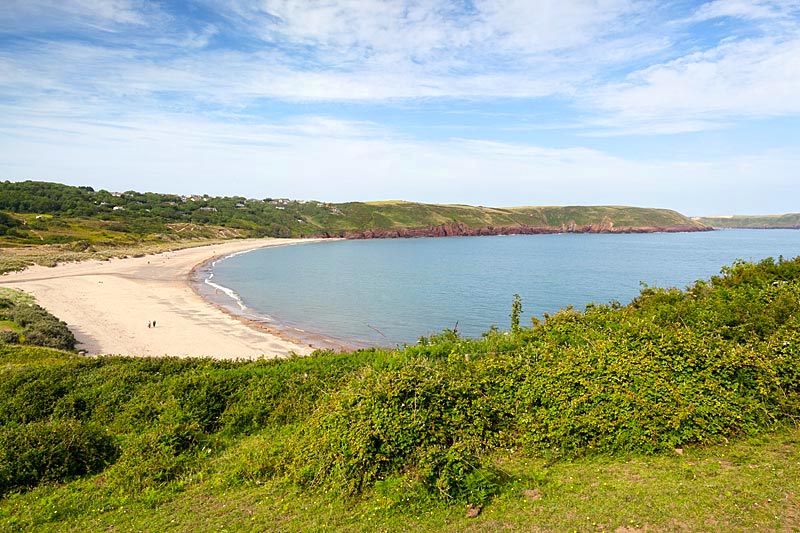
FROM the golden sand dunes of Poppit Sands and the unspoiled beauty of Freshwater East, Pembrokeshire is known around the world for its incredible coastline.
And as today’s Wales Coast Award winners for 2026 show, Pembrokeshire has once again earned itself the highest number of best beaches in Wales, with more locations recognised in the awards than any other part of the country.
Announced today by environmental charity Keep Wales Tidy, Pembrokeshire’s coastline received an impressive 16 Wales Coast Awards. This includes nine Blue Flag Awards and seven Green Coast Awards, recognising high environmental standards, meeting tough water quality targets and delivering top standards of environmental education.
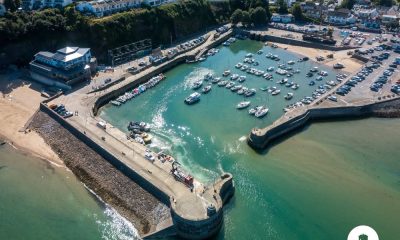
Pembrokeshire received nine of Wales’ 20 Blue Flag Award beaches, with Tenby’s South Beach, Poppit Sands. Broadhaven North, Newgale, Dale, Whitesands and Coppet Hall all meeting the awards’ high criteria, along with Saundersfoot and Tenby Castle, which both celebrate an impressive 25 years of the Blue Flag Award.
The Blue Flag Award is recognised internationally, recognising the highest standards of environmental quality, safety, and environmental management. Awarded by the Foundation for Environmental Education (FEE), it means the beach or marina is clean, safe, and well-managed, promoting sustainability and attracting visitors.

Pembrokeshire also has the most Green Coast Award beaches in Wales, with seven of the 13 locations receiving the award located here.
Green Coast Award beaches boast unspoilt beauty, high environmental standards, and excellent water quality with Aberiddy, Freshwater East, Manorbier, Penally, Caerfai, Druidsone, and West Angle Bay all retaining their status of being exceptional places to visit.
The Wales Coast Awards have been managed by Keep Wales Tidy for more than 20 years and signify that a beach or marina meets and maintains the highest environmental standards and achieves tough water quality targets, as well as ensuring high standards of information provision, environmental education, safety, and site management.
The Awards are voluntary and recognise the huge effort of staff and volunteers across Wales who are committed to protecting and preserving our natural landscape in the face of increasingly challenging circumstances.
In addition to the Blue Flag and Green Coast Awards, an additional 15 beaches across Wales achieved the Seaside Award. This is a UK-only beach award available in England, Northern Ireland and Wales, its yellow and blue flag signifying a clean, attractive and well-managed coastal stretch. Recipients of the award this year include popular tourist resorts Aberystwyth South and North, New Quay Harbour, Aberavon in Neath Port Talbot, and Whitmore Bay and Jackson’s Bay in Barry Island.
Owen Derbyshire, Chief Executive of Keep Wales Tidy congratulated Pembrokeshire on its impressive tally of award-winning beaches.
He said: “Once again, Pembrokeshire has shown us it is home to some of the most beautiful beaches not just in Wales but in the world and we’re delighted to see this recognised in the 2026 Wales Coast Awards, which are a fantastic celebration of Wales’ beautiful and diverse coastline.”
He added: “These awards recognise high and consistent standards and we would like to thank staff, volunteers and everyone else at sites across Wales who work so hard to protect and preserve our natural landscape in the face of increasingly challenging circumstances. All of these places are beautiful, but seeing that flag flying means visitors can be assured that they are clean, safe and well-managed with excellent facilities too.”

The Pembrokeshire beaches named in the 2026 award list are|: Newgale, Saundersfoot, Dale, Whitesands, Coppet Hall, Tenby South, Tenby Castle, Poppit Sands and Broadhaven North (Blue Flag); Abereiddy, Freshwater East, Manorbier, Penally, Caerfai, Druidstone and West Angle Bay (Green Coast).
The Ceredigion beaches named are: Borth, Llangrannog, Tresaith (Blue Flag); Aberystwyth South, Aberystwyth North, New Quay Harbour, Clarach, New Quay North (Seaside Award); Cilborth, Llanrhystud, Mwnt, Penbryn (Green Coast).



The Llŷr project could see up to ten floating turbines installed 35km off the coast, with power brought ashore at Freshwater West
A MARINE licence has been granted for a floating offshore wind demonstration project off the Pembrokeshire coast.
Natural Resources Wales has approved the licence for Llŷr Floating Wind Limited, allowing the Llŷr Floating Offshore Wind Farm Project to move forward.
The test and demonstration facility is proposed around 35km off the Pembrokeshire coast, off Linney Head, and is among the first demonstration-scale floating wind projects in Wales.
The scheme could include up to ten turbines, each reaching up to 300 metres above sea level, together with floating platforms, mooring lines and anchors.
Up to two offshore export cables, around 50km in length, are planned to bring electricity ashore at Freshwater West.
Ruth Jenkins, Head of Planning and Permitting Services and Marine Operations at Natural Resources Wales, said the organisation had a role to play in supporting the move towards clean energy while ensuring projects were developed responsibly.
She said: “At Natural Resources Wales, we have a unique opportunity to tackle the climate emergency across a range of sectors and industries. This includes using our licensing powers to support Wales’s transition to clean energy.
“As a regulator and advisor, we ensure energy projects are developed sustainably and with respect for the environment and local communities. At the same time, we play a vital role in enabling innovation in green energy, helping projects move forward safely and responsibly.
“Wales has enormous potential as a leader in renewable energy, and we’re committed to supporting the benefits that can come from these projects as we move towards net-zero targets.”
Natural Resources Wales is the Marine Licensing Authority on behalf of Welsh Ministers.
Full details of the marine licence granted for the Llŷr Floating Offshore Wind Farm Project are available on the NRW public register.
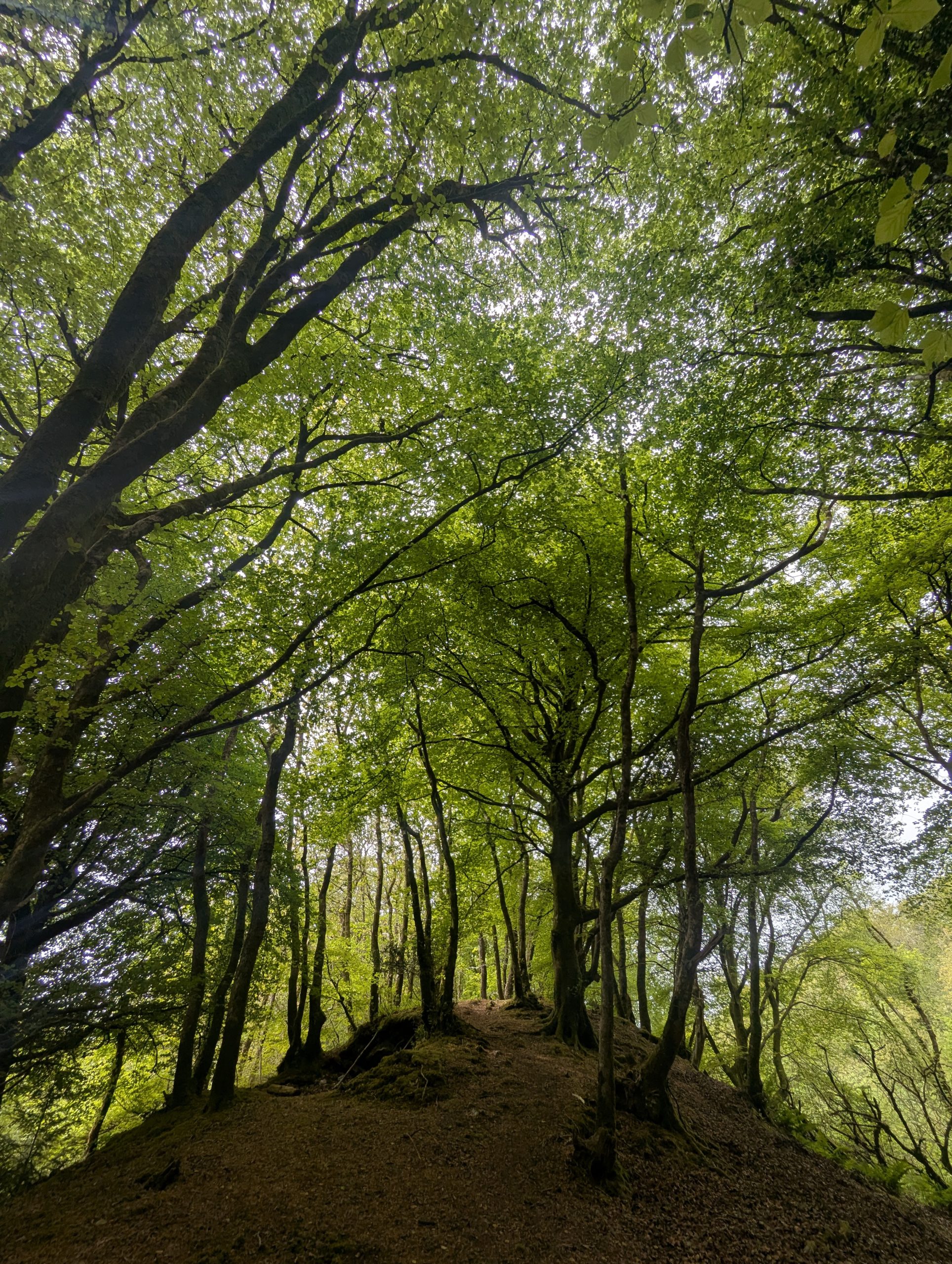
A FREE woodland event in north Pembrokeshire will invite people to reconnect with the Welsh language, local landscape and cultural traditions through storytelling, creativity and time spent in nature.
Dod yn ôl at fy nghoed / To Return to My Trees will take place on Friday, July 17, from 10am to 4pm, at Canolfan Llwynihirion and Allt Tŷ Canol, near Brynberian.
The event is being hosted by Cwm Arian as part of the Preseli Woodlands Project and will be led by Welsh Druid, author and celebrant Deborah Rose Hālani.
Participants will spend time in the ancient woodland of Allt Tŷ Canol, exploring how Welsh language, landscape, folklore and local traditions have shaped one another over generations.
Organisers say the day is open to everyone, including those reconnecting with their own heritage, people learning about Welsh culture for the first time, or anyone who wants to build a deeper connection with the place they call home.
Sophie Jenkins, Outreach and Engagement Coordinator at Cwm Arian Renewable Energy, said: “Conservation isn’t only about protecting species and habitats. It’s also about nurturing our relationship with the places we live.
“The Welsh language, our stories and our landscapes have evolved together over centuries, yet many people feel disconnected from one or all of those things.
“Whether someone is rediscovering a part of their own heritage or beginning a relationship with Cymru for the first time, we hope this day creates space to connect more deeply with the land, with culture and with community.”
The Preseli Woodlands Project brings together nature restoration and cultural heritage through activities designed to help people experience, understand and care for Pembrokeshire’s woodland heritage.
The project is a partnership between Cwm Arian Renewable Energy, the South and West Wales Wildlife Trust and Pembrokeshire Coast National Park Authority.
It is funded through the Welsh Government’s National Forest for Wales Landscape Scheme 2025–2027 and administered by WCVA.
The event is free, but places are limited and advance booking is essential.
To book, email [email protected].

A MAJOR scientific study carried out in Carmarthenshire has found that two simple interventions could help young woodlands capture significantly more carbon.
The research, led by Imperial College London and science-based charity The Carbon Community, found that adding crushed silicate rock and soil microbes can increase carbon capture in young woodland by up to 27%.
The study was carried out at Glandwr Forest in Carmarthenshire and is described as the largest field trial of its kind in the world, with 72 individually managed research plots spread across 28 acres of Welsh hillside.
More than 200 local volunteers worked alongside researchers to gather annual data from 6,400 individually monitored trees, making the project a major example of citizen science in action.
Researchers say the findings could help reforestation projects deliver greater climate benefits without requiring additional land.
The study suggests that, if these simple measures are used as part of wider planting targets, they could help remove an additional 45,000 to 106,000 tonnes of CO₂ in the first four years of planting alone.



Business2 hours ago
Pembrokeshire lands £98m share of Wales marine energy boom
New industry report says county has received the second highest level of marine energy investment in Wales, supporting more than...


Crime2 hours ago
First aider tells jury teacher was “crying, shaking” after classroom stabbing
A SCHOOL first aider has told a jury that teacher Vicki Williams was “crying, shaking” and in “complete shock” after...


Crime23 hours ago
Teacher feared she was dying after Milford Haven classroom stabbing
A TEACHER allegedly stabbed in the head at Milford Haven Comprehensive School told a jury she feared she was dying...


News23 hours ago
Farage to resign as MP and fight Clacton by-election amid finance row
NIGEL FARAGE has announced he will resign as MP for Clacton and stand again in the by-election he intends to...
Crime1 day ago
Teacher tells jury there were ‘no issues’ with accused pupil hours before ‘stabbing’
Milford Haven teacher gives evidence as trial of 15-year-old continues at Swansea Crown Court A TEACHER allegedly stabbed at Milford...


News2 days ago
Major incident stood down after fire at Impala Terminal in Milford Haven
Fire involved decommissioned oil tank containing residual crude oil and around 60 cylinders A MAJOR incident declared during a fire...


News2 days ago
Large fire breaks out at Impala Terminal in Milford Haven
Black smoke seen for miles as emergency services respond to incident at former Puma Energy site A LARGE fire has...
Crime2 days ago
Prosecution outlines ‘planned attack’ as Milford Haven teacher stabbing trial opens
Jury hears teenager allegedly brought kitchen knife into school before teacher was stabbed in the head THE JURY in the...


Crime2 days ago
Boy, 15, denies attempted murder of Milford Haven teacher in ‘horrifying’ attack
Swansea Crown Court hears dramatic opening of trial over February stabbing A 15-YEAR-OLD boy from Milford Haven has gone on...


Crime3 days ago
Fishguard man cleared after five years in prison refused compensation again
Brian Buckle’s case raises fresh questions over justice system that says a man can be cleared by a jury but...
-

 Entertainment6 days ago
Pembrokeshire DJ lands record deal with London dance label
-
 Education7 days ago
Council deputy leader moves to halt Stepaside school closure plan
-

 News7 days ago
Bridge installation to begin at Tenby station as accessibility upgrade reaches key stage
-
 Health7 days ago
Wales begins early NHS winter planning after long waits and ambulance pressure
-

 Charity7 days ago
Prince of Wales praises Wales Air Ambulance as charity marks 25 years
-

 Crime6 days ago
Llandeilo man accused of rape sent to Crown Court
-
 Community6 days ago
Saundersfoot Harbour regeneration project wins national planning award
-

 Community5 days ago
Closure-threatened Stepaside school expected to remain open