


Farming
Union welcomes private vet input to TB testing

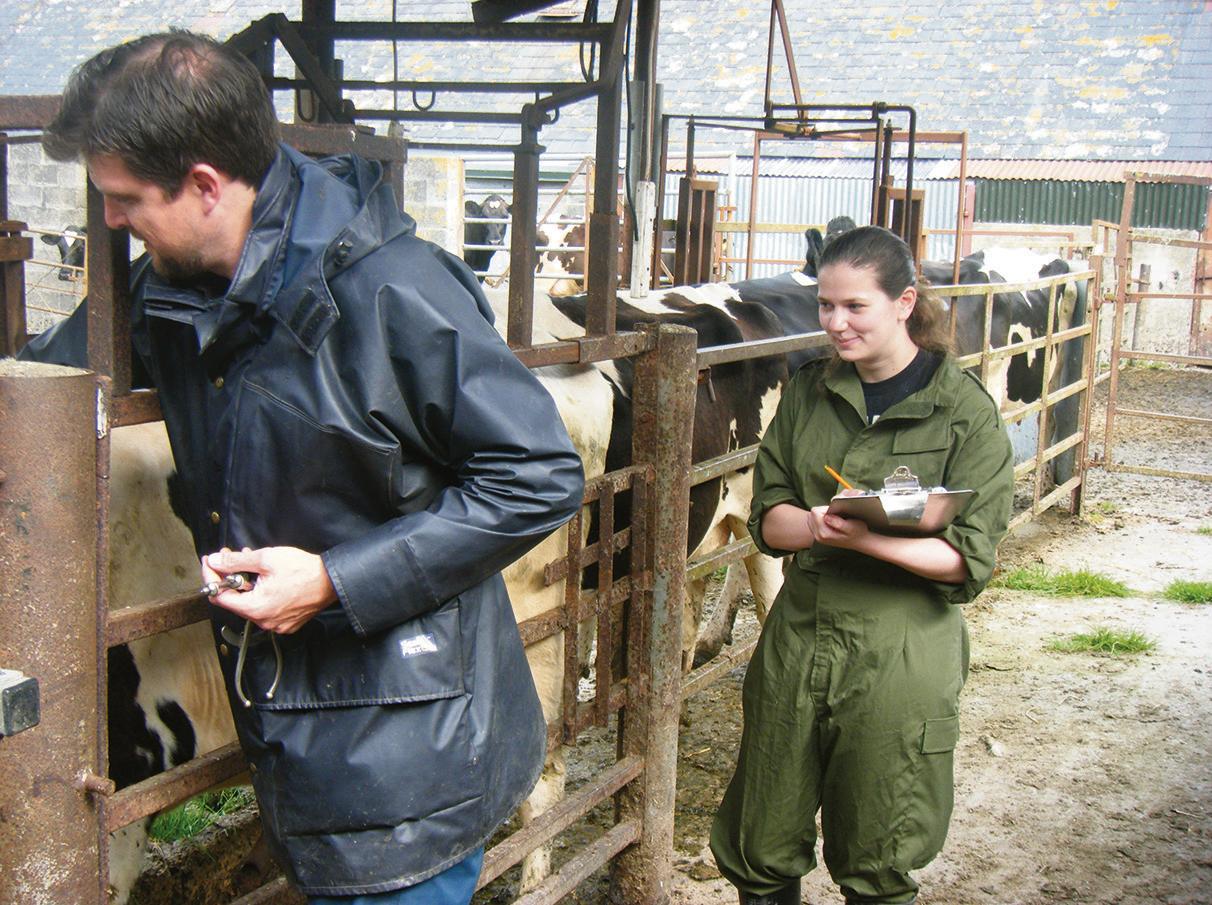
THE FARMERS’ UNION OF WALES has welcomed deputy farming and food minister Rebecca Evans’ announcement that private vets will remain at the heart

Private vets to help: Menter a Busnes in North Wales and Iechyd Da (Gwledig) Ltd in South Wales
of TB testing procedures in Wales.
Two ‘Delivery Partners’ have successfully tendered for TB testing in Wales – Menter a Busnes in North Wales and Iechyd Da (Gwledig) Ltd in South Wales.
FUW animal health and welfare committee chairman Catherine Nakielny said: “The union is pleased that private vets will remain central to TB testing in Wales. The FUW believes that only private vets have knowledge of the farm business and of the local disease situation.”
Farmers will continue to be responsible for ensuring that TB testing is completed on time but in future they will need to contact their regional Delivery Partner to make the arrangements.

Delivery Partners will then be responsible for allocating the actual testing activity through their network of practices and for assuring the quality of the work performed.
Work that has already been assigned to Official Veterinarian (OV) practices under existing arrangements will be completed by those practices but from April 1 all new work will be undertaken by Delivery Partners.
When making arrangements for tests, farmers and livestock keepers can express a preference to use a specific veterinary practice from within the Delivery Partners network to undertake their testing, and this preference will be honoured where possible.
Farmers and livestock keepers who would prefer to use a practice that is not part of the Delivery Partners network retain an option to pay for the testing privately.

“The announcement provides certainty to farmers in Wales about the future of TB testing and the continued and critical role of the private vet in the control and eradication of bovine TB,” added Miss Nakielny.
Deputy Minister for Farming and Food, Rebecca Evans declared: “This is good news for Wales and particularly for those successful Welsh veterinary service providers which will form an important foundation stone for the TB Eradication Programme.”
Also welcoming the news, Christianne Glossop, Chief Veterinary Officer for Wales commented: “The private vet has a detailed understanding of the wider health status of each herd under their care and is uniquely placed to apply this in support of our TB Eradication Programme. I would like to congratulate Iechyd Da and Menter a Busnes on their successful bids and look forward to working with them.”

Eirwen Williams, Director of Development, Menter a Busnes, stated: “We will be working with Milfeddygon Gogledd Cymru (MGC) which includes 27 local vet practices in North Wales. Winning this contract will mean a continuation of service to farmers and secures many veterinary jobs within the local practices, which make an important contribution to the rural economy. Our aim is to provide an efficient, high quality service and we will be working in close partnership with APHA and the veterinary profession.”
David Thomas, Senior Official Veterinarian (SOV) for Iechyd Da said: “We are delighted that Iechyd Da which is a consortium of 38 independent Welsh veterinary practices and Welsh Lamb & Beef Producers Ltd, a producer co-operative of around 8,000 Welsh livestock farmers have been able to secure this contract. The contract award ensures that TB Testing in the area will be delivered by the farmers local vet practice, as all existing practices delivering TB testing in South Wales are a member of the Iechyd Da consortium.”
The contracts have been awarded for a three year period, with the option to extend up to a further two years.
Farmers and livestock keepers in Wales will continue to be responsible for ensuring that TB testing is completed on time but in future will need to contact their regional Delivery Partner to make these arrangements. Delivery Partners will then be responsible for allocating the actual testing activity through their network of practices, and for assuring the quality of the work performed.
In recognition of the important relationship between farmers or livestock keepers and their vets in preventing and controlling disease and for ensuring the health and welfare of animals, the new contracts require Delivery Partners to offer testing work to eligible veterinary businesses operating within their geographical regions.
Work that has already been assigned to Official Veterinarian (OV) practices under existing arrangements will be completed by those practices but from 1 April all new work will be undertaken by delivery partners.

Welsh Government guarantees £340m annually for Sustainable Farming Scheme as minister pledges greater certainty and less bureaucracy
WELSH farmers will receive more than £1 billion in agricultural funding over the remainder of the Senedd term, under a new multi-year commitment announced by the Welsh Government.
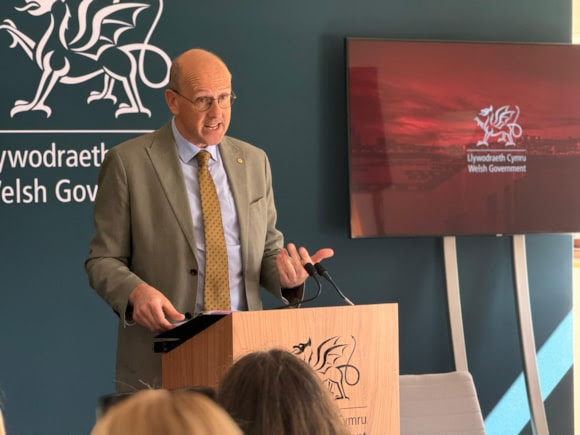
Cabinet Minister for Rural Resilience and Sustainability, Llyr Gruffydd, unveiled the package at the Royal Welsh Show, in his first major announcement since taking responsibility for the rural affairs portfolio.
The Government has guaranteed £340 million a year for three years, taking funding for the Sustainable Farming Scheme through to March 2030.
Of that annual total, £238 million will support the scheme’s Universal Layer, while £102 million will fund Optional and Collaborative actions.
The Welsh Government said the agreement would end the uncertainty caused by annual funding settlements and allow farming businesses to make longer-term investment and planning decisions.
The commitment was promised during the first 100 days of the new Plaid Cymru Government.
Mr Gruffydd said: “Giving farmers only 12 months’ line of sight to funding is not sufficient.
“We know how hard it is to plan and make business decisions without knowing what funding is coming.
“Farmers told us loud and clear they need certainty and stability, and that is exactly what we are delivering.”
Red tape changes announced
The minister also announced initial measures intended to reduce bureaucracy for family farms, following early feedback from an independent review led by former NFU Cymru president John Davies.
The requirements of the Animal Health Improvement Cycle, known as AHIC, will be simplified under the Universal Layer of the Sustainable Farming Scheme.
The Welsh Government will work with farm assurance schemes to align their requirements from 2027.

Farmers participating in an aligned assurance scheme would then complete one form following a single veterinary visit, rather than carrying out separate processes for farm assurance and Sustainable Farming Scheme compliance.
Because 2026 is being treated as a transition year, membership of farm assurance schemes that have committed to aligning their requirements by 2027 will be accepted as satisfying the AHIC requirement this year.
Mr Gruffydd said the relationship between farmers and their vets would remain central to improving animal health and farm performance.
New grants opening
Applications for organic conversion support are expected to open at the end of July.
A new Production and Efficiency capital grant category will also provide support towards livestock-handling facilities, precision soil and crop-management equipment, and other investments designed to reduce waste and improve productivity.
Further Optional Actions will be introduced over the coming months.
The Small Woodland Creation Grant and Woodland Creation Grant application windows will open on Monday, July 20.
A further window for the Integrated Natural Resources Scheme, which forms part of the Collaborative Layer, is also expected to open later this year.
Mr Gruffydd said: “The family farm sits at the heart of rural Wales, its economy and its communities.
“I am committed to working to ensure farming in Wales thrives for generations to come.
“My message to farmers from day one has been: you have a minister on your side.
“Someone who is in tune with the agricultural sector, who knows that the family farm is the foundation of our rural economy and our rural communities, and who will work every day to make sure farming in Wales thrives for generations to come.”
Ceredigion Penfro MS says disease is placing severe emotional and financial pressure on farming families
Paul Davies MS has urged the Welsh Government to use every available measure to tackle bovine tuberculosis and work towards eradicating the disease in Wales.
The Ceredigion Penfro Senedd Member raised the issue during a Senedd debate, warning that bovine TB continues to have a devastating impact on farmers, their families and rural communities.
Mr Davies called for a science-led and comprehensive strategy that addresses every potential source and route of infection.
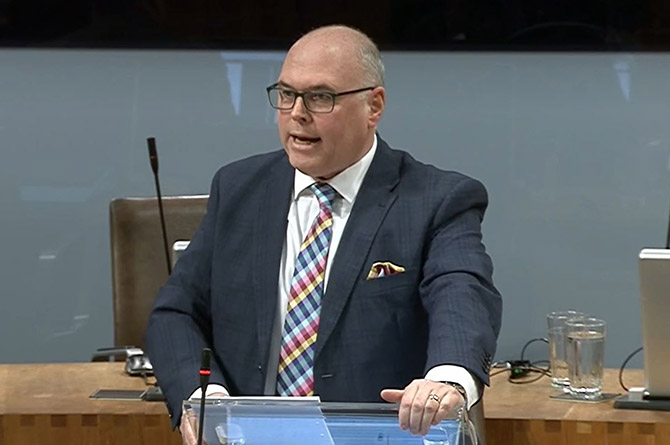
He said farmers across west Wales needed clear leadership from the new Welsh Government and greater confidence that ministers were prepared to take effective action.
Mr Davies said: “Bovine TB continues to have a huge impact on farmers, their families and rural communities across Wales.
“It places enormous emotional and financial pressure on farming businesses and remains one of the most significant challenges facing our agricultural industry.
“Farmers and the wider rural community are looking to the new Welsh Government to provide leadership by introducing a holistic approach that addresses all routes of transmission.
“The Welsh Government must do everything it can to eradicate this appalling disease.
“I will continue to raise this issue on behalf of farmers in west Wales and press the Welsh Government to use every lever available to tackle bovine TB.”

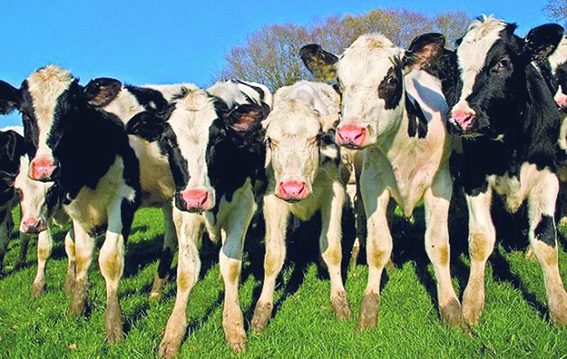
A RETROSPECTIVE call for amendments to a previously granted building and slurry lagoon at a 700-herd Pembrokeshire dairy farm has been given the go-ahead by county planners.
In an application to Pembrokeshire County Council, Bill Ridge of Vaynor Farm Ltd, Bethesda sought retrospective permission for a replacement agricultural building for cattle housing, the retention of a slurry lagoon as built and associated works at Talybont Farm, Llawhaden.
A supporting statement through agent Cynllunio RW Planning Ltd said: “Bill Ridge farms at Vaynor Farm, trading as Vaynor Farm Ltd. The farm is a 645-acre farm compromising of owned and rented land, this supports a dairy herd of circa 700 cows. The dairy system is an extensive grass-based spring calving system.
“The application is made following receipt of a letter from the local authority planning enforcement department stating that the replacement agricultural building which had recently been erected required planning permission and that the lagoon also recently built seemed not to be in line with the approved plans of [the 2022 application] recently approved on site for the lagoon.
“Therefore, this application seeks retrospective planning permission for the retention of the building as built and the lagoon as built.”
It said the 22.72 by 13.33-metre agricultural building “will house the farm’s dairy replacement heifers as a replacement to the previous building on site,” and the lagoon is of a similar size, depth and capacity to the previously approved one, other than slight changes in positioning and orientation, providing 4,500square metres of slurry storage, which in combination with the existing store of 6,900cubic meters at Vaynor will provide over 170 days’ storage.
It went on to say: “All development is reasonably required for the purpose of agriculture. The applicant does not intend to increase the farm’s stocking rate as a result of this development.”
An officer report recommending approval said the application had been amended since being submitted to improve the proposed green infrastructure, adding: “Information has been provided during the course of the application that proposal is not intended to result in, or support, an increase in the herd numbers of the agricultural enterprise.”
It concluded: “Based upon the information provided within the application, it is considered that the development would be reasonably necessary for the purpose of agriculture.”
The application was conditionally approved.


News13 hours ago
Jo Stevens out as Welsh Secretary as Burnham reshapes government
Cardiff East MP repeatedly visited Pembrokeshire to champion clean energy jobs, but her successor inherits unresolved questions over Milford Haven’s...


Crime19 hours ago
Teen cleared of attempted murder but guilty of GBH after Milford teacher stabbed
Jury returns 11-1 majority verdict on charge of causing grievous bodily harm with intent, with sentencing set for September 3...

Community20 hours ago
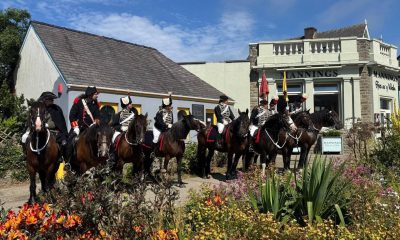
French troops march through Fishguard as Britain’s last invasion returns to life
Battle scenes, cavalry displays and a surrender procession brought one of Pembrokeshire’s most extraordinary stories back to the streets MUSKET...


News20 hours ago
Andy Burnham promises new politics as he enters Downing Street
New Prime Minister admits politicians have “not been good enough” as he sets out a ten-year plan for Britain and...


Health2 days ago
Two new surgeons appointed as Hywel Dda admits orthopaedic waits remain too long
Health board says it is increasing capacity after figures revealed hip replacement patients waited an average of 64 weeks HYWEL...


Community3 days ago
84-year-old man rescued after falling overboard near Tenby
A MAYDAY call sparked a major nighttime rescue after an 84-year-old man fell from a tender and was swept towards...


Crime4 days ago
Jury hears final arguments in Milford Haven teacher stabbing trial
Defence says there was no motive or intention to kill as judge reviews competing accounts of classroom knife incident SPECIAL...


News4 days ago
Andy Burnham becomes Labour leader and prepares to enter No 10
Former Greater Manchester mayor promises an ‘unashamedly Labour’ government after completing extraordinary return to Westminster ANDY BURNHAM has been formally...


News4 days ago
Motorcyclist dies following collision near Narberth
Police appeal for witnesses and footage after fatal crash on B4313 at Redstone A MOTORCYCLIST has died following a collision...

Local Government5 days ago
Stepaside school saved as council abandons closure proposal
Governors welcome decision but maintain original plans were based on outdated information STEPASIDE Community Primary School will remain open after...
-

 Health21 hours ago
Welsh Ambulance Service invites public to AGM and Board meeting
-
News2 days ago
Andy Burnham set for No 10 as Wales awaits change
-
Crime19 hours ago
Teen cleared of attempted murder but guilty of GBH after Milford teacher stabbed
-

 Crime19 hours ago
What the Milford Haven School stabbing verdict really means
-
Health2 days ago
Two new surgeons appointed as Hywel Dda admits orthopaedic waits remain too long
-

 Community2 days ago
Tributes paid to long-serving Mansel Davies driver Gareth Griffiths
-

 Entertainment2 days ago
Dinosaur adventure set to roar into the Torch Theatre
-

 Business23 hours ago
Port appoints two new directors as energy and regeneration projects advance