


Farming
Angry reaction as First Milk confirms April prices

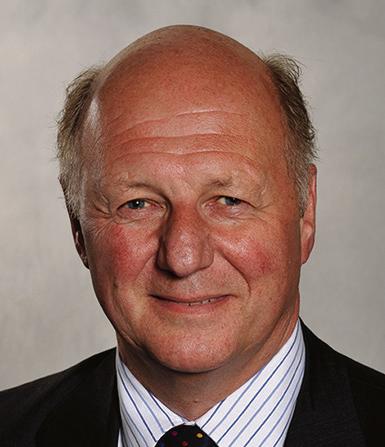
FIRST MILK has confirmed that under its new A & B pricing structure for April, that the A price will be set at 20.87ppl for the manufacturing pool and 20.5ppl for the balancing pool.
The range for the B price is 16ppl to 18ppl and as previously communicated this will be fixed after the month-end.
Chairman Sir Jim Paice MP commented: “There continues to be marked volatility in global dairy prices. Nevertheless, the recent movement of market indicators means that we are cautiously optimistic that the trend for future dairy prices is, at long last, a more positive one.
“However, there remain a number of uncertainties. For example, although the latest few GDT figures have been encouraging, as yet, they have not fed through to milk prices and many buyers are awaiting the outcome of the forthcoming spring flush.
“As a Board we will continue to monitor market indicators closely and build these into our decision-making on milk price.”

However, NFU Cymru says First Milk members are shocked at the forecast milk price set for April under their new A and B pricing model and the Union is concerned that some are already questioning their future in the industry as a result. NFU Cymru Milk Board Chairman Aled Jones said, “Late last month, First Milk announced they were bringing in their new A and B pricing model from April and now we’ve seen what this delivers. Put simply, this is a price cut masquerading as a new pricing model. We have seen positive signals recently and this needs to feedback onto farm urgently.
“The B price forecast of 16-18ppl is extremely cautious – sitting at around the EU powder intervention price this is not manageable for farmers to deal with.”
NFU Cymru President Stephen James said, “This decision will see many First Milk producers seriously questioning their future in the dairy industry. This has massive implications not just for the future of dairy production in one of the most efficient milk fields in Europe but also for the rural economy.”

Thousands gather at Llanelwedd as Welsh farming, rural heritage and the future of food take the spotlight
THE ROYAL WELSH SHOW has opened at Llanelwedd, with thousands of visitors arriving for four days celebrating Welsh agriculture, food, countryside traditions and rural life.
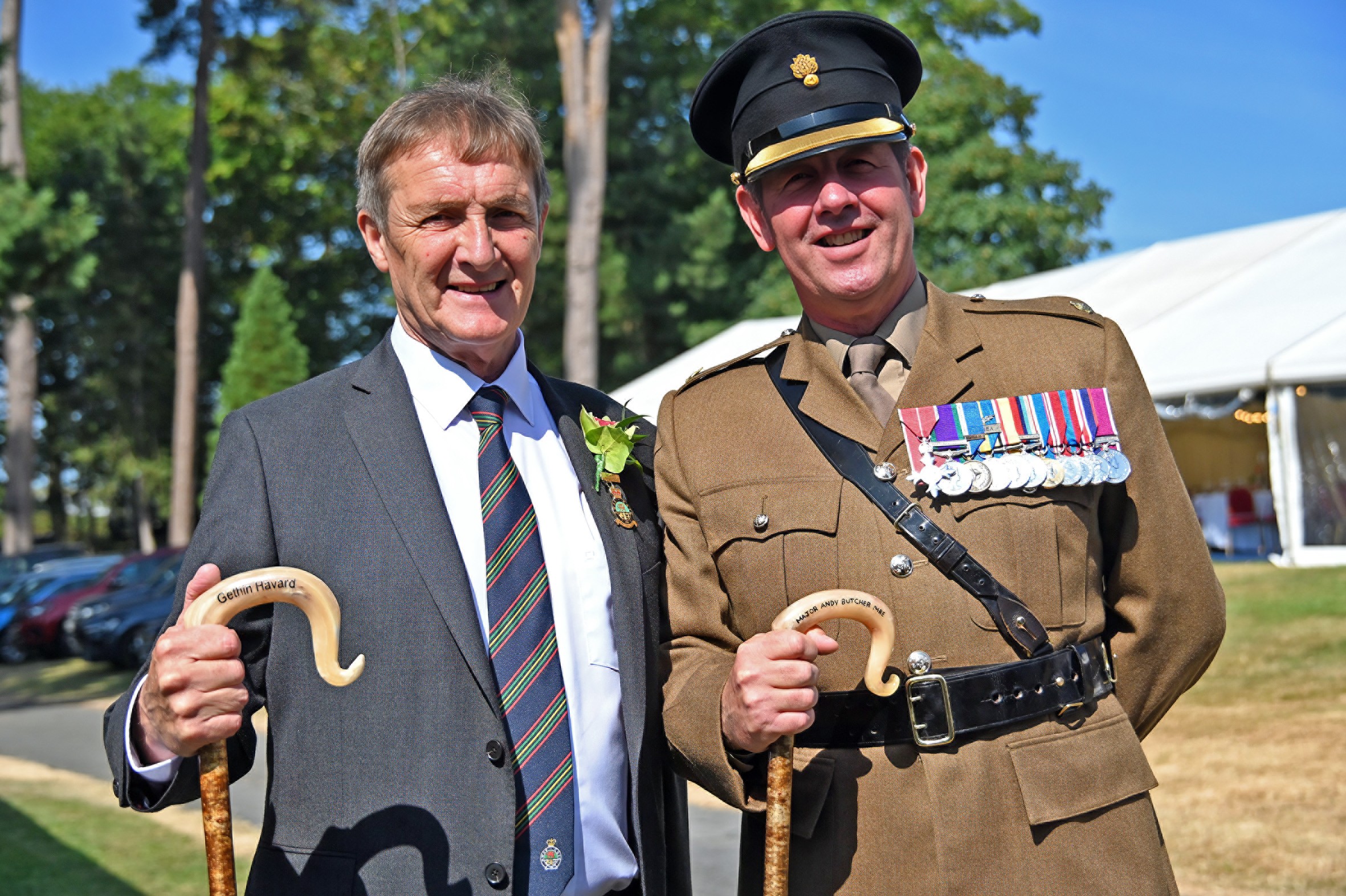
Major Andrew Butcher MBE, Senior Training Safety Officer at Sennybridge Defence Training Camp, officially declared the 2026 show open during Monday’s traditional ceremony.
He was joined by Royal Welsh Agricultural Society chair of council Nicola Davies, show president Gethin Havard and representatives from farming, government and rural organisations.
First Minister Rhun ap Iorwerth was among the senior political figures attending the opening day, underlining the show’s importance not only as a major visitor attraction, but as a focal point for debate about the future of agriculture and food production in Wales.
This year, Brecknock is taking centre stage as the society’s Feature County.
It is the fifth time the county has held the honour, following previous feature years in 1964, 1980, 1997 and 2012.
The opening ceremony recognised the efforts of Mr Havard and his family, county advisory committee chair Rob Powell, honorary secretary Shelley Hughes, ambassador Teleri Haf Thomas and the many volunteers involved in organising events and raising funds throughout the year.

Last month’s Grassland Event at Cwmbrynich, hosted by the Havard family, was among the highlights of Brecknock’s feature year.
A special tribute was also paid to the families of Epynt who were displaced from their homes in 1940 when the land was taken over for use as a military training area.
Addressing the crowd, Major Butcher said agriculture remained central to the Welsh economy, environment, food security and national identity.

He said: “In a rapidly changing world, the importance of agriculture has never been clearer. It is central to our economy, to our environment and to our food security. But beyond all that, it is central to our identity.
“The Royal Welsh Show stands as a powerful reminder of that truth. It showcases excellence, encourages innovation and strengthens the bonds between us.

“It brings town and country together, offering a space where understanding can grow and where traditions can be celebrated and shared.”
The show was officially opened to a fanfare performed by the Regimental Band of The Royal Welsh.
Farming policy takes the spotlight
Away from the competitions and entertainment, the political future of Welsh farming has already emerged as one of the central themes of this year’s show.
The Welsh Government used the event to confirm that £340 million a year will be provided for three years to March 2030 to support the Sustainable Farming Scheme.
The package includes £238 million annually for the scheme’s Universal Layer and £102 million for its Optional and Collaborative Layers.
Ministers say the multi-year agreement will end the uncertainty caused by annual funding decisions and allow farmers to plan investments with greater confidence.
A new national Farm to Fork plan is also being unveiled during the show, setting out proposals for the future of food production and the wider food industry in Wales.
New sheep village launched
Among the major additions to the showground this year is Cynefin, a new Welsh Sheep Village created by the Royal Welsh Agricultural Society and the National Sheep Association.
The area was opened by Margaret Dalton OBE and Alun Evans CBE, both longstanding champions of the Welsh and UK sheep industry.
The dedicated village celebrates the people, breeds, products and traditions that have shaped sheep farming in Wales, while showcasing innovation and best practice across the sector.
Visitors can take part in educational displays, live demonstrations, discussions and interactive activities designed to improve understanding of the role sheep farming plays in the Welsh landscape, rural economy and national heritage.
Brecknock’s native breeds are also being showcased, including the Beulah Speckled Face, Brecknock Hill Cheviot, Epynt Hardy Speckled Face and Talybont Welsh Mountain.
The name Cynefin reflects the close relationship between the land, livestock, farming families and the communities shaped by the sheep industry.
The popular Horticulture Village has also returned with a packed programme of expert talks, demonstrations and practical activities.
BBC Gardeners’ World presenter Adam Frost joined the opening day as special guest judge for the Micro Show Garden Competition before taking part in a question-and-answer session with visitors.
Main Ring entertainment
The Main Ring programme began with the Royal Welsh debut of the Shetland Pony Grand National, alongside the return of the Paul Hannam Quad Bike Stunt Show, Hawkeye Falconry and displays by the RAF Falcons.
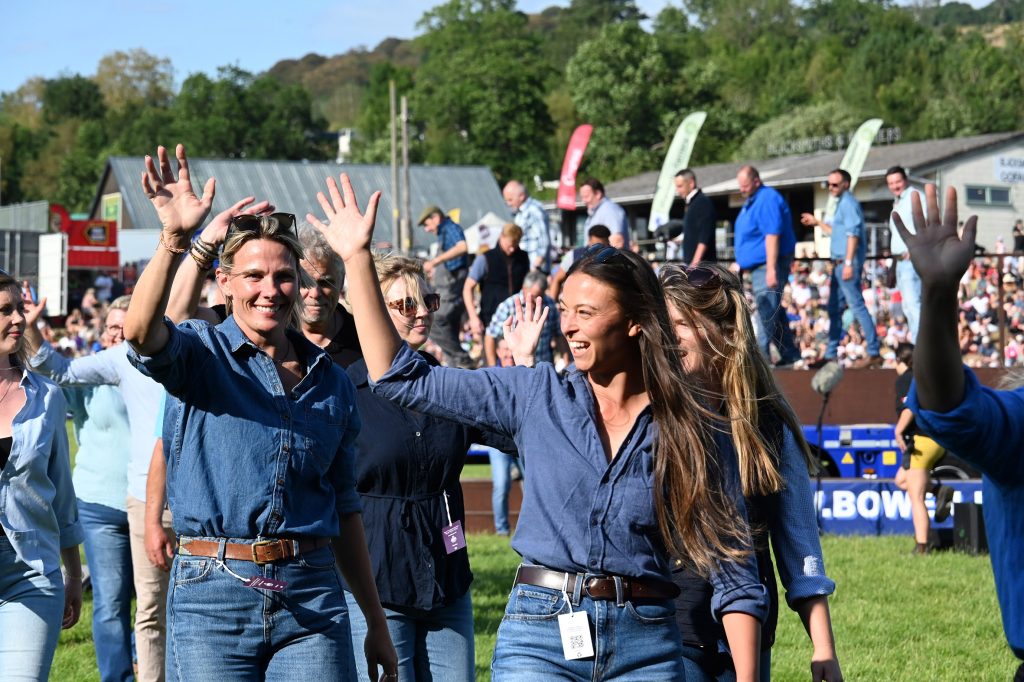
A special performance was also given by Britain’s Got Talent winners the Hawkstone Farmers’ Choir, whose members waved to the crowds from the Main Ring.
The choir has used its growing public profile to raise awareness of loneliness and mental health pressures within farming communities.
Wales YFC also marked its 90th anniversary with a colourful display celebrating the organisation’s contribution to rural life and generations of young farmers.
The Royal Welsh Show continues until Thursday, July 23, with livestock and equine competitions, forestry, horticulture, countryside sports, shopping, Welsh food and drink and a full programme of Main Ring entertainment.
Picture caption: Royal Welsh Agricultural Society president Gethin Havard with Major Andrew Butcher MBE following the opening ceremony.
Picture caption: Members of the Hawkstone Farmers’ Choir wave to the crowds from the Main Ring.
Pictures: RWAS
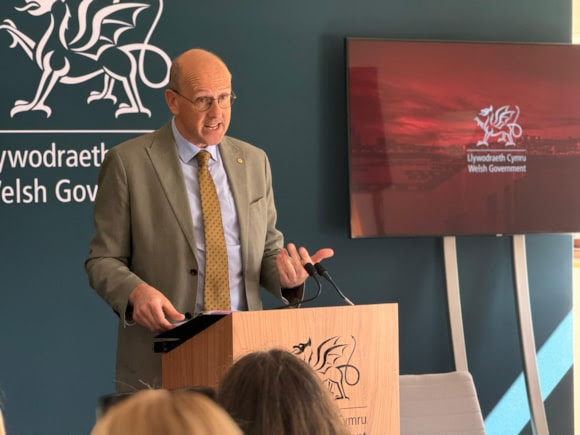
Welsh Government guarantees £340m annually for Sustainable Farming Scheme as minister pledges greater certainty and less bureaucracy
WELSH farmers will receive more than £1 billion in agricultural funding over the remainder of the Senedd term, under a new multi-year commitment announced by the Welsh Government.
Cabinet Minister for Rural Resilience and Sustainability, Llyr Gruffydd, unveiled the package at the Royal Welsh Show, in his first major announcement since taking responsibility for the rural affairs portfolio.
The Government has guaranteed £340 million a year for three years, taking funding for the Sustainable Farming Scheme through to March 2030.
Of that annual total, £238 million will support the scheme’s Universal Layer, while £102 million will fund Optional and Collaborative actions.
The Welsh Government said the agreement would end the uncertainty caused by annual funding settlements and allow farming businesses to make longer-term investment and planning decisions.
The commitment was promised during the first 100 days of the new Plaid Cymru Government.
Mr Gruffydd said: “Giving farmers only 12 months’ line of sight to funding is not sufficient.
“We know how hard it is to plan and make business decisions without knowing what funding is coming.
“Farmers told us loud and clear they need certainty and stability, and that is exactly what we are delivering.”
Red tape changes announced
The minister also announced initial measures intended to reduce bureaucracy for family farms, following early feedback from an independent review led by former NFU Cymru president John Davies.
The requirements of the Animal Health Improvement Cycle, known as AHIC, will be simplified under the Universal Layer of the Sustainable Farming Scheme.
The Welsh Government will work with farm assurance schemes to align their requirements from 2027.

Farmers participating in an aligned assurance scheme would then complete one form following a single veterinary visit, rather than carrying out separate processes for farm assurance and Sustainable Farming Scheme compliance.
Because 2026 is being treated as a transition year, membership of farm assurance schemes that have committed to aligning their requirements by 2027 will be accepted as satisfying the AHIC requirement this year.
Mr Gruffydd said the relationship between farmers and their vets would remain central to improving animal health and farm performance.
New grants opening
Applications for organic conversion support are expected to open at the end of July.
A new Production and Efficiency capital grant category will also provide support towards livestock-handling facilities, precision soil and crop-management equipment, and other investments designed to reduce waste and improve productivity.
Further Optional Actions will be introduced over the coming months.
The Small Woodland Creation Grant and Woodland Creation Grant application windows will open on Monday, July 20.
A further window for the Integrated Natural Resources Scheme, which forms part of the Collaborative Layer, is also expected to open later this year.
Mr Gruffydd said: “The family farm sits at the heart of rural Wales, its economy and its communities.
“I am committed to working to ensure farming in Wales thrives for generations to come.
“My message to farmers from day one has been: you have a minister on your side.
“Someone who is in tune with the agricultural sector, who knows that the family farm is the foundation of our rural economy and our rural communities, and who will work every day to make sure farming in Wales thrives for generations to come.”
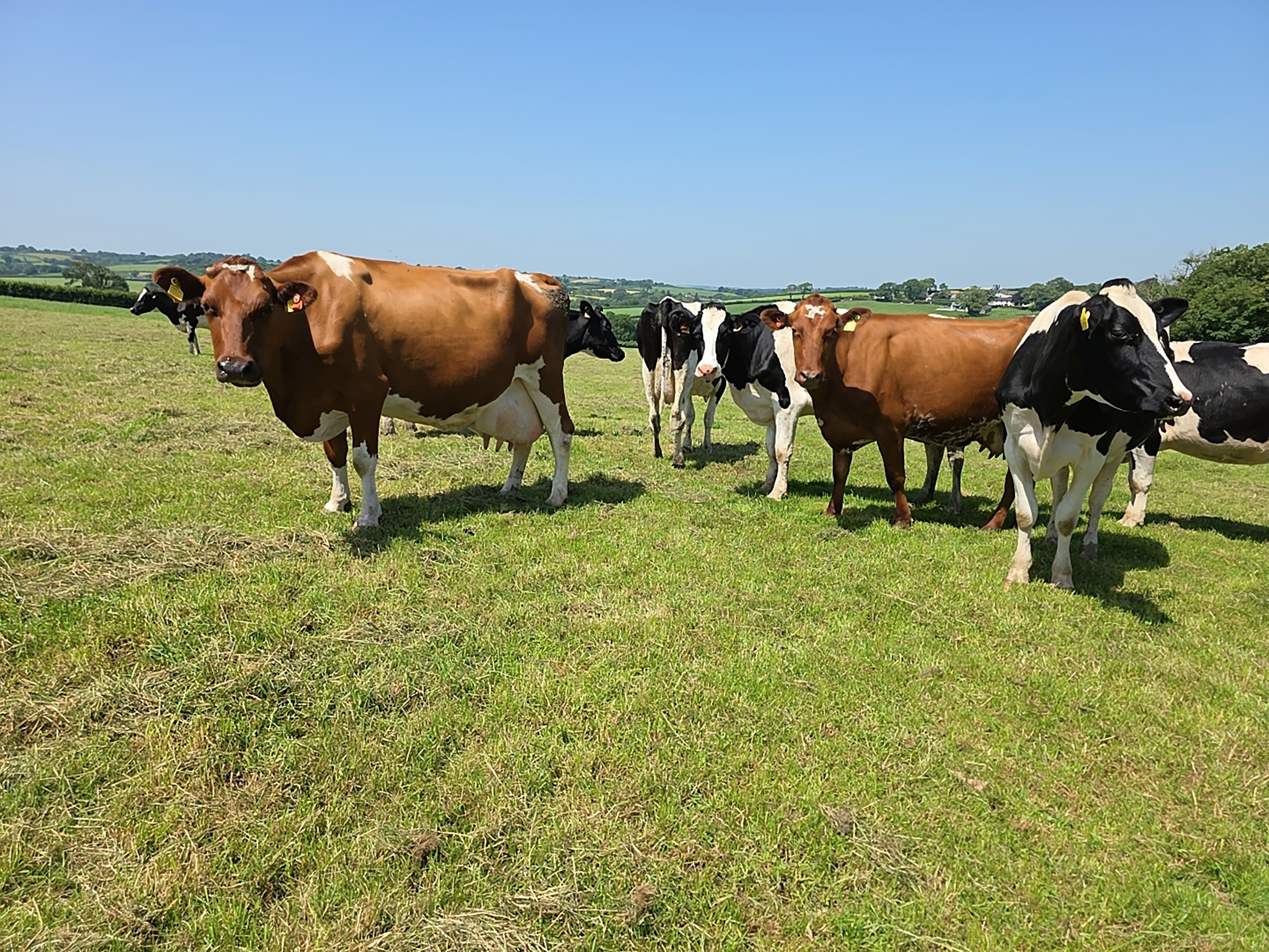
Ceredigion Penfro MS says disease is placing severe emotional and financial pressure on farming families
Paul Davies MS has urged the Welsh Government to use every available measure to tackle bovine tuberculosis and work towards eradicating the disease in Wales.
The Ceredigion Penfro Senedd Member raised the issue during a Senedd debate, warning that bovine TB continues to have a devastating impact on farmers, their families and rural communities.
Mr Davies called for a science-led and comprehensive strategy that addresses every potential source and route of infection.
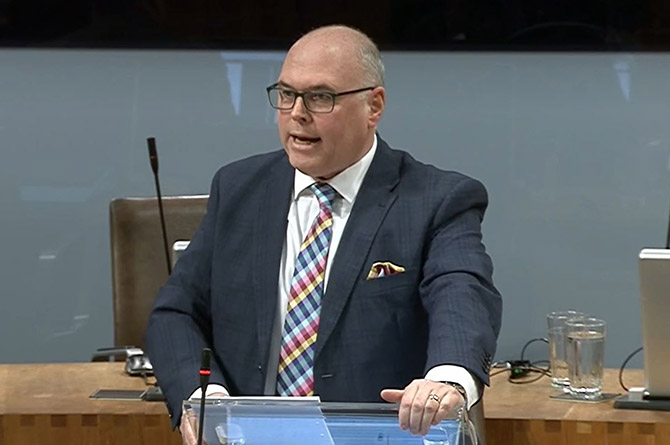
He said farmers across west Wales needed clear leadership from the new Welsh Government and greater confidence that ministers were prepared to take effective action.
Mr Davies said: “Bovine TB continues to have a huge impact on farmers, their families and rural communities across Wales.
“It places enormous emotional and financial pressure on farming businesses and remains one of the most significant challenges facing our agricultural industry.
“Farmers and the wider rural community are looking to the new Welsh Government to provide leadership by introducing a holistic approach that addresses all routes of transmission.
“The Welsh Government must do everything it can to eradicate this appalling disease.
“I will continue to raise this issue on behalf of farmers in west Wales and press the Welsh Government to use every lever available to tackle bovine TB.”



Crime1 hour ago
Women jailed after man chased through Milford home and attacked with knives
Kelly Rees receives further 27-month sentence while already serving prison term for notorious taxi robbery TWO women have been jailed...


Crime2 hours ago
Mother headbutted and clawed police officers after threatening social worker
Court shown body-worn footage of violent confrontation at Goodwick property A COURT has been shown police body-worn footage capturing the...


Crime20 hours ago
Man, 37, found dead following major police response in Pembroke Dock
Death not being treated as suspicious as police make statutory referral to IOPC following active investigation A 37-YEAR-OLD man has...

Community24 hours ago
Household Cavalry drum horse returns home to Pembrokeshire for final farewell
Dyfed Willa Rose, who became Major Juno and the first mare to serve as a Household Cavalry Drum Horse, was...

News2 days ago
Jo Stevens out as Welsh Secretary as Burnham reshapes government
Cardiff East MP repeatedly visited Pembrokeshire to champion clean energy jobs, but her successor inherits unresolved questions over Milford Haven’s...


Crime2 days ago
Teen cleared of attempted murder but guilty of GBH after Milford teacher stabbed
Jury returns 11-1 majority verdict on charge of causing grievous bodily harm with intent, with sentencing set for September 3...

Community2 days ago
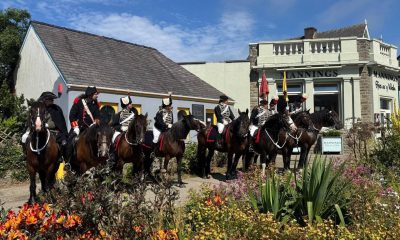
French troops march through Fishguard as Britain’s last invasion returns to life
Battle scenes, cavalry displays and a surrender procession brought one of Pembrokeshire’s most extraordinary stories back to the streets MUSKET...


News2 days ago
Andy Burnham promises new politics as he enters Downing Street
New Prime Minister admits politicians have “not been good enough” as he sets out a ten-year plan for Britain and...


Health3 days ago
Two new surgeons appointed as Hywel Dda admits orthopaedic waits remain too long
Health board says it is increasing capacity after figures revealed hip replacement patients waited an average of 64 weeks HYWEL...


Community4 days ago
84-year-old man rescued after falling overboard near Tenby
A MAYDAY call sparked a major nighttime rescue after an 84-year-old man fell from a tender and was swept towards...
-

 featured20 hours ago
From a father-and-son project to an award-winning campervan business
-
 Crime3 hours ago
Drunken rail passenger tried to headbutt police after being refused travel
-
Crime2 days ago
Teen cleared of attempted murder but guilty of GBH after Milford teacher stabbed
-

 Crime2 days ago
What the Milford Haven School stabbing verdict really means
-
Community24 hours ago
Household Cavalry drum horse returns home to Pembrokeshire for final farewell
-
Crime2 hours ago
Mother headbutted and clawed police officers after threatening social worker
-
 Crime2 days ago
Hakin man jailed after driving while banned and over alcohol limit
-
Crime1 hour ago
Women jailed after man chased through Milford home and attacked with knives