


Education
Funding cuts to hit teacher quality



Teaching: 28% of new teachers left the profession in the last five years
TEACHING and school leadership unions have joined together in a statement to the School Teachers’ Review Body (STRB), warning the Government risks undermining teaching standards due to a real terms reduction in funding and the continued erosion of teachers’ pay.
Unions representing the full spectrum of the teaching profession in England and Wales are opposed to the Government’s wish to continue to limit teachers’ annual pay increases to an average of 1% for a further four years, following five years of imposed pay restraint.
Unions, including UCAC, the NUT and NAHT have submitted a joint document to the School Teachers’ Review Body (STRB) which makes the following points:
· We are facing a national crisis in number of teachers and as pay and prospects improve in comparable occupations, further pressure will be placed on recruitment and retention. The STRB must accept that we are facing a national crisis, not “a challenge” in teacher supply, which means more children will not be taught by teachers qualified in the subject they teach. DfE data has failed to capture the scale of the crisis.
· School budgets are at breaking point. Schools are facing real terms cuts in funding, at a point when an overall funding increase is needed. Schools are under insurmountable pressure to maintain current spending, let alone afford pay increases or other forecast increases in costs such as national insurance increases coming in from April. The Government must fully fund the necessary pay increases for teachers and school leaders in both England and Wales.

· Teachers are an investment, not a cost. Teachers need a pay rise. The public sector pay policy of the past five years has depressed teachers’ real earnings to the extent that recruitment and retention are being seriously harmed. We are asking the STRB to recommend a fair pay award for teachers for the highly skilled, important jobs that they do. A significant pay increase is needed for teachers at all stages of their careers so we can ensure there are enough teachers for the number of pupils.
Mary Bousted, general secretary of the Association of Teachers and Lecturers (ATL), said: “The numbers applying for initial teacher training are rapidly declining and more teachers left the profession last year than in any previous year, so unless teachers get a significant pay rise schools will have to start increasing class sizes or shutting courses and cutting the subject options available to pupils.”
Something which is shortly to become a fact of life in both Pembrokeshire and Carmarthenshire.
Elaine Edwards, UCAC’s general secretary, said: “The Government must invest more in education funding and fund fully a pay rise for teachers. Teachers need a proper pay rise – more than the 1% average suggested by the Government. Pay freezes and below inflation increases have contributed to a crisis in teacher recruitment and retention. The Government needs to reconsider its pay policies for the sake our children and young people and the education system as a whole.”

Russell Hobby, general secretary of the National Association of Head Teachers (NAHT), said: “Years of pay restraint are now extracting their toll. High standards require great teachers; this is an investment in our future not a short term cost to the country. And competitive salaries that match other graduate professions must be funded appropriately by the government when it sets school budgets.”
Kevin Courtney, deputy general secretary of the National Union of Teachers (NUT), said: “No amount of misleading advertising which claims that great teachers can earn £65k can cover up the basic pay problems. It is quite clear that unless teachers’ salaries reflect the work they do this is a situation that will only get worse, with disastrous consequences for education and pupils.”


AN OUTLINE business case to Welsh Government for new schools in Milford Haven, which would be “the most expensive capital project ever undertaken by the council” has been backed by senior councillors.
At the Pembrokeshire County Council Cabinet meeting of May 27, members were asked to approve the submission of an outline business case for the Milford Haven Schools redevelopment to Welsh Government, and to approve the new updated budget for the scheme, in light of completing the outline business case , and make provision within the capital programme.
It was previously reported at the May meeting of full council that the scheme, for both a new English Medium and a Welsh Medium School, won’t be built before 2030 and 2032 respectively.
At that meeting, Cabinet member for education, Cllr Guy Woodham, who had earlier announced he was stepping down from his Cabinet education role, said he felt a personal disappointment to be stepping down before there was “a spade in the ground”.
A report for Cabinet members, presented by Cabinet Member for Residents’ Services, Cllr Rhys Sinnett, said following the Sustainable Communities for Learning Strategic Programme Board considering a report on the draft business case it was recommended a new Welsh Medium 3-11 primary school be built on the existing Milford Haven Community Primary School (junior site) and an English Medium provision combined new primary and secondary school building on the existing secondary school site, with some sharing of services.
The schemes also include a 40-place Flying Start centre, a 36-place secondary learning resource centre and a 24-place primary learning resource centre.
It also includes a leisure centre on site, with Thornton Sports Hall demolished as part of scheme, following a March Cabinet backing to support a new leisure investment programme, the funding for that not forming part of the business plan approved.
The report added: “The estimated cost of the scheme has changed from £141,598,965 to £143,617,659, primarily as a result of a change of Welsh Government requirements, from the Building Bulletin to new Area Guidelines, which has required an increase in the Gross Internal Floor Area (GIFA) of the schools to comply, together with further development of the project towards more accurate costs.”
The scheme would see a funding split of: Welsh Government 67.75 per cent, Pembrokeshire County Council 32.25 per cent, a total contribution from the council of £46,316,467
In the report, Director of Resources Jonathan Haswell the scheme would be “the most expensive capital project ever undertaken by the council”.
Members backed the recommendation, new Leader Cllr Tessa Hodgson reflecting it was the first Cabinet meeting without Cllr Guy Woodham in the education role, having stepped back due to health issues, saying he had “worked so hard for this”.
Members backed the recommendations.

Mike Cavanagh, Head of Culture, Leisure, and School Modernisation stressed the business case was not the last part of the process with a full business case expected by the end of the year, and hopes construction would be complete by 2030 and ’32 respectively.


Campaigners call for supporters to attend ‘crucial’ County Hall meeting in bid to save village school
SUPPORTERS fighting to save Ysgol Clydau are urging parents, children and members of the community to gather at County Hall in Haverfordwest next month as councillors prepare to make a final decision on the school’s future.
The grassroots campaign group Save Ysgol Clydau – Cadw Clydau yn Gadarn has called on as many people as possible to attend an extraordinary meeting on Monday, June 15, describing it as a “crucial” moment in the battle to keep the school open.
Campaigners are asking supporters to gather outside County Hall from 9:00am ahead of the meeting, which is due to begin at 10:00am.
In a public appeal shared online, organisers said the day would likely be emotional regardless of the outcome, but stressed the importance of showing a united front.
A spokesperson for the campaign said: “We need as many parents, children, and supporters as possible at County Hall, Haverfordwest to help save our school.
“A final decision will be made. Please do your very best to attend and stand with our community.
“It will be an emotional day, whatever the outcome — but together we can show the county and the country that we are here, united, and determined to be heard.”
The campaign has become a rallying point for local families concerned about the future of education in rural communities, with supporters arguing that closing the school would have a lasting impact on village life and young children.
Promotional material shared by the group encourages families to bring children and “their voices” to the demonstration, with campaigners insisting: “Together we are stronger.”
The Herald understands the meeting is expected to draw strong local interest, with campaigners hoping a large turnout could influence councillors ahead of what may be a decisive vote.
Ysgol Clydau has been at the centre of an ongoing debate about the future of smaller rural schools in Pembrokeshire, with supporters arguing the school plays a vital role at the heart of the community.
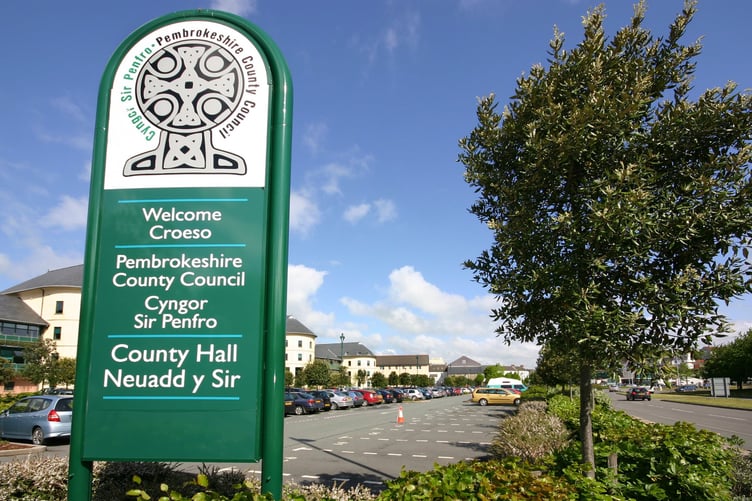
The meeting takes place at County Hall, Haverfordwest, on Monday, June 15, with supporters gathering from 9:00am.


Students recognised as exhibitions and performances continue across Wales and beyond
THE UNIVERSITY OF WALES Trinity Saint David has celebrated the work of emerging artists, designers and performers through its annual Summer Degree Shows.
The exhibitions and performances, held during May and continuing into the summer, showcase final-year projects from students across a wide range of creative disciplines, including Fine Art, Graphic Design, Surface Pattern and Textiles, Photography, Illustration, Automotive and Transport Design, Acting and Adventure Filmmaking.

Events have taken place across Swansea, Carmarthen, Cardiff and London, with major showcases held at Swansea College of Art’s Dynevor and Alex buildings. Performances have also been staged at Yr Egin in Carmarthen, with further exhibitions planned at national venues.
A key part of the celebrations was the annual prize-giving ceremony at Dynevor in Swansea, where students were recognised for outstanding achievement.
Aimiee Brown and Branwen Jones received the Elysium Sculpture Award, with two £500 prizes presented for excellence in sculptural practice.
The Hayden John James Prize awarded £1,000 prizes to undergraduate student Tilly Lewis and postgraduate student Andrew T Gardiner.
Surface Pattern student Samantha McGrath received the Elizabeth Jeffries Prize, while Cel Hopkins was awarded the Josef Herman Carolyn Davies Prize, presented by the Josef Herman Foundation.

Illustration student Morgan Stevens received the Rhys Bevan Jones Illustration Prize, while Seren Trodden was recognised twice, receiving both an Old Dyvorians Association President Prize and the Mission Gallery Makers Award in collaboration with the Jane Phillips Award.
Other Old Dyvorians Association President Prizes went to Bella Watkins, Rhiannon Hughes, Adam Mayhew, Emi Joy and Becca May.
Jewellery student Jessica Theobald received the ACJ College Jewellery Prize, which includes membership of the Association for Contemporary Jewellery, while Photography student Carys Bristowe-Davies received the Sarah Tierney Award, offering mentoring and access to workshops at Swansea College of Art.
Dr Mark Cocks, Dean of UWTSD’s Wales Institute for Science and Art, said: “The Summer Degree exhibitions celebrate the inspirational creative talents of our students.
“The innovation and diversity of the student work is testament to their dedication and creative application of their personal practice. These shows are the culmination of academic study, but also the beginning of professional creative journeys.”
Caroline Thraves, Academic Director for Art and Media at UWTSD’s Swansea College of Art, said the shows provided students with an important professional platform.
She added: “Hosting the Summer Shows is a vital part of our mission at UWTSD. It gives our students a professional platform to share their creativity with the world, celebrates their hard work, and connects them with the industries they are about to enter.”
Lynne Seymour, Academic Director for Design and Performing Industries, said this year’s programme was particularly significant as the university marks 25 years since the first graduates from its Set Design and Production course.
She said: “These exhibitions and performances represent not only the culmination of years of hard work, collaboration and artistic exploration, but also the beginning of many professional creative journeys.”
The Summer Shows continue throughout the season, including Architecture, Engineering and Computing exhibitions at UWTSD’s Swansea Waterfront campus, performances from WAVDA students at Yr Egin and in Cardiff, exhibitions at New Designers and Copeland Gallery in London, and Automotive and Transport Design showcases at the Goodwood Festival of Speed in July.



Community13 hours ago
HMS Erebus tragedy links Pembroke Dock ship to Templeton family
DNA breakthrough identifies cabin boy David Young as exhibition marks 200 years since ship’s launch ON MAY 19, 1845, a...


Community16 hours ago
Narberth cash machine closures spark urgent access review
CALLS have been made for an urgent review of access to cash in Narberth after two town centre ATMs were...


Health1 day ago
First Minister quizzed on Welsh NHS pressures in his first-ever FMQs
SENEDD Members pressed the First Minister over the state of the health service in Wales, as the Plaid Cymru leader...


Community2 days ago
Historic paddle steamer Waverley to return to Fishguard this month
THE WORLD’S last seagoing paddle steamer will return to Fishguard this month as part of her annual visit to South...


Local Government2 days ago
National Express use of new Haverfordwest interchange still subject to risk checks
A RUMOUR that National Express coaches may struggle to use Haverfordwest’s new transport interchange has been denied by Pembrokeshire County...


Crime2 days ago
Milford Haven man jailed for illegal Premier League streaming service
A MILFORD HAVEN man who supplied illegal Premier League streams and loaded Firesticks to almost 2,000 customers has been jailed...


Community3 days ago
RNLI lifeguards rescue beachgoers during busy heatwave weekend
FOUR PEOPLE RESCUED AS RIP CURRENTS AND OFFSHORE WINDS HIT PEMBROKESHIRE BEACHES RNLI lifeguards in Pembrokeshire rescued four people and...


Local Government3 days ago
Council and school staff pay row could hit Pembrokeshire services
COUNCIL workers, carers and school support staff in Pembrokeshire could be drawn into a growing UK-wide pay dispute after GMB...

Health3 days ago
Hywel Dda to hold second consultation on future of stroke services
A SECOND phase of public consultation is to be held on the future of stroke services across Hywel Dda University...


Community3 days ago
Warning as algal blooms mistaken for sewage on Welsh coast
Beachgoers urged to avoid contact with suspicious foam and report pollution concerns NATURAL RESOURCES WALES has issued summer advice to...
-

 Health7 days ago
Paul Davies warns health board over Withybush and Bronglais services
-

 Crime7 days ago
Carmarthenshire man sent to Crown accused of 33 historic sexual offences
-
Crime2 days ago
Milford Haven man jailed for illegal Premier League streaming service
-
Crime2 days ago
Haverfordwest man admits cocaine offence as Crown disputes basis of plea
-

 Crime14 hours ago
Milford Haven man bit neighbour’s neck near cashpoint
-

 Crime6 days ago
Suspended prison sentence for man who left dogs without vet care
-

 News7 days ago
Vehicle destroyed in early morning fire in Pembroke
-

 News7 days ago
Davies calls for NHS foreign language interpreters to be scrapped