


News
Will Lower Town be abandoned to the sea?

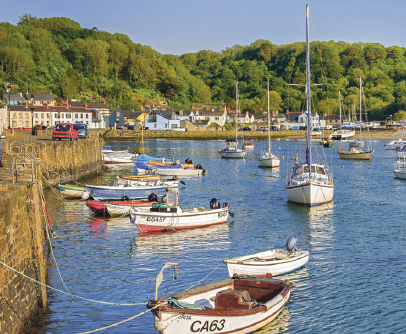

Lower Town Fishguard
CHAIRED by AM Paul Davies, residents of Fishguard and Goodwick attended a meeting to address representatives from the Pembrokeshire County Council and National Resources Wales, about the flooding issue which has long plagued Fishguard Lower Town.
The meeting was scheduled to discuss a Flood Investigation Report brought out by PCC on the topic of the serious flooding which occurred in 2014.
In 2014 the tidal surge saw water not only come from the sea to flood properties, but also up through drainage systems beneath houses, which proved an impossible force to tackle.
Starting off with Richard Wicks, Flood risk analysis team leader for the NRW speaking about the responsibilities NRW has and then going onto PCC’s Darren Thomas who explained the councils responsibility for the roads, highways and coastal protection constructions. Also attending was PCC’s Emyr Williams one of the coastal engineers and Pauline Louchart the emergency planning officer for the council.
What do the people of Lower Town think of the report?

In Mayor Richard Grosvenor’s absence, town Cllr Alex Allison spoke on behalf of the town and said: “One of the things I noticed in the report, I think on behalf of both agencies, it is a total abligation of their responsibilities, and that they’re passing this responsibility directly onto the local residents.
“The other thing that concerns me about the report is that you keep talking about projected frequencies, we know that in the last 10-15 years your projected frequencies have been blown right into the air.”
Also criticising the councils emergency efforts Cllr Allison said: “I also have to criticise the county council directly, in the actions they take when there is flooding.”
He continued: “To turn around and tell residents that if they want sand bags, they will have to buy them for themselves is again, a total abligation of their responsibilities.”
How does the report help the residents of Lower Town?
Getting down to the main issue the residents have with the report he also brought up the fact that, the report does not shed any light on future plans to tackle the flooding issue.
Alex Allison also brought up something mentioned in the report, which said that the cost of the properties has to outweigh that of the works being completed.

Following on from this he questioned how the works at Newgale were financially justified, where there is only ‘One pub and a field’ and not to save ‘125 houses in a historic village.’
He said: “I know a lot of people in the village feel the same way, that we are going to be abandoned in the long term.
“All we ask for is for you to tell us what plans you’ve got to stop it happening.”
Paul Davies then once again took the floor to highlight they key issues and possible ways to tackle them, which were brought up in the meeting directly following the 2014 flood crisis.
He also mentioned about the second flood which occurred just a month after the main issue which sparked the initiation of the report happened.
Some of the discussed flood defences included a “flood gate, and improvement to the old quay”, however he said: “No immediate solution was found, thus creating the need for the report.”
What do the locals think of the report?
Darren Thomas briefly explained the report: “We looked into what happened with the flooding, its causes, a summary of the incident, the responsibilities of those involved, and the conclusions and recommendations.”
“The report also includes technical details about the flooding for how our findings came about.”
He then welcomed questions from the attending audience. One man stepped up and began picking apart the report, he said: “In the conclusions and recommendations section you reference the operatives, who you say are trained, but it seems they need some guidance on where to place sand bags.”
He continued to explain an example where those placing sand bags had used ‘no common sense’ when placing them in non-strategic way.
Questioning the qualifications of those who wrote the report he also spoke about one possible flood defence strategy listed, and he himself being an engineer with over 50-years experience explained how the solution would make the flooding worse.
He then also stated that it was obvious that no public consultation had taken place when writing the report, because it was written from an unfamiliar perspective.
One lady asked why the report had taken two years to write, and questioned a point in the report which stated the sewage systems beneath the homes were deemed satisfactory following the January 2014 flooding.
She then went on to quote the report which said that no immediate action was needed in order to tackle the flooding issue, which she followed up by asking the rhetorical question: “What about the flooding which then occurred just one month on from that flood?”
Darren Thomas addressed the issue of the time it took to release the report and said: “This hasn’t just been sat on a desk waiting to be issued, it has gone through a process of consultation with stake holders and being drafted.”
Henry an attendee of the meeting began by stating he could match the engineering qualifications of those talking about the report and continued: “They built a refinery from scratch to produce oil in 18 months and you’ve taken two years to write a report which should have taken four at most.”
What is going to be done for the future?
Henry then proposed an idea and finishing with the question: “Are you going to do anything about the flooding or not?”
Bruce, another local, then picked more problems and issues with the plan when he was interrupted by Darren who said: “We’ve come along tonight to try and constructively discuss the issue, it is not constructive to keep just slagging off the report.
“We are here to go through the report and its findings.”
Richard Wicks added: “We do want to stop the flooding in Lower Town Fishguard and on the Abergwaun.”
He continued: “The first stage is to map where we actually are with the flooding, which we are doing, so please don’t think we don’t consider your small town here worth looking at.
Bringing up a few of the suggestions and problems with the proposed plans, Richard said about how Lower Town doesn’t just face tidal flooding but fluvial flooding from the river, he noted: “The last thing you want from us as engineers is to stop one type of flooding and leave you exposed to the other.”
Talking about more of the suggested solutions, he said that the cost would be very high for any considerable works and went on to explain the priority ranking system in place, which they advise the Welsh Government on.
Richard said: “Fishguard is about 400 on the list. Cardiff with it’s high population is top, as they are at risk of flooding with rising tide levels.
“Money would be much more wisely spent on areas like this with a high population. In time we will look at flood defences for Lower Town.”
Deputy Mayor, Mike Mayberry then spoke about Fishguard being so low down the list, and said about how places like Newgale where there are no residents effected have already had work started.
Darren went onto say that the work at Newgale isn’t about protecting houses or residents but is ‘managerial alignment’ after a ‘vulnerability survey’ showed the trunk road had only 10 years left before it was lost to the sea.
What was the final conclusion of the meeting?
More discussion about strategies to solve the problem, including short term suggestions about stopping traffic took place which Emyr said would be ‘extremely difficult to police’. The meeting continued to heat up and a local man left the meeting through frustration, of not hearing any actual solutions from the report which took two years to complete.
Highlighting that the meeting had started to snow ball and cross topics set out for discussion, Paul Davies pulled the meeting back and asked the panel to answer the question: “What solutions can you bring forward to start alleviating the issues?
“Because so far I am not hearing any.”
Richard from the NRW said that before work could be started, time has been taken to map the area and it’s specific issues, but further studies would need to take place to more studies and surveys would need to be completed.
He expressed that because it is a small harbour there are limits to what can be done, and lots of this they cannot do as it would spoil the scenery.
Paul Davies asked him to confirm: “Are you saying that further studies will need to be done?”
To which Richard replied: “Studies will be done, but I can’t promise you when they will be done, as any public funded body, we have to do things in a prioritised way.
“We have done what we can for Lower Town Fishguard.” He continued: “at the moment we have done what we can for residents in the short term.”
A local woman stood up and said: “So basically what you are saying is that you will not be doing anything!”
He responded: “I didn’t say that.” another man jumped in and said: “If it’s already taken two years to get this report, how many more years will it take for the next?”
Richard responded: “It really depends on availability of funds.”
Asked if they will be consulting the locals in any further reports, he replied by saying that they would. At which point several locals raised their voices and stated that is was not done with the current report.
The meeting closed with Richard saying that in the short term nothing will be done for Lower Town, and after being questioned as to how long ‘the short term’ was, he responded by saying it all depends on fund.
Richard then spoke about some solutions and concluded by saying: “If the cost of the measures are not much less than the damages that it is stopping, the works will not be allowed to go ahead.”
A local man asked: “I’ve got a simple question, give us a clue when it is going to start?”
Richard replied: “It is not in the short term, that is all I can say. It is all a question of resources and priority.”



Stephen Kinnock has been named the new Secretary of State for Wales after Prime Minister Andy Burnham unveiled his first Cabinet reshuffle, replacing Jo Stevens following two years in the post.
The appointment comes as the new Prime Minister continues to shape his government after entering Downing Street, with the Wales Office among a number of departments seeing changes at ministerial level.
Mr Kinnock, the Labour MP for Aberafan Maesteg, takes over responsibility for representing Welsh interests at the Cabinet table and overseeing the UK Government’s relationship with the Welsh Government.
The 55-year-old has served in Parliament since 2015 and has held a number of ministerial positions. Before joining the Cabinet, he served as a minister in both the Home Office and the Department of Health and Social Care, where he was involved in immigration, public health and NHS-related policy.
He is also well known as the son of former Labour leader Neil Kinnock, one of Wales’ most prominent political figures, and former European Commissioner Glenys Kinnock.
Mr Kinnock replaces Jo Stevens, who has served as Secretary of State for Wales since 2024. During her tenure she worked on issues including economic investment, the transition to green energy, rail infrastructure and cooperation between the UK and Welsh Governments.
The change follows Prime Minister Andy Burnham’s first Cabinet reshuffle since taking office, with several senior ministerial appointments announced as he begins setting out the priorities of his new administration.
As Secretary of State for Wales, Mr Kinnock will be expected to play a key role in discussions over economic growth, energy, transport, the future of the steel industry, and constitutional matters affecting Wales. He is also likely to be heavily involved in negotiations between Westminster and Cardiff Bay as the Burnham Government develops its agenda.
His appointment will be closely watched across Wales, including in Pembrokeshire, where businesses, local authorities and public services will be looking for signs of how the new Government intends to deliver on its promises for investment, infrastructure and economic development.
Further announcements on the new Government’s programme are expected in the coming days.
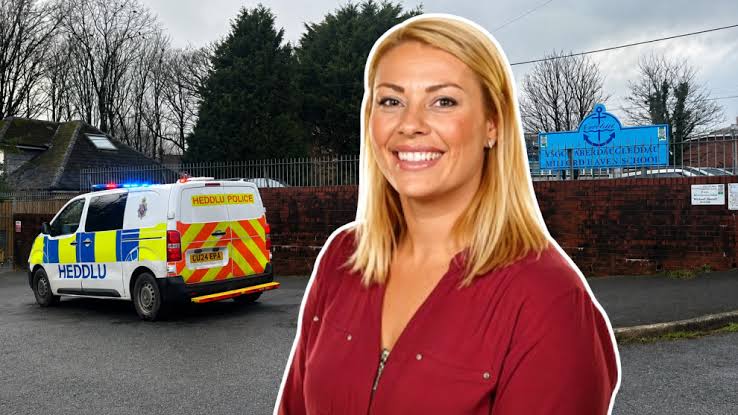
Detectives say it was “pure good fortune” the victim did not suffer even more serious injuries during the classroom attack
POLICE have praised the bravery of a teacher who was attacked with a knife at Milford Haven Comprehensive School, saying the emotional impact of the incident “cannot be underestimated”.
A 16-year-old boy was convicted at Swansea Crown Court of wounding with intent and unlawful wounding following the attack on Thursday, February 5.
The jury cleared him of attempted murder. He had previously pleaded guilty to possessing a knife.
The teenager, who cannot be identified because of his age, was 15 when the incident took place.
At approximately 3.20pm, he approached the teacher and asked for assistance with schoolwork before following her into a classroom.
He then attacked her while armed with a knife.
The teacher managed to disarm the pupil despite sustaining injuries which required hospital treatment. She later recovered from her physical injuries.
Dyfed-Powys Police said officers and other emergency services swiftly attended the school, where pupils and staff were safeguarded and a lockdown was put in place.
The teenager was traced and arrested shortly afterwards. He was charged on February 7 and remanded in custody ahead of his trial.
Following the verdicts, Senior Investigating Officer Detective Inspector Sarah Totterdale commended the victim for attending court and giving evidence about the attack.
She said: “Firstly, I would like to commend the bravery shown by the victim in this case.
“What happened to her on February 5 must have been a truly terrifying ordeal, so to have to attend court and relive that experience has taken exceptional courage.

“It is thanks to pure good fortune that she did not sustain even worse injuries, but the emotional impact cannot be underestimated.
“We would like to thank her for her assistance throughout this investigation.”
DI Totterdale said the incident had also deeply affected pupils, teachers and the wider Milford Haven community.
She added: “This incident understandably had a profound impact on other students and teachers at Milford Haven Comprehensive School, as well as the wider community.
“Fortunately, we were able to promptly attend the school, ensure the safeguarding of pupils and teachers, and apprehend the offender.”
She also thanked the emergency services, school staff, parents, pupils, Pembrokeshire County Council and members of the community for their support and patience during the investigation and subsequent court proceedings.
DI Totterdale said: “I hope that, with the trial now concluded, the victim in this case can begin to obtain some closure from this incident, and that Milford Haven Comprehensive School can continue passionately teaching, learning and thriving together in a safe environment.”
The teenager will return to Swansea Crown Court to be sentenced on Thursday, September 3.
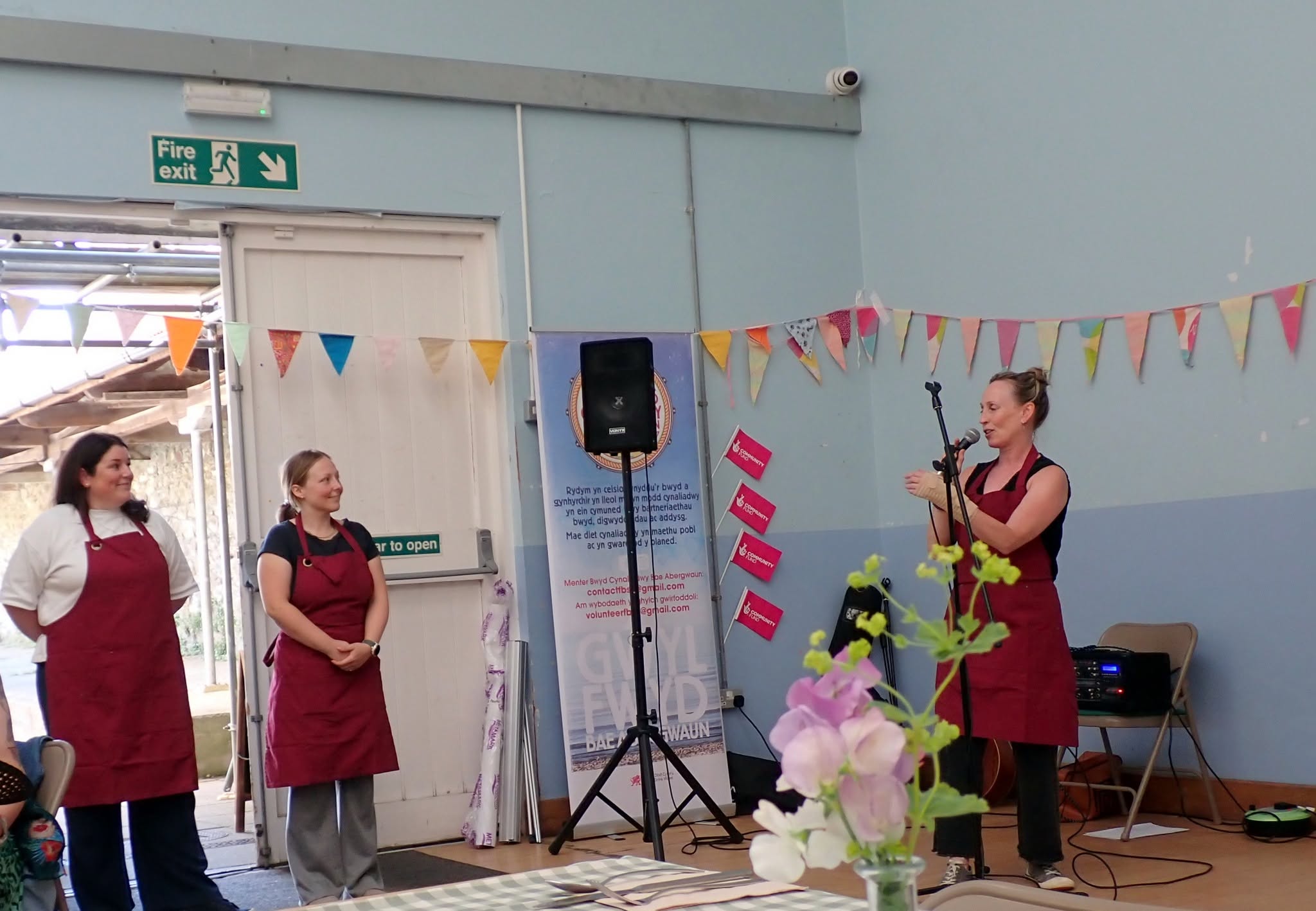
Ford Pawb offers affordable, nutritious meals alongside friendship and community spirit
A NEW community dining initiative has enjoyed a successful opening night, welcoming a packed gathering to Fishguard Town Hall for an evening of affordable food and friendly conversation.
Ford Pawb, also known as Everyone’s Table, has been launched by the Fishguard Bay Sustainable Food Initiative CIC and will serve a low-cost, nutritious meal open to everyone on Monday evenings.
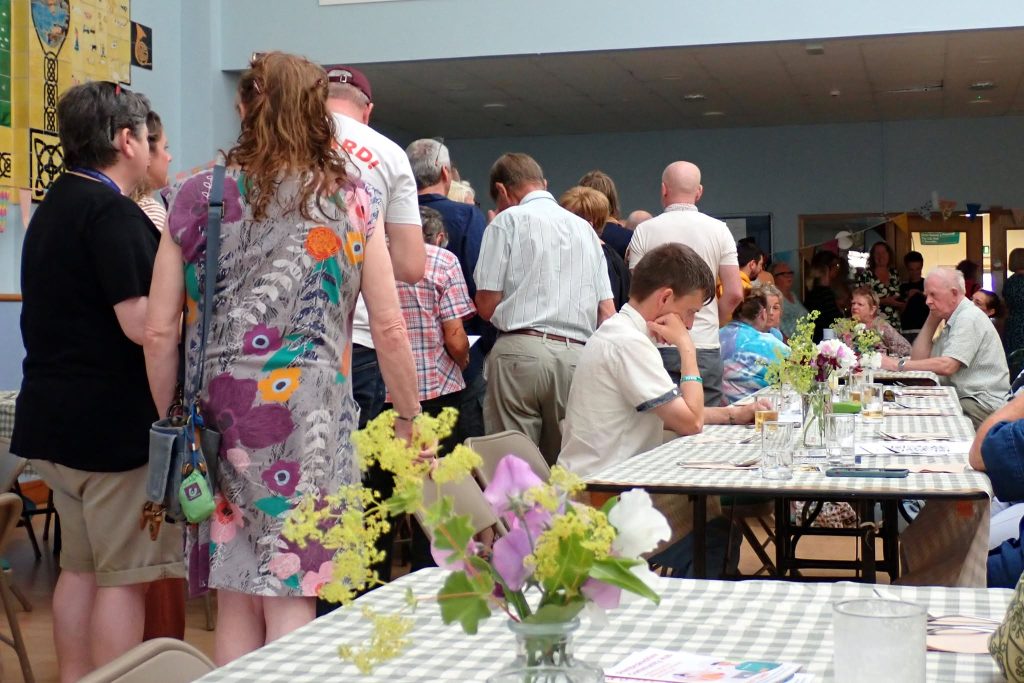
The first event attracted residents of all ages, with tables filling as people gathered to eat, catch up with friends and meet others from the community.
Guests were served vegetable lasagne with potatoes and salad, followed by a fresh garden berry crumble and a selection of non-alcoholic drinks. Much of the food was locally sourced, with diners praising both the generous portions and the quality of the meal.
Flowers decorated the tables, adding to the welcoming atmosphere, while music followed the meal as guests continued to socialise.
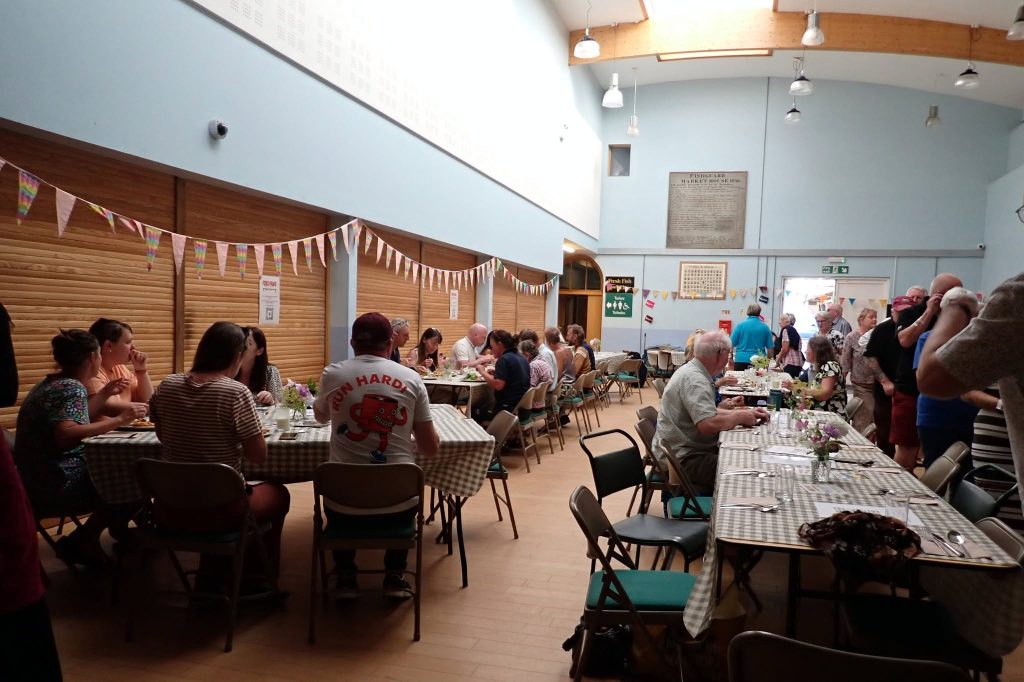
Behind the scenes, a team of volunteer cooks and servers worked throughout the evening to prepare and serve the food, clear tables and ensure the new project got off to a smooth start.
Organisers hope Ford Pawb will provide more than simply an affordable meal. The weekly gatherings are also intended to offer a warm and inclusive place where people can spend time together, reduce social isolation and strengthen community connections.
The strong turnout on the opening night demonstrated the appetite for such an initiative in Fishguard and Goodwick, and organisers and volunteers were congratulated for their hard work in bringing the project to life.



Community2 hours ago
Household Cavalry drum horse returns home to Pembrokeshire for final farewell
Dyfed Willa Rose, who became Major Juno and the first mare to serve as a Household Cavalry Drum Horse, was...

News19 hours ago
Jo Stevens out as Welsh Secretary as Burnham reshapes government
Cardiff East MP repeatedly visited Pembrokeshire to champion clean energy jobs, but her successor inherits unresolved questions over Milford Haven’s...


Crime1 day ago
Teen cleared of attempted murder but guilty of GBH after Milford teacher stabbed
Jury returns 11-1 majority verdict on charge of causing grievous bodily harm with intent, with sentencing set for September 3...

Community1 day ago
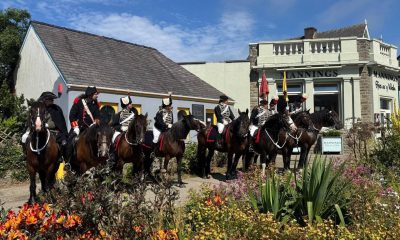
French troops march through Fishguard as Britain’s last invasion returns to life
Battle scenes, cavalry displays and a surrender procession brought one of Pembrokeshire’s most extraordinary stories back to the streets MUSKET...


News1 day ago
Andy Burnham promises new politics as he enters Downing Street
New Prime Minister admits politicians have “not been good enough” as he sets out a ten-year plan for Britain and...


Health2 days ago
Two new surgeons appointed as Hywel Dda admits orthopaedic waits remain too long
Health board says it is increasing capacity after figures revealed hip replacement patients waited an average of 64 weeks HYWEL...

Community3 days ago
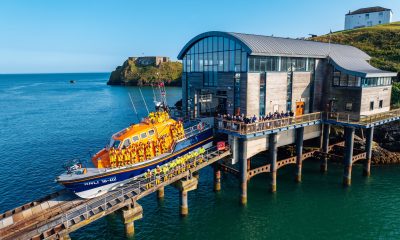
84-year-old man rescued after falling overboard near Tenby
A MAYDAY call sparked a major nighttime rescue after an 84-year-old man fell from a tender and was swept towards...

Crime4 days ago
Jury hears final arguments in Milford Haven teacher stabbing trial
Defence says there was no motive or intention to kill as judge reviews competing accounts of classroom knife incident SPECIAL...

News4 days ago
Andy Burnham becomes Labour leader and prepares to enter No 10
Former Greater Manchester mayor promises an ‘unashamedly Labour’ government after completing extraordinary return to Westminster ANDY BURNHAM has been formally...


News4 days ago
Motorcyclist dies following collision near Narberth
Police appeal for witnesses and footage after fatal crash on B4313 at Redstone A MOTORCYCLIST has died following a collision...
-

 Health1 day ago
Welsh Ambulance Service invites public to AGM and Board meeting
-
Crime1 day ago
Teen cleared of attempted murder but guilty of GBH after Milford teacher stabbed
-
News2 days ago
Andy Burnham set for No 10 as Wales awaits change
-

 Crime1 day ago
What the Milford Haven School stabbing verdict really means
-

 Business1 day ago
Port appoints two new directors as energy and regeneration projects advance
-

 Community2 days ago
Tributes paid to long-serving Mansel Davies driver Gareth Griffiths
-
Community2 hours ago
Household Cavalry drum horse returns home to Pembrokeshire for final farewell
-
 Farming2 days ago
Welsh farmers promised £1bn funding package under three-year deal