


News
Council is ‘having a go at the vulnerable’



Mike Stoddart: Angry with the ‘depooling’ procedure
ANGRY residents in sheltered accommodation across the county have expressed their concern about a process within the Welsh Government entitled ‘Depooling’, which has caused a big rise in rent for certain services, even if they don’t use them.
Charges for grass cutting, warden services and communal areas have been pooled and spread across the rents of all tenants. This has lead to unfairness in that the tenants with no grass in front of their houses are paying for grass cutting services.
However, the Welsh Government is now insisting that these charges be ‘depooled’ so that tenants pay for the services the actually receive. However, Cllr Mike Stoddart claims that the way the council has calculated these charges is flawed, and that some tenants will be paying twice: Once through the pooling system, and once independently.
He said that the pooled charged should have been deducted before the depooled costs were added to the rents.
This process has affected residents in sheltered accommodation at Dairy Park, Hakin, and The Herald has been handed a document which shows they are facing a bill of £12 per week.

The Herald spoke to a resident at Dairy Park, Mr Clifford Pitman, who said he feels as though the Welsh Government are ‘ having a go ‘ at the vulnerable.
He said: “It’s outrageous. We have a laundry room, but I couldn’t get in there because it was so impractical. I bought my own washing machine, but I’m still being charged £2 to use the communal one – even though I’m not using it!
“We even pay for the warden when she’s on holiday. Don’t get me wrong, I have nothing against the warden, but when she’s not here we get emergency cards, and there is nobody there in her place.”
Mr Pitman had a sewerage problem with his property and contacted the Co-ordinator at Dairy Park. He said: “She refused to see me! If she’s a coordinator, she should be only too glad to see me.

“They’re civil servants, but they think they’re superior. They’re just having a go at the vulnerable.”
An angry Cllr Mike Stoddart told The Herald that he believes the way the Council has calculated the charges is flawed, and said: “I emailed both the Leader and the Cabinet member for housing Alison Lee ahead of the cabinet meeting alerting them to this doublecharging, but the issue didn’t even get a mention.
“Indeed the whole debate, on a matter which has profound consequences for some of my constituents, lasted a mere seven minutes. Surely people have a right to expect that these highly paid Cabinet members should be more than just a rubber stamp for whatever officers put in front of them.”

Cllr Stoddart has also promised that more information will be available when the issue comes before full council next Thursday , when there will be a full debate.
When The Herald contacted Pembrokeshire County Council, a spokesperson said: “As part of the implementation of the Housing (Wales) Act 2014, local authorities are now required to change the way in which they set council rents and – where they have not done so previously – introduce service charges which will be paid by tenants living in properties that have the benefit of additional services.
“These changes mean that tenants of Housing Associations and Councils are charged on the same basis.
“Pembrokeshire County Council started this process last year by introducing charges for the sheltered housing warden service and this year they will complete this process with the exception of charges for grounds maintenance.
“We undertook a number of consultations with our tenants in sheltered schemes in November and December, 2015, to discuss the charges as we acknowledged that they will be affected by the changes the most because they have a lot of communal facilities.
“We recognise that some tenants who will have to pay the charges may choose not to use the facilities.
“However, the charges are applied to the property and do not get adjusted on the basis of whether an individual tenant does or does not use the facilities on offer.
“We are also aware that the majority of tenants will have the additional costs covered in part by Housing Benefit.
“Those who do not, may wish to make contact with the Council’s Revenue Services division to discuss whether the increase in charges will make them eligible for Housing Benefit in the future.”


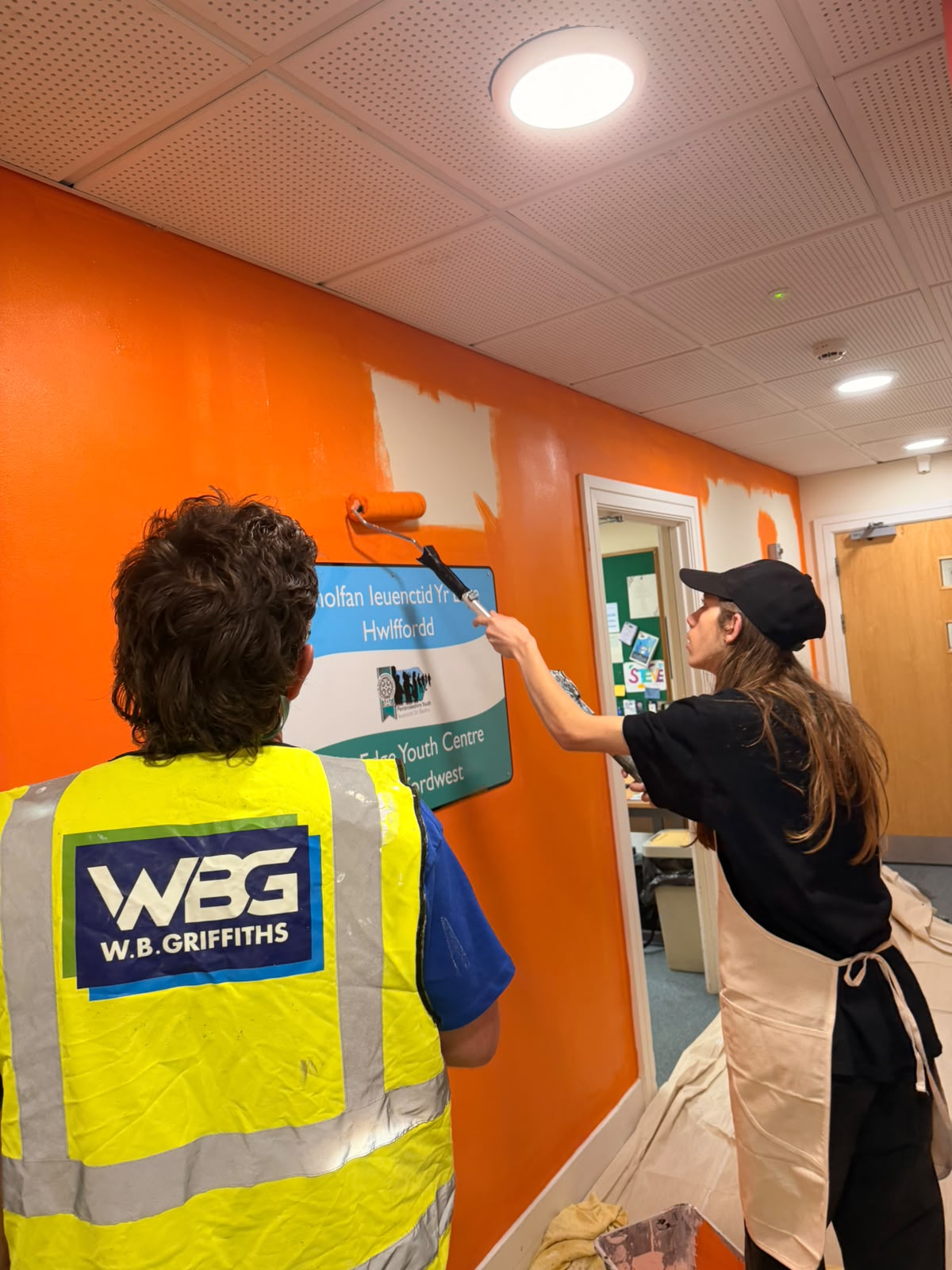
YOUNG people at a Haverfordwest youth centre have helped transform one of its rooms into a bright and welcoming space.
The Edge Youth Centre, Haverfordwest, has thanked W.B Griffiths & Son Ltd for supporting the painting and decorating project, which saw young people work alongside Chris, a painter and decorator from the company.
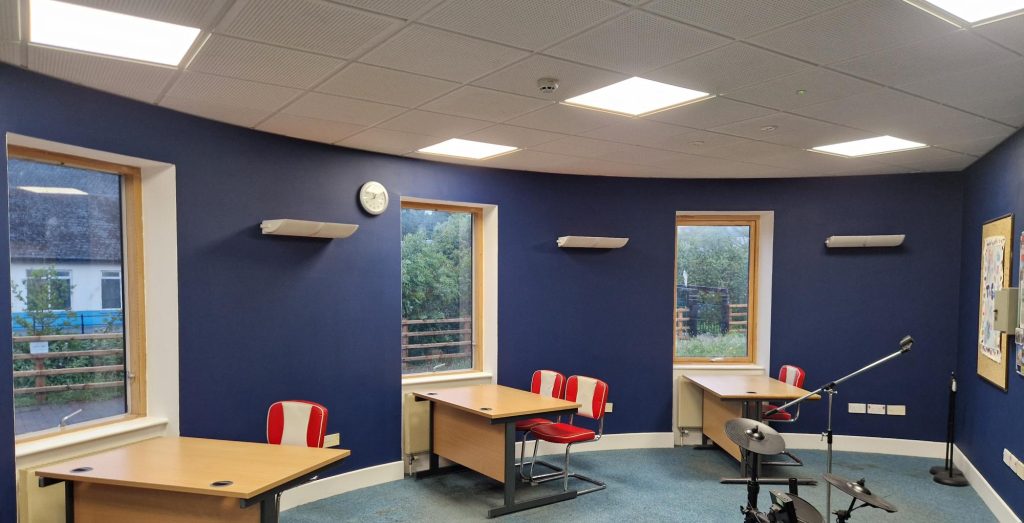
The project has given the room a colourful refresh, creating a cheerful space for young people using the centre.
Rabart Decorators Merchants, Pembroke Dock, also supported the work by supplying the colourful paints.
A spokesperson for The Edge Youth Centre said: “We’d like to extend a huge thank you to W.B Griffiths & Son Ltd for supporting us with the painting and decorating of one of the rooms at our Youth Centre.
“The young people were fortunate enough to work alongside Chris, a painter and decorator from W.B Griffiths & Son Ltd, to transform the room.
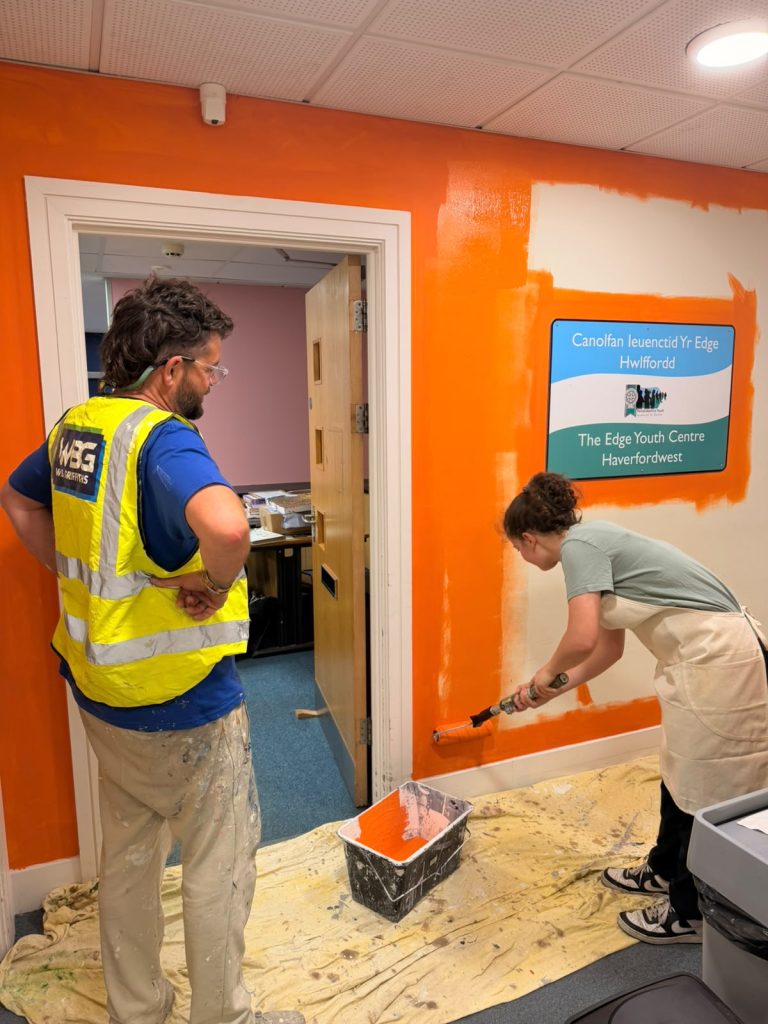
“Thanks to Chris and the young people’s hard work and enthusiasm, the space is now looking bright, welcoming, and cheerful.
“We’d also like to thank Rabart Decorators Merchants, Pembroke Dock, for generously supplying the colourful paints. Your support has helped create a vibrant room that young people can enjoy for years to come.”
The centre added: “Thank you both for your generosity and for helping us create such a positive space for our young people.”
Photo caption: Bright new look: Young people worked alongside W.B Griffiths & Son Ltd to refresh a room at The Edge Youth Centre, Haverfordwest.

A PARLIAMENTARY committee is to hold an oral evidence session into the impact of metal mine pollution in Wales.
The Welsh Affairs Committee will examine the environmental and economic legacy of abandoned metal mines as part of its ongoing inquiry into Wales’ industrial past.
Abandoned metal mines continue to cause extensive pollution across Wales. Figures from the Mining Remediation Authority show around 1,300 sites are affecting water quality and ecology across more than 700km of watercourses.
The session, due to take place on July 1, will allow MPs to gather up-to-date evidence on the scale and consequences of the pollution, as well as what is being done on regulation, remediation and public transparency.
It will also examine progress made since a similar evidence session was held by the committee’s predecessor in the last Parliament.
Ruth Jones MP, Chair of the Welsh Affairs Committee, said: “While the extraction of metals such as zinc, lead and gold was once an important part of Welsh industry, the legacy of abandoned mines now poses a serious threat to the animal and plant life of our rivers, streams and lakes, and possibly even to human health.
“Our session will be exploring the scale and consequences of metal mine pollution and whether more can be done to tackle this ongoing environmental challenge.”
Ahead of the session, the committee is inviting written submissions on the human and environmental impacts of metal mine pollution, who should be responsible for tackling it, what progress has been made in recent years, and how affected communities can be supported.
It is also seeking views on how the public can make informed decisions about any risks from metal mine pollution, and what could happen if further action is not taken.
The Welsh Affairs Committee scrutinises the expenditure, administration and policies of the Wales Office, as well as UK Government policies that affect Wales.
The committee is not part of the Government, but is a House of Commons select committee with a role in holding ministers to account.

CARMARTHENSHIRE COUNTY COUNCIL repaired just over 10 potholes a day on average last year — significantly more than during the previous 12 months.
Pothole repairs rise as council faces growing road maintenance pressure
Highways staff repaired 3,623 potholes in 2025-26, compared with 2,360 in 2024-25.
The figures closely align with the number of potholes reported by the public in both years, although defects are also picked up by staff during scheduled inspections.
The council received 156 insurance claims for damage and injury caused by potholes over the last two years and paid out on five of them. The total amount paid, excluding any ongoing claims, was £8,181.
It provided the figures following a freedom of information request by the Local Democracy Reporting Service.
Cllr Edward Thomas, cabinet member for transport, waste and infrastructure services, said the council inspected, assessed and repaired road defects such as potholes in line with national guidance and best practice.
He said all pothole reports from the public were logged and, where necessary, assessed.
Cllr Thomas said: “Reactive pothole repairs are carried out to address immediate safety concerns. However, the council’s long-term strategy is focused on targeted, planned maintenance to prolong the lifespan of road surfaces and deliver best value across the county’s road network, while working within the available budget.”
A council scrutiny committee heard last November that the number of potholes recorded in the county soared from 1,978 in 2020 to 11,014 in 2024. The figure for the first 10 months of 2025 was 9,146.
A committee report said Carmarthenshire had the second-largest road network of Wales’ 22 councils and the fifth-highest traffic levels.
It said: “The increase in potholes is as a result of sustained low levels of investment in preventative maintenance.”

Potholes worsen in winter when water freezes and expands, causing further cracks.
Carmarthenshire is not unique in having a seemingly endless list of potholes to fix. Swansea Council repaired 6,322 potholes in 2025-26 and received 5,455 pothole reports from the public.
It also paid out £111,175 in pothole damage and injury claims during 2024-25 and 2025-26, although the number of claims paid was only a fraction of those received.



Community5 hours ago
HMS Erebus tragedy links Pembroke Dock ship to Templeton family
DNA breakthrough identifies cabin boy David Young as exhibition marks 200 years since ship’s launch ON MAY 19, 1845, a...


Community8 hours ago
Narberth cash machine closures spark urgent access review
CALLS have been made for an urgent review of access to cash in Narberth after two town centre ATMs were...


Health22 hours ago
First Minister quizzed on Welsh NHS pressures in his first-ever FMQs
SENEDD Members pressed the First Minister over the state of the health service in Wales, as the Plaid Cymru leader...


Community1 day ago
Historic paddle steamer Waverley to return to Fishguard this month
THE WORLD’S last seagoing paddle steamer will return to Fishguard this month as part of her annual visit to South...


Local Government1 day ago
National Express use of new Haverfordwest interchange still subject to risk checks
A RUMOUR that National Express coaches may struggle to use Haverfordwest’s new transport interchange has been denied by Pembrokeshire County...


Crime1 day ago
Milford Haven man jailed for illegal Premier League streaming service
A MILFORD HAVEN man who supplied illegal Premier League streams and loaded Firesticks to almost 2,000 customers has been jailed...


Community3 days ago
RNLI lifeguards rescue beachgoers during busy heatwave weekend
FOUR PEOPLE RESCUED AS RIP CURRENTS AND OFFSHORE WINDS HIT PEMBROKESHIRE BEACHES RNLI lifeguards in Pembrokeshire rescued four people and...


Local Government3 days ago
Council and school staff pay row could hit Pembrokeshire services
COUNCIL workers, carers and school support staff in Pembrokeshire could be drawn into a growing UK-wide pay dispute after GMB...

Health3 days ago
Hywel Dda to hold second consultation on future of stroke services
A SECOND phase of public consultation is to be held on the future of stroke services across Hywel Dda University...

Community3 days ago
Warning as algal blooms mistaken for sewage on Welsh coast
Beachgoers urged to avoid contact with suspicious foam and report pollution concerns NATURAL RESOURCES WALES has issued summer advice to...
-

 Health6 days ago
Paul Davies warns health board over Withybush and Bronglais services
-

 Crime6 days ago
Carmarthenshire man sent to Crown accused of 33 historic sexual offences
-
Crime1 day ago
Milford Haven man jailed for illegal Premier League streaming service
-
Crime1 day ago
Haverfordwest man admits cocaine offence as Crown disputes basis of plea
-

 Crime6 days ago
Suspended prison sentence for man who left dogs without vet care
-
 News6 days ago
Vehicle destroyed in early morning fire in Pembroke
-

 Crime6 days ago
Man accused of police station bomb hoax remanded in custody
-

 News6 days ago
Police investigate ‘arson’ after vehicle fire spreads to property in Pembroke