


News
St Davids: City mourns loss of dedicated Lifeboat volunteer Jeff Davies



Jeff Davies (Pic: St Davids RNLI/Alex Ingram)
ST DAVIDS branch of the Royal National Lifeboat Institution have announced that it is with ‘great sadness’ that their ex Honorary Secretary and Operations Manager, Jeff ‘The Butcher’ Davies, has passed away.
Jeff retired from this position of St David’s Lifeboat Operations Manager in July 2008, and remained a well known personality in north Pembrokeshire.
A spokesman for the Lifeboats charity told The Herald: “Our deepest sympathies are extended to Jeff’s family at this sad time.”

Jeff retires, and hands the station over to new a new manager in 2008
Jeff has served the RNLI at St Davids for the past 50 years in different capacities. He joined the Lifeboat Committee in 1965 until 1982 when he became a Deputy Launching Authority (DLA). In 1990 he became the Honorary Secretary, which today is known as the LOM position. It carried many responsibilities with the running of the station and authorisation of lifeboats to launch on service.
In May 2007, Jeff was awarded the RNLI’s Gold Badge for his dedicated work as a volunteer with the lifeboat service. Jeff was soon after appointed St David’s Lifeboat Branch Chairman.

The funeral will take place at St. David’s Cathedral on Saturday 2nd April at 14:30.


Rhun ap Iorwerth says he will press the new Prime Minister for powers over policing, railways and Wales’ natural resources when the two leaders meet.
FIRST MINISTER Rhun ap Iorwerth has said he believes Andy Burnham is more willing to listen to Wales’ demands for further devolution than his predecessor, Sir Keir Starmer.
The Plaid Cymru leader is expected to hold an introductory meeting with the new Prime Minister on Thursday, following a telephone conversation between the pair earlier this week.
Mr ap Iorwerth said he hoped the change in leadership at Westminster would provide an opportunity to take Welsh devolution to the “next level”.
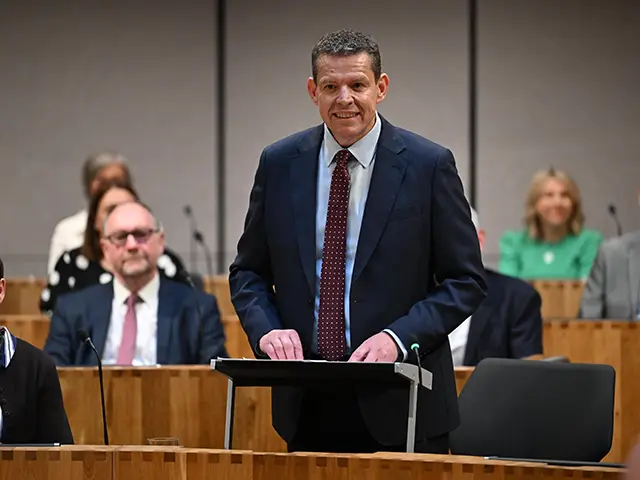
Speaking to BBC Radio 4’s Today programme on Wednesday, he said: “I had a conversation with Andy Burnham yesterday, congratulated him on becoming Prime Minister, and we both made it clear to each other that we wanted to have a positive relationship, a constructive relationship.
“I know that he understands devolution for Manchester. I want to help him understand what devolution means in Wales and what tools we need to make it work better.”
The First Minister said his government had been elected with a mandate to seek greater control over policing and justice, rail services and funding, as well as Wales’ natural resources.
He said: “There is a list, if you like, of things that we need to devolve now in order to move the story of Wales, the story of devolution, on to the next level.
“It’s clear that we now have a Prime Minister who is open to listening, perhaps in a way that Keir Starmer wasn’t, and I’m eager to do everything that I can to make the case for Wales.”
A planned meeting between Mr ap Iorwerth and Sir Keir failed to take place before the former Prime Minister left office, with the First Minister previously blaming “chaos in Westminster”.

Plaid Cymru formed the Welsh Government in May after ending more than two decades of Welsh Labour rule at the Senedd election.
Mr Burnham has extensive experience of devolved government after serving as Mayor of Greater Manchester, where he repeatedly called for greater powers and funding to be transferred away from Westminster.
However, the new Prime Minister has sought to play down the prospect of major constitutional reform.

During conversations with the leaders of Wales, Scotland and Northern Ireland on Tuesday, Mr Burnham said his immediate focus would be on “practical measures” rather than constitutional changes or further independence referendums.
Mr ap Iorwerth supports Welsh independence but has said his government will not seek to hold an independence referendum during its first term.
Thursday’s meeting is expected to focus on the working relationship between the Welsh and UK governments, as well as funding, transport and the future balance of devolved powers.
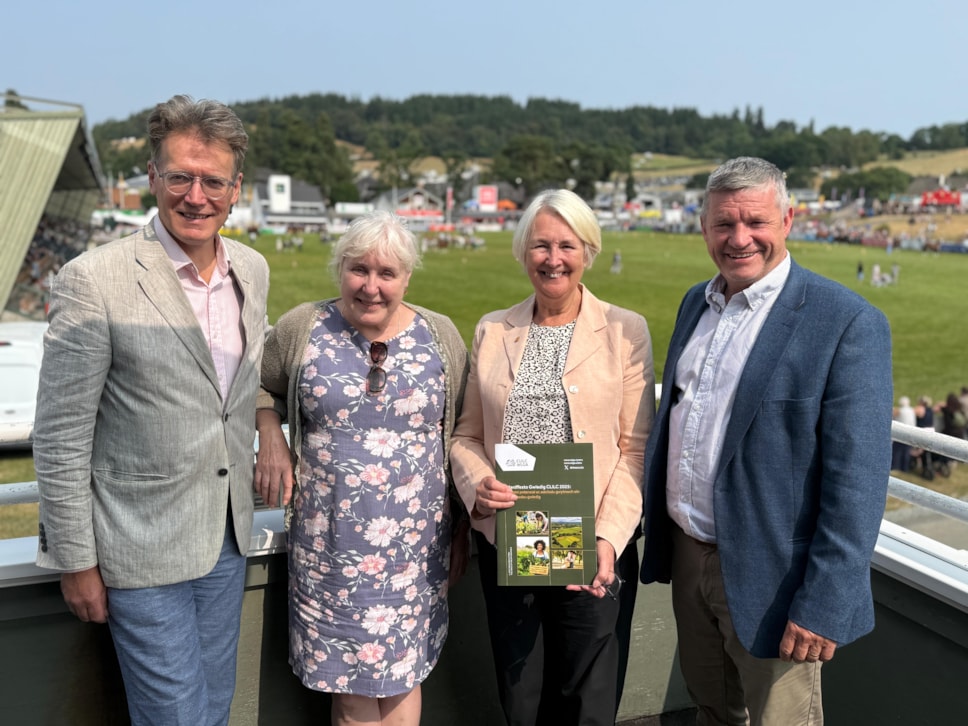
New bursary schemes will support up to 19 qualified planners, with a particular focus on tackling workforce shortages in mid and west Wales
COMMUNITIES across Wales are set to benefit from stronger local planning services following the announcement of almost £450,000 to train and retain the next generation of planners.
The Welsh Government has confirmed £447,400 for two bursary programmes which could support up to 19 people to gain professional planning qualifications.
The existing Pathways to Planning bursary scheme will receive £126,000, enabling up to seven junior planners to complete fully funded postgraduate study.
A further £321,400 will be invested over three years in a new Mid and West Wales Rural Planners bursary scheme, designed to address recruitment and retention difficulties in rural authorities.
The programme will support up to 12 graduates and existing local authority staff to study for Royal Town Planning Institute-accredited postgraduate qualifications while continuing to live and work in their local communities.
It will operate across Ceredigion, Pembrokeshire, Powys, Pembrokeshire Coast National Park and Eryri National Park.
The scheme will also place a strong emphasis on supporting Welsh-speaking graduates and developing locally based professionals with an understanding of the communities they serve.
Cabinet Minister for Local Government, Housing and Planning Siân Gwenllian said effective planning departments were vital to the future of communities across Wales.
She said: “Good planning services are the backbone of thriving communities. They shape where homes are built, where businesses grow and how we protect our natural environment, but too many rural areas in Wales are struggling to recruit and retain the planners they need.
“That is why I joined a roundtable at the Royal Welsh Show this week with rural council leaders, including the leaders of Ceredigion and Powys, to hear directly about the pressures they face.
“These bursary schemes are a direct response to what we heard, investing in local talent, supporting Welsh-speaking graduates and growing the planning workforce from within the communities it serves.”
Ceredigion County Council will lead the delivery of the rural programme in partnership with the other participating authorities.

Council leader Cllr Bryan Davies said the initiative demonstrated what rural authorities could achieve by working together to tackle shared workforce challenges.
He said: “Ceredigion has been proud to lead the development of this regional initiative, working with our partners to create new opportunities for local people to build professional careers in planning while remaining in rural Wales.
“By investing in home-grown talent, supporting Welsh-speaking graduates and strengthening the skills we need for the future, we are helping to ensure that mid and west Wales has the capacity, expertise and local knowledge required to shape thriving, sustainable communities for generations to come.
“We thank the Welsh Government for the opportunity to develop this ‘grow your own’ planners approach.”

Finance provided during 2025/26 is expected to help create 1,300 jobs and support more than 17,000 existing roles across Wales
SMALL businesses receiving British Business Bank-backed finance are forecast to generate an additional £600m in turnover and contribute £300m to the Welsh economy.
The figures, published in the government-owned development bank’s latest annual Impact Report, relate to businesses newly supported during the 2025/26 financial year.
Around 1,400 smaller businesses in Wales received bank-backed finance for the first time during the year.
Over the lifetime of that finance, the businesses are expected to create approximately 1,300 additional jobs while supporting a further 17,200 existing roles.
The forecast £300m increase in economic output represents the gross value added generated from the additional £600m in business turnover.
The bank said one of the main drivers of its activity in Wales had been the £130m Investment Fund for Wales, which was launched to improve access to finance for businesses at different stages of development.
The fund recently passed its second anniversary and has so far invested £37m through more than 102 investments involving 93 Welsh businesses.
Those investments have supported companies across a range of industries while also attracting additional private-sector funding into Wales.
Recent deals include a £3.5m investment in industrial services company Advantiv Limited, the fund’s largest equity investment to date.
The funding is intended to support the company’s expansion, the opening of additional locations across the UK and investment in operational innovation.
The British Business Bank is also supporting a new £6.5m innovation cluster in the Cardiff Capital Region.
The initiative aims to increase equity investment in high-growth businesses operating within the UK Government’s eight priority Industrial Strategy sectors.

Jess Phillips-Harris, director for Wales within the bank’s Local Growth Team, said the report demonstrated the effect that access to finance could have on businesses and communities.
She said: “This year’s Impact Report shows the real difference that British Business Bank support is making to businesses and communities across Wales.
“As the bank’s support continues to grow, we’re backing more businesses across a wider range of sectors, while bringing more private investment into Wales alongside our own funding.
“This is helping innovative companies develop new technologies, manufacturers expand their operations and entrepreneurs turn ambitious plans into long-term growth.”
She added that programmes including the Investment Fund for Wales, Start Up Loans and angel investment initiatives were helping companies grow while supporting skilled employment and local economies.
Across the UK, the British Business Bank supported £9.4bn of finance for smaller businesses during 2025/26.
The bank estimates that the finance will generate £19.7bn in additional turnover, £8.8bn in gross value added and 39,000 additional jobs over its lifetime.
Approximately 87% of the businesses newly supported during the year were based outside London.
The economic impact figures are forecasts based on the expected long-term performance of businesses receiving finance and do not represent turnover or jobs already delivered.



News2 hours ago
Burnham more willing to listen on Welsh devolution, says First Minister
Rhun ap Iorwerth says he will press the new Prime Minister for powers over policing, railways and Wales’ natural resources...


Crime6 hours ago
Women jailed after man chased through Milford home and attacked with knives
Kelly Rees receives further 27-month sentence while already serving prison term for notorious taxi robbery TWO women have been jailed...


Crime7 hours ago
Mother headbutted and clawed police officers after threatening social worker
Court shown body-worn footage of violent confrontation at Goodwick property A COURT has been shown police body-worn footage capturing the...


Crime1 day ago
Man, 37, found dead following major police response in Pembroke Dock
Death not being treated as suspicious as police make statutory referral to IOPC following active investigation A 37-YEAR-OLD man has...


Community1 day ago
Household Cavalry drum horse returns home to Pembrokeshire for final farewell
Dyfed Willa Rose, who became Major Juno and the first mare to serve as a Household Cavalry Drum Horse, was...

News2 days ago
Jo Stevens out as Welsh Secretary as Burnham reshapes government
Cardiff East MP repeatedly visited Pembrokeshire to champion clean energy jobs, but her successor inherits unresolved questions over Milford Haven’s...


Crime2 days ago
Teen cleared of attempted murder but guilty of GBH after Milford teacher stabbed
Jury returns 11-1 majority verdict on charge of causing grievous bodily harm with intent, with sentencing set for September 3...


Community2 days ago
French troops march through Fishguard as Britain’s last invasion returns to life
Battle scenes, cavalry displays and a surrender procession brought one of Pembrokeshire’s most extraordinary stories back to the streets MUSKET...
News2 days ago
Andy Burnham promises new politics as he enters Downing Street
New Prime Minister admits politicians have “not been good enough” as he sets out a ten-year plan for Britain and...


Health3 days ago
Two new surgeons appointed as Hywel Dda admits orthopaedic waits remain too long
Health board says it is increasing capacity after figures revealed hip replacement patients waited an average of 64 weeks HYWEL...
-

 Crime7 hours ago
Drunken rail passenger tried to headbutt police after being refused travel
-

 featured1 day ago
From a father-and-son project to an award-winning campervan business
-
Crime6 hours ago
Women jailed after man chased through Milford home and attacked with knives
-
Community1 day ago
Household Cavalry drum horse returns home to Pembrokeshire for final farewell
-
Crime7 hours ago
Mother headbutted and clawed police officers after threatening social worker
-

 Entertainment1 day ago
Robin Hood: A magical show by young talent at The Torch Theatre
-
News2 days ago
Jo Stevens out as Welsh Secretary as Burnham reshapes government
-

 Crime2 days ago
Mynachlog-ddu man handed suspended sentence for assaulting child