


News
Car parking charges are ‘killing town centres’

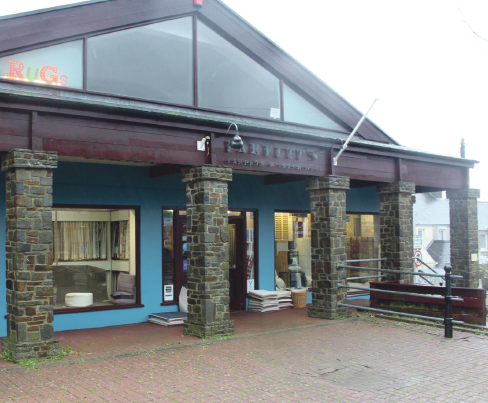

Parfitt’s Carpets and Interiors: Just one of the many businesses parking charges affect
THE PLIGHT of town centre businesses was discussed at Pembrokeshire County Council’s meeting on March 10.
Taking aim at the Council and attempting to persuade members to back a scheme to reduce car parking charges in Pembrokeshire’s town centres was Leader of the Pembrokeshire Alliance Bob Kilmister.
Cllr Kilmister’s motion was just the latest shot in a long-drawn out battle between those who wish to attract shoppers to towns and those who see parking as a cash cow to be milked for money to help balance the books.
That Pembrokeshire has had historic problems with its parking provision is almost trite, so often has the matter been the subject of reviews, reports and debate in the Chamber and on committee.
Critics say that implementation of car parking charges in popular car parks around the county has contributed in the effort of driving people away, causing an increase in congestion with people parking in neighbouring streets to avoid paying a price to walk around the town.

Some previously free car parks have emptied almost immediately after the imposition of charges, for example at St Thomas Green and Rifleman’s Field.
Despite a report prepared for the County Council which set out that parking charges and their increase would have an adverse effect on town centre trade and that the Council has steadfastly ignored it in order to raise revenue from workers and shoppers while ruining shops and businesses.
Undaunted, Bob Kilmister decided that it was time to make some real progress on the matter as opposed to doing what the Council seems most adept at doing; hanging around wringing its hands about town centre decline without doing a thing to encourage shoppers to return to them.
Pembrokeshire is in the virtually unique position in the UK of having car parks in the centre of the County Town, Haverfordwest, while free bus services – admittedly subsidised by retailers – ship shoppers to out of town retail parks.

During the meeting, it seemed that some – but by no means all – members of the local authority support Pembrokeshire’s town centres in the same way that rope supports the condemned prisoner.
Cllr Kilmister explained to full council how he felt that if Pembrokeshire County Council actually benefited directly from the collection of business rates (100%), the Council would deal with this issue “very very differently.”
He also commented on how he felt that when this matter was raised in cabinet, the notice of motion was interpreted incorrectly. This gave the impression that the councillors present at that time were only mildly interested.

This feeling was intensified, with many of the speakers at the meeting failing to even pronounce Cllr Kilmister’s surname during the course of the debate.
“The Council receives approximately 75% of business rates,” he said. “Empty retail premises don’t have a direct impact on this council’s revenue, but have a huge impact on the economy and employment. It may surprise people, but retail is the biggest employer in the UK by a considerable margin.”
Cllr Kilmster claimed that in 2014, 2.7 million people were employed through retail, with the next biggest sector being construction, and said that: “Since this inception of this authority we have done very little to support our town centres.”
When the charges were first introduced, Councillor Terry Mills went as far as to describe the parking charges in Milford Haven town centre as “criminal,” and that it was “the last thing our town needs.”
As it stands, Haverfordwest town centre is a monument to the ability of local planners to inflict more damage on its local community.
Cllr Kilmister stated that since the charges, car park revenue has “gone in leaps and bounds,” and said that between 2008 and 2009, the Council’s total car park revenue was £51,000. In comparison, next year’s budget proposes an increase in revenue to £584,000 – over 1,000% of an increase in less than ten years.
Mr Kilmister stated that is people believe that has no effect on the economy in Pembrokeshire, then he “truly despair.”
He said: “Take a walk down Bridge Street in Haverfordwest and see what a depressing experience it is. Unless we do something, it’s not going to change. Pots of paint will not bring customers.”
And, he’s right! While retail parks are packed, with barely a space at Withybush Retail Park or Havens Head, town centres are dying. Not only is Bridge Street in Haverfordwest suffering, but Dimon Street in Pembroke Dock and Charles Street in Milford Haven have, and are continuing to pay the price.
Councillor Rob Lewis decided to chip in, seemingly defended the charges currently imposed. He told the Council that his “colleagues from the glorious north” face charges that are three times higher than what the people of Pembrokeshire currently fork out.
Almost as if he was telling Cllr Kilmister that he’s got nothing to complain about, Cllr Lewis said: “Charges don’t just cover car parks – the money is used for traffic management. When we discussed this in July, we recognised this could have an impact.”
Next to address the Council was Councillor Peter Stock, who told the council that the town centres are in a “bad state” – except for Narberth. He claimed that there has got to be some answers and action should be done very quickly. However, he also stated: “I’m not saying free car parking is the answer.”
He went on to say: “I’m sad when I look to see how to town centre has deteriorated. Carmarthen can afford to have charges because there’s something to go there for, we’ve got to encourage people to come in, so we must give them an incentive.”
What do people think?
A petition, which gained almost 9,000 signatures by April 2015, asked the Council not to implement any charges for parking at St Thomas Green Car Park in Haverfordwest.
Despite this, a decision to impose the charges was made in July 2015, and in addition to this area, charges were also introduced in High Street in St Dogmaels, Station Hill in Goodwick, New Quay and Rifleman’s Field in Haverfordwest, Mart Ground in Crymych and Station Road in Pembroke.
As of February 1, you must pay to park at St Thomas Green. The other areas will carry charges with them by the end of March.
Residents at St Thomas Green expressed their upset, and explained that families with two cars would have to buy a permit, which would work out as being expensive – and even then – what’s to stop someone parking in their space illegally?
And, just in that small vicinity is a Doctors Surgery, Haverfordwest Swimming Pool and much more, including people’s homes. Does the Council really want to charge people for visiting a doctor?
Speaking of St Thomas Green, Cllr Stock said: “It’s sad to see the number of times it’s empty and lacking spaces.”
He continued: “If we grasp the nettle – and you do need to grasp the nettle – you must either consider the fact you want successful town centres or not.”
It looked as though Councillor Keith Lewis was about to sympathise with the public, by starting off stating: “I must accept if we were asked as individuals, we would vote for not paying to park.”
However, our hopes were diminished when he stated: “But that’s not the world we live in. There is no such thing as a free car park.”
He did admit, however, that during the time that the ticket machine was vandalised in a car park in Cardigan – so it was therefore out of use – retail increased.
Car parks in Cardigan currently charge £1.40 for an hour, which according to Cllr Lewis, is a ‘significant difference,’ stating the 30-50p charge is ‘perfectly reasonable.’
But, what Cllr Lewis failed to explain, was whether Cardigan’s town centre is thriving, or whether trade has reduced since the charges – an important piece of information, that would most likely, show the latter.
Councillor Mike Evans, who explained that the £584,000 proposed that will come in from car parking charges is profit, with an income of £1.5m, and suggested bringing in free car parking in Haverfordwest and Milford.
When it was time for Councillor Tessa Hodgson to speak, she spoke of how the ‘landscape of British retail is changing,’ and suggested a way of paying for car parking by means of electronics.
She proposed that the Council look at ‘smart technology,’ and said to a room of men how she thinks it a good idea to propose paying for parking through technology as opposed to ‘scrambling for change in your handbags.’
Bringing a personal experience to the table was Council Gwilym Price, who explained that the day before the car parking charges were introduced at West Street Car Park in Fishguard, the car park was full. The day after, he said, it was empty.
He explained: “Car parks should be packed. It’s causing a lot of confusion and a lot of upset.”
What do business owners think?
The Herald spoke to shop owners around Pembrokeshire, to ask whether they thought that car parking charges took a toll on the amount of customers they had coming into their stores. It seemed that the feeling was mutual between them all.
We asked Mr James Parfitt, owner of Parfitt’s Carpets & Interiors Ltd in Pembroke Dock, whether he agreed with Cllr Kilmister, and if he thought that car parking charges have an affect on the amount of people coming into town centres to shop.
Mr Parfitt told The Herald: “I completely agree. I’ve been telling the Council from day one! In the first three months of the car parking charges being introduced, our turnover had fallen by 40% – and that’s just my business.
“Car parking charges are killing our town centres. Paying to park just to have a look around the town is silly, especially when out of town stores are free of charge.
“It’s financially hard on people, and it’s non beneficial to town centres at all. It would be a huge benefit for town centres to have free charges, and if the Council want to regenerate them, Pembroke Dock needs its help.
“We need to encourage people to come into the town centre as much as possible.”
Mr Parfitt went on to explain what he think should be done with regards to parking. He said: “There should be free management parking. We still want the traffic wardens, because they do a good job. They make sure that people aren’t parked illegally, and we’ll need them to make sure we aren’t grid locked.
“There should be free parking for two hours, and someone can pay if they want to stay longer. It will still need to be policed, but it would be the right way forward.”
When asked if Mr Parfitt felt whether free parking would reduce the amount of people parking on curbs, neighbouring streets or on double yellow lines, he said: “Absolutely.”
What does Cllr Kilmister think?
The Herald also contacted Cllr Kilmister after the council meeting, to ask what his thoughts were regarding how the notice of motion was dealt with within the chamber.
Cllr Kilmister said: “I don’t think many of the Councillors actually read my notice of motion. I did not make any clear cut proposals, just suggested that the Council investigates the affect car parking charges were having on trade in our town centres, and suggested some ideas for innovative schemes to try and increase footfall in all our town centres.
“Councillors who rejected this notice of motion must be saying that they are happy with the trade levels in our towns. I am not, and I am sure our hard pressed retailers must be tearing their hair out at the lack of interest shown in their plight by those councillors, who voted against my motion.
“Time is running out for our town centres and the current administration does not understand how desperate things are.”
He continued: “Retailing is the biggest employer in the country, and yet I don’t think many councillors understand the affect car parking charges can have on footfall.
“They lack vision, ambition and seem only concerned with the revenue they are receiving from our car parks. This is short sighted and will further damage the retail economy in Pembrokeshire.”



Welsh Conservatives accuse Plaid Cymru of failing farmers as ministers call for patience over changes to agricultural support
CONCERNS over the pace of farming reforms in Wales have intensified after the Welsh Conservatives accused the Welsh Government of failing to act quickly enough on promised changes to agricultural subsidy schemes.
The criticism comes after Welsh Government Rural Resilience and Sustainability Minister, Llyr Gruffydd, urged farmers to be patient as major changes to support payments continue to be developed.
Speaking to ITV Wales, Mr Gruffydd acknowledged that “change is difficult” as the government seeks to reshape agricultural support across rural Wales. The comments come at a time of growing unease among parts of the farming community over the future of post-Brexit subsidy arrangements and concerns about financial pressures facing farms.
The reforms centre on replacing previous support systems with a new approach intended to balance food production, environmental sustainability and rural resilience. However, some farmers and unions have warned that uncertainty over payments and policy changes risks damaging confidence in the sector.
Reacting to the minister’s remarks, Welsh Conservative Shadow Farming Minister, Andrew RT Davies, said Plaid Cymru was not moving quickly enough to deliver on commitments made to Welsh farmers.
Mr Davies said: “Change is not difficult – contrary to Plaid Cymru separatists’ claims.
“If the will is there, there’s no reason reforms can’t be implemented immediately.
“Plaid Cymru separatists must fulfil their promises to Welsh farmers now.”
The comments reflect wider political tensions over the direction of farming policy in Wales, with opposition parties arguing that delays and uncertainty are creating anxiety for agricultural businesses already facing rising costs and economic pressures.
Farming remains a major part of the Welsh economy, particularly in rural counties such as Pembrokeshire, Carmarthenshire and Ceredigion, where many communities rely heavily on agriculture and associated industries.
The Welsh Government has previously said changes to support schemes are aimed at creating a more sustainable long-term future for farming, though ministers have acknowledged the transition period will take time and may prove challenging for some in the industry.
The debate over subsidy reform is likely to remain a key political battleground as the government finalises details of its future support model and seeks to reassure farmers concerned about their livelihoods.


MILFORD HAVEN TOWN COUNCIL has warned that the town’s paddling pool could be drained and closed if anti-social behaviour continues.
The warning follows an incident today in which rowdy adults were reportedly drinking alcohol from glass bottles inside the pool enclosure and throwing a glass bottle around.
The council also said people were seen smoking cannabis just outside the gate.
In a statement, Milford Haven Town Council said the behaviour was “highly dangerous, irresponsible and inconsiderate” and “cannot and will not be tolerated”.
The council warned: “If this sort of behaviour continues we will have no choice but to consider draining and closing the pool.”
The paddling pool is run voluntarily by a dedicated group of councillors for the benefit of local families and visitors.
The council is now urging people to act responsibly so the facility can remain open and be enjoyed safely by everyone.

New seasonal service restores direct link between Wales and Canada after nearly 20 years
CARDIFF AIRPORT has welcomed the first WestJet flight from Toronto, marking the return of a direct air link between Wales and Canada for the first time in almost 20 years.
The inaugural service from Toronto Pearson International Airport landed at Cardiff on Saturday (May 23), officially launching a new transatlantic route between South Wales and North America.
Passengers on the first arrival were greeted with a traditional water cannon salute, while Penarth choir Criw Canu welcomed the crew and customers with Welsh songs at the aircraft steps.
The new route will operate four times a week using WestJet’s Boeing 737-8 MAX aircraft. Cardiff Airport said the service would open up new opportunities for tourism, business, investment and cultural links between Wales and Canada.
Toronto Pearson is also a major hub, offering onward connections to more than 100 destinations across Canada and the United States, including Calgary, Halifax, Vancouver and Florida.
Cabinet Minister for Enterprise, Connectivity and Energy, Adam Price MS, attended the launch alongside guests including Vale of Glamorgan Council leader Cllr Lis Burnett, Lord-Lieutenant of South Glamorgan Morfudd Meredith, Ontario’s Agent-General in London Sophia Arvanitis, Visit Wales and aviation industry partners.

Mr Price said: “WestJet’s inaugural flight from Cardiff to Toronto is a powerful signal to the world that our nation is open for business.
“Direct transatlantic connectivity like this is exactly what Welsh businesses need to reach new markets, attract investment and grow and it reinforces our ambition to make Wales one of the best-connected economies in the UK.
“Cardiff Airport is a vital piece of our economic infrastructure, and today’s milestone is something to celebrate.”
Jon Bridge, Chief Executive Officer of Cardiff Airport, described the launch as a landmark moment for the airport and for Wales.
He said: “The arrival of WestJet’s direct service gives customers easier access to Toronto and onward destinations across North America. It firmly strengthens Cardiff Airport’s position as the international gateway for Wales.
“We are proud to welcome WestJet and excited about the long-term potential of this partnership.”

Chris White-DeVries, WestJet Senior Manager Hub Strategy and Airport Affairs, said the route was an important addition to the airline’s transatlantic network.
He said: “WestJet’s new seasonal offering makes it easier for more people to discover everything South Wales and Canada have to offer, while staying closely connected to friends, family and business opportunities.
“Cardiff plays an important role in our growing transatlantic network, and we are proud to offer our guests from Wales more convenient access to Canada.”
The Cardiff to Toronto service departs Cardiff at 11:35am on Mondays, Tuesdays, Thursdays and Saturdays.
Toronto to Cardiff flights depart at 10:10pm on Mondays, Wednesdays, Fridays and Saturdays.



Business2 days ago
Plaid energy policy challenged by Labour after Adam Price interview
LABOUR SAYS MINISTERS MUST EXPLAIN COST AND TIMETABLE FOR PYLON PLANS PLAID CYMRU’S approach to energy infrastructure has come under...


Community2 days ago
Pembroke Fair praised as well-organised community event
HORSES, STALLS AND FAMILY CROWDS RETURN TO MONKTON FAMILIES, horse owners and visitors turned out in force for Pembroke Fair...


Local Government4 days ago
Youngest mayor in century takes office in Haverfordwest
Randell Izaiah Thomas-Turner makes history as town’s first millennial mayor and first from a diverse background HAVERFORDWEST has welcomed a...


Community4 days ago
Pembroke Fair set to return after last year’s success
STALL HOLDERS INVITED AS HORSE DRIVE PLANNED PEMBROKE Fair is set to return this weekend following the success of last...


Crime4 days ago
Neyland man accused of running over traffic worker’s foot
Jury hears conflicting accounts over roadworks incident in Milford Haven A NEYLAND man has appeared before Swansea Crown Court accused...


Community4 days ago
New pilot boat Llanion dedicated at emotional Milford Haven ceremony
Vessel dedicated at Mackerel Quay as Port marks major investment in safety and resilience MILFORD HAVEN’S new state-of-the-art pilot vessel...


Local Government5 days ago
Police and GoSafe to target speeding in Newport and Dinas
RESIDENTS’ concerns over speeding and anti-social driving have prompted planned enforcement action in the Newport and Dinas areas. Dyfed-Powys Police...


Community5 days ago
Safety first as Milford Haven’s new pilot boat marks end of troubled chapter
Gary Solomon, who was aboard St Davids during the 2016 collision, helped shape new self-righting vessel Llanion from conception to...


Crime6 days ago
Cocaine courier caught with £15,000 haul in Pembroke Dock
Defendant transported high-purity drugs from Cardiff to Pembrokeshire for £210 A PEMBROKESHIRE man caught transporting more than £15,000 of high-purity...


News6 days ago
Car bursts into flames near Redberth Croft as road closed after incident
Nobody injured after vehicle fire near A477 prompts emergency response A CAR was destroyed by fire near the entrance to...
-

 News3 days ago
Watchdog criticises health board over £10m GP contract checks
-

 Crime5 days ago
Farm owner in court after 26 dogs removed over welfare concerns
-

 News4 days ago
Paul Davies meets Openreach Cymru at the Senedd to discuss Full Fibre rollout
-

 Crime6 days ago
Tree surgeon sentenced for failing to provide breath test
-

 Crime6 days ago
Pembrokeshire teenager admits driving almost four times over drug-drive limit
-

 News6 days ago
Milford man admits handling stolen goods from three local properties
-

 Crime4 days ago
Milford Haven man admits affray after alleged pub incident
-
 Crime6 days ago
Pembroke Dock drink-driver arrested on Cleddau Bridge
tomos
April 4, 2016 at 8:05 pm
the IPiG farmers who run the council don’t care about shops or town centres, they’ve destroyed PCC as a council and as a county so lets destroy the town centres too eh?
I’d have thought they would be so ashamed of what they’ve done but I guess all those expenses and SRAs keep them warm and sleeping soundly at night.
Paris
April 10, 2016 at 9:03 am
Of course we cannot forget about the litter and the hundreds of cigarette ends spread all over the place………..disgusting.
kathryn Hodgson
April 15, 2016 at 7:39 pm
As a busy shop owner, housewife and babysitter my aim is to get to the nearest car parking space to the shop that i’m buying from, rush in get what I need and rush out, I don’t need the aggro of finding change for parking metres, Also, speaking as a trader in Pembroke Dock , parking charges have been proven to be detrimental to local economy, there are surely other ways for PCC to make their money