


News
The Skomer Island Project

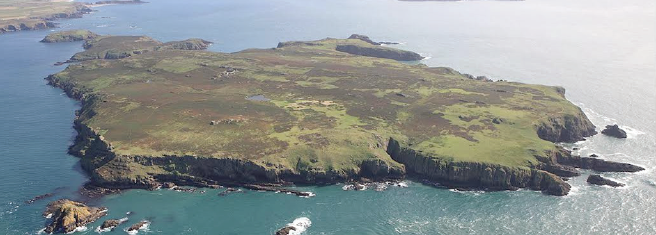

Skomer: famed for its wildlife and for the survival of its ancient field systems
AT THE BEGINNING of this month, the Skomer Island Project team returned to Skomer to undertake the latest phase of archaeological research on the Island.
The Herald contacted the Royal Commission for Ancient and Historical Monuments in Wales (RCAHMW) who kindly provided us with an update and photographs of their latest visit to Skomer.
Skomer Island is a highly protected landscape famous for its puffins and other breeding seabirds, but it is also home to some of the best preserved prehistoric field systems and settlements anywhere in Britain.
The Royal Commission began the Skomer Island Project in 2011, together with colleagues from the University of Sheffield and Cardiff University, to find out more about the prehistoric communities who lived once and farmed here.
New airborne laser scanning has allowed detailed mapping of every field and round house while fieldwork has demonstrated that settlement on the island extends back some 5000 years.

This year archaeologists Louise Barker and Toby Driver (RCAHMW), Bob Johnston (University of Sheffield) and Oliver Davis (Cardiff University) were delighted to be joined by geographer and environmental scientist Sarah Davies of Aberystwyth University.
The aims of this year’s work were twofold; to excavate one of the Island’s main archaeological features, a prehistoric field boundary and the continuation of geophysical survey within the improved fields surrounding the old farm in the centre of the Island.
Despite Storm Katie cutting short our planned four days of fieldwork, we managed to achieve our goals in the two sunny and still days we had and were also lucky enough to witness the return of the puffins.
The focus of our small evaluation trench was a substantial lynchet, part of the Northern Field Systems on the Island.

A lynchet is a bank of earth that builds up on the down slope of a field ploughed over a period of time and the resulting earth or plough soil is important for helping us reconstruct the environmental history of the Island, identify what was being cultivated and possibly at what date.
Therefore, the principal focus of the excavation was to recover samples of the soils within the lynchet which will now be carefully analysed over the coming months.
Preliminary results from the geophysical survey also look positive. Within the improved fields surrounding the farm in the centre of the Island, there is little evidence for surviving archaeology; however geophysics undertaken in 2012 did reveal subsurface archaeological features and we wanted to see if this was the case elsewhere.

This was indeed the case, and in the area surveyed directly to the west of the farm, the gradiometer detected a linear feature, perhaps a ditch cut by later cultivation ridges.
As ever the Skomer Island Project team would like to thank the Wildlife Trust of South and West Wales and the Skomer Wardens for their continued support and help with our work on the Island.


PEMBROKESHIRE’S all-female rowing crew Merched y Mor have completed one of the hardest endurance challenges on the planet after crossing the Atlantic Ocean in just over fifty days.
Denise Leonard, Helen Heaton, Liz Collyer and Heledd Williams arrived at Nelson’s Dockyard in Antigua on Monday (Feb 2) after rowing roughly 3,000 miles from La Gomera in the Canary Islands as part of the World’s Toughest Row.
Their official crossing time was 50 days, 14 hours and 43 minutes.
The team becomes the first all-Wales female crew ever to finish the transatlantic race, joining a small global community of ocean rowers who have successfully crossed the Atlantic under human power alone. Organisers frequently note that fewer people have completed the crossing than have travelled into space.
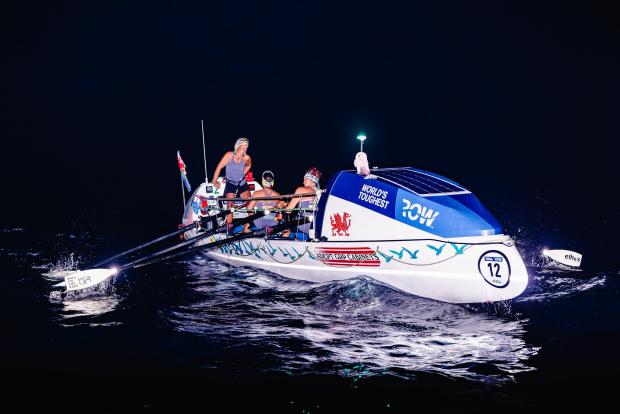
Life at sea
For seven weeks, the four women lived aboard their boat Cariad, rowing in pairs around the clock in two-hour shifts, day and night.

They battled steep Atlantic swells, equipment issues and relentless fatigue, with waves reported at up to twenty feet. Temperatures swung from chilly nights to intense daytime heat, while flying fish, salt sores and sleep deprivation became part of daily life.
There were no days off. Christmas, New Year and birthdays were marked mid-ocean.
Communication with home was limited to satellite messages and brief calls, making morale and teamwork critical.
The crew said their strategy was simple: break the challenge into small pieces.

“We just took one day at a time and looked after each other,” they said after stepping ashore. “Kindness and teamwork got us through.”
Months of preparation
The race, widely described as the world’s toughest endurance row, demands far more than fitness.
Teams must be fully self-sufficient, carrying their own food, water makers, safety gear and navigation equipment. Crews train for months in open water, learning survival skills, first aid, and how to repair equipment at sea.

For Merched y Mor, much of that preparation happened along the Pembrokeshire coast, building strength and sea confidence in conditions not unlike the Atlantic’s winter swells.
Each member came with a different personal motivation, from setting an example to their children and grandchildren to proving that age and background are no barriers to big ambitions.
Before departure, Denise Leonard said she wanted to show “that if you take a chance and are brave enough to try, extraordinary things are possible.”
Warm welcome in Antigua
Their final approach into Antigua was emotional, with families waiting on the quayside.
After weeks without physical contact, the first hugs brought tears from both crew and supporters.
“It didn’t feel real until we saw them,” the team said. “Those first hugs were just the best.”
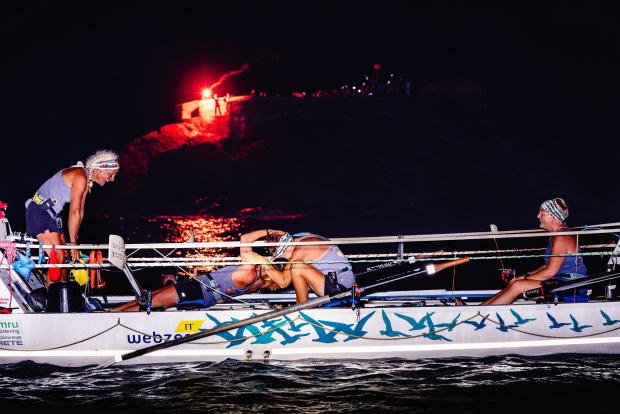
Rowing for good causes
The challenge was not just personal.
The crew are raising funds for several charities close to their hearts, including the RNLI, Sea Trust Wales, Action for Children and Popham Kidney Support. Proceeds from sponsorship and the planned sale of their boat will be shared between the causes.
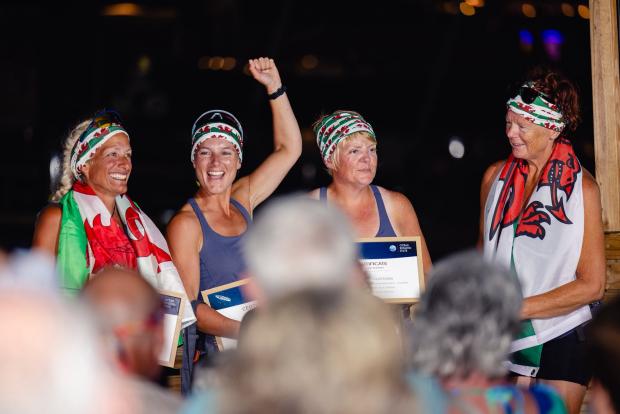
A proud moment for Pembrokeshire
Back home, messages of congratulations poured in from across the county, with supporters tracking the boat’s progress online throughout the crossing.
Their achievement places Pembrokeshire firmly on the international endurance-sport map and offers an inspiring story of resilience, teamwork and determination.
After fifty days alone with the ocean, Merched y Mor have returned not just as finishers, but as record-makers — proof that a small Welsh crew can take on the Atlantic and win.

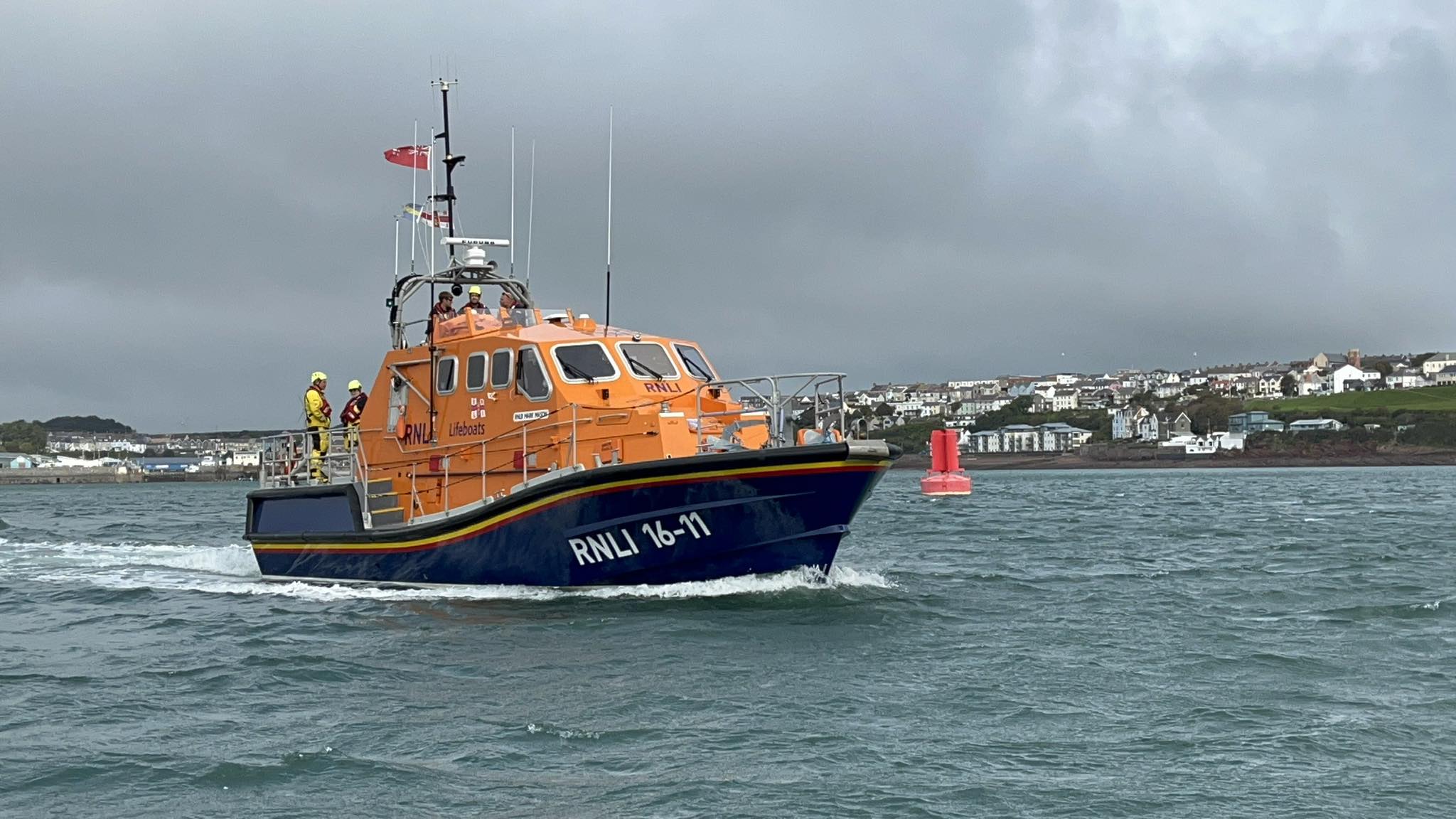
Volunteers diverted mid-exercise to help casualty at slipway
CREW from Angle RNLI were called into action yesterday afternoon after being diverted from a training exercise to assist with a medical emergency at Neyland Slipway.
The all-weather lifeboat was afloat on an extended navigation exercise when the request for assistance came in at 2:44pm. At the time, the crew were operating off Milford Shelf and immediately made best speed towards Neyland.
On arrival, the lifeboat’s inflatable Y-boat was launched, allowing casualty care-trained volunteers to reach the shore quickly. Crew members assessed the casualty and provided immediate assistance while coordinating with emergency services.
Working alongside Dale Coastguard Rescue Team and the Welsh Ambulance Service, the volunteers helped safely extract the casualty from the slipway and transfer them for further treatment.
Once the incident was concluded, the lifeboat was stood down and returned to station, where it was cleaned, refuelled and readied for service again by 4:30pm.
A spokesperson said the call-out highlighted how quickly routine training can turn into a real-life rescue, with crews ready to respond at a moment’s notice.
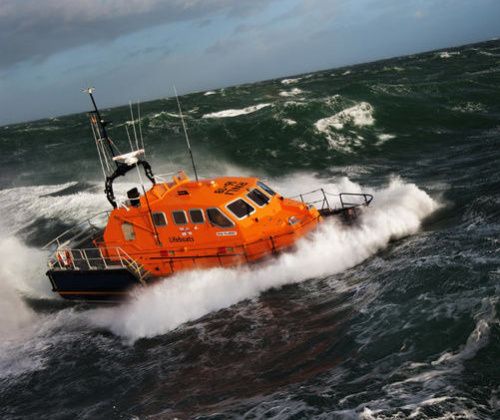
Lifeboat crew battle six-metre seas after lone sailor loses engine, sail and takes on water west of Skokholm
ANGLE RNLI lifeboat volunteers carried out a dramatic rescue after responding to a broken Pan Pan call from a 28ft yacht in severe conditions, with winds gusting to 42 knots and waves reaching up to six metres.
At 10:56am on Tuesday (Feb 3), the crew were already afloat on a navigation pass-out exercise in Dale Roads when they overheard the distress transmission from a yacht west of Skokholm Island. Moments later, HM Coastguard tasked the lifeboat to respond while further information was gathered.
While making best speed to the scene, the crew were told the yacht, carrying one person, had suffered engine failure, blown out its sail and was taking on water from an unknown source.
The casualty vessel was located around three miles west of the island. After assessing the situation, the crew decided conditions were too dangerous to place a lifeboat volunteer aboard, and the safest option was to establish a tow.
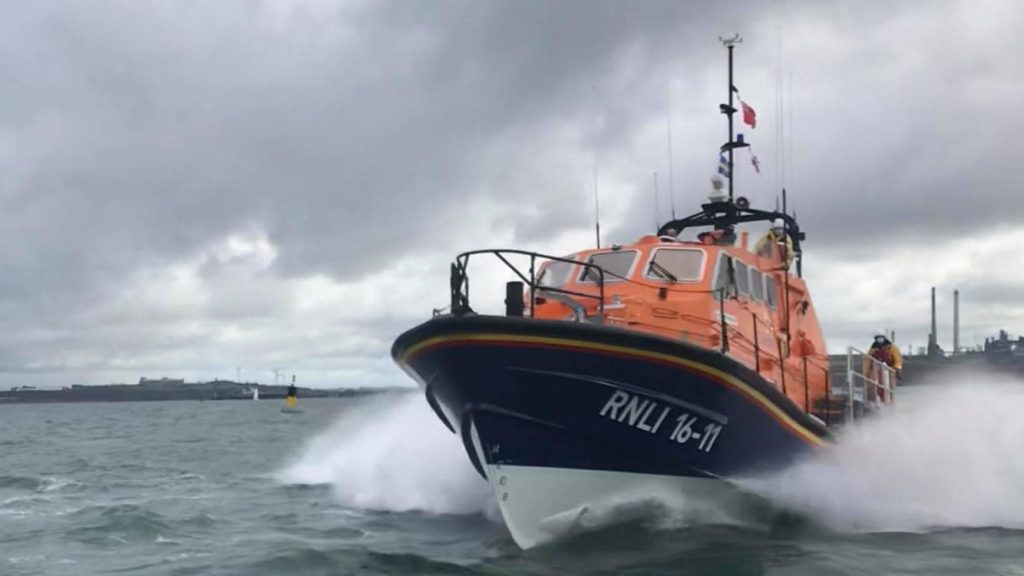
With a south-easterly gale and a very rough sea state, the tow was rigged and the yacht began a slow passage towards Milford Haven.
However, shortly after the tow commenced, a large wave threw the skipper overboard. Although tethered to the yacht by his safety harness, he was dragged alongside the vessel in the heavy swell.
The lifeboat crew immediately released the tow and began recovery operations. With the towline fouling access on one side and the casualty trapped on the other, a crew member was eventually placed aboard the yacht over its bow. The skipper’s harness was cut, allowing him to drift clear, before he was safely recovered from the water by the lifeboat.
With the priority now the sailor’s welfare, and the risks of re-establishing the tow judged too great, the crew member was brought back aboard and the lifeboat returned to harbour.
On arrival, volunteers from the Dale Coastguard Rescue Team assisted with casualty care and gathered the necessary details.

The lifeboat was stood down and made ready for further service by 2:30pm.
The station also thanked the The Lord Nelson Hotel for accommodating the sailor at short notice.
A spokesperson for Angle RNLI said the incident highlighted both the speed at which conditions can deteriorate at sea and the importance of safety equipment such as harnesses and tethers.




international news12 minutes ago
Pembrokeshire women conquer Atlantic in epic 3,000-mile row
PEMBROKESHIRE’S all-female rowing crew Merched y Mor have completed one of the hardest endurance challenges on the planet after crossing...


Crime15 hours ago
Sex offender jailed after living off grid in Pembrokeshire and refusing to register
Man walked into police station after months avoiding authorities A CONVICTED sex offender who told police he intended to live...


Crime22 hours ago
More rape and sexual assault survivors to get right to challenge dropped cases
New review scheme to be rolled out across CPS Cymru-Wales following successful pilot SURVIVORS of rape and serious sexual assault...


Crime2 days ago
Man spared jail after admitting child abuse image offences
Police seized devices after intelligence linked Pembrokeshire address to illegal cloud storage accounts A 23-YEAR-OLD Pembrokeshire man has avoided immediate...

Community2 days ago
Cleddau at heart of major water reforms as ministers promise ‘fundamental reset’
New regulation plan aims to tackle pollution, sewage spills and ageing infrastructure COMMUNITIES along the River Cleddau could see tighter...


Crime2 days ago
Man caught in hotel sting after trying to meet girl, 13
Laugharne defendant confronted by paedophile hunters at St Clears Travelodge before suspended jail term at Swansea Crown Court A LAUGHARNE...


News2 days ago
Princess of Wales visits historic Pembrokeshire woollen mill
Catherine the Princess of Wales visited Melin Tregwynt, a historic family-owned woollen mill, today, highlighting the enduring traditions and skills...


Crime3 days ago
Arrest made after Carmarthen park stabbing investigation
Police thank community and media following public appeal to trace suspect AN ARREST has been made following last week’s stabbing...


Crime3 days ago
Search continues for attempted murder suspect after Carmarthen park stabbing
Police expand searches across riverbank and woodland as public urged to come forward with information DYFED-POWYS POLICE say their search for...

Community3 days ago
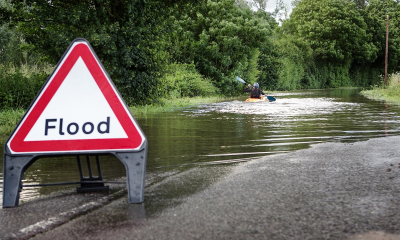
Flood alert issued for Pembrokeshire coast this evening
Pembrokeshire residents are being urged to prepare for possible flooding along the coastline between St Dogmaels, Cardigan and Amroth, after...
-

 Health7 days ago
Consultation reveals lack of public trust in health board
-
Crime15 hours ago
Sex offender jailed after living off grid in Pembrokeshire and refusing to register
-
News2 days ago
Princess of Wales visits historic Pembrokeshire woollen mill
-

 Crime6 days ago
Pembroke man accused of child sex offences sent to Swansea Crown Court
-

 Health4 days ago
Doctor struck off after sexual misconduct findings at Withybush Hospital
-

 Business7 days ago
Eight-year prison sentence after vehicle stop uncovers drugs worth over £150,000
-

 Crime2 days ago
Hakin man’s appeal delayed again as Crown Court seeks guidance on insurance law
-

 Community6 days ago
50s women threaten legal action over pension compensation refusal