


News
Puppy farming

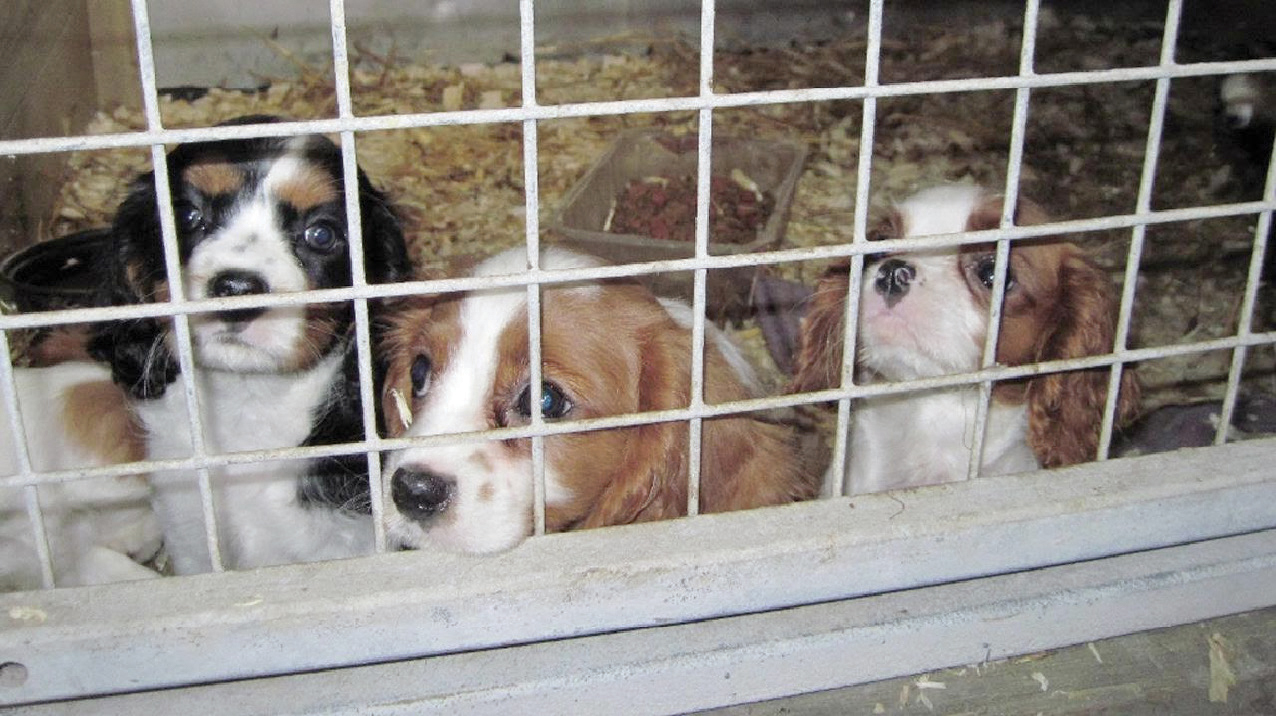
 IT IS sometimes observed that the British are prepared to allow humans to live in conditions that they would not allow their own pets to endure.
But imagine what it is like to be a breeding bitch on a puppy farm. Puppy farms are large-scale breeding premises. The aim of puppy farms is to make money, no matter the cost to the dogs, who are kept in cramped and cruel conditions.
The puppies are sold through pet shops, internet and newspaper ads.
Puppy farms in the UK have been found to have as many as 200 breeding dogs, most kept locked inside 24 hours a day, often in complete darkness. They are usually located on farms in barns, disused chicken houses garages or any disused outbuilding.
The dogs are forced to eat, sleep and give birth in the same area they urinate and defecate; something they would never do given the choice. In some cases they are treated worse than animals bred for the food chain.

The general public keep up the demand for pups and so the cruelty continues, day after miserable day.
Dogs on puppy farms are often neglected; matted coats, infected eyes and ears and rotten teeth are just a few of the painful conditions the dog suffer. When breeding dogs become too old and exhausted to continue producing puppies they are killed or a lucky few are given to rescues.
The puppies also often have behavioural and psychological problems, such as aggression and fearfulness, because they are not exposed to the outside world.
The puppies are generally removed from their mothers far too early and sent by rail or van to ‘dealers’ or pet shops to satisfy the public’s demands.

Many are severely traumatised by the transition, and some do not make it out alive. Puppies from these sources will have had the worst possible start in life, and are far more likely to have health and temperament problems.
THE COST OF BUYING FROM A PUPPY FARM CAN BE SIGNIFICANT
Almost half of dog owners are spending more on vet’s fees than they had accounted for, as more than one in four people (27%) say that they suspect that their puppy came from a cruel puppy farm. The rising cost of owning a puppy comes as people opt to buy ‘mail order pups’ online or from newspaper ads.

Many of these pups will go on to develop diseases and conditions common in puppy farmed pups. One fifth of pups purchased online, without being seen by their new owner first, ended up with serious gastro intestinal problems, 15% with the potentially deadly parvovirus and one in ten developed kennel cough.
WHY ARE PUPPIES FARMED?
And make no mistake, puppy farming is big and profitable business. While there are around 10 licensed dog breeders in Ceredigion, Pembrokeshire and Carmarthenshire, there are many more unscrupulous breeders doing the canine equivalent of stacking ‘em high and selling ‘em not so cheap.
As an example if a commercial breeder with 50 bitches – a not unusual figure – that produce one litter a year of four pups and the pups sold for £200 each, that would be an annual income of around £40,000. If one multiplied that by the number of licensed breeders in one county, Carmarthenshire, that is £3.2m of gross income each year.
Add in Ceredigion, another 40 licensed establishments and you are up to £4.8m a year.
Those figures are startling enough, but the true figures may be even higher. An investigation by The Dog Rescue Federation has suggested that Carmarthenshire alone produces 28,000 puppies a year from licensed breeding establishments.
Moreover, some of the puppy farms are co-located with farms that receive significant sums in European subsidies, and the Welsh Government has neither the resources nor the capacity to determine whether funds intended to assist agriculture are being used to fund the factory farming of family pets.
As for any assurance that might be given by the statutory provisions in Wales, a Daily Mirror investigation into Carmarthenshire puppy farms in January of this year revealed that even licensed dog breeders are reluctant to allow purchasers to follow a key part of purchase advice; namely, allowing buyers to see their purchases with their mothers.
KENNEL CLUB SPEAKS
With west Wales being a centre for both legitimate dog breeding and puppy farming, The Herald asked the Kennel Club for their view on the issue.
Caroline Kisko, Kennel Club Secretary, said: “Puppy farmers exploit the UK’s love of dogs by breeding for profit, without any consideration for health and welfare. The sad fact is that puppy buyers can inadvertently keep irresponsible breeders in business if they do not do the necessary research before they buy a puppy.
“By far the simplest message the Kennel Club can give those looking for a dog is to always go to a Kennel Club Assured Breeder and to always see the pup interacting with its mother in its home environment.
“The Kennel Club established the Kennel Club Assured Breeder Scheme to help guide puppy buyers to responsible breeders and it carries out its own inspections on breeders to ensure they are adhering to high standards of practice.
“It is the only scheme in the UK where dog breeders have to follow high standards for caring for the health and welfare of their dogs and they have to agree to have their premises inspected before they join the scheme and at least every three years thereafter.
“We are extremely concerned about any breeders, large or small scale, who put the health and welfare of the dogs and puppies secondary to profit, or do not even consider it at all, and we would recommend anyone who has concerns that someone may be a puppy farmer to make their local authority aware and report any dog welfare concerns to the RSPCA.
“Prospective puppy buyers can help put irresponsible breeders out of business by doing their research and ensuring they buy a dog responsibly.
“There are a few simple things people can do to ensure they buy a puppy as responsibly as they can, such as always seeing the puppy with its mother, checking out the breeding environment and asking to see relevant health test certificates for the puppy’s parents.
“There are lots of tips and advice on finding a healthy, happy dog on the Kennel Club website and we would strongly suggest prospective dog owners start there when doing their research.”
WHAT DOES RSPCA CYMRU HAVE TO SAY?
RSPCA Cymru superintendent Martyn Hubbard told us: “Puppy trafficking is big business and dealers are getting rich from duping members of the public and leaving a trail of sick and dead puppies behind them, not to mention the heartache of families that have bought puppies.
“Many irresponsible breeders who breed puppies for sale, are based on maximising profit with little regard for animal welfare.
“RSPCA Cymru welcomed the introduction of new legislation in Wales in 2015 to regulate dog breeding establishments. However, though this marks a significant improvement, we remain concerned that the regulations don’t go far enough in some areas.
“For example, they fail to address the need to prioritise health, welfare and temperament over appearance when choosing which animals to breed, in order to protect the welfare of both the parents and the offspring, or to tackle the issues of inherited diseases and exaggerated physical features which compromise the welfare of many dogs of numerous breeds and types.
“Parts of Wales have an unenviable reputation for poor breeding practices. It is vital Local Authorities in Wales feel equipped to tackle this serious problem, and are in a position to stamp out such incidences and ensure breeders protect the welfare of dogs and puppies involved.
“This is particularly important where dog breeding is exceptionally prevalent, such as in Carmarthenshire and other parts of west Wales.
“Given the overpopulation of companion animals in Wales, we’d urge people to strongly consider adopting a dog or puppy in need of a second chance.”
THE PROBLEM ISN’T CONFINED TO BUYING DOGS FROM WALES.
There was a 61% increase in pups coming into the UK from abroad in the first year since the controls were relaxed under changes to the Pet Travel Scheme in 2012, and that does not account for the undeclared dogs that are being smuggled illegally into the country.
People opt to buy ‘mail order pups’ online or from newspaper ads, not realising that many pups being sold through these routes have been illegally smuggled from abroad.
One in ten people bought a ‘mail order pup’ from the internet online or from a newspaper advert, without seeing it first. This is a classic sign that the puppy has come from a puppy farm, as the breeder does not want buyers to see the state of the pup or the conditions it was raised in. Local authorities have a key role in taking action against puppy farmers, both through Trading Standards investigations and in animal welfare.
DOES YOUR COUNTY COUNCIL HAVE ANYTHING TO SAY?
The Herald asked each of the County Councils in our circulation area to tell our readers what they were doing to curb the puppy farm trade. We asked for details of any prosecutions and rogue breeders.
Ceredigion County Council directed our enquiry to the Chief Veterinary Officer for the Welsh Government.
Carmarthenshire County Council was a little more forthcoming: ‘All reports of potential unlicensed dog breeding are investigated and followed up and appropriate action taken. Several of these have resulted in licences being issued when appropriate and conditions allowed.
‘A very small number of unlicensed dog breeding resulted in offenders receiving an official caution.
‘There are currently four ongoing investigations’.
Pembrokeshire County Council told us: ‘In 2015 Welsh Government brought in new legislation relating to the licensing of dog breeders in Wales.
Licensed breeders are required by law to:
- have a staff to dog ratio of one full time attendant to no more than 20 dogs
- submit enrichment and socialisation plans to local authorities
- conform to statutory licensing requirements
- have regard to specific guidance published by Welsh Ministers
Pembrokeshire County Council’s spokesperson continued: ‘The Council has always been proactive in trying ensure good standards are followed by licensed dog breeders.’
Three years ago it introduced a scheme that rewarded good licensed dog breeders with an Award scheme.
The scheme aims to recognise and encourage high standards at licensed premises and this year six out of 13 licensed breeders have achieved the Award.
Pembrokeshire County Council actively looks for people advertising puppies for sale on a regular basis and will investigate all complaints relating to the breeding of dogs.
The Council’s Cabinet Member for Environmental and Regulatory Services, Huw George, said he welcomed the stance taken by the new Chief Executive of the RSPCA who said the organisation would be ‘less adversarial’ under his leadership.
Councillor George added: “We also support the recommendation in the recent RSPCA Report on the Review of Responsible Dog Ownership. Commissioned by the Welsh Government, it calls for an annual dog registration fee scheme for Wales, to help fund sustainable dog welfare and control services.”

A brutal trade: Puppy farming


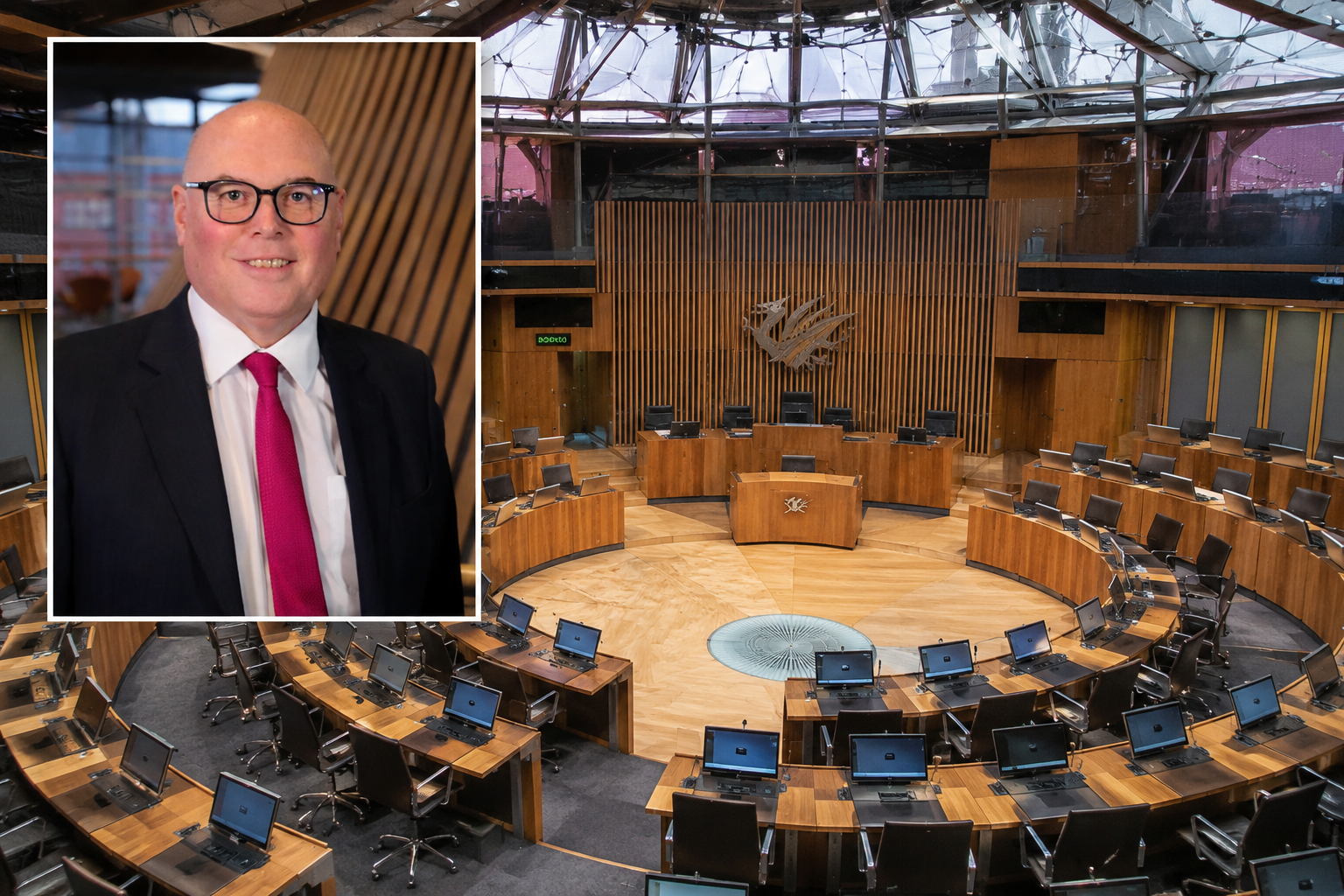
Senior Conservative MS says he has the experience and procedural knowledge needed for the role
PAUL DAVIES has confirmed that he will put his name forward to become the next Llywydd of the Senedd following growing speculation after the Welsh election.
The former leader of the Welsh Conservatives and long-serving Member of the Senedd said he had decided to stand after discussions with colleagues and encouragement from others.
In a statement issued on Sunday (May 10), Davies said he believed he had the experience needed to champion the Welsh Parliament and oversee proceedings fairly.
He said: “There has been much speculation since the election about who will take on the role of the next Llywydd in the Senedd.
“I want make it clear that, after consultation with colleagues and having been urged to do so by others, I will be putting my name forward to be the next Presiding Officer.
“I have the experience to champion the Welsh Parliament and have a clear understanding of its Standing Orders and procedures.
“As the Temporary Presiding Officer in the previous Senedd, and as a former Committee Chair and Business Manager in the Welsh Parliament, I have the necessary skills to take on this important role.”
The role of Llywydd is one of the most senior positions in the Senedd, with responsibility for chairing debates, maintaining order in the chamber and ensuring parliamentary rules are followed.
Davies, who represents Ceredigion Penfro, has been a prominent figure in Welsh politics for many years and previously served as leader of the Welsh Conservatives.
Sam Kurtz disappointment
Davies’ announcement also comes against the backdrop of disappointment within Welsh Conservative circles after Sam Kurtz failed to win a seat.
Kurtz, the former Carmarthen West and South Pembrokeshire MS, had been placed second on the Conservative list in Ceredigion Penfro behind Davies.

That decision was controversial locally, with many party supporters believing Kurtz had built a stronger personal following in Pembrokeshire and was one of the party’s most visible and energetic campaigners in west Wales.
His failure to return to the Senedd is likely to be seen as one of the most significant Conservative casualties of the new electoral system, particularly given his profile in rural affairs, farming, tourism and local campaigning.
There is already speculation about Kurtz’s next move, including rumours that he could seek to stand for Parliament in the future.
However, speaking to The Herald at the declaration, Kurtz was tight-lipped about his plans and even suggested he may return to journalism.
Before entering politics, Kurtz worked in local journalism, including at The Pembrokeshire Herald and the Western Telegraph.
Davies said he was saddened that Kurtz had not been returned, describing him as a hard-working colleague who had given strong service to Pembrokeshire and west Wales.
The announcement comes as parties continue discussions following the historic 2026 Senedd election, which resulted in no overall majority and a dramatically reshaped Welsh political landscape.

PLAID CYMRU leader Rhun ap Iorwerth has signalled he is ready for confrontation with Prime Minister Keir Starmer after the biggest political earthquake in Welsh devolution history.
Following Plaid’s dramatic Senedd election victory, which saw the party emerge as the largest force in the Welsh Parliament for the first time, ap Iorwerth has made it clear he intends to push aggressively for more powers and funding for Wales — including reopening rows over HS2 funding, policing, justice, and control of natural resources.
Speaking during a series of high-profile interviews on Sunday, the likely next First Minister said the UK Labour government now faced a choice: work with Wales or risk being seen as punishing Welsh voters for rejecting Labour dominance.
The comments are likely to raise tensions between Cardiff Bay and Westminster just days after Welsh Labour suffered a historic collapse at the polls.
Plaid plans minority government
Plaid Cymru won 43 seats in the expanded 96-member Senedd, leaving the party short of an outright majority but comfortably ahead of rivals.
With support expected from the two Green MSs, and the Liberal Democrats indicating they will abstain rather than oppose him, ap Iorwerth now appears on course to become Wales’ next First Minister as early as Tuesday.
The result marks the end of more than a century of Labour electoral dominance in Wales and the first time Labour has failed to emerge as the largest party since devolution began in 1999.
Ap Iorwerth has insisted he wants Plaid to govern alone rather than form a coalition, although he acknowledged cross-party cooperation would be necessary.
Fresh pressure over HS2 and funding
One of the clearest signals from the Plaid leader was his intention to revive demands over the HS2 rail project.
Welsh politicians have long argued Wales was unfairly denied billions of pounds in consequential funding after HS2 was classified as an England-and-Wales project despite no track entering Wales.
Ap Iorwerth suggested a future “Wales Bill” at Westminster could include demands on fairer funding, policing and criminal justice powers, and greater Welsh control over natural resources.
The remarks are likely to concern Labour strategists in London already facing growing pressure after heavy losses in Wales.

Labour admits “catastrophic defeat”
Interim Welsh Labour leader Ken Skates described the election result as a “catastrophic defeat” and confirmed the party would carry out what he called a “forensic” review into what went wrong.
Skates is also expected to enter the race to become permanent Welsh Labour leader following the shock loss of former First Minister Eluned Morgan, who lost her own seat during the election.
Meanwhile, Reform UK, which surged to 34 seats, said it intended to become an aggressive opposition force inside the Senedd.
Tensions with Reform
Ap Iorwerth also appeared to take a swipe at Reform leader Dan Thomas after claiming he had been unable to arrange a courtesy call following the election.
Reform denied the allegation, insisting contact details had been provided and that Plaid had been told to communicate through Thomas’s staff.
Despite the row, Reform MS Llŷr Powell suggested the party would not simply oppose everything brought forward by Plaid, saying Reform would judge proposals individually and focus heavily on government spending and scrutiny.
“A new era” for Wales
The weekend celebrations outside the Senedd increasingly resembled the atmosphere of a government-in-waiting, with Plaid supporters openly speaking of a “new era” in Welsh politics.
For the first time since the Senedd was created, Wales now faces the prospect of a nationalist-led government prepared to challenge Westminster far more openly than previous Labour administrations.
Whether that leads to meaningful constitutional change, or confrontation with London, could define the next chapter of Welsh politics.
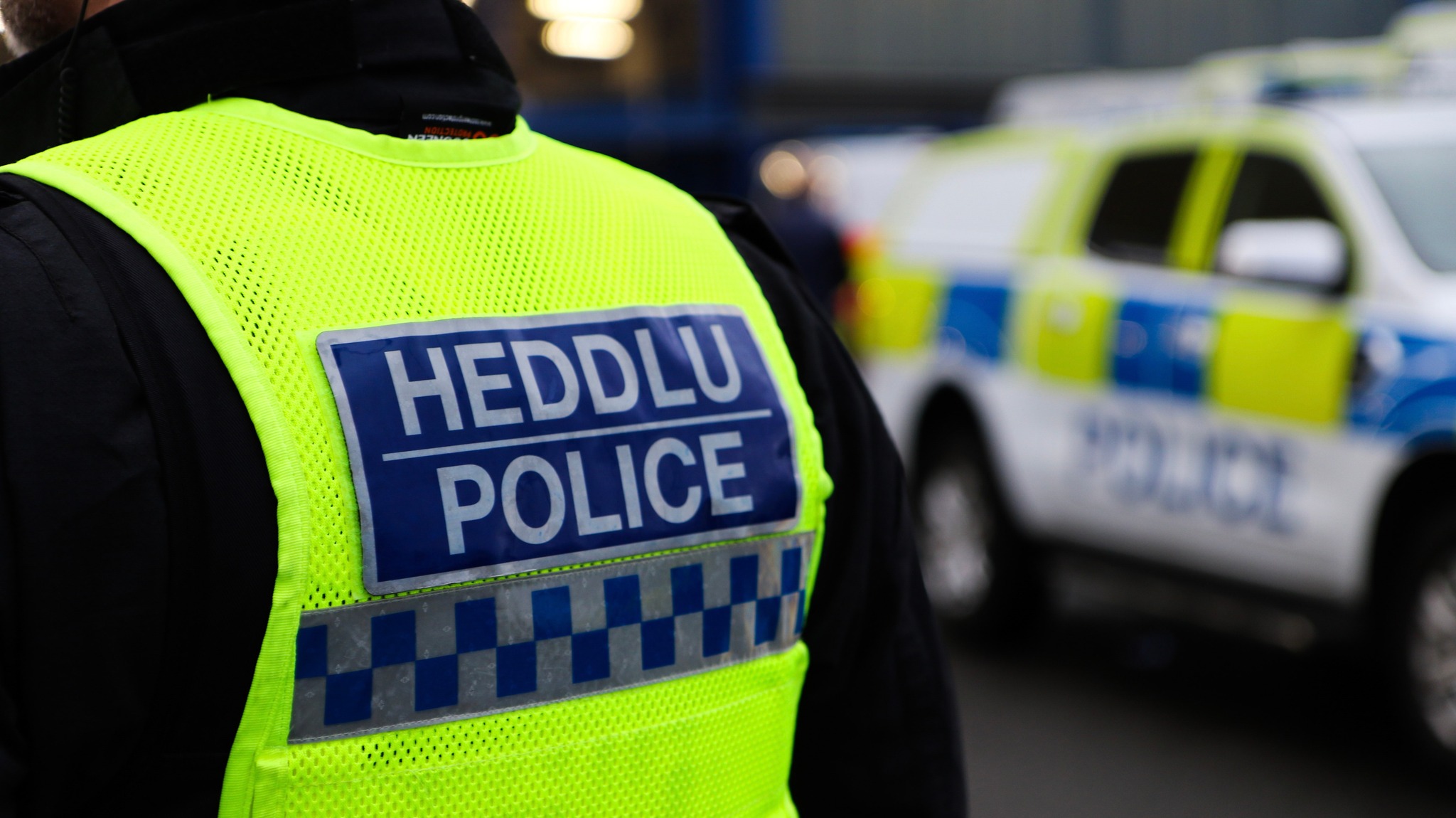
TWO WOMEN were arrested following a disturbance at the Mount Estate in Milford Haven on Saturday night (May 9).
The Herald understands the arrests followed an altercation involving four people.
Video circulating on social media shows two women lying face down on the ground outside while handcuffed and restrained by police officers.
In the footage, officers can be heard telling one woman that she is being arrested on suspicion of assaulting police.
Both women were then taken away, each flanked by officers.
Other women can be seen speaking to those detained while they remain on the ground.
The Herald has contacted Dyfed-Powys Police for further details, including confirmation of the number of arrests, the nature of the incident, and whether anyone was injured.



News41 minutes ago
Rhun prepares for clash with Starmer as Plaid eyes power in Cardiff Bay
PLAID CYMRU leader Rhun ap Iorwerth has signalled he is ready for confrontation with Prime Minister Keir Starmer after the...

News1 day ago
Plaid Cymru celebrates historic victory as Rhun ap Iorwerth arrives at Cardiff Bay
CROWDS gathered outside the Senedd as Plaid Cymru leader Rhun ap Iorwerth arrived in Cardiff Bay following his party’s historic...

Crime1 day ago
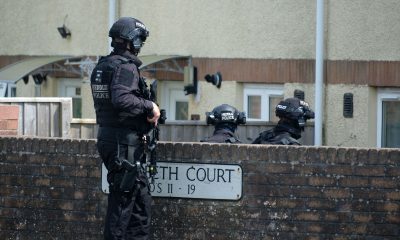
Police standoff ends after four-hour incident in Pembroke Dock
ELIZABETH COURT SCENE STOOD DOWN AFTER DOMESTIC INCIDENT A FOUR-HOUR police standoff in Pembroke Dock has ended with a 21-year-old...


Crime1 day ago
Teen denies attempted murder of Milford Haven teacher
TEENAGER REMANDED AHEAD OF JULY TRIAL A 15-YEAR-old boy has denied attempting to murder a teacher during a stabbing incident...

News2 days ago
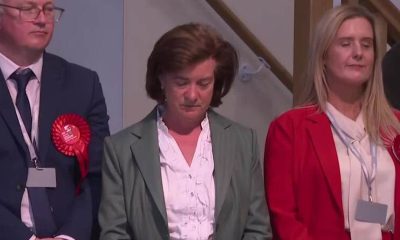
Catastrophe for Labour as Plaid and Reform reshape Welsh politics
ELUNED MORGAN LOSES SEAT AS OLD CERTAINTIES ARE SWEPT AWAY THE VOTERS of Wales have delivered one of the most...

News2 days ago
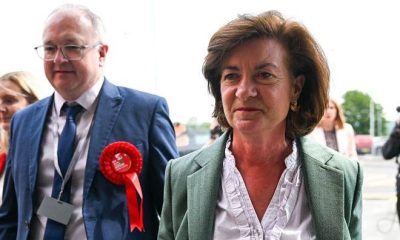
Labour wiped out in Ceredigion Penfro as Plaid tops poll and First Minister loses seat
Shock result sends political shockwaves across Wales as Reform also surges in historic Senedd count LABOUR suffered one of the...

News2 days ago
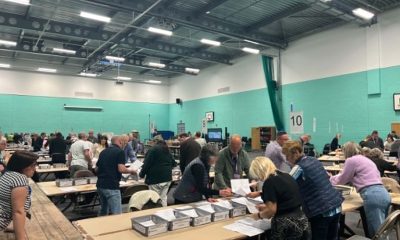
Labour deputy says party ‘will not form next Welsh Government’
LABOUR FACES HISTORIC DEFEAT AS COUNTING CONTINUES ACROSS WALES LABOUR’S Deputy Leader in Wales has effectively conceded the Senedd election,...
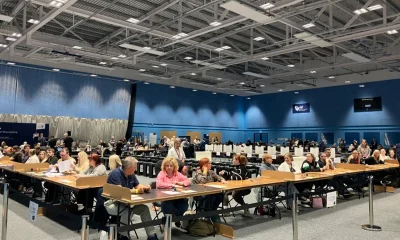

News2 days ago
Counts underway in historic Senedd election
Wales waits for results as first election under new voting system reaches count stage COUNTING is underway across Wales today...
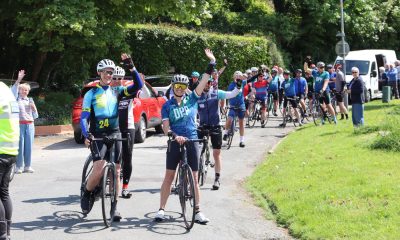

Charity3 days ago
Chief’s Tour honours fallen officers with 75-mile Pembrokeshire ride
Dyfed-Powys Police team raises thousands for bereaved police families charity A TEAM of officers and staff from Dyfed-Powys Police cycled...


Crime3 days ago
Racial abuse suspect barricaded himself inside Johnston lodge
ARMED police were called to a supported accommodation building in Johnston after a man allegedly barricaded himself inside a room...
-
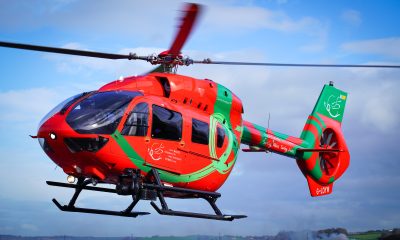
 News5 days ago
Baby in critical condition after Fishguard emergency
-
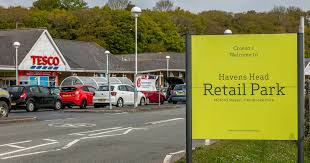
 News4 days ago
Former housing officer admits drink-driving in Pembrokeshire retail park
-
 Crime4 days ago
Job loss threat for convicted Pembrokeshire drug-driver
-
 Crime4 days ago
Milford motorist disqualified for drug-driving
-

 Crime4 days ago
Police tip-off leads to driving ban for Milford motorist
-
Crime3 days ago
Racial abuse suspect barricaded himself inside Johnston lodge
-

 Community4 days ago
Sixth-former firefighter balances schoolwork with saving lives
-
 Crime4 days ago
Delivery driver caught twice over legal drink-drive limit
zackery sellers
October 9, 2025 at 4:12 am
Really well-researched and written. Catch pakistani live tv ptv sports — studio analysis and highlights. low‑latency playback. replays, match previews, expert commentary. fast, reliable HD streaming.