


Farming
Scientists in Nitrogen breakthrough

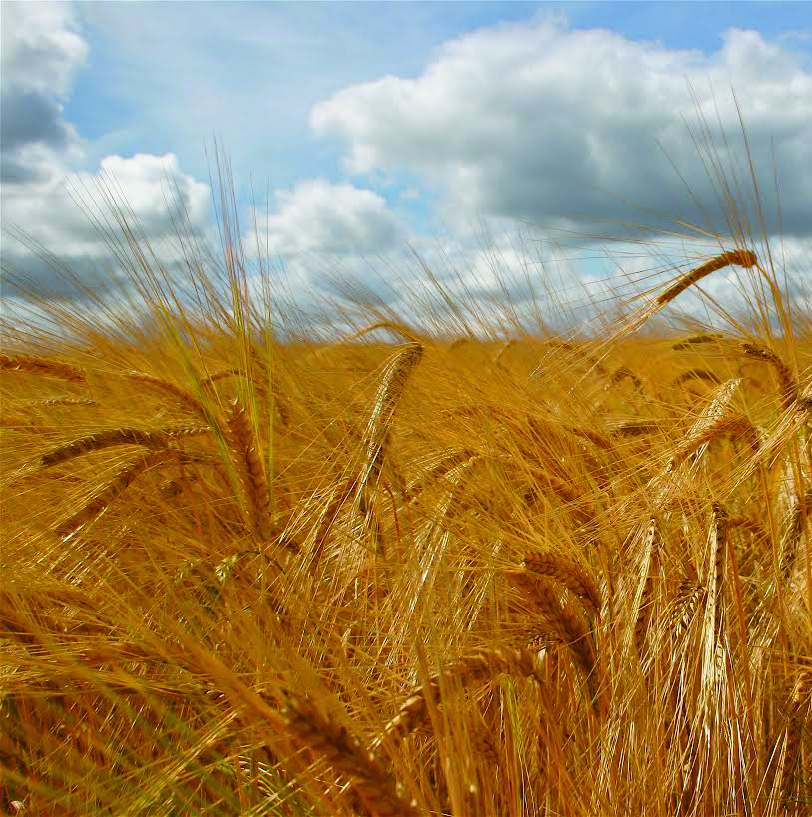

Barley: Discovery could aid developing countries
SCIENTISTS at the John Innes Centre have discovered an important component in the process of nitrogen fixation in plants.
The scientists have identified a key protein that facilitates the movement of calcium in plant cells. This movement of calcium signals to the plant that nitrogen-fixing bacteria are close by and triggers the development of nodules on its roots to house these bacteria.
Nitrogen is the most abundant gas in the atmosphere, and legumes are able to take nitrogen out of the air and incorporate it into their cells. This is possible because legumes have developed a symbiotic relationship with a particular type of soil bacteria that are housed within their roots. These bacteria take up (or ‘fix’) the nitrogen and pass it to the plant in exchange for sugars and other nutrients. This function enables legumes to grow with less nitrogen fertiliser.
Scientists have known for some time that the interaction between plants and bacteria depends on movement of calcium in plant root cells. This movement of calcium takes place in the central nucleus of plant cells. New research from the John Innes Centre lead by Dr Myriam Charpentier and Professor Giles Oldroyd discovered a set of critically important proteins; these proteins facilitate the calcium movement into the nucleus allowing the plant to transfer the information that the nitrogen-fixing soil bacteria are nearby. They believe this is now the nitrogen fixing symbiosis is established.
Although this calcium movement is limited to the nuclei of plant cells, it has a large impact on how the whole plant will grow.
Professor Oldroyd said: “This discovery demonstrates that there is a CNGC protein located at the edge of the nucleus in plant cells which controls the movement of calcium into the nucleus. This is an important step towards understanding nitrogen fixation in legumes and this understanding will help us to develop more efficient crops.”
Dr Charpentier added: “Although the presence of nuclear calcium signals in plants was demonstrated more than a decade ago, the exact identity of the nuclear calcium channel has remained a mystery. This research identifies the first nuclear calcium channel in plants. Calcium signalling is not only important for symbioses but also for many other processes happening in the plant during development and in response to the environment. Knowing the identity of the nuclear calcium channel will now enable us to better understand how plants use nuclear calcium signals to grow and respond to their environments.”
Professor Giles Oldroyd is leading a research group at the John Innes Centre that aims to transfer the ability to fix nitrogen to other types of plants, like wheat or barley. This would increase growth and yield for these crops – particularly in developing countries where farmers have less access to nitrogen fertilisers.

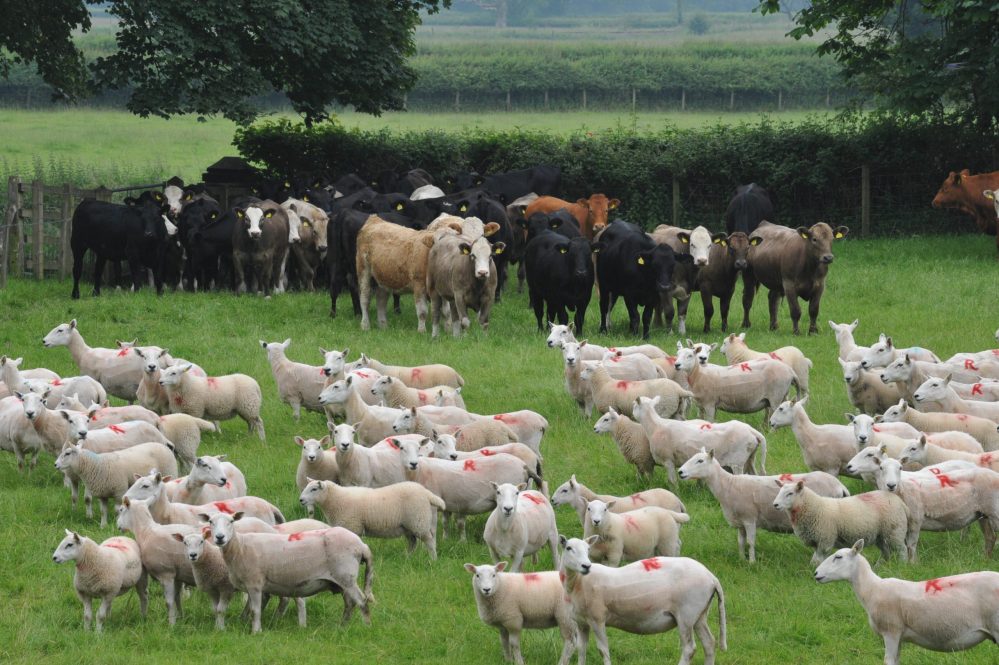
Welsh Conservatives accuse Plaid Cymru of failing farmers as ministers call for patience over changes to agricultural support
CONCERNS over the pace of farming reforms in Wales have intensified after the Welsh Conservatives accused the Welsh Government of failing to act quickly enough on promised changes to agricultural subsidy schemes.
The criticism comes after Welsh Government Rural Resilience and Sustainability Minister, Llyr Gruffydd, urged farmers to be patient as major changes to support payments continue to be developed.
Speaking to ITV Wales, Mr Gruffydd acknowledged that “change is difficult” as the government seeks to reshape agricultural support across rural Wales. The comments come at a time of growing unease among parts of the farming community over the future of post-Brexit subsidy arrangements and concerns about financial pressures facing farms.
The reforms centre on replacing previous support systems with a new approach intended to balance food production, environmental sustainability and rural resilience. However, some farmers and unions have warned that uncertainty over payments and policy changes risks damaging confidence in the sector.
Reacting to the minister’s remarks, Welsh Conservative Shadow Farming Minister, Andrew RT Davies, said Plaid Cymru was not moving quickly enough to deliver on commitments made to Welsh farmers.

Mr Davies said: “Change is not difficult – contrary to Plaid Cymru separatists’ claims.
“If the will is there, there’s no reason reforms can’t be implemented immediately.
“Plaid Cymru separatists must fulfil their promises to Welsh farmers now.”
The comments reflect wider political tensions over the direction of farming policy in Wales, with opposition parties arguing that delays and uncertainty are creating anxiety for agricultural businesses already facing rising costs and economic pressures.

Farming remains a major part of the Welsh economy, particularly in rural counties such as Pembrokeshire, Carmarthenshire and Ceredigion, where many communities rely heavily on agriculture and associated industries.
The Welsh Government has previously said changes to support schemes are aimed at creating a more sustainable long-term future for farming, though ministers have acknowledged the transition period will take time and may prove challenging for some in the industry.
The debate over subsidy reform is likely to remain a key political battleground as the government finalises details of its future support model and seeks to reassure farmers concerned about their livelihoods.

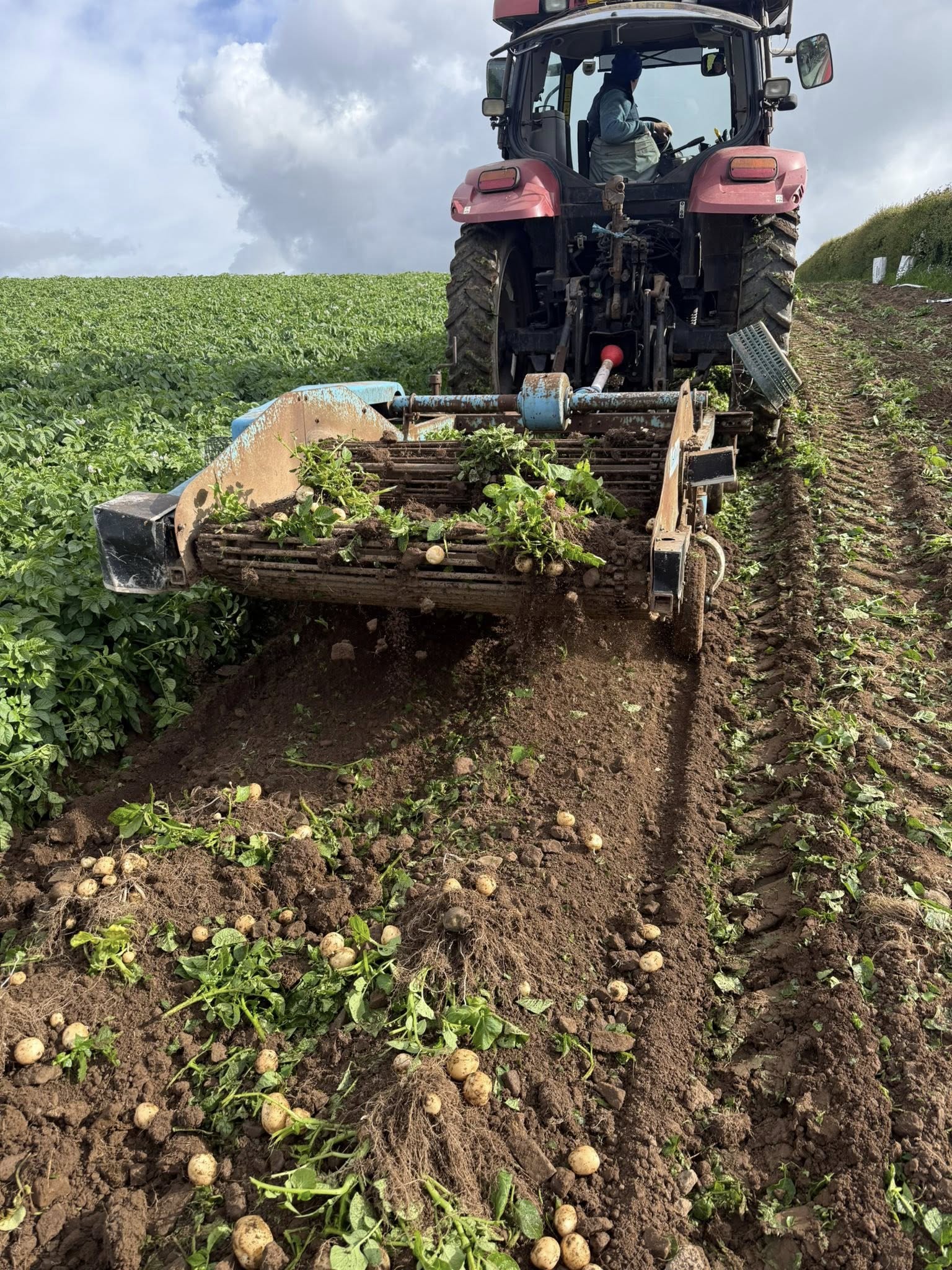
Locally grown early potatoes arrive in stores as farmers begin lifting the first Pembrokeshire crop of 2026
PEMBROKESHIRE’S famous new potato season has officially begun, with the first crop of locally grown potatoes being harvested and delivered to shops across the county.
Farmers at Norton Farm began lifting the first Pembrokeshire new potatoes of the year this week, with the freshly harvested crop expected to reach local stores by Friday morning.
The arrival of Pembrokeshire new potatoes marks the unofficial start of the county’s summer growing season and is eagerly anticipated by shoppers keen to enjoy one of Wales’ best-loved seasonal foods.
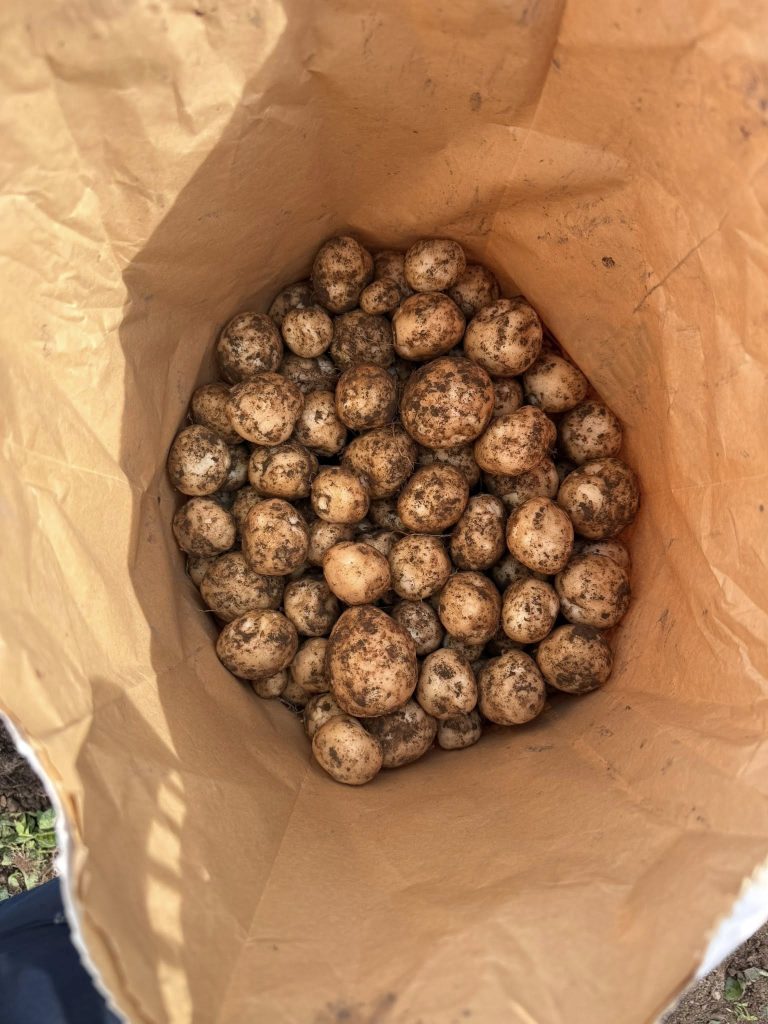
Photographs shared by the farm show workers hand-picking potatoes from freshly turned soil as machinery lifted the crop from fields overlooking the Pembrokeshire countryside.
The potatoes, prized for their distinctive flavour and soft skins, benefit from the county’s mild climate and coastal growing conditions.
Brian Llewelyn a’i Ferched shared the news on social media, telling customers: “Arriving with us this afternoon!!!!” as excitement builds around the first deliveries.
Locally grown Pembrokeshire new potatoes are expected to be available in selected shops from around 10:00am on Friday.
For many in Pembrokeshire, the arrival of the first new potatoes is a sign that summer is just around the corner — and that it is finally time to get the butter on.
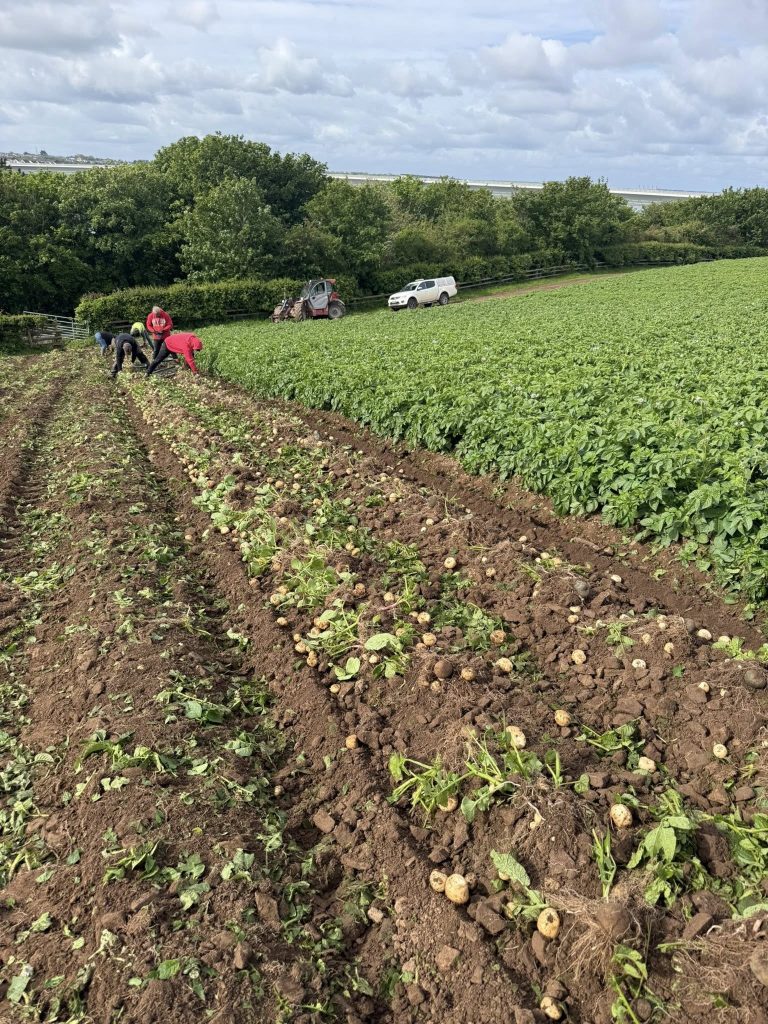
Photo caption:
First crop: Workers begin lifting Pembrokeshire new potatoes at Norton Farm as the 2026 harvest season gets underway (Pics: Norton Farm).
LOCAL FOOD PRODUCERS GIVEN NEW MONTHLY PLATFORM
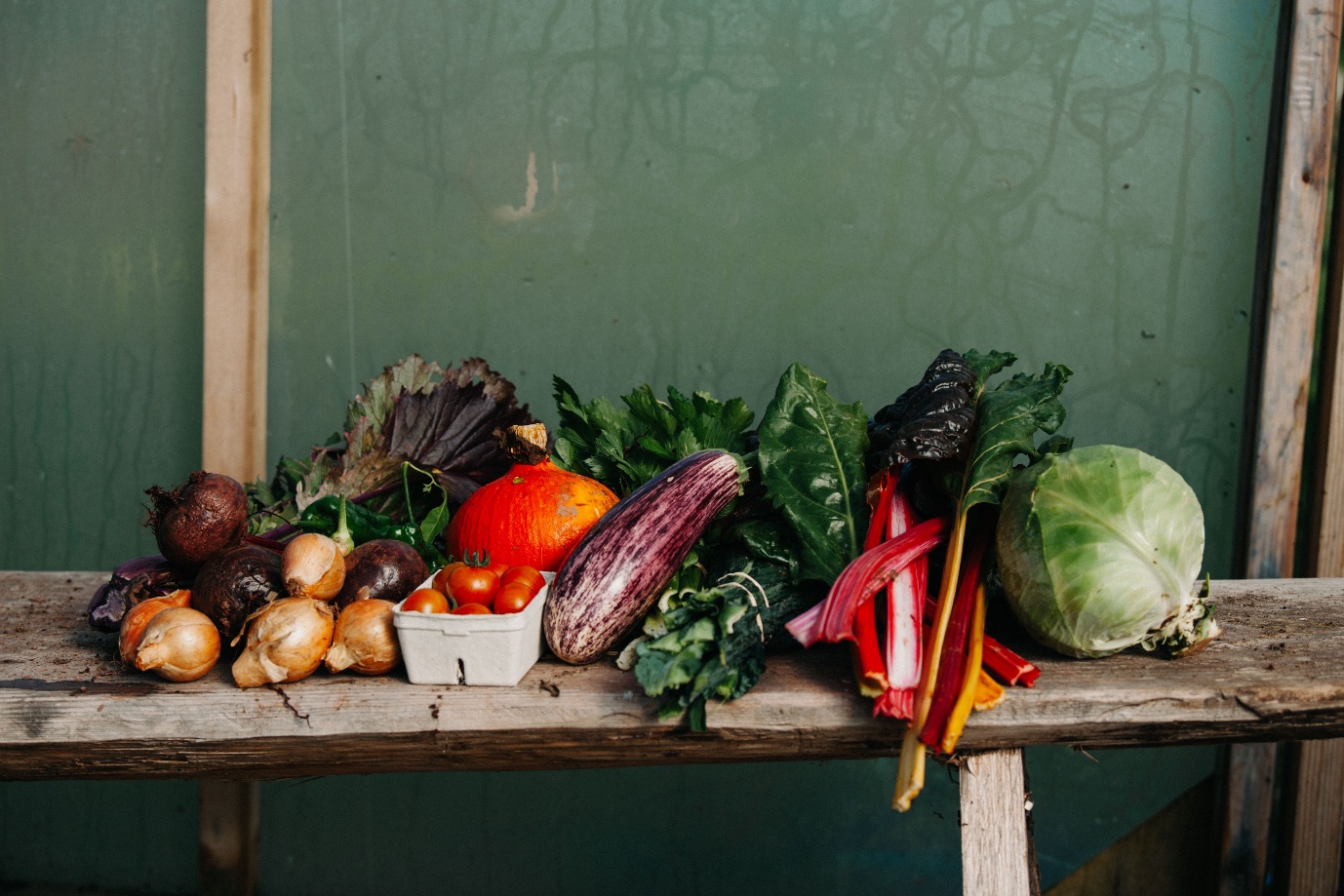
A NEW monthly farmers’ market is set to launch in Narberth next month, giving Pembrokeshire producers a regular space to sell and showcase food grown, reared and made in the county.
Pembrokeshire Local Food Partnership is launching the market at the Queen’s Hall, Narberth, on Saturday, June 13. It will then run monthly from 10:00am to 2:00pm.
The market has been developed in collaboration with local growers Rufus and Ffion, of Hael Natural Produce, based in Clunderwen.
Organisers say it will bring together a wide range of local food and drink producers, with stalls expected to include fresh seasonal produce, artisan foods, baked goods and speciality items.
Among those taking part are Spirit Wood Wales, Big Green Elephant, Foxhill Preserves and Pencw Cheese.
Pembrokeshire Local Food Partnership will lead on marketing and subsidise stall costs for the first three markets, in a bid to encourage strong early participation and reduce barriers for small and emerging producers.
The launch will also see Rufus and Ffion introduce a new local veg box scheme through Hael Natural Produce.
Rufus said: “I’m really excited to be launching my new veg box scheme at the farmers’ market.
“It’s a great opportunity to get fresh, locally grown produce directly to people in the community and to build something that connects people more closely with where their food comes from.”
Sue Latham, Coordinator of Pembrokeshire Local Food Partnership, said: “We are looking forward to creating a regular space in Narberth that supports local producers and gives the community consistent access to high-quality, local food.
“This market is about strengthening those connections and building something that can grow over time.”
Organisers are encouraging residents, visitors and food lovers to attend the launch and support the new initiative, which forms part of Pembrokeshire Local Food Partnership’s wider work to strengthen local food networks across the county.

Further information is available from Pembrokeshire Local Food Partnership at www.plfp.org.uk or by emailing [email protected].
Pic: Pembrokeshire Local Food Partnership.


Business1 day ago
Plaid energy policy challenged by Labour after Adam Price interview
LABOUR SAYS MINISTERS MUST EXPLAIN COST AND TIMETABLE FOR PYLON PLANS PLAID CYMRU’S approach to energy infrastructure has come under...


Community1 day ago
Pembroke Fair praised as well-organised community event
HORSES, STALLS AND FAMILY CROWDS RETURN TO MONKTON FAMILIES, horse owners and visitors turned out in force for Pembroke Fair...


Local Government4 days ago
Youngest mayor in century takes office in Haverfordwest
Randell Izaiah Thomas-Turner makes history as town’s first millennial mayor and first from a diverse background HAVERFORDWEST has welcomed a...


Community4 days ago
Pembroke Fair set to return after last year’s success
STALL HOLDERS INVITED AS HORSE DRIVE PLANNED PEMBROKE Fair is set to return this weekend following the success of last...


Crime4 days ago
Neyland man accused of running over traffic worker’s foot
Jury hears conflicting accounts over roadworks incident in Milford Haven A NEYLAND man has appeared before Swansea Crown Court accused...


Community4 days ago
New pilot boat Llanion dedicated at emotional Milford Haven ceremony
Vessel dedicated at Mackerel Quay as Port marks major investment in safety and resilience MILFORD HAVEN’S new state-of-the-art pilot vessel...


Local Government4 days ago
Police and GoSafe to target speeding in Newport and Dinas
RESIDENTS’ concerns over speeding and anti-social driving have prompted planned enforcement action in the Newport and Dinas areas. Dyfed-Powys Police...


Community5 days ago
Safety first as Milford Haven’s new pilot boat marks end of troubled chapter
Gary Solomon, who was aboard St Davids during the 2016 collision, helped shape new self-righting vessel Llanion from conception to...


Crime5 days ago
Cocaine courier caught with £15,000 haul in Pembroke Dock
Defendant transported high-purity drugs from Cardiff to Pembrokeshire for £210 A PEMBROKESHIRE man caught transporting more than £15,000 of high-purity...


News6 days ago
Car bursts into flames near Redberth Croft as road closed after incident
Nobody injured after vehicle fire near A477 prompts emergency response A CAR was destroyed by fire near the entrance to...
-

 News3 days ago
Watchdog criticises health board over £10m GP contract checks
-

 Crime5 days ago
Farm owner in court after 26 dogs removed over welfare concerns
-
 News4 days ago
Paul Davies meets Openreach Cymru at the Senedd to discuss Full Fibre rollout
-

 Crime5 days ago
Tree surgeon sentenced for failing to provide breath test
-

 Crime6 days ago
Pembrokeshire teenager admits driving almost four times over drug-drive limit
-

 News5 days ago
Milford man admits handling stolen goods from three local properties
-

 Crime4 days ago
Milford Haven man admits affray after alleged pub incident
-
 Crime6 days ago
Pembroke Dock drink-driver arrested on Cleddau Bridge