


News
Citizens Advice Pembrokeshire launches campaign to expose scammers’ tricks


 CITIZENS ADVICE PEMBROKESHIRE and Pembrokeshire Trading Standards Team are urging people in Pembrokeshire to spread the word about scams and expose the tactics of fraudsters to protect others.
Citizens Advice Pembrokeshire and Trading Standards are hosting an information session in Fishguard library next Wednesday (Jul 27) from 10am until 1pm, to help raise awareness of popular scams, how to deal with them and the importance of reporting them. They will be joined by Paul Davies, Assembly Member for Preseli Pembrokeshire.
Mr Davies said, “I’m pleased to support Citizens Advice Pembrokeshire and other organisations who are working hard to raise awareness of scams right across Wales. It’s important that everyone gets involved in this campaign and helps spread the message that scams can be tackled if we work together to spot the signs and share what we learn with others.”
He added, “People across Wales are losing their savings in the space of a telephone conversation, the click of a mouse or the stroke of a pen and it is simply unacceptable. That’s why I’m urging everyone in Pembrokeshire to look out for each other and help eradicate these scams from our communities.”
It comes as national research by Citizens Advice finds scammers are using a variety of tactics to get people to part with their cash, with people losing an average of £2,500 across all types of scam.

Scam methods include vishing whereby scammers cold-call people in a bid to get their bank details, and offers of fake services, such as telling people their computer has a virus which they can fix remotely.
Investment scams carried the highest price tag, with people investing in fake diamonds or bogus stocks and shares losing of on average £20,000 each.
Citizens Advice is warning people to be on guard and watch out for the different methods used by fraudsters, from doorstep selling of counterfeit goods to demands for upfront payments for services that never materialise.
Vicki Skeats, Chief Executive of Citizens Advice Pembrokeshire said:

“Scams are not a minor blight, they heap misery on people and in some cases can lead to financial ruin.
“Fraudsters use sophisticated techniques to con people and because they vary their methods, it can be tricky to spot when something is a scam. If you come across something that seems suspicious, seek advice so you don’t put yourself at risk.
“It’s vital to report scams and spread the word so we can clampdown on con artists and stop others falling into the same traps.

Eight common scams reported to Citizens Advice are:
- Investment – victims are persuaded to invest money into fake ventures and are then unable to get their money back.
- Fake services – people are offered a service for a fee, only to find the service isn’t real or doesn’t exist at all. Examples include, offers to fix computers remotely and fake invoices for advertising.
- Vishing – con-artists cold-call people pretending to be a legitimate company, asking for credit or debit card details – for example on the pretence that they need to refund overpaid bills.
- Doorstep selling – victims are offered goods door-to-door or from the back of a van, which are likely to be counterfeit. Fraudsters selling mattresses, “fresh” fish and cleaning products were all reported to Citizens Advice.
- Upfront payment or fee – fraudsters ask for a payment in advance for a service or product that never materialises, such as asking for a fee to get a loan, or to pay for a training course to secure a job.
- Premium rate texts – victims inadvertently agree to receive premium rate texts about games or competitions, usually costing around £4 each.
- Counterfeit goods – people buy goods at marketplaces or online that turn out to be counterfeit or even stolen. Common products include cigarettes, shoes and clothing, and tickets for events.
- Goods not received – people place orders for goods which don’t arrive. Scams are often carried out through social media and online auction sites.


PUBLIC INVITED TO LETTERSTON EVENT HOSTED BY TRANSITION BRO GWAUN
A FREE public screening of The People’s Emergency Briefing is to be held at Letterston Memorial Hall on Friday, May 29.
The event, hosted by Transition Bro Gwaun, starts at 7:00pm, with doors opening at 6:30pm.
The screening will be introduced by Dr Sarah Beynon, of The Bug Farm, St Davids, and will be followed by a structured discussion on climate and nature risks and what they may mean for local communities.
The 50-minute film has been adapted from the National Emergency Briefing, held at Westminster Central Hall in November 2025, where more than 1,200 MPs, peers, business leaders, cultural figures, faith representatives, sports figures and media leaders gathered to hear from experts on climate and nature risks.
The briefing, introduced by Chris Packham CBE, examines the potential impact of climate and nature breakdown on food security, public health, infrastructure, the economy and national security.
Dr Beynon said: “We are in a biodiversity and climate emergency. We have destroyed over half of our wildlife. In my late father’s lifetime, we have destroyed 97% of our wildflower meadows.
“Over 80% of our habitats are in poor condition. Over 60% of our rivers are not in good health and one in five species is at risk of extinction.
“How do we want to leave this planet for future generations? Then ask yourself if you are prepared to act. If you are, the first step is to understand the issues facing us, and this film is a vital part of understanding the situation we are in so we can all step up and do something together.”
The People’s Emergency Briefing was launched nationwide in April and is now being screened in communities across the UK. Organisers say more than 300 showings have already taken place, with around 1,000 scheduled over the summer.
Further local screenings are also planned for Solva and Cardigan in June.
Transition Bro Gwaun said the Letterston event comes at a time when communities in Pembrokeshire are facing increasing pressure from severe weather, flooding, dry spells and wildfire risks.
November and December 2025 saw flooding affect many areas, with the Met Office confirming rainfall was more than 50% above average during that period.

The group said the event was not intended to be “doom and gloom”, but would also focus on practical and hopeful responses.
Henry Tufnell MP, Pembrokeshire county councillors and town and community councillors have been invited to attend.
Tom Latter, trustee at Transition Bro Gwaun, said: “TBG welcomes the opportunity to host one of many Emergency Briefing events around the UK, addressing the climate and nature crisis.
“Co-ordinated restorative action is urgently needed, and understanding of the urgency for honest commitment to resilience planning from all branches of society.”
Free tickets are available through Transition Bro Gwaun, and refreshments will be provided.

PUBLIC INVITED TO LETTERSTON EVENT HOSTED BY TRANSITION BRO GWAUN
A FREE public screening of The People’s Emergency Briefing is to be held at Letterston Memorial Hall on Friday, May 29.
The event, hosted by Transition Bro Gwaun, starts at 7:00pm, with doors opening at 6:30pm.
The screening will be introduced by Dr Sarah Beynon, of The Bug Farm, St Davids, and will be followed by a structured discussion on climate and nature risks and what they may mean for local communities.
The 50-minute film has been adapted from the National Emergency Briefing, held at Westminster Central Hall in November 2025, where more than 1,200 MPs, peers, business leaders, cultural figures, faith representatives, sports figures and media leaders gathered to hear from experts on climate and nature risks.
The briefing, introduced by Chris Packham CBE, examines the potential impact of climate and nature breakdown on food security, public health, infrastructure, the economy and national security.
Dr Beynon said: “We are in a biodiversity and climate emergency. We have destroyed over half of our wildlife. In my late father’s lifetime, we have destroyed 97% of our wildflower meadows.
“Over 80% of our habitats are in poor condition. Over 60% of our rivers are not in good health and one in five species is at risk of extinction.
“How do we want to leave this planet for future generations? Then ask yourself if you are prepared to act. If you are, the first step is to understand the issues facing us, and this film is a vital part of understanding the situation we are in so we can all step up and do something together.”
The People’s Emergency Briefing was launched nationwide in April and is now being screened in communities across the UK. Organisers say more than 300 showings have already taken place, with around 1,000 scheduled over the summer.
Further local screenings are also planned for Solva and Cardigan in June.
Transition Bro Gwaun said the Letterston event comes at a time when communities in Pembrokeshire are facing increasing pressure from severe weather, flooding, dry spells and wildfire risks.
November and December 2025 saw flooding affect many areas, with the Met Office confirming rainfall was more than 50% above average during that period.

The group said the event was not intended to be “doom and gloom”, but would also focus on practical and hopeful responses.
Henry Tufnell MP, Pembrokeshire county councillors and town and community councillors have been invited to attend.
Tom Latter, trustee at Transition Bro Gwaun, said: “TBG welcomes the opportunity to host one of many Emergency Briefing events around the UK, addressing the climate and nature crisis.
“Co-ordinated restorative action is urgently needed, and understanding of the urgency for honest commitment to resilience planning from all branches of society.”
Free tickets are available through Transition Bro Gwaun, and refreshments will be provided.
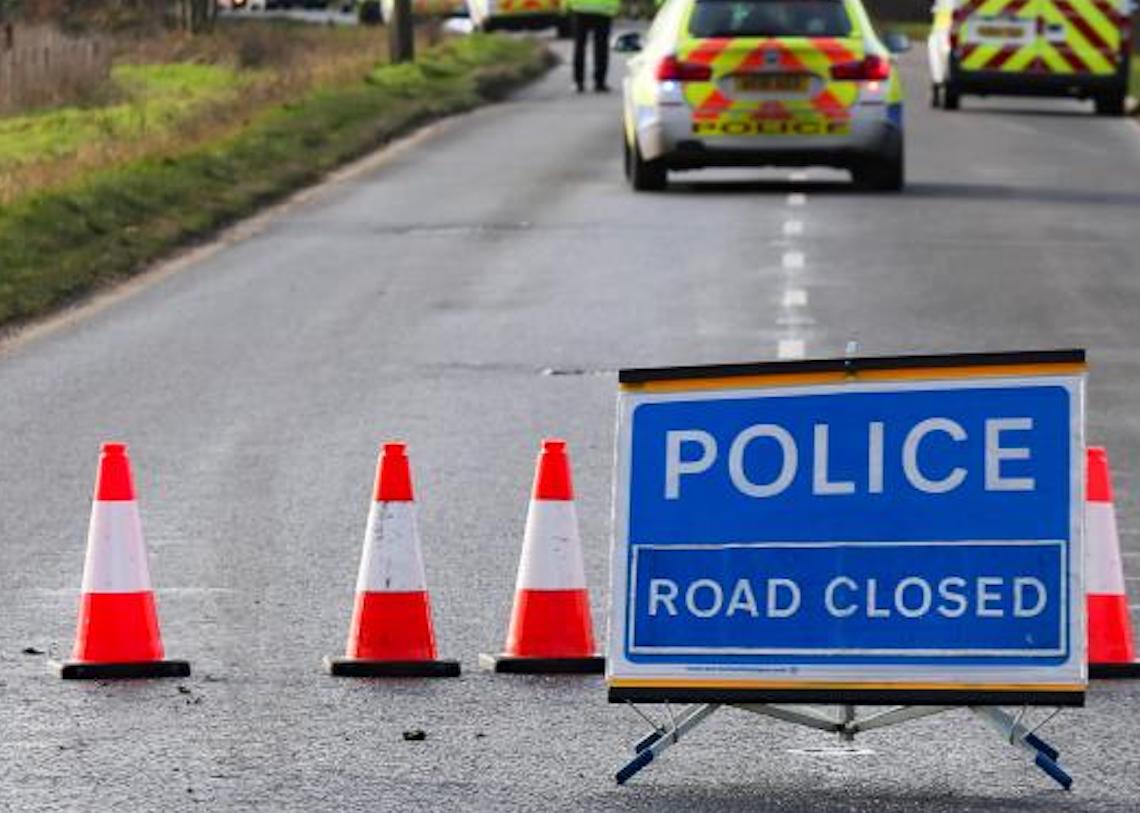
FIVE people were taken to hospital, three with serious injuries, following a collision on the A477 between Llanteg and Red Roses on Sunday (May 24).
Dyfed-Powys Police said the crash happened at around 5:00pm and involved a grey Honda Civic i-VTEC and a white Kia Soul 2.
A 23-year-old man has been arrested and remains in police custody.
Officers are appealing for anyone who was driving on the A477 at around the time of the collision, or who may have dash-cam footage of either vehicle before the crash, to come forward.
Police said visitors to Pembrokeshire who may not know the area should check their route in case they were travelling along the A477 at the relevant time.
Anyone with information can contact Dyfed-Powys Police online, by emailing [email protected], by direct message on social media, or by calling 101.
Alternatively, contact Crimestoppers anonymously on 0800 555 111.
Quote reference: 326 of May 24.


Business1 day ago
Plaid energy policy challenged by Labour after Adam Price interview
LABOUR SAYS MINISTERS MUST EXPLAIN COST AND TIMETABLE FOR PYLON PLANS PLAID CYMRU’S approach to energy infrastructure has come under...


Community1 day ago
Pembroke Fair praised as well-organised community event
HORSES, STALLS AND FAMILY CROWDS RETURN TO MONKTON FAMILIES, horse owners and visitors turned out in force for Pembroke Fair...

Local Government4 days ago
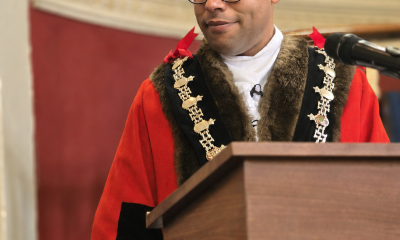
Youngest mayor in century takes office in Haverfordwest
Randell Izaiah Thomas-Turner makes history as town’s first millennial mayor and first from a diverse background HAVERFORDWEST has welcomed a...


Community4 days ago
Pembroke Fair set to return after last year’s success
STALL HOLDERS INVITED AS HORSE DRIVE PLANNED PEMBROKE Fair is set to return this weekend following the success of last...

Crime4 days ago
Neyland man accused of running over traffic worker’s foot
Jury hears conflicting accounts over roadworks incident in Milford Haven A NEYLAND man has appeared before Swansea Crown Court accused...

Community4 days ago
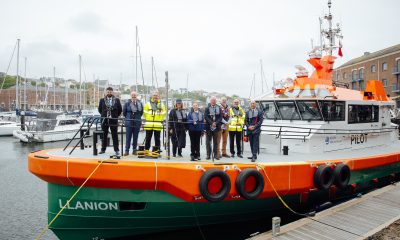
New pilot boat Llanion dedicated at emotional Milford Haven ceremony
Vessel dedicated at Mackerel Quay as Port marks major investment in safety and resilience MILFORD HAVEN’S new state-of-the-art pilot vessel...


Local Government4 days ago
Police and GoSafe to target speeding in Newport and Dinas
RESIDENTS’ concerns over speeding and anti-social driving have prompted planned enforcement action in the Newport and Dinas areas. Dyfed-Powys Police...

Community5 days ago
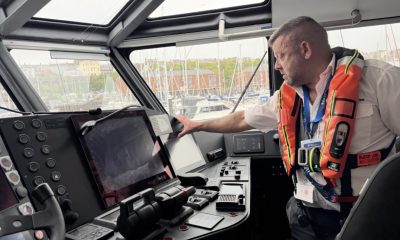
Safety first as Milford Haven’s new pilot boat marks end of troubled chapter
Gary Solomon, who was aboard St Davids during the 2016 collision, helped shape new self-righting vessel Llanion from conception to...


Crime5 days ago
Cocaine courier caught with £15,000 haul in Pembroke Dock
Defendant transported high-purity drugs from Cardiff to Pembrokeshire for £210 A PEMBROKESHIRE man caught transporting more than £15,000 of high-purity...

News6 days ago
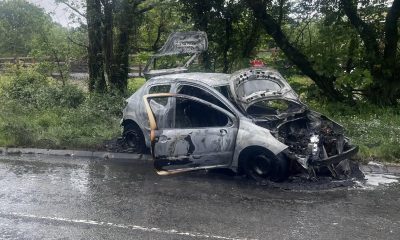
Car bursts into flames near Redberth Croft as road closed after incident
Nobody injured after vehicle fire near A477 prompts emergency response A CAR was destroyed by fire near the entrance to...
-

 News3 days ago
Watchdog criticises health board over £10m GP contract checks
-
 Crime5 days ago
Farm owner in court after 26 dogs removed over welfare concerns
-
 News4 days ago
Paul Davies meets Openreach Cymru at the Senedd to discuss Full Fibre rollout
-
 Crime5 days ago
Tree surgeon sentenced for failing to provide breath test
-

 Crime5 days ago
Pembrokeshire teenager admits driving almost four times over drug-drive limit
-

 News5 days ago
Milford man admits handling stolen goods from three local properties
-

 Crime7 days ago
Builder jailed for £82,000 fraud affecting 18 victims
-

 Crime4 days ago
Milford Haven man admits affray after alleged pub incident
flash bang
July 20, 2016 at 4:10 am
Do these scammers hold meetings in secret and give away taxpayers money to developers and builders only to find they have been duped?