


Farming
Farming unions back EU customs deal

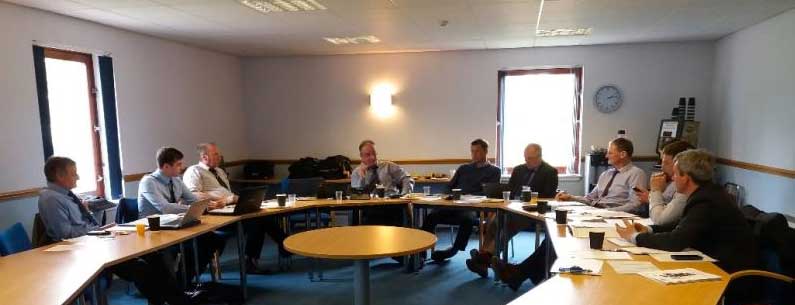
LIVESTOCK representatives from farming unions in all parts of the UK attended a meeting in Edinburgh, hosted by NFU Scotland. Top of the agenda for the representatives was the on-going uncertainty over the UK Governments policy for post-Brexit trade.
Farmer representatives from NFU Cymru, NFU, NFU Scotland and the Ulster Farmers Union (UFU) were clear that the UK Government must adopt a trade policy which prioritises tariff free, frictionless access to the European marketplace.
At the meeting, the four organisations agreed that there were concerning media reports over the possibility of the UK market being opened up to low standard imports from outside of Europe, should the Government not recognise the sensitive nature of beef and lamb.
Following the meeting, NFU Cymru Livestock Board Chairman Wyn Evans said: “We fundamentally need to hear the UK Government recognise and take action to protect lamb and beef production in developing its post-Brexit trade policy. Stability is key, and the trading agreement agreed with Europe is fundamental to achieving livestock prices that will result in profitable businesses that can invest and face the future with confidence. A customs agreement would achieve that certainty, particularly important for our lamb sector which is so dependent on the European market.”
NFU Scotland Livestock Committee Chairman Charlie Adam said: “From today’s meeting it is clear that any future trade with countries outside of Europe must be negotiated on the basis that all imported produce must meet UK and EU standards of production, traceability and environmental protection, it is therefore essential that the UK Government recognise the sensitive nature of beef and lamb. Additionally, for our future trade with the EU, the UK Government must adopt an approach which avoids any barriers to trade in to the European market.”

NFU Livestock Board Chairman Richard Findlay said: “It’s vital at this stage in the Brexit process that the UK Government adopts a form of customs arrangement that allows our beef and lamb to be exported to established markets in continental Europe. If this isn’t prioritised then there’s likely to be an economic impact, damaging livestock producers across the United Kingdom.”
UFU Deputy President David Brown said: “Efforts must also be maintained to secure new markets outside of Europe which can help to address carcase balance in the livestock sector. There are global opportunities to market high quality red meat produced from farms in the UK. It is important that these are fully capitalised upon to boost returns to farmers and add value to the industry.”














LOW UPTAKE HAS RAISED FRESH QUESTIONS OVER THE FUTURE OF SUPPORT FOR WELSH FARMERS
REFORM WALES has called for an urgent review of the Sustainable Farming Scheme after figures showed only around half of eligible farmers have signed up.
The party said the lower-than-expected uptake showed that serious concerns remained within the farming community over the complexity of the scheme, compliance rules and uncertainty about how it will operate in the long term.
Laura Anne Jones MS, Reform Wales’ Shadow Cabinet Minister for Food, Farming and Rural Affairs, raised the issue during questions to the Welsh Government.
She said: “The figures released by the Welsh Government today confirm what many farmers have been saying for some time: the Sustainable Farming Scheme is too complex, too restrictive and too bureaucratic.
“Farmers need certainty and security, not endless paperwork and rigid requirements that fail to reflect the realities of farming in Wales.
“Reform Wales believes the scheme should be reviewed as a matter of urgency, with a greater focus on flexibility, common sense and practical outcomes.
“Welsh farmers deserve a scheme that works with them, not against them.”
The Sustainable Farming Scheme is due to replace previous systems of agricultural support in Wales and has been one of the most contentious issues facing the rural sector.
Farming unions and campaigners have repeatedly warned that any new system must be practical for family farms and must not add unnecessary red tape at a time when many businesses are already under pressure from rising costs, bovine TB and market uncertainty.

Reform Wales said the Welsh Government must now explain how it intends to respond to the level of take-up and whether changes will be made before the scheme is fully rolled out.

PLANS to convert historic farm buildings near north Pembrokeshire’s Whitesands beach for use as holiday accommodation have been given the go-ahead, but their use doesn’t have to be restricted to just that purpose.
In an application to Pembrokeshire Coast National Park, Matthew James of James Properties, through agent Harries Planning Design Management sought permission for the conversion of two derelict barns to two self-catering holiday accommodation units at Porthmawr Ganol, Whitesands, St Davids.
An officer report said: “The farmstead occupies a prominent position within a landscape characterised by open agricultural fields enclosed predominantly by traditional dry-stone walls, exposed coastal pasture and areas of heathland associated with Carn Llidi.”
It added: “The site lies within the Porthmawr Historic Landscape Character Area, an area recognised for its historic pattern of dispersed settlement, traditional farmsteads, dry-stone wall field boundaries and evidence of medieval and post-medieval agricultural activity.
“The retention and reuse of the existing buildings therefore has the potential to preserve an important element of the area’s historic landscape character whilst securing a viable long-term future for structures that would otherwise continue to deteriorate.”
It said that insufficient evidence had initially been submitted to demonstrate that the buildings were unsuitable for permanent residential conversion and only for self-catering accommodation and therefore an affordable housing contribution should be secured.
Policy would lead to a contribution of £36,400, the report said, but a financial viability assessment by the applicant “demonstrated that the development would not be viable if required to provide the full policy contribution,” the maximum contribution capable of being supported whilst maintaining viability was £12,641.
This reduced figure was accepted, the officer report saying: “Whilst this represents a reduced contribution when compared with the full policy requirement, the submitted viability evidence demonstrates that the development could not reasonably support the full contribution whilst remaining deliverable.
“In these circumstances, securing a reduced contribution is considered preferable to losing the opportunity to secure the restoration and beneficial reuse of the historic buildings.”
It stated that, with the affordable contribution, the scheme would not be limited to self-catering development only.
The application was conditionally approved by Park planners.
Hartt family members listed at Haverfordwest Magistrates’ Court over unpaid penalties linked to major cattle prosecution
TWO PEMBROKESHIRE farmers convicted in a major bovine tuberculosis-related cattle case are due back before the courts this week over unpaid financial penalties.
Henry Hartt, 66, of Ciffig, Whitland, and Edward William Henry Hartt, 48, of Llandewi Velfrey, are both listed to appear at Haverfordwest Magistrates’ Court on Thursday (June 11).
Court records show both men face proceedings relating to the non-payment of fines of £94,739.64 imposed on March 4, 2024. Separate applications to lodge committal warrants are also listed, relating to unpaid fines of £22,300 and £22,400 respectively.
The pair were among three members of the Hartt family sentenced at Swansea Crown Court in March 2024 following a major prosecution brought by Pembrokeshire County Council involving bovine TB controls.
The court heard that cattle known to have reacted to bovine tuberculosis tests were knowingly kept on-farm, while substitute animals were allegedly presented for slaughter instead.
At the time, Henry Hartt, Edward Hartt and Charles Hartt admitted a total of 12 cattle identification offences connected to Longford Farm, Clynderwen.
The case centred on failures to comply with bovine TB restrictions and cattle tracing rules designed to prevent the spread of the disease.
Each defendant was fined £24,000, while confiscation orders and prosecution costs running into hundreds of thousands of pounds were also imposed.
Thursday’s hearing is expected to deal with enforcement proceedings connected to the unpaid financial orders rather than the original criminal offences.
The Herald will be attending court.



Community7 hours ago
Beating of the Bounds brings music, boats and tradition to Haverfordwest
CENTURIES-OLD CEREMONY DRAWS FAMILIES TO THE RIVERSIDE HAVERFORDWEST’S historic Beating of the Bounds returned on Sunday (Jun 14), with boats,...


Community14 hours ago
Milford Haven School pupil praised after stepping in during real-life emergency
A YEAR 11 pupil at Milford Haven School has been praised after putting his first aid training into action to...


Community17 hours ago
River festival brings crowds to Haverfordwest
A CELEBRATION of the River Cleddau brought crowds into Haverfordwest on Saturday (June 13) as the town’s River Festival returned...


Charity18 hours ago
Voices at the Castle hailed as unforgettable night after weather setback
Russell Watson headlines spectacular charity concert at Pembroke Castle A SPECTACULAR evening of live music at Pembroke Castle has been...

Local Government1 day ago
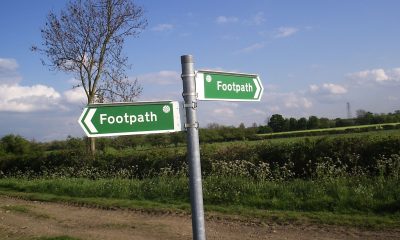
Council admits 74 rights of way complaints remain unresolved
Key post vacant since February as walker raises safety concerns over paths near Llanteg and Amroth PEMBROKESHIRE COUNTY COUNCIL has...


Education2 days ago
Diocese threatens legal action as Manorbier school closure battle intensifies
Church says council could face judicial review over fire-hit school A BITTER row over the future of Manorbier Church in...


Health3 days ago
Baby loss charity calls for urgent action after latest Wales figures published
Sands says Welsh Government must set clearer targets to reduce stillbirths and neonatal deaths A BABY loss charity has called...

Health3 days ago
Cancer delays worsening as west Wales hospitals struggle to recruit specialists
Health board admits standards are difficult to meet as doctors warn of “extremely dangerous” shortages PATIENTS in west Wales are...


News3 days ago
Rhun ap Iorwerth highlights first 25 days in office as First Minister
Plaid Cymru leader says government is moving quickly on NHS, farming and economic priorities FIRST MINISTER Rhun ap Iorwerth has...


Crime4 days ago
Man accused of six rapes including alleged Haverfordwest offence
A MAN has been sent to Crown Court accused of six rapes, including an alleged offence at a Haverfordwest campsite....
-

 Crime7 days ago
Sex offender in senior role at Tenby family hotel
-
Education2 days ago
Diocese threatens legal action as Manorbier school closure battle intensifies
-

 Crime6 days ago
Haverfordwest pair accused of £80,000 rogue trading frauds
-
Crime4 days ago
Man accused of six rapes including alleged Haverfordwest offence
-

 Community7 days ago
Forgotten wartime archive found in Pembroke Dock attic after 80 years
-

 Crime6 days ago
Families condemn failed appeal by paddleboard boss jailed over Haverfordwest tragedy
-

 Crime4 days ago
Pembroke Dock teenager sentenced over train strangulation attack
-
 Crime6 days ago
Knife blankets call as school staff face rising violence fears