


News
Pembroke: Man arrested in connection with ‘novichok’ hoaxes


A 64-YEAR-OLD man has been arrested in connection with the recent ‘novichok’ substance hoaxes at Pembroke Castle.
Dyfed-Powys Police has arrested the man on suspicion of causing a public nuisance, in connection with the five incidents at Pembroke Castle.
Superintendent Ross Evans said: “Police and other agencies have used significant resources responding to these five incidents over the past three weeks.
“We are treating them as linked. On each occasion an unknown substance has been left in a container at Wogan’s Cavern, which is located behind the castle near the Mill Pond.
“We are waiting for forensic test results to confirm our hypothesis, but we are treating this as a series of hoax incidents.

“Hoax calls and incidents not only waste very valuable time for all emergency services, but also cause unnecessary concern within our communities.
“I would like thank members of the public and the management team at Pembroke Castle for their patience while we continue to investigate this matter.”










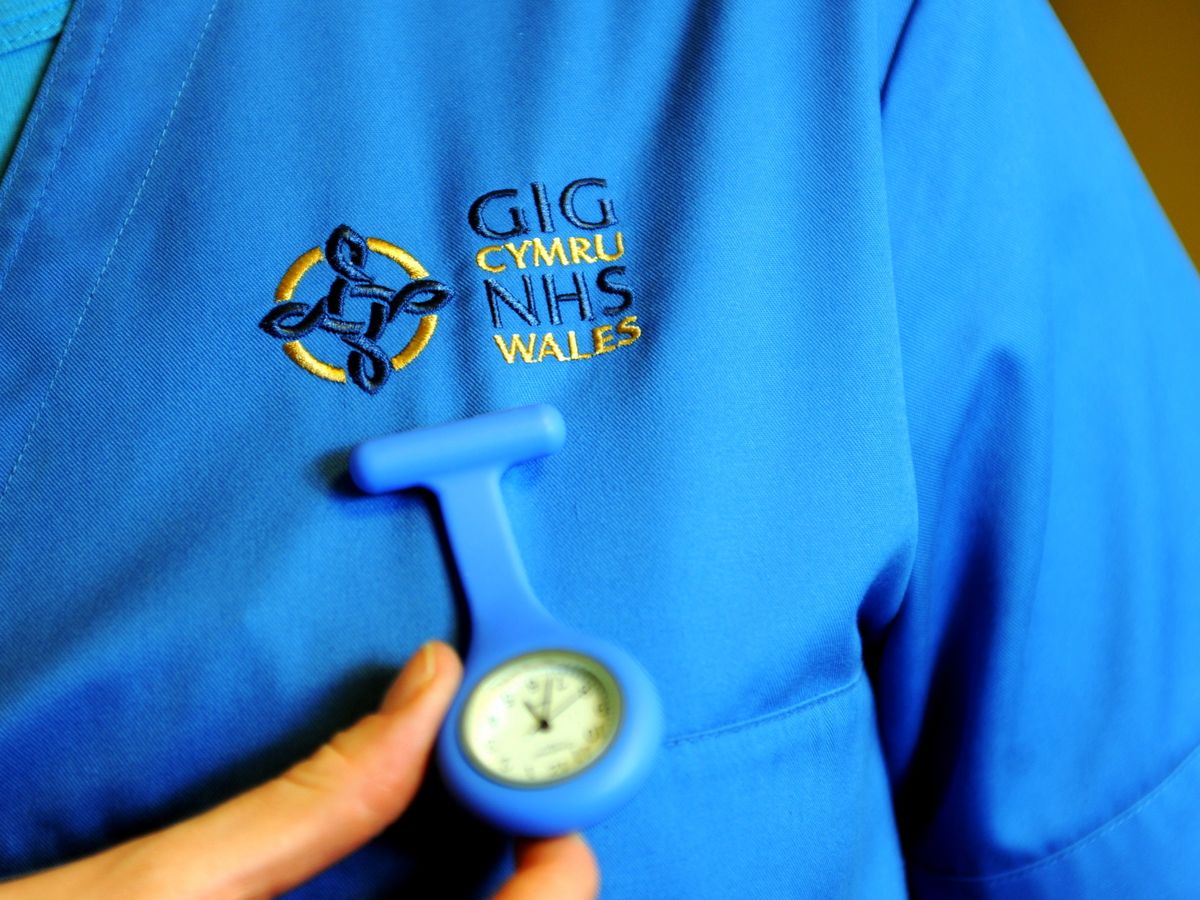
Improving treatment figures welcomed, but local concerns grow over pharmacy changes, service reorganisation and access to care
WAITING times across NHS Wales are continuing to improve, according to the latest national figures — but patients in west Wales may question whether those improvements are being felt on the ground as concerns continue over changing local services, pharmacy provision and healthcare access.

New figures released by the Welsh Government show there were just under 666,700 referral-to-treatment patient pathways waiting to start treatment in March — down by around 21,300 compared with February and the lowest level recorded since August 2021.
It marks the tenth consecutive month that waiting lists have fallen, while the proportion of pathways waiting less than 26 weeks rose to 65.9 per cent — the highest figure since May 2020.
The average waiting time for treatment also dropped to 15.5 weeks, the lowest level since April 2020.
However, despite the improving national picture, NHS leaders have warned that Wales remains under significant pressure and that progress must not mask wider challenges facing the health service.
Responding to the figures, the Welsh NHS Confederation said scheduled care was “going in the right direction” but cautioned that emergency pressures, social care pressures and financial constraints remain major concerns.
The organisation’s director, Darren Hughes, said NHS leaders were ready to work with the new Welsh Government as part of its first 100 days in office, but stressed that reforms would require difficult decisions and honest conversations with the public.
He said: “While it’s not a perfect picture across the board, with high demand on urgent and emergency care, scheduled care waits continue to go in the right direction.
“Now is the time to build on this progress and make further inroads into the backlog of care that has built up in recent years.”

But for many people in Pembrokeshire, Carmarthenshire and Ceredigion, improving national statistics may feel at odds with the reality of healthcare closer to home.
Recent changes affecting community pharmacy provision, alongside continuing concerns over access to services, travel distances and healthcare reorganisation within the Hywel Dda University Health Board area, have left some residents questioning whether NHS recovery is being experienced equally across Wales.
Community pharmacy provision has become an increasing concern locally following recent changes affecting some chemist services, raising fears over access to medication and frontline healthcare support — particularly in rural areas where alternatives may involve lengthy travel.

At the same time, debates around the future location of services, staffing shortages and the long-term sustainability of care in west Wales continue to generate concern among patients and campaigners.
For many residents, the NHS debate is no longer only about waiting times — but whether services remain accessible in the first place.
The figures also require some caution. NHS waiting-list totals are measured in “patient pathways” rather than individual patients, meaning one person can appear on the list more than once if waiting for multiple treatments or appointments.
The Welsh NHS Confederation warned that any future improvements would need a “whole-system approach”, involving primary care, community healthcare and social care, alongside action to reduce demand before patients require hospital treatment.
Mr Hughes added that NHS organisations also face tightening budgets and renewed inflationary pressures linked to global events.
He warned: “NHS leaders will need clarity from political leaders on a focused set of priorities and the backing to make the difficult decisions required to reform services, being honest with the public around timelines and expectations.”
The Herald has approached Hywel Dda University Health Board for comment on how improving national waiting-time figures compare with the experience of patients in west Wales, including concerns around pharmacy provision, service changes and access to local care.
The Welsh Government has also been asked what the new administration’s healthcare priorities will mean for communities in rural Wales over the coming months.

RESIDENTS’ concerns over speeding and anti-social driving have prompted planned enforcement action in the Newport and Dinas areas.
Dyfed-Powys Police Roads Policing Unit and the GoSafe enforcement van are expected to carry out speed checks over the coming month following complaints raised with county councillor Huw Murphy, Newport Town Council and Dinas Community Council.
The operation is aimed at deterring motorists from excessive speed and anti-social driving, as well as taking enforcement action where offences are detected.
Drivers caught exceeding the speed limit could face sanctions ranging from a warning to a court summons, depending on the seriousness of the offence. More serious breaches of road traffic law can result in substantial fines and possible disqualification.
Police have not released specific dates or locations for the enforcement activity.
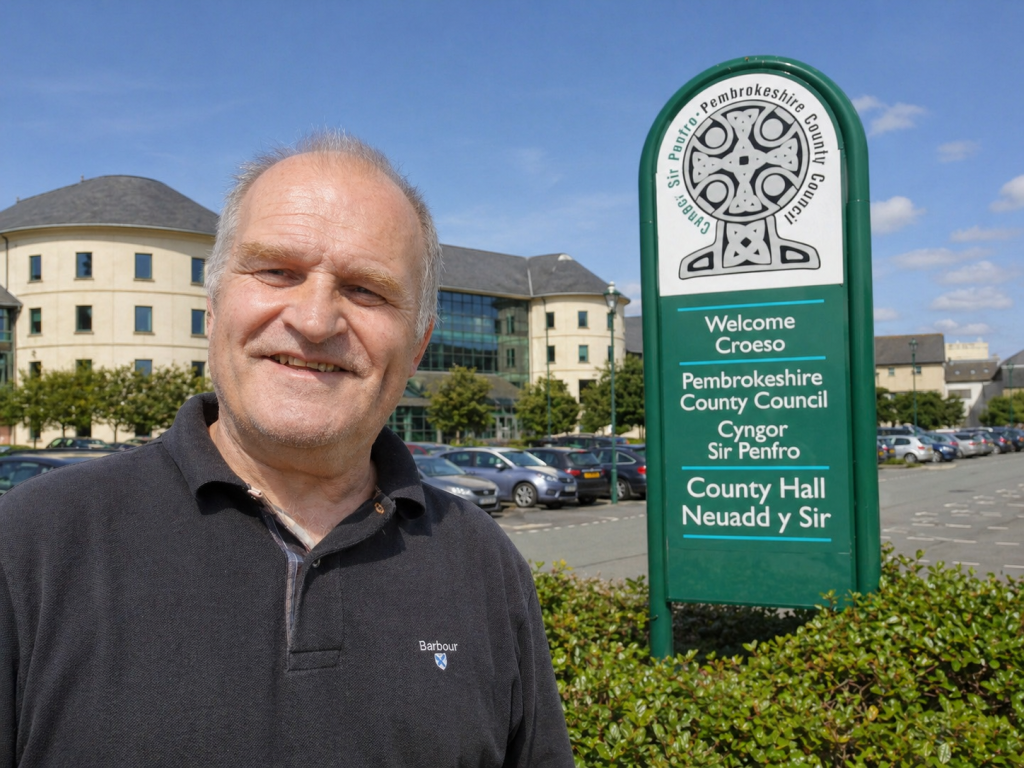
Cllr Murphy told The Herald that motorists who drive within the law have nothing to fear.
Most police vehicles are now fitted with Automatic Number Plate Recognition technology, increasing the likelihood of detecting vehicles being driven without valid insurance, MOT or vehicle excise licence.
Speeding remains one of the “Fatal Five” factors linked to serious injury and fatal collisions on UK roads. The others are careless driving, drink or drug driving, not wearing a seatbelt, and using a mobile phone while driving.
Cllr Murphy said: “Residents have raised concerns regarding excess speed and anti-social driving, and I am grateful to Dyfed-Powys Police and GoSafe for responding to these concerns.
“The aim of this enforcement activity is to improve road safety for everyone and to encourage motorists to drive responsibly and within the speed limits.
“If they do not, and are caught, then they will have to face the consequences.”

SCOUTSCYMRU has secured funding to support a new project aimed at improving opportunities for young carers across Wales.
The funding, from the Quilter Foundation, will help the organisation better understand the experiences of young carers and young adult carers, and shape more flexible and inclusive opportunities within Scouting.
The project will be led by ScoutsCymru, with input and support from Carers Trust Wales.
It follows conversations with young carers at the Young Carers Festival, where young people spoke openly about the challenges of balancing caring responsibilities with school, friendships and everyday life.

The funding will allow ScoutsCymru to run engagement sessions with young carers across Wales. These will give young people the chance to spend time outdoors, try new activities, build friendships and share their views on how Scouting can better support them.
The sessions, supported by Carers Trust Wales and partner organisations, will include activities and discussions designed around the needs of young people themselves.
The project will also help volunteers and staff better understand the experiences of young carers, with the aim of creating more welcoming, accessible and flexible opportunities across Scouting in Wales.
Kerrie Gemmill, CEO at ScoutsCymru said: “There are around 22,000 young people under the age of 25 who are young carers or young adult carers in Wales, and too often young carers miss out on opportunities simply because life looks different for them.
“What really struck us during early conversations was how much young people valued simple opportunities to spend time with others, try new experiences and just enjoy being young.
“Although we know some young carers are part of Scouting, this project is about listening properly, learning from young carers themselves and making sure Scouting in Wales is shaped in ways that are welcoming, realistic and supportive for them.”
As part of the engagement work, ScoutsCymru hopes to bring young carers together for a final co-design session at one of its campsites, where young people, volunteers and staff will help shape future guidance based on what has been learned during the project.



Local Government13 minutes ago
Police and GoSafe to target speeding in Newport and Dinas
RESIDENTS’ concerns over speeding and anti-social driving have prompted planned enforcement action in the Newport and Dinas areas. Dyfed-Powys Police...


Community22 hours ago
Safety first as Milford Haven’s new pilot boat marks end of troubled chapter
Gary Solomon, who was aboard St Davids during the 2016 collision, helped shape new self-righting vessel Llanion from conception to...


Crime1 day ago
Cocaine courier caught with £15,000 haul in Pembroke Dock
Defendant transported high-purity drugs from Cardiff to Pembrokeshire for £210 A PEMBROKESHIRE man caught transporting more than £15,000 of high-purity...

News2 days ago
Car bursts into flames near Redberth Croft as road closed after incident
Nobody injured after vehicle fire near A477 prompts emergency response A CAR was destroyed by fire near the entrance to...


News2 days ago
Welsh Labour unveils new Senedd spokesperson team
Ken Skates says Labour group will hold Plaid Cymru government to account WELSH Labour’s interim leader Ken Skates MS has...


Cymraeg2 days ago
Two new Milford Haven schools could be built and open by 2032
NEW SCHOOLS in Milford Haven won’t be built before 2030 at the earliest, and 2032 for a planned Welsh Medium...


Crime3 days ago
Stolen vehicle investigation after late-night crash in Waterston
A VEHICLE involved in a late-night single-vehicle crash in Waterston, Milford Haven, is believed to have been stolen, police have...


Community3 days ago
Paul Davies MS calls for review of parking charges in Ceredigion following concerns
SENEDD Member for Ceredigion Penfro, Paul Davies, has called on Ceredigion County Council to urgently review its policy on car...

Crime3 days ago
Former Lostprophets singer’s killing ‘not justified’, jury told
JURORS in the trial of two prisoners accused of murdering former Lostprophets singer Ian Watkins have been told that his...


Health4 days ago
Occupational therapists urge Welsh Government to act before NHS crisis deepens
More than 300 professionals sign open letter calling for prevention-focused care and urgent reform OCCUPATIONAL therapists across Wales are urging...
-

 News6 days ago
Palestine pledge backed by 36 new Senedd Members
-

 Community5 days ago
Surfers take sewage protest to Broad Haven beach
-
 Crime1 day ago
Tree surgeon sentenced for failing to provide breath test
-

 Crime21 hours ago
Farm owner in court after 26 dogs removed over welfare concerns
-

 Crime1 day ago
Pembrokeshire teenager admits driving almost four times over drug-drive limit
-

 Crime3 days ago
Builder jailed for £82,000 fraud affecting 18 victims
-
 Health5 days ago
New NHS regional body raises questions over future hospital services in Pembrokeshire
-
 Crime1 day ago
Pembroke Dock drink-driver arrested on Cleddau Bridge