


Farming
French homecoming for Ceredigion Head Chef

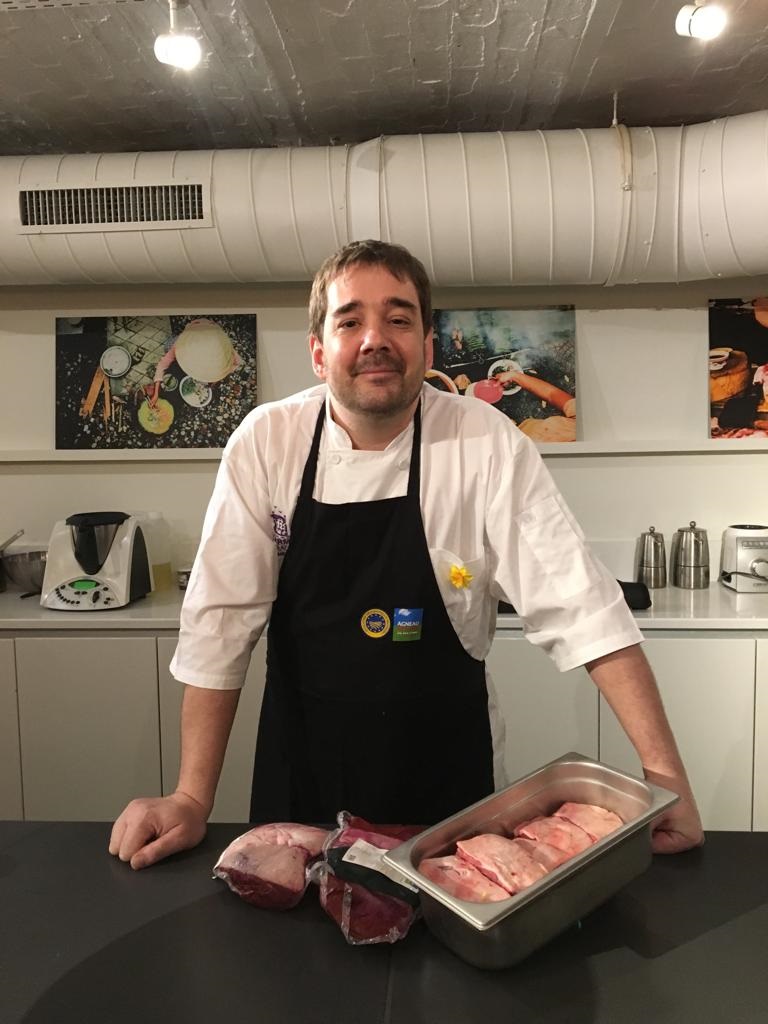
THE HEAD Chef of a renowned harbourside restaurant in Aberaeron, Ludovic Dieumegard, has been showcasing the wonders of Welsh Lamb in Paris.
Frenchman Ludovic is a Professional Masterchef semi-finalist and is well-known in Wales for his delicious dishes using high-quality local produce. He was recruited by Hybu Cig Cymru – Meat Promotion Wales (HCC) for a celebratory event in his home country where he cooked Welsh Lamb dishes for a select group of 40 butchers as well as members of the press and media.
Butchers across France were invited to compete for the opportunity to attend the Welsh Lamb workshop held in the French capital. For one night only, an exciting collaboration was created between an artisan Parisian butcher, known in France as a Meilleur Ouvrier de France, who cut down a Welsh Lamb carcase, followed by a cooking demonstration by Ludovic.
He said: “It was an honour to be asked to be part of the event in Paris demonstrating with Welsh Lamb. The location and ambience were both incredible as was the welcome. The chance to cook with Welsh Lamb and show other people the variety and diversity of dishes available with this amazing product was great. Hopefully, I’ve managed to convince a few other Frenchmen that Welsh Lamb is the best in the world!”
HCC’s Export Development Officer, Kate Patten was at the event. She said: “The workshop was a celebration of Welsh Lamb in our largest export market. An online competition was held to increase the online presence of Welsh Lamb in France, whereas the workshop aimed to raise further awareness of the product amongst butchers and the retail sector. It was also a platform for butchers to meet and discuss future businesswith key exporters of Welsh Lamb who were in attendance.

“We were thrilled to be joined by Ludovic at the event and the duo between butcher and chef worked perfectly. The butcher skilfully cut down the carcase for Ludovic to cook and his dishes oozed passion and sophistication. Between them, they positioned Welsh Lamb as a premium product to an audience of highly impressed individuals.
“It is hoped that they will order their supply of Welsh Lamb in time for the start of the new season as a result of this event.”



A CALL for a two-year period of grace to test a previously-refused Pembrokeshire dog exercise area has again been turned down by planners.
In a resubmitted application to Pembrokeshire Coast National Park after a 2025 refusal, Lawson and Penny Owen, through agent Hayston Developments & Planning Ltd, sought retrospective permission for a farm diversification scheme for a dog exercise area with a small hardstanding area for parking on land near Williamston Farm, Long Lane, Broad Haven, near Haverfordwest.
The previously-refused scheme sought a permanent seasonal exercise area, the latest application seeking a temporary two-year year-round option so that the impact of dog exercise on agricultural land could be fully assessed.
That application was refused on the grounds it was not considered to be sited in a sustainable location which will assist in removing the need for private motor vehicle trip generation, and the potential impact on neighbours.
Local community council The Havens again objected to the latest application, objections including it too close to neighbouring residential properties resulting in unacceptable noise impacts, is incompatible with the adjoining agricultural use, and is located adjacent to a cycle route.
A supporting statement said: “It is clear that, whilst the whole of the field has been operating as a dog exercise area for the past two years, staff in Public Protection have not received any complaints in respect of noise or any other form of objection. As a result of additional information gained from [the previous application], this re-submission sets out to explore a suggested temporary two-year option so that the impact of dog exercise on agricultural land can be fully assessed.”
It said the applicants, who have some 400 acres spread across four farms in the Broad Haven/Nolton area have had a need to diversify, with previous activities including holiday lets, a weddings/summer cinema show venue, and a submitted planning application for nine holiday units.
It said the non-framing activities amounted to under a third of the applicants’ income, the dog exercise operation now foreseen to be some five per cent of income, at up to £20,000 per year.
An officer report recommending refusal said that, as with previous application, objections had been received; concerns including it being in an unsustainable countryside location, noise and disturbance to neighbouring residential properties, disturbance to grazing livestock, and concerns the proposal relies entirely on private motor vehicle journeys and conflicts with sustainable transport objectives.

The report said that while many planning matters could be addressed, they didn’t outweigh the principal policy objections that it had not been demonstrated the particular location was needed or it accords with the sustainable transport objectives [of planning policy], representing “an unsustainable form of development within the open countryside”.
It also said officers were of the view “that the proximity of the commercial dog exercise area to neighbouring residential properties would give rise to an unacceptable impact upon residential amenity through noise and associated activity”.
It concluded: “The proposed temporary two-year permission does not overcome these fundamental planning objections. The use has already operated for a significant period, enabling the Authority to assess the proposal on its planning merits, and a temporary consent would not resolve the inherent conflict with the adopted Development Plan.”

The resubmitted application was refused on the grounds highlighted in the officer report.
Average pasture and arable land prices fell slightly during the second quarter, although demand remains strong for high-quality farms and land with development potential.
FARMLAND values across Wales softened slightly during the second quarter of 2026 as higher costs and economic uncertainty continued to weigh on the agricultural sector.
The latest Farmland Market Update from property consultancy Carter Jonas found that average pasture land values fell by 0.4% during the quarter to £7,750 an acre.
Average arable land values declined by 0.3% to £9,467 an acre.
Compared with the same period last year, arable land values were down 2.4%, while pasture land values had fallen by 1.9%.
The figures suggest a gradual cooling of the market following the sustained growth recorded between 2021 and 2024.
However, Carter Jonas said the headline figures did not tell the full story because a significant number of farmland transactions continued to take place privately and away from the open market.
Demand also remains strong for high-quality, well-located farms, larger commercial units and land offering investment or development potential.
Hugh O’Donnell, rural partner at Carter Jonas, said: “The volume of farmland brought to market has been lower in the first half of the year, but acreage alone only tells part of the story.
“We continue to see a significant number of transactions taking place, underlining the ongoing appeal of well-located, high-quality farmland as a long-term investment.
“Buyer demand remains resilient, but understanding local market conditions and having access to off-market opportunities is increasingly important in a more selective market.”
The modest decline in values comes during a challenging period for farming businesses, with elevated input costs and volatile commodity prices continuing to squeeze profit margins.
These pressures have reduced the purchasing power of farmers seeking to expand their holdings.
Carter Jonas said there had nevertheless been some positive economic and policy developments during recent months.
Inflation fell from 3.3% in March to 2.8% in April and May, while the reopening of SFI26, the relaunch of Capital Grants and publication of the Farming Roadmap had provided greater clarity for parts of the sector.
Uncertainty remains, however, over the longer-term direction of agricultural support and future government spending and taxation policies.
Sophie Davidson, research associate at Carter Jonas, said the arrival of a new Prime Minister had introduced another element of uncertainty.
She said: “While it is unlikely to trigger significant short-term changes to agricultural policy, the potential for shifts in spending priorities, taxation and rural policy direction may encourage a ‘wait and see’ approach among some vendors and purchasers.”
Ms Davidson added that the strongest parts of the market continued to perform well despite a smaller and increasingly selective pool of buyers.
“Larger commercial farming units and investment opportunities remain scarce and continue to attract strong interest, while strategically located land with development potential is also seeing robust demand,” she said.
“What we’re seeing is a selective market where targeted demand continues to support values despite a thinner buyer pool.”
Pasture and arable values fall slightly amid uncertainty over taxation, agricultural policy and rural spending
FARMLAND values in Wales have softened for the second consecutive quarter, although demand remains strong for high-quality farms, development land and larger commercial holdings.
The latest Farmland Market Update from property consultancy Carter Jonas shows that the average value of Welsh pasture land fell by 0.4% during the second quarter of 2026 to £7,750 an acre.
Average arable land values declined by 0.3% to £9,467 an acre.
Compared with the same period last year, arable land values are now 2.4% lower, while pasture land prices have fallen by 1.9%.
The figures suggest the Welsh farmland market is cooling gently following several years of sustained price growth between 2021 and 2024.
However, Carter Jonas said the published figures did not reveal the full extent of activity, as a significant proportion of farmland transactions were taking place privately and without being openly advertised.
The consultancy said fewer farms and parcels of land had been publicly brought to market during the first half of the year, while buyers had become more selective about location, land quality and commercial potential.
Hugh O’Donnell, rural partner at Carter Jonas, said: “The volume of farmland brought to market has been lower in the first half of the year, but acreage alone only tells part of the story.
“We continue to see a significant number of transactions taking place, underlining the ongoing appeal of well-located, high-quality farmland as a long-term investment.
“Buyer demand remains resilient, but understanding local market conditions and having access to off-market opportunities is increasingly important in a more selective market.”
The report comes as Welsh farmers continue to face uncertainty over agricultural support, succession planning, inheritance tax changes and the future direction of rural policy.
Carter Jonas said the appointment of a new Prime Minister had added another element of uncertainty for buyers and sellers considering major transactions.
Sophie Davidson, research associate at Carter Jonas, said: “While it is unlikely to trigger significant short-term changes to agricultural policy, the potential for shifts in spending priorities, taxation and rural policy direction may encourage a ‘wait and see’ approach among some vendors and purchasers.”
Despite the modest fall in average values, demand remains strong for land offering clear agricultural, investment or strategic benefits.
Larger commercial farms remain scarce and continue to attract significant interest, while land close to towns and villages, or with potential for housing, renewable energy or other development, is also commanding attention.
Ms Davidson added: “Strategically located land with development potential is seeing robust demand.
“What we’re seeing is a selective market where targeted demand continues to support values despite a thinner buyer pool.”


Health7 hours ago
More than 3,000 people have their say as Hywel Dda stroke consultation closes
Final decision on proposals, including a central 24-hour stroke unit at Glangwili and treat-and-transfer services at Withybush, is expected in...


Crime9 hours ago
James McKenna guilty of attempted murder after Carmarthen Park knife attack
Jury rejects defendant’s claim he only intended to cause serious injury after ambush attack on former partner SPECIAL REPORT FROM...

Community1 day ago
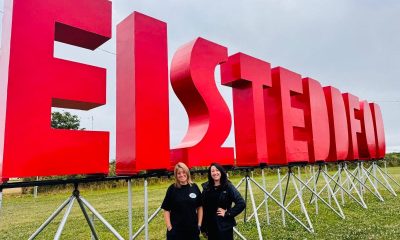
New creative team transforms the Maes ahead of Eisteddfod y Garreg Las
Festival site in Llantwd is taking shape ahead of the National Eisteddfod’s arrival in Pembrokeshire from August 1 to 8...


Community1 day ago
From Tenby to Llandudno: Wales’ seaside towns face the same signal crisis
Businesses in two of Wales’s busiest resorts say unreliable mobile coverage is disrupting payments, bookings and everyday life TWO of...


Crime1 day ago
Judge orders Dyfed-Powys Police review after £3,912 fraud error
Force responsible for policing Pembrokeshire criticised after an officer understated the amount stolen from a vulnerable care-home resident A JUDGE...


Community2 days ago
Narberth bursts into colour as carnival brings Civic Week to spectacular close
Crowds lined the streets for an afternoon of floats, fancy dress, music and family entertainment at one of Pembrokeshire’s longest-running...


Community2 days ago
More than 100 racers take to Castle Pond for Paddle West’s inaugural regatta
Successful community event raised money for Forever11 and launched three consecutive weekends of waterside activity in Pembroke MORE than 100...


News2 days ago
NASA chief meets west Wales scientist helping search for life on Mars
Aberystwyth-led technology will guide Europe’s first Mars rover as it drills beneath the planet’s surface, while the proposed DARC radar...


News3 days ago
Princess Royal celebrates Pembrokeshire craftsmanship at family-run weaving mill
A Pembrokeshire business that began after a mother grew tired of waiting three weeks for her children’s name tapes has...


Local Government3 days ago
Burger King could be coming to Haverfordwest as plans submitted
Plans have been lodged for a Burger King outlet at the Morrisons petrol station on Bridge Meadow Lane BURGER KING...
-

 Community6 hours ago
Huge water main burst sends geyser over Fishguard town centre
-

 Health51 minutes ago
Welsh A&E performance hits record low as parties clash over NHS pressures
-

 Crime3 hours ago
Man in custody accused of intentionally strangling woman in Haverfordwest
-

 Crime1 day ago
Steynton man fined after breaching dog mess and anti-social behaviour notice
-
Community1 day ago
New creative team transforms the Maes ahead of Eisteddfod y Garreg Las
-

 Health1 day ago
Welsh NHS executive pay revealed as patients face lengthy waits
-

 News1 day ago
Landmark rural law could reshape public services across west Wales
-

 News1 day ago
B4327 reopens after 14-hour closure following late-night crash