

Community
The tale of the WW2 Luftwaffe pilot who mistakenly landed in west Wales

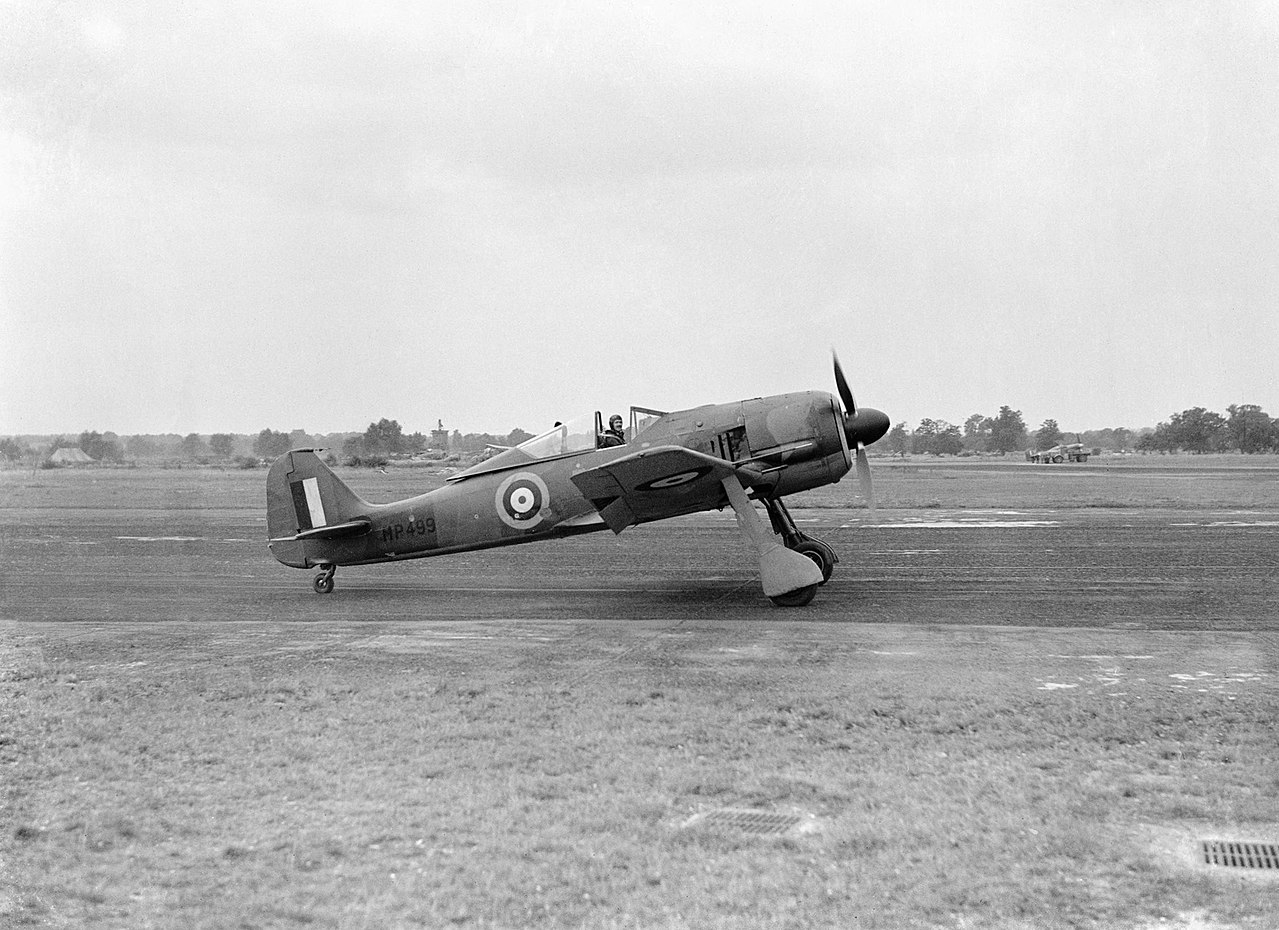
IT WAS this time of year, 1942, that a bizarre series of events led to a German fighter pilot landing at RAF Pembrey in South Wales, unintentionally aiding the war effort of The Allied Forces in the process.
On June 23, 1942, Oberleautnant Armin Fabar was ordered to a fly a combat mission along with his squadron, in response to an Allied bombing raid of northern France.
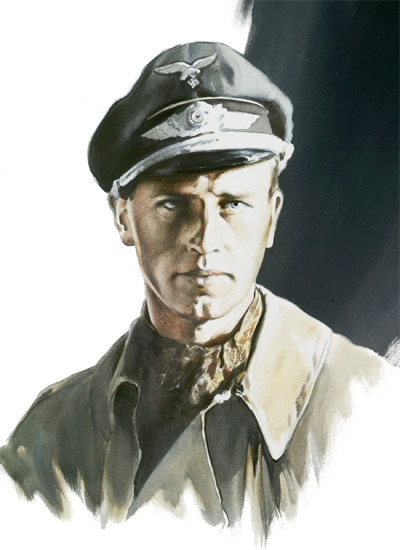
Armin Faber mistakenly flew to South Wales after the dog-fight
Fabar’s squadron (the 7th Staffel) all flew Focke-Wulf 190 fighter planes. These planes were seen as superior to the then current Spitfires of the Allied Forces, and in the subsequent dog-fight that developed over The English Channel seven Spitfires were shot down, compared to only two Focke-Wulf 190s (FW-190s).
One Czechoslovakian Spitfire pilot, Alois Vašátko, dramatically lost his life when, in the fray of combat, he collided head-on with an FW-190. The German pilot bailed out and was later captured by Allied Forces.
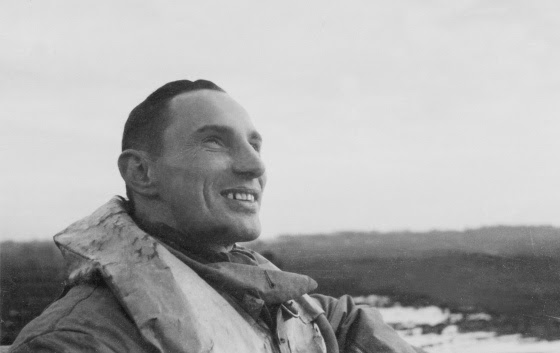
Spitfire pilot Alois Vašátko lost his life in the battle
In the ensuing battle, Faber became disorientated and was separated from his squadron. He was attacked by a Spitfire manned by Seargent František Trejtnar. In a desperate attempt to shake off his pursuer, Faber fled North over the skies of Devon. He pulled off a brilliant ‘Immelman Turn’, a move in which the sun is used to dazzle a pursuer on your tail. Now flying directly from Trejtnar’s view of the sun, Faber shot him down.

Trejtnar crashed near the village of Black Dog, Devon suffering shrapnel wounds and a broken arm.
The victorious Faber had another problem entirely, though he was unaware of it at the time. He had mistaken The Bristol Channel for The English Channel, and flew north into south Wales, thinking it was northern France!
Finding the nearest airfield – RAF Pembrey, in Carmarthernshire, Faber prepared to land. Observers on the ground ‘could not believe their eyes’ as Faber waggled his wings in a victory celebration, lowered the Focke-Wulf’s undercarriage and landed.
Faber expected to be greeted with open arms by his German brothers, but was instead greeted by Pembrey Duty Pilot, Sgt Matthews, pointing a flare gun at his face (he had no other weapon to hand).
As the gravity of the mistake slowly dawned on him, the stricken Faber was ‘so despondent that he attempted suicide’ unsuccessfully.
Faber was later driven to RAF Fairwood Common for interrogation under the escort of Group Captain David Atcherley. Atcherley, fearful of an escape attempt, aimed his revolver at Faber for the entire journey. At one point the car hit a pothole, causing the weapon to fire; the shot only narrowly missing Faber’s head!
Fabers mistaken landing in Wales was a gift for The Allied Forces, a disaster for The Third Reich.

He had inadvertently presented the RAF with one of the greatest prizes of the entire war – an intact example of the formidable Focke-Wulf 190 fighter plane, an aircraft the British had learned to fear and dread ever since it made its combat debut the previous year.
Over the following months Faber’s plane was examined in minute detail, the allies desperately looking for any weakness in the FW-190. There were few to be found.
They did find one, however.
The FW-190s became relatively sluggish at higher altitudes. This knowledge aided the Allied Forces and saved countless lives, as the aerial battles turned increasingly in their favour.
Faber was taken as a prisoner of war, eventually being sent to a POW camp in Canada. Towards the end of the war he was sent home to Germany due to his ill health.
49 years later Faber would visit the Shoreham Aircraft Museum, where parts of his FW-190 are displayed to this day, along with parts of the Spitfire that he shot down in the skies over Devon. He presented the Museum with his officer’s dagger and pilot’s badge.
This little-known but important piece of Carmarthenshire history illustrates not only the high-stakes arms race between The Third Reich and The Allied Forces during WW2, but also the cost of human error.

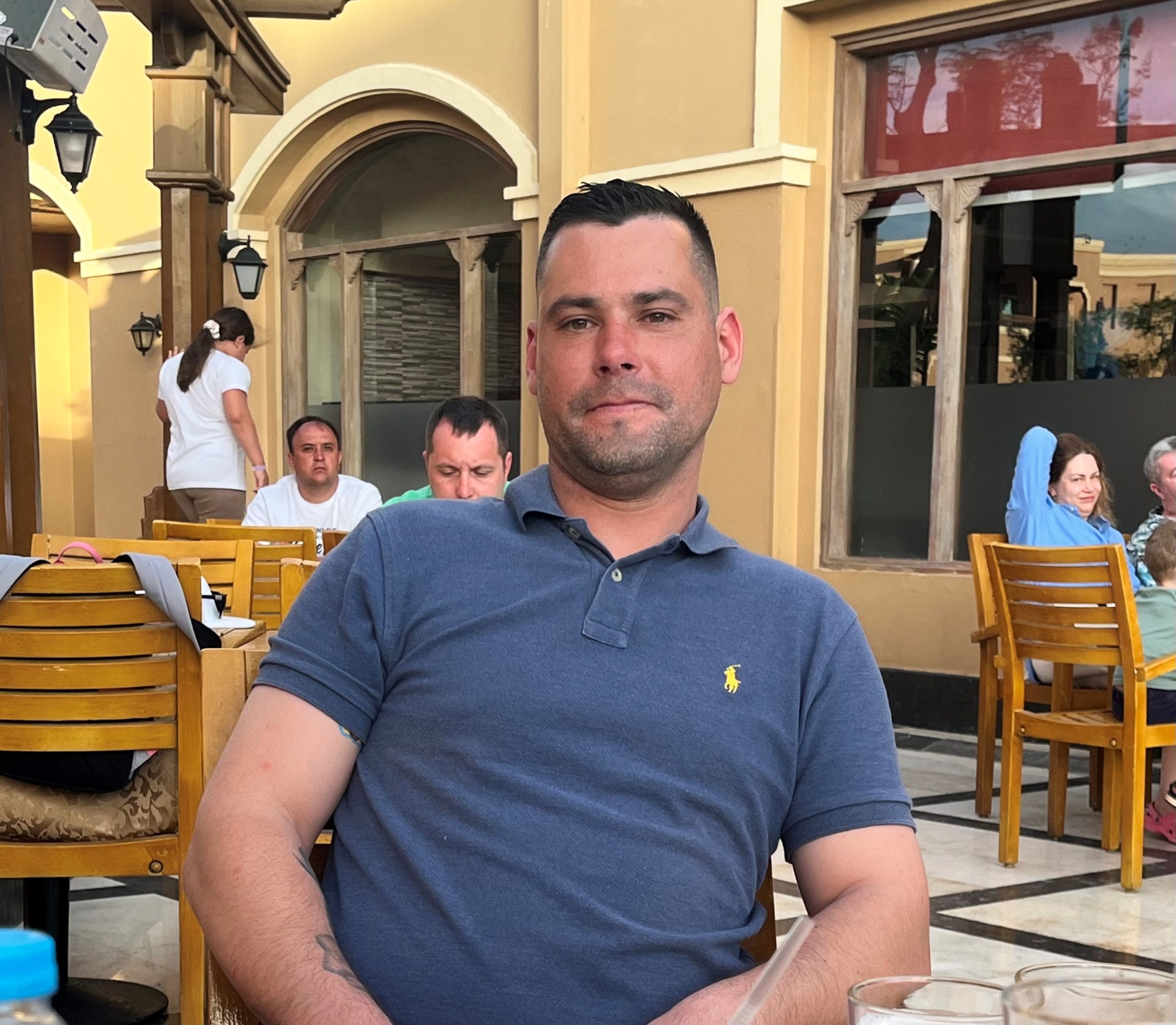
The 38-year-old died after a collision between a van and a bus near Llandeilo
THE FAMILY of a man who died following a collision on the A40 have paid tribute to him, saying they have been left “utterly heartbroken” by their sudden loss.
Ashley Wayne Keane, aged 38, was the driver of a van involved in the collision between Llandeilo and Nantgaredig at around 4.25pm on Friday, July 3.
Emergency services attended the scene, but Mr Keane sadly died following the collision.
In a statement released through Dyfed-Powys Police, his family said: “We are utterly heartbroken by the sudden and tragic loss of Ashley Wayne Keane.
“He will forever be in our hearts, and as his family, we kindly ask for privacy to grieve this devastating loss.”
Police have asked that the family’s request for privacy is respected.


WORLD RENOWNED drag icon, Dr Bev, has been announced as the closing act for the Pembrokeshire Pride Festival in September.
Dr Bev, whose full stage name is Dr Beverley Ballcrusher, is a well known drag artist from Cardiff. In a career that has lasted for over 30 years, she has become one of the highlights of the city’s LGBTQ+ scene.
In that time, she has toured across mainland Europe. Before coming to Pembrokeshire Pride Festival, Dr Bev will be performing at Sao Paulo Pride Festival, the world’s biggest Pride festival.

Dr Bev has also been a fierce advocate for LGBTQ+ rights and HIV awareness. Dr Bev’s performer, Rob Keetch, volunteered at Cardiff Body Positivity to offer advice to those dealing with HIV during the 1990s. Dr Bev began at an event designed to support one of Rob’s associates from this charity, drag queen Connie Condom.
Dr Bev went on to be the founder of Pride Cymru, Wales’ largest LGBTQ+ celebration, holding an annual big weekend in Cardiff. The parade and festival promotes awareness of LGBTQ+ people, part of Pride Cymru’s wider mission to promote acceptance in Wales.
Dr Bev is therefore a figure rooted deeply in Welsh Pride and LGBTQ+ celebration. Having her come to Pembrokeshire Pride Festival is a massive moment for Pride in Pembrokeshire, closing out the festival with one of Wales’ biggest LGBTQ+ icons.
The day will include family friendly entertainment and activities, with food vendors, community areas and performances.
On Dr Bev’s appearance, Rob Keetch said: ‘To go from São Paulo Pride to Dewslake Farm is exactly what Pride should be about: joy, visibility, connection and making sure LGBTQ+ people know they are seen and celebrated wherever they live.‘
Dr Bev will also be wearing her rainbow outfit worn at San Paulo Pride, giving fans an opportunity to see part of the world’s biggest pride festival.
Pembrokeshire Pride Festival will take place on 19th September at Dewslake Farm, near Lamphey. Tickets will be available from the 24th July.
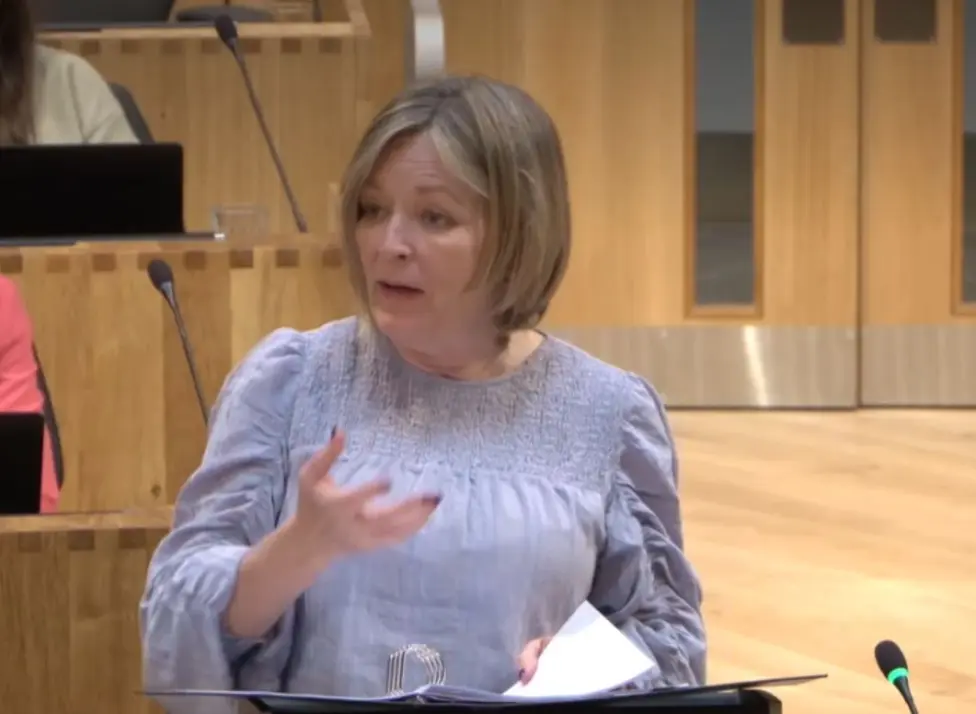
THE WELSH language is “one of our biggest success stories as a small nation on the world stage”, according to the minister responsible for the language.
Education and Welsh language minister Anna Brychan told the Senedd on 7 July that “language does not live solely through policy, but through people and through use.”
Sharing how the language has influenced her life, Ms Brychan said: “My personal story is a bilingual one. My mother learned Welsh as an adult. Today, Welsh and English intertwine in my family at home in Grangetown, and several other languages can be heard around us, and that’s a good thing.”
Concluding her speech, Ms Brychan said: “This is our opportunity to ensure that our two languages drive our future – in the community, digitally, in education and in the economy, and with the Welsh language contributing to making a welcoming, confident bilingual and multilingual country for us all.”
Reform’s deputy leader in Wales, Helen Jenner, described her parents’ decision to send her to a Welsh-medium school as one of “the most precious gifts” they could have given her.
Ms Jenner shared the story of her grandfather, Silgwyn Weston, who didn’t speak any English until he was around eight years old.
She told the Siambr how having received advice from his sister, who attended university in London, her grandfather decided the best way to provide opportunities to his children was for them to speak English at home, meaning her mother did not have the chance to speak Welsh.
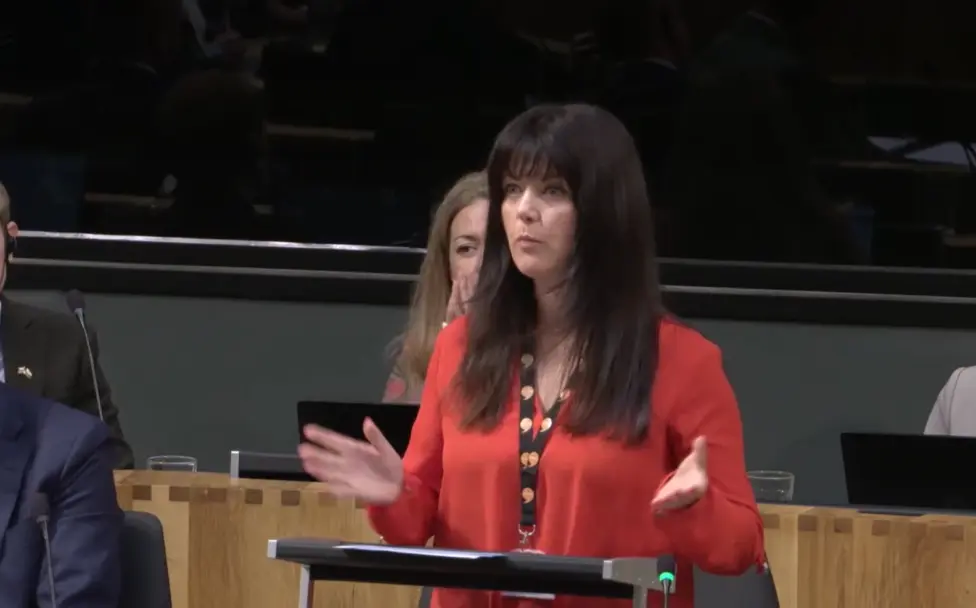
She said: “There was something very special between myself and my grandfather. We were the only two members of the family who could hold a natural conversation in Welsh.
“Silgwyn Weston was a very proud Welshman and in his final years, there was one constant – his hearing was somehow always better if the conversation was about rugby or if someone spoke Welsh to him.”
Reform’s deputy leader agreed with Ms Brychan that language sits at “the heart” of Welsh culture, but criticised the government’s plan to use legislation and targets to secure the language’s future.
She said: “We can’t force people to love a language. We can’t legislate for enthusiasm. We can’t create Welsh-speaking communities through targets alone. The Welsh language flourishes when people choose to use it at home, in the workplace, in the pub, on the rugby pitch and on the street.”
Ms Jenner also welcomed the minister’s commitment to strengthening the Welsh language in digital and AI, adding that if Welsh is not available in these technologies there is a risk of it being “left behind”.

She asked how the government will measure an increase in the daily use of the language and what practical steps will be taken to help learners use Welsh once they have left school.
Responding, Ms Brychan said: “People shouldn’t have to look for opportunities to use the Welsh language.”
She noted importance of including Welsh outside of education, in areas such as “technology, workplaces, sport, culture, planning, research, and leadership in our communities”.

Also sharing his experiences with the Welsh Language, Labour’s Huw Thomas told the Siambr that he himself “couldn’t speak a word of English” until he was around 7.
Discussing the Welsh Government’s target of a million Welsh speakers by 2050, former Cardiff Council leader Mr Thomas called for further details on how the Welsh language will be pushed through childcare and the education system.
He asked Ms Brychan how many Welsh-medium childcare settings will need to be developed to reach the target of free childcare from nine-months-old and how the Welsh Government plans to ensure Welsh-speaking staff will be available to meet demand.
Ms Brychan acknowledged the challenges in terms of developing the necessary workforce, but said there’s “a plan in place” to address this.
The Labour spokesperson for the Welsh language then noted the importance of Welsh in technology and the workforce.
He urged the minister to work with trade unions to promote the Twf Charter, which was developed to promote Welsh in the workplace.
Mr Thomas also questioned what measures the government will be taking to introduce more Welsh-medium apprenticeships.
Ms Brychan revealed she has numerous upcoming meetings on technology, and said the Welsh language is at the forefront of her discussions with such companies.
She also said she’s “always” willing to speak to unions to get their views and expertise.

Conservative Paul Davies voiced his and his party’s support for the Welsh Government’s target of one million Welsh speakers by 2050, but questioned Ms Brychan on Welsh-medium education and socialising through the Welsh language.
Mr Davies highlighted that currently only 21% of children are in Welsh-medium schools, according to the latest schools survey.
He suggested that work could be done in terms of learner travel to help reduce barriers to Welsh language education.
The Conservative spokesperson called on Ms Brychan to reveal whether she will review the Learner Travel (Wales) Measure 2008 to see if more “can be done” to allow children access to Welsh-medium education. However, Ms Brychan did not mention learner travel in her response.
Mr Davies also spoke of the importance of socialising in Welsh in cultural settings, referring to events such as Tafwyl, which took place in Cardiff last month.
He said: “These events and many other community events are held by organisations like the mentrau iaith and others, of course, that do so much in our communities with little resource.”
Mr Davies called on the Welsh Government to consider how it can support community organisations “more effectively” in the future.
Ms Brychan replied: “In terms of socialising through the medium of Welsh, that takes me back to the point that I was making that we need to create the environment where people don’t have to look for opportunities to use the Welsh language.
“As you mentioned, the opportunities provided through the mentrau iaith are key to ensure that those opportunities are available.”



Crime20 hours ago
Ann Widdecombe: Welsh politicians pay tribute as murder probe launched
Prime Minister Sir Keir Starmer has praised the former minister’s “conviction and dedication”, while political figures in Wales remembered her...


News24 hours ago
Solardo pulls out of Haverfordwest show as organisers offer full refunds
Headline act confirms non-appearance as Park House Series announces major event changes DANCE music duo Solardo will no longer perform...


Local Government1 day ago
Conservatives win Pembroke Dock seat as Reform stalls and Dowson polls just 11
Jamie Street takes Market ward with a 43-vote majority as Reform finishes fourth despite its major Senedd breakthrough two months...

Health1 day ago
Hospital ward closed after highly contagious scabies outbreak
Hywel Dda confirms wider rise in cases across Carmarthenshire, Pembrokeshire and Ceredigion as patients and staff are offered treatment A...


Crime2 days ago
Teacher stabbing trial: The first week of evidence
Jury hears accounts of alleged planned classroom attack, teacher’s fear she was dying, and boy’s words after leaving school A...


Community2 days ago
Haverfordwest Castle refurbishment reaches new heights as roof goes on
Major milestone reached in project to transform historic gaol building into flagship visitor attraction A MAJOR milestone has been reached...


Business3 days ago
Pembrokeshire lands £98m share of Wales marine energy boom
New industry report says county has received the second highest level of marine energy investment in Wales, supporting more than...
Crime3 days ago
First aider tells jury teacher was “crying, shaking” after classroom stabbing
A SCHOOL first aider has told a jury that teacher Vicki Williams was “crying, shaking” and in “complete shock” after...

Crime4 days ago
Teacher feared she was dying after Milford Haven classroom stabbing
A TEACHER allegedly stabbed in the head at Milford Haven Comprehensive School told a jury she feared she was dying...


News4 days ago
Farage to resign as MP and fight Clacton by-election amid finance row
NIGEL FARAGE has announced he will resign as MP for Clacton and stand again in the by-election he intends to...
-
 Farming4 days ago
Pembrokeshire slaughterhouse given urgent improvement rating after audit failure
-
 Entertainment3 days ago
Swing and big band classics heading to Torch Theatre
-
 News4 days ago
From boccia to boxing: ALN multisport events give youngsters chance to try activities
-
 News5 days ago
Large fire breaks out at Impala Terminal in Milford Haven
-
 Education5 days ago
Council failed Welsh language standards over school closure
-
 Community7 days ago
Milford Haven Carnival brings colour, music and crowds to the town
-
 Entertainment5 days ago
Crymych Arms to host weekend of local music, food and drink
-

 News4 days ago
Questions raised over Hamilton Accies finances after club’s Haverfordwest friendly