


News
Sea Empress oil spill: 25 years since Wales’ biggest ecological disaster

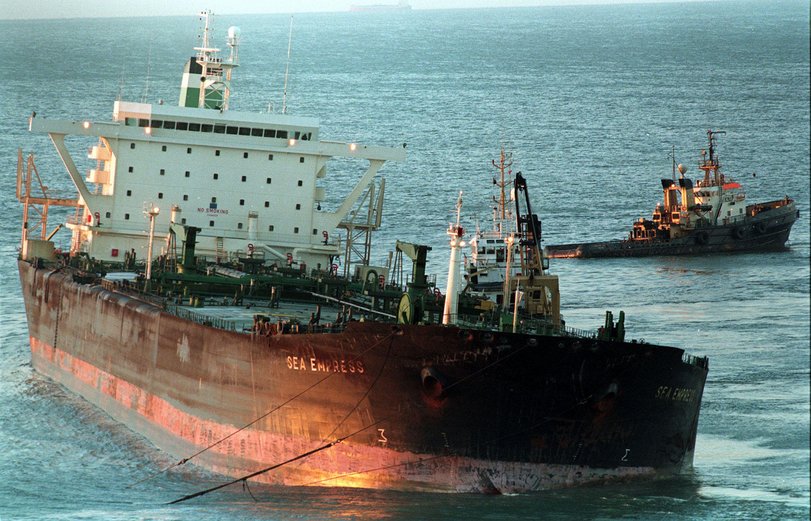
IT’S EXACTLY 25 years since Wales’ worst ecological disaster – single hull oil tanker hit rocks in the middle of the channel, holing her below the waterline.
On 15 February 1996, the Sea Empress oil tanker ran aground as it entered the Milford Haven Waterway.
Six days later, the tanker re-floated and was towed into the harbour. In the days between its grounding and towing, the oil tanker spilled 72,000 tons of crude oil along the Pembrokeshire Coastline, within the Pembrokeshire Coast National Park.
It was a Thursday morning the oil tanker was en route to the Texaco oil refinery when she became grounded on mid-channel rocks at St. Ann’s Head. Over the course of a week, she spilt 72,000 tons of crude oil into the sea. The spill occurred within the Pembrokeshire Coast National Park – one of Europe’s most important and sensitive wildlife and marine conservation areas.
Sailing against the outgoing tide and in calm conditions, at 20:07 GMT the ship was pushed off course by the current and became grounded after hitting rocks in the middle of the channel.

The collision punctured her starboard hull causing oil to pour out into the sea. Tugs from Milford Haven Port Authority were sent to the scene and attempted to pull the vessel free and re-float her. During the initial rescue attempts, she detached several times from the tugs and grounded repeatedly – each time slicing open new sections of her hull and releasing more oil.
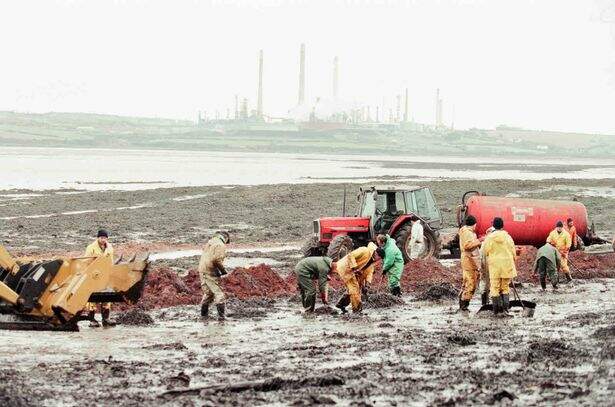
Clean up underway near Dale, Pembrokeshire following the oil spill (Image PA)
RESCUE OPERATION
A full scale emergency plan was activated by the authorities. News of the grounding was first reported at 21:18 on the BBC’s Nine O’Clock News – just over an hour after she ran aground.
Over the next few days, efforts to pull the vessel from the rocks continued.
Assisting the many local vessels, tugboats were drafted in from the ports of Dublin, Liverpool and Plymouth to assist with the salvage operation.
The tanker ran aground very close to the islands of Skomer and Skokholm – both national nature reserves, Sites of Special Scientific Interest (SSSI) and Special Protection Areas and home to Manx shearwaters, Atlantic puffins, guillemots, razorbills, great cormorants, kittiwakes, European storm-petrels, common shags and Eurasian oystercatchers.
Birds at sea were hit hard during the early weeks of the spill, resulting in thousands of deaths. The Pembrokeshire grey seal population didn’t appear to be affected too much and impacts to subtidal wildlife were limited. However, much damage was caused to shorelines affected by bulk oil. Shore seaweeds and invertebrates were killed in large quantities. Mass strandings of cockles and other shellfish occurred on sandy beaches. Rock pool fish were also affected. However, a range of tough shore species were seen to survive exposure to bulk oil and lingering residues.
A rescue centre for oiled birds was set up in Milford Haven. According to the Countryside Council for Wales (CCW), over 70% of released guillemots died within 14 days. Just 3% survived two months and only 1% survived a year.

The Pembrokeshire coast is home to common porpoises and bottlenose dolphins.
The effects of the oil and chemical pollution on these species remains unknown. Significant numbers of both species were recorded in the waters off the Skomer Marine Nature Reserve during the spring and summer of 1996.
The main containment and dispersement of the oil slick at sea was completed within six weeks. However, the removal of oil on shore took over a year until the late spring of 1997. Small amounts of oil were still found beneath the sand on sheltered beaches and in rock pools in 1999 – three years after the spill.
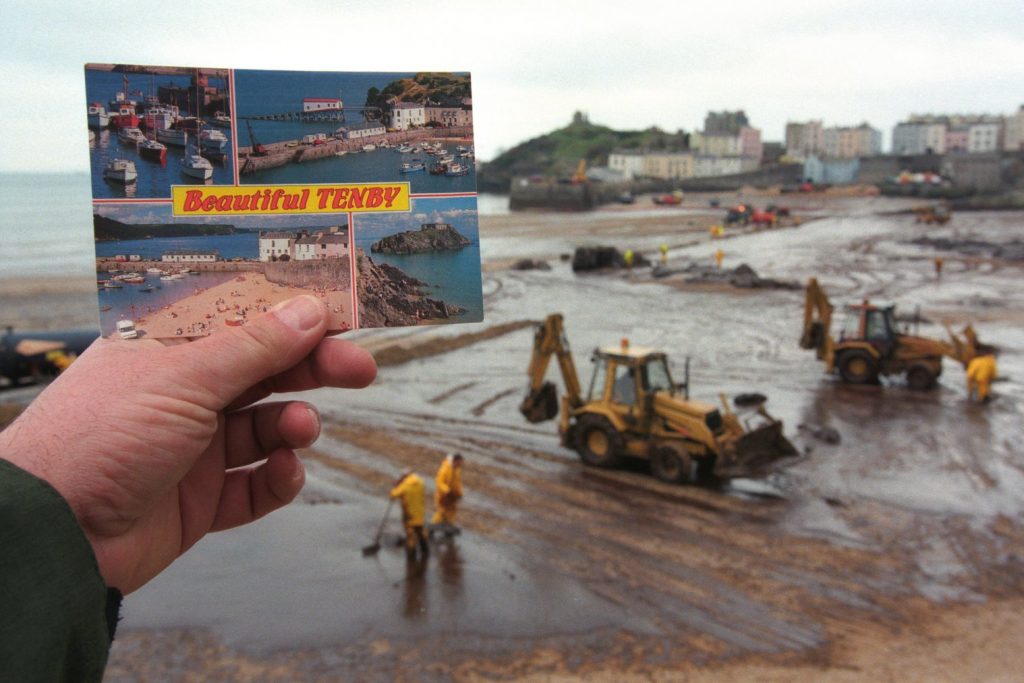
Contractors clean oil from Tenby north beach after the oil tanker Sea Empress ran aground on rocks Pembrokeshire Wales UK (Image: PA)
IT COULD HAVE BEEN WORSE
The effects of the spill were not as bad as initially predicted. This was due in part to the time of year when the spill occurred.
In February, many migratory animals had not yet arrived back in Pembrokeshire for breeding.
Along with stormy weather which helped break-up and naturally disperse the oil, the effect on wildlife would have been much worse if the spill had occurred just a month later.
The spill would undoubtedly have been catastrophic for both the environment and local economy if it had occurred during the summer months.
Much of the Pembrokeshire coastline recovered relatively quickly.
By 2001, the affected marine wildlife population levels had more-or-less returned to normal.
There was an immediate ban on fishing off the coast of Pembrokeshire and south Carmarthenshire which had a devastating impact on the local fishing industry.
The ban remained in place for several months and was lifted in stages.
Many local fishermen received financial compensation for the loss of income due to the ban.
The spill occurred just a few weeks before the Easter break when many holidaymakers would be visiting the area.
Some sheltered beaches and tidal estuaries were still covered with oil, but the main tourist locations of Tenby, Saundersfoot, Pendine, Manorbier and Bosherston were superficially cleaned.
A large clean-up operation began as soon as the Sea Empress started spilling oil.
Volunteers and paid hands alike, came together to restore the beautiful beaches of Pembrokeshire.
In the immediate days and weeks that followed, one thousand people worked around the clock to rescue oiled birds and remove oil from beaches using suction tankers, pressure washers and oil-absorbing scrubbers.
The main clean-up operation lasted several weeks and continued on a reduced scale for over a year.
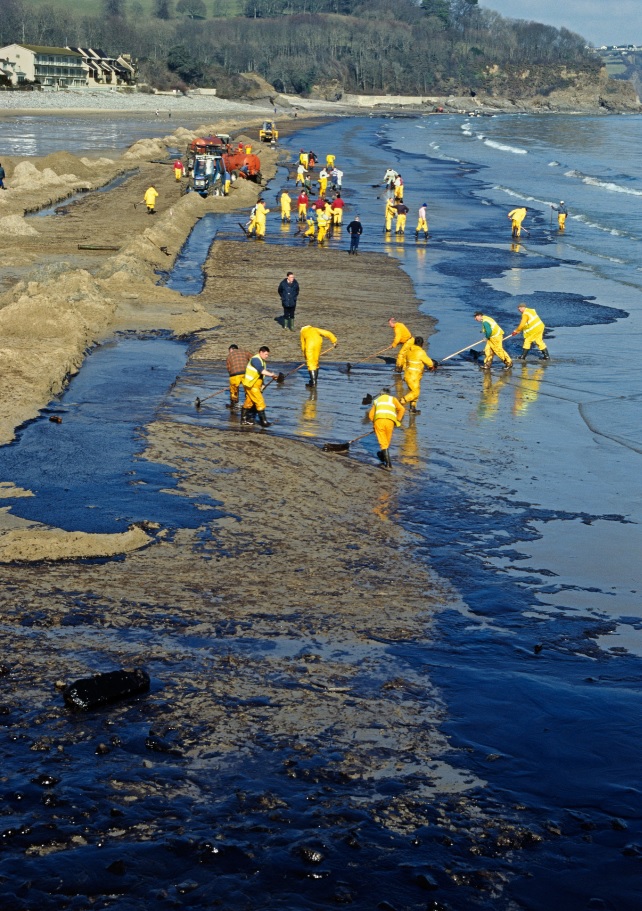
Workmen clean up the spill in Tenby (Image PA)
PORT AUTHORITY FINED £4 MILLION
Almost three years after the spill in January 1999, Milford Haven Port Authority (MHPA) was fined a record £4m after pleading guilty to the offence of causing pollution under the Water Resources Act 1991. The MHPA was also required to pay a further £825,000 prosecution costs by agreement.
The cost of the clean-up operation was estimated to be £60m. When the effects to the economy and environment are taken into account, the final cost is estimated to have been twice that, at £120m.
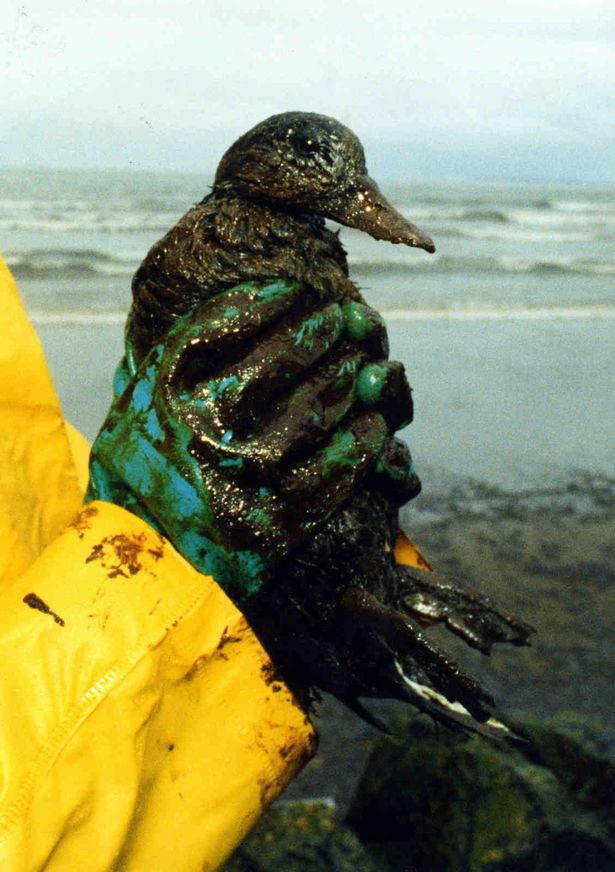
Oiled seabird rescued for cleaning (Image: File)
SHIPS BAD LUCK CONTINUES
While the cause of the initial grounding was found to be due to pilot error, it seems the vessel, even under new ownership, could not escape her run of bad luck. While attempting to dock for scrapping in Bangladesh she was ruptured again, this time by a sunken vessel.
She was renamed a further four times before her final demise, known as MV Front Spirit for a while before being sold under the name MV Ocean Opal, to Chinese buyers.
They used her as a floating storage and offloading unit from 2004. In 2010, she was converted in Shanghai into a bulk carrier, and re-flagged as the Panamanian registered MV Welwind. In 2012, she was renamed for a fifth time: MV Wind 3 and on June 3 that year the 274-metre long vessel was brought to Chittagong in Bangladesh for dismantling at the Shitakunda ship breaking yard.
On the way to the yard the ship developed a crack in one side of its engine room following a collision with a sunken ship, Hang Ro Bong, when she was attempting to anchor at the B (Bravo) anchorage of the port.
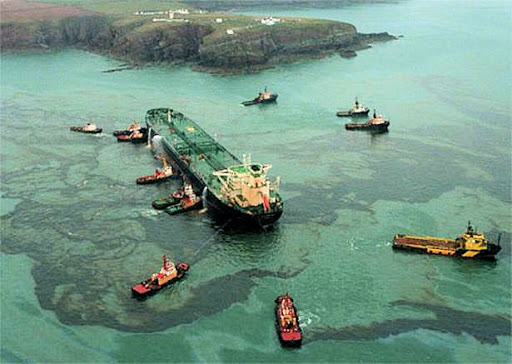
The view from above: The scale of the operation unfolds (Image: Herald archive/MCA)
LESSONS NOT LEARNED
In 2016 former local MP Nick Ainger said that the lessons from the disaster had not been learned
He told BBC Radio Wales’ Sunday Supplement programme that the scrapping of the UK’s emergency towing vessel fleet showed lessons had not been learned 20 years on- The Maritime and Coastguard Agency (MCA) said it was felt the shipping industry should fund such a service.
Mr Ainger said: “We now have a position, 20 years after the Sea Empress, 23 after the Braer, where we have no emergency towing vehicles stationed around our coast.
“Ironically, other countries in Europe, in Spain, in France, Germany, Norway have got government-financed emergency towing vessels.
“We, with our huge coastline with all the shipping that we have coming not only in and out of Milford Haven, but around our shores from the North Sea carrying crude oil, we haven’t got a government-supported emergency towing vessel.
“I think that lesson should be re-learned very, very quickly before we have another disaster.”
An MCA spokeswoman said: “The government believes that responsibility for ensuring the operational safety of ships is properly a matter for the commercial shipping industry, working in partnership with the tug and salvage industries; it did not believe that it was appropriate for the taxpayer to fund this provision.”
She added that no vessel had run aground or foundered in UK waters, nor had any pollution occurred, as a result of a ship being unable to engage a suitable towing vessel.
Following the Sea Empress disaster towing regulations in the Milford Haven waterway were tightened. Following the lead from a Scottish oil terminal, Sullom Voe, ‘escort towing’ was started. Cory Towage sent a representative to Shetland to observe and report back.
At the time the Sea Empress went aground this practice had already started in the Solent for the Port of Southampton, If Milford Haven had done the same in time, the disaster would certainly not have occurred.
Further reading: The Sea Empress’s second accident











A SWISS woman has returned to Pembroke Dock Heritage Centre to see a special display celebrating her grandmother’s remarkable wartime work helping Allied servicemen who escaped into neutral Switzerland.
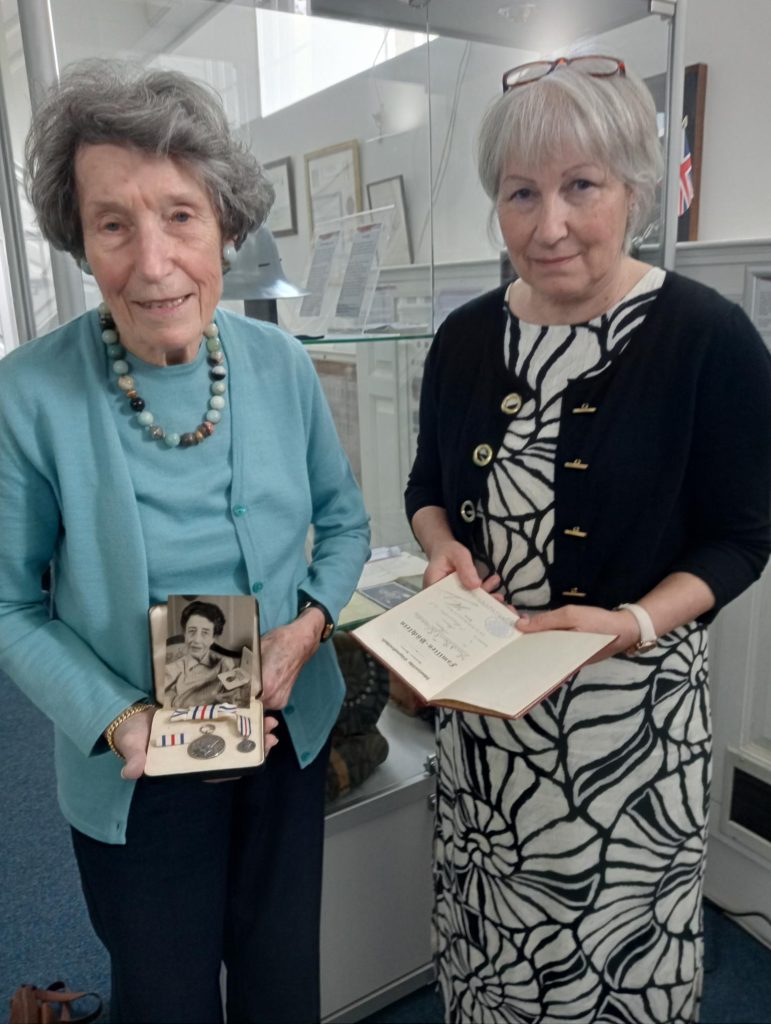
Therese Burckhardt, from Zurich, is the granddaughter of Mrs Beryl Schaerer Morse, a former Pembroke Dock woman who was awarded the King’s Medal in 1952 for her service during the Second World War.
The rare medal, one of only around 2,500 awarded, is now on display at the Heritage Centre alongside photographs, family records and an information panel telling Mrs Schaerer Morse’s story.
Beryl Schaerer Morse was born in Pembroke Dock in 1887, the daughter of Mr and Mrs Thomas Harrison Morse, who lived in Pembroke Dock and later Tenby.
After marrying a Swiss banker in 1913, she settled in Switzerland for the rest of her life, but always regarded Pembrokeshire as home. She returned for many summers to the family’s house in Tenby, which her grandparents had built in the 1930s.
During the Second World War, Mrs Schaerer Morse led an organisation assisting Allied servicemen who had escaped into neutral Switzerland. Her work was later recognised with the award of the King’s Medal.
Therese first visited the Heritage Centre last summer with childhood friend Penny Tighe, of Pembroke, bringing the medal and family records with her. She has now returned with further documents and family photographs to add to the centre’s archive.
Joining her again was Penny Tighe, along with Ruth Waddington, who now lives in the Tenby house where Therese spent many happy childhood holidays with her brother Roland, known affectionately to his grandmother as “Chips”.
Mrs Schaerer Morse died in 1967 and had expressly wished to be buried near her father at Llanion Cemetery, Pembroke Dock.
Therese said: “I am very pleased with how my grandmother’s medal and her story are displayed at the Heritage Centre, and also pleased to bring more records to add to the archive there.”
Pembroke Dock Heritage Centre is based at the Royal Dockyard Chapel and tells the story of the town’s maritime, aviation, military, social and community heritage.
Pembroke Dock was Wales’ only Royal Dockyard, a major garrison town, and during the Second World War was home to the largest flying boat station in the world.

The centre is currently open Monday to Friday, from 10:00am to 4:00pm.
Therese Burckhardt shows the King’s Medal, awarded to her grandmother, to Ruth Waddington at Pembroke Dock Heritage Centre (Pic: PDHC).
VOLUNTEERS at West Wales Maritime Museum were praised after another successful Pirates Party brought crowds to Pembroke Dock.
The family event was held at Hancock’s Yard, Front Street, on Saturday (Jun 20), with visitors enjoying a day of maritime-themed entertainment, stalls, refreshments and fancy dress.
The museum, run by the West Wales Maritime Heritage Society, hosted the event with the help of volunteers, with activities including a tombola, raffle, barbecue, face painting, children’s games and a prize for the best-dressed pirate.
There was also live entertainment from the Cantabile Singers and the Barti Waves.
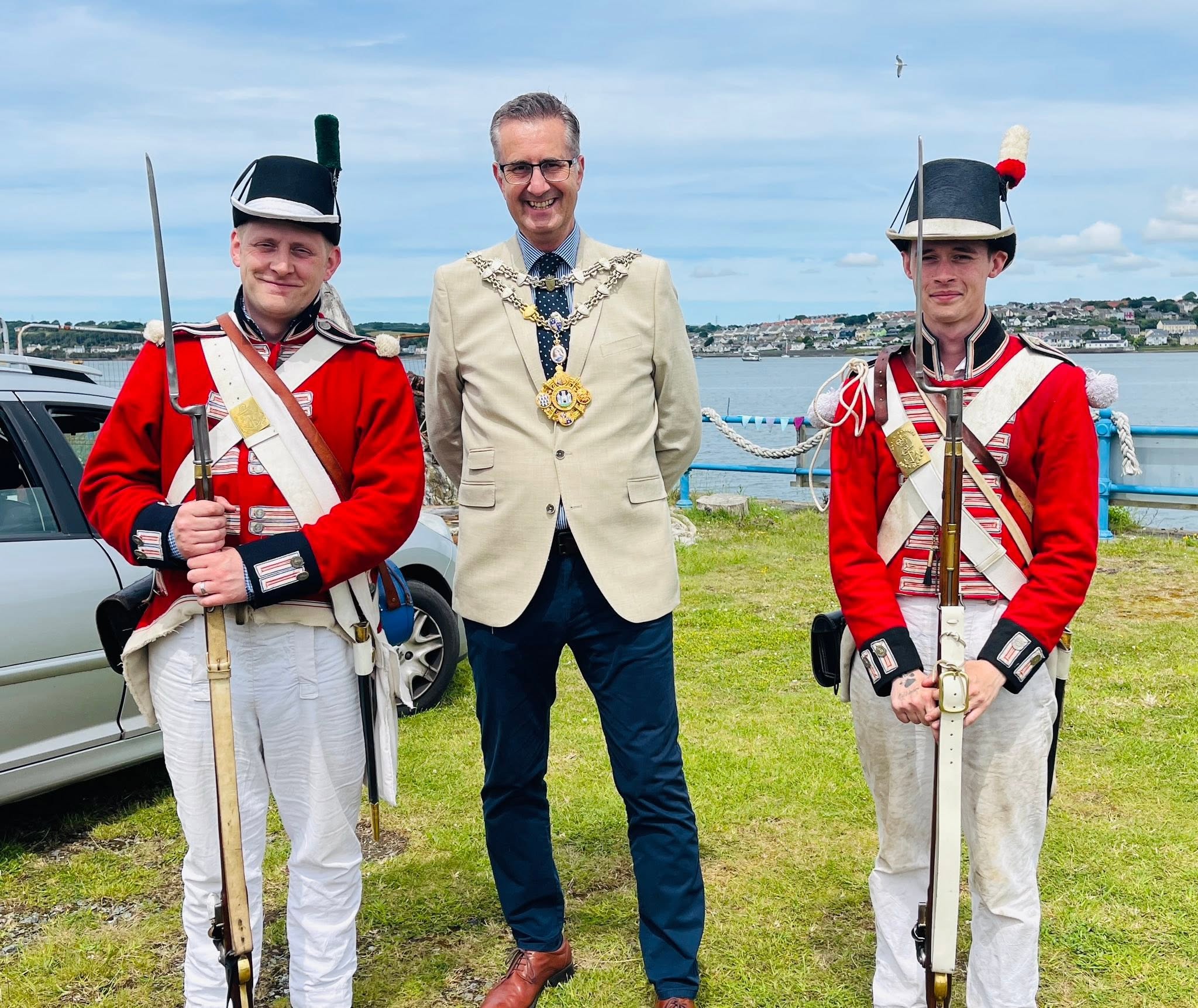
One of the highlights of the afternoon was a musket firing display by the H.M.S Wales Re-enactment Group, which drew strong interest from those attending.
County councillor Jonathan Grimes, who represents Pembroke St Mary South and Monkton, was among those who visited the event.
He said it had been “a fantastic afternoon” and praised the volunteers who had worked hard to put on “another brilliant event”.
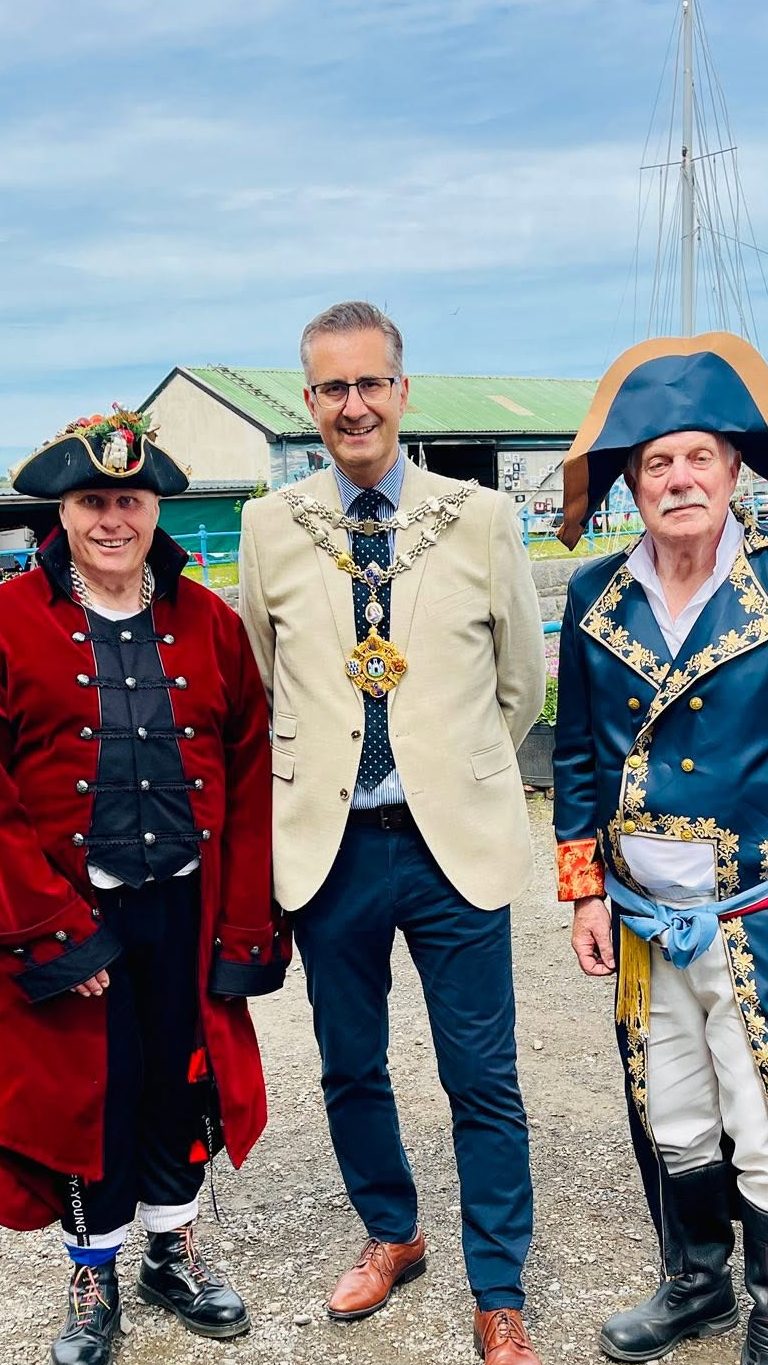
Cllr Grimes said: “There was plenty to see and enjoy, but my personal highlight had to be the musket firing display from the H.M.S Wales Re-enactment Group — a real crowd-pleaser with live firing.
“It was wonderful to see so many people coming along and supporting yet another successful event at the museum.”
He also thanked Peter Kraus and everyone involved for their dedication in bringing the event to life.
The West Wales Maritime Museum is based at the historic Hancock’s Yard and is run by volunteers who work to preserve Pembroke Dock’s maritime heritage.
The society restores and maintains classic boats, operates a museum of maritime artefacts and offers visitors a chance to learn more about the town’s long connection with the sea.
The museum has become an increasingly popular community venue, with events such as the Pirates Party helping to bring families into the town while celebrating Pembroke Dock’s seafaring past.
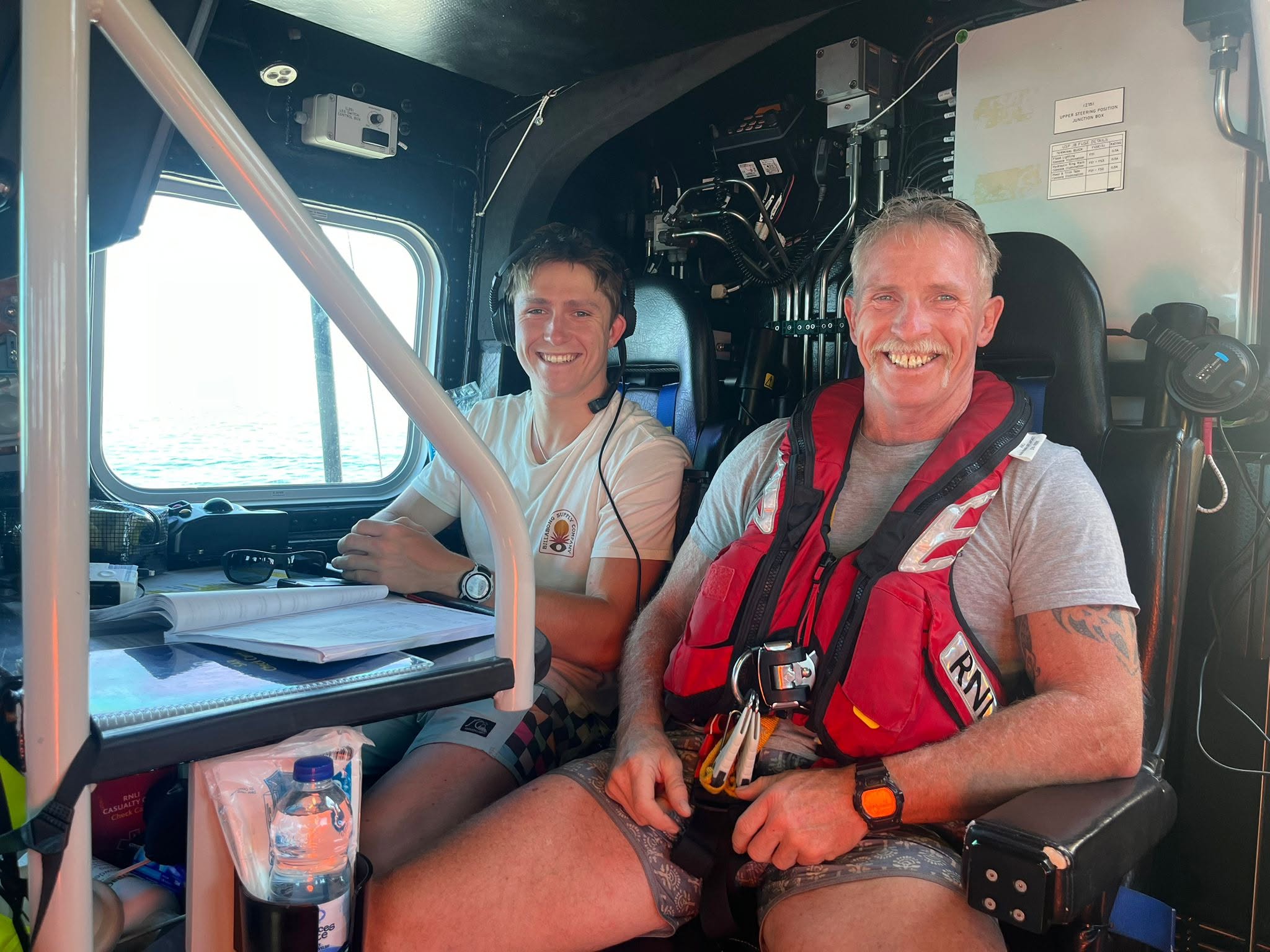
FATHER’S DAY celebrations were interrupted for several Tenby RNLI crew members on Sunday afternoon (Jun 21) after a five-metre RIB suffered engine failure off Broadhaven South and began drifting dangerously towards rocks.
The casualty vessel issued a Pan Pan call, prompting a Coastguard tasking to Tenby Lifeboats.
Among those responding were Coxswain Gary and his son Eddie, who still managed to spend part of Father’s Day together — although not quite in the way they may have planned.
The lifeboat was quickly launched and made best speed to the reported position, around nine miles west of Tenby Lifeboat Station.
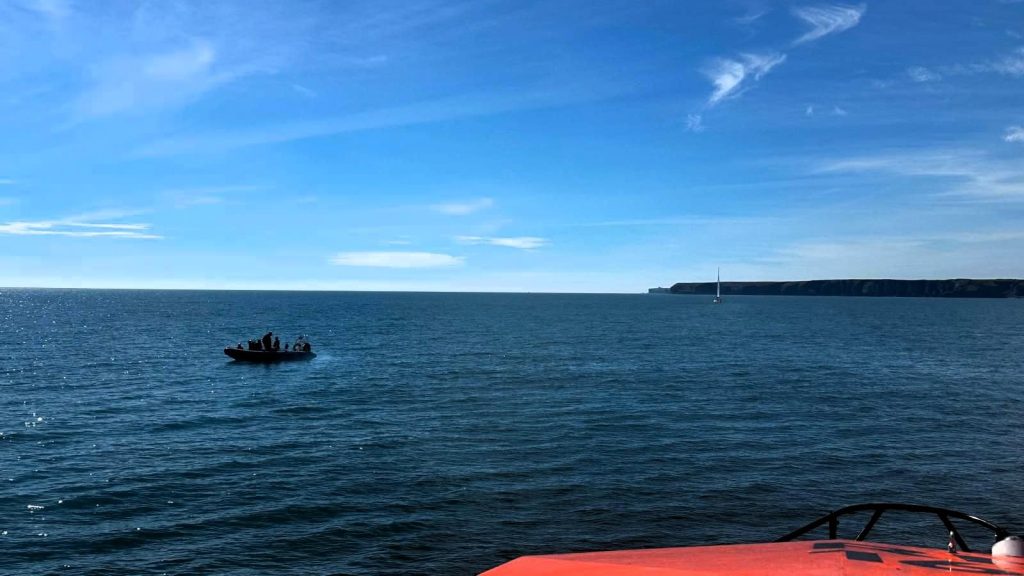
When the crew arrived on scene, the engine of the casualty vessel had been restarted. However, with those on board concerned it could fail again, the Coxswain decided to escort the RIB back towards the entrance of the Milford Haven Waterway.
Once at the mouth of the waterway, the occupants were confident they could safely continue to their mooring without further assistance.
The lifeboat was then stood down and returned to station, arriving back at 5:50pm.



Community6 hours ago
The gentle giant behind the tattoos
Pembrokeshire security worker Josh Davies praised for professionalism, kindness and proving first impressions can be wrong JOSH Davies is hard...


Charity1 day ago
Toy Story fans fill charity toy box at Haverfordwest cinema
Donations pour in for SNAP Specialist Play as families embrace Toy Story 5 launch A TOY STORY-themed charity appeal at...


Community1 day ago
Lord Rhys emerges from the mist in St Davids
Giant puppet begins historic journey marking 850 years since the first Eisteddfod MIST swirled around St Davids Cathedral on Friday...


News2 days ago
Tragic tribute paid to Haverfordwest man after A4075 collision
FAMILY REMEMBERS “KIND AND LOVING” CALLUM HANSON THE FAMILY of a 22-year-old man from Haverfordwest who died following a road...

News3 days ago
Motorcyclist, 22, dies in A4075 crash in Pembrokeshire
A 22-year-old woman remains in hospital after two-vehicle collision A MOTORCYCLIST has died following a serious two-vehicle crash on the...

Community3 days ago
Why police will be visiting every home in Pembrokeshire
New operation aims to knock on more than 257,000 doors across Dyfed-Powys over the next three years DYFED-POWYS POLICE has...


Crime4 days ago
Prisons at breaking point: MPs warn Wales is paying the price of a failing system
Frozen healthcare budgets, overcrowded jails, homelessness on release and mounting pressure on staff are undermining rehabilitation across Wales, according to...


News4 days ago
Brexit at 10: How Britain was sold a dream that cost us dearly
A decade after the referendum, the promised benefits remain hard to find while the economic costs are increasingly difficult to...


Crime4 days ago
Worcestershire man jailed after violent attack on woman in Tenby
Defendant was already serving a suspended sentence when serious assault took place A WORCESTERSHIRE man has been jailed for more...


Climate4 days ago
Offshore wind ‘could bring new generation of jobs to Milford Haven’
Pembrokeshire ports and Celtic Sea projects placed at centre of Wales’ green energy ambitions MILFORD HAVEN and Pembroke Dock could...
-

 Crime4 days ago
Milford Haven man jailed for breaching domestic violence protection order
-

 Local Government5 days ago
Security privately arranged by Mayor at Beating of the Bounds
-

 News3 days ago
Crash on Freeman’s Way causes school-run chaos across Haverfordwest
-

 Crime5 days ago
Man wanted by court after failing to attend hearing over alleged shop thefts
-
 Crime5 days ago
Man banned from roads after drink-driving offence
-

 Crime5 days ago
Man jailed after admitting strangulation and assaults
-

 Crime5 days ago
Drug trafficker must repay £33,000 after court rules he made nearly £500,000
-
 Crime5 days ago
Man sentenced over stalking campaign and lock knife offence