


Education
Students learn about offshore wind development and the jobs they could benefit from

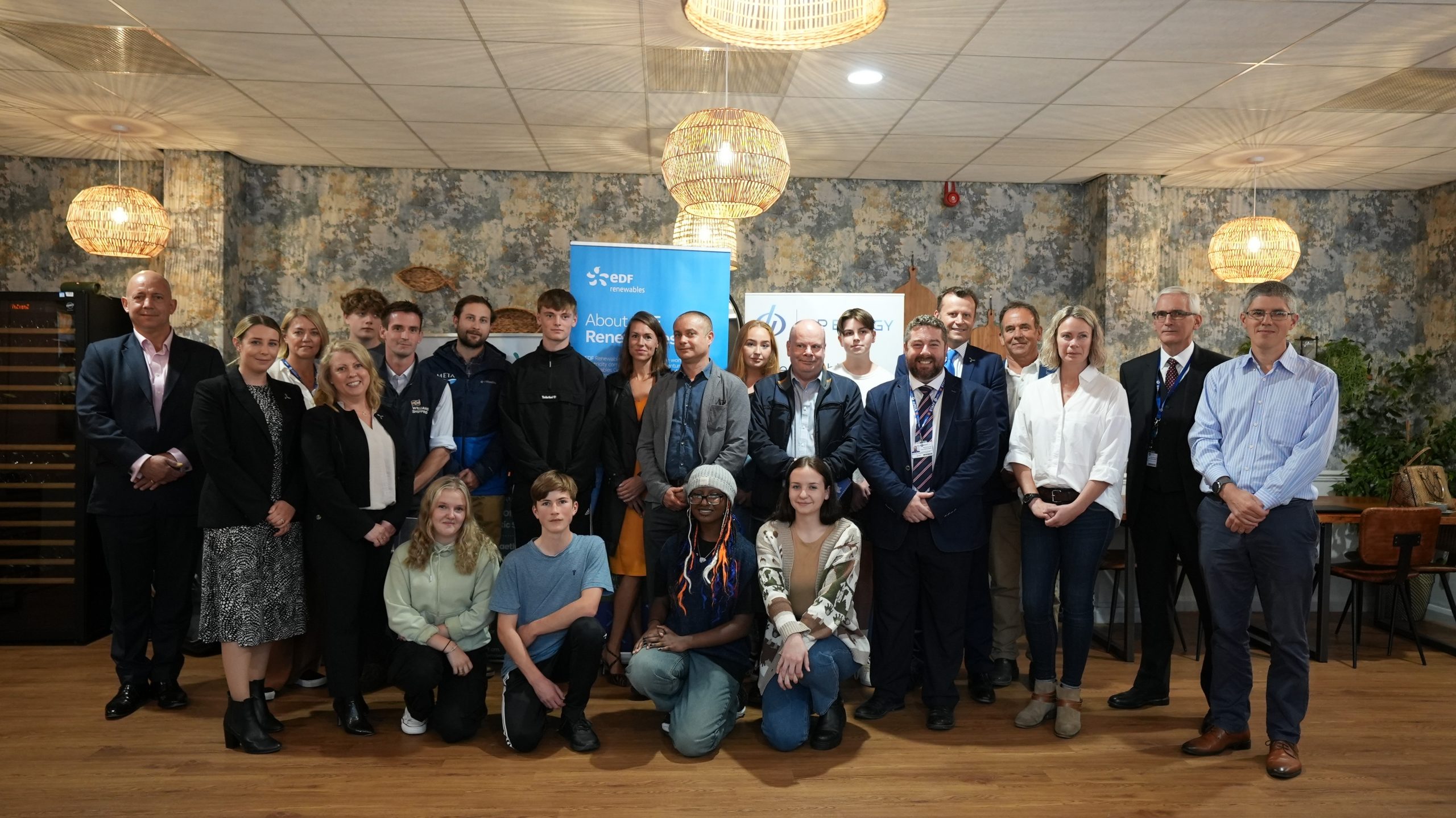
TEENAGERS Ethan Adams and Jack Hale said they barely knew anything about renewable energy when they signed up to a brand new course at Pembrokeshire College, but that has changed.
They now have a solid grasp of what is shaping up to be a significant source of jobs and investment in the Celtic Sea – the large body of water bordered by South West Wales, the South West of England and the south of Ireland.
Floating offshore wind farms in this marine expanse could be helping the UK decarbonise its power supply further in a few years’ time, and people will be needed to assemble, install and maintain the turbines, connect them to the grid, and refine and improve their design.
Staff will also be needed to research, build and maintain tidal energy projects – like a large electricity-generating lagoon and floating solar farm that has been proposed in Swansea Bay.
Mechanical engineering students Ethan and Jack were among the first intake of a pilot course called Destination Renewables at Pembrokeshire College. The industry-led programme is the first of what is expected to be several courses underpinned by a £1.2 billion city deal for the Swansea Bay region, which comprises Pembrokeshire, Carmarthenshire, Swansea and Neath Port Talbot.

The idea of the courses will be to equip students with some of the advanced manufacturing, technical and other skills which the jobs of tomorrow will need.
Ethan, 18, of Tenby, said he was interested in widening his horizons. “I knew nothing about renewable energy,” he said. “I thought, why not expand my knowledge and gain an interest in what’s going on around me.
“I’ve really enjoyed it. I’ve found it really informative and interactive. It’s never the same thing twice.”
The students have done field trips and workshops, listened to renewable energy business leaders, and learned about the planning and consenting process, among other things.
Ethan said one example of what they’d explored was the different ways of “pegging down” offshore wind turbines, and the need to consider the impact on marine life – particular the vibrations associated with their installation.
“They were telling us that they can create a forcefield of bubbles to soak up the sound,” he said.
Ethan attended a conference held at the Port of Milford Haven where he spoke to Secretary of State for Wales David TC Davies. He and other students who have opted to carry on with the course will focus on a renewable energy project in the second year.

Ethan said he could see a future for himself in the renewable sector. “I feel like I would be quite suited to project management,” he said.
Jack, 17, who lives near Newgale, said: “I never really learned about renewable energy at school. I’ve definitely gained a wider perspective.
“We’ve had guest speakers coming in telling us about how much goes into these projects, and how many jobs there will be.”
Hayley Williams, the college’s curriculum development manager, said the course aimed to raise awareness both of the UK’s drive towards net zero – drastically cutting carbon emissions and offsetting the remainder – and the role Pembrokeshire could play in it.
Irish company DP Energy and French energy giant EDF Renewables have had a key role in delivering the pilot course.
“We started talking to DP Energy about 18 months ago,” said Mrs Williams. “What surfaced is that young people didn’t really know what net zero was and they didn’t know there was so much research and development taking place at the Milford Haven Waterway.
“The plan was to bring the whole renewable sector to life – from research and development, consenting, commissioning and connecting.”
She said around 60 students initially signed up but that this number had reduced. “Some students, say those doing doing construction, were not finding it was relevant to them,” she said. “The ones that have stayed on are thoroughly engaged. Other colleges in South West Wales are interested.”
Mrs Williams said there were around nine companies in the area developing marine energy technologies, and that a demonstration floating offshore wind project by a company called Blue Gem Wind could start being installed in the Celtic Sea next year.
Mrs Williams said she felt there was an element of “sea blindness” in Pembrokeshire about the natural resources just off the coastline. “All of a sudden it’s like somebody is opening the curtains,” she said.
DP Energy and EDF Renewables will provide mentoring opportunities to students in the second year.
Ffion Wright, of DP Energy, said: “We are working now to build on the success achieved to come back in September with a condensed programme that can be delivered to Pembrokeshire learners and rolled out to other interested colleges in Wales and the South West of England.
“A key ingredient of the programme has been the time given by industry partners to share their knowledge and expertise with students. The course fully embraces the ‘you have to see it to be it’ approach and it will continue to be central to Destination Renewables.”
UK ministers want to increase the installed capacity of offshore wind by fourfold by 2030. There are currently around 12 gigawatts (GW) of installed offshore wind in UK waters. The target is 50GW, with up to 5GW from floating rather than fixed turbines. To put it in context, the UK Government said 50GW of offshore wind would generate the equivalent electricity for approximately 75 million homes. But wind conditions aren’t perfect all the time.
DP Energy said a 1GW project it would like to develop in the Celtic Sea with EDF Renewables could generate the equivalent electricity used by 920,000 homes based on average wind yields.
All told, this would require a vast acceleration in projects coming on stream compared to now, and industry groups say the planning process needs to be shortened and environmental assessments streamlined. That in turn could concern those who worry about the impacts of offshore wind farms on busy waterways and the marine life they support.
The Welsh Affairs Committee has published a report saying that floating offshore wind, like the 1GW joint venture proposed by DP Energy and EDF Renewables, represented the “single biggest investment opportunity in Wales for decades”.
DP Energy said it hopes to secure a seabed lease for the project, called Gwnyt Glas – Welsh for blue wind – from the Crown Estate next year. The Crown Estate has identified five zones in the Celtic Sea which will be refined into potential project development areas. It expects to begin a seabed leasing tender process this year for companies looking to develop projects up to 1GW.
Meanwhile, the ports of Milford Haven and Port Talbot together form the newly-announced Celtic Freeport, which aims to speed up the roll-out of floating offshore wind among other things. Free ports have tax exemptions and aim to boost economic activity.
Another long-term project – part of the city deal programme – is the testing and development of zero-carbon marine energy in Pembrokeshire. Called Pembroke Dock Marine, the £60 million project comprises infrastructure improvements, an engineering centre of excellence, and a new test area and demonstration zone.
It appears that South West Wales could have a big part to play in solving the UK’s net zero puzzle. There will be significant upfront costs but also good job prospects for young engineers, scientists, welders and project managers.
“I think it’s definitely a big move and it will take time,” said Jack. “But, with climate change, I think it’s the way to go.”



SCHOOL leaders have accused the Welsh Government of missing a major opportunity to support children with additional learning needs after ministers declined to ring-fence more than £500 million for ALN provision.
NAHT Cymru said more than 5,000 letters were sent to ministers in less than a week urging them to protect funding linked to increased Special Educational Needs and Disabilities spending in England.
The union said the money amounts to £322 million in 2026-27 and a further £197 million recurrently from 2028-29.
However, the Welsh Government has not agreed to allocate the full amount specifically to ALN, instead choosing to distribute resources across a range of priorities in its supplementary budget.
Funding pressure
NAHT Cymru, which represents school leaders across Wales, said the decision would disappoint schools already struggling with rising demand for support.
Laura Doel, National Secretary of NAHT Cymru, said: “We recognise the very real challenges facing Welsh Government and the difficult decisions ministers must make when allocating funding across public services.
“However, school leaders across Wales will be extremely disappointed that this funding has not been directed specifically to Additional Learning Needs provision, particularly given the scale of demand and the pressures currently facing schools and local authorities.
“The response over the past week has been remarkable. More than 5,000 people took the time to write directly to ministers to highlight the importance of this investment.”
The union said demand for ALN support had increased significantly in recent years, with costs more than doubling over the last decade.
It warned that without further investment, schools could face further pressure on staffing, including teachers and teaching assistants who deliver support to pupils.
Welsh Government position
The issue centres on consequential funding received by Wales following spending decisions in England.
While NAHT Cymru argues the money arose from SEND spending and should therefore be used for ALN in Wales, Welsh ministers are not required to spend Barnett consequential funding in the same policy area.

The union had called for the full funding to be allocated to ALN, passed to local authorities and schools, and ring-fenced so it could not be diverted to other areas.
Those calls have not been met.
Ms Doel added: “If education is a key priority for this government, it needs to demonstrate it through action not just warm words.”

SCHOOLS across Wales are to receive statutory guidance on restricting pupils’ mobile phone use during the school day, the Welsh Government has announced.
The move follows a consultation and a workforce survey which found strong support for national direction on the issue.
Although most schools already have mobile phone policies, the survey found there was no consistent approach across Wales. It also found that 82% of respondents supported statutory restrictions.

The new guidance for local authorities and schools will set out clearer expectations on how phones should be used during the school day. It will be evaluated over the school year, with ministers leaving open the option of strengthening the rules further if required.
Cabinet Minister for Education and Welsh Language, Anna Brychan said: “Our 100-day plan was clear that we would act, and I have listened to the calls for stronger clarity on this issue.
“This is why the government will publish statutory guidance to provide clear national expectations on how mobile phones are used in schools.
“I want to be clear: as Cabinet Minister, I fully support — and strongly encourage — headteachers to introduce clear and robust restrictions on mobile phone use during the school day, up to and including a full restriction across the school site.
“I am mindful some children will always need exceptions, for medical reasons for example.
“By consulting on guidance at the start of the school year I am giving schools the clarity they want quickly, and creating a safer learning environment by reducing distractions now.”
The Welsh Government said it would also consider the implications of UK Government plans for new restrictions on under-16s’ access to social media.
Ms Brychan said ministers were committed to protecting young people online and would work with school leaders and partners across the education system in Wales as the proposals develop.
The announcement came as the Education Minister set out wider priorities for the sector, including raising standards, strengthening Welsh language provision, improving skills and creating what she described as a system that works for everyone.
The Welsh Government said it would develop a new Foundational Literacy and Numeracy Plan before the end of the summer and review the curriculum.
Other priorities include reducing workload for education staff, expanding Welsh-medium education, ensuring learners have more opportunities to use Welsh beyond the classroom, and reviewing how universities are funded.
Ms Brychan added: “Education is the key to unleashing our nation’s potential and there is no shortage of talent, energy and innovation in Wales.
“If we want to unlock this potential and build a stronger Wales, we need a stronger education system.
“We will raise standards, strengthen the Welsh language, develop skills and build a system that works.
“By working together, we can provide opportunity, ambition and excellence for all learners, in all parts of Wales and support the workforce that makes it possible.
“This Government has made education a priority because the future of Wales depends on it.”

Estyn report highlights strengths in classrooms but says too many pupils face gaps in learning
A NEW report by Wales’ education watchdog has found examples of excellent science teaching across the country but warns that inconsistent provision is preventing many pupils from developing the scientific knowledge and skills they need.
Inspectors from Estyn found strong practice in both primary and secondary schools, with some pupils benefiting from engaging practical experiments, real-world learning opportunities and well-planned lessons that build understanding over time.
However, the report concludes that the quality of science education remains “too variable” across Wales, with weaknesses in curriculum planning, teaching and assessment continuing to affect pupils’ progress.
Inspectors said problems were particularly evident when pupils moved from primary to secondary school, where poor coordination often led to repetition of work, gaps in learning and uneven levels of challenge.
His Majesty’s Chief Inspector, Owen Evans, said science education plays a crucial role in preparing young people for future careers.
“Science plays a vital role in helping young people understand the world around them and preparing them for future study and employment,” he said.
“While we saw encouraging examples of effective practice in schools across Wales, too many pupils experience an inconsistent science curriculum that does not build their knowledge and understanding systematically enough over time.”
The report also highlights ongoing difficulties recruiting and retaining specialist science teachers, particularly in Welsh-medium education.
Growing importance
The findings come at a time when demand for science, technology and engineering skills is increasing across west Wales.
Projects linked to renewable energy, environmental monitoring, advanced manufacturing and the Celtic Freeport are expected to create new opportunities requiring strong STEM (Science, Technology, Engineering and Mathematics) skills over the coming years.
Estyn said schools need to strengthen teachers’ subject knowledge, improve curriculum planning and work more closely together to ensure pupils progress smoothly through their education.
The watchdog also called on local authorities, school improvement services and the Welsh Government to invest further in science-specific professional development and tackle shortages of specialist teachers.

The report was commissioned by the Welsh Government and examined science teaching in primary, secondary and all-age schools across Wales.



News2 minutes ago
Rhun ap Iorwerth urges new deal for Wales after Starmer quits
First Minister says next Prime Minister must focus on greater powers, fair funding and respect for Wales’ democratic mandate FIRST...


News34 minutes ago
How Labour’s landslide victory unravelled in just two years
Prime Minister announces resignation after losing support within his own party as Andy Burnham emerges as overwhelming favourite to take...


News13 hours ago
Long Course Weekend set to bring thousands to Pembrokeshire
Three days of swimming, cycling and running will once again transform Tenby into one of the UK’s biggest endurance sporting...


Community20 hours ago
The gentle giant behind the tattoos
Pembrokeshire security worker Josh Davies praised for professionalism, kindness and proving first impressions can be wrong JOSH Davies is hard...


Charity2 days ago
Toy Story fans fill charity toy box at Haverfordwest cinema
Donations pour in for SNAP Specialist Play as families embrace Toy Story 5 launch A TOY STORY-themed charity appeal at...


Community2 days ago
Lord Rhys emerges from the mist in St Davids
Giant puppet begins historic journey marking 850 years since the first Eisteddfod MIST swirled around St Davids Cathedral on Friday...


News3 days ago
Tragic tribute paid to Haverfordwest man after A4075 collision
FAMILY REMEMBERS “KIND AND LOVING” CALLUM HANSON THE FAMILY of a 22-year-old man from Haverfordwest who died following a road...


News4 days ago
Motorcyclist, 22, dies in A4075 crash in Pembrokeshire
A 22-year-old woman remains in hospital after two-vehicle collision A MOTORCYCLIST has died following a serious two-vehicle crash on the...


Community4 days ago
Why police will be visiting every home in Pembrokeshire
New operation aims to knock on more than 257,000 doors across Dyfed-Powys over the next three years DYFED-POWYS POLICE has...


Crime4 days ago
Prisons at breaking point: MPs warn Wales is paying the price of a failing system
Frozen healthcare budgets, overcrowded jails, homelessness on release and mounting pressure on staff are undermining rehabilitation across Wales, according to...
-

 Crime4 days ago
Milford Haven man jailed for breaching domestic violence protection order
-

 Local Government6 days ago
Security privately arranged by Mayor at Beating of the Bounds
-

 News4 days ago
Crash on Freeman’s Way causes school-run chaos across Haverfordwest
-

 Crime6 days ago
Man wanted by court after failing to attend hearing over alleged shop thefts
-
 Crime6 days ago
Man banned from roads after drink-driving offence
-

 Crime6 days ago
Man jailed after admitting strangulation and assaults
-

 Crime6 days ago
Drug trafficker must repay £33,000 after court rules he made nearly £500,000
-

 Crime6 days ago
Man sentenced over stalking campaign and lock knife offence