


News
National Trust Cymru’s Blue Lagoon to close early to protect breeding Grey seals

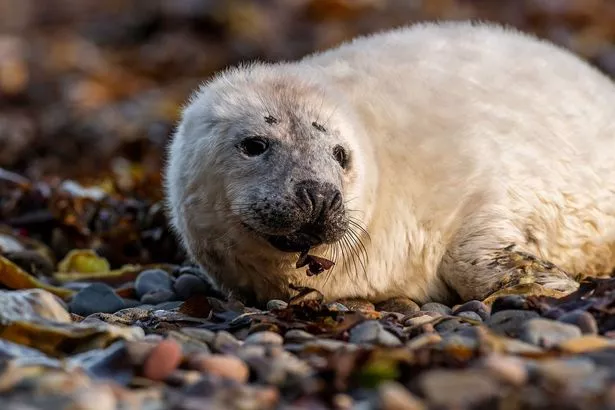
EVERY year National Trust Cymru close the Blue Lagoon in Pembrokeshire to the public to protect breeding seals from disturbance, however due to some early arrivals, the conservation charity have closed the lagoon a week earlier than planned.
There’s been an increasing numbers of the Grey seal population breeding in and around the lagoon over recent years. This combined with the Blue Lagoon’s high visitor numbers and its sheltered nature, which makes it so attractive to seals, creates a situation where there is a high potential for disturbance to seals.
As a result, the former slate quarry at Abereiddi will close from Saturday 16 September through to 4 November.
Mark Underhill, National Trust Cymru’s Countryside Manager, Pembrokeshire said: “There are two species of seal that can be found in Britain; the Common seal and the Grey seal. Only Grey seals occur regularly in Pembrokeshire, where they are present all year around.”
“About half the world’s population of Grey Seal breed on our coastline and the total number in West Wales, mostly Pembrokeshire, is estimated to be about 5,000, with some 1,400 pups being born each year.”

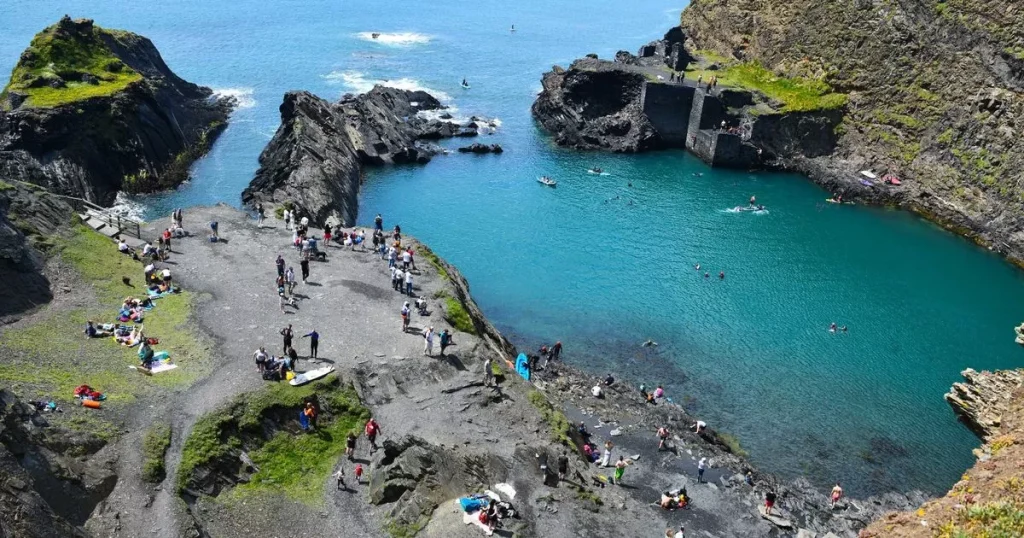
“The breeding season is vital for our seal colonies here in Pembrokeshire, and we ask that visitors do not access the Blue Lagoon and that they follow the guidelines laid out by the Seal Alliance and Pembrokeshire Marine Code when on the coastal path.”
The time seals spend resting on land is vital to their health and that of their pups as they are digesting a recent meal, socialising, and feeding their young. In order to provide them with a safe environment to raise their pups, National Trust Cymru will be closing the Blue Lagoon to visitors from 16 September through to 4 November. Re-opening is subject to seal breeding activity at that time.
Visitors will still be able to watch these wild creatures in their habitat from the Wales Coast Path and coasteering activity providers who have signed up to the National Trust’s Coasteering Agreement and undertaken specific training on how to operate around seals, will still have access to the lagoon with groups of visitors who have booked in advance.
To avoid disturbing seals at this very important time of year, National Trust Cymru recommends following the Pembrokeshire Marine Code: Stay quiet, keep your distance and at least 50m away from seals and never come between a seal and her pup, or a seal and the sea and don’t take dogs near a seal breeding area.

They also ask that if a seal is spotted in distress or alone never approach the pup. Seals are often left alone on the beach and distress can be caused by contact with people. Sadly, also at this time of year some seal pups don’t survive. Whilst it’s distressing to find a dead seal pup, there are a number of natural causes that can cause them to lose their lives To raise any concerns about seals or seal pups contact conservation group Welsh Marine Life Rescue 01646 692943 or 07970 285086 who will be able to offer you further guidance.



A HAKIN motorist has been banned from driving for three years after being caught behind the wheel with cocaine and benzoylecgonine in his system.
Mark Briskham, 53, of Waterloo Square, Wellington Road, Hakin, was stopped by police on January 5 as he drove a Ford Kuga along Steynton Road, near Milford Haven.
Blood tests carried out at the police station showed he had 800mcg of benzoylecgonine in his system. The legal limit is 50mcg.
He also had 64mcg of cocaine in his system. The legal limit is 10mcg.
Briskham pleaded guilty to two drug-driving charges when he appeared before Haverfordwest Magistrates’ Court this week.
Magistrates disqualified him from driving for three years, taking into account a previous drug-drive conviction from 2020.
He was also fined £120 and ordered to pay £85 costs and a £48 surcharge.cr
A PEMBROKESHIRE man has been remanded in custody following an alleged May Day assault against a woman in Begelly.
Tomas Baker, 34, of Ty Dee, New Road, Begelly, is accused of assaulting the woman, causing actual bodily harm, at an undisclosed location in Begelly on May 1.
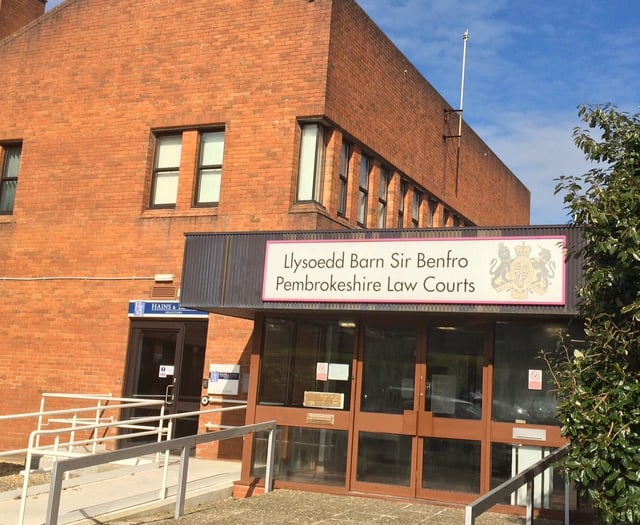
Baker appeared before Haverfordwest Magistrates’ Court this week by video link from Swansea Prison.
He pleaded not guilty to the charge.
His trial will take place at Haverfordwest Magistrates’ Court on June 22.

A WATERSTON man has appeared before magistrates charged with 13 sexual offences against children, including three allegations of raping a girl under the age of 13.
Chaisee Price, 25, of Biggins Hill, Waterston, Milford Haven, appeared before Haverfordwest Magistrates’ Court this week.
He faces three charges of raping a girl under 13, eight charges of sexually assaulting girls aged between five and eight, and two charges of intentionally inciting girls under 13 to engage in sexual activity.
The offences are alleged to have taken place between 2014 and 2019.
Price denied all charges.
Because of the seriousness of the allegations, magistrates declined jurisdiction and the case will now proceed to Swansea Crown Court on July 10.
Price was released on conditional bail.
The conditions include a daily electronically monitored curfew between 6:00pm and 6:00am, no contact with the prosecution witness, no unsupervised contact with children under 18, and a requirement to surrender his passport to police.



News6 hours ago
First Minister challenged over jobs for student nurses
REFORM WALES has accused the First Minister of failing to guarantee jobs for student nurses in Wales, despite continuing pressure...

Crime9 hours ago
Knife blankets call as school staff face rising violence fears
GMB says protective equipment should be considered where risk assessments show staff could face blades SCHOOL staff should be given...


News9 hours ago
Claire Archibald secures review of Milford Haven train times
RURAL TRANSPORT CONCERNS RAISED WITH TFW CLAIRE ARCHIBALD MS has secured a review of train times between Milford Haven and...


Crime9 hours ago
PCC review calls for stronger youth crime prevention work
REPORT MAKES 13 RECOMMENDATIONS A REVIEW into crime and anti-social behaviour services for young adults has called for stronger prevention...


Crime12 hours ago
Families condemn failed appeal by paddleboard boss jailed over Haverfordwest tragedy
RELATIVES SAY LATEST COURT BID HAS REOPENED PAIN AFTER FOUR DEATHS ON WESTERN CLEDDAU THE FAMILIES of victims of the...


Community1 day ago
Forgotten wartime archive found in Pembroke Dock attic after 80 years
Remarkable family collection reveals story of father and son who served through two world wars A REMARKABLE untouched family archive...


Crime1 day ago
Milford Haven woman left with facial fractures after drunken attack
A WOMAN in her late fifties suffered facial fractures after being repeatedly punched through the window of her car during...


Crime1 day ago
Sex offender in senior role at Tenby family hotel
CREST HOTEL GROUP says it is investigating safeguarding concerns after staff at the Imperial Hotel in Tenby raised alarm over...

Sport2 days ago
Runners tackle new route in Ras Y Castell 10k
MORE than 90 runners took to the streets and paths around Cardigan on Friday evening (June 5) for the annual...


Business2 days ago
Turkish Kitchen reaches Welsh restaurant award semi-finals
Haverfordwest café praised as small independent business flies flag for Pembrokeshire A HAVERFORDWEST café has been named as a semi-finalist...
-
Crime4 days ago
Paddleboard company owner loses bid to cut sentence over Haverfordwest tragedy
-

 Crime3 days ago
Milford Haven man admits harassment and assault
-

 Crime6 days ago
Milford Haven man bit neighbour’s neck near cashpoint
-

 News3 days ago
Community appeal for privacy after serious emergency in Pendine
-

 Crime6 days ago
Pembroke Dock driver avoided jail after drug-drive crash
-

 Crime6 days ago
Dinas Cross man jailed over shop thefts
-
Crime1 day ago
Sex offender in senior role at Tenby family hotel
-
 News6 days ago
Mass rescue as west Wales lifeguards save three lives during busy half-term