


Community
Ten Afghan refugee families could soon be homed in Pembrokeshire


SENIOR Pembrokeshire councillors are expected to back an MoD scheme which will see up to 10 Afghan refugee families homed in the county.
The MOD will be leasing 10 properties in Pembrokeshire to Afghan families who have a military connection, Pembrokeshire County Council’s Cabinet, meeting on October 2, will hear.
In November 2021 Cabinet backed a call for support from the Home Office following the launch of the Afghan Citizens Resettlement Scheme (ACRS), launched in addition to the Afghan Relocations and Assistance Policy (ARAP).
This offers eligible current or former locally employed staff (who worked for or with the UK Government) and who are assessed to be under serious threat to life, priority relocation to the UK.
At that time Cabinet agreed to support the scheme by offering to accommodate two families in the private rented sector.

Due to pressures in the private housing market, no Afghan families have yet been placed in Pembrokeshire.
A report for Cabinet members says: “Due to the strong military linkages that many resettled Afghans have due to the historic conflicts in Afghanistan, the Ministry of Defence (MoD) has put forward 10 houses (mix of three and some four-bed houses) based in Pembrokeshire for use by people arriving from Pakistan and their families.
“This is part of their nation-wide support for the ARAP scheme.
“Only families with a military connection will be able to access these properties, in line with the ARAP policy. These houses are currently being renovated by contractors commissioned by the MoD, to ensure they meet housing standards and should be available by November 30.”
It is proposed the properties are leased directly to the families; The MoD responsible for furnishing and maintaining the properties, and setting and collecting rent.
The report for members says concerns have been raised around community cohesion, mainly due to the 10 properties being located in one – unnamed – town, based on experiences in other counties.
“We would mitigate against this through robust communications and community events,” the report says, adding: “The police have not raised any concerns relating to this matter.”

In order to support the families, the council is able to access Home Office grant funding, available for three years at a total of £20,520 per person. If all 10 households were occupied the Authority would receive an estimated £620,000 to £820,000.
It is recommended that Cabinet support the MoD using the houses, with the Pembrokeshire Migration Partnership Board and delivery team managing the Afghan resettlement scheme using the infrastructure currently in place.

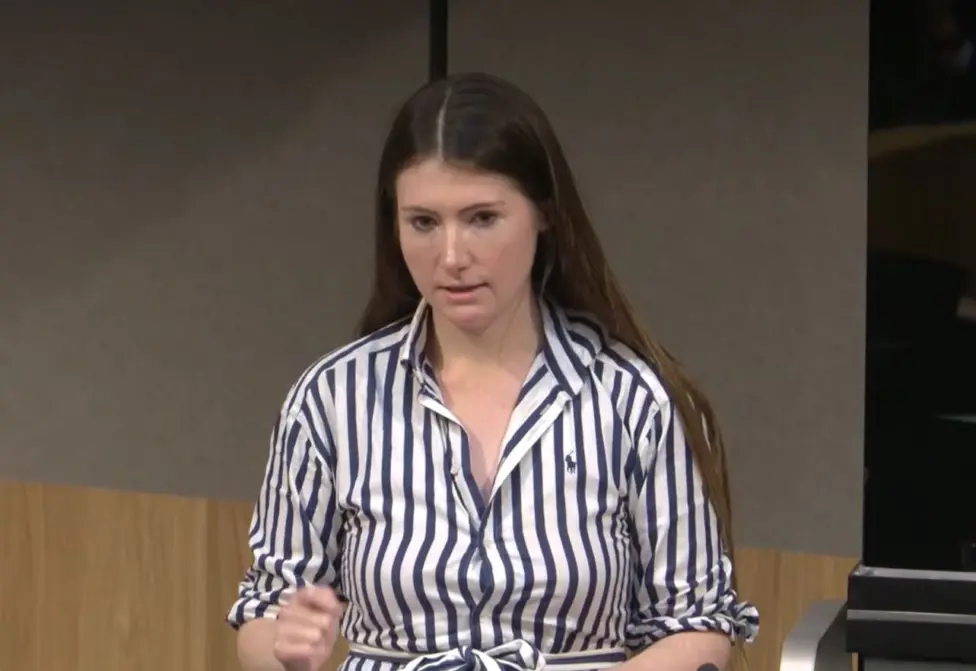
A SENEDD Member who lost her birth mother at just three weeks old has spoken about her childhood experiences during a debate on the lasting impact of adverse childhood experiences.
Reform’s Sarah Cooper-Lesadd discussed her adoption in a debate tabled by Plaid Cymru’s Beca Brown, with the Senedd hearing calls for a ‘trauma-informed’ approach to services.
The debate called on the Senedd to “recognise the profound and lasting impact of trauma on individuals throughout their lives.”
Ms Cooper Lesadd said: “My story did not start with adoption. It began with loss.
“My birth mother died when I was three-weeks-old. She had postnatal psychosis, a severe, frightening and treatable condition, and she did not get the help she needed in time.
“Today, with her history known, she might have been seen before crisis ever came, supported through pregnancy, monitored in the weeks that followed, kept safe.
“She fell through every gap the system had, and the highest price was paid by her and by a three-week-old baby, me, who entered care because the mother who loved her could not be saved.”
The Pen y Bont Bro Morgannwg MS continued: “My birth father took me in for a time, and then he gave me up too. So, before I was old enough to understand the world, I’d already been let go of twice.”
“I was not told how she died until I was ten. People sometimes assume you cannot grieve someone you never really knew. You can. You mourn not who they were, but everything you never got to be.
“I have grieved my mother my entire life. I have two photographs, and never once heard her voice.”
Ms Cooper-Lesadd told the Siambr that she comes to this debate not from reading policy papers or briefings but as “the child in the file, the case number, the placement”.
Discussing the importance of support for care-experienced children, she said: “The difference between a care-experienced child who thrives and the one who does not is rarely talent, and never worth.

“It is about whether someone in the system chooses to see them. And this is what trauma-informed practice means – not a slogan, not a toolkit gathering dust, but a culture in which the midwife, the teacher, the nurse, the social worker are equipped to see the person, not just the case.”
Ms Cooper-Lesadd called for three things; for trauma-informed training to be standard for professionals on the frontline; for individuals to have to tell their story only once not to “relive the worst of their life at every new desk”; and for recognition that trauma does not end at 18.
Concluding her statement, she said: “If my being here means anything, let it mean this – that we build a Wales that sees a struggling mother and the frightened child before it is too late. That Wales might have saved her.”
During the debate, the Senedd Commission – the body responsible for the Senedd’s property staff, and MS support services – faced calls to “adopt trauma-informed approaches across all Senedd activities and services” and to “promote approaches that place individuals at the centre of services”.

The debate was opened by Beca Brown who told the Siambr “far too many people” are living with complex trauma that is often related to adverse childhood experiences (ACE).
ACEs are associated with an increased risk of poorer mental and physical health, an increased risk of substance misuse, and an increased likelihood of suffering from chronic conditions in later life.
Ms Brown noted the importance of a secure home for all, reciting the words of Shelter Cymru – ‘A home is everything’.
Yet, she told her colleagues how being homeless, or experiencing housing insecurity, is often overlooked as an adverse childhood experience.
She said: “A home is essential for a child to feel safe. It’s more than just bricks and mortar, and it’s at home that a child learns to relax and to close the door on the troubles of the world.
“When that foundation is not available to a child, temporary accommodation can create, exacerbate and perpetuate trauma.”
The Plaid Cymru MS went on to discuss the rates of child sexual abuse, noting that an estimated 25,000 children and young people are sexually abused in Wales each year.
Ms Brown shared the story of Venus, who was referred to the Rape and Sexual Abuse Support Centre North Wales by Sussex Police during an investigation into prolonged childhood sexual abuse.
Ms Brown shared Venus’ own words about her experience: “’I never felt like I wasn’t believed. I was always treated with respect, and my experiences were never referred to as allegations before the trial.
“The support I received was centred on me and the feelings I was experiencing, rather than trying to fit me into labels or clinical models.
“Their trauma-informed approach meant they recognised how trauma can affect trust, communication, emotions and day-to-day life. It helped me understand myself better.’
“They worked at my pace and I felt understood as a person, rather than defined by something that had happened to me.”
Venus emphasised the importance of a “safe, non-judgemental space” in her recovery, as well as the knowledge that the support wouldn’t end abruptly.
She said: “Knowing there was continuity and that I wouldn’t suddenly be discharged gave me a sense of security and stability – an important part of my recovery.”
Ms Brown called for the Welsh Government to commit to “supporting positive childhood experiences and prioritise opportunities for trusting, therapeutic relationships”.
She continued: “We could embed relational health across Welsh Government and public services, ensure trauma-informed practice prioritises positive relationships, strengths and collaboration with people, rather than transactional or process-driven services.
“We can invest in prevention by promoting positive childhood experiences, PCEs, create policies that strengthen parent-child relationships, therapeutic relationships and family strengths, and recognise the impact of poverty on relational health.”
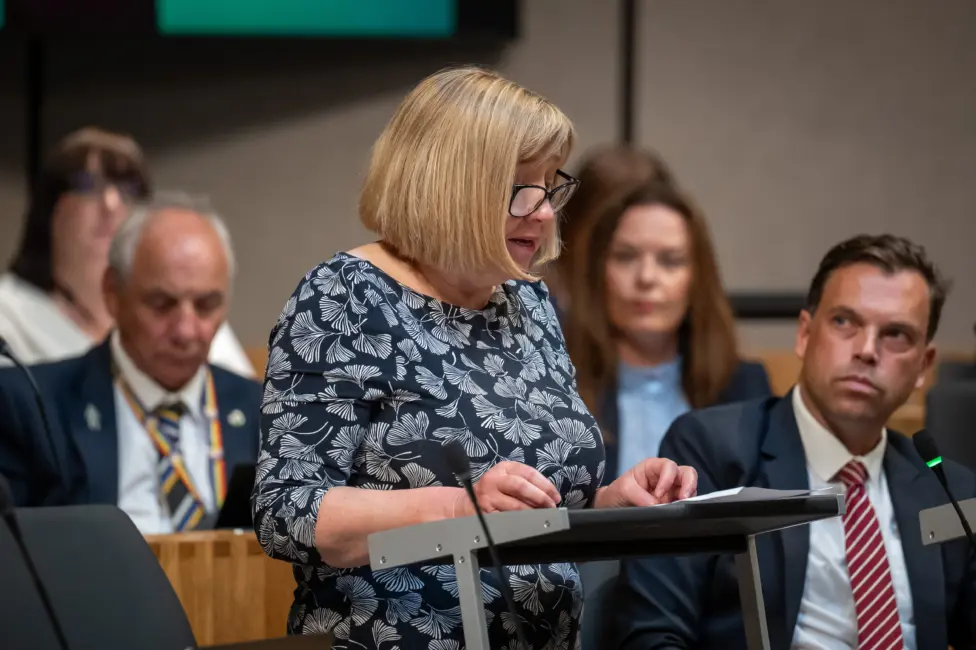
Highlighting the importance of treating others with “kindness and empathy”, Labour’s Lynne Neagle drew attention to the benefits of trauma-informed practices in schools.
Discussing her visit to Ysgol Gyfun Llangefni last year, Ms Neagle noted children at the school are met off the bus each morning by staff – an example of the trauma-informed practices in place there.
She said: “The purpose of that is so that those young people know there is always an adult keeping them in mind, and the power of that, especially to a child who doesn’t have strong relationships at home, is incalculable.”
The former education minister told the Siambr that one of the last things she did as minister was to announce new funding for additional mental health and wellbeing support in schools, as well as new funding to develop the introduction of trauma-informed practice in schools.
She called on the new Plaid government to ensure those initiatives continue, adding: “I think there is consensus around supporting our young people with strong relational practice, and I hope that, regardless of political differences, we can all agree on that.”

Sam Rowlands, the Conservative spokesperson for families, spoke of the importance of funding for organisations supporting those living with trauma.
Mr Rowlands shared his experience meeting Stepping Stones – a charity supporting adult survivors of child sexual abuse in his Fflint Wrecsam constituency.
He said one issue the charity raised with him was that it operates with “significant uncertainty” due to much of their funding being allocated on an annual basis.
Mr Rowlands said: “I appreciate that public finances are under pressure, but organisations delivering essential trauma-informed services should not have to spend so much time worrying about whether they will still exist the following year.
“As I say, the people who require that support need to know that services are there into the future as well.”
He called on the cabinet minister for social justice and equality to consider “whether longer term funding arrangements could be introduced for charities”.
He added: “If we’re serious about supporting people who’ve gone through these adverse childhood experiences, we must be serious about providing that sustainable support for the organisations doing this work day-in and day-out.”
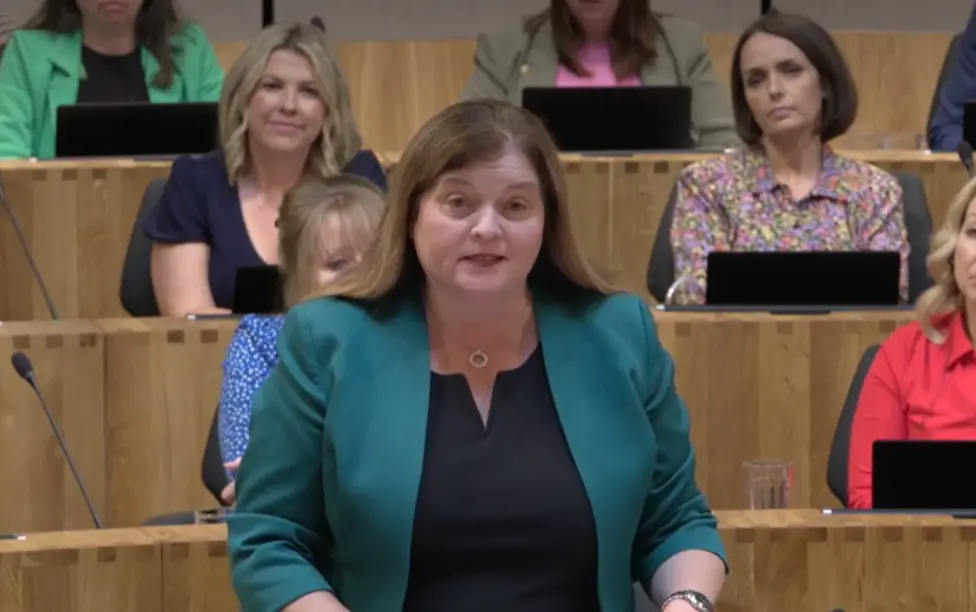
Deputy First Minister Sioned Williams said it is “quite clear” action must be taken on adverse childhood experiences – and said preventing ACEs is “not only critical to the health and wellbeing of individuals, it’s crucial to the wellbeing of our nation”.
Ms Williams, who is also social justice and equality minister, continued: “The cost of not doing so impacts not only the individual in terms of the lost opportunity to enjoy a long, happy, healthy and productive life, but is also felt by families, communities, public services, and our economy.
“One study that looked at the financial cost of ACEs in England and Wales estimated that the annual costs were nearly £43 billion, equivalent to around £1,800 per household per annum. So, as well as a moral obligation, we have an economic imperative to act on ACEs.”
Ms Williams pointed to Plaid’s early years programmes, which aim to identify and prevent adverse childhood experiences early and offer timely support.
She recognised the importance of “taking a cross-Government, system-wide, holistic approach to tackling childhood adversity and trauma, guided by the evidence and best practice.”
Concluding her response she added: “A commitment to working in an ACE and trauma-informed way is already embedded within Welsh Government policies, programmes and strategies, but I will continue to encourage and push for this as new policies and programmes are developed, and to ensure good practice is continued and shared.”
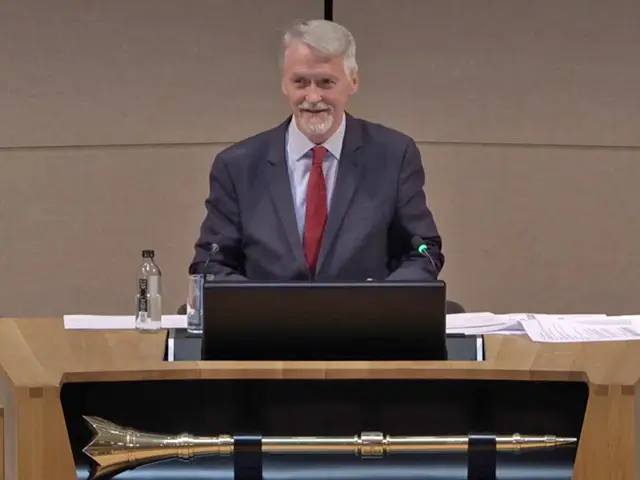
Huw Irranca-Davies responded to the debate in his role as Llywydd and chair of the Senedd Commission.
Describing the debate as one of “profound importance”, Mr Irranca-Davies stressed the impact of trauma on individuals and Welsh society as a whole.
He told his colleagues in the Siambr the Senedd Commission “firmly recognises” the importance of considering how working practices, services, and engagement can reflect an understanding of trauma.
The Llywydd emphasised the commission’s commitment to both increasing awareness of the impact of trauma among MSs and promoting the approaches that put individuals at the centre of services.
Closing his response, Mr Irranca-Davies said: “The matters raised in this motion highlight not only the challenges associated with trauma, but also the opportunity and the responsibility for public bodies to respond thoughtfully and effectively.
“The Senedd Commission will continue to reflect on how its role, responsibilities and services can contribute to this aim in a manner consistent with its duties and its resources.”
The motion was agreed with no objections.

PEMBROKESHIRE’S national park was recently recognised for its planning excellence after works on the redevelopment of Saundersfoot harbour were named the best project at the RTPI Cymru Awards for Planning Excellence 2026.
The RTPI (Royal Town Planning Institute) Cymru Awards for Planning Excellence celebrate outstanding plans, projects and people that demonstrate the power of planning to make a positive difference to places and communities.
The award recognises the role of planning in supporting the transformation of Saundersfoot Harbour into a resilient, year-round destination.
Delivered by Saundersfoot Harbour with planning input from Pembrokeshire Coast National Park, the phase two project was praised by judges as “an exemplar for coastal economic resilience in smaller settlements” and “a very good example of planning enabling place-based regeneration.”
The judges also recognised the role of planners in addressing design changes, conservation area issues, flood risk, accessibility and the coordination of several linked schemes within a working harbour.

Sara Morris, Director of Place and Engagement at Pembrokeshire Coast National Park Authority, said: “We are delighted that Phase 2 of the Saundersfoot Harbour Redevelopment Project has been recognised by RTPI Cymru.
“This award is a real testament to the value of good planning in helping places adapt, thrive and deliver lasting benefits for their communities. Saundersfoot Harbour is a hugely important location, both locally and strategically, and this project shows how careful planning can support regeneration while respecting the character, heritage and environmental challenges of a coastal setting. I would particularly like to thank Andrew Richards and Nicola Gandy who both led on the planning aspects of the project for the Authority.
“The judges’ comments underline the strength of the partnership approach behind the project, and we are very pleased to see the work of our planning team recognised alongside Saundersfoot Harbour’s ambition and commitment. The final delivered scheme is a result of significant work from the Harbour, local businesses and the community who have transformed Saundersfoot’s offer.”
Ted Sangster, Chairman of Saundersfoot Harbour Commission, said: “The successful Phase 2 of the harbour development now provides both an active fishing and recreational sailing harbour and an all-year-round visitor attraction serving an increasingly diverse range of users and has created around 100 new jobs – so far. Our work with local businesses and stakeholders has been greatly assisted and supported by the open and consultative partnership with the Park Authority, which is based on the shared aim of sustainable economic delivery and social benefit to our community.”
As winner of the Best Project category in Wales, the Saundersfoot Harbour project will also be automatically entered as a finalist in the UK National Awards for Planning Excellence; the UK national finals taking place in December.
The Authority is also shared in another win as Dark Skies Guidance for Wales, developed by a working group from across Wales including the park’s Principal Planning Officer (Strategic Policy) Gayle Lister, won the Chair’s Award at the RTPI Cymru Awards for Planning Excellence 2026.
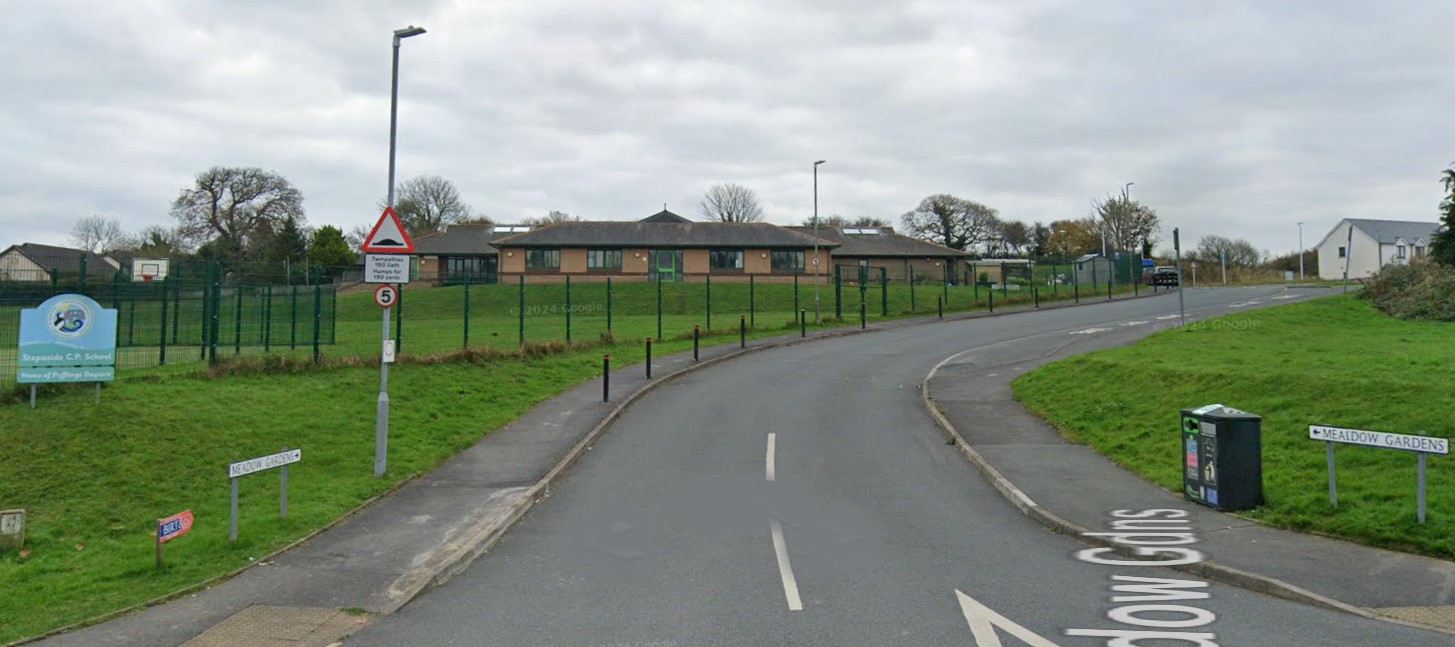
A PEMBROKESHIRE school at threat of closure as part of education reorganisation in the south of the county is now expected to remain open following a call from the council’s deputy leader.
Stepaside CP School was being earmarked for closure by Pembrokeshire County Council, as part of proposals to establish a new 3-11 primary school on the Saundersfoot School site, discontinuing both Saundersfoot School and Stepaside school.
The Stepaside proposal was based on surplus places for all the schools in the proposals, with Stepaside having a surplus capacity of over 50 per cent, councillors had previously heard.
An e-petition on the council’s own website, started by Angela Robinson, called upon Pembrokeshire County Council “to Save Stepaside School and work with local communities to look at alternative solutions” attracting nearly 2,000 signatures.
In March, a vote at a full meeting of Pembrokeshire County Council reaffirmed the decision of last December, that the Director for Education be authorised to commence statutory consultation to discontinue Stepaside and Saundersfoot schools and establish the new three-11 primary school.
Since then, Pembrokeshire’s deputy leader, who has recently taken on Cabinet member responsibility for education, is now recommending the school doesn’t close.
That takes the form of a notice of motion, due to go before full council meeting on July 16 which, if approved by, rescinds the earlier December 2025 decision.
Cllr Miller said: “Following a thorough review, I have decided to recommend to Council that it not proceed with the closure of Stepaside School. I believe the school is providing good educational outcomes for its local population and is sustainable in its current form.”
The statement was welcomed by Angela Robinson of Standing Together for Stepaside School, who said: “After months of challenges for our dedicated staff, students, families, and the Kilgetty community, we’re thrilled to share that Stepaside School is here to stay!
“With 1,952 signatures backing our cause, we’ve shown just how vital our school is to the community. We’ve held meetings with council members and engaged our Senedd and Parliament representatives, resulting in countless discussions, reports and late nights trying to challenge an unfair process.
“Our community has truly rallied together, building stronger relationships along the way.”
Local county councillors Alistair Cameron and Alec Cormack, who both battled to keep the school open, said they were delighted by the decision, indicating their support for the motion.

Cllr Cameron said: “We owe a huge debt of gratitude to Mr Jones, Headteacher at Stepaside School, and all of his colleagues at the school for their continued dedication and hard work to the school children during this very unsettling time.
“Thank you also to the parents, governors and local residents for their magnificent support for our local school. I never believed it was right to consider closing Stepaside School with its modern building, stable pupil numbers of over 100 and excellent report from the school inspectors, Estyn.
“The school staff can now concentrate on what they do best, which is to provide excellent education in a caring and nurturing environment.”
Cllr Cormack welcomed the Cabinet decision: “This decision removes the cloud of reorganisation hanging over both Saundersfoot and Stepaside/Kilgetty. Now both head teachers, staff and governing bodies can continue to deliver excellent education to their local communities.”



News24 hours ago
A40 closed near Llandeilo following collision
A SECTION of the A40 in Carmarthenshire has been closed in both directions following a collision. The road is currently...

Local Government1 day ago
Award-winning Saundersfoot sauna faces refusal over location concerns
PLANS to allow an award-winning outdoor sauna to remain permanently at Saundersfoot Harbour have been recommended for refusal by Pembrokeshire...


Health1 day ago
NHS at 78: A moment to give back to the service Wales helped create
As the health service marks its 78th birthday, people in Pembrokeshire are being urged to support local NHS charities helping...


Community2 days ago
Saundersfoot Harbour regeneration project wins national planning award
SAUNDERSFOOT HARBOUR’S redevelopment has been named Best Project at the RTPI Cymru Awards for Planning Excellence 2026. The award recognises...


Business2 days ago
Pembrokeshire-based Ascona Group expands UK portfolio with Truckhaven acquisition
PEMBROKESHIRE-BASED Ascona Group has completed the acquisition of Truckhaven (Carnforth) Ltd, a major trunk road services area in Lancashire. The...


Health3 days ago
Wales begins early NHS winter planning after long waits and ambulance pressure
Ministers say health boards and councils must act now to ease pressure on hospitals, ambulances and social care before winter...


Crime4 days ago
Judge calls pensioner a ‘dirty old man’ as he avoids jail for exposing himself to women
Judge says 75-year-old Stewart Laugharne behaved ‘disgracefully’ as he avoids jail but is ordered to sign sex offenders register A...
Health4 days ago
Stroke services consultation reaches halfway point as public urged to have say
HYWEL DDA University Health Board is urging people to take part in its consultation on the future of stroke services,...


Business4 days ago
Welsh firms eye share of £5bn defence drone boom
WELSH defence and aerospace firms could be in line for a share of billions of pounds in new military spending...


Community6 days ago
Thousands line Cardigan streets for Lord Rhys homecoming parade
THOUSANDS of people lined the streets and quayside in Cardigan on Saturday as the town marked 850 years since Lord...
-

 News5 days ago
Biker dies and woman seriously injured in Black Mountain crash
-
Community6 days ago
Thousands line Cardigan streets for Lord Rhys homecoming parade
-

 Crime4 days ago
Estate agent banned after drug-drive crash in Milford Haven
-

 Community6 days ago
Civic service brings Pembrokeshire towns together in Haverfordwest
-

 Crime4 days ago
Eight guilty over ‘industrial scale’ cocaine conspiracy into Pembrokeshire and Carmarthenshire
-

 Local Government5 days ago
Flood defence scheme moves closer as community invited to view plans
-
Crime4 days ago
Judge calls pensioner a ‘dirty old man’ as he avoids jail for exposing himself to women
-

 Crime4 days ago
Men threatened to have prisoner killed in chilling phone call to his father