


News
Long-awaited overhaul of environmental governance in Wales


LONG-AWAITED plans to overhaul environmental governance have been unveiled amid concerns that Wales has the weakest protections in the UK.
Julie James announced the publication of a Welsh Government white paper on establishing environmental principles, strengthening governance and introducing biodiversity targets.
Wales’ climate change minister said a bill will be brought forward to ensure there is no post-Brexit drop in environmental standards.
She told the Senedd that an environmental governance body will be established to oversee implementation and compliance with environmental law by public authorities.
She said: “We think it’s very important that it is independent of the Welsh Government, that it holds our feet to the fire.”
Ms James stressed that the proposals are not simply an exercise in replacing EU structures and legislation, with the approach instead tailored to the Welsh context.
“The governance body will similarly reflect Wales’ priorities,” she explained.

“The body will work in a spirit of collaboration and take an escalatory approach, working with Welsh public authorities to put things right.
“However, where this is not possible, the body will be rightly empowered to take effective enforcement action to ensure compliance.”
Ms James said public authorities will be required to draw up local nature recovery plans.
She told MSs the proposed headline target is that of the 2020 global biodiversity framework: reverse decline with an improvement in biodiversity by 2030, with recovery by 2050.
Janet Finch-Saunders pointed out that the proposals are long-awaited, with the Welsh Government first committing to addressing a governance gap in 2018.
The Conservatives’ shadow minister said: “This is already long overdue and has been requested through our environment and climate change committee so many times.”
Ms Finch Saunders warned that proposals for local nature recovery plans could add to the considerable pressures on public authorities.

Pressed for clarity on the timetable, Ms James cautioned that this is the very beginning of proposals making their passage through the Senedd.
She said work on a bill is under way but suggested it could take a year to bring forward.
Delyth Jewell broadly welcomed the announcement but warned of a genuine need for urgent legislation to close a gap in Wales’ environmental protections.
Plaid Cymru’s shadow minister said: “We’ve been waiting too long for this.”
She urged the minister to make every effort to avoid any further delay, with equivalent governance bodies already established for England, Northern Ireland and Scotland.
Ms James acknowledged the delays, saying further slippage is not an option as the bill will be one of the last to go through the Senedd in this term, which ends in 2026.
Responding to concerns the new environmental body could be confused with Natural Resources Wales (NRW), Ms James said: “Broadly, this is not a regulatory authority.
“This is an authority that gives guidance to public authorities on how to set the targets and monitor and make sure they do them.”
John Griffiths, the Labour MS for Newport East, raised the importance of gaining buy-in from the public and organisations such as the Gwent Wildlife Trust.


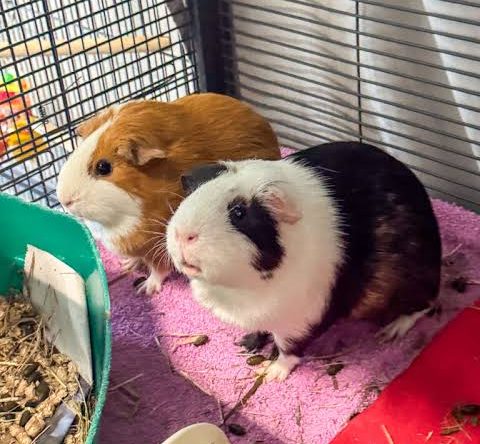
A PEMBROKESHIRE smallholding plan involving guinea pigs, rabbits and pigeons being reared for food has been criticised by animal welfare campaigners.
The scheme, at Walnut Grove near Jeffreyston, was approved by Pembrokeshire County Council’s planning committee last month (Jun 30) as part of a One Planet Development.
The proposal is not for a commercial guinea pig meat farm. The animals would be reared for the applicants’ own household consumption as part of a self-sufficient, low-impact lifestyle.
There is also a cultural divide. In parts of South America, especially Peru, guinea pigs are known as cuy and have been eaten for centuries. They are still served as a traditional dish, particularly in the Andean region around Cusco.
Travel and food accounts from Peru often describe cuy as being served whole, sometimes in a traditional presentation, before being cut up and eaten by hand because of the small bones. The meat is commonly compared to a cross between chicken and rabbit.
That context may explain why the proposal has provoked such a strong reaction in Britain. What many people here see as a family pet is regarded elsewhere as a normal source of food.
Animal Aid has said the idea raises serious questions about animal welfare and what should be considered sustainable living.

In a letter to The Herald, Elizabeth Davenport, Senior Campaign Manager at Animal Aid, said: “I’m sure your readers have already heard about the off-grid couple in Pembrokeshire planning to breed, kill, and eat guinea pigs, rabbits, and pigeons as part of a so-called sustainable living project.
“Aside from the obvious concerns, who will ensure that welfare laws are followed? It’s clear that if this is what sustainability looks like, we have truly lost our way.”
Guinea pigs are widely kept as pets in the UK, which has made this part of the proposal especially controversial.
Animal Aid says the issue is not simply whether guinea pigs are eaten elsewhere, but whether breeding and killing animals should be promoted as part of a sustainable future.
Ms Davenport said: “These One Planet Developments are built on the simple truth that we only have one Earth and must live within its limits. But recognising this should mean respecting our fellow animals, not expanding the menu of those we exploit.


“Too often, individuals get lost amongst the sustainability argument. Guinea pigs, like cows, experience bursts of excitement and hop and skip in the air; pigeons, just like chickens, are devoted parents. We lose so much when we reduce them to the latest sustainability fads and trends.”
The One Planet Development policy is intended to support low-impact rural living, where people meet a significant proportion of their basic needs from the land.
In this case, the applicants’ plans include food production from the land, including fruit, vegetables and other produce, alongside small-scale livestock for personal use.
Animal Aid argues that a genuinely sustainable future should involve reducing reliance on animal farming rather than adding new species to the menu.
Ms Davenport added: “If we are serious about protecting the planet, the evidence is clear: reducing our dependence on all animal farming and embracing a plant-based food system offers far greater sustainability benefits.
“I urge local residents to contact Pembrokeshire County Council. Decisions made in the name of our shared future should be for everyone, including animals.”
Pembrokeshire County Council approved the application subject to conditions.
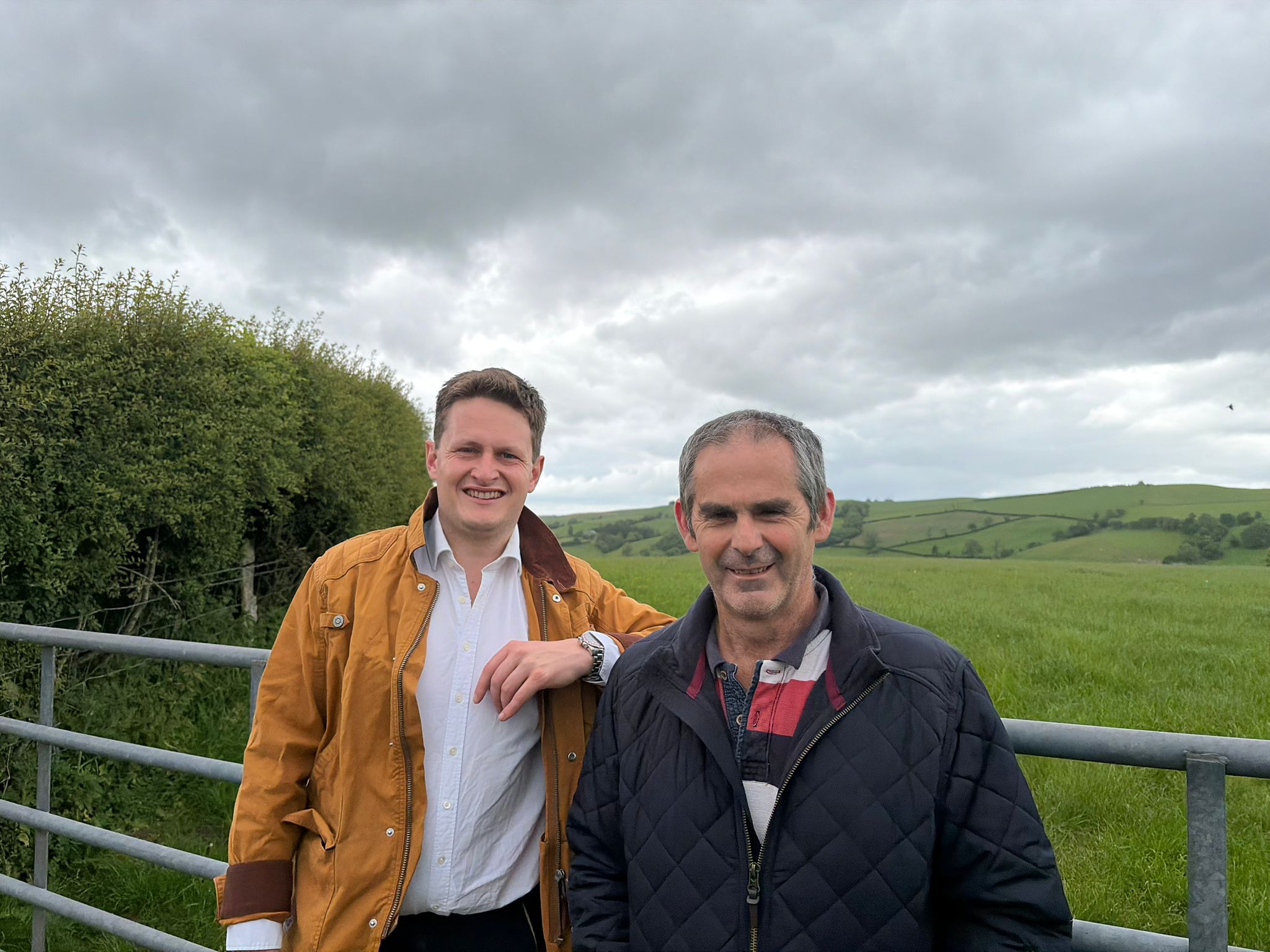
Local farmer Colin Millichap wins Yscir with Honddu Isaf and Llanddew by-election
THE WELSH LIBERAL DEMOCRATS have won a closely watched Powys by-election, taking the Yscir with Honddu Isaf and Llanddew seat after a hard-fought contest with Reform UK.
Local farmer Colin Millichap topped the poll for the Lib Dems with 297 votes, securing 39.6 per cent of the vote. Reform UK’s Dawn McIntosh finished second with 259 votes, or 34.5 per cent.
Plaid Cymru came third with 96 votes, followed by the Welsh Conservatives on 68, the Green Party on 15 and Welsh Labour on 14. Turnout was just over 51 per cent.
The result is politically significant because the ward had previously been represented by Iain McIntosh, who was elected as a Conservative before later sitting as a Reform councillor. Mr McIntosh has since been elected to the Senedd.
The contest was one of three Powys County Council by-elections held on Thursday, July 2, after sitting councillors were elected to the Senedd in May.
Reform UK held Llanyre with Nantmel, where Gareth Hughes was elected with 359 votes. The Liberal Democrats finished second there with 226 votes, ahead of the Conservatives on 210.
Plaid Cymru also successfully defended Glantwymyn, where Rwth Hughes secured a comfortable victory with 513 votes. Reform UK finished a distant second on 63 votes.
The Yscir result will be seen as a boost for the Liberal Democrats ahead of next year’s full council elections in Powys, where the party is already part of the ruling minority administration.
Welsh Liberal Democrat MP for Brecon, Radnor and Cwm Tawe, David Chadwick, described the result as “phenomenal” and said it showed the party could challenge Reform in rural Wales.
He said: “This is a phenomenal result for Colin and a massive win for the Welsh Liberal Democrats. Winning in Reform’s own backyard proves that when it comes to the next council elections, the real choice is between the Lib Dems and Reform.
“The political dividing line for our communities is now crystal clear. It is a choice between the Welsh Liberal Democrats, who work hard, focus on practical solutions, and are determined to get things done for local people, versus those who simply look to complain, manufacture anger, and channel rage from the sidelines without offering any real answers.
“Colin’s victory shows that voters are rejecting empty populism in favour of local champions who actually care about delivering results. We will carry this momentum straight into next year’s local elections in Powys.”

Mr Millichap is a well-known local farmer who lives in Llandefalle with his wife Mandy. The couple have four children and two grandchildren.
He farms with his wife and three sons at Llandefalle and Yscirfawr, Merthyr Cynog, running a sheep flock and suckler cow herd.
He is a former chairman of NFU Cymru in Brecon and Radnor, has served on the organisation’s Livestock Board, and currently sits on the Less Favoured Area Board.
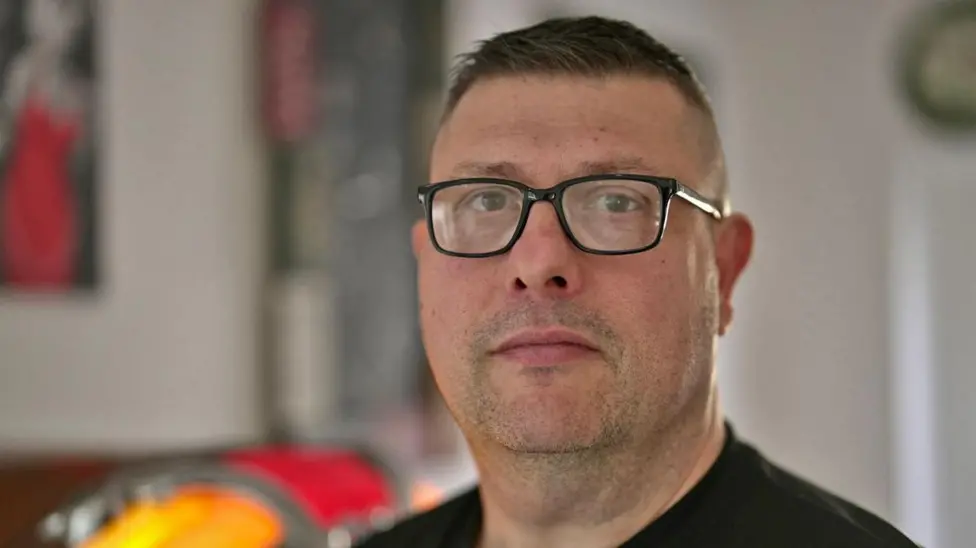
Brian Buckle’s case raises fresh questions over justice system that says a man can be cleared by a jury but still not qualify for a payout
A FISHGUARD man who spent more than five years in prison before being cleared by a jury has been refused miscarriage of justice compensation for a second time.
Brian Buckle was convicted of historical child sexual offences in 2017 and sentenced to 15 years in prison.
He always maintained his innocence.
After a long legal battle by his family and defence team, his conviction was ruled unsafe by the Court of Appeal in 2022. He was released from prison and later faced a retrial at Swansea Crown Court.
In May 2023, after fresh forensic evidence was put before the court, a jury unanimously found him not guilty.
But according to BBC Wales, the Ministry of Justice has now rejected his compensation claim again following a further review.
The decision has caused anger in Pembrokeshire and at Westminster because Mr Buckle’s case exposes a brutal gap in the justice system.
He has cleared his name in court.
He has been found not guilty by a jury.
But the compensation scheme still says he has not met the legal test for a payout.
The Herald reported from the retrial in 2023, when Swansea Crown Court heard that the prosecution case had relied in part on forensic evidence said to link Mr Buckle to a childhood diary.
Mr Buckle denied the allegations throughout. His barrister argued that he had never seen the diary before the original 2017 trial. The defence also called forensic evidence about traces of condom lubricant, which helped cast doubt on the earlier case against him.

The jury returned not guilty verdicts and Mr Buckle walked free.
For him and his family, however, the damage was already done.
The legal fight to clear his name is said to have cost around £500,000. In earlier Herald coverage, Mr Buckle said his father-in-law had sold his house to fund the legal battle, his wife’s inheritance had gone, and he had lost a well-paid job he had held for 16 years.
He also missed his daughter’s 18th and 21st birthdays while he was in prison.
Mr Buckle has spoken publicly about living with PTSD following his imprisonment.
He previously said: “I don’t want millions. I just want recognition of the injustice I suffered and the chance to rebuild my life.”
His case has become one of the clearest examples of what campaigners call the “innocence tax”: the huge cost paid by people who are forced to spend years and vast sums of money proving they should never have been jailed in the first place.
The reason Mr Buckle has been refused compensation lies in a controversial change to the law made in 2014.
Before that change, compensation could be paid where a conviction was overturned and the evidence showed that no reasonable jury could have convicted.
Since 2014, the test has been much harder. Applicants must show, beyond reasonable doubt, that they did not commit the offence.
Campaigners say that creates an almost impossible hurdle in many cases.
A person can have their conviction quashed. They can be cleared at retrial. But unless they can produce the sort of conclusive evidence that proves innocence beyond doubt, such as DNA or CCTV, they can still be refused compensation.
That is what has happened to Brian Buckle.
His MP, Ben Lake, has repeatedly raised the case in Parliament.
In March 2025, Mr Lake led a Westminster Hall debate on miscarriage of justice compensation. He told MPs that many people assume those wrongly convicted are compensated when their convictions are overturned, but in England and Wales compensation is often the exception rather than the rule.
He said the system was forcing people who had already been cleared to prove their innocence all over again.
Mr Lake has described Mr Buckle’s case as one of the clearest injustices he has encountered during his time as an MP.
The issue was also raised directly with Prime Minister Keir Starmer at Prime Minister’s Questions in July 2025.
Mr Lake told the Commons that Mr Buckle had been wrongfully imprisoned for more than five years, had been unanimously cleared by a jury, and yet had still been refused compensation because of the 2014 legal test.
The Prime Minister described the case as a “grave miscarriage of justice” and said he had undertaken to look at the statutory test for compensation.
A year on, Mr Buckle has again been told that he does not qualify.
The Ministry of Justice has previously said that refusal of compensation does not affect the fact that Mr Buckle’s conviction was quashed, nor does it cast doubt on the outcome of the appeal.
For his supporters, that is exactly the problem.
The state accepts that his conviction was quashed. A jury has cleared him. But the compensation scheme still says he is not entitled to be paid.
The Government announced last year that compensation caps would be increased for victims of miscarriages of justice. But that does not help people like Mr Buckle if they are ruled ineligible before the amount of any payment is even considered.
The Law Commission is now reviewing the criminal appeals system in England and Wales, including compensation and support for the wrongly convicted.
Its provisional proposals include replacing the current requirement to prove innocence beyond reasonable doubt with a lower test based on the balance of probabilities.
A standalone report on compensation and support for the wrongly convicted is expected by the end of 2026.
Mr Buckle hopes any change will apply retrospectively, so people already caught by the current rules are not left behind.
For Pembrokeshire, this is not simply a legal technicality.
It is the story of a local man who lost years of his life, a family that spent everything trying to clear his name, and a justice system that still appears unable to say the one thing he has been waiting to hear from the state: we got it wrong.
Cover image: Stephen Fildes / BBC


Crime14 hours ago
Fishguard man cleared after five years in prison refused compensation again
Brian Buckle’s case raises fresh questions over justice system that says a man can be cleared by a jury but...


Crime21 hours ago
Wales’ police commissioners to face MPs over future of policing
WALES’ four Police and Crime Commissioners are to be questioned by MPs next week as major changes to the way...


Crime2 days ago
Man in critical condition after serious assault in New Quay
A 20-YEAR-OLD man remains in a critical condition in hospital after being seriously assaulted in New Quay. Dyfed-Powys Police said...


Community2 days ago
Kilgetty and Begelly tractor run raises funds for local charities
Around 70 tractors joined the annual charity road run, hosted by the Begelly Arms Hotel THE ANNUAL Kilgetty and Begelly...


Community2 days ago
Milford Haven Carnival brings colour, music and crowds to the town
MILFORD HAVEN was filled with colour, music and community spirit on Saturday as the town’s annual carnival brought crowds onto...


News3 days ago
A40 closed near Llandeilo following collision
A SECTION of the A40 in Carmarthenshire has been closed in both directions following a collision. The road is currently...

Local Government3 days ago
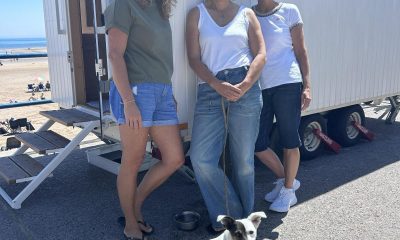
Award-winning Saundersfoot sauna faces refusal over location concerns
PLANS to allow an award-winning outdoor sauna to remain permanently at Saundersfoot Harbour have been recommended for refusal by Pembrokeshire...


Health3 days ago
NHS at 78: A moment to give back to the service Wales helped create
As the health service marks its 78th birthday, people in Pembrokeshire are being urged to support local NHS charities helping...


Community3 days ago
Saundersfoot Harbour regeneration project wins national planning award
SAUNDERSFOOT HARBOUR’S redevelopment has been named Best Project at the RTPI Cymru Awards for Planning Excellence 2026. The award recognises...


Business4 days ago
Pembrokeshire-based Ascona Group expands UK portfolio with Truckhaven acquisition
PEMBROKESHIRE-BASED Ascona Group has completed the acquisition of Truckhaven (Carnforth) Ltd, a major trunk road services area in Lancashire. The...
-

 News7 days ago
Biker dies and woman seriously injured in Black Mountain crash
-

 Crime6 days ago
Estate agent banned after drug-drive crash in Milford Haven
-

 Crime6 days ago
Eight guilty over ‘industrial scale’ cocaine conspiracy into Pembrokeshire and Carmarthenshire
-

 Crime6 days ago
Men threatened to have prisoner killed in chilling phone call to his father
-

 Crime6 days ago
Judge calls pensioner a ‘dirty old man’ as he avoids jail for exposing himself to women
-

 News7 days ago
Should Wales ban boiling lobsters alive?
-

 Entertainment4 days ago
Pembrokeshire DJ lands record deal with London dance label
-

 News7 days ago
Burnham sets out vision for Britain as he pitches for No 10