


Community
Public want government in Wales to prioritise cost of living, health and housing


THE WELSH public want government to prioritise addressing the cost-of-living crisis, reducing NHS waiting lists and improving affordable housing provision above other challenges in the coming years, according to a new report published by Deloitte.
The State of the State 2024 is an annual report on attitudes to government and public services, published by Deloitte and the independent think tank Reform.
The research includes a survey by Ipsos UK of 5,815 UK adults aged 16-75, including 713 from Wales, as well as in depth interviews with leaders from across the public sector.
For the second year running, the cost of living crisis was the Welsh public’s top concern, mentioned by 77% of people surveyed, followed by NHS waiting lists, which were mentioned by 75%. These two areas of concern were the top priorities for members of the public in all UK regions.
The Welsh public’s next priorities for improvement were jobs and the economy (48%), social care for children, the elderly and vulnerable adults (46%) and the provision of affordable housing, which saw the number of people highlighting it as a key concern rise by 11 percentage points to 47% from the previous State of the State survey. Concerns about crime (40%) and the country’s infrastructure (36%) both increased by six percentage points.

The research also found that people in Wales are pessimistic about some of the issues they most want to see improved, with 61% of those surveyed expecting NHS waiting lists to get worse in future and 54% expecting the availability of affordable housing to worsen. However, the number of people expecting the cost-of-living crisis to get worse decreased to 55% from 79% in the previous survey.
Timely access to services top of public’s wish list
Asked how they would like to see public services improved, the top priority cited by 50% of people was being able to access decent quality services when they need them, while 42% wanted complaints to be dealt with effectively when things go wrong. The third response, highlighted by 41% of people, was to be able to access the same services wherever they live in the country, while 35% of those surveyed wanted better contact and communication.
Deloitte’s interviews with public sector leaders revealed that the successive crises of recent years have left their services ‘fragile’, their workforces ‘tired’ and their decision-making ‘reactive’. Those leaders told Deloitte that the public sector’s aspirations are too often beyond the reality of its resources, and reform is needed that will allow the sector to prioritise, work towards a collective vision and improve its ability to deliver.

While the survey found the Welsh public expect government spending to stay at current levels or go up (56%), Welsh public sector leaders indicated they expect spending cuts on the near horizon due to the challenging state of Welsh public finances.
The survey also found that trust in the Welsh government was down on the previous survey carried out in late 2022, but it still remains more trusted than the UK and Northern Ireland governments.
Liz Jones, Senior Partner for Wales at Deloitte, said: “Recent years have seen government and public services face successive disruptions, not least from COVID and the cost-of-living crisis. This year’s State of the State survey shows those years have taken a toll on the Welsh public’s optimism for the future and expectations for public services.

“Our interviews with public sector leaders also painted a challenging picture of the state of public services in Wales, and a difficult outlook that will require tough choices. But against that backdrop, we heard real optimism for the future of Wales. Leaders across government and public services told us that Wales has huge strengths to leverage.
“The challenge for any Welsh government is to come out of crisis mode, think more strategically and find a way to unlock the power of a small nation which has the capacity to be agile and innovative in how it delivers public services. There is undoubtedly an opportunity to use the power of devolution to deliver significant change.”
Ian Howse, Senior Partner for Wales at Deloitte added: “While our discussions with public sector leaders explored serious challenges for the Welsh public sector, interviewees were undoubtedly ambitious for the future. They argued that Wales needs to think longer-term, collaborate better within the public sector and better connect government and business to thrive in the years ahead.
“Consideration needs to be given to how public policy helps create economic growth by making Wales a location that businesses want to invest in. That means investing in the skills coming out of our universities and colleges, but also in good housing provision, robust infrastructure, well maintained parks, and a safe environment that appeals to investors.
“The Welsh government has put in place globally recognised policies on issues such as the rights of older people and children, wellbeing and climate. If that same innovative thinking is applied to economic development and understanding business, it could be a game changing development for Wales.”


Major project will create new visitor attraction, events space, museum and improved town links
HAVERFORDWEST Castle is on course to reopen in 2028 following a major redevelopment project aimed at transforming the historic site into a high-quality visitor attraction.
County Councillor Thomas Tudor, who represents the Castle Ward in Haverfordwest, recently visited the site to see the progress being made.
He said: “As County Councillor for the Castle Ward in Haverfordwest, it was lovely to visit the Haverfordwest Castle Redevelopment Project and see the progress that has been achieved.
“I am very much looking forward to the Castle reopening in 2028.”
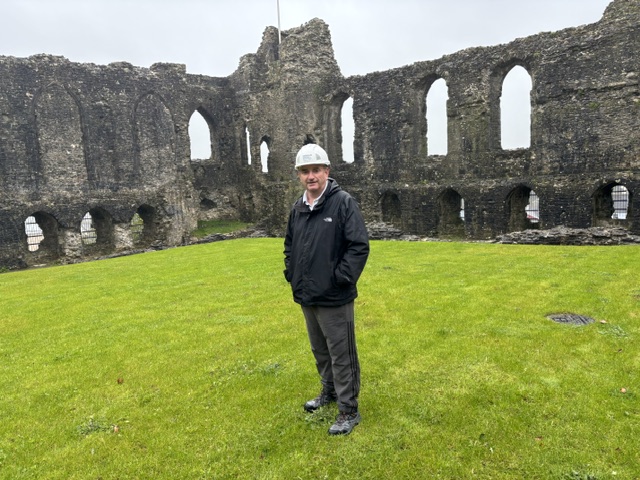
The project will see the mediaeval castle conserved for future generations, while the Inner Bailey has been landscaped so it can host events for up to 500 people.
These could include concerts, plays, craft fairs, Christmas markets and other community events.
The wider castle grounds are also being improved, with new interpretation explaining the history of the site, as well as family-friendly activities.
The building which houses Haverfordwest Museum, the Governor’s House, is being conserved, while the museum exhibition inside will be completely refurbished and modernised.

The former gaol building will also be transformed into a visitor attraction telling the story of Pembrokeshire’s past and future in an interactive and family-friendly way.
The attraction will include a café, shop, community spaces and exhibition areas.
Work is also taking place to improve the physical route between the castle and the town centre at Castle Back, with better signage planned to help visitors find the castle and navigate Haverfordwest more easily.
The castle is expected to reopen in 2028.


FOLLY Farm has joined animal attractions across the UK in celebrating Sir David Attenborough’s 100th birthday, with school visits, staff quizzes, new conservation signage and even a newborn alpaca named in his honour.
The much-loved broadcaster turns 100 on Friday (May 8), and the Pembrokeshire attraction said his lifelong work had inspired many of its own keepers and staff to care about endangered species and habitats.
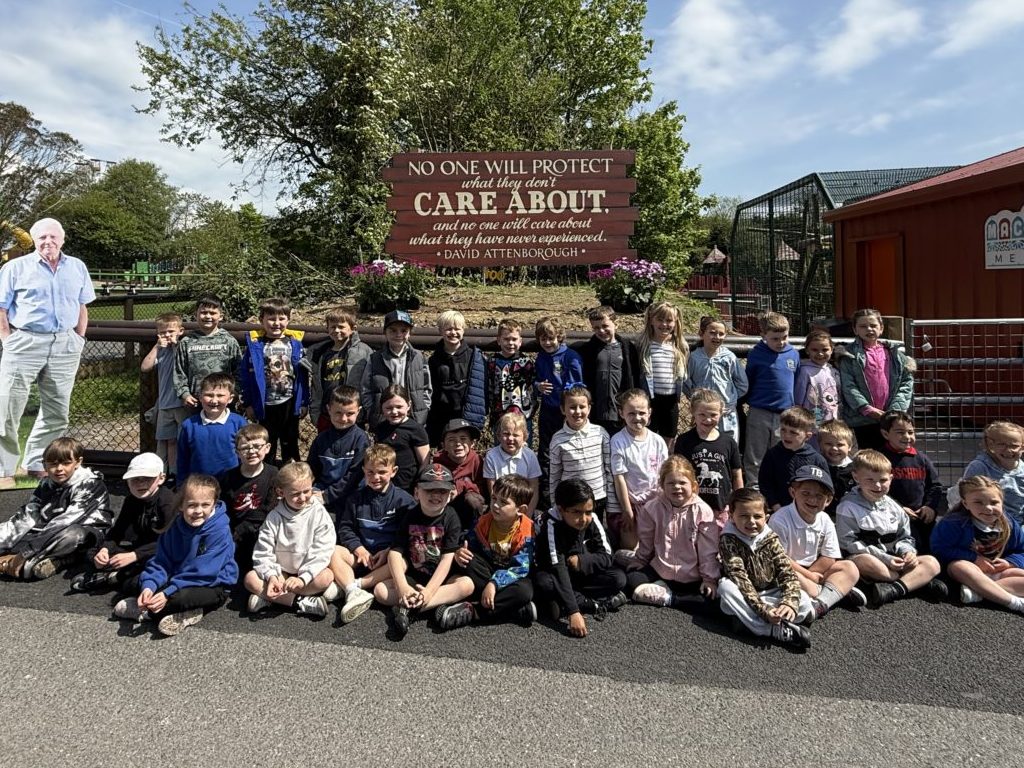
As part of the celebrations, Folly Farm welcomed pupils from Monkton Priory CP School in Pembroke, who spent time with conservation officer Jack learning about endangered and vulnerable animals, including lions, penguins and rhinos.
The pupils also gathered to sing Penblwydd Hapus to Sir David.
The attraction has also installed a new sign at the entrance to its zoo featuring one of Sir David’s best-known conservation messages: “No one will protect what they don’t care about, and no one will care about what they haven’t experienced.”
Folly Farm said one of its favourite tributes was the naming of a newborn alpaca cria, born on World Earth Day, April 22. The new arrival has been named David Alpacanborough.
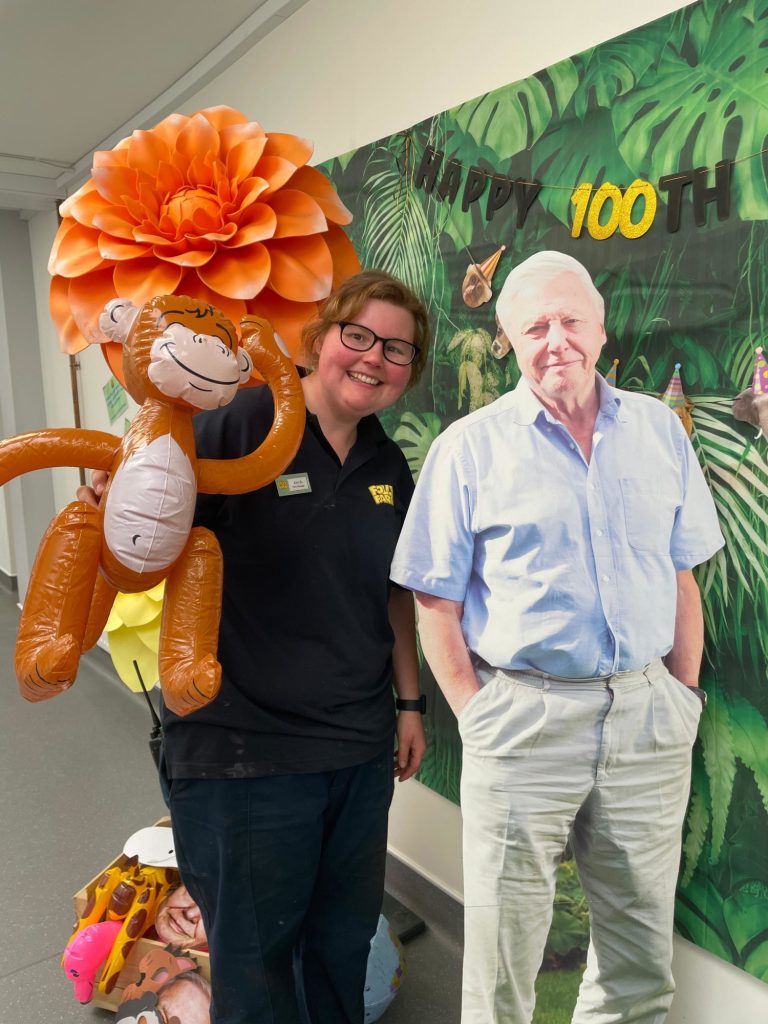
The zoo also held staff quizzes, created photo areas with a life-size cut-out of “Sir Dai”, and joined other BIAZA zoos and animal attractions in marking the milestone.
Folly Farm said: “Marking Sir David Attenborough’s 100th birthday is about more than photos and quizzes. It’s about acknowledging what his life’s work has achieved.
“Every time a child meets an animal up close, asks a question, or sings Penblwydd Hapus to a conservation hero, a seed is planted.
“Every time a keeper chooses this career path because of a documentary they watched growing up, that influence is still working quietly in the world.”

The Pembrokeshire celebrations come as the RSPCA urges the public to mark Sir David’s birthday by taking part in its Summer of Kindness campaign.
The charity is encouraging people to carry out seven simple acts to help animals, including planting flowers for pollinators, making bee drinking stations, feeding hedgehogs, helping pets in hot weather, organising litter picks and creating a basic rescue box for injured small wildlife.

The RSPCA said summer can be a difficult period for animals, with cruelty reports often rising during the warmer months. Last summer, the charity received 34,401 cruelty calls to its emergency line, up by a third on the previous year.
RSPCA wildlife expert Rebecca Machin said: “Sir David Attenborough has inspired generations to fall in love with animals and he has been a lifelong advocate for wildlife.
“His passion, care and voice for conservation has encouraged millions of people, including many across the RSPCA, to dedicate their lives to helping animals.
“As Sir David celebrates this milestone birthday, we’re also celebrating his legacy in changing the way the world sees wildlife, and the importance of animal welfare.
“By taking on seven kind acts for animals as part of our Summer of Kindness, people can give David the best birthday present, by helping animals of every kind, and helping us build a better world for every animal.”
The campaign has particular resonance in Pembrokeshire, where wildlife is central to the county’s identity, from Skomer’s seabirds and coastal habitats to garden birds, hedgehogs, pollinators and farmland species.
The RSPCA’s suggested acts include planting nectar-rich flowers such as lavender, sunflowers and wildflowers, avoiding pesticides, leaving wild patches of grass, putting shallow water dishes out for bees and wildlife, and never leaving pets in cars on warm days.
Rebecca Machin added: “Positive change often starts with simple, everyday actions.
“From helping keep local communities clear of litter, to providing water and safe food for visiting wildlife, we can all get involved in making a big difference for animals.”
Folly Farm added: “If we can keep that sense of awe alive, keep telling the stories of endangered species, and keep making small, steady changes to protect the environment, then we’re doing our bit to carry his legacy forward.
“So, from all of us here, to the man who brought the natural world into our living rooms and into our hearts, happy 100th birthday, Sir David. Thank you for everything.”
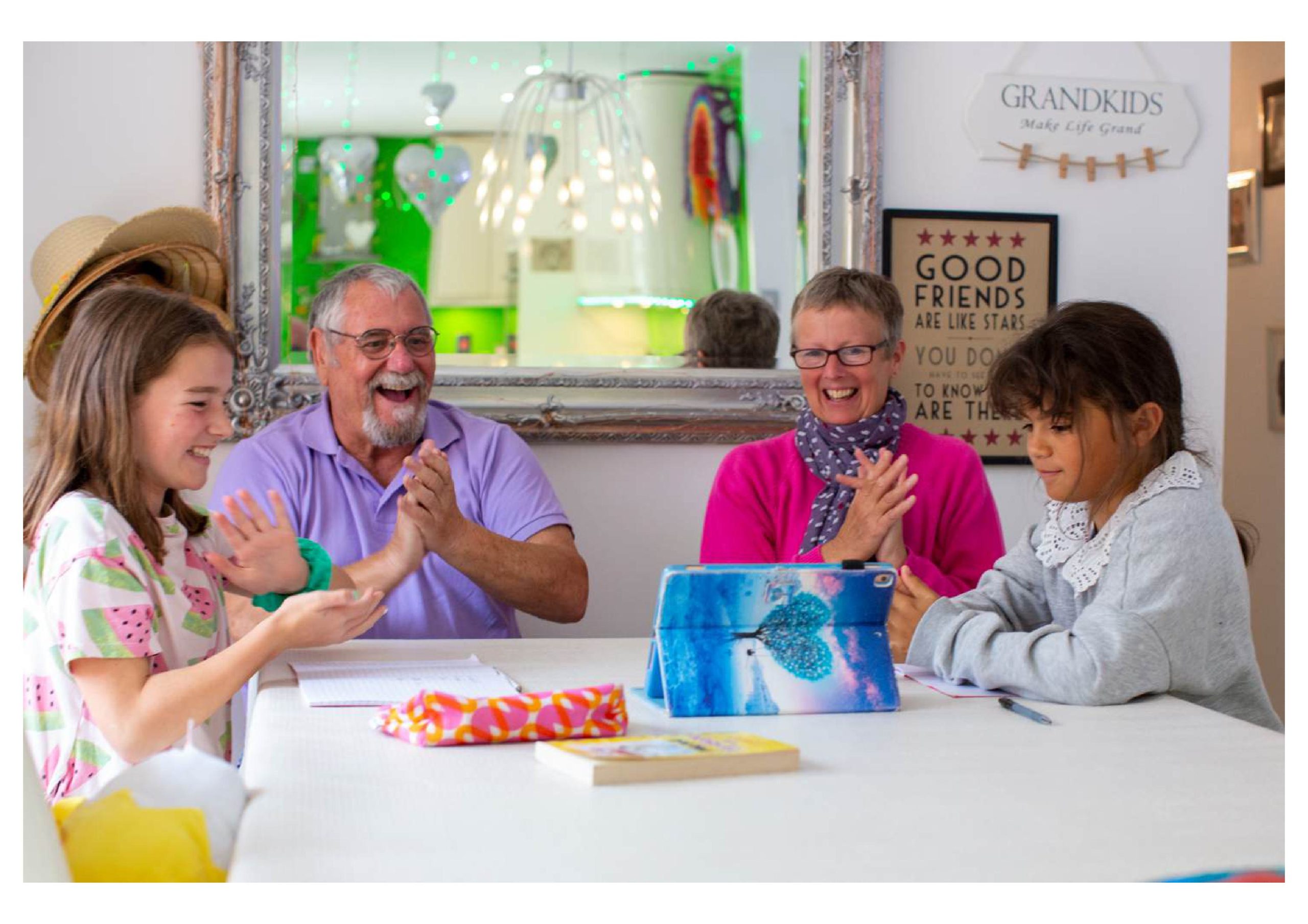
PEMBROKESHIRE foster carers have spoken about the small but powerful moments that show children in their care are beginning to feel safe, supported and able to trust again.
The comments have been shared as part of Foster Care Fortnight, the UK’s largest annual campaign to raise awareness of fostering, which runs from Monday, May 11 to Sunday, May 24.
This year’s theme, This is Fostering, focuses on the real experiences of foster carers and the vital role they play in helping children recover from trauma.
For many children who enter care, trauma can lead to anxiety, emotional shutdown, intense reactions, difficulties with boundaries, or problems following rules.
A national survey commissioned by Foster Wales found that around 80% of carers questioned had supported children showing behaviour of this kind.
However, half of those surveyed said they had seen a meaningful breakthrough within the first six months.
These moments can be simple, such as a child laughing, talking about their day, asking to watch a film, or opening up about something that has happened to them.
But for foster carers, they can mean much more. They are often signs that a child is beginning to feel safe, loved and supported.
Almost all carers questioned, 93%, said that with experience, support and professional guidance, they now feel confident responding to trauma-related behaviour.
Pembrokeshire foster carer Lynda, who has been fostering for just over a year, said: “In the beginning, I struggled with my confidence. The child pushed boundaries constantly, fought every option and often wasn’t living in reality. It was difficult to know whether what I was doing was making any difference at all.
“I made it clear through my actions that no matter what happened, I would always be there for them. I praised positive behaviour, set clear boundaries and stuck to them, always explaining why those boundaries were there, particularly around safety. I learned to wait until we were both calm before talking things through.
“The moment that really showed me things were beginning to change was when she opened up about her past and the trauma she had been through. We cried together and hugged. That was the moment I knew she felt safe enough to trust me.

“When you realise you’ve made that connection, it’s the best feeling in the world. Every child wants to feel loved and safe, and once that starts to happen, the rewards are huge.”
Pembrokeshire County Council’s Head of Children’s Services, Chris Frey-Davies said: “Foster carers across Pembrokeshire provide stability, care and understanding to children who have often experienced difficult and traumatic circumstances.
“This survey highlights the importance of local support, training and guidance in helping carers respond confidently to children’s needs over time. The breakthrough moments described by carers, while often small, show that children are beginning to feel safe and supported.
“At Foster Wales Pembrokeshire, we remain committed to supporting our foster carers throughout their fostering journey, ensuring they have access to the help they need to make a lasting difference.”
In Wales, there are 7,200 children in care. Of these, 4,884 live with foster families, supported by 3,538 foster carers.
Foster Wales is the national network of not-for-profit local authority fostering services in Wales.
Anyone interested in becoming a foster carer can find out more at fosterwales.gov.wales.
This Foster Care Fortnight, the local Foster Wales team will be at Tenby Leisure Centre on May 11 from 11:00am to 5:00pm; Haverfordwest Leisure Centre on May 12 from 10:30am to 1:00pm; Haverfordwest Library on May 12 from 3:00pm to 4:30pm; Milford Haven Library on May 14 from 10:00am to 1:00pm; Milford Haven Leisure Centre on May 14 from 3:00pm to 6:00pm; Tenby Leisure Centre on May 18 from 11:00am to 5:00pm; Haverfordwest Leisure Centre on May 21 from 10:30am to 2:00pm; and Fun in the Park at Pembroke Dock Memorial Park from 11:00am to 7:00pm.



News2 hours ago
Plaid Cymru celebrates historic victory as Rhun ap Iorwerth arrives at Cardiff Bay
CROWDS gathered outside the Senedd as Plaid Cymru leader Rhun ap Iorwerth arrived in Cardiff Bay following his party’s historic...


Crime3 hours ago
Police standoff ends after four-hour incident in Pembroke Dock
ELIZABETH COURT SCENE STOOD DOWN AFTER DOMESTIC INCIDENT A FOUR-HOUR police standoff in Pembroke Dock has ended with a 21-year-old...


Crime6 hours ago
Teen denies attempted murder of Milford Haven teacher
TEENAGER REMANDED AHEAD OF JULY TRIAL A 15-YEAR-old boy has denied attempting to murder a teacher during a stabbing incident...

News23 hours ago
Catastrophe for Labour as Plaid and Reform reshape Welsh politics
ELUNED MORGAN LOSES SEAT AS OLD CERTAINTIES ARE SWEPT AWAY THE VOTERS of Wales have delivered one of the most...


News1 day ago
Labour wiped out in Ceredigion Penfro as Plaid tops poll and First Minister loses seat
Shock result sends political shockwaves across Wales as Reform also surges in historic Senedd count LABOUR suffered one of the...


News1 day ago
Labour deputy says party ‘will not form next Welsh Government’
LABOUR FACES HISTORIC DEFEAT AS COUNTING CONTINUES ACROSS WALES LABOUR’S Deputy Leader in Wales has effectively conceded the Senedd election,...

News1 day ago
Counts underway in historic Senedd election
Wales waits for results as first election under new voting system reaches count stage COUNTING is underway across Wales today...

Charity2 days ago
Chief’s Tour honours fallen officers with 75-mile Pembrokeshire ride
Dyfed-Powys Police team raises thousands for bereaved police families charity A TEAM of officers and staff from Dyfed-Powys Police cycled...


Crime2 days ago
Racial abuse suspect barricaded himself inside Johnston lodge
ARMED police were called to a supported accommodation building in Johnston after a man allegedly barricaded himself inside a room...


Crime2 days ago
Milford Haven woman denies causing suffering to cat
Jury hears evidence over alleged failure to seek treatment for tumour A MILFORD HAVEN woman has denied causing unnecessary suffering...
-

 News4 days ago
Baby in critical condition after Fishguard emergency
-

 News3 days ago
Former housing officer admits drink-driving in Pembrokeshire retail park
-

 Crime3 days ago
Job loss threat for convicted Pembrokeshire drug-driver
-

 Crime3 days ago
Milford motorist disqualified for drug-driving
-

 Crime3 days ago
Police tip-off leads to driving ban for Milford motorist
-
Crime2 days ago
Racial abuse suspect barricaded himself inside Johnston lodge
-

 Community3 days ago
Sixth-former firefighter balances schoolwork with saving lives
-

 Crime3 days ago
Delivery driver caught twice over legal drink-drive limit