


Climate
Fears raised in Senedd over coal tip reclamation projects


PROPOSALS to reclaim disused tips risk opening the floodgates to coal extraction under the guise of remediation, the Senedd heard.
Delyth Jewell led a Plaid Cymru debate on coal tip and opencast mine remediation, warning a new industry is emerging with reclamation coming at the price of coal extraction.
Ms Jewell, who represents South Wales East, raised concerns about Energy Recovery Investments Limited’s (ERI) proposals for reclamation of Bedwas tip.
Plaid Cymru’s deputy leader said: “Before the land is restored to its former glory, it seems it must be ravaged and plundered again.”
She said some make good on promises but others do not, “claiming at the end of projects that not enough money remains for restoring – it’s all gone on draining every drop of profit.”

Hefin David urged fellow members to keep an open mind to ERI’s plans to remediate coal tips in Bedwas in his Caerphilly constituency.
Dr David said: “We need to keep an open mind about any opportunity or avenue we have to remediate, but at the same time we must ask sceptical questions.”
He stressed: “This isn’t Ffos y Fran, this isn’t ‘leave it as a disaster zone and exploit the land.
“This is a company that is saying, ‘Yes, we’ll take the coal as a by-product and we’ll make a profit, but we are there to remediate the land.’”
Dr David added his voice to a chorus of calls for the UK Government to urgently provide additional funding for proper long-term remediation of disused tips.
Plaid Cymru’s Peredur Owen Griffiths raised concerns about the “troubling” proposals for a coal-extraction project in his South Wales East region.
Mr Owen Griffiths said ERI is planning to extract coal from the Bedwas colliery site over seven years, with a possible extension.

He told the chamber: “The potential implications of the project are far-reaching and alarming, with many questions yet to be answered satisfactorily to alleviate the concerns of residents.”
Warning it could set a dangerous precedent, with more than 300 at-risk coal tips in south Wales, he said the project risks allowing coal extraction under the guise of remediation.
Mr Owen Griffiths said: “It’s imperative that we ask many searching questions to guard against attempts to revive the coal-mining industry through the back door.”
Rhianon Passmore said people in her Islwyn constituency have deep concerns about ERI’s plans for the former coal tips at Mynydd y Grug in Bedwas.
Ms Passmore raised constituents’ concerns about 18 to 20 lorries a day travelling down a haul road that passes through the Sirhowy valley country park.
Pointing out that a planning application has yet to be submitted, she said: “While we want to see coal tips removed and remediated, it cannot and should not be at any cost.”
The Labour MS said the Welsh Government has committed £47m but the UK Government has yet to contribute funding for long-term remediation of disused coal tips.
She called for the UK Government to step up to the plate and take responsibility.
Sioned Williams said there are more than 900 disused tips in her South Wales West region, warning that the landscape has been scarred with environmental hazards left behind.
The Plaid Cymru MS raised the example of Godre’r Graig in the Swansea valley.
She said: “Due to an assessment of the risk of the quarry spoil tip to the village school, children have had to be educated in Portakabins miles away from the village since 2019.
“The school has now been demolished, causing absolute heartbreak in the community.”
Heledd Fychan, who represents South Wales Central, called for new legislation to reflect the realities of today, pointing out that the Mines and Quarries Act dates back to 1969.
The Plaid Cymru MS said: “It is absolutely appalling, in my view, that the UK Government has not played its part in helping to fund the work.”
Joel James, for the Conservatives, rejected Plaid Cymru’s “alternative reality” that paints Wales as a victim of exploitation during the industrial revolution.
“The truth is that our national resources were used to help to enrich us,” he said.
Mr James argued the UK Government should not be expected to pick up the bill for remediation while the Welsh Government brings forward proposed legislation on disused tips.
The South Wales Central MS said the Welsh Government has resources at its disposal, criticising the estimated £18m-a-year cost for 36 more politicians in Cardiff Bay.
Mr James said Wales should engage with ERI on remediation works.
Julie James – who could not comment on the Bedwas proposals – said her father was a miner who died of cancer, almost certainly because of his mining history.
She said: “That will be the case in many families across Wales. To say that that isn’t exploitation beggars belief, quite frankly.”
Wales’ local government and planning secretary urged the UK Government to recognise its moral responsibility to help fund remediation because coal tips long predate devolution.
Ms James said a forthcoming coal tips, mines and quarries bill will reform outdated laws around tip safety and give greater security to people living in its shadow.
MSs voted down Plaid Cymru’s motion, 12-45, with Conservative amendments also falling. The motion as amended by the Welsh Government was agreed, 41-16.


Countryside charity says renewables must be built in the right places
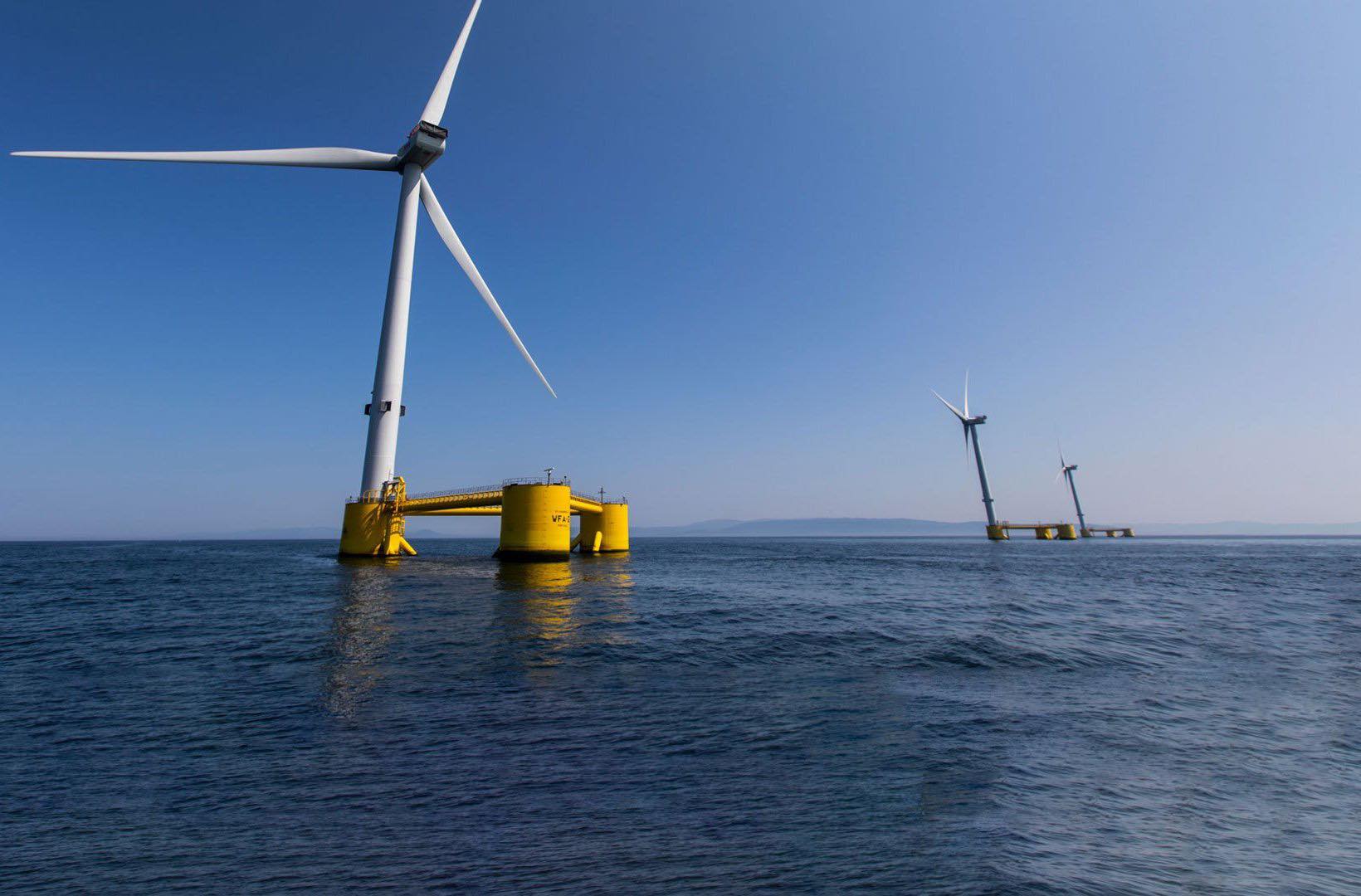
A WELSH countryside charity has backed offshore wind as a major opportunity for Wales, saying it can deliver clean energy, skilled jobs and coastal regeneration without putting unnecessary pressure on rural landscapes.
CPRW, The Welsh Countryside Charity, said comments by Cabinet Minister Adam Price in support of offshore wind marked a positive direction for Wales’ renewable energy future.
The charity said offshore wind offered one of the clearest ways for Wales to meet its future electricity needs while reducing pressure for large-scale onshore developments in sensitive upland areas, peatlands, productive farmland and rural communities.
The issue has become increasingly prominent across Wales as communities respond to major renewable energy proposals, including new-generation wind turbines, pylons, substations and grid infrastructure.
CPRW said it supported the transition to renewable energy, but argued that Wales needed a planned national strategy rather than a system which left rural communities reacting to speculative applications.
The Welsh Government has also identified offshore wind as a key economic opportunity, particularly around ports, supply chains, manufacturing, maintenance, skills and long-term energy infrastructure.
Floating offshore wind in the Celtic Sea is seen as especially important for south west Wales, with Milford Haven and Port Talbot both linked to future green energy and port development.
Dr Jonathan Dean, CPRW energy specialist, said: “Adam Price is making some very encouraging noises. Wales absolutely needs renewable energy, but we also need to be strategic about where it goes.
“Offshore wind has the potential to revitalise the economy in both north and south Wales, with genuine long-term service and support jobs linked to ports, maintenance, skills and supply chains.
“It can deliver clean electricity at the scale Wales needs, without forcing unnecessary trade-offs with our most valued landscapes, upland peat, rare habitats and rural communities.
“This should be the direction of travel for Wales: ambitious, strategic and offshore-led.”
CPRW said Wales must ensure that renewable energy development brings lasting benefit to Welsh communities, rather than simply exporting power and profit elsewhere.

Jonty Colchester, Chair of CPRW, said: “CPRW strongly supports the transition to renewable energy, but it must be planned properly and in the public interest.
“Offshore wind gives Wales a major opportunity to lead: creating skilled jobs, supporting coastal communities and delivering clean energy, while helping to protect the countryside and landscapes that are central to our national identity.
“We welcome the Minister’s comments and urge Welsh Government to put offshore wind, marine energy, grid modernisation and Welsh supply-chain benefit at the heart of a clear national energy strategy.”
The charity said offshore wind should sit alongside marine energy, grid upgrades and stronger community benefit arrangements.
It added that a strategic approach was needed to protect landscapes, nature and rural communities while still delivering the scale of clean power needed for the future.
CPRW, formerly known as the Campaign for the Protection of Rural Wales, has worked for nearly 100 years to protect rural landscapes and promote sustainable development.

Pembrokeshire ports and Celtic Sea projects placed at centre of Wales’ green energy ambitions
MILFORD HAVEN and Pembroke Dock could be at the heart of a new offshore wind boom after Wales’ new energy minister said the sector could drive jobs, investment and coastal regeneration.
Adam Price, the Cabinet Minister for Enterprise, Connectivity and Energy, told the Global Offshore Wind 2026 conference that Wales was “open for business” and ready to work with industry, the UK Government and The Crown Estate.

For Pembrokeshire, the announcement is particularly significant. The Milford Haven Waterway is already being positioned as a key base for floating offshore wind in the Celtic Sea, with Pembroke Port earmarked as a major renewables hub. Plans for a dedicated floating offshore wind storage compound at Pembroke Dock have already secured planning permission.
Mr Price said: “I believe that the offshore wind sector has the potential to deliver high quality sustainable career opportunities for people in Wales.
“The offshore wind sector has a key role to play in bringing about the regeneration of coastal communities in both north and south Wales.
“Our role is to remove the blockers faced by the sector — whether in planning, access to finance or infrastructure.”
The Celtic Sea floating wind programme is expected to create major supply chain opportunities for Welsh ports, engineering firms, vessel operators and training providers. Marine Energy Wales has said the first 4.5GW of floating offshore wind in the Celtic Sea could create more than 5,300 jobs during construction.
The Port of Milford Haven has previously said the Haven’s existing energy expertise, heavy engineering base and deep-water port facilities make it well placed to support the industry.
Mr Price also welcomed UK Government support for Port Talbot, but Pembrokeshire businesses will be watching closely to ensure Milford Haven and Pembroke Dock receive a fair share of the investment.
Jessica Hooper, Director of RenewableUK Cymru, said offshore wind was “Wales’ next big industrial opportunity”, adding that it could be worth almost £5bn to Welsh businesses and deliver more than 3,000 long-term secure jobs.
For Milford Haven, long associated with oil, gas and marine industry, floating offshore wind could mark the next chapter in the Haven’s energy story.

VISITORS to this year’s Royal Welsh Show are being encouraged to use public transport as organisers look to ease congestion and promote more sustainable travel.
The show takes place at the Royal Welsh Showground in Llanelwedd, Builth Wells, from July 20 to 23, and is expected to attract thousands of people from across Wales and beyond.
The Royal Welsh Agricultural Society said rail and bus services would provide convenient options for showgoers, with free shuttle buses running from Builth Road railway station to the showground, which is just over a mile away.
Discounted admission
Visitors travelling on the Heart of Wales Line with a valid rail ticket will be able to buy discounted show admission tickets from conductors and ticket offices along the route.
The discounted prices are £35 for adults and £11 for children. Children under 16 can travel free by train when accompanied by a fare-paying adult.
Transport for Wales said rail services would connect visitors from across Wales and the borders, including routes from Cardiff through some of Wales’ most scenic countryside. TrawsCymru bus services will also provide another option for those travelling to the event.
Family activities
Transport for Wales and Network Rail will also have an interactive stand at the show, offering family-friendly rail safety activities and entertainment.
Activities will include VR headset experiences, story time sessions, badge-making classes and rail safety performances. Builth Wells Male Voice Choir is also due to visit the stand on the first day of the show.
Children under 16 travelling to the show by train on the Heart of Wales Line will be able to collect a free activity sheet on board and hand in their completed artwork at the Transport for Wales stand for a chance to win a prize.
Visitors are being urged to plan their journeys in advance through the Transport for Wales website and journey planner.
Travel encouraged:
Visitors to the Royal Welsh Show are being urged to consider rail and bus services this year (Pic: RWAS).




Community2 minutes ago
Lord Rhys emerges from the mist in St Davids
Giant puppet begins historic journey marking 850 years since the first Eisteddfod MIST swirled around St Davids Cathedral on Friday...


News22 hours ago
Tragic tribute paid to Haverfordwest man after A4075 collision
FAMILY REMEMBERS “KIND AND LOVING” CALLUM HANSON THE FAMILY of a 22-year-old man from Haverfordwest who died following a road...


News2 days ago
Motorcyclist, 22, dies in A4075 crash in Pembrokeshire
A 22-year-old woman remains in hospital after two-vehicle collision A MOTORCYCLIST has died following a serious two-vehicle crash on the...


Community2 days ago
Why police will be visiting every home in Pembrokeshire
New operation aims to knock on more than 257,000 doors across Dyfed-Powys over the next three years DYFED-POWYS POLICE has...


Crime2 days ago
Prisons at breaking point: MPs warn Wales is paying the price of a failing system
Frozen healthcare budgets, overcrowded jails, homelessness on release and mounting pressure on staff are undermining rehabilitation across Wales, according to...


News3 days ago
Brexit at 10: How Britain was sold a dream that cost us dearly
A decade after the referendum, the promised benefits remain hard to find while the economic costs are increasingly difficult to...


Crime3 days ago
Worcestershire man jailed after violent attack on woman in Tenby
Defendant was already serving a suspended sentence when serious assault took place A WORCESTERSHIRE man has been jailed for more...


Climate3 days ago
Offshore wind ‘could bring new generation of jobs to Milford Haven’
Pembrokeshire ports and Celtic Sea projects placed at centre of Wales’ green energy ambitions MILFORD HAVEN and Pembroke Dock could...


Community4 days ago
Police officer hailed hero after midnight sea rescue in Milford Haven
PC swam 100 metres offshore to save distressed woman heard calling for help in darkness A DYFED-POWYS POLICE officer has...


Local Government4 days ago
Security privately arranged by Mayor at Beating of the Bounds
HAVERFORDWEST TOWN COUNCIL has confirmed that security personnel seen at this year’s Beating of the Bounds were privately arranged and...
-

 Community6 days ago
Pembrokeshire Chess Club crowned Welsh champions
-

 Crime2 days ago
Milford Haven man jailed for breaching domestic violence protection order
-
Local Government4 days ago
Security privately arranged by Mayor at Beating of the Bounds
-

 News2 days ago
Crash on Freeman’s Way causes school-run chaos across Haverfordwest
-

 Crime4 days ago
Man wanted by court after failing to attend hearing over alleged shop thefts
-

 Crime4 days ago
Man jailed after admitting strangulation and assaults
-
 Crime4 days ago
Man banned from roads after drink-driving offence
-

 Crime4 days ago
Man sentenced over stalking campaign and lock knife offence