


Politics
Call to bring forward council tax shake-up rejected by Senedd

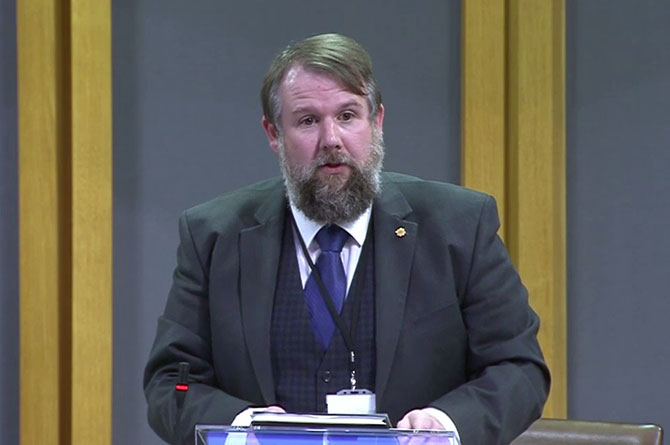
THE SENEDD rejected calls to press ahead with “long overdue” reforms to council tax before the next election despite an “overwhelming” moral case for change.
Peredur Owen Griffiths, Plaid Cymru’s shadow local government secretary, warned council tax imposes a disproportionate burden on poorer households.
He tabled an amendment to the local government finance bill, which would have placed a duty on the Welsh Government to stick to implementing reforms by April 2025.
In mid-May, the Welsh Government pushed back plans – which were jointly agreed with Plaid Cymru – to redesign council tax with the aim of making it fairer until 2028.
Plaid Cymru pulled out of the broad cooperation agreement two days later due to the delay coupled with concerns about donations to Vaughan Gething’s leadership race warchest.

During a debate on July 9, Mr Owen Griffiths urged fellow Senedd members to back his amendment to ease pressure on some of the poorest households in Wales.
He said: “Reflect on the real-world implications of kicking this reform into the long grass, especially for lower income families who are continuing to struggle to make ends meet.”
He warned the delay would condemn those with the least to three years of disproportionately high council tax bills while those with the broadest shoulders do not pay their fair share.
Mr Owen Griffiths told the Senedd: “The moral case for implementing this change is overwhelming and, given the continued financial pressure facing households across the length and breadth of our nation, now is the time to strike whilst the iron’s hot.”
The South Wales East MS accused the Welsh Government of letting an opportunity slip, with parliamentary arithmetic currently in favour and a Senedd election on the horizon in 2026.
Rebecca Evans, for the Welsh Government, described the Plaid Cymru amendment as “too broad to constitute workable or clear law”.
The finance secretary reiterated that a consultation found a clear appetite for a council tax shake-up but over a slower time frame.

Ms Evans said it is no longer feasible to deliver reforms by 2025, adding: “We’re listening to the people of Wales by moving forwards with council tax revaluation and reform in 2028.”
She stressed ministers remain committed to reforming council tax, with the first revaluation of Wales’ 1.5 million homes since 2003 scheduled for 2028 and every five years following.
She told the chamber the local government finance bill will underpin delivery of the proposals developed with Plaid Cymru’s Cefin Campbell as part of the cooperation agreement.
Members voted 12-37 against the amendment.
Peter Fox put forward amendments that would give people a say on “reckless” council tax rises, with a local referendum required for any increase in excess of 5%.
The Conservatives’ shadow local government secretary, who led Monmouthshire Council for more than a decade, said: “Councils can’t keep hiking council tax excessively year on year.
“I put council tax up, I admit it, every year. We had to do that. But there is a limit to how long the public can keep putting their hands in their pockets. Sometimes they need to have a say in if this is right or not, and the councils have to go back to the drawing boards.”
Ms Evans said no council that has held a referendum has been able to proceed with its initial budget needs since the policy was introduced in England in 2012.
She said setting limits in this way effectively becomes a target for local authorities to raise council tax to the maximum allowed rather than carefully considering what is necessary.
Mr Fox’s amendment fell, with 36 against, one abstention and 12 in favour. As did another Tory amendment seeking to enshrine the 25% single person discount within the bill.
If passed, the bill would increase the frequency of business rates revaluations to three years.
Mr Fox also spoke to a Conservative amendment to use new powers in the bill to create a separate business rates multiplier for small businesses.
He said: ”It is important that the differences between small businesses and medium and large businesses are recognised in the rates that they pay.”
The Tory MS for Monmouth added: “We should be really thinking about looking at creating a multiplier for small businesses, as Scotland and England have.”
Plaid Cymru supported the amendment, with Mr Owen Griffiths saying seeking and obtaining powers but not using them has been a recurring trend with the Welsh Government.
Ms Evans said the Welsh Government has no current policy intention to create a small business multiplier, committing to consulting before introducing any such differential.
The amendment was narrowly defeated, with 25 against and 24 in favour.
Following the meeting, Mr Fox warned: “Be in no doubt, Labour has today passed a bill that will result in continued excessive council tax rises for the people of Wales.”
But Ms Evans told the Senedd the bill will deliver meaningful change to council tax and business rates in the short term as well as pave the way for further reforms.
“It’s an opportunity to make a real difference to a taxation system that impacts almost every person and business in the country,” said the finance minister.
The bill now moves onto the fourth and final stage of the Senedd’s legislative process, with a vote of the whole Senedd on the amended version scheduled for July 16.
With Labour and Plaid Cymru’s support, and no legal challenge expected, the bill is likely to be agreed next week before moving on to receive royal assent.


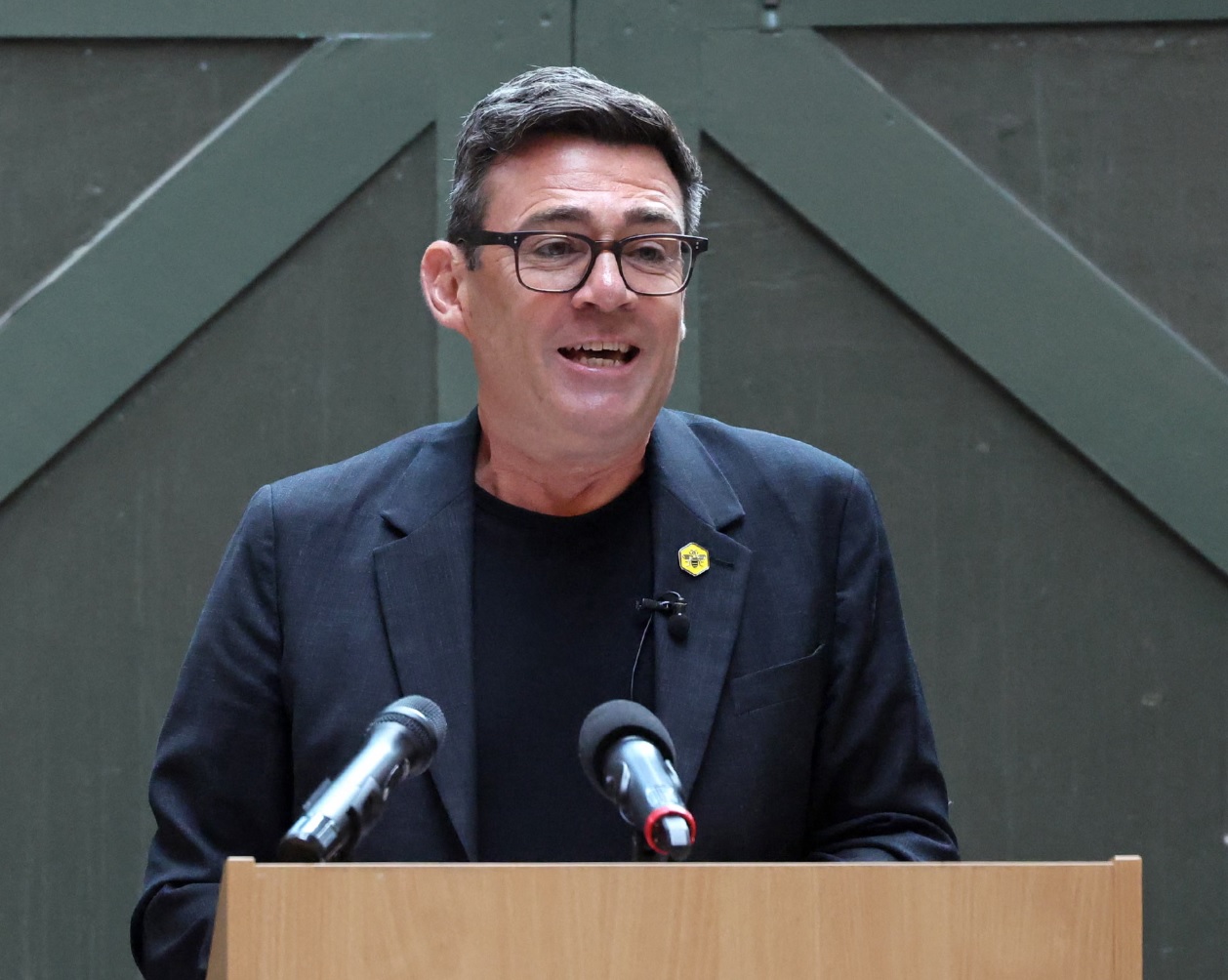
Former Greater Manchester mayor promises radical devolution agenda after sweeping Makerfield victory
ANDY BURNHAM has used his first major policy speech since returning to Westminster to set out a blueprint for government, promising the biggest transfer of power away from Whitehall in modern times and unveiling plans for a new “No 10 North” in Manchester.
Speaking at the People’s History Museum on Monday, Burnham presented himself as the politician capable of breaking what he described as Britain’s cycle of economic stagnation, political division and over-centralised government.
The speech is widely being seen as his opening pitch to the country ahead of his expected move into Downing Street next month.
Burnham enters the contest from a position of strength after winning the Makerfield by-election earlier this month with a landslide majority. The result marked his return to Parliament and cleared the way for his challenge to succeed Keir Starmer.
At the heart of the speech was a promise to deliver “good growth in every postcode”, with Burnham arguing that Britain can no longer rely on decisions being made almost exclusively in London.
He said the UK remained one of the most centralised countries in the developed world and claimed the current system was failing the north, the south, London and the wider regions alike.
“The whole country suffers when the regions and nations are not meeting their potential,” he said.
Burnham argued that economic growth should be driven from communities and regions rather than directed from Whitehall, promising what he called “the biggest rebalancing of power our country has seen”.
The headline announcement was the creation of a permanent northern operation for the Prime Minister’s Office.
Burnham said a new No 10 North would be based in Manchester, but insisted it would not simply move power from London to one city.
“The job of No 10 North will be to make power flow into the Midlands, into the South West, into the East of England and yes, into London,” he said.
Burnham used the speech to outline what he calls “Manchesterism” — an approach shaped by his years running Greater Manchester.

The model combines sound public finances, local leadership, infrastructure investment, housing, universities, business, public services and trade unions working together to drive growth.
He said his time in Greater Manchester had shown that a different style of politics was possible, based on “place first, not party first” and “problem solving, not point scoring”.
Burnham also attacked Westminster culture, saying Parliament had become increasingly fragmented and disconnected from the communities MPs represent.
He promised a more collaborative style of government and said MPs should be allowed to be “authentic representatives” rather than being controlled by fear of the whipping system.
He also said local government had been left “threadbare”, with councils struggling to meet basic responsibilities while national government had grown larger since the pandemic.
The speech was quickly attacked by Conservative leader Kemi Badenoch, who dismissed Burnham’s proposals as “more public control, more regulation, more taxes”. Reform UK figures also criticised him for not taking questions from journalists after the speech.
For Wales, the speech will be watched closely because of its focus on devolution, regional growth and shifting power away from Westminster.
His argument that decisions should be taken closer to communities is likely to resonate with ongoing debates about transport, healthcare, economic investment and local government powers in Wales.
With Labour’s leadership transition expected to conclude within weeks, Burnham’s Manchester speech offered the clearest indication yet of how he intends to govern: less power concentrated in Whitehall, more influence for regions and nations, and a long-term focus on rebuilding local economies and living standards.
Local Government
Fresh call for devolution of Crown Estate assets in Wales backed by county councillors

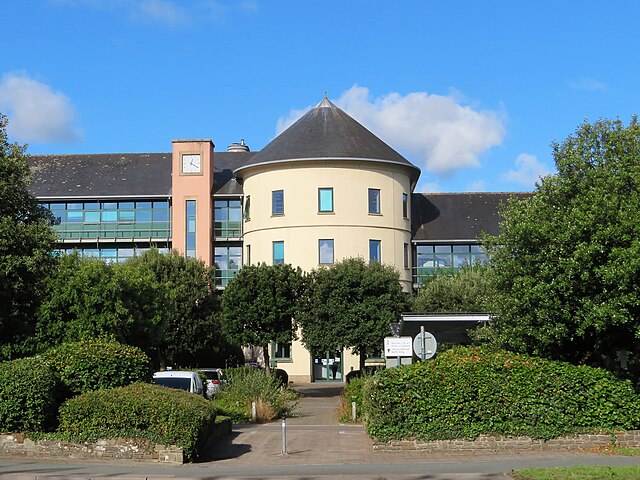
A FRESH call has been made for Crown Estate assets in Wales to be devolved to the country, a call backed by Pembrokeshire councillors last year, after it made £210m profit this financial year.
Today, June 26, the Crown Estate published its annual review, also releasing a Wales-specific review, showing that, in 2025-’26 its profits in Wales were £210m, up from £8.7m in 2020-’21.
Plaid Cymru Westminster Leader Liz Saville Roberts said that Plaid Cymru – which has long campaigned for the assets to be devolved – has a “mandate to keep fighting for fairness” with devolving the Crown Estate being a position held by every council in Wales.
The new Plaid Cymru Welsh Government is also pursuing control over natural resources, in line with Scotland, where the Crown Estate was devolved in 2017.
Ms Saville Roberts said that profits from Wales’ natural resources being sent to London is a “striking injustice” and that the next UK Government “must take steps to devolve the Crown Estate to Wales”.
Back in 2025, Pembrokeshire County Council joined other Welsh councils in supporting the Crown Estate assets in the county being devolved to its people.
The Crown Estate owns 65 per cent of Wales’ riverbeds and beaches.
Proceeds from the Crown Estate, which dates to the 17th century, are split by 25 per cent funding the Royal Family and 75 per cent to the UK Treasury.
Responsibility for the Crown Estate is already devolved to the Scottish Government, which has previously been reported as generating £103.6 million into the public coffers in Scotland in 2023.
A sticking point in Wales is that Westminster has to date been against any change.
A successful notice of motion before Pembrokeshire County Council, by Plaid Cymru councillor Michael Williams said: “We ask PCC to support the proposal for the Crown Estate assets to be devolved to the people of Wales, so that profits can be used to invest in the economy and communities of Wales.

“A poll in 2023 showed that 75 per cent of the population were in favour of taking control of the assets of the Crown estate rather than the profits going to the Treasury and the Crown.

“Local authorities are under huge financial pressure and placing the Crown Estate in the hands of Wales would be a significant step to address the lack of investment in our local government.
“We call upon the Welsh Government to ask Westminster to devolve the assets and revenue of the Crown Estates as a matter of urgency, as was done in Scotland in 2017.
“We demand that Wales is treated fairly and accepts management of the Crown Estate land for the benefit of the people of Wales.”
Councillors have previously heard the Crown Estates derives nearly £60,000 from some 16 leases in Pembrokeshire.
The £59,005 quoted at the time includes £26,600 for foreshore lease agreements, £8,520 for the land around Haverfordwest’s Riverside Market, and £12,800 for a sailing centre and car park at Cosheston Pill near Pembroke Dock.
MORE THAN 100 development schemes in Pembrokeshire, amounting to more than 2,300 homes, are in limbo due to the ongoing Nitrogen Neutrality guidelines from Natural Resources Wales, councillors heard.
At the June meeting of Pembrokeshire County Council’s services overview and scrutiny committee, members received an update on the ongoing issue of Nitrogen Neutrality which has led to delays in many housing schemes in the county since its introduction last June.
The area which development is required to demonstrate nitrogen neutrality is approximately 75 per cent of the county, including Haverfordwest, Narberth, Pembroke and Pembroke Dock.
The report, presented by Cabinet Member for Planning and Highways Cllr Jacob Williams, focussed on the implications of Natural Resources Wales’ (NRWs) Nutrient Neutrality requirements in respect of dissolved inorganic nitrogen (DIN) for development within the Milford Haven Inner waterbody catchment of the Pembrokeshire Marine Special Area of Conservation (SAC) and the measures being taken by the council at a local level to address this issue as well as the council’s contribution to regional and national initiatives.
The report said that, as of May, there were 21 planning applications which were in the system before the introduction of nitrogen neutrality requirements (June 2025) which are now caught and which remain undetermined, along with a further 66 undetermined since that date, and a further 15 applications which are caught by nitrates requirements, but which have not yet reached eight-week determination date.
It said the 102 developments caught by the nitrates issue amounted to some 35 per cent of the total undetermined applications; that figure even higher when determined (refused) schemes were taken into account.
Cllr Williams, who last year with the backing of full council, wrote a letter to the First Minister, conveying the authority’s “great concern over Natural Resources Wales’ recent river nitrates guidance in relation to development, and the serious effects this is having,” said that amounted to 2,376 of 6,741 potential housing units, adding that “Pembrokeshire County Council cannot approve development which is unable to demonstrate Nitrogen Neutrality”.
Last October, Cabinet endorsed an action plan to address the nitrates issue for affected development within its planning area, the early stages already delivered, with a final report due for Cabinet consideration this September in order to determine how mitigation opportunities identified might be taken forward.
Members backed a recommendation to note the action plan progress ahead of the report to Cabinet.



Community22 hours ago
Thousands line Cardigan streets for Lord Rhys homecoming parade
THOUSANDS of people lined the streets and quayside in Cardigan on Saturday as the town marked 850 years since Lord...


Crime2 days ago
Dyfed-Powys Police rated only ‘Adequate’ in organised crime inspection
A WATCHDOG has rated Dyfed-Powys Police only “Adequate” in its response to serious and organised crime, despite praise for the...


News2 days ago
Two taken to hospital after aircraft ditches in Cardigan Bay
Coastguard helicopter spotted two casualties after light aircraft came down off west Wales coast TWO people were taken to hospital...


Sport3 days ago
Long Course Weekend gets underway in Tenby as thousands head for county
Three days of swimming, cycling and running begin with The Wales Swim at North Beach THOUSANDS of athletes and supporters...


Climate3 days ago
Welsh waters, Westminster profits: Crown Estate row reignited in Wales
PLAID CYMRU has renewed calls for the Crown Estate to be devolved to Wales after figures showed income linked to...

News3 days ago
Reform MS: ‘I felt like shouting get out of the water’
Paul Marr says children playing in streams at Pembrokeshire beaches deserve better protection from pollution risks REFORM UK MS Paul...

Health4 days ago
Senedd backs call to rule out hospital downgrades after heated NHS debate
Reform UK amendment passes as West Wales hospital fears remain central political issue THE SENEDD has backed a call for...


News4 days ago
Coastguard callout payments axe sparks fears for coastal communities
VOLUNTEER coastguards across the UK are set to lose callout payments, prompting concern over the future resilience of emergency cover...


Farming4 days ago
Rural Wales ‘left out’ of net zero debate, warns carbon entrepreneur
A WELSH carbon entrepreneur has warned that rural Wales risks being left behind in the national conversation about net zero....


Local Government5 days ago
Tenby Spectacular row continues as organisers say key question remains unanswered
Round Table says legal clarity over pedestrian access is still holding up event plan TENBY ROUND TABLE has welcomed Pembrokeshire...
-

 Crime5 days ago
Milford man threatened to smash parents’ windows, court hears
-

 Crime4 days ago
Police appeal after reported rape at Young Farmers rally
-

 Crime5 days ago
Haverfordwest father stole groceries amid cost-of-living struggle
-

 Crime5 days ago
Woman sentenced over neglect of child at Haverfordwest property
-

 Crime5 days ago
Grandmother banned after cocaine drug-drive offence
-

 Crime5 days ago
Hakin man stole Tesco goods to fund drink and gambling addictions
-

 Crime5 days ago
Dock woman given mental health treatment order after supermarket thefts
-

 Crime6 days ago
Government fraud squad hunts down Covid loan scams