


Farming
First Minister speaks of need to win back trust of Welsh farmers


THE FIRST Minister accepted the need to win back farmers’ trust as he was scrutinised about Welsh Government support for rural Wales.
Vaughan Gething told a scrutiny committee the relationship with farmers has improved significantly in the months since widespread protests against subsidy reforms.
In May, the Welsh Government postponed the Sustainable Farming Scheme (SFS) until 2026 after a consultation received more than 12,000 responses.
Mr Gething raised the importance of taking a step back and listening but he stressed the need for compromise, adding: “You can’t please everyone.”
He said: “Farmers were the first group … I met when I first became the First Minister to try to reset our relationship – to recognise that we need to have a further conversation.”

Llyr Gruffydd, Plaid Cymru’s shadow rural affairs secretary, raised the farming sector’s calls for the SFS budget to increase by more than £500m due to inflation.
The First Minister replied: “We’re not going to be able to put right the last 14 years in the next 14 weeks – and I think that’s a wholly unrealistic demand.”
Mr Gething told the committee: “There is a need for honesty about the scale of the hole that has been inherited by the new UK Government.”
He said farming got the rough end of Brexit, with the sector “sold out” in trade deals.
Mr Gething stressed the issue will not be resolved in the first Labour UK budget, warning the UK’s books are “in a worse state than the public were told”.
“There’s an even bigger hole than we thought,” said the former lawyer and trade union representative. “You can’t click your fingers and wish that away.”
Recalling Labour’s 1997 landslide, Wales’ First Minister cautioned that it took two years to unlock significant investment “and I wouldn’t be surprised if we saw a similar picture”.

Mr Gruffydd raised concerns about water quality regulations, which include slurry storage requirements coming into force on August 1.
He warned some farmers are “stuck in the planning system” and may not be able to meet the regulations through no fault of their own.
Mr Gething assured the North Wales MS that discussions will be held with regulators and enforcement authorities about the practicalities.
Turning to transport, Labour’s John Griffiths raised comments from Stuart Cole, a professor of transport economics, who has warned rural Wales has “lost out” on spending.
Mr Gething said the Welsh Government took over responsibility for the core valleys lines which became a significant financial commitment, skewing spending figures.
Pressed about cuts to rail in some rural areas in Transport for Wales’ timetable review, Mr Gething pointed out that an average of six passengers used one Heart of Wales line route.
“You can run a flexi-bus service, you can’t run a flexi-rail service,” he said.
The First Minister told the meeting forthcoming bus reforms, which would re-regulate the industry and introduce a franchising system, will be a real benefit to rural Wales.
On roads policy, Mr Gething described the former road-building programme as unaffordable, saying a new approach is needed in light of the climate and nature emergency.
David Rees, the Senedd’s deputy speaker or Diprwy Lywydd, who chairs the committee, raised suggestions that the south Wales metro has been too dominant.
Mr Gething said a better service in south Wales should give people confidence that it can be done in other parts of the country as well.
But he cautioned: “As ever, I can’t give you a definitive timeframe even though I know everyone would like me to – that’s about the balance of being honest and ambitious.”
Quizzed about the rural economy by Labour’s Jack Sargeant and the Conservatives’ Mark Isherwood, Mr Gething described digital connectivity as an essential enabler.
He pointed to Welsh Government investment in digital infrastructure despite responsibility being reserved to Westminster.
Turning to health, Russell George raised long-standing concerns about the recruitment and retention of dentists, doctors and other health professionals in rural Wales.
The Tory MS for Montgomeryshire criticised proposals to close Welshpool and Caernarfon air ambulance bases, which will be replaced by a new site in north Wales in 2025.
Pointing out that tens of thousands of people signed petitions and expressed “deep, deep concern”, Mr George asked why the Welsh Government did not step in.
Mr Gething said compelling evidence suggests the new model will lead to a better service for more people as he rejected calls to “override” clinician-led decisions.
“This isn’t about money,” he told committee members. “This is about what is the appropriate model to ensure people have the best possible service.”
Labour backbencher Joyce Watson raised the importance of rural schools to communities such as those in her Mid and West Wales region.
Mr Gething said the Welsh Government strengthened the school organisation code in 2018 to include a presumption against closure and a higher test for councils.
He told the meeting at Llanelli’s Parc y Scarlets on July 12 that only one proposal to close a rural school – on Ynys Mon – is currently being taken forward.
“I grew up in a rural part of the world,” he said. “Where you have a primary school, in particular, it makes a really big difference … and a sense of place as well.”
Asked about access to school transport, Mr Gething pledged to take forward the recommendations of a review on learner travel.


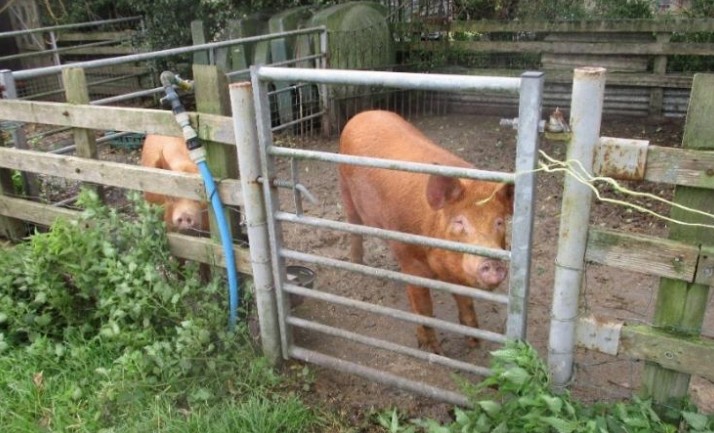
A CALL to allow a Pembrokeshire farm to keep welfare facilities to care for rare breed breeding Tamworth pigs has been given the go-ahead.
In an application to Pembrokeshire County Council, Sharron Nicolas, through agent Hayston Developments & Planning Ltd, sought a certificate of lawfulness permission for the creation of a welfare flat within a previously-approved agricultural building, plus a rear lean-to extension and the erection of two further sheds at Fairybank Fields Farm, Bethesda, near Clynderwen.
An application for a certificate of lawfulness allows an applicant to keep a development if they can provide proof of occupancy or use, without any enforcement taking place, over a prolonged period.
The previous agricultural building application was granted back in 2003.
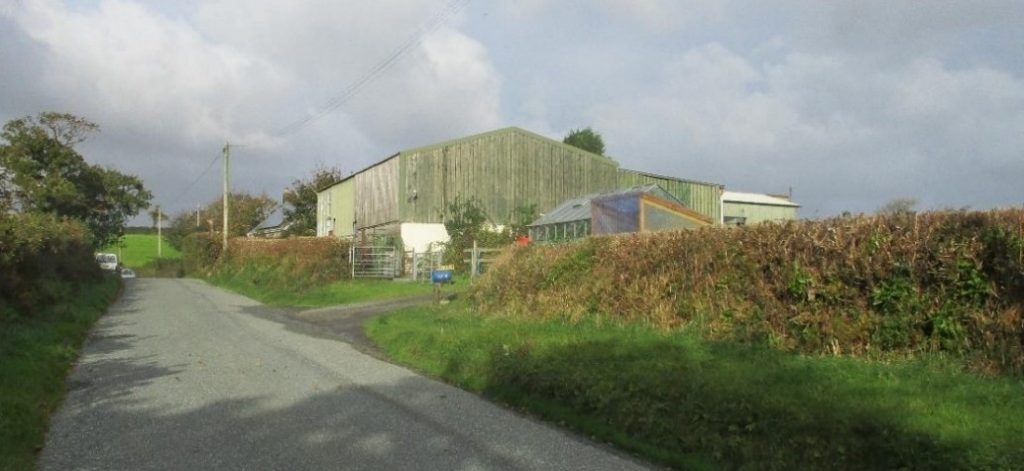
A supporting statement accompanying the application said the two-level welfare unit in the 2003-granted shed “contains the necessary elements to allow overnight stays which are essential when the pigs are farrowing.”
It added: “Mr Allan and Mrs Sharron Nicholas have been owners of Fairybank Fields since 1998. Unfortunately, Mr Nicolas died in February 2025. Although managing the farm at Bethesda, they lived at Pleasant View, Cold Blow, Narberth meaning a round trip of some 12 miles per visit – a visit which was required on a daily basis because of the need to feed and generally care for their animals – which were and still are rare breed pigs together with a number of beef cattle.
“It is essential that the pigs require continuous care when farrowing or when there are other pressures on animal health. When such occasions occurred, it was the practice of Mr Nicholas to spend the night at the farm and to use the welfare provision.”
It said Mr Nicholas would have spent approximately three months’ worth of nights (circa 90 nights) staying over at Fairybank Fields – a period of some 12 years when the bedroom above had been created to late 2024 when his brother assisted Mrs Nicholas in caring for the pigs as Mr Nicholas was too ill.
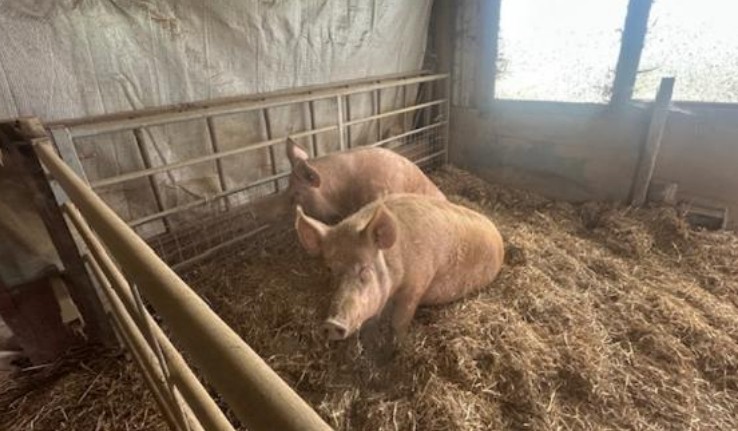
It went on to say: “Whilst the principal activity at the Farm is the breeding of the rare breed, the Tamworth Pig of which there are only currently 290 breeding sows in the UK, Mr and Mrs Nicholas also have had beef cattle on their farm and Mrs Nicholas intends to re-start that element in 2026.”
An officer report recommending approval said a site visit had been undertaken finding no evidence of the unit being occupied as a separate residential dwelling, nor as a primary residence.
It said a range of evidence was submitted in support of the application, including a detailed timeline, aerial imagery and multiple witness statements “which consistently indicate that the rear extension to Building 1 was constructed circa 2008, Shed 2 was completed in September 2012 and Shed 3 was erected in 2015”.
It said historic aerial photographs and witness statements demonstrated “on the balance of probability, that the operational development was substantially completed well in excess of four years prior to the submission of the application and has not been subject to any material interruption,” considered to be lawful by virtue of immunity from enforcement action.

It was granted approval on that basis.

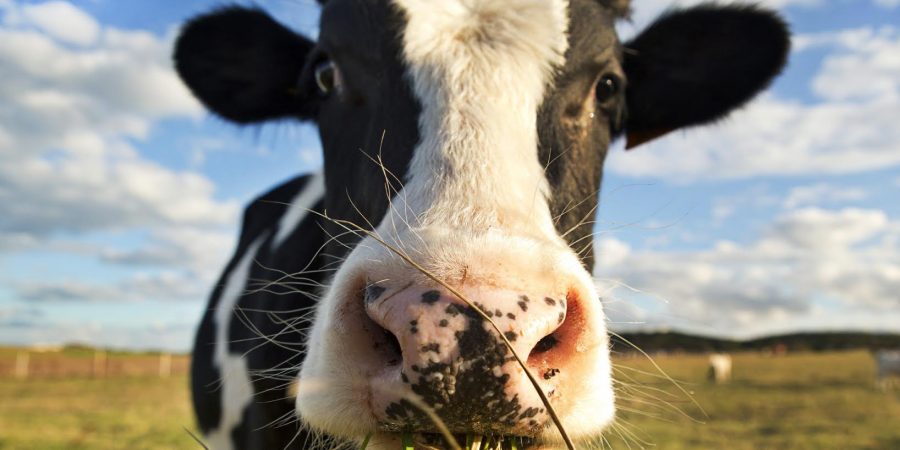
A WELSH GOVERNMENT minister has defended his approach to tackling bovine TB after being accused of lacking ambition by Conservative farming spokesman Andrew RT Davies.
Mr Davies challenged Rural Resilience and Sustainability Minister Llyr Gruffydd in the Senedd on Tuesday (Jun 23), claiming the government’s latest position contained “lots of reviews” but “little substance”.
He warned that bovine TB remained a major concern for farming communities and urged the minister to bring forward a clearer plan to eradicate the disease.
Mr Davies said: “Bovine TB is devastating for the countryside, yet for the past 20 years those in power have let rural communities down.
“Plaid Cymru ministers must get a grip of officials. They must not be allowed to curtail ambition to tackle this terrible disease.”
He added that the Welsh Conservatives would support the minister if he brought forward a “positive vision” for tackling bovine TB.
Responding, Mr Gruffydd said the government needed to wait for advice from the technical advisory group before deciding its next steps.
He said: “They have been charged with bringing forward concrete proposals on the way ahead.
“I think we wait for the experts to speak; we look at the evidence, we look at the science that they provide us, and then we get a grip and take action.”
Bovine TB remains one of the most divisive issues in Welsh farming. Farmers have long argued that the disease causes major financial and emotional pressure, while governments have faced difficult decisions over cattle controls, testing, wildlife management and disease eradication policy.
The exchange comes as farming unions continue to call for stronger measures to reduce the spread of the disease, while ministers say future policy must be guided by evidence and expert advice.
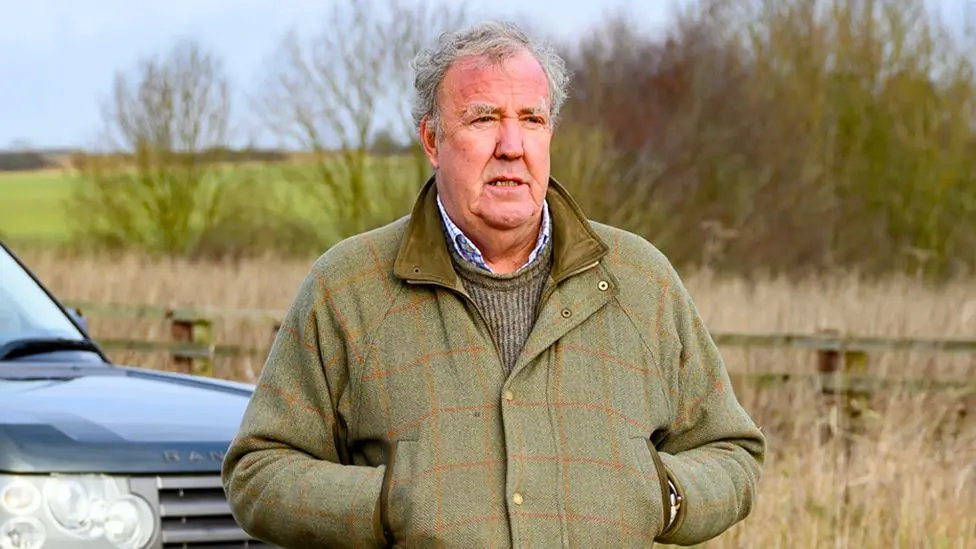
JEREMY CLARKSON’S prostate cancer diagnosis has highlighted a problem familiar to many farming families — what happens when serious illness collides with the daily demands of running a farm.
The presenter revealed in the latest series of Clarkson’s Farm that he had been diagnosed in 2025 with an aggressive form of prostate cancer. He has since confirmed that he is in remission.
But his comments about worrying that treatment would clash with a busy period on his Cotswolds farm have struck a chord with farmers across the country.
For many in agriculture, illness is not just a personal health crisis. It can also raise immediate questions about livestock, crops, machinery, bills, family income and who will carry out essential work if the farmer is forced to stop.
Bridgette Baker, a fifth-generation farmer from Montacute, near Yeovil, said the dilemma was one many farmers would recognise.
She said: “Farmers calculate how many days they would be off and think, ‘how far back in my jobs list am I going to be?’”
Miss Baker, 25, works on her family’s beef and arable farm at Windmill Farm. With no outside employees, she said covering daily duties during periods of illness could be extremely difficult.
She added: “Sometimes you’d think the priority is to get the treatment, but sometimes farmers like to put their farm first to get the jobs done.”
The issue is particularly serious in family-run farms, where the business, home and livelihood are often closely linked. A period of illness can affect not only the patient, but the whole family operation.
The Farming Community Network, which supports farming families, is working with Macmillan Cancer Support to improve help for those affected by cancer in rural communities.
The charity said farmers often faced barriers in accessing cancer services and support because of long working hours, rural isolation and the practical demands of farming.
A spokesperson for FCN said cancer could have a serious impact on a family business, especially where livestock needed immediate care or where the farm employed others.

They said: “That can have significant impacts on an individual and their families, including their housing and extended family situation or immediate welfare issues for livestock.”
Clarkson’s Farm, which launched in 2021, has become one of Amazon’s most successful factual entertainment series. It follows the former Top Gear presenter as he attempts to run Diddly Squat Farm in Oxfordshire, highlighting the financial pressures, red tape, weather problems and practical challenges facing British agriculture.
His diagnosis has now brought another farming issue into the public eye: the difficulty of putting health first when the land, animals and business cannot simply be paused.
Health charities continue to urge men to seek advice if they are concerned about prostate cancer, particularly if they are over 50, have a family history of the disease, or are at higher risk.
Farm support groups say the message is simple: farmers should not delay seeking medical help because of work pressures, and families should reach out for support before a health crisis becomes unmanageable.



Community18 hours ago
Thousands line Cardigan streets for Lord Rhys homecoming parade
THOUSANDS of people lined the streets and quayside in Cardigan on Saturday as the town marked 850 years since Lord...


Crime2 days ago
Dyfed-Powys Police rated only ‘Adequate’ in organised crime inspection
A WATCHDOG has rated Dyfed-Powys Police only “Adequate” in its response to serious and organised crime, despite praise for the...


News2 days ago
Two taken to hospital after aircraft ditches in Cardigan Bay
Coastguard helicopter spotted two casualties after light aircraft came down off west Wales coast TWO people were taken to hospital...


Sport3 days ago
Long Course Weekend gets underway in Tenby as thousands head for county
Three days of swimming, cycling and running begin with The Wales Swim at North Beach THOUSANDS of athletes and supporters...


Climate3 days ago
Welsh waters, Westminster profits: Crown Estate row reignited in Wales
PLAID CYMRU has renewed calls for the Crown Estate to be devolved to Wales after figures showed income linked to...

News3 days ago
Reform MS: ‘I felt like shouting get out of the water’
Paul Marr says children playing in streams at Pembrokeshire beaches deserve better protection from pollution risks REFORM UK MS Paul...


Health4 days ago
Senedd backs call to rule out hospital downgrades after heated NHS debate
Reform UK amendment passes as West Wales hospital fears remain central political issue THE SENEDD has backed a call for...

News4 days ago
Coastguard callout payments axe sparks fears for coastal communities
VOLUNTEER coastguards across the UK are set to lose callout payments, prompting concern over the future resilience of emergency cover...

Farming4 days ago
Rural Wales ‘left out’ of net zero debate, warns carbon entrepreneur
A WELSH carbon entrepreneur has warned that rural Wales risks being left behind in the national conversation about net zero....


Local Government5 days ago
Tenby Spectacular row continues as organisers say key question remains unanswered
Round Table says legal clarity over pedestrian access is still holding up event plan TENBY ROUND TABLE has welcomed Pembrokeshire...
-

 Crime4 days ago
Police appeal after reported rape at Young Farmers rally
-

 Crime5 days ago
Milford man threatened to smash parents’ windows, court hears
-

 Crime5 days ago
Woman sentenced over neglect of child at Haverfordwest property
-

 Crime5 days ago
Haverfordwest father stole groceries amid cost-of-living struggle
-

 Crime5 days ago
Grandmother banned after cocaine drug-drive offence
-

 Crime5 days ago
Hakin man stole Tesco goods to fund drink and gambling addictions
-

 News7 days ago
Rhun ap Iorwerth urges new deal for Wales after Starmer quits
-

 Charity7 days ago
Sea shanties and street food bring crowds to Cardigan RNLI festival