


News
Huw Edwards accused of grooming as young man speaks out

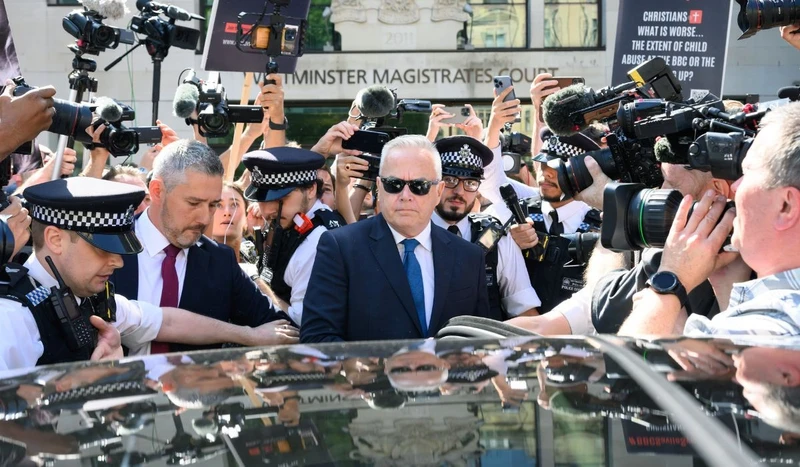
THE YOUNG person at the centre of the original allegations against Huw Edwards has now come forward, stating that he feels “groomed” by the broadcaster.
In an exclusive interview with the Daily Mirror, the young man, who claims he was paid by Edwards to send sexually explicit pictures of himself when he was a teenager, accused the former newsreader of exploiting his vulnerability. The Metropolitan Police, however, found no evidence of criminal behaviour in that matter last year.
This week, the ex-BBC presenter pleaded guilty to making indecent images of children in a separate case.
The story first broke in July last year when The Sun newspaper reported on an unnamed young person’s alleged contact with Edwards. It published a claim by his mother that Edwards—then not publicly named—had paid her child tens of thousands of pounds for explicit photos over three years, beginning when they were 17.
Initially, The Sun referred to the individual as a “young person” without specifying a gender. A few days later, the lawyer representing the young person disputed the mother’s account, saying, “the allegations reported in the Sun newspaper are rubbish” and adding in a letter to the BBC that “nothing inappropriate or unlawful” had occurred.

In his new interview on Saturday, the young man described Edwards as “an A-class manipulator”. He revealed that he had first contacted Edwards, along with other celebrities, on social media when he became homeless. The 62-year-old sent him money before asking if there was anything he would do in return.
“Although it was a friendship at the beginning, it did change. He would say things like, ‘Are you going to do something for me then?’ I needed help, so I did,” he said. “I feel like he sort of fed on my vulnerability… as he knew I needed the money. I felt like I was being groomed.”
The young man claims he sent explicit messages and videos to Edwards, who allegedly sent £35,000 over two years in return. He noted, “Because of who he was as a BBC presenter and because he had such power… I felt like I trusted him and that he cared. But that’s how the manipulation started. I looked up to this man but he didn’t really care about me. I felt like he was taking advantage of me but I felt I had to listen to him because he was Huw Edwards.”
Despite initially staying silent to protect Edwards, the young man said he felt “sick” when he heard the news this week.

The Sun also published a video of Edwards allegedly waiting for the young man at a Welsh train station, filmed by the young man’s stepfather. The stepfather told the newspaper, “I was so angry. I just wanted to confront him and tell him to stop doing what he was doing.”
Edwards was suspended by the BBC in July last year. His wife later publicly named him as the TV presenter at the centre of the allegations. The young man revealed that Edwards texted him from an unknown number last October, a few weeks before his arrest, asking him to download the messaging app Signal to “catch up.”
Edwards has not commented on the claims and resigned from the BBC in April, citing medical advice. On Wednesday, he admitted to possessing 41 indecent images of children, which had been sent to him by another man on WhatsApp. These included seven category A images, the most serious classification, two of which depicted a child aged between seven and nine.

Police later revealed that the man who sent the images to Edwards was a convicted paedophile. Until last year, Edwards was one of the main presenters on BBC One’s News at Ten and often fronted coverage of major national events. He was charged last month and could now face a jail sentence. He will next appear in court on September 16 .






LABOUR FACES HISTORIC DEFEAT AS COUNTING CONTINUES ACROSS WALES
LABOUR’S Deputy Leader in Wales has effectively conceded the Senedd election, saying the party will “not form the next government” as counting continued across the country.
Huw Irranca-Davies, Eluned Morgan’s Deputy First Minister and Rural Affairs Minister, made the candid admission on BBC Wales on Friday (May 8), in what will be seen as one of the most dramatic moments in modern Welsh political history.
He said the result was “not the end” for Welsh Labour, but accepted that the party now faced a major period of reflection over what went wrong, why its campaign failed to cut through, and how it had lost the confidence of so many Welsh voters.
Mr Irranca-Davies also said it appeared “likely” that Eluned Morgan would not return to the Senedd as a member for the new Ceredigion Penfro constituency.
If confirmed, that result would be a devastating blow for Labour and would leave the party without its First Minister in the new Welsh Parliament.
Labour MSs are expected to meet on Saturday to discuss their changed position and decide their next steps as a group.
Mr Irranca-Davies avoided a direct answer when asked whether he would seek to lead Labour in the Senedd if Baroness Morgan loses her seat.
He is widely regarded as a possible contender for the post of Presiding Officer if Labour’s final results are as poor as early indications suggest.
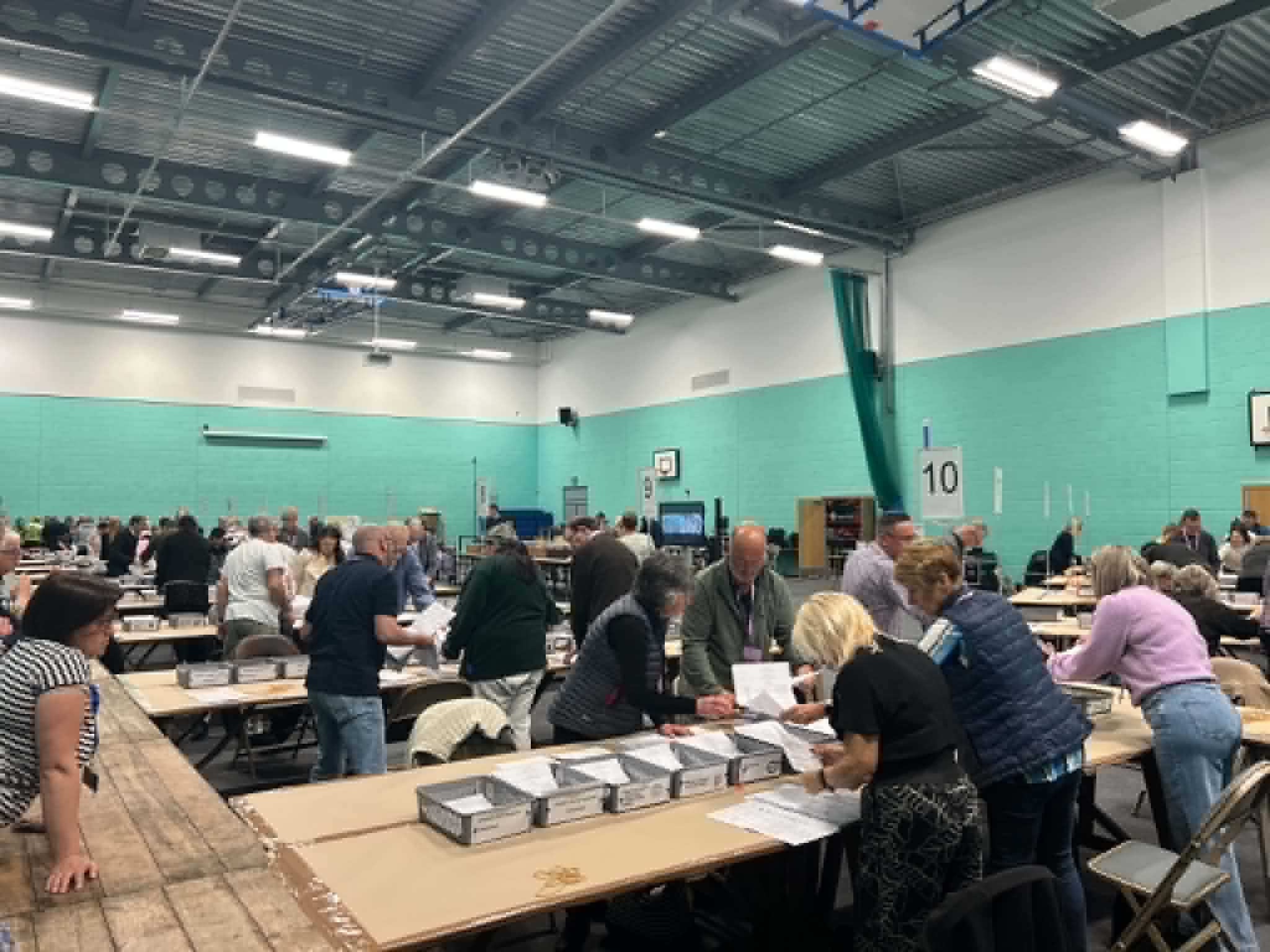
Counting began on Friday morning after voters went to the polls on Thursday (May 7) in the first Senedd election held under the new electoral system.
The old arrangement of constituency MSs and regional list members has been replaced by sixteen larger “super constituencies”, each electing six members.
The system uses the d’Hondt formula, which allocates seats proportionally according to party vote totals.
Once all votes are counted, each party’s total is divided by the number of seats it has already won, plus one. The highest remaining total wins the next seat, and the calculation is repeated until all six seats are filled.

The process has drawn criticism from some voters and commentators, who say it is difficult to understand.
Former Labour minister Harriet Harman also criticised the Welsh voting system this week, describing it as overly complicated.
However, the method was first chosen by Tony Blair’s Labour Government ahead of the first Senedd election in 1999. Welsh Labour also rejected alternatives, including the Single Transferable Vote, when the new system was designed.
Critics of the reforms say the counting method itself has received too much attention, while the more serious change has been the creation of vast multi-member constituencies, which have weakened the direct link between voters and individual elected representatives.
Labour has dominated Welsh politics for more than a century.
At every General Election since 1922, Labour has been the largest party in Wales in terms of seats won. Since devolution began in 1999, it has also been the largest party in the Senedd and has led every Welsh Government.
As recently as June 2024, Labour won 27 of Wales’s 32 Westminster seats.
But that record appeared to count for little as voters went to the polls this week, with early briefings suggesting Labour had suffered serious damage in both its traditional heartlands and in West Wales.
As polls closed on Thursday night, Labour figures were already briefing broadcasters about the scale of the reverse.
One report suggested the party’s performance in the South Wales Valleys had been disastrous, while the BBC later reported that a senior Labour source had described results in West Wales as “bloody” and “challenging”.
At this stage, however, the full picture remains unclear.
It is also possible that Labour figures have deliberately played down expectations, in the hope of presenting anything short of total collapse as a better result than feared.
If the opinion polls and early indications prove accurate, Plaid Cymru and Reform UK could emerge as the largest forces in the next Welsh Parliament.
Such a result would represent a political earthquake in Wales and could bring an end to Labour’s unbroken control of devolved government.
MORE TO FOLLOW
Wales waits for results as first election under new voting system reaches count stage
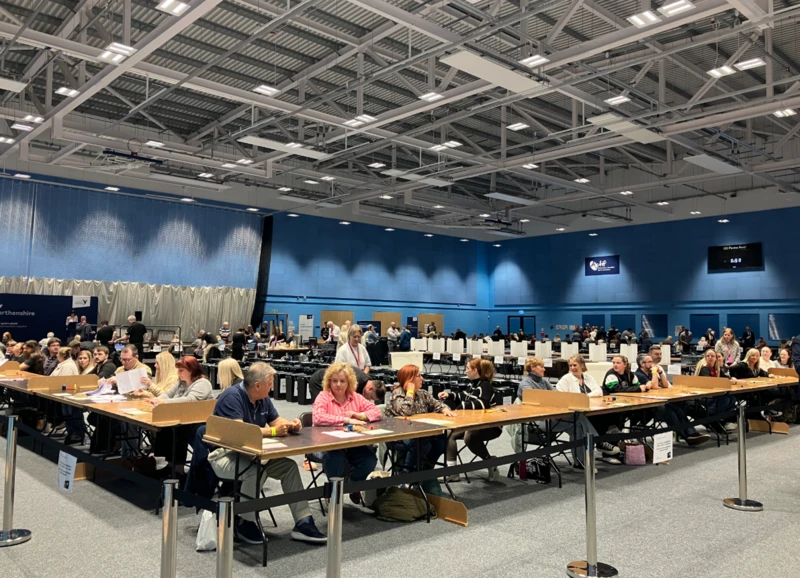
COUNTING is underway across Wales today as voters await the results of one of the most important Senedd elections since devolution.
Ballot boxes were opened this morning after polling stations closed at 10:00pm on Thursday (May 7), with all 16 new Senedd constituencies now counting votes under a completely changed electoral system.
For the first time, Wales is electing 96 Members of the Senedd, up from 60, with six MSs to be returned in each constituency.
Voters had one ballot paper and one vote, choosing a party or independent candidate rather than voting for an individual constituency candidate and a regional list, as happened under the previous system.
Seats will be allocated using the D’Hondt method, meaning the final results in each area may depend on narrow margins between parties.
The new system has also created new political battlegrounds, including Ceredigion Penfro, which brings together large parts of Pembrokeshire and Ceredigion.
Locally, attention will be on how Labour, Plaid Cymru, the Conservatives, Reform UK, the Liberal Democrats, Greens and independents perform in what has been one of the most unpredictable elections in recent Welsh history.
The election comes at a critical moment for Welsh politics, with Labour seeking to retain its long-standing dominance in Cardiff Bay, Plaid Cymru hoping to make major gains, Reform UK looking to break through, and the Conservatives fighting to hold ground after a difficult period nationally.
Because each constituency elects six members, the count is not simply a case of declaring one winner. Officials must calculate how many seats each party has won, and then allocate those seats to candidates in the order they appear on party lists.
That means list position is crucial. If a party wins one seat, its first-placed candidate is elected. If it wins two, the first two names on its list are returned.
Results are expected throughout Friday, although close contests and possible recounts could delay some declarations.
The outcome will determine not only who represents Wales in the next Senedd, but also who is best placed to form the next Welsh Government.

More to follow as results are declared.
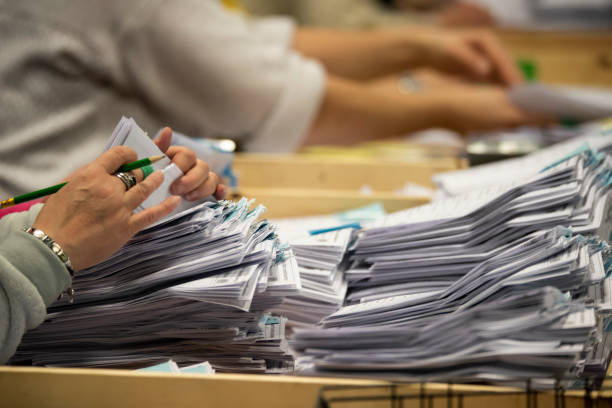
Political sources warn tiny vote differences could decide final seats under Wales’ new proportional voting system, with fears of inconsistent recount decisions across the country
QUESTIONS have been raised over how recounts will be handled in Wales’ first Senedd election using the new six-member proportional voting system, amid fears that tiny vote differences could decide the final seat in some constituencies.
Under the new arrangements, Wales has been divided into larger multi-member constituencies, with six Senedd Members elected in each area using the D’Hondt system of proportional representation.
Political sources have expressed concern that the current Electoral Commission guidance may not adequately address situations where the allocation of the sixth and final seat could hinge on very small differences in party vote totals.
One political source, who asked not to be named, said the issue was not about the competence or integrity of Returning Officers, but about the lack of detailed public guidance surrounding recount decisions under the new system.
They said: “In some constituencies, the final seat may come down to a very narrow margin once the D’Hondt calculations are applied, even if no party’s overall vote total appears especially close in traditional terms.
“The concern is that there appears to be no clear guidance about how close the contest for the final seat needs to be before a recount is granted.”
The source warned that without clearer guidance there could be inconsistencies across Wales, with recounts potentially being allowed in one constituency but refused in another despite similar margins.
Electoral Commission guidance currently states that Returning Officers must be satisfied vote totals are accurate before producing a provisional result and that candidates and agents are entitled to request recounts.
However, the guidance also makes clear that Returning Officers may refuse recount requests if they consider them “unreasonable”.
The Electoral Commission said the existing rules already provide a framework for openness and transparency during the counting process, with candidates and agents allowed to inspect ballot bundles and challenge provisional results before declarations are made.
The guidance also confirms that more than one recount can take place if Returning Officers believe further recount requests are justified.
But critics argue that Wales is entering untested territory with the new electoral system, where relatively small shifts in vote totals could alter the final seat allocation after D’Hondt calculations are completed.

The Senedd election is the first to use the new system, which replaces the previous arrangement of constituency and regional members with fully proportional six-member constituencies across Wales.
This story was first reported by Nation.Cymru, you can read their report here.


News2 hours ago
Labour deputy says party ‘will not form next Welsh Government’
LABOUR FACES HISTORIC DEFEAT AS COUNTING CONTINUES ACROSS WALES LABOUR’S Deputy Leader in Wales has effectively conceded the Senedd election,...

News3 hours ago
Counts underway in historic Senedd election
Wales waits for results as first election under new voting system reaches count stage COUNTING is underway across Wales today...


Charity20 hours ago
Chief’s Tour honours fallen officers with 75-mile Pembrokeshire ride
Dyfed-Powys Police team raises thousands for bereaved police families charity A TEAM of officers and staff from Dyfed-Powys Police cycled...


Crime23 hours ago
Racial abuse suspect barricaded himself inside Johnston lodge
ARMED police were called to a supported accommodation building in Johnston after a man allegedly barricaded himself inside a room...

Crime24 hours ago
Milford Haven woman denies causing suffering to cat
Jury hears evidence over alleged failure to seek treatment for tumour A MILFORD HAVEN woman has denied causing unnecessary suffering...


News2 days ago
Plaid Cymru projected to lead Senedd as Labour faces historic collapse
Final poll suggests Welsh politics could be on the brink of a major realignment PLAID CYMRU is on course to...

Community2 days ago
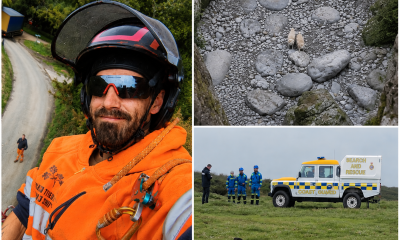
Rescue bid planned for lambs stranded below Stack Rocks cliffs
Tree surgeon preparing 150ft descent after live firing delayed rescue attempt A MAJOR rescue operation is being planned this afternoon...

News2 days ago
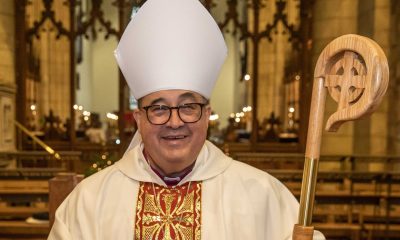
Bishop’s report reveals major renewal challenge at St Davids Cathedral
Formal Visitation highlights financial, structural, leadership and spiritual pressures at one of Wales’ most important religious sites ST DAVIDS CATHEDRAL...


Crime3 days ago
Farming company fined £19,000 for damaging protected wildlife site
A CARDIGAN farming company has been ordered to pay almost £20,000 after recklessly damaging a Site of Special Scientific Interest....


News3 days ago
Baby in critical condition after Fishguard emergency
Teenagers arrested as police investigate circumstances A BABY remains in hospital in a critical but stable condition after being taken...
-
News3 days ago
Baby in critical condition after Fishguard emergency
-

 News2 days ago
Former housing officer admits drink-driving in Pembrokeshire retail park
-
 Crime2 days ago
Job loss threat for convicted Pembrokeshire drug-driver
-
 Crime2 days ago
Milford motorist disqualified for drug-driving
-

 Crime2 days ago
Police tip-off leads to driving ban for Milford motorist
-
Crime23 hours ago
Racial abuse suspect barricaded himself inside Johnston lodge
-
 Crime2 days ago
Delivery driver caught twice over legal drink-drive limit
-

 Community2 days ago
Sixth-former firefighter balances schoolwork with saving lives