


Business
The past, present and future possibilities for Swansea Airport

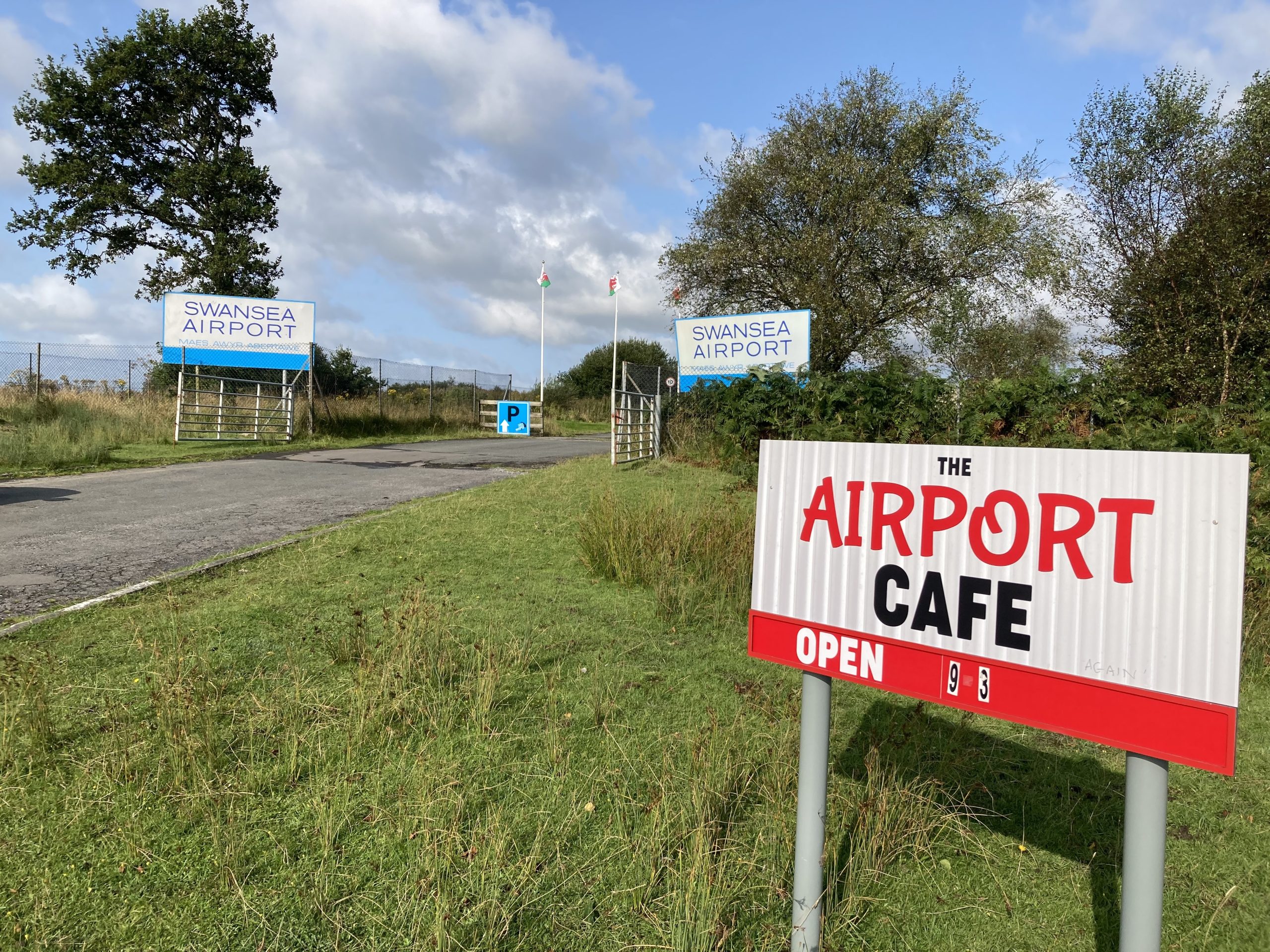
SWANSEA Airport is turning a page shortly after a bumpy period which looked like it was heading to the courtroom.
Swansea Council, which owns but doesn’t run the airport, was taking steps to end the lease held by the current operator – citing a “range of issues” – when it announced at the beginning of August that the operator had agreed to relinquish it. A group representing users of the 450-acre Gower site is to take it over on a temporary basis.
Although court action was avoided there has been frustration on many sides – and in some cases still is – and a question mark lingers over the future of staff who work there currently.
Equally several people who have spoke to the Local Democracy Reporting Service have expressed their wish to look ahead and maximise what the Fairwood Common facility has to offer.
There aren’t many airports where pilots can soar above an area of outstanding natural beauty in largely unrestricted airspace surrounded on three sides by a coastline like Gower’s. The majority of aircraft which took part in last month’s Wales National Airshow refuelled there, and on the morning of August 23 six tradesmen were ordering breakfast at the reopened airport cafe.

Thousands of people will have fond memories of flights over the Bristol Channel or learning to fly in gliders as air cadets. Gower councillor Richard Lewis recalled arranging a half-term flight many years ago to Swansea from Taunton, Somerset, where he was at school at the time.
“There was a rail strike, so I organised the flight,” he said. “There was me and eight of my friends from the Swansea area. It was fantastic.” In later years he and a fellow councillor flew from the airport in a Lancaster bomber, and while serving as Lord Mayor of Swansea he and his daughter Francesca were taken up in a pair of gliders. “Fabulous,” he said.
There have been attempts over the years to run commercial passenger services from Swansea Airport – most latterly by Air Wales which flew to London City, Dublin, Jersey and Amsterdam – but demand wasn’t strong enough. The current operator, Swansea Airport Ltd, whose director Roy Thomas owned and subsidised Air Wales, announced plans in January last year to start a passenger service to Exeter but they didn’t come to fruition.
Swansea Council said is predecessor council was gifted the airport site and its land in 1938 and that the airfield was run by the authority until around 35 years ago except during the Second World War. The council said it didn’t have the in-house expertise to run such a facility. “Running an airport is a specialised activity, one that’s not within the core business of a council,” said a spokesman.
According to heritage website Coflein, the airfield was used by the RAF for Hurricane, Beaufighter and Spitfire squadrons from June 1941 onwards, ceasing in this capacity three years later when it become a training base solely. The airfield was targeted by enemy bombers, said the website, with one unexploded 1,000lb device apparently remaining in-situ until 1976 when it was extracted and taken to Whiteford Point, North Gower, for detonation.

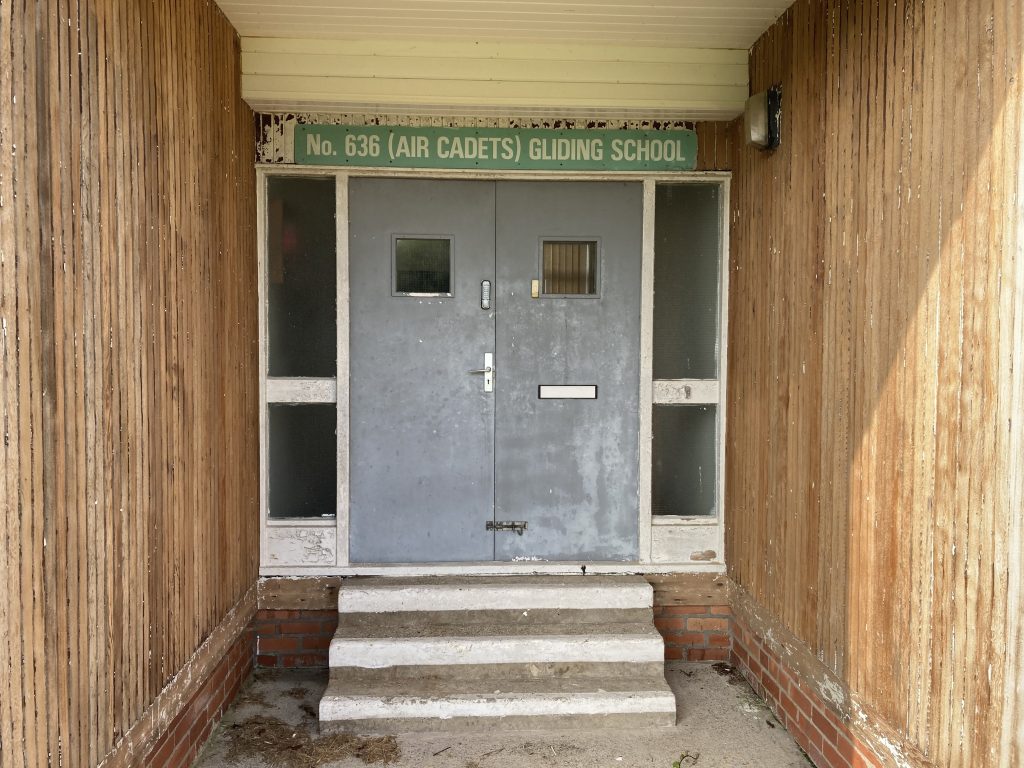
After being decommissioned by the RAF the airfield went on to be used by private pilots, flying clubs and occasional fare-paying passenger services run by Cambrian Airways and, for a three-year period up to 2004, Air Wales. Wales Air Ambulance and RAF 636 air cadets glider squadron also had bases there.
The airport and its two runways are home now to two flying schools, a skydiving business and around 20 pilots, plus visitors flying in from elsewhere.

The soon-to-be-installed operator, Swansea Airport Stakeholders’ Alliance, said it wanted to support current users and safely operate the airport seven days a week, talk to potential investors, and offer opportunities to the community. An alliance spokesman said such opportunities could include buildings being available for community use, work experience for people with physical or learning disabilities, an expanded catering offer, and potentially a creche serving Gower.
He said there was no plan for commercial flights, partly because the Civil Aviation Authority (CAA) licence permitting these was suspended and did not transfer with the lease. The current aviation activities can take place without a CAA licence but the alliance stressed it would abide by CAA regulations.
Alliance members have visited small airports which have grown their business such as Sandown, Isle of Wight, and Sleap airfield, Shropshire. “Sandown had around the same number of movements 10 years ago when the current operator took over as we do now at Swansea – it now has almost 12 times as many,” said the alliance spokesman. “There are facilities for the local community. The place is buzzing.”
He added: “Sleap is an enormous success after being rescued. A hundred or more small aircraft go there for an event with folk bands and a barbecue. People are saying to me, ‘Why can’t we do that?’ Well, we can. We have to provide people with a reason for coming.”
The alliance has previously submitted a business plan to the council, and said it would work with the authority’s events team with a view to hosting events. But the spokesman said there would be no change of use of the land – for example house-building on part of it. “It’s legally, politically and practically impossible,” he said.
Asked about the staff currently working there, the spokesman said he sympathised with them but that he couldn’t say for sure what would happen until the alliance took over. He said there would have to be certain key roles filled such as airport manager and head of safety. He added: “We are also in the process of drawing up a revised scale of charges, but we’re not planning substantial rises.”
Phil Thomas, the airport’s current manager, said he was brought in by leaseholder Roy Thomas in March last year following a critical CAA audit which identified a “systemic failure of safety management”. Phil Thomas in turn brought in Peter Beales, operations manager, and with the small team of staff he said they’d successfully addressed all the most serious safety concerns and the majority of the less serious ones. He said the licence suspension was voluntary and that he felt the airport had done what it needed to address the outstanding matters, describing the situation as “immensely frustrating”.
Swansea Airport Ltd said the team had also brought an additional hangar into use, introduced an effective self-service fuelling system, increased the number of visiting aircraft, and made preparations for the reintroduction of grass runways. Phil Thomas said at least £20,000 had been spent on the airport’s fire appliance this year alone. He said the airport was staffed five days a week and that it operated on the other two, although pilots had to sign disclaimers on those days if they wanted to use it.
“This place has had its ups and downs,” he said. “It can be disheartening, but then you have days like the air show when 75% of the aircraft came here for fuelling and parking, and the place changes. I think all our staff are very professional – the rescue and fire-fighting guys are top drawer.”
He added: “We have worked with the alliance towards a safe transition. All we want it is a well-run airport which is operated safely, regardless of whose name is above the door.”
Operations manager Mr Beales said: “We would like to remain in-situ regardless of who’s taking it over, but we are passionate about the airport succeeding.”
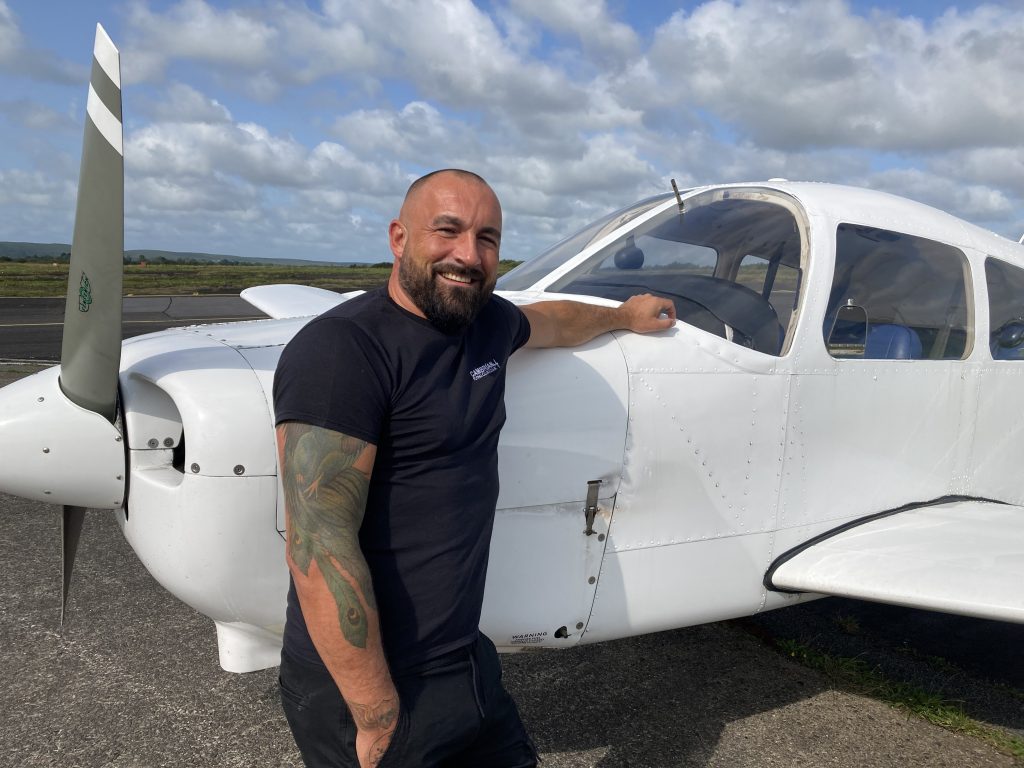
Cambrian Flying Club has been based at the airport since 2009, offering flight training, hobby flying and flight experiences for the public. It has three two-seater and one four-seater aircraft. Operations manager Ben Clyde said the training provided was the “first rung in the ladder” towards a commercial pilot licence and that former trainees now flew planes for British Airways, Cathay Pacific and Ryanair, among others.
Mr Clyde said the company was started by his father and that he’d picked up the aviation bug as a boy, travelling to air shows. The 42-year-old took the family firm over around four years ago having worked as a business manager and building inspector, among other things. “We’ve currently got just under 150 students on our books,” he said. “It’s for all ages – we’ve got a 14-year-old up to people in their 90s.”
Mr Clyde said the club was part of the alliance and that he hoped the airport would become busier. Ideally he’d like to provide the next level up in commercial flight training. “I’m sure we can make a go of this,” he said.
Karl Nicholson, flight instructor at microlight outfit Gower Flight Centre, which also operates from the airport, said it had more than 100 learners on its books. “We all want a safe and thriving airport,” he said.
Carl Williams set up Skydive Swansea at the airport 18 years ago, building it up and eventually buying a plane worth more than £1 million. “It was the scariest signature I have ever put on paper,” he said. The company has since been acquired by a business called Go Skydive, with Mr Williams managing the Swansea operation on its behalf. Looking ahead to the alliance takeover, he said security of tenure was key. “Go Skydive are in a very good position going forward,” he said.
For Lisa Winter, co-owner of the airport cafe, the future feels very uncertain. She said she started working with leaseholder Roy Thomas last summer on plans to reopen the cafe, including a kitchen redesign. “We opened in May (2024), were closed for a brief period due to a plumbing problem, and re-opened again in July,” she said. “We have been building things up, and it’s starting to get really busy.”
The not-for-profit alliance said it intended to work towards reinstating the suspended CAA licence and would apply for a long-term tenancy when the council launched a competitive tender process at some point in the future.
Speaking earlier this month, Roy Thomas said he would also bid for a long-term lease when the opportunity arose. He has repeatedly said he has ploughed significant sums of money into the airport since he took it over in the early 2000s. “I took it from dereliction to a stage where it’s got a bright future,” he said. Mr Thomas said he’d never taken a salary, and he reiterated his call for an inquiry into the process which had led to the current turn of events.
Cllr Lewis said he wished the best for the airport. “I think there are opportunities,” he said. “My view is that there could be a small caravan site linked to it.”


PLANS for a new showroom for a Pembrokeshire car dealership which has recently acquired a new Isuzu vehicle franchise, have been given the go-ahead.
In an application to Pembrokeshire County Council, Gareth Hughes Motors of 25 Burton Road, Sardis, through agent Hayston Developments & Planning Ltd, sought permission to replace a temporary canopy with fixed permanent mini-showroom.

A supporting statement said: “Gareth Hughes Motors is a family run enterprise, established in 1982. In order for the business to respond to the latest technological advancements, especially those related to the transition to hybrid and electric vehicles, additional space and different resources will be required.
“Approval of this application will assist in the delivery of these required resources, associated staff training and recruitment for the servicing of electric vehicles will also lead to the retention and provision of skilled employment.”
It says the extension will be designed to allow sufficient space to display Isuzu vehicles, an additional motor franchise recently acquired by the dealership, with no changes proposed to the existing access from the C3007 as the mini-showroom would take place to the rear of the site and replace an existing canopy structure.
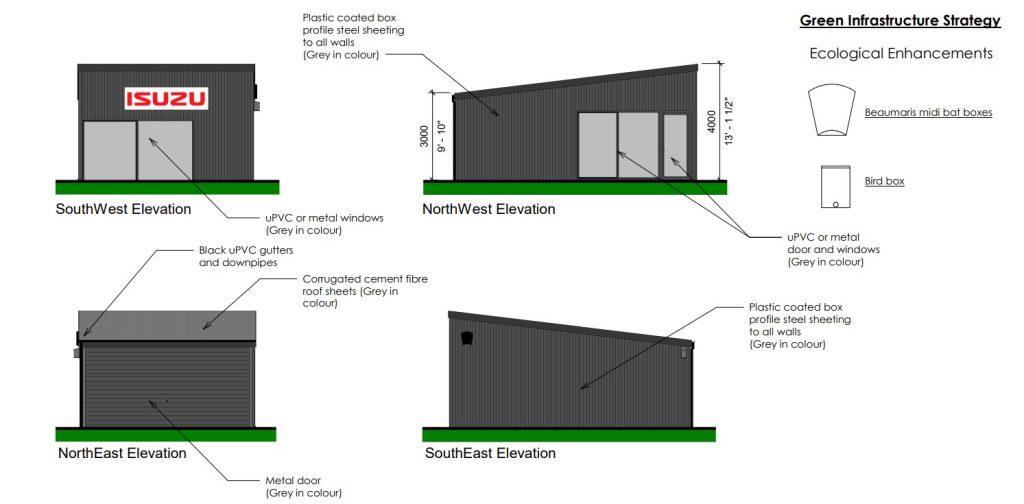
It added: “The environmental impacts from the proposal are minimal as the replacement structure takes place on a concreted/bitumac surface which is currently used for the parking of cars. In addition, the design and use of materials complements that of the current showroom and repair shop and by the addition of a bird and bat box on the south-east of the proposed extension.
“The proposed new mini-showroom will accommodate a maximum of two vehicles and would take place to the rear/side of the site and would be constructed in materials which complement those of the existing showroom and service bays.
“Although Gareth Hughes Motors is located within a group of residential properties it is considered that there will be no significant negative impacts on those neighbouring properties because of their distance from the application site, the orientation of the buildings.
“The securing of an additional franchise at this Sardis site will both help secure the future of the existing staff and create opportunities for additional employment in the motor trade.”
The application was conditionally approved by county planners.
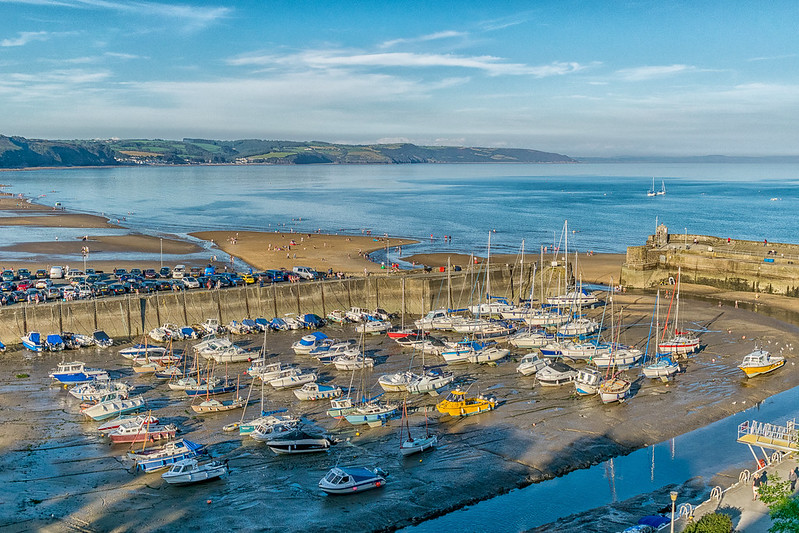
PLANS for what could have been the third store in the country for Welsh cheesecake business The Cheesecake Guy Ltd at Saundersfoot’s Coal Building interpretation centre have been withdrawn.
In an application to Pembrokeshire Coast National Park, Craig Taylor of Merthyr Tydfil-based The Cheesecake Guy Ltd sought a change of use of part of Saundersfoot’s Cambrian Terrace Coal Building interpretation centre to create a small retail unit.
On its website, The Cheesecake Guy says of its business and products: “Established in 2019, The Cheesecake Guy is all about delivering indulgent, handcrafted cheesecake desserts with a twist. While we offer a range of sweet treats, our specialty — and customer favourite — is the signature cheesecake jar.
“Made with quality ingredients and packed with rich, creamy layers, our jars are the perfect dessert for any occasion. Whether you’re treating yourself or sharing with others, The Cheesecake Guy brings a spoonful of happiness to every bite.”
While no supporting statement was published for the Saundersfoot proposal, the application said the scheme, if approved, would employ two full-time members of staff, operating 10am-6pm Mon-Sat, and 10-5 on Sundays and bank holidays.
Of the scheme itself it said it would involve “retail sales of pre-prepared desserts and merchandise,” adding there will be “no on-site manufacturing or heavy processing,” with “equipment limited to display fridges and freezers”.
If approved, the Saundersfoot site would have been the third outlet for The Cheesecake Guy, with sites in Merthyr, and, more recently, Newport Market.
For its Newport site, The Cheesecake Guy says: “We specialise in creating a wide variety of cheesecake desserts that cater to all tastes. Our menu features popular favourites that have won the hearts of many, alongside exciting new creations designed to keep your taste buds satisfied.
“Whether you’re a classic cheesecake lover or an adventurous foodie, we promise a cheesecake experience like no other. Each cheesecake is made with the utmost care, ensuring a rich, creamy texture and a burst of flavour in every slice (or jar!).”
Since the application was submitted, Saundersfoot Community Council objected “on the basis that the harbour is diluting the original intention of this area, which was designed to be an educational section of the development”.
The application is now, as of June 19, marked as withdrawn.

AN AMENDED scheme for a children’s care home on the edge of Fishguard has been approved after a previous call was refused.
In an application to Pembrokeshire County Council, Martin Leahy of Ty Caredig Ltd sought a certificate of lawfulness permission for the use of a dwellinghouse to a residential care home for up to two children at Bryn Delyn, Y Fraich, Fishguard.
Last November, a similar call to allow Bryn Delyn to be used as a children’s home, which raised fears from local objectors the scheme was being ‘rubber stamped’ by the council, was refused.
In that application to the council, Cardiff-based Ty Caredig Ltd sought permission for a Certificate of Lawfulness on the basis the use was not materially different from the property’s existing lawful use.
Residents had accused the council of “pushing through a highly controversial children’s home application behind closed doors”.
A supporting statement for that scheme, with many redacted parts, said the four-bed property had a lawful use as a dwelling house; saying the use as a care home did not require planning permission through a change of use.
However, planners said the use of the dwelling as a care home “would represent a material change of use requiring the benefit of planning permission”.
Since then, amendment to the scheme, for a lawful change of use was submitted, a supporting statement saying Ty Caredig Ltd operates homes throughout Wales that provide specialist care for children, the latest scheme “seeks formal confirmation that the proposed use of Bryn Delyn as a children’s care home for up to two children (plus care staff) would not require planning permission”.
Fishguard Town Council objected, on the grounds of highway safety and parking issues.
It also raised points of “apparent discrepancies between the planning application and the information available on the website,” but stressed it did support provision of suitable accommodation for vulnerable young people and children “with the correct infrastructure in place”.
Local county councillor Cllr Par Davies has said the scheme has her “full support,” as did the certificate call, adding: “Rumours abound regarding this application with objections concerning the usage of the property as a care home for young people. The application states that only two young people would be cared for in the property.
“This type of property is needed as we often talk as councillors for the need for Pembrokeshire children in care to remain in Pembrokeshire instead of the alternative of moving them to other areas in the country and this application fulfils that need.”

The application was approved by planners, the approval stating “Based on the information submitted and on the balance of probability it is considered that the use of the property as a residential care home for up to two children would not result in a material change of use from the lawful use of the property as a dwellinghouse and as a result a certificate of lawfulness for a proposed use should be granted.”



Charity22 hours ago
Toy Story fans fill charity toy box at Haverfordwest cinema
Donations pour in for SNAP Specialist Play as families embrace Toy Story 5 launch A TOY STORY-themed charity appeal at...


Community1 day ago
Lord Rhys emerges from the mist in St Davids
Giant puppet begins historic journey marking 850 years since the first Eisteddfod MIST swirled around St Davids Cathedral on Friday...

News2 days ago
Tragic tribute paid to Haverfordwest man after A4075 collision
FAMILY REMEMBERS “KIND AND LOVING” CALLUM HANSON THE FAMILY of a 22-year-old man from Haverfordwest who died following a road...

News3 days ago
Motorcyclist, 22, dies in A4075 crash in Pembrokeshire
A 22-year-old woman remains in hospital after two-vehicle collision A MOTORCYCLIST has died following a serious two-vehicle crash on the...

Community3 days ago
Why police will be visiting every home in Pembrokeshire
New operation aims to knock on more than 257,000 doors across Dyfed-Powys over the next three years DYFED-POWYS POLICE has...


Crime3 days ago
Prisons at breaking point: MPs warn Wales is paying the price of a failing system
Frozen healthcare budgets, overcrowded jails, homelessness on release and mounting pressure on staff are undermining rehabilitation across Wales, according to...


News4 days ago
Brexit at 10: How Britain was sold a dream that cost us dearly
A decade after the referendum, the promised benefits remain hard to find while the economic costs are increasingly difficult to...


Crime4 days ago
Worcestershire man jailed after violent attack on woman in Tenby
Defendant was already serving a suspended sentence when serious assault took place A WORCESTERSHIRE man has been jailed for more...


Climate4 days ago
Offshore wind ‘could bring new generation of jobs to Milford Haven’
Pembrokeshire ports and Celtic Sea projects placed at centre of Wales’ green energy ambitions MILFORD HAVEN and Pembroke Dock could...

Community5 days ago
Police officer hailed hero after midnight sea rescue in Milford Haven
PC swam 100 metres offshore to save distressed woman heard calling for help in darkness A DYFED-POWYS POLICE officer has...
-
 Community7 days ago
Pembrokeshire Chess Club crowned Welsh champions
-

 Crime3 days ago
Milford Haven man jailed for breaching domestic violence protection order
-

 Local Government5 days ago
Security privately arranged by Mayor at Beating of the Bounds
-

 News3 days ago
Crash on Freeman’s Way causes school-run chaos across Haverfordwest
-

 Crime5 days ago
Man wanted by court after failing to attend hearing over alleged shop thefts
-
 Crime5 days ago
Man banned from roads after drink-driving offence
-

 Crime5 days ago
Man jailed after admitting strangulation and assaults
-
 Crime5 days ago
Man sentenced over stalking campaign and lock knife offence