


Business
HMRC investigations into large UK businesses hit five-year low


The number of large UK businesses under investigation by HMRC for potential tax underpayment has dropped to a five-year low, with only 790 companies investigated in 2022-23. This significant decline has prompted questions about HMRC’s strategy and resource allocation in enforcing tax compliance among the UK’s largest corporations.
Decline in investigations amid resource constraints
Historically, HMRC has investigated about half of Britain’s 2,000 largest companies at any given time. However, recent data shows a steady decline in these probes, with 820 companies investigated in 2021-22, down from nearly 1,000 in 2018-19.
Several factors have contributed to this decline. The COVID-19 pandemic temporarily paused some investigations as HMRC redirected resources to more urgent issues. Additionally, ongoing resource constraints and a shortage of skilled investigators have compounded the challenge, especially given the complexity of large business tax cases.
Despite these challenges, HMRC has prioritised high-value cases to boost tax recovery. This targeted approach, aided by technology, helps HMRC maximise the impact of its limited resources, even with fewer investigations. Businesses can maintain compliance by using tools like HMRC approved payroll software, which ensures accurate and timely tax reporting.
Increased compliance yields
Despite the decline in investigations, HMRC has seen a significant rise in compliance yields—the tax revenue recovered due to compliance efforts. In 2023-24, the yield increased by £1.6 billion compared to 2018-19, reaching £11.4 billion. This growth highlights HMRC’s focus on high-value cases with substantial tax recovery potential.

Tax experts generally agree with HMRC’s reasoning for the decline in investigations, acknowledging that the agency is using its resources more effectively. Additionally, investigations are being completed faster, with the average inquiry now taking 21 months, down from 36 months the previous year.
Future outlook and legislative impact
Looking ahead, analysts anticipate an increase in investigations during the current parliament, especially with the Labour Party’s plan to invest an additional £855 million annually into HMRC to tackle tax avoidance.
The “notification of uncertain tax treatments” law, introduced in April 2022, is expected to impact future investigations by requiring large businesses to inform HMRC of uncertain tax positions. This enables HMRC to better target its efforts, aiming to further reduce the legal interpretation tax gap, which has already decreased from £6 billion in 2019-20 to £4 billion in 2022-23.
Conclusion
Despite the decrease in the number of investigations, HMRC’s refined approach has proven effective in increasing tax compliance among large UK businesses. With additional funding and new legislation in place, the agency is poised to continue improving its oversight and ensuring that large businesses pay their fair share of taxes.




LABOUR SAYS MINISTERS MUST EXPLAIN COST AND TIMETABLE FOR PYLON PLANS
PLAID CYMRU’S approach to energy infrastructure has come under scrutiny after Energy Minister Adam Price was challenged over plans to reduce the use of overhead pylons in Wales.
Mr Price defended the Welsh Government’s position during an appearance on BBC Radio Wales’ Sunday Supplement, arguing that communities must have greater confidence in how major grid projects are handled.
Plaid Cymru has pledged to give communities a stronger voice over energy developments and to look more closely at alternatives to overhead transmission lines, including underground cabling where possible.
The issue has become increasingly sensitive in rural parts of Wales, where proposed pylon routes linked to renewable energy schemes have raised concerns about landscape impact, tourism and local consultation.
However, Welsh Labour said the minister had failed to explain when any restriction on pylons would take effect, or who would pay the additional cost of placing cables underground.
A Welsh Labour spokesperson said: “Adam Price keeps saying how clear their manifesto was and yet he won’t say when they’re banning pylons. They won’t say who is paying for the extra cost of undergrounding cables.
“Without certainty, companies won’t invest. That’s thousands of clean, green energy jobs at risk. Plaid need more than a plan to have a plan.”
Labour said the Welsh Government must now set out how its policy would work in practice, including whether it amounts to an outright ban, what exemptions would apply, and how any extra costs would be funded.
The debate highlights the challenge facing ministers as Wales seeks to expand renewable energy generation while addressing public opposition to large-scale grid infrastructure.

A CALL by a Pembrokeshire shooting club for more disability-friendly facilities has been given the go-ahead by county planners.
In an application to Pembrokeshire County Council, Haverfordwest Target Shooting Club, through agent Andrew Sutton Architecture, sought permission for an extension to existing target shooting club building at The Firing Range, Withybush Road, Haverfordwest to improve accessibility and internal facilities, together with associated landscaping works.
A supporting statement said: “The club’s own published history states it was founded in 1968, moved from the Drill Hall to the old wartime airfield butts at Withybush by the early 1970s, and had developed facilities over time, including the clubhouse by 1999. The established leisure/community use has existed on the site for a number of years and the proposal does not seek to intensify the core activity beyond that already authorised/established.”
It added: “The primary objective of the scheme is to improve inclusive access to the club’s facilities for disabled users and those with reduced mobility. The internal arrangement will provide adequate entrance and lobby space, clear accessible routes and appropriately designed sanitary accommodation, including an accessible wetroom/shower and separate WC.”
It also said accessible parking and surfacing designed to provide a firm, even, slip-resistant route from parking to the principal entrance.
It added: “The Equality Act 2010 places duties on service providers to make reasonable adjustments so that people with additional access needs are not placed at a substantial disadvantage.
“The proposal is therefore a positive enhancement to a community/leisure facility and supports wider policy objectives for inclusive environments.”
It went on to say: “The club operates within a highly controlled environment, and the proposed works will maintain and enhance safety and security measures.”
The application was conditionally approved by planners.
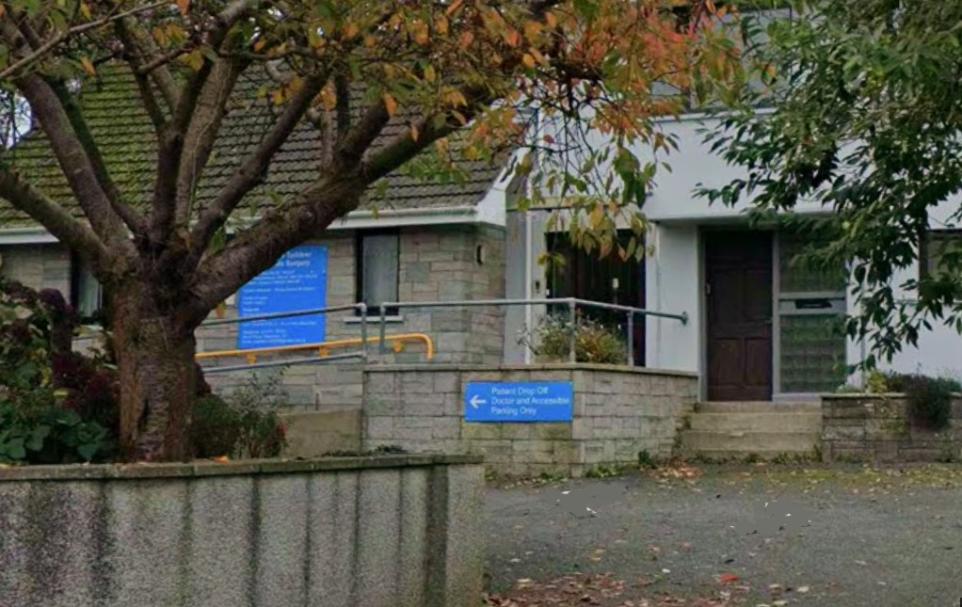
PLANS to convert a former GP surgery in Pembrokeshire’s only city to a home and holiday let have been lodged with the national park.
In an application to Pembrokeshire Coast National Park, Alice and Danjal Joensen, through agent Oochitecture, seek permission for a change of use of the ground floor of the former GP surgery, Eryl Mor, 36, New Street, St Davids, merging with the existing first-floor apartment to create a larger single dwelling house, along with the creation of an attached short-term holiday let.
The GP surgery is currently vacant, following its closure in October 2024 after new partners could not be secured.

A supporting statement says, prior to being a GP surgery, the two storey element was a single dwelling house.
It adds: “The house would consist of an open plan kitchen-living space to the ground floor, along with a study, lounge and utility room. The first floor includes four double bedrooms with ensuite and main bathroom.
“The new unit of accommodation would form a holiday-let with two double bedrooms, shower room, and an open plan kitchen-living space.
“The GP surgery is currently vacant, following its closure in October 2024 after new partners could not be secured, therefore the proposed change of use will provide a viable long-term future use for the property.”
It says minimal external alterations are proposed to the property with existing entrances utilised for both the main house and holiday-let, adding: “The existing concrete ramp to the front elevation will be retained with proposed works including extending the upper level and steps to provide a connection to the front door, allowing for accessible entrance to the property.
“There will be no changes to vehicular or pedestrian access, with the site continuing to be accessed via the existing entrance from New Street. Parking will be provided for the main house and holiday-let on the existing tarmac driveway off New Street.”
The application will be considered by Park planners at a later date.



Business12 hours ago
Plaid energy policy challenged by Labour after Adam Price interview
LABOUR SAYS MINISTERS MUST EXPLAIN COST AND TIMETABLE FOR PYLON PLANS PLAID CYMRU’S approach to energy infrastructure has come under...


Community13 hours ago
Pembroke Fair praised as well-organised community event
HORSES, STALLS AND FAMILY CROWDS RETURN TO MONKTON FAMILIES, horse owners and visitors turned out in force for Pembroke Fair...


Local Government3 days ago
Youngest mayor in century takes office in Haverfordwest
Randell Izaiah Thomas-Turner makes history as town’s first millennial mayor and first from a diverse background HAVERFORDWEST has welcomed a...


Community3 days ago
Pembroke Fair set to return after last year’s success
STALL HOLDERS INVITED AS HORSE DRIVE PLANNED PEMBROKE Fair is set to return this weekend following the success of last...


Crime3 days ago
Neyland man accused of running over traffic worker’s foot
Jury hears conflicting accounts over roadworks incident in Milford Haven A NEYLAND man has appeared before Swansea Crown Court accused...


Community3 days ago
New pilot boat Llanion dedicated at emotional Milford Haven ceremony
Vessel dedicated at Mackerel Quay as Port marks major investment in safety and resilience MILFORD HAVEN’S new state-of-the-art pilot vessel...


Local Government4 days ago
Police and GoSafe to target speeding in Newport and Dinas
RESIDENTS’ concerns over speeding and anti-social driving have prompted planned enforcement action in the Newport and Dinas areas. Dyfed-Powys Police...


Community4 days ago
Safety first as Milford Haven’s new pilot boat marks end of troubled chapter
Gary Solomon, who was aboard St Davids during the 2016 collision, helped shape new self-righting vessel Llanion from conception to...


Crime5 days ago
Cocaine courier caught with £15,000 haul in Pembroke Dock
Defendant transported high-purity drugs from Cardiff to Pembrokeshire for £210 A PEMBROKESHIRE man caught transporting more than £15,000 of high-purity...


News5 days ago
Car bursts into flames near Redberth Croft as road closed after incident
Nobody injured after vehicle fire near A477 prompts emergency response A CAR was destroyed by fire near the entrance to...
-

 News2 days ago
Watchdog criticises health board over £10m GP contract checks
-

 Crime4 days ago
Farm owner in court after 26 dogs removed over welfare concerns
-

 News3 days ago
Paul Davies meets Openreach Cymru at the Senedd to discuss Full Fibre rollout
-

 Crime5 days ago
Tree surgeon sentenced for failing to provide breath test
-

 Crime5 days ago
Pembrokeshire teenager admits driving almost four times over drug-drive limit
-

 News5 days ago
Milford man admits handling stolen goods from three local properties
-

 Crime6 days ago
Builder jailed for £82,000 fraud affecting 18 victims
-

 Crime3 days ago
Milford Haven man admits affray after alleged pub incident