


News
Wales’ Future Generations Act inspires new legislation proposal in India

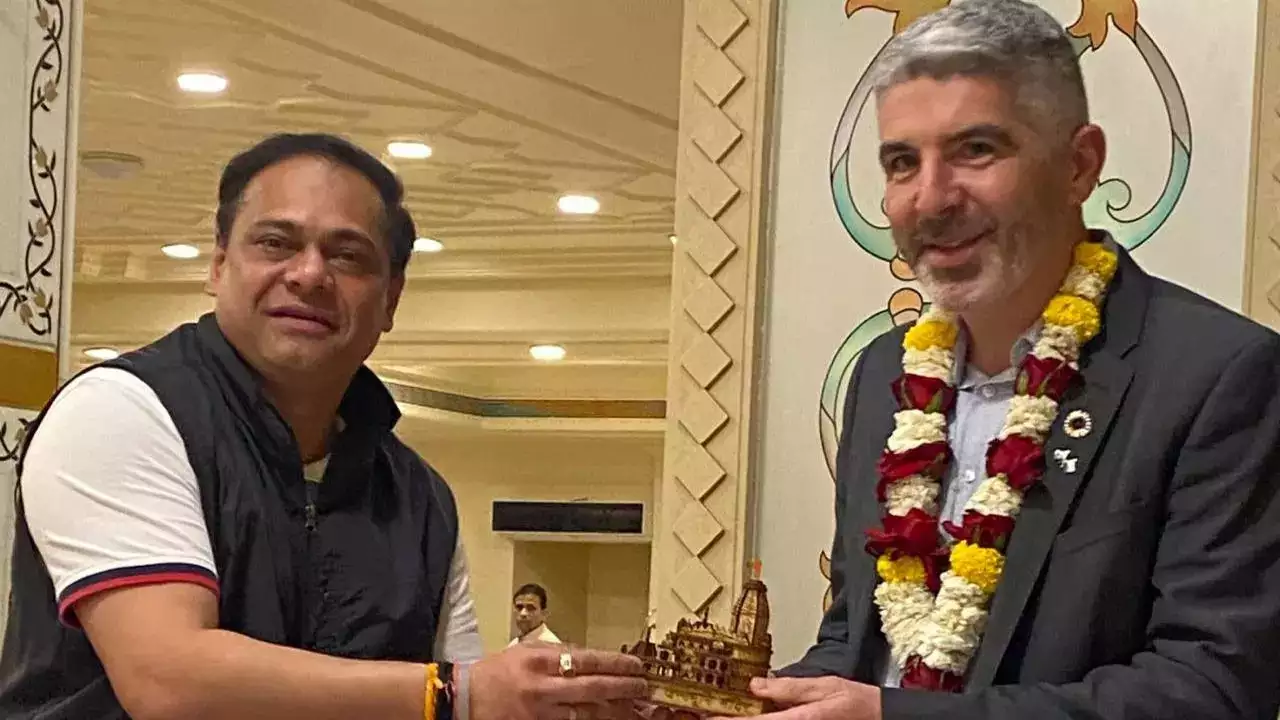
WALES’ pioneering sustainability law has inspired newly proposed legislation in an Indian state of around 114m people.
A new private members’ bill – called the Maharashtra Future Generations Welfare Bill – has been introduced to the Maharashtra Legislative Assembly.
Based on Wales’ Well-being of Future Generations (Wales) Act 2015, the new bill proposes a Commissionerate of Future Generations to ensure government departments follow sustainable goals. In terms of population, the Maharashtra state is almost 40 times bigger than Wales.
In January, delegates from India visited Wales on a fact-finding mission, following on from a previous visit in 2023 with the Maharashtra Legislator’s Learning Exchange Programme on Good Governance and Public Policy at the University of Wales Trinity Saint David.
Delegates spoke to Derek Walker, the Future Generations Commissioner for Wales and Cabinet Secretary for Culture, Social Justice, Trefnydd and Chief Whip Jane Hutt MS about the Act and how it works in Wales.

Then in March, as part of the launch of Wales in India, a 12-month series of events celebrating the links between the two countries, delegates from Wales visited Mumbai and, among other talks, held discussions around the future generations legislation.
Led by the First Minister of Wales, Eluned Morgan MS, during her time as Minister for Health and Social Services, and Derek Walker, Welsh delegates engaged with Members of the Legislative Assembly (MLAs) from Maharashtra.
These talks focused on the Well-being of Future Generations Act with the possibility of the Maharashtra state adopting a similar legislative framework.
First Minister, Eluned Morgan, said:“In February, we were delighted to welcome the government of the Maharashtra state in India, which is home to some 114m people – to share our experience in becoming the first country in the world to pass into law a Well-being of Future Generations Act. The Act puts an end to short-term decision making, ensuring Ministers and public bodies consider the long-term impacts of our choices.
“I welcome the news that Maharashtra is just a step away from implementing its own version of the Act. We look forward to collaborating with our friends in the state to share learnings and help leave a positive legacy for our children, grandchildren and generations to come.”
After hearing the news that the private members’ bill had been introduced in Maharashtra, Derek Walker said: “It’s great news that Maharashtra is taking forward its plans for a Well-being of Future Generations Act.
“The world needs both Wales and Maharashtra to act for the sake of the people not yet born who will inherit the consequences of our actions today – Wales as a small nation is showing the large part it is playing in that global mission.

“I’m proud that Wales continues to be an example in future generations thinking. Both countries will have much to share and learn from as we work together to implement the UN’s Sustainable Development Goals and support current and future leaders to act now for a better tomorrow.”
Ameet Satam, Member of the Legislative Assembly (MLA) from Andheri (West) who introduced the bill, said: “The aim is to make the government’s decision-making and functioning aligned with the United Nations Development Programme’s 17 Sustainable Development Goals. This will ensure that irrespective of the government led by any party, each department will have to follow a path that leads towards the already set goals and parameters and in line with sustainable development.”
Back in 2015, Wales became the first country in the world to legislate for the interests of future generations – inspiring the UN’s vision for a Special Envoy for Future Generations and other countries, from Canada and Ireland, to Scotland and Gibraltar.
The Act made it a requirement for public bodies in Wales to make decisions that meet the needs of the present without compromising the ability of future generations to meet their own needs.
Wales in India was launched on St David’s Day (1 March) by the Welsh Government in a bid to strengthen ties and opportunities between the two countries. For more information on Wales In India, visit https://www.wales.com/news/india/wales-india-2024


Rail operators urge passengers to check before travelling as extreme heat threatens delays and cancellations across Wales
RAIL passengers from Pembrokeshire are being warned to expect disruption this week as soaring temperatures place pressure on Wales’ railway network.
Transport for Wales, Great Western Railway and Network Rail have all issued warnings as an extreme heat alert remains in force across much of Wales, with temperatures forecast to reach the high 30s in some areas.
While no services in Pembrokeshire have been cancelled, passengers travelling to Swansea, Cardiff, Bristol and London are being advised to check before travelling and allow extra time for their journeys.
Transport for Wales has already suspended services on two routes in south Wales due to the forecast conditions, while further disruption is expected elsewhere on the network.
Rail operators say extreme temperatures can cause overhead power lines to sag, increase the risk of trackside fires and, in severe cases, lead to rails buckling. Temporary speed restrictions may also be introduced, resulting in delays and cancellations.
Jake Kelly, deputy chief executive of Network Rail, said: “Extreme heat can have a significant impact on the railway, so safety must come first.
“We’re asking passengers to check before travelling and only travel if absolutely essential during the peak of this weather event.”
Great Western Railway has also advised customers to travel only if necessary on Wednesday (June 24) and Thursday (June 25).
The operator said reduced timetables may be introduced during the hottest parts of the day, with fewer trains running and journey times taking longer than normal.
To help passengers affected by disruption, ticket restrictions have been relaxed, allowing some tickets to be used on alternative travel dates.
Passengers are being urged to carry water, plan ahead and check the latest service information before setting off.

PEMBROKESHIRE parents are being urged to check school messages as neighbouring Carmarthenshire prepares to close all secondary schools on Wednesday and Thursday because of extreme heat.
The move in Carmarthenshire has raised questions across west Wales about whether schools in Pembrokeshire could also be affected as temperatures continue to rise.
All secondary schools in Carmarthenshire are set to close for two days, with some primary schools also deciding to shut. There has been no blanket closure decision for primary schools in that county.
In Pembrokeshire, no county-wide secondary school closure announcement has been made at this stage.
Parents should check directly with their child’s school for the latest information, including texts, emails, school apps, websites and social media pages.
The situation may vary from school to school, depending on building conditions, ventilation, classroom temperatures and local circumstances.
The closures in Carmarthenshire come as Wales faces exceptional weather conditions, with concerns about pupil and staff welfare during the heatwave.
Many school buildings, particularly older sites, can become extremely hot during prolonged periods of high temperature.
A Wales-wide picture is now emerging, with schools in several counties considering closures, early finishes or remote learning.
For Pembrokeshire families, the key message is not to assume schools are closed unless official confirmation has been received.
The Herald will continue to monitor updates from Pembrokeshire schools and the county council.

THE ARMED FORCES flag is flying proudly at County Hall this week ahead of Armed Forces Day on Saturday, June 27.
Leader of Pembrokeshire County Council, Cllr Tessa Hodgson, and the Council’s Armed Forces Champion, Cllr Simon Hancock were among those who marked the flag raising on Monday morning (June 22).
Also present were the Chairman of Council, Cllr Delme Harries, the Chief Executive, Will Bramble and the Regional Armed Forces Covenant Liaison Officer, Hayley Edwards.
Cllr Hancock said: “It is always a very proud moment to see the Armed Forces Flag flying over County Hall.
“Armed Forces Day is a chance to show our deep appreciation for the men and women who serve, as well as the families and communities who support them.
“Our county has a rich history of connection with the Armed Forces, and we are proud to uphold and strengthen that bond.
“As a Council we are committed to ensuring that members of the Armed Forces community in Pembrokeshire receive the recognition and support they truly deserve and we are proud to be a Defence Employer Recognition Scheme Gold Award holder.”



News7 hours ago
Bus overturns in major incident near Kidwelly
All passengers rescued as emergency services remain at scene A BUS overturned on the A484 between Kidwelly and Ferryside on...


Community1 day ago
Tenby Summer Spectacular cancelled amid council row over harbour access
Organisers say popular charity events cannot safely go ahead without clear powers to control crowds TENBY ROUND TABLE has announced...


News1 day ago
Motorcyclist dies after four-vehicle crash on A40 in Carmarthenshire
A MOTORCYCLIST has died following a four-vehicle collision on the A40 between St Clears and Whitland. Dyfed-Powys Police said the...


News1 day ago
Rhun ap Iorwerth urges new deal for Wales after Starmer quits
First Minister says next Prime Minister must focus on greater powers, fair funding and respect for Wales’ democratic mandate FIRST...


News1 day ago
How Labour’s landslide victory unravelled in just two years
Prime Minister announces resignation after losing support within his own party as Andy Burnham emerges as overwhelming favourite to take...


News2 days ago
Long Course Weekend set to bring thousands to Pembrokeshire
Three days of swimming, cycling and running will once again transform Tenby into one of the UK’s biggest endurance sporting...


Community2 days ago
The gentle giant behind the tattoos
Pembrokeshire security worker Josh Davies praised for professionalism, kindness and proving first impressions can be wrong JOSH Davies is hard...


Charity3 days ago
Toy Story fans fill charity toy box at Haverfordwest cinema
Donations pour in for SNAP Specialist Play as families embrace Toy Story 5 launch A TOY STORY-themed charity appeal at...


Community3 days ago
Lord Rhys emerges from the mist in St Davids
Giant puppet begins historic journey marking 850 years since the first Eisteddfod MIST swirled around St Davids Cathedral on Friday...


News4 days ago
Tragic tribute paid to Haverfordwest man after A4075 collision
FAMILY REMEMBERS “KIND AND LOVING” CALLUM HANSON THE FAMILY of a 22-year-old man from Haverfordwest who died following a road...
-

 Crime6 days ago
Milford Haven man jailed for breaching domestic violence protection order
-

 News5 days ago
Crash on Freeman’s Way causes school-run chaos across Haverfordwest
-

 Health3 days ago
Woman jailed assaults on police, harassment and XL Bully possession
-

 Crime7 days ago
Drug trafficker must repay £33,000 after court rules he made nearly £500,000
-

 Crime3 days ago
Milford Haven woman spared jail despite string of shop thefts
-
Community2 days ago
The gentle giant behind the tattoos
-

 Crime6 days ago
Portfield Gate man faces careless driving allegation after Tufton crash
-

 Local Government5 days ago
Pembrokeshire faces accessible housing shortage as 403 people wait for homes