


Health
Calls for ‘Owain’s law’ to aid brain tumour treatment


SENEDD Members called for Owain’s law, in memory of a young father, to ensure a gold-standard approach to preserving human tissue for other cancer patients in future.
Hefin David led a debate on a cross-party motion on July 2 calling for a law named after his Caerphilly constituent Owain James, who sadly died last year.
He said: “Owain was only 34 years old when he was diagnosed with a 14cm, malignant, grade-four brain tumour in his right frontal lobe. His neurosurgeon said it was one of the biggest tumours she’d ever come across in her professional career.
“It was an absolutely devastating blow to Owain, his wife Ellie, who is in the public gallery today, and his daughter Amelia, who at the time was only 18 months old. Until then, Owain had always been a fit and healthy young man.”
Dr David said the family turned to private treatment and found a personalised vaccine that used a patient’s tumour tissue to educate the immune system to recognise cancerous cells.

He told the Senedd: “The problem here, however, was that Owain needed fresh frozen tumour tissue to develop a sufficient dose of the vaccine. Owain had had 7cm of tissue surgically removed but, unfortunately, only 1cm of this was fresh frozen and could be used.”
The Caerphilly Senedd Member explained Owain only had three doses of vaccine when it should have been more like 30 doses, but he initially made a remarkable recovery.
“Unfortunately, metastasis caused his tumour to recur elsewhere,” he said. “This time, the tumour was too aggressive and Owain sadly passed away in June 2024.

“Ellie, 35 years of age, now lives with the regret that they were only able to develop and obtain enough doses for those three vaccines.

“Had there been more, we feel that Owain would still be alive today.”
Dr David said fresh frozen tissue is regarded as the gold-standard approach and can be used for vaccines, therapies, research and genome sequencing.
He explained: “This kind of use, though, can only be done when the tumour is fresh frozen, which it wasn’t in Owain’s case. Owain’s law seeks to address this. It seeks to make this the default process for storing surgically removed tissue in Wales.”


Plaid Cymru’s Peredur Owen Griffiths, who represents South Wales East, said: “My mother also died from a brain tumour, so it’s an issue that is deeply personal for me.
“Brain tumours remain the biggest cancer killer of children and adults under 40, yet they receive just one per cent of national cancer research funding.
“Families like mine and Owain’s are let down not only by research but also by how precious tumour tissue is managed. Owain’s law will enshrine a vital principle that patients and families must be fully informed and able to consent.”

Mr Owen Griffiths added: “This is more than a technical protocol. This is a matter of dignity, respect and hope for families facing devastating diagnoses.”
The Conservatives’ Altaf Hussain, a former surgeon, supported Owain’s law but emphasised the importance of accommodations for religious preferences.
Mabon ap Gwynfor, Plaid Cymru’s shadow health secretary, expressed concerns about long waits before receiving a diagnosis and a lack of diagnostic machines such as scanners.
Mr ap Gwynfor told the Senedd: “Even after receiving a diagnosis, we have a lack of specialist treatment centres – with far too many of our patients having to travel very long distances at times of weakness to receive their treatment.”
Backing Owain’s law, he said: “This proposal does reflect two core principles at the heart of our NHS. The first is that the NHS belongs to the public…. Second, it’s the voice of the patient, their concerns, their views, that should be at the heart of every decision made.”
Jeremy Miles, for the Welsh Government, stressed the need to proceed with care and warned a legal requirement to freeze all brain tumour tissue risks unintended consequences.
Wales’ health secretary said: “Clinical teams already use their expert judgment to balance diagnostic needs with the potential for research and novel therapies.
“Overriding that clinical discretion through legislation could compromise timely diagnosis or create conflict where tissue volume is limited, which is why the government does not believe that the case is made for legislation.”

While the non-binding motion was agreed unanimously, Owain’s law is unlikely to proceed without Welsh ministers’ full support. But Dr David argued the UK and other countries will eventually introduce such a law as the availability of tissue becomes key to treatment.
Closing the debate, he said: “Let’s remember Owain for everything he’s done today. Even in his passing, he’s contributed to the debate on keeping patients alive for longer.”



Long-running 3 Amigos and Dollies group marks 25 years of support
THANKS to outstanding fundraising by the Pembrokeshire-based 3 Amigos and Dollies Motorcycle Group, Hywel Dda Health Charities has funded a major improvement of the outdoor play area at Cilgerran children’s ward in Glangwili Hospital — a project costing more than £15,000.
The 3 Amigos and Dollies have supported Hywel Dda University Health Board’s children’s services for twenty-five years, with their Easter and Christmas toy runs becoming landmark dates in the local calendar, drawing hundreds of bikers and supporters from across west Wales.
The latest funding has delivered a full transformation of the ward’s outdoor space, including a re-sprayed graffiti wall, new toys and play equipment, a summer house, improved storage, and a moveable ramp to make the area more accessible for young patients. Members of the group even volunteered to help paint and refresh the space themselves.
Paula Goode, Service Director for Planned and Specialist Care, said: **“We are so grateful to the 3 Amigos and Dollies Motorcycle Group for their amazing support. Not only have they raised an incredible amount for the ward, but they have given their time to help make the outdoor space as special as possible.
“Outdoor play greatly reduces stress and anxiety for children, and it provides a vital opportunity to meet other young people going through similar experiences. It benefits both their physical and mental wellbeing, so we couldn’t be happier with the transformation.”
Tobi Evans, a volunteer with the fundraising group, said: “Because of the generosity of everyone who donates, we are able to give thousands each year. We are always humbled by how much people give, and it’s thanks to them that we’ve reached our 25th year.”
Katie Hancock, Fundraising Officer for Hywel Dda Health Charities, added: “We can’t thank the 3 Amigos and Dollies enough for their support for Cilgerran ward. You have put a smile on so many faces. Diolch yn fawr!”
Hywel Dda Health Charities funds items, equipment and activities that go beyond core NHS funding, making a meaningful difference to children and families across mid and west Wales.

PATIENTS are being treated in store cupboards, break rooms and toilets as so-called corridor care becomes the norm in Welsh hospitals, the Senedd has heard.
Senedd Members warned treating patients in inappropriate areas has become a “daily reality” rather than an exception as they debated calls for the practice to be eradicated.
The debate was prompted by a petition – submitted by the Royal College of Nursing (RCN) and British Medical Association (BMA) – which gathered more than 10,000 signatures.
Petitioners demanded that keeping patients on trolleys or chairs for a long time be formally classified as a “never event” – a serious, preventable safety incident that should not happen.
But the Welsh Government rejected the calls, arguing the strict definition of a “never event” applies only to preventable medical mistakes – not systemic capacity pressures.
The petition urged ministers to start reporting on corridor care, pause reductions in hospital beds, invest in community care, and prioritise prevention and early intervention.
Sharing her own experience, Reform UK’s Laura Anne Jones argued corridor care is one of the clearest signs of a health service that has been allowed to fall into crisis.
“I was placed on a broken bed in a corridor for two nights before a room became available,” she said. “I was in too much pain to care at the time but those caring for me said how completely inappropriate it was and kept apologising for it.”
Ms Jones added: “I could hear private conversations between consultants, doctors and nurses about other patients. And I was right against a curtainless window… there was no dignity, no privacy, and that’s just not OK.”

The Conservatives’ Joel James told the Senedd thousands of patients are now being treated on trolleys in corridors, in ambulances, store cupboards and other places not meant for care. “This is putting life at risk,” he said. “They are being treated without proper facilities.”
Mr James warned: “NHS Wales doesn’t even collect data on who is being treated in a corridor. That frankly should surprise no-one, as Welsh Labour’s philosophy has always been, if you don’t measure it, then there is no evidence to pin you down on it.”
His Tory colleague Janet Finch-Saunders said: “I even know of situations where a paramedic will leave a patient in an ambulance with a new paramedic coming on. When that paramedic comes back on the next shift, the same patient is still in that ambulance

“How can that be morally right? It’s inhumane, it’s cruel and it’s certainly unacceptable.”
Mabon ap Gwynfor, Plaid Cymru’s shadow health secretary, warned the “demeaning and dangerous” practice has become an “almost inescapable” part of hospital care.
“What should be the exception has now been normalised,” he said.
Rhys ab Owen, who sits as an independent, highlighted reports of patients being cared for in “car parks, break rooms and even toilets”.
Labour’s Carolyn Thomas, who chairs the Senedd’s petitions committee, warned that RCN and BMA members view corridor care as a “systemic national crisis”.
Responding to the debate on Wednesday December 10, Jeremy Miles acknowledged that corridor care “compromises patient dignity and staff wellbeing”.
But Wales’ health secretary insisted that designating corridor care as a “never event” was not the solution. “The delivery of care in undesignated or non-clinical environments doesn’t meet the criteria due to the complexity of underlying causes,” he said.
Mr Miles told the Senedd: “We do not endorse routine care in non-clinical environments. Our goal is to eliminate this practice through system-wide reform.
“Eradicating care in undesignated or non-clinical environments will not be a simple quick fix. It requires co-ordinated action across health and social care.”
Health board urges public to help protect vulnerable patients
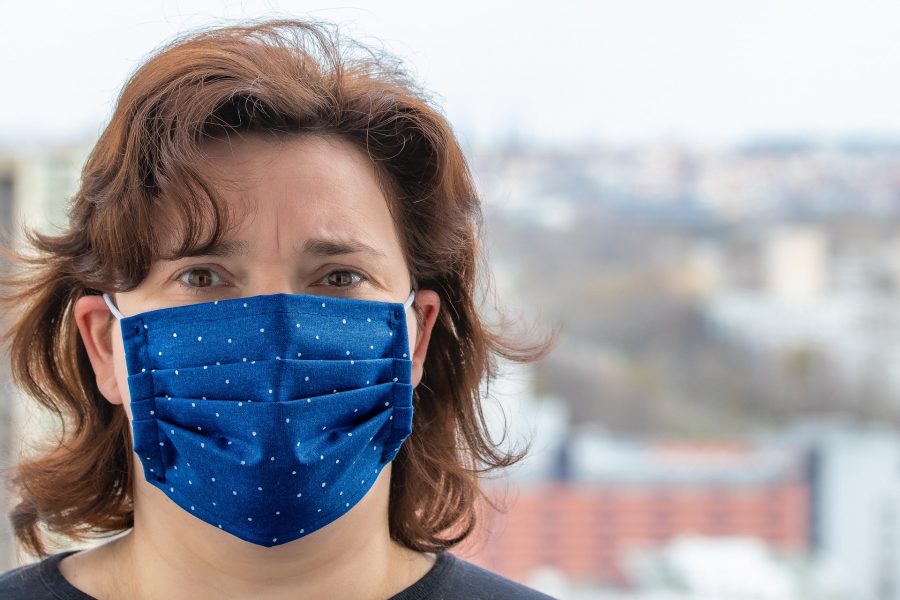
From today (Thursday, December 11, 2025), Hywel Dda University Health Board has reintroduced mandatory face masks for all visitors and staff in clinical and patient-facing areas as cases of flu and other respiratory viruses continue to rise across west Wales.
The health board says the number of patients needing care for respiratory illnesses has been “increasing at a steady rate”, prompting the return of precautionary measures. All staff — regardless of role — must now wear a surgical mask when in clinical environments or interacting with patients, unless otherwise advised through PPE guidance. Visitors must also wear masks when entering clinical areas, including when attending appointments at hospitals and community sites.
Sharon Daniel, Director of Nursing, Quality and Patient Experience, said the precaution was necessary to prevent further spread within local hospitals.
“We are seeing a growing number of people with flu and other respiratory viruses needing our care and need to take this proactive step to limit the spread within our services and sites,” she said. “This change is effective immediately and our Infection Prevention colleagues will be reviewing the situation on a regular basis.”
Ms Daniel reminded visitors not to attend hospitals if unwell.
“You should only come to our sites if you are feeling well, and to wait 48 hours after you are free of flu and cold-like symptoms, or sickness and diarrhoea. This helps protect our most vulnerable patients and keeps staff well so they can look after those in greatest need.”
While visiting remains open, Hywel Dda warned this could change at short notice if virus levels continue to increase.
Masks will be available at all hospital and community site entry points.
Health board urges public support
Ms Daniel added: “There are several ways people can support our NHS during this time. Please follow the mask-wearing guidance and ensure that you wash your hands regularly with soap and warm water.
“A simple way to keep ourselves and our loved ones safe this winter is to have a flu vaccination. Information on where you can get your vaccine — including RSV and COVID-19 boosters if eligible — is available on our website.”
More information about vaccination clinics can be found at hduhb.nhs.wales/fluvaccine.
.



Rural cannabis factory exposed after five-year operation in Carmarthenshire
Family-run drugs enterprise brought in millions before police raid during lockdown A FAMILY who relocated from England to a remote...
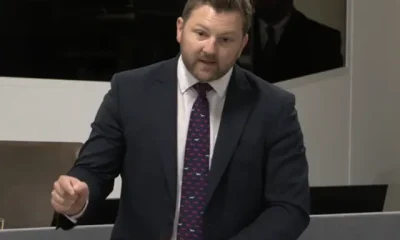

Senedd rejects calls to ‘eliminate’ rates for small businesses
A CONSERVATIVE call to abolish rates for all small businesses in Wales has been voted down by the Senedd amid...


Christmas song pokes fun at Haverfordwest’s ‘Instagram-friendly’ bridge
Rock track raises money for charity while giving a gentle dig to the council A BRAND-NEW Christmas rock song by...


Police reassure community after school lockdown incident in Carmarthen
DYFED-POWYS POLICE have issued reassurance to the community after Ysgol Bro Myrddin in Carmarthen was placed into a precautionary lockdown on...


Councillors call for urgent review as flooding hits coastal communities
Motion demands assessment of drainage infrastructure after Castle Pond overflow A MOTION on emergency flooding concerns was brought before Pembrokeshire...


Phillips found guilty of raping baby in “worst case” judge has ever dealt with
Baby’s mother cleared as judge says case “shaken me to my core” CHRISTOPHER PHILLIPS has been found guilty of the...
Storm Bram triggers widespread flood alerts across West Wales
As of Tuesday 9 December 2025, coastal communities in Pembrokeshire remain on high alert as Storm Bram continues to batter...


Parent challenges council over Manorbier school closure data as long-running dispute deepens
Fire-damaged school has operated with limited capacity since 2022, but consultation still uses original figures A ROW over the future...


Manorbier Castle Inn warns colossal rates hikes will ‘push venues to the brink’
Local inn among many facing dramatic increases from April 2026 MANORBIER Castle Inn has warned that its business rates are...
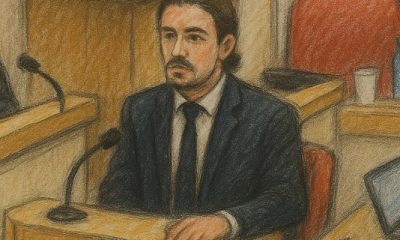

Jury retires tomorrow in harrowing Baby C rape trial
Final legal points to be addressed in the morning before deliberations begin THE JURY in the harrowing three-week trial concerning...
-
Crime4 days ago
Phillips found guilty of raping baby in “worst case” judge has ever dealt with
-

 Crime3 days ago
Kilgetty scaffolder sentenced after driving with cocaine and in system
-

 Crime3 days ago
Housing site director sentenced after failing to provide breath sample following crash
-

 Crime3 days ago
Motorist banned for three years after driving with cannabis in system
-

 Education2 days ago
Teaching assistant struck off after asking pupil for photos of her body
-
News5 days ago
Jury retires tomorrow in harrowing Baby C rape trial
-

 Crime3 days ago
Milford Haven pensioner denies exposure charges
-

 Local Government5 days ago
New defamation row erupts after anonymous website targets Herald editor