


Community
St Clears: A vibrant transformation under the Ten Towns Programme

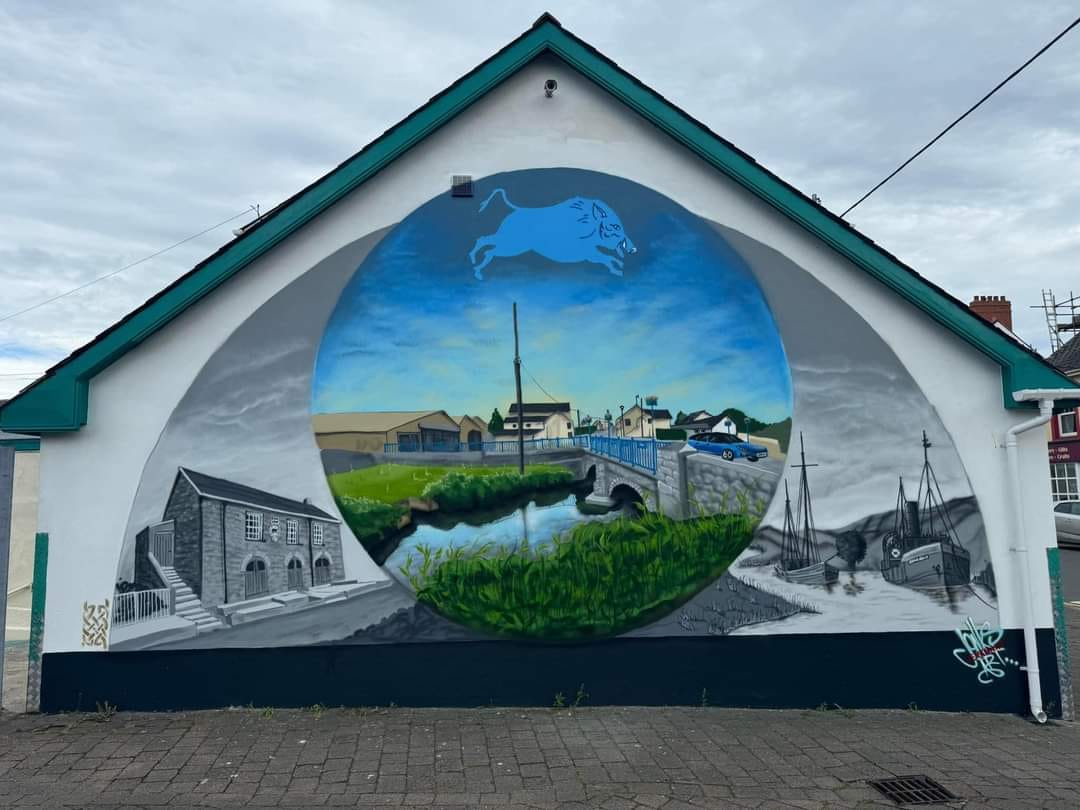
ST CLEARS has undergone remarkable changes through the Ten Towns Programme, delivered by Carmarthenshire County Council and supported by the UK Government’s Shared Prosperity Fund (UKSPF). These projects aim to bring vibrancy and economic benefits to the town while preserving its rich heritage.
A town steeped in history
Located just eight miles from Carmarthen, St Clears is deeply rooted in Welsh history, famously linked to the Rebecca Riots of the 1800s. Today, it boasts a thriving community of independent shops, cafes, and restaurants, making it an appealing destination for visitors and locals alike. More information on St Clears as a destination can be found on the Discover Carmarthenshire website.
Y Gât: A revitalized hub
As part of the programme, Y Gât, an anchor building in the heart of St Clears, has been transformed to meet the town’s economic and social needs. Following an asset transfer from Carmarthenshire County Council, the town council secured funding to reconfigure the downstairs area, improving accessibility and functionality. The refurbished café space now hosts a new local business, providing a welcoming environment for residents and visitors.
The centre is managed by a coordinator tasked with facilitating its services, which include small business workshop units, a library, and meeting spaces for hire.
Enhanced digital communication
Consultations with local stakeholders highlighted the need for improved digital communication. Digital screens have been installed at Y Gât and Pentre Road car park to display local activities, business news, and community updates, enhancing the town’s digital presence.

Supporting local businesses
The Revitalising Rural Town Centre Fund has provided grants to several businesses in St Clears. The funding supported improvements such as refreshed exteriors, new signage, and artistic enhancements. Notably, local artist Steve Jenkins, known as Jenks Art, has created two murals showcasing the town’s historical landmarks, which have been warmly received by the community.
High street enhancements
High street improvements on Pentre Road are nearing completion, featuring inclusive street furniture, refreshed pathways, and riverbank seating. New bus shelters are also set for installation this spring.
Tŷ Croeso: A community hub
Another beneficiary of the UKSPF is Tŷ Croeso at Bethlehem Newydd Chapel in Pwll Trap. The project aims to promote the Welsh language and support social, leisure, and well-being activities for the community. More details on Tŷ Croeso’s activities can be found online.

Art with a purpose
An innovative project is raising awareness of the circular economy through a commissioned sculpture by local artist Lisa Evans. The installation, made from recycled aluminium, involves contributions from local schoolchildren and community groups. A drop-off point for aluminium donations has been set up at Y Gât.

Rural outreach and support
Carmarthenshire County Council’s Hwb Bach y Wlad initiative offers advice and services to rural communities. Residents can meet Hwb advisors at Y Gât on the third Tuesday of every month from 10:30am to 3:00pm for help with council enquiries, waste and recycling supplies, and more.

Business and tourism roadshow
St Clears Leisure Centre will host a Tourism and Business Roadshow on Thursday, January 23. Businesses and community groups can access expert advice on licensing, planning, funding, and marketing opportunities.
A Message from Cllr Carys Jones
Carmarthenshire County Council’s Cabinet Member for Rural Affairs, Community Cohesion and Planning Policy, Cllr Carys Jones, praised the programme’s success:
“With thanks to the Ten Towns Programme and funding from the UK Government’s Shared Prosperity Fund, St Clears has benefitted from numerous initiatives that enhance life for residents and visitors alike. As a local member, I encourage everyone to explore the town’s rich history and vibrant atmosphere.”

St Clears stands as a testament to how well-planned projects can breathe new life into rural towns, ensuring a thriving future while celebrating its historical roots.

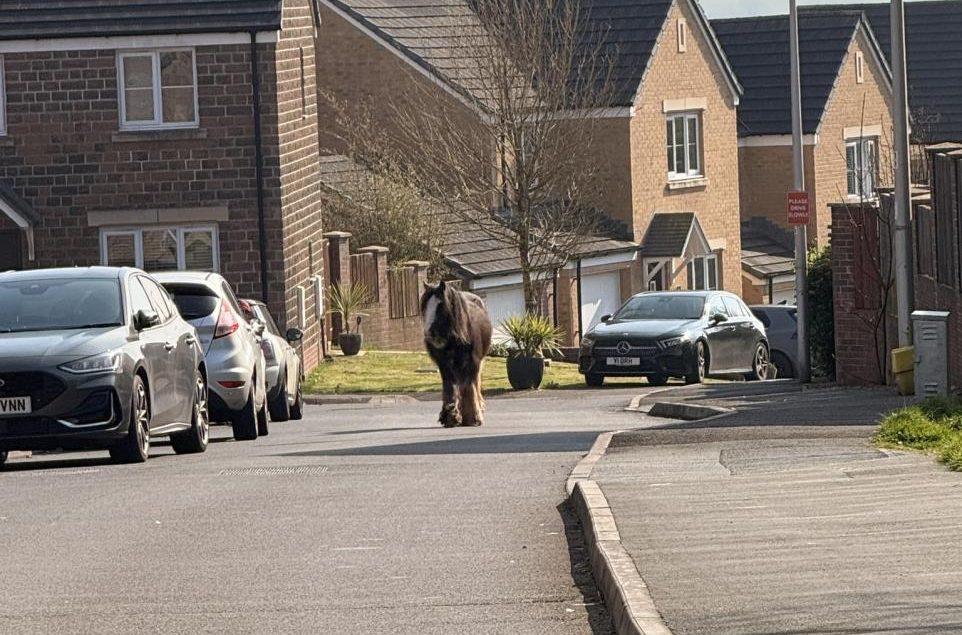
Animal seen galloping through residential streets and towards main road
POLICE are reportedly tracking a loose horse which strayed into a residential area of Pembroke.
The animal was first spotted in Gatehouse View before making its way onto a nearby main road.
A post on the Pembroke and Pembroke Dock Citizens’ Forum said the horse had left Gatehouse View and was seen heading towards the road by Pembroke Leisure Centre.
The resident wrote: “Anyone recognise it? Police following it.”
The horse was later reported to be galloping down Buttermilk Lane in the direction of Martha’s.
Stray horses are not uncommon in the area. In January, several animals were reported loose around Pembroke and along the A477, particularly near Buttermilk Close and the Cleddau Bridge.
Those incidents created a hazard for motorists, prompting Pembrokeshire County Council to step in and return the animals. Drivers were advised to take extra care and avoid startling them.

Beloved character to greet visitors as Heritage Centre reopens for new season
CHARLIE the 100-year-old ventriloquist’s doll is coming out of retirement — and back to where it all began.
Visitors to Pembroke Dock Heritage Centre will be greeted by the much-loved character when the attraction reopens for the new season on Monday (March 30).
It marks a nostalgic return for Charlie, who once performed in the very same building — then the Royal Dockyard Chapel — alongside his original owner, Ernie James, a Pembroke Dock bus company proprietor. Over the years, the duo became a familiar and popular act on the Pembrokeshire variety circuit.
Today, Charlie is cared for by Paul Elliott, of Llanreath, who inherited the doll from his father, Fred Elliott — better known locally as magician ‘Mr E’, whose shows delighted audiences for decades.
Charlie has also recently enjoyed a brush with national attention, appearing alongside Paul at a BBC Antiques Roadshow event in Swansea.

The Heritage Centre will offer free entry on opening day, with Charlie and Paul on hand to meet visitors and share stories from a century of entertainment.

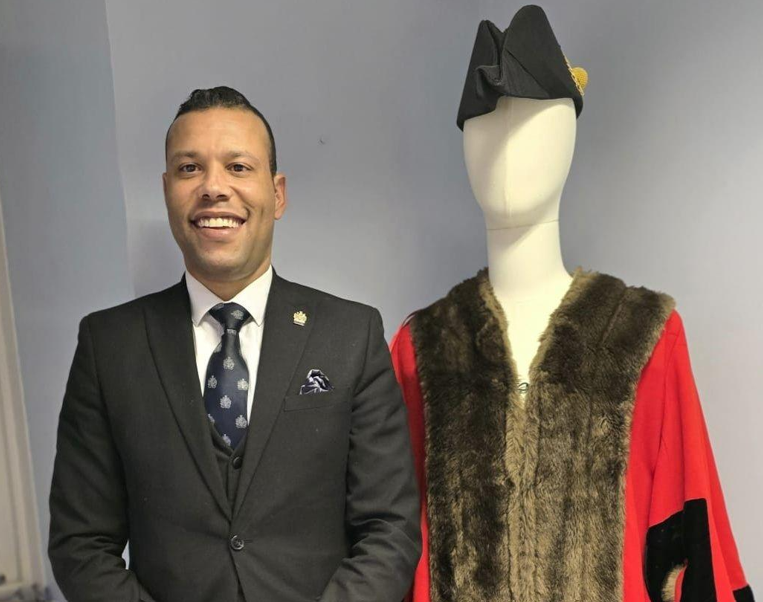
A PEMBROKESHIRE town council will soon have its first-ever person of colour as mayor, and its youngest mayor in a century.
Haverfordwest Town Councillor Randell Iziah Thomas-Turner, aged 37, is to become mayor this May.
Cllr Turner said: “Tonight [March 19], I had the honour of accepting the nomination as mayor-elect — a moment that will forever stay with me.
“In doing so, I am humbled to be making history as the first mayor of colour in Haverfordwest and the youngest mayor in a century. This is not just my achievement, it belongs to every person who believes in progress, representation, and the power of community. This is a new chapter for our town — one built on unity, opportunity, and hope.
“My mayor-making will take place this May, and I cannot wait to officially step into the role and begin serving the people of Haverfordwest with pride, passion, and purpose. Haverfordwest is the best in the West — and together, we are just getting started.
“Diversity is not a challenge to overcome, but a strength to embrace. When people from different backgrounds, experiences, and perspectives come together with respect and openness, we unlock new ideas, stronger solutions, and deeper understanding.”
It’s a double celebration for the Thomas-Turner family.
Wife, and fellow town councillor, Dani, has been voted as sheriff of the town for the second-year-running, the first woman to serve as sheriff for two consecutive years.
“The coming civic year will be one to watch as my husband Councillor Randell Izaiah Thomas-Turner is becoming the first mayor of colour in Haverfordwest’s history,” said Cllr Dani Thomas-Turner, adding: “It’s going to be a year of history and memory making for sure.”




Entertainment6 hours ago
Tenby steams up in spectacular style as crowds flock to festival
Colourful parade, towering creations and Victorian flair bring town centre to life TENBY was transformed into a vibrant Victorian fantasy...


Crime1 day ago
Publican jailed for six years for supplying cocaine and cannabis
Milford Haven man sentenced at Swansea Crown Court following drug dealing operation A MILFORD HAVEN publican has been jailed for...

Local Government1 day ago
Poverty summit highlights support efforts across Pembrokeshire
A SUMMIT bringing together key organisations from across Pembrokeshire has highlighted both the scale of local poverty and the work...


Education2 days ago
Milford Haven school plans unveiled but funding not yet secured
PLANS for a new £100 million school in Milford Haven have been unveiled, but the project has not yet secured...


News2 days ago
Council unveils plans for new state-of-the-art secondary school in Milford Haven
PEMBROKESHIRE COUNTY COUNCIL has revealed plans for a new state-of-the-art school in Milford Haven, promising modern, inspiring learning spaces for...


Health2 days ago
NHS waiting list falls — but cancer delays and diagnostic backlog worsen
Record progress claimed by Welsh Government as critics warn key targets are still being missed THE NHS in Wales has...


Crime3 days ago
Rapist jailed after ‘abhorrent’ attacks on woman and children
Haverfordwest man told police “women won’t have sex without force” A HAVERFORDWEST man who raped a woman and a young...


News4 days ago
Reform secures first Pembrokeshire councillor in Hakin by-election win
Late Reform candidate takes seat as independent surge and Labour withdrawal shape contest REFORM UK candidate Scott Thorley has won...


News4 days ago
Scott Thorley elected as Pembrokeshire’s first Reform councillor
REFORM UK candidate Scott Thorley has won the Hakin by-election after securing 179 votes. The full result is as follows:...


News4 days ago
Police confirm man has died after being recovered from River Cleddau
Major emergency response in town centre after concerns raised for man in water A MAN has died after being recovered...
-
 News6 days ago
Fishguard linked to allegations in Many Tears Animal Rescue investigation
-

 News4 days ago
Emergency services flood Haverfordwest after reports of person in river
-

 Crime3 days ago
Mother given community order after admitting child cruelty offence
-
Health2 days ago
NHS waiting list falls — but cancer delays and diagnostic backlog worsen
-
 Crime6 days ago
Man cleared of sexual assault allegation after magistrates rule no case to answer
-

 international news6 days ago
UK considers military options as pressure grows to secure Strait of Hormuz
-
 News4 days ago
Senedd votes to ban Greyhound racing in Wales to protect animal welfare
-

 News4 days ago
Senedd vote to ban greyhound racing hailed as ‘landmark moment’ by charities