


News
Wales faces deepening housing crisis as new figures show drop in home building


Welsh Conservatives blame Labour for continued shortfall in new homes
THE LATEST housing figures from the Welsh Government have revealed a sharp drop in house building across Wales, deepening concerns over what opposition politicians are calling a “self-made housing crisis”.
Data covering the period from October to December 2024 shows that only 1,116 new dwellings were started in Wales — a 27% decrease compared to the same period the previous year. Completions also dropped, with just 1,336 new homes completed, a 12% fall from the previous year.
The figures have sparked renewed criticism from the Welsh Conservatives, who accuse the Labour-led Welsh Government of failing to prioritise housing policy effectively.
Laura Anne Jones MS, the Welsh Conservative Shadow Cabinet Secretary for Housing & Local Government, said the latest numbers highlighted a deepening problem.
“These latest figures highlight Labour’s self-made housing crisis in Wales,” she said.

“Labour simply aren’t building enough suitable homes and hardworking people are struggling to get on the housing ladder. Their obsession with second homes and their toxic tourism tax are the wrong priorities for Wales. The Welsh Conservatives would ensure more homes are built and empty homes are brought back into use.”
Drop across all sectors
The Welsh Government’s statistical bulletin confirms a decrease in house building across all tenures — private sector, social housing, and local authority-led construction.
The biggest fall was seen in the private sector, which accounted for 62% of all new dwelling completions but saw a 15% year-on-year decrease in total numbers. Social housing completions fell by 6%, and the small number of homes built by local authorities (only 62 units) represented a 13% fall on the same period the year before.
The slowdown comes amid wider concerns about housing affordability, population growth, and the availability of construction labour and materials.

Tourism tax and second homes policy under fire
The Welsh Conservatives have linked the slowdown to what they describe as Labour’s “misguided” focus on issues like second homes and tourism levies. The proposed visitor levy — sometimes referred to as a “tourism tax” — would allow local authorities to charge overnight visitors in a bid to generate revenue for communities affected by high levels of tourism.
Critics say the move could damage the rural economy and does nothing to address the underlying issue of housing supply.
In contrast, Labour ministers argue the measures are designed to help address the affordability crisis in areas where second home ownership has driven up house prices and left local people priced out.

Julie James MS, Minister for Climate Change with responsibility for housing, has previously defended the Welsh Government’s approach, saying efforts are underway to bring empty properties back into use and expand affordable housing through innovative schemes.
Rural communities hit hardest
The figures are particularly concerning for rural areas such as Pembrokeshire, Gwynedd, and Ceredigion, where housing demand remains high but new developments are often held back by planning delays and community opposition.
With fewer than 4,800 homes started across Wales in the whole of 2024, housing charities have also raised concerns that the government is unlikely to meet its target of delivering 20,000 new low-carbon homes for rent during this Senedd term.
Shelter Cymru and other housing organisations have repeatedly warned of a worsening crisis in homelessness and temporary accommodation, as local councils struggle to keep pace with rising demand.
Political pressure mounting
With the next Senedd elections coming up in 2026, housing is likely to remain a key political battleground.
The Welsh Conservatives are calling for:
- A national strategy to bring empty homes back into use
- A review of planning laws to streamline development approvals
- Greater investment in infrastructure to support new housing schemes
Meanwhile, Labour will continue to argue that their policies are geared toward long-term sustainability and fairness — especially in communities where local people have been priced out by the second home market.
But with house building in decline and demand on the rise, pressure is growing on ministers in Cardiff Bay to act swiftly before the housing gap becomes unbridgeable.


Defendant admitted using Xbox without informing police as required under court order
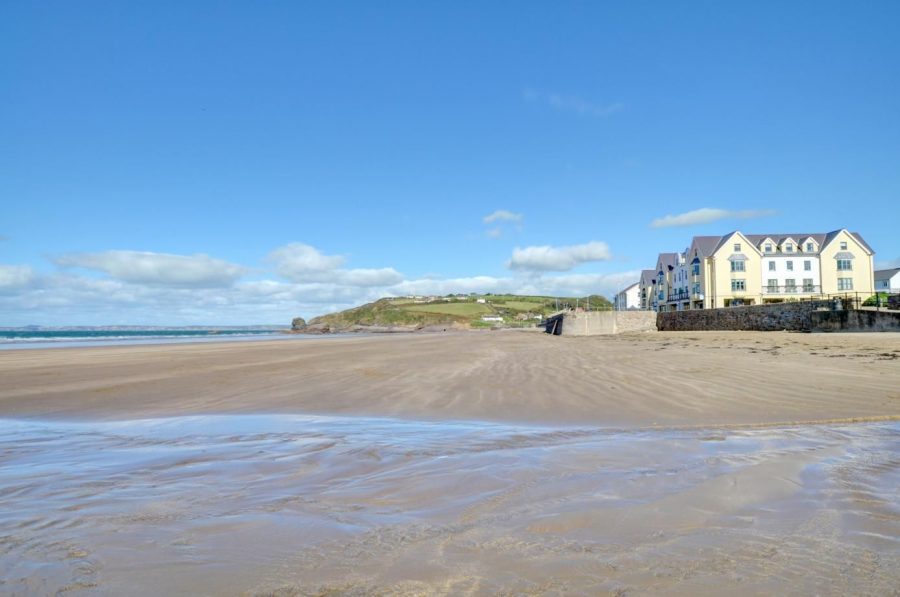
ANTHONY COOMBES, aged 26, of Sand Banks, Broad Haven, appeared before Llanelli Magistrates’ Court on Thursday (Mar 20) charged with breaching a sexual harm prevention order.
The court heard that between February 26 and March 19, 2026, at Haverfordwest, Coombes repeatedly breached the order by using an Xbox device without informing police within three days, as required.
The offences relate to a sexual harm prevention order imposed at Swansea Crown Court on October 20, 2021.
Coombes indicated guilty pleas to the offences at the first hearing.
Magistrates committed the case to Swansea Crown Court for sentence.
He was remanded in custody ahead of the next hearing, which is due to take place at 9:00am on Friday, April 3, at Swansea Crown Court.
The court refused bail on the grounds that he was likely to offend, citing the nature and seriousness of the offences and his previous record and character.
A pre-sentence report was ordered.
Police say death not suspicious as 46-year-old arrested over alleged Class A drug supply
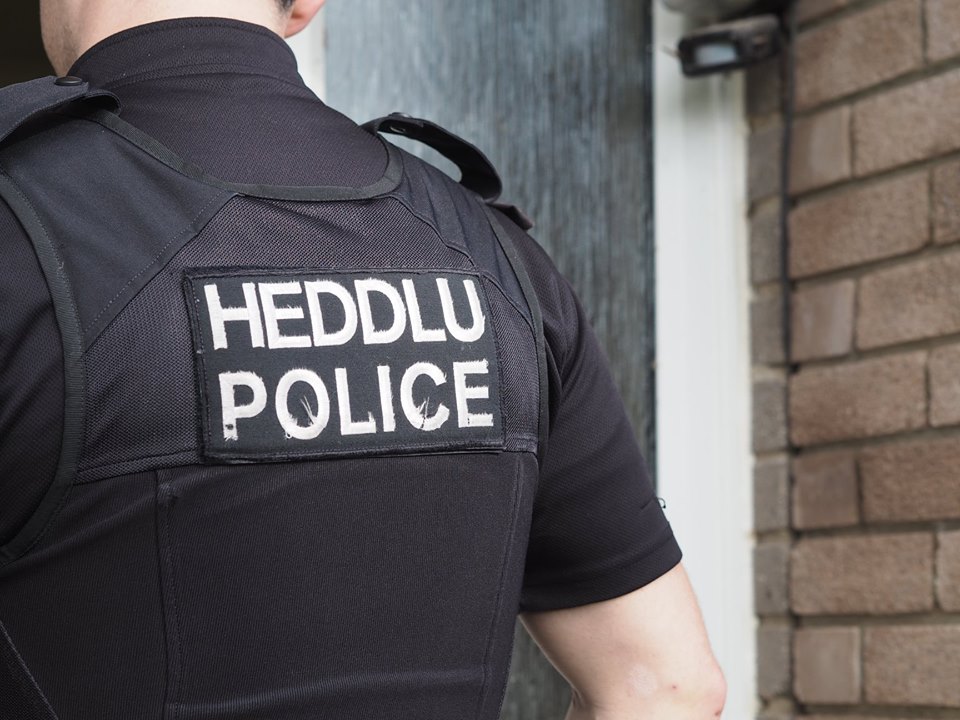
A MAN has died following a medical emergency at a property in Haverfordwest, police have confirmed.
Emergency services were called at 3:18pm on Wednesday (March 18) after a report of a medical incident.
A man was pronounced dead at the scene.
Dyfed-Powys Police said the man’s next of kin have been informed and are being supported by officers.
The death is not being treated as suspicious at this time.
However, police confirmed that a man, aged 46, was arrested on suspicion of being concerned in the supply of Class A drugs.
He has since been released under investigation while enquiries continue.
No further details about the deceased have been formally released.

FOUR people from Mynyddygarreg, Kidwelly, have been ordered to pay more than £129,000 following a successful prosecution for illegal dog breeding.
At Swansea Crown Court on Tuesday (Mar 10), before His Honour Judge Thomas KC, Stacey May June Edwards, Peter John Edwards, Sian Eleri Thomas and David Malcolm James Thomas, all of Sea Breeze, Mynyddygarreg, pleaded guilty to offences under the Breeding of Dogs (Wales) Regulations 2014.
The court imposed confiscation orders totalling £129,873.41 under the Proceeds of Crime Act across the four defendants. They were also ordered to pay £8,000 in costs, while each defendant received a £2,000 fine.
The investigation began in April 2021 after Carmarthenshire County Council’s Animal Health team received an enquiry from Peter Edwards about obtaining a dog breeding licence. Although licensing guidance was provided and a partial application was submitted in February 2022, this was later withdrawn.
In March 2024, the council received a complaint that puppies were being advertised for sale without the required licence. Officers subsequently contacted online advertising platforms and issued data requests to assess the scale of activity.
Analysis of records from Pets4Homes, Freeads and Gumtree revealed multiple litters being advertised by members of the same household.
Correspondence under the Police and Criminal Evidence Act confirmed that up to 25 dogs were kept at the property, including between 16 and 19 breeding females.
While some defendants claimed joint ownership of the dogs, others attempted to minimise their involvement.
The Herald understands that numerous puppy advertisements were posted between July 2020 and April 2025, demonstrating a sustained pattern of unlicensed breeding.

Carmarthenshire County Council’s Cabinet Member for Climate Change, Decarbonisation and Sustainability, Cllr Aled Vaughan Owen, said: “This case demonstrates the council’s firm stance against unlicensed and illegal dog breeding.
“These regulations are in place to protect animal welfare and ensure that breeding activities are subject to proper oversight. The scale of activity uncovered at this property was entirely unacceptable, and we welcome the court’s decision to issue significant confiscation orders under POCA.”
He added: “We urge anyone with concerns about illegal dog breeding to report it. Our Animal Health officers will continue to investigate thoroughly and take action against those who disregard the law.”
Residents are reminded that anyone breeding and selling dogs must comply with licensing regulations designed to protect both animal welfare and consumers.



Crime13 hours ago
Publican jailed for six years for supplying cocaine and cannabis
Milford Haven man sentenced at Swansea Crown Court following drug dealing operation A MILFORD HAVEN publican has been jailed for...

Local Government15 hours ago
Poverty summit highlights support efforts across Pembrokeshire
A SUMMIT bringing together key organisations from across Pembrokeshire has highlighted both the scale of local poverty and the work...


Education1 day ago
Milford Haven school plans unveiled but funding not yet secured
PLANS for a new £100 million school in Milford Haven have been unveiled, but the project has not yet secured...


News2 days ago
Council unveils plans for new state-of-the-art secondary school in Milford Haven
PEMBROKESHIRE COUNTY COUNCIL has revealed plans for a new state-of-the-art school in Milford Haven, promising modern, inspiring learning spaces for...


Health2 days ago
NHS waiting list falls — but cancer delays and diagnostic backlog worsen
Record progress claimed by Welsh Government as critics warn key targets are still being missed THE NHS in Wales has...


Crime3 days ago
Rapist jailed after ‘abhorrent’ attacks on woman and children
Haverfordwest man told police “women won’t have sex without force” A HAVERFORDWEST man who raped a woman and a young...


News3 days ago
Reform secures first Pembrokeshire councillor in Hakin by-election win
Late Reform candidate takes seat as independent surge and Labour withdrawal shape contest REFORM UK candidate Scott Thorley has won...


News3 days ago
Scott Thorley elected as Pembrokeshire’s first Reform councillor
REFORM UK candidate Scott Thorley has won the Hakin by-election after securing 179 votes. The full result is as follows:...


News3 days ago
Police confirm man has died after being recovered from River Cleddau
Major emergency response in town centre after concerns raised for man in water A MAN has died after being recovered...


Community3 days ago
Davies and Kurtz urge groups to seek employability funding
Community organisations in Pembrokeshire encouraged to apply for new grants supporting skills and job access LOCAL Senedd Members Samuel Kurtz...
-

 News7 days ago
Rayner and Lammy visit Wales to discuss justice and community safety
-

 News6 days ago
Fishguard linked to allegations in Many Tears Animal Rescue investigation
-
 News4 days ago
Emergency services flood Haverfordwest after reports of person in river
-
 Local Government7 days ago
Investigation confirmed after inspectors visit Many Tears Animal Rescue
-

 Crime2 days ago
Mother given community order after admitting child cruelty offence
-

 Business7 days ago
Tesco B&Q Haverfordwest click and collect pod approved
-

 Community7 days ago
Town hall takeover plan questioned as cost figures conflict
-
 Business7 days ago
Legal action backed in case over development at Dinas Cross