


Health
Campaign launched to reverse sharp fall in organ donation consent in Wales

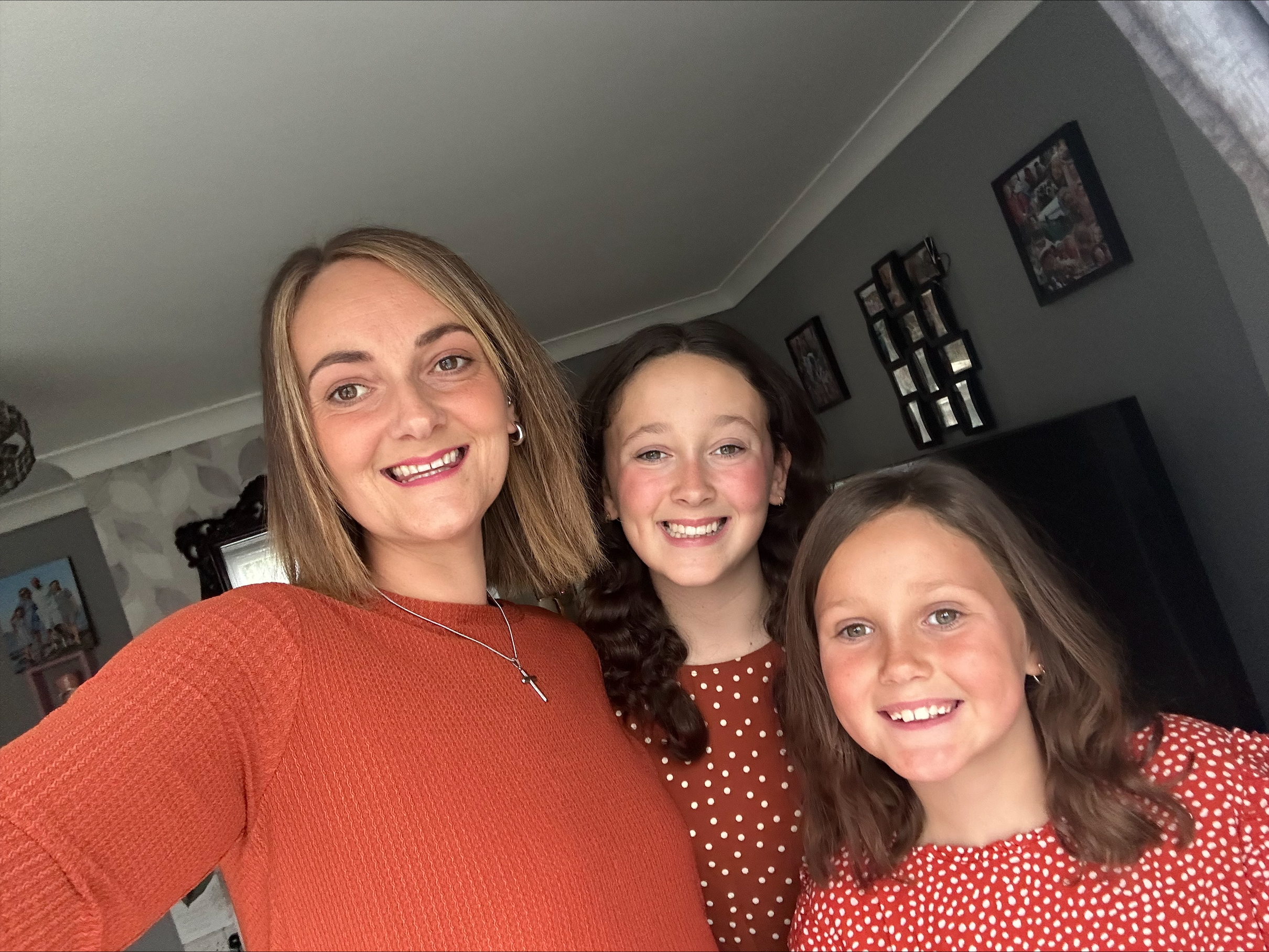
Woman from Pembrokeshire in campaign to raise awareness
A NEW campaign has been launched to reverse a worrying decline in family consent rates for organ donation in Wales—now the lowest in the UK.
Just five years ago, Wales had the highest consent rate in Britain. Today, it lags behind all other UK nations, with a 56% consent rate—down from 77% in 2018/19—despite having pioneered a “presumed consent” law in 2015.
Under that system, unless individuals opt out via the NHS Organ Donor Register, they are presumed to have agreed to donate their organs after death. But transplant specialists say the law may have had an unintended consequence: fewer families are talking about donation.
“Many people think presumed consent means everything is sorted, so they don’t have the conversation,” said Bethan Moss, a specialist nurse in Wales. “But families are always asked to confirm, and if they’re unsure, they often say no.”
The new campaign—The Best Thing You’ll Do Today—encourages people to both sign the register and speak with their loved ones.

“It’s about peace of mind,” Moss added. “If families know what their relative wanted, they’re far more likely to agree.”
More than 1.3 million people in Wales have declared their willingness to donate organs since the register began in 1994. Over 10,000 patients in Wales have received life-saving transplants. But the lack of conversation is proving deadly.
Across the UK, consent rates are falling, but the drop in Wales is steepest. Current family consent rates are 60% in England, 61% in Scotland, and 66% in Northern Ireland.
“Talking is key,” said Joanna Chalker, a senior nurse with NHS Blood and Transplant who has worked in Wales for 16 years. “When someone has signed the register or told their family, the consent rate jumps to 90%. That can mean the difference between life and death.”

One of those lives saved was 35-year-old Pembrokeshire mum Jessica (pictured), who was diagnosed with Primary Biliary Cholangitis—a rare liver condition—in 2016. After two false alarms, she finally received a successful transplant in 2022.
“I’d always been healthy, so the diagnosis was a shock,” she said. “But I was ready. Now I’m walking the kids to school again and loving life. Organ donation gave me everything back.”
Every day in the UK, someone dies waiting for a transplant. Right now, around 8,000 people—including over 200 children—are on the waiting list. A single donor can help up to nine people.

To register your decision or find out more, visit:
👉 www.organdonation.nhs.uk/register-your-decision

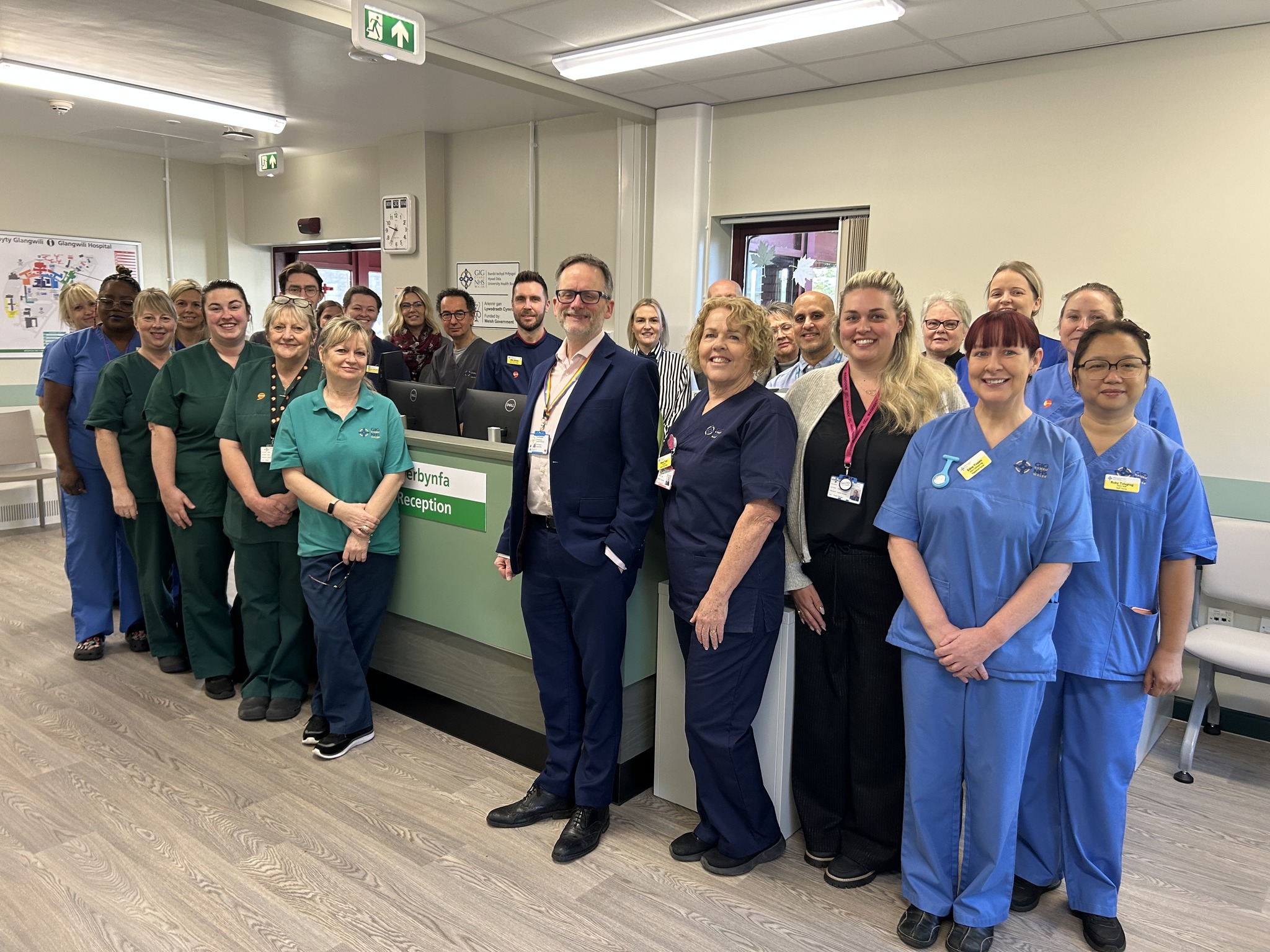
£2m upgrade aims to ease pressure on emergency department and improve care for patients
THE REFURBISHED Same Day Emergency Care (SDEC) unit at Glangwili Hospital has reopened to patients and staff this week following a major £2 million upgrade.
On Monday (March 30), Hywel Dda University Health Board chief executive Dr Phil Kloer visited the unit to tour the new facilities and meet staff and patients.
The refurbishment was made possible by £2.096 million in Welsh Government funding and has delivered more consultation rooms, an improved reception area, and a brighter, more welcoming environment for both patients and staff.
Health board bosses say the upgraded SDEC is expected to reduce pressure on Glangwili’s emergency department and forms part of wider efforts to improve patient experience across acute hospital sites, as well as the Minor Injury Unit at Prince Philip Hospital.
Dr Kloer said: “Thank you to everyone who has worked on this project. One of our biggest challenges as a health board is the unscheduled care system and how services in the community and hospitals connect, and SDEC plays a key role in that.
“I am delighted that we are opening the refurbished SDEC building. I’m really impressed with all the work that has been done, but really it is the people and the team that are most important.”
During his visit, Dr Kloer also paid tribute to Dr George Eltom, who played a central role in establishing the SDEC at Glangwili and who died around two years ago.
His memory has been woven into the unit through maple leaf artwork on the walls and windows, reflecting his dream of moving to Canada with his family. One of the consultation rooms has also been decorated with a blue butterfly in tribute to his love of Chelsea Football Club.
Dr Kloer said: “The fact that George’s memory has been embedded in the work is extremely important to everyone working here. I know that will mean a lot to all of us who knew him so well because he worked here for a long time. He was the heart and soul of it for so many years.”

One of the first patients to be treated in the refurbished unit was Anita Harmes, from Peniel, Carmarthen.
She said: “It’s my first time to visit the refurbished SDEC building and it’s absolutely fabulous. Hospital can be a scary place but this isn’t scary at all. How could you not be happy in here?”
Keith Jones, Hywel Dda’s Director of Operational Planning and Performance, said the investment would make a real difference.
He said: “We are very grateful to Welsh Government for the £2.096 million funding that has enabled us to increase the capacity of the SDEC at Glangwili.
“We anticipate that the refurbishments at SDEC will now help to reduce capacity pressures on the Emergency Department and enable our staff to provide a much smoother and swifter experience for patients in our care.”
Services temporarily moved to Y Lolfa, formerly Padarn Ward, have now returned to the SDEC building. These include the Discharge Lounge, Medical Day Unit, previously based at the Priory Day Hospital, and the Primary Care Out of Hours Service.
Access routes for services that remained at the Priory Day Hospital during the work, including podiatry, neuro-rehabilitation and occupational therapy, have also returned to normal.
Patients and visitors are being advised to follow the permanent signage or ask staff if they need help finding their clinic.
Mr Jones added: “Patients will be informed of changes and the return of services to SDEC in their appointment letters. We would still ask patients attending any of the clinics affected to double-check their appointment letters for information about the location of their treatment. If unsure, patients can also call the department on the number in their appointment letter.”

Report finds a third of reception-age children are above a healthy weight as activity levels fall sharply in teenage years
A THIRD of children aged four and five in West Wales are above a healthy weight, according to new research which warns that too many young people are heading towards a future of preventable ill health.
The findings are included in a new State of the Region report commissioned by Activate West Wales, covering Pembrokeshire, Carmarthenshire, Swansea and Neath Port Talbot.
The report found that fewer than one in four primary school children across the region are achieving the recommended 60 minutes of physical activity each day. By secondary school age, that figure drops to just 19 per cent.
Researchers also identified a clear gap between boys and girls, with boys significantly more active. Between 22 and 24 per cent of boys meet the daily activity target, compared with just 13 to 14 per cent of girls.
Sedentary behaviour was also found to be high across the region, with children in some areas spending seven or more hours inactive on weekdays. Swansea and Neath Port Talbot recorded levels above the Wales average, while girls were found to be more sedentary than boys in all four local authority areas.

The report brings together data from a range of sources to highlight patterns, inequalities and areas where more targeted action could improve health and wellbeing through sport and physical activity.
There were some more positive findings. Children and young people in West Wales were found to be taking part in organised sport three times a week at a higher rate than the Wales average.
However, girls’ participation remained lower than boys in every local authority area.
The review also looked at demand for different activities. Children and young people with disabilities highlighted interest in weightlifting, tennis and archery, while those without disabilities most commonly chose swimming, football and cycling.

Dr Susan Barnes, chair of Activate West Wales, said: “This first State of the Region review gives us the most comprehensive picture to date of sport, physical activity and health across West Wales.
“The evidence in the report presents a clear and uncomfortable truth: unless we act decisively now, too many people across our regional footprint will face a future marked by preventable ill health, widening inequality, and diminished opportunity.
“Without intervention, today’s inactive child is highly likely to become tomorrow’s unhealthy adult.”

Jamie Rewbridge, chief executive of Activate West Wales, said tackling the problem would require long-term action across government, councils, health boards, schools, businesses, clubs and community groups.
He said: “This report is not an end point, but a starting line for lasting change.”

Students trained at public expense urged to take lower-grade jobs as anger grows over NHS workforce planning
NEWLY qualified paramedics in Wales have been told there are no jobs available for them this year, with the Welsh Ambulance Service instead urging graduates to consider applying for technician roles or seeking work elsewhere.
The development marks a major escalation in a row already exposed by The Herald, which revealed that final-year student paramedics had been told there would be no newly qualified paramedic posts available in Wales during the 2026-27 financial year. A second Herald report then disclosed an internal email sent after a board meeting on Wednesday, March 26, confirming that the trust “does not require any NQPs” this year.
That internal message, seen by The Herald, said employing newly qualified paramedics in 2026 was “simply not affordable” and stated that the service currently had “more paramedics than required” and enough lead practitioners to cover short and medium-term vacancies.
Now, in an on-the-record statement, Carl Kneeshaw, Director of People at the Welsh Ambulance Service, has publicly confirmed the same position.

He said the service was navigating a “difficult financial and operational landscape” and that recruitment decisions had to be based on current staffing levels, service demand, workforce skill mix and affordability.
Mr Kneeshaw said: “Regrettably, as things stand, we are not in a position to employ newly qualified paramedics this year.”
He said graduates wanting to build a career with the Welsh Ambulance Service should explore other opportunities, including Emergency Medical Technician roles, and also consider positions with other ambulance services and organisations across health and social care.
For many students, that will be a bitter blow. They have spent three years training specifically to qualify as paramedics, often on publicly supported courses, only to now be told they may need to take lower-grade frontline roles or look beyond Wales for work.
The row has now triggered political backlash.

Welsh Conservative leader Darren Millar described the situation as “staggering and deeply frustrating”.
He said: “We are training paramedics at public expense, only to tell them there are no jobs for them in Wales and they should consider going abroad.
“At a time when ambulance response times are still far too long and patients are coming to harm and waiting in pain, this simply makes no sense.”

Mr Millar said the development showed a serious failure in NHS workforce planning and accused the Welsh Labour Government of mishandling the situation.
The controversy also revives wider questions about how NHS staffing is being planned in Wales.
The Herald previously reported that opportunities for newly qualified paramedics had already been shrinking, with only around a third of 2025 graduates initially securing paramedic posts, while others were instead offered technician roles.
For critics, the contradiction is obvious: Wales is helping fund the training of future paramedics, but the ambulance service is now telling at least some of those graduates to take lower-grade roles, apply elsewhere, or even seek work overseas.
The Welsh Ambulance Service, however, is likely to argue that the decision reflects financial pressures and the current make-up of its workforce, rather than any lack of respect for newly qualified staff.
With the Senedd election due on Thursday, May 7, the issue is fast becoming more than an employment dispute. It is shaping up as a test of whether ministers can justify spending public money training frontline NHS staff while the national ambulance service says it cannot afford to hire them.



Crime1 day ago
Driver spared jail after crash killed young couple
A PEMBROKE DOCK driver who caused the deaths of a young couple in a road crash has been given a...


Entertainment2 days ago
BBC unveils major new Welsh dramas with Tenby set for prime-time spotlight
New crime series Old Town Murders and supernatural thriller The Witch Farm will both be filmed and set in Wales...


Health2 days ago
No jobs for new paramedics in Wales as graduates told to apply for technician roles
Students trained at public expense urged to take lower-grade jobs as anger grows over NHS workforce planning NEWLY qualified paramedics...


News2 days ago
Health minister refuses to act on Withybush despite 15,000-signature petition
Senedd pressure grows as Welsh Government declines to intervene over surgery fears THE WELSH GOVERNMENT has refused to step in...


Business3 days ago
Fishguard to Wexford rail tunnel plan backed by Elon Musk firm
Six-hour London to Dublin service proposed in £32bn project ahead of Senedd election PLANS for a rail tunnel linking west...

Charity4 days ago
Milford Haven charity honoured with King’s Award for voluntary service
A PEMBROKESHIRE charity supporting vulnerable young people has received one of the highest honours in the UK for voluntary work....


News4 days ago
Plaid Cymru launches bid to lead next Welsh Government
Party positions itself as ‘government-in-waiting’ ahead of May election PLAID CYMRU has formally launched its campaign for the 2026 Senedd...


Crime4 days ago
Police appeal after attempted child abduction in Haverfordwest
DYFED-POWYS POLICE has launched an appeal for witnesses following a reported attempted abduction of a 12-year-old girl in Haverfordwest. The...

Crime5 days ago
Gunshot fired by police during incident in Milford Haven
A POLICE officer discharged a firearm during an incident in Milford Haven on Saturday evening (March 28), prompting an investigation...


Community6 days ago
Three Amigos Easter Run roars through Pembrokeshire
MOTORCYCLE enthusiasts turned out in force today (Saturday, March 28) as the popular Three Amigos Easter Run returned to the...
-

 News13 hours ago
Accommodation providers in Wales will be required to register under new law
-
Business3 days ago
Fishguard to Wexford rail tunnel plan backed by Elon Musk firm
-

 Charity4 days ago
RSPCA calls for stronger animal welfare measures as Welsh Labour launches manifesto
-

 Entertainment1 day ago
From Milford Haven to the world: The story of The Evolution Experience
-
Entertainment2 days ago
BBC unveils major new Welsh dramas with Tenby set for prime-time spotlight
-

 Community6 days ago
Residents return home after major Carmarthenshire fire as probe continues
-

 News7 days ago
West Wales man remanded in custody over serious sexual assault charge
-
Crime5 days ago
Gunshot fired by police during incident in Milford Haven