


Business
West Wales farmer’s 5G mast rent row highlights a rural connectivity crunch


A shock on the Carmarthenshire Farm
A FARMER from Carmarthenshire is at the centre of a growing legal storm over the UK Government’s controversial 5G rollout policy – a policy critics say is slowing progress, not speeding it up.
In 2017, ministers promised a faster, cheaper path to mobile connectivity by changing the law to let telecoms companies pay landowners far less for installing masts. But instead of unleashing 5G, the new rules have triggered a wave of legal battles – and rural Wales is bearing the brunt.
Thomas Richards from Llangennech, who agreed to host a mast in 2016 for around £5,500 a year, was stunned when the new rules allowed the telecoms company to revise their offer to just £3.50 a year.
“Negotiations were very stressful. I felt we were taken advantage of as a family,” he said. “I can’t believe the government is allowing this to happen. Who is going to want a mast on their land now?”
His case is one of more than a dozen disputes across Wales, all stemming from the 2017 reforms to the Electronic Communications Code.


Wales is now a legal hotspot for telecom disputes, with more than 14 tribunal cases since 2021. These include disputes with Cardiff International Airport, South Wales Fire and Rescue Authority, and farmers in Snowdonia and Powys.
The number of mast-related legal cases across the UK has surged from just 33 in the 30 years before the code change to more than 1,100 since 2017.
Many site owners – from farmers and churches to care homes and sports clubs – have reported rent drops of 90 percent or more, often with little say in the matter. Campaign group Protect and Connect say some landowners feel bullied and cornered.
In one case, a hill farmer in North Wales saw his annual rent slashed from £5,500 to £3.50. A park visitor centre lost £9,800 a year in mast income, damaging their ability to operate. A church in mid Wales was left scrambling to pay heating bills after its mast rent collapsed.

In response, telecom companies argue that the changes were necessary to stop landowners charging what they call ransom rents that stalled network upgrades. The UK Government insists the reforms are about making digital connectivity affordable and universal.
The Department for Digital, Culture, Media and Sport said it wants fairer, faster and more collaborative negotiations, and introduced the Product Security and Telecommunications Infrastructure Act in 2022 to encourage dispute resolution.
But critics, including the Farmers’ Union of Wales, say the reforms have gone too far. One landowner was offered just £32 total for a 10-year lease – down from an earlier offer of £4,650 per year.

In Pembrokeshire, the battle over connectivity has a familiar ring. Residents in Tenby have been complaining about poor mobile signal for years, with tourists flooding in each summer only worsening the problem.
County Councillor Michael Williams said: “All the providers are blaming visitor numbers, but that excuse doesn’t justify the charges people are paying. It’s the same problem every year.”
One resident told The Herald he had missed hospital appointments because of poor signal. Businesses relying on card machines and mobile bookings say the network failures cost them money and reputation.
Efforts to install a 20-metre mast in Tenby to ease pressure have stalled due to planning objections within the Pembrokeshire Coast National Park. Officials say it’s a difficult balance between connectivity and conservation.
Another controversial mast plan in the Preseli Hills was recently rejected due to its visual impact. Despite the potential to improve rural signal, inspectors upheld objections that it would harm the landscape.
In Cardiff and other urban areas, rooftop masts are also facing disputes over low renewal offers, showing this issue is not confined to the countryside.
Official Ofcom figures show Wales lags behind on mobile coverage. Only 62 percent of land area in Wales has 4G from all four major networks. In some rural constituencies, that figure drops below 50 percent. Superfast broadband access in Pembrokeshire stands at around 93 percent, still below the Welsh average.
Broadband tells a similar tale of two Waleses. Overall, about 96 percent of homes in Wales can access superfast broadband via fixed lines or wireless solutions – roughly on par with the UK average. But rural counties lag behind. Powys has the lowest superfast availability at just 84 percent of premises. Ceredigion is at 86 percent. Pembrokeshire stands around 93 percent – better, but still below the Welsh average. When it comes to future-proofed networks, the gap is starker: only 40 percent of premises in Pembrokeshire have access to full-fibre broadband so far, compared to nearly 70 percent of premises in Cardiff.
Some relief for landowners has started to arrive via the courts. In a recent case, the Upper Tribunal increased the annual rent for a greenfield mast site from £750 to £1,750, after ruling that the earlier valuation was too low. Farming unions hailed the decision, but warned it was still far below the market rates common before 2017.
Campaigners and MPs are now urging a review of the policy before new rules expand the same approach to 15,000 more sites across the UK. Legal experts warn the number of tribunal cases could double again if this happens.
Telecoms industry representatives argue that the reforms were needed to break deadlock and reduce deployment costs. They say most landowners still agree terms without dispute, and that masts are essential national infrastructure, not just commercial equipment.
But for rural communities, that message is wearing thin. Many feel they are being asked to sacrifice land, income and peace of mind – all while still waiting for improved service.
In Tenby, local plasterer Ben Jones says poor signal is costing him work. “I’ve missed bookings from clients because they couldn’t get through,” he said. “One customer said it took him five tries to make contact.”
Another resident, Paul, told The Herald he had missed hospital calls and emergency transport arrangements due to unreliable signal. “It’s ridiculous that in 2025, my phone signal is worse than it was in the 1990s,” he said.
Shops relying on mobile card machines also report frequent outages. One shop owner said: “It’s embarrassing having to explain to customers that we can’t process a payment because the network’s gone down again.”
There is growing consensus that progress on connectivity must be matched by fairness for those who host it. As the Carmarthenshire farmer put it: “I want better signal too. But not if it means giving up my land for pennies.”
Bridging the digital divide in Wales may require more than telecom towers. It may demand trust, balance, and real partnership between the countryside and the companies trying to connect it.



THE PEMBROKEHIRE HERALD is launching a recruitment drive to bring in two new sales executives as the newspaper continues to grow its commercial operations across the county.
The move comes as the Herald strengthens its position as the leading independent news platform in West Wales, with increasing demand from local businesses looking to advertise both in print and online.
The expansion is being driven in part by the rapid growth of Milford Haven and the wider energy sector, with major investment in green energy projects, port activity and associated industries creating new opportunities for local businesses.
As the area continues to develop as a key energy hub, more companies are seeking to reach customers, partners and the wider community through trusted local media.
The successful candidates will work directly with Pembrokeshire businesses, helping them promote their services to a growing audience through the Herald’s expanding digital reach and established print readership.

Editor Tom Sinclair said the recruitment reflects both the changing local economy and the Herald’s increasing audience.
He said: “Milford Haven is expanding rapidly, particularly with new energy and green projects coming forward, and that’s creating real opportunities for local businesses.
“At the same time, our audience continues to grow across both our website and social media platforms, meaning we can now offer advertisers a much bigger and more effective platform than ever before.”
The new roles will focus on building relationships with local firms, developing advertising campaigns, and identifying new opportunities across sectors including tourism, retail, trades, energy and professional services.

The Herald has continued to invest in its digital platforms, including Herald.Wales, alongside its well-established print edition, offering advertisers a multi-platform approach to reaching customers.
The recruitment drive also comes at a time when many local businesses are looking for cost-effective ways to promote themselves amid ongoing economic pressures.
Mr Sinclair added: “Local advertising matters. When businesses advertise locally, that money stays in the local economy. It helps create jobs, supports families and helps communities grow alongside the businesses within them.”

The roles are expected to appeal to motivated, target-driven individuals with strong communication skills and an interest in media, sales or marketing.
Both positions are based in Pembrokeshire, with opportunities for training and career progression within the Herald’s growing media group.
Anyone interested in applying is encouraged to email [email protected] with a CV and covering letter before Tuesday (Apr 1, 2026).

Employment down by 124 year-on-year with further monthly decline recorded in February
EMPLOYMENT in Pembrokeshire has fallen over the past year, with new figures showing a drop of 124 jobs compared with the same period in 2025.
Data for February 2026 reveals that 47,801 people were on payroll across the county, representing a 0.3% decrease year-on-year.
The latest monthly figures also show continued pressure on local businesses, with payroll numbers falling by 82 compared to January — a 0.2% drop.
The data, based on analysis of Office for National Statistics payroll figures by employment app WageSight, paints a mixed picture for the county’s labour market.
Compared with other Welsh local authorities, Pembrokeshire ranks 12th out of 22 for employment change, placing it in the lower half of performers.

The Herald understands that while some parts of Wales have seen modest job growth, others — including Pembrokeshire — continue to experience a squeeze on employment levels.
Paul Hebden, Director at WageSight said: “The latest figures underline the continued pressure on employment in Pembrokeshire. Payroll remains down compared with last year, and recent month-on-month data suggests employers are still cutting back.”
Nationally, employment trends remain uncertain, with fluctuations across different regions and sectors creating an unpredictable backdrop for businesses.
It remains unclear whether the recent decline marks the beginning of a longer-term trend or simply a short-term dip, but the figures suggest that employers in Pembrokeshire are continuing to act cautiously in the current economic climate.
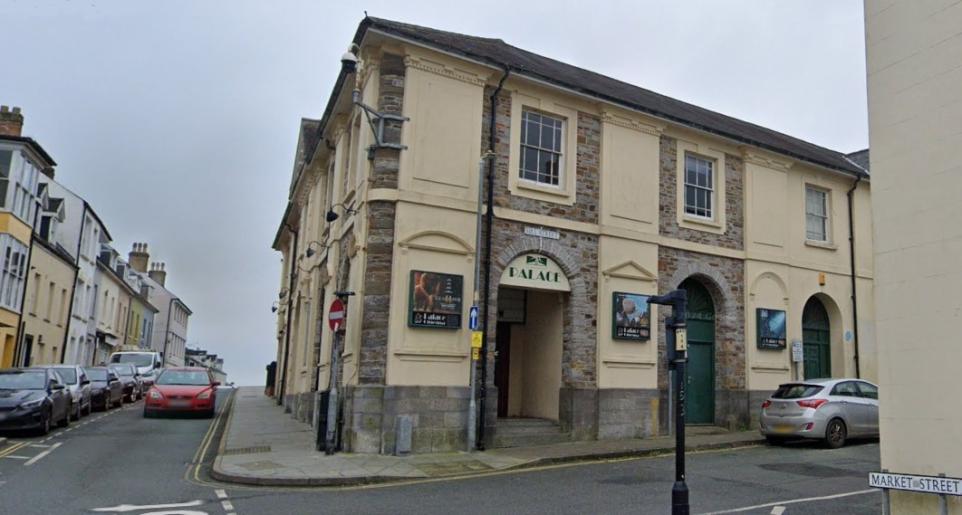
SIX COUNCIL-owned properties in Pembrokeshire, including Haverfordwest’s Palace Cinema, a boatyard, and a former social services premises in Tenby, are to be put up for sale following a decision by senior councillors.
At the March 16 meeting of Pembrokeshire County Council’s Cabinet, members were asked to back the disposal of six properties in the county’s portfolio as well the earmarking of four properties for other purposes.
A report for members said: “The Property Department has recently undertaken a review of the council’s estate to identify underused or vacant properties that are no longer required for service delivery and could be transferred internally or disposed of to generate capital receipts.”
The report listed six assets which members were asked to declare surplus for disposal by freehold sale.
Those assets were: Iveston Farm, Maidenwells; land east of Cleddau Reach School, Llangwm; Palace Cinema, Haverfordwest; St Asaph, Trafalgar Road, Tenby – social services premises; land at East Llanion Marine, Pembroke Dock – boat yard area; and land at Maidenwells – development plot.
For those six properties, it said of Iveston Farm: “Farm homestead in need of extensive renovation. An approach to local agents will begin to market the homestead and surrounding land. The remainder of the land areas are to be re-let as part of the County Farm Estate.”
For the land east of Cleddau Reach School, it said: “Areas of land parcels that no longer form part of the school demise and offer no opportunity to the authority and is therefore to be declared surplus for disposal.”
For Palace Cinema, it said: “Freehold of property to be sold. The property is listed and requires significant investment.”
For St Asaph, Trafalgar Road, Tenby, it said: “The property is not required or suitable for other internal services and is therefore to be declared surplus for disposal.”

For East Llanion Marine, it said: “Freehold of the property to be sold. This is an area of land (0.29 acres) adjacent to Port owned land. Both parcels are leased to East Llanion Marine. The property is not required or suitable for other internal services and is therefore to be declared surplus for disposal.”
For the land at Maidenwells, it said: “The property is not required or suitable for other internal services and is therefore to be declared surplus for disposal.”
It also listed three assets in which cabinet was asked to declared surplus to the requirements of one council department and appropriated to another use within the council.
Those were: Portfield Social Activity Centre, Haverfordwest – for future education project; Eastgate Centre, Pembroke – for future re-development project; and land west of Cleddau Reach School, Llangwm – for future education project.
Members were also asked to remove one property declared surplus to council requirements, appropriated for a particular use within the council: Pembroke Dock Watersports Centre – Watersports centre in occupation.
Members backed the 10 recommendations.



Education10 hours ago
Milford Haven school plans unveiled but funding not yet secured
PLANS for a new £100 million school in Milford Haven have been unveiled, but the project has not yet secured...


News11 hours ago
Council unveils plans for new state-of-the-art secondary school in Milford Haven
PEMBROKESHIRE COUNTY COUNCIL has revealed plans for a new state-of-the-art school in Milford Haven, promising modern, inspiring learning spaces for...


Health14 hours ago
NHS waiting list falls — but cancer delays and diagnostic backlog worsen
Record progress claimed by Welsh Government as critics warn key targets are still being missed THE NHS in Wales has...


Crime2 days ago
Rapist jailed after ‘abhorrent’ attacks on woman and children
Haverfordwest man told police “women won’t have sex without force” A HAVERFORDWEST man who raped a woman and a young...


News2 days ago
Reform secures first Pembrokeshire councillor in Hakin by-election win
Late Reform candidate takes seat as independent surge and Labour withdrawal shape contest REFORM UK candidate Scott Thorley has won...


News2 days ago
Scott Thorley elected as Pembrokeshire’s first Reform councillor
REFORM UK candidate Scott Thorley has won the Hakin by-election after securing 179 votes. The full result is as follows:...


News2 days ago
Police confirm man has died after being recovered from River Cleddau
Major emergency response in town centre after concerns raised for man in water A MAN has died after being recovered...


Community2 days ago
Davies and Kurtz urge groups to seek employability funding
Community organisations in Pembrokeshire encouraged to apply for new grants supporting skills and job access LOCAL Senedd Members Samuel Kurtz...


News2 days ago
Emergency services flood Haverfordwest after reports of person in river
Town centre sealed off as multi-agency response continues A MAJOR emergency response is underway in the centre of Haverfordwest after...


News3 days ago
Detectives receive surge of new information in bid to identify man found at Powys reservoir
Public response follows release of facial image as officers pursue fresh lines of enquiry DETECTIVES investigating the identity of a...
-

 Health7 days ago
Welsh Ambulance Service to host bi-monthly Board meeting
-

 News6 days ago
Rayner and Lammy visit Wales to discuss justice and community safety
-

 News5 days ago
Fishguard linked to allegations in Many Tears Animal Rescue investigation
-
News2 days ago
Emergency services flood Haverfordwest after reports of person in river
-

 Local Government6 days ago
Investigation confirmed after inspectors visit Many Tears Animal Rescue
-

 Community7 days ago
Local charity hosts cancer awareness event in Cardigan
-

 Farming7 days ago
Plea to remove decades old ‘unviable’ planning conditions from property
-

 Business7 days ago
Work set to begin on £50m hydrogen plant in Milford Haven