


Community
Exceptional sporting talent celebrated


 Amazing sport achievements from across the County were recognised at the Sport Pembrokeshire awards on Friday (28th November). Over six hundred people turned up to celebrate the outstanding talent of the County’s sportspeople at the prestigious annual event at Folly Farm. Hosted by Sport Pembrokeshire- Pembrokeshire County Council’s sports development service – this year’s awards attracted more nominations that ever before across a wide variety of sports. Among those recognised was former professional football player – Mark Delaney, who was presented with a Lifetime Achievement Award.
Mark played for Goodwick United, Carmarthen Town, Cardiff City and finally Aston Villa, where he is now the coaching organiser for their under 7s to 11s and coaches their talented under 16 side. He was only at Cardiff City for 28 matches before John Gregory took him to Aston Villa and he established his first team place very quickly. One highlight of his 158 games there was playing for Villa in the last FA Cup Final to take place at the old Wembley Stadium, although they lost to Chelsea. Another of Mark’s highlights was representing Wales 36 times after his debut in 1999 – and he was honoured with the captaincy as an added bonus.
Another of this year’s winners was Christopher Gouldsmith, recipient of the Chairman’s Special Achievement Award. He and identical twin brother, Jonathan, grew up the best of friends and both had successful careers in the Army. Christopher was a Corporal with the Royal Engineers and Jonathan a Lance Corporal with the Royal Electrical and Mechanical Engineers (REME). In April, 2011, Jonathan returned home to celebrate winning a services skiing championship but tragedy struck during a night out in Llanelli when he was hit by a taxi and killed.
Three years on, Christopher decided to honour his brother’s memory and take on a mammoth marathon challenge. He ran 10 marathons in 11 days as part of the ‘Run Goldie, Run’ challenge. On September 15th this year, Christopher began his mammoth undertaking in Kinloss, Scotland – which is where incidentally he and Jonathan trained with Great Britain’s cross country skiing team – and less than a fortnight and 524 miles later he finished in his home town of Haverfordwest.
Christopher wanted to raise £20,000 for the REME Charitable Trust – which helped support his family when they lost Jonathan – and Combat Stress, the Mental Health Charity for ex-service personnel. Councillor Elwyn Morse, Cabinet member for Sport and Leisure said the awards recognised not just the hard work and effort that went into sport in Pembrokeshire but also the sporting heroism that often went with it.

“We have an exceptional standard of award winners this year, who epitomise the very best of sporting endeavour,” he said. “Again, it proved to be a very emotional evening.” Ben Field, Manager of Sport Pembrokeshire said the success of the awards scheme was due to the many coaches, parents and volunteers that kept community sports clubs going right throughout the year. “It’s down to them that grass roots sport in Pembrokeshire is alive and kicking!” he said.


Natural Resources Wales (NRW) has issued a Flood Alert for the Pembrokeshire coastfollowing rising water levels. The alert, which affects areas between St Dogmaels, Cardigan and Amroth, warns that flooding is possible in the region due to adverse weather conditions and high tides.
The alert was issued at 12:53 PM today (Apr 4), urging local residents to be prepared for potential flooding in the coming hours.
Key Advice for Residents
As the flood risk increases, NRW has shared crucial advice to help people stay safe:
- Prepare a flood plan: If you have one, now is the time to follow it.
- Protect valuables: Residents should move important items, such as documents and sentimental belongings, to higher ground or safer locations.
- Stay alert and pack an emergency kit: Ensure your phone is charged, and pack essential items like medications, chargers, insurance documents, and warm clothing in case you need to evacuate quickly.
- Check on vulnerable individuals: Ensure that children, elderly relatives, and pets are safe, with a plan for their evacuation if necessary.
Avoid Floodwater at All Costs
NRW is also stressing the importance of avoiding floodwater, as even shallow levels of water can be extremely dangerous. As little as 30 cm (1 foot) of floodwater can sweep away a car, and 15 cm (6 inches) can knock you off your feet.
Authorities are urging everyone to never walk or drive through flooded areas.
How to Stay Updated
Residents are advised to stay informed through NRW’s website, where they can track water levels and access real-time updates. The agency also recommends checking its social media accounts for the latest information.
For more detailed information or if you need assistance, call Floodline at 0345 988 1188 (quick dial number: 503013).
For More Information:
- Flood Warning Details: Flood Warning Page
- Check River and Rainfall Levels: River Levels
- Floodline: 0345 988 1188
Follow NRW on Twitter: @NatResWales

Image: Herald file photo


A FORMER Pembrokeshire county councillor who owns many hostelries in the county has submitted plans to the national park to rejuvenate a “tired” seaside pub.
In an application to Pembrokeshire Coast National Park, Mike Evans of Harbwr Brewery, a former county councillor and national park authority member, seeks a partly retrospective permission for works at the Old Chemist Inn, The Strand, Saundersfoot.
The works include proposed internal alterations to the basement and ground floor, a new rear balcony area to replace the existing one, improvements to front façade, a change of use of shop space to food/drink, and installation of seating booths in the rear garden.
It says the changes proposed will increase the number of staff employed to 15 full time and 10 part-time.
No objections to the proposal were raised by local community council Saundersfoot.

A supporting statement through agent David J P Morgan RIBA Architect, says the 19th Century pub “has endured many alterations during its lifetime and at present it needs improvements to echo the recent upgrading of the village, both in the general tourism support facilities, as well as the new innovative harbour development,” with the appearance and interior facilities “tired” and needing “works both inside and outside to enable the inn to achieve and provide the high levels of cuisine and facilities now expected”.
It says: “The Inn has been purchased by a local company who have a number of establishments within Saundersfoot and Tenby. The company is owned by local people, they use local produce, they employ local labour and work actively with local communities to achieve the high standards expected.
“The proposals include internal alterations to the internal layout of basement and ground floor which will improve bar, kitchen and food facilities and allow a much more varied menu including lots of local produce and locally caught seafood dishes. New toilet facilities will be provided on both levels to cater for the increase in visitors to the Inn.”
It adds: “The applicant has recently purchased the small retail unit on the ground floor. This was a single room, situated in between the two entrances into the Inn and with its own entrance door from the street.

“The current proposals include integrating this unit into the public house bar area and consequently the application includes a change of use from retail to the serving of food and drink.”
It goes on to say: “The rear ‘beer garden’ will be improved to allow more space and comfortable seating areas.
“The applicant is well known for the extensive use of external plotted plants in open areas at their establishments and the garden area will give the opportunity of using such to soften the garden area whilst giving greater habitat opportunities for birds and insects.”

There were initial objections from the Park’s buildings conservation officer to some of the parts of the design, a 2025 application being withdrawn early that year; amended plans being later submitted.
The application will be considered by park planners at a later date.
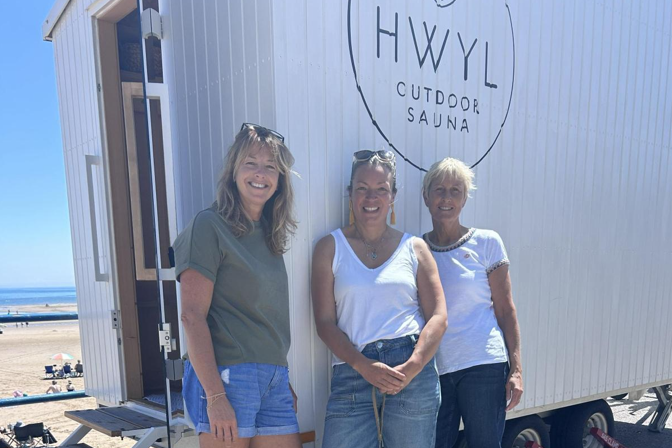
CALLS to allow the permanent siting of an award-winning Pembrokeshire seaside village outdoor sauna, which has been featured in the national press, have been submitted to the national park.
Back in June 2024, a temporary two-year permission for a mobile wood-fired sauna at Saundersfoot harbour was granted by Pembrokeshire Coast National Park’s development management committee.
Since then, a further application by Kerry Evans of Hwyl Outdoor Sauna to make the siting permanent has been submitted to national park planners.
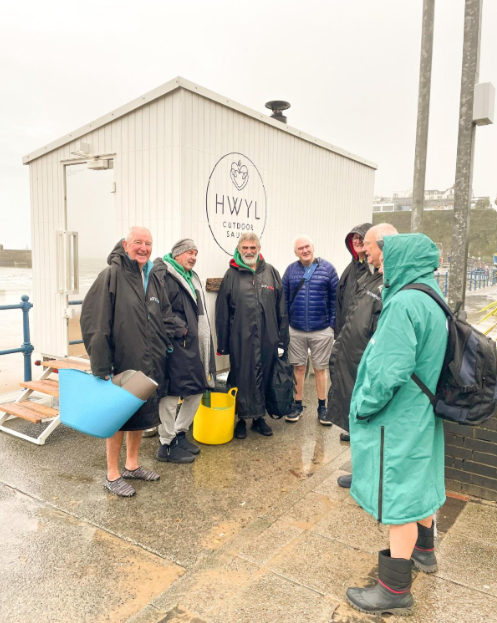
A supporting statement says, since its introduction the sauna has “become a popular and valued amenity for both residents and visitors, offering a space focussed on health, wellbeing and community connection”.
It went on to say: “The overall sentiment within the village has been strongly supportive, with many residents recognising the sauna as a valuable asset that enhances the amenities in Saundersfoot,” adding: “Hwyl Outdoor Sauna has received positive attention in regional and national press helping to promote Saundersfoot as a destination for coastal wellbeing and outdoor experiences.
“Media coverage has highlighted the sauna as an example of the increasing popularity of sea swimming and sauna culture around the UK coastline.
“Hwyl Outdoor Sauna has been featured in two books on the best saunas in the UK.
“The business has also been recognised through tourism and hospitality awards, further demonstrating the quality of the experience provided and the positive contribution it makes to the local visitor offer.”
Back in February, the business, set up by former superyacht worker and mum-of-two Kerry won Sauna of the Year 2026/27 at the Wales Prestige Awards.

At the time Kerry said: “I could not be more proud of what I have achieved with Hwyl. I am so grateful to my wonderful team, who have made this journey not only possible but genuinely so much fun.”
Kerry ploughed a legacy from her beloved late father into the venture of a Pembrokeshire seafront sauna.
The application for allowing the sauna to be permanent added: “Through the Welsh Government I have been able to secure the funds to install a cold-water shower on Saundersfoot Harbour, which will be open year-round. This will be achieved via Hywel Outdoor Sauna and a weather proofing fund, from the Welsh Government. This facility has also a GoFundMe to raise the remaining costs.”
It concludes: “Hwyl Outdoor Sauna has established itself as a valued wellbeing facility that benefits both residents and visitors. It enhances the amenities available in Saundersfoot, supports the local economy by encouraging additional visitor activity, and contributes positively to the community through charitable support and engagement.
“The permanent siting of the sauna would allow this successful local small business to continue operating and provide these benefits to the village in a stable and sustainable way.”
The application for a permanent facility will be considered by park planners at a later date.



News1 hour ago
Emergency services respond to incident in Haverfordwest town centre
EMERGENCY SERVICES were called to an incident in Haverfordwest town centre on Saturday morning (Apr 4), with police and ambulance...

News2 hours ago
Teenager intervenes after bridge incident
A TEENAGER was left shaken after stepping in to help a young woman in distress on Clay Lanes bridge in...


Crime2 days ago
Driver spared jail after crash killed young couple
A PEMBROKE DOCK driver who caused the deaths of a young couple in a road crash has been given a...


Entertainment2 days ago
BBC unveils major new Welsh dramas with Tenby set for prime-time spotlight
New crime series Old Town Murders and supernatural thriller The Witch Farm will both be filmed and set in Wales...


Health2 days ago
No jobs for new paramedics in Wales as graduates told to apply for technician roles
Students trained at public expense urged to take lower-grade jobs as anger grows over NHS workforce planning NEWLY qualified paramedics...


News3 days ago
Health minister refuses to act on Withybush despite 15,000-signature petition
Senedd pressure grows as Welsh Government declines to intervene over surgery fears THE WELSH GOVERNMENT has refused to step in...


Business4 days ago
Fishguard to Wexford rail tunnel plan backed by Elon Musk firm
Six-hour London to Dublin service proposed in £32bn project ahead of Senedd election PLANS for a rail tunnel linking west...


Charity4 days ago
Milford Haven charity honoured with King’s Award for voluntary service
A PEMBROKESHIRE charity supporting vulnerable young people has received one of the highest honours in the UK for voluntary work....


News5 days ago
Plaid Cymru launches bid to lead next Welsh Government
Party positions itself as ‘government-in-waiting’ ahead of May election PLAID CYMRU has formally launched its campaign for the 2026 Senedd...


Crime5 days ago
Police appeal after attempted child abduction in Haverfordwest
DYFED-POWYS POLICE has launched an appeal for witnesses following a reported attempted abduction of a 12-year-old girl in Haverfordwest. The...
-

 News1 day ago
Accommodation providers in Wales will be required to register under new law
-
Business4 days ago
Fishguard to Wexford rail tunnel plan backed by Elon Musk firm
-
Entertainment2 days ago
BBC unveils major new Welsh dramas with Tenby set for prime-time spotlight
-

 Charity5 days ago
RSPCA calls for stronger animal welfare measures as Welsh Labour launches manifesto
-

 Community7 days ago
Residents return home after major Carmarthenshire fire as probe continues
-

 Entertainment2 days ago
From Milford Haven to the world: The story of The Evolution Experience
-

 Crime6 days ago
Gunshot fired by police during incident in Milford Haven
-

 Community5 days ago
Pembrokeshire school allows Sikh pupil to wear Kirpan