


Comment
Take a bow, the government’s own comedy duo


This column is “THE ALTERNATIVE VIEW” by Mike Dello
THERE have been some terrific comedy double acts over the years – Laurel and Hardy, Abbott and Costello, Morecambe and Wise. Well, take a bow, at considerable expense, the government’s own pair: Mahmood and Lammy – the Home Secretary and Justice Secretary.
It would all be rather funny if this hapless duo hadn’t compromised the safety of the British public. The system somehow managed to accidentally release migrant sex offender Hadush Kepatu – yes, by mistake. From all accounts, this individual even tried to get back into prison, but was sent away, wandering the streets for forty-eight hours before being re-arrested.
He was then promptly deported to Ethiopia – with £500 of taxpayers’ money in his pocket. And, given we’re still bound by the European Convention on Human Rights, one suspects he may soon turn up again on a small boat, free of all checks.
Meanwhile, 49-year-old Wayne Broadhunt was murdered while walking his dog this week – reportedly by a migrant – as this scandal reaches epidemic proportions.
Starmer’s house of cards

Sir Keir Starmer’s premiership continues to unravel. Lucy Powell has defeated Bridget Phillipson in a members’ vote for the deputy leadership of the Labour Party – despite being sacked from the Cabinet by the Prime Minister only a few short weeks ago.

As BBC Political Editor Chris Mason dryly observed: “It’s a result the Prime Minister did not want.”
Then there’s Rachel Reeves, the Chancellor, now under fire over alleged rule breaches involving her personal rental affairs. Starmer is standing by her, of course – though one might think the person managing the nation’s finances should at least keep her own in order.
Conflict abroad and chaos at home

The paper-thin ceasefire in Gaza has been shattered once again, with Israel launching air strikes that killed more than a hundred civilians after the killing of an Israeli soldier by Hamas.
And across the Atlantic, Hurricane Melissa has devastated Jamaica, with winds of up to 185mph leaving a trail of destruction. In an ironic twist, some climate campaigners are finally conceding that such disasters are not becoming more frequent – as they long claimed – but more severe.
Meanwhile, Net Zero by 2030 looks increasingly like a fantasy. Wind farms aren’t delivering what was promised, and these expensive steel giants are driving energy bills through the roof. One wonders if Sir Ed Miliband, the government’s “climate chappy,” has received his knighthood yet.
True heroes among us
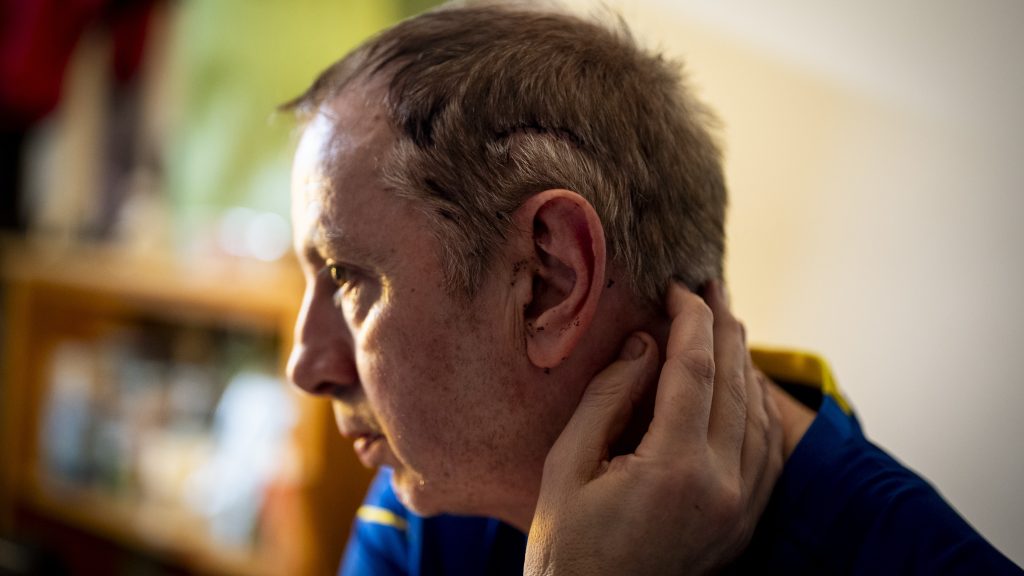
The word “hero” is often used loosely – but seldom has it been more deserved than in the horrific events of Saturday night, when 32-year-old Anthony Williams went on a stabbing spree aboard a passenger train between Doncaster and London.
Eleven people, including the driver, were injured – some seriously. Driver Andrew Johnston showed exceptional skill and courage in diverting the train into a platform at Huntingdon, enabling police to apprehend Williams within minutes.

Among the passengers was Nottingham Forest fan Stephen Crean, who quite literally put his body on the line to protect others, suffering grave injuries in the process. He and others on that train are the true heroes of our times – far more deserving of honours than certain MPs, lords or celebrity “captains of industry.”
Thankfully, such incidents remain rare – a small comfort when more than five million people travel safely on Britain’s railways every day.
A final word

It is worth remembering that during the 1982 Falklands conflict, Prince Andrew – as he then was – served as a Royal Navy helicopter pilot on numerous dangerous missions, including anti-surface operations and casualty evacuations. He was rightly honoured for that service.
Today, his reputation lies in ruins due to his association with Jeffrey Epstein. While King Charles was right to strip him of certain titles and privileges, his wartime honours should stand. If not, the word “hero” loses all meaning.
And finally, the BBC once again finds itself accused of manipulating footage – this time allegedly inserting false words into Donald Trump’s mouth during a Panorama documentary to suggest he incited the 2020 Capitol riot.
If true, it’s yet another reason why the broadcaster should be defunded and made to stand on its own feet, rather than forcing taxpayers to bankroll what many now see as a partisan, outdated institution.


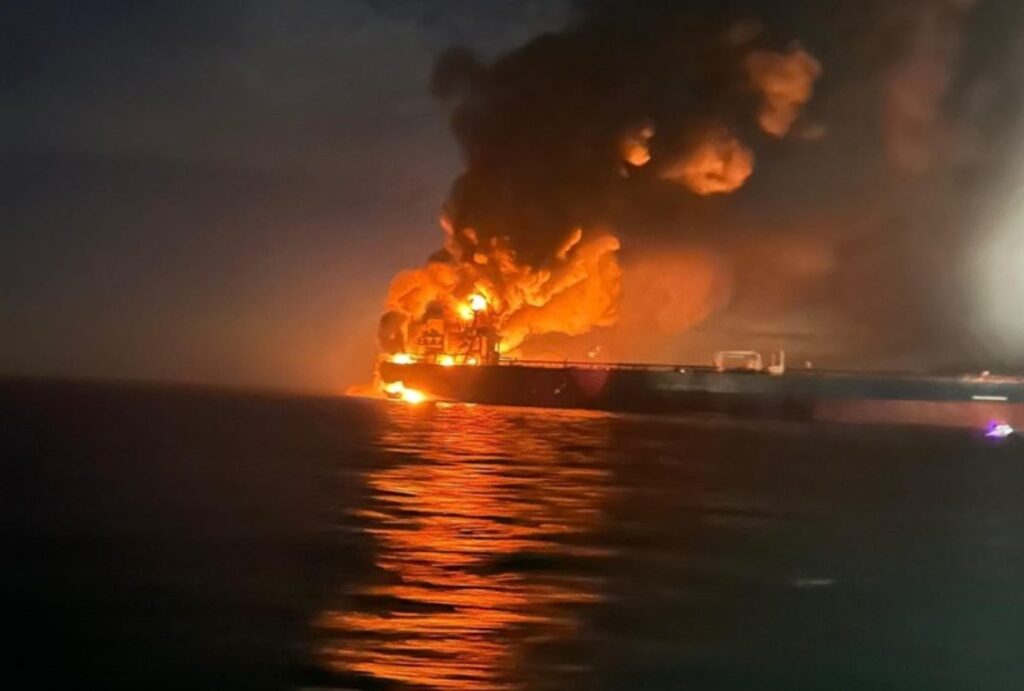
IN THE FIRST weeks of the latest confrontation between the United States and Iran, headlines have focused on airstrikes, missile exchanges and the destruction of Iranian launch sites. Some commentators have rushed to declare that Tehran is already on the back foot.
That conclusion is dangerously premature.
Iran is not Iraq in 2003, nor Afghanistan in 2001. It is a large, heavily populated state with a formidable military doctrine built around survival, endurance and retaliation. Even after weeks of strikes, Iran retains several advantages that make the idea of a quick victory highly doubtful.
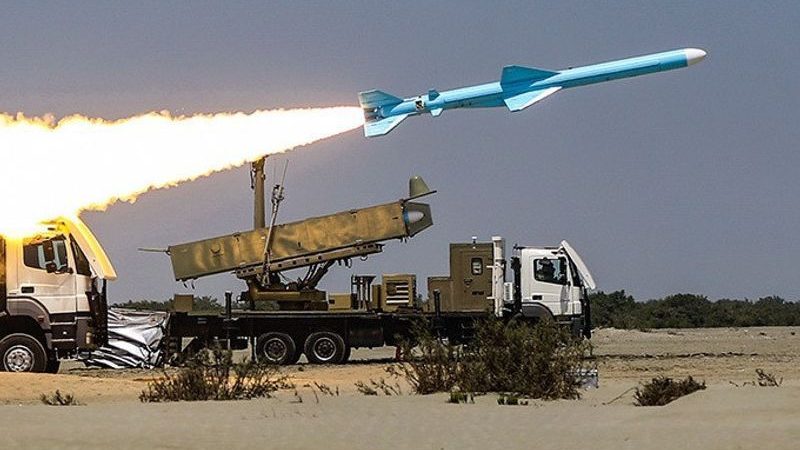
A major factor is the sheer scale of Iran’s military resources. The country possesses one of the largest missile arsenals in the Middle East, with hundreds of ballistic missiles capable of striking targets across the region. Alongside this, Iran has developed a substantial drone programme and a wide range of rockets and cruise missiles designed specifically to overwhelm sophisticated Western air defence systems.
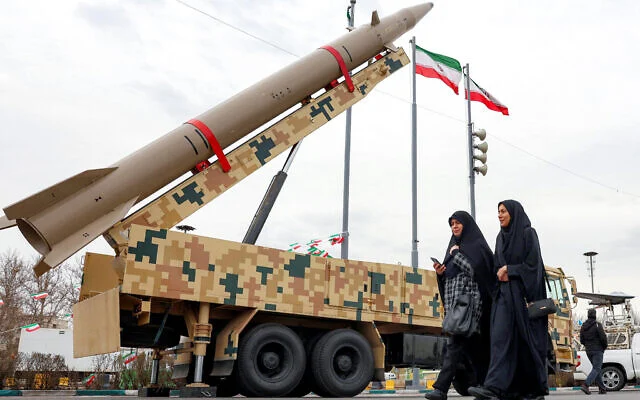
These weapons form part of a layered strategy developed over decades. Iran has constructed underground facilities, often referred to as “missile cities,” where large quantities of drones, missiles and other weapons are stored in tunnels beneath mountains and desert terrain. Even if airstrikes destroy some launchers or storage sites, the system is designed to survive and regenerate.

Geography also makes Iran one of the most difficult countries on earth to invade.
The Zagros Mountains stretch for roughly 1,500 kilometres along Iran’s western frontier — precisely the direction any land invasion from Iraq would likely take. These mountains create narrow passes, chokepoints and defensive high ground that strongly favour defenders and slow mechanised armies.
Iran is also vastly larger than the countries the United States has fought in recent decades. It is almost four times the size of Iraq and has a population of more than eighty million people. Any ground war there would not resemble the rapid march to Baghdad in 2003. It would almost certainly become a grinding and prolonged campaign.
History offers a warning about underestimating Iran’s ability to absorb invasion.
In 1980, Saddam Hussein’s Iraq — backed by many Western and regional powers — launched a full-scale invasion of Iran. The conflict lasted eight brutal years. Despite suffering enormous casualties and economic damage, Iran ultimately survived the war and forced Iraq into a costly stalemate.
That experience shaped Iran’s entire modern military doctrine. The country has built its defence strategy around endurance, attrition and the ability to mobilise large numbers of fighters if necessary.
Iran also holds one of the world’s most powerful economic pressure points: the Strait of Hormuz.
Roughly a fifth of the world’s oil shipments pass through this narrow waterway linking the Persian Gulf to global markets. Iran’s naval strategy focuses on the ability to disrupt or potentially close that route using sea mines, fast attack boats, anti-ship missiles and drones. The geography of the strait, with narrow shipping lanes running close to Iran’s coastline, makes it particularly vulnerable to such tactics.
Even limited disruption to shipping there can push global oil prices sharply higher and trigger wider economic shocks. In other words, Iran does not necessarily need to defeat the United States militarily to inflict serious damage on the world economy.
There is also the wider geopolitical picture to consider.
While Russia and China are unlikely to intervene directly in the conflict, both powers have strategic reasons to see the United States tied down in a prolonged Middle Eastern war. Russia benefits from higher energy prices and from American military attention being diverted elsewhere. China relies heavily on Gulf energy supplies and has developed increasingly close economic ties with Tehran.
Neither country is likely to support a scenario in which Iran is completely defeated or the regional balance shifts decisively in Washington’s favour.
For that reason alone, the conflict is unlikely to remain a simple bilateral confrontation (or trilateral including Israel).
The economic consequences of the conflict could also reshape the political landscape in the United States itself. Rising oil and gas prices are already beginning to feed into inflation and household costs, and history shows that wars which drive up energy prices rarely remain popular for long. If disruption in the Strait of Hormuz continues, American motorists and businesses will feel the effects within weeks.
With mid-term elections approaching, the political pressure on Washington could grow rapidly. Voters are already asking two simple questions: why are we fighting this war, and what exactly is the endgame?
Military technology may give the United States overwhelming air superiority, but wars are not won from the air alone. Iran’s strategy has never been about defeating the United States in a conventional battlefield clash. Instead, it is about making victory so costly — economically, politically and militarily — that outside powers eventually conclude the war is not worth continuing.
That strategy helped Iran survive the Iran-Iraq war in the 1980s.
It may yet shape the outcome of this conflict as well.
For now, the early headlines suggesting Iran is already beaten say far more about wishful thinking than about the realities of war. The uncomfortable truth is that this conflict may only just be beginning — and the question facing the world is no longer how it started, but how it ends.

After a fire destroyed the village school, rebuilding was described as the “preferred option”. Three years later, councillors have voted to close it instead.
WHEN Manorbier Church in Wales VC School was devastated by fire in October 2022, the community did what communities always do in the face of adversity: it rallied.
Teachers carried on teaching.
Parents carried on supporting.
Children carried on learning.
Classes moved into temporary accommodation at Jameston Community Hall and, despite the upheaval, the school community stayed together.
And crucially, the council itself appeared to signal that this was only temporary.
In March 2023 Pembrokeshire County Council announced it had backed what it described as “positive steps towards rebuilding” the school. Council documents went further, describing full reinstatement as the “preferred option.”
Pupils would continue learning in temporary accommodation while rebuilding work took place.
Those words mattered. They created hope.
Not unrealistic hope. Not wishful thinking.
Hope based on what the council itself was saying.

So the community carried on.
Parents campaigned to save the school.
A petition was launched.
The Diocese of St Davids objected to the closure proposals.
Bishop Dorrien Davies visited the school community in their temporary classrooms.
Through all of it, the assumption remained the same: the school would eventually return.

But this week that hope was extinguished.
Despite a consultation in which more than 90 per cent of responses opposed closure, councillors voted to proceed with plans to discontinue the school.
The explanation offered is that the insurance settlement following the fire fell far below the cost of rebuilding the school, while falling pupil numbers and surplus places in nearby schools mean the facility is no longer considered viable.
Those may be the financial and strategic realities the council now faces.
But they do not erase the uncomfortable truth at the centre of this story.
For three years a community was allowed to believe its school would be rebuilt.
Then, quietly, the direction of travel changed.
To be fair, the council now insists that no promise was ever made. The decision in 2023, it says, was simply to commission a feasibility study and explore options.
Technically, that may well be correct.
But leadership is not just about technicalities. It is about clarity, honesty and managing expectations.
If rebuilding was unlikely, the community should have been told that plainly from the start.
Instead, hopeful language about reinstatement allowed a very different belief to take hold — that Manorbier School would one day reopen.
Even Cabinet Member for Education Cllr Guy Woodham acknowledged during Thursday’s debate that those expectations existed.
“There may have been a general perception that a decision had been made to reinstate the school,” he told councillors.
That perception did not appear out of thin air.
It came from the words the council itself chose to use.
The result is a decision that now feels, to many residents, less like an unavoidable policy choice and more like a betrayal.
Manorbier is not simply losing a building. It is losing a village school, a community hub and a Church in Wales education provision that has served generations.
Rural schools across Wales face difficult challenges. Falling pupil numbers and financial pressures are real issues.
But when communities are asked to accept painful decisions, they deserve something in return: honesty.
Communities can cope with difficult truths.
What they struggle to accept is the feeling that they were allowed to hope for something that was never really going to happen.
For the children who continued learning in a community hall after the fire, and for the parents who believed their school would return, that hope has now gone.
And many in Manorbier will be left asking the same question:
Why were we led to believe otherwise?
Cllr Huw Murphy said in the council chamber in December: “If there ever was a template written on how not to deal with a catastrophic incident at a school, we have written it here.”
He’s right.

For more than a decade, services at Withybush have been reduced while promises of improvement remain unfulfilled — and public trust is wearing thin
THERE is a growing sense across Pembrokeshire that no matter what promises are made, healthcare services here only ever seem to move in one direction — backwards.
This week’s decision by Hywel Dda University Health Board on February 19, 2026, to remove emergency general surgery from Withybush Hospital is not an isolated event. It is the latest chapter in a story residents know all too well.
For more than a decade, people in this county have watched services gradually disappear: consultant-led maternity, the Special Care Baby Unit, inpatient children’s services — and now emergency surgery.
Each decision has been presented as necessary. Each one justified on grounds of safety, staffing shortages or sustainability.
And yet the outcome is always the same: Pembrokeshire loses something.
At The Herald, we do not make that statement lightly. Since 2014, we have reported on every development — the protests, the packed public meetings, the consultations, the board decisions. We have interviewed senior clinicians, chief executives and health board members.
We know what promises were made. And we have seen what followed.
That long view reveals something individual announcements often obscure. Residents are told changes will improve care or lead to better outcomes. But from the perspective of patients and families, things rarely feel improved.
Travel distances get longer. Waiting times remain difficult. Ambulance pressures continue. Anxiety about access grows — especially for those in remote communities facing poor roads, winter weather, or limited transport. For elderly residents without cars, and for families with young children, the strain is real. During tourism peaks, pressures only increase.
Trust, once lost, is hard to rebuild.
One of the deepest frustrations is that assurances of future improvement never quite materialise. The long-discussed new hospital remains years away at best. Recruitment challenges persist. Temporary measures quietly become permanent realities.
What begins as reassurance often ends as another reduction.

None of this denies the genuine challenges facing the NHS. Workforce shortages are real. Rural healthcare is difficult to sustain. Clinical standards must come first.
But fairness matters too.
Pembrokeshire is a large rural county with unique geographic challenges, seasonal pressures and communities that deserve confidence in local services.
People understand healthcare must evolve. What they struggle to accept is a situation where change repeatedly means less provision here.
Local MSs Paul Davies and Samuel Kurtz had warned ahead of the vote that undermining Withybush would cross a “red line.” Paul Davies described the outcome as “appalling but not surprising.” Plaid Cymru’s Kerry Ferguson urged the board to reconsider.
Yet here we are — another acute service shifted away, primarily to Glangwili.
That reality now shapes public confidence. And confidence matters. Healthcare relies not only on clinical outcomes but on public trust. When communities feel decisions are predetermined, consultation loses meaning. When residents believe their county is continually losing out, resentment grows.
The danger is not just political anger. It is disengagement — the belief that nothing will change no matter what people say or do.
Pembrokeshire deserves better than that.
It deserves clarity about the long-term vision for healthcare in the county. Honesty about what can and cannot be delivered locally. Genuine effort to protect services wherever possible.
Withybush still provides a 24-hour emergency department, midwife-led maternity and vital outpatient care. But each loss chips away at confidence in its future.
The people of this county are resilient, pragmatic and realistic. But patience is not unlimited.
When every few years brings another reduction, the question becomes unavoidable:
When do things finally start getting better?




Business12 hours ago
Work set to begin on £50m hydrogen plant in Milford Haven
A MAJOR new hydrogen production facility worth around £50 million is expected to begin construction in Milford Haven later this...


Education2 days ago
Manorbier school closure approved while insurance claim still unresolved
Council confirms negotiations with insurer ongoing following 2022 fire PEMBROKESHIRE COUNTY COUNCIL has confirmed that negotiations with its insurer over...


Crime2 days ago
‘Knife attack’ at Spittal property leaves man in hospital
POLICE have arrested a woman following what is being described as a ‘knife attack’ at a property in Spittal on...


Community2 days ago
Pembrokeshire to receive its first banking hub in Pembroke Dock
LINK, the UK’s Cash Access and ATM network, has today announced local people and businesses in Pembroke Dock will benefit from a new banking...


Health4 days ago
Future of Withybush Hospital petition sparks urgent call for Senedd debate
CALLS have been made for an urgent debate in the Senedd over the future of services at Withybush Hospital as...


Sport4 days ago
Sean Bowen set for historic Welsh clash at Cheltenham Gold Cup
PEMBROKESHIRE jockey Sean Bowen could be part of a historic all-Welsh showdown when he lines up in the Cheltenham Gold...


Community4 days ago
Tenby still waiting as Wales hits 50 rural mobile mast upgrades
Seaside town plagued by signal congestion again absent from latest government-backed coverage improvements A NEW milestone in the UK Government’s...


Crime5 days ago
Man raped 15-year-old girl in caravan while she was on family holiday in west Wales
Jury convicts Pendine man after court hears he raped intoxicated teenager in caravan during family holiday A MAN who raped...


Community5 days ago
Crash sparks fresh questions over future of former Haverfordwest library
CONCERNS have been raised about the future of a distinctive Haverfordwest building after a car crashed into it last week,...

Community6 days ago
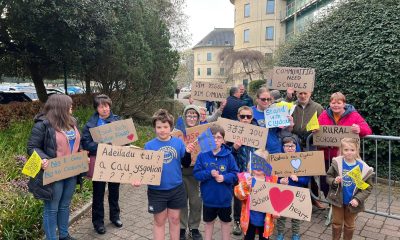
Councillors vote to close Ysgol Clydau despite community concerns
Petition and protests fail to prevent closure of small rural school near Tegryn PEMBROKESHIRE COUNTY COUNCIL has voted to close...
-

 Local Government2 days ago
Register now to vote in May’s Senedd election
-

 Health5 days ago
Women’s health services ‘expanding’ across mid and west Wales says Health Board
-

 Health11 hours ago
Welsh Ambulance Service to host bi-monthly Board meeting
-
Community6 days ago
Councillors vote to close Ysgol Clydau despite community concerns
-

 Comment6 days ago
Manorbier deserved honesty — not false hope
-

 Crime4 days ago
Former Pembrokeshire Army officer stripped of MBE after fraud conviction
-

 Community7 days ago
Farm matriarch who built family poultry business dies aged 90
-

 Cymraeg5 days ago
Commissioner’s five-year report highlights key opportunities to strengthen Welsh language