


Business
Crown Estate awards rights for third Celtic Sea floating wind farm


OCEAN WINDS selected as developer as politicians and industry hail “huge vote of confidence” in west Wales
The Crown Estate has confirmed that global offshore wind developer Ocean Winds has been awarded the rights to build the third commercial-scale floating wind farm in the Celtic Sea — a decision described as a major milestone for the UK’s renewable energy sector and a significant opportunity for west Wales.
The announcement finalises all three project development areas under Offshore Wind Leasing Round 5, following earlier awards to Equinor and Gwynt Glas. Together, the three sites could deliver up to 4.5GW of clean power — enough to supply more than four million homes — and establish the Celtic Sea as one of the world’s leading regions for floating offshore wind.
Ocean Winds, a 50-50 joint venture between EDPR and ENGIE, is recognised as a global leader in floating wind technology. The company delivered the world’s first semi-submersible floating wind farm, WindFloat Atlantic, in Portugal, and has an established UK track record through its Moray East and Moray West projects.
Boost for west Wales
The Crown Estate said today’s award represents a strong vote of confidence in the sector during a challenging period for global energy markets.

Dan Labbad, Chief Executive of The Crown Estate, said the organisation was proud to secure the third developer and ensure the full delivery of the Round 5 capacity.
He said the three companies — Equinor, Gwynt Glas and Ocean Winds — will be progressing “some of the largest floating wind farms in the world.”
The projects are expected to bring significant economic opportunities for Wales and the south-west of England, particularly through port development, manufacturing, assembly, and long-term maintenance. Port Talbot and the Port of Bristol have already been identified as potential hubs for turbine assembly and deployment.
Under tender requirements, all developers must meet strict commitments for local benefits, including new apprenticeships, wider workforce development, and supporting young people who are not currently in education or employment. Full delivery of Round 5 could create more than 5,000 jobs and contribute £1.4 billion to the UK economy.

Ocean Winds must now outline which ports and supply-chain partners it intends to work with before finalising an Agreement for Lease, expected in spring 2026.
Political reaction
Welsh politicians described the announcement as transformative for west Wales.
Samuel Kurtz MS said the decision moves the region “a significant step closer” to realising its potential as a strategic hub for renewable energy and economic growth.

He said the priority now must be ensuring that local workers, local manufacturers, and communities secure real and lasting benefits from the new industry.
UK Energy Secretary Ed Miliband welcomed the award, saying it strengthens the UK’s position as a global leader in floating wind and “unlocks the region’s vast potential to deliver our clean power mission and bring down energy bills for good.”
Wales’ Economy Minister Rebecca Evans said the project shows the country is “at the global forefront of the offshore wind sector”, while Welsh Secretary Jo Stevens called it “another major step forward” for creating thousands of skilled jobs across Wales.
Industry leaders: “Thousands of skilled jobs”
RenewableUK’s Deputy Chief Executive Jane Cooper said today’s announcement means the Celtic Sea leasing round is now fully underway, creating “excellent opportunities” for ports in south Wales to lead the manufacture and assembly of floating platforms and turbines more than 250 metres tall.
She highlighted that the UK has the second-largest pipeline of floating wind projects in the world and predicted the industry could support 97,000 jobs by 2050, contributing £47 billion to the economy.
Port leaders also welcomed the announcement. Richard Ballantyne of the British Ports Association said it gives Welsh and south-west ports “a real opportunity to be in the driving seat,” while Geraint Evans of the UK Major Ports Group said floating wind could become a generational economic opportunity for coastal communities.
Background: de-risking Round 5
Recognising the commercial complexity of floating wind at scale, The Crown Estate has taken steps to de-risk Round 5, including:
- agreeing a grid connection plan with the National Energy System Operator
- investing in technical and environmental surveys around the sites
- completing a Plan-Level Habitats Regulations Assessment before auction
The Crown Estate said these steps have given developers greater confidence to invest and will help accelerate the deployment of floating offshore wind in UK waters.











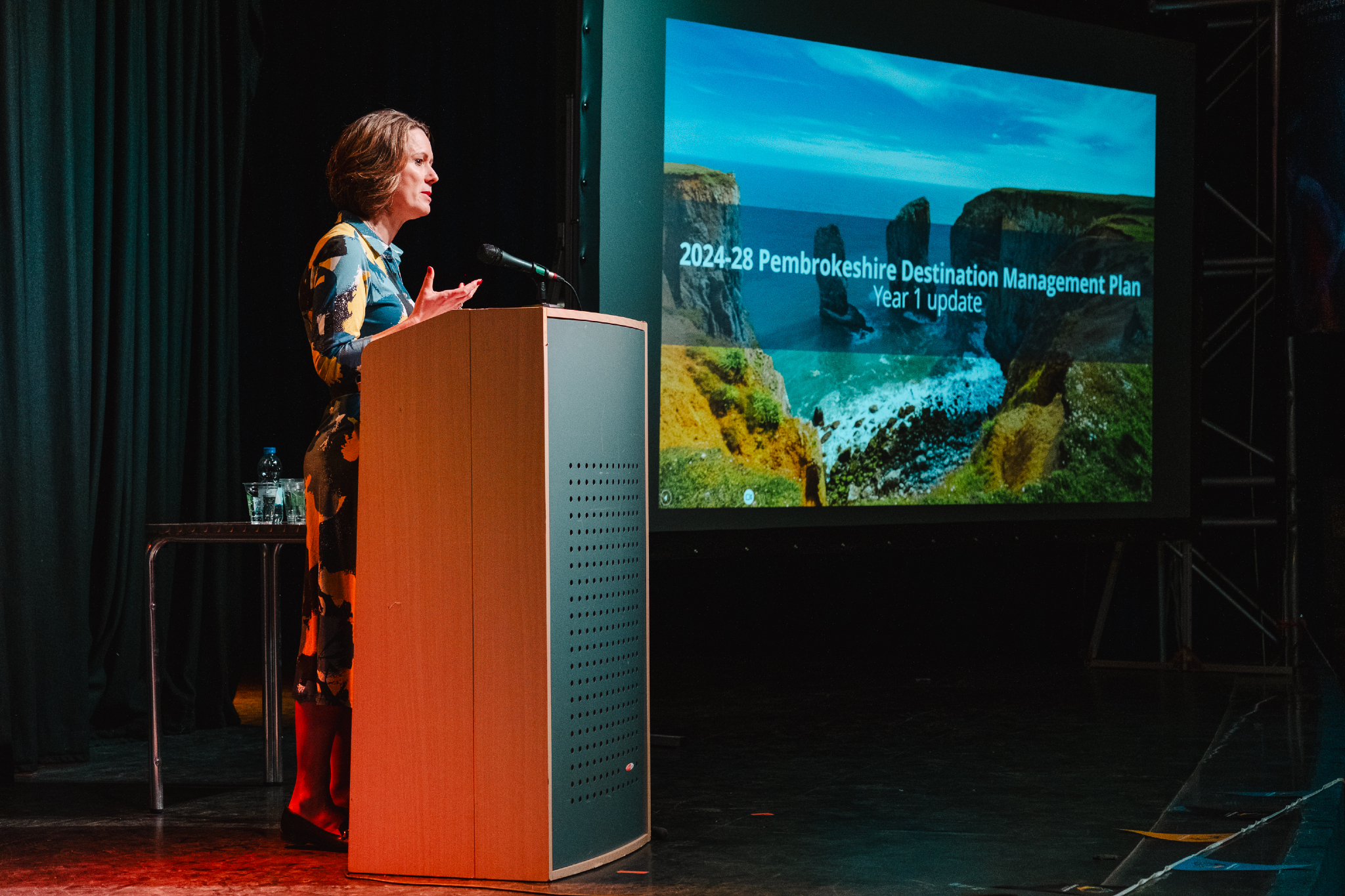
VISIT PEMBROKESHIRE will host a highly anticipated political Q&A session at its upcoming Tourism Summit 2026, giving tourism businesses the opportunity to engage directly with candidates standing in the forthcoming Senedd elections this May.
As Wales’ first and only hybrid Destination Management Organisation, Visit Pembrokeshire brings together both public and private sector partners to support and develop the region’s visitor economy. This collaborative approach will be reflected in the format of this year’s summit, which combines leading industry speakers with a dedicated political panel discussion.
The Q&A session will provide a platform for tourism operators and industry professionals to raise key issues affecting the sector, while offering political candidates the opportunity to outline how their respective parties plan to support Pembrokeshire’s most significant economic driver.

Tourism businesses across the county continue to navigate a changing policy landscape and wider economic pressures. These include the 182-day rule for self-catering accommodation, rising operating costs, the proposed Visitor Levy, and increasing regulatory and licensing requirements.
For many operators, these pressures come alongside ongoing challenges such as recruitment difficulties, seasonality, energy costs and the need to maintain year-round viability for the many small and family-run businesses that form the backbone of Pembrokeshire’s visitor economy and rural communities.
The session will explore how the sector can work collaboratively with policymakers to support a thriving visitor economy while delivering Visit Pembrokeshire’s shared ten-year vision of becoming a world leader in regenerative tourism.
Neil Kedward, Chair of Visit Pembrokeshire’s Board of Directors, said: “Tourism is Pembrokeshire’s largest economic driver and supports thousands of local jobs, businesses and communities. With the upcoming Senedd elections, this summit provides an important opportunity for the sector to engage directly with those who may help shape the policies that affect our long-term future.
“We want our political representatives to succeed, and that means ensuring they are properly informed, connected to the businesses on the ground, and able to hear first-hand about the opportunities and challenges facing the industry. Creating space for open dialogue like this is an essential part of modern politics, particularly at a regional level where the impact of decisions is felt most directly.
“Our hope is that these conversations help build stronger understanding and partnership between tourism businesses and policymakers as we work together towards a thriving and regenerative visitor economy.”

Emma Thornton, Chief Executive of Visit Pembrokeshire, added: “The Tourism Summit is designed to bring together the people shaping the future of Pembrokeshire’s visitor economy. By inviting political candidates to hear directly from tourism businesses, we are creating an open platform for meaningful discussion about both the challenges and opportunities facing the sector.
“Pembrokeshire has an incredibly strong tourism industry, and collaboration between business, government and communities will be essential in ensuring it continues to grow in a sustainable and responsible way while achieving our shared long-term vision for the visitor economy.”
The Visit Pembrokeshire Tourism Summit 2026 will bring together tourism operators, policymakers and industry leaders from across Wales for a day of insight, discussion and networking focused on the future of the region’s visitor economy.
The event is proudly supported by Barclays, whose sponsorship reflects a shared commitment to supporting local businesses and the continued growth of Pembrokeshire’s visitor economy.
Tickets are available now via Eventbrite.



A CALL for the relocation of a Pembrokeshire farm diversification scheme which packages and distributes specialist medical equipment across Europe has been given the final go-ahead by councillors.
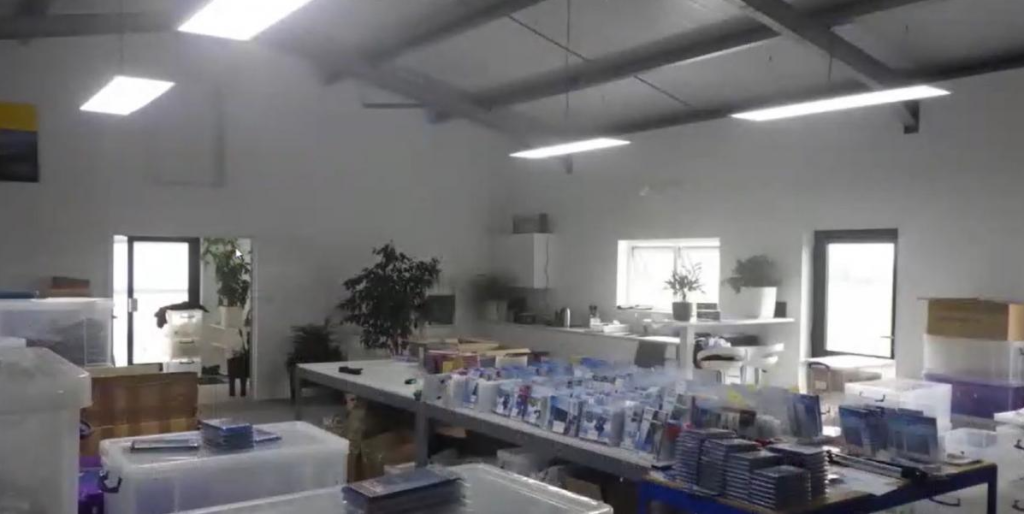
In an application recommended for refusal at the March meeting of Pembrokeshire County Council, Mr Van Der Spoel sought permission for the relocation and expansion of an existing farm diversification business into an existing agricultural building at Castle Villa, Hayscastle.
The proposals were before full council rather than its planning committee as members had twice gone against officer recommendations of refusal with a ‘minded to’ support for the scheme, and a ‘cooling off’ period, meaning a final decision would need to be made by all councillors.
Last July a similar application by Mr Van Der Spoel, through agent Harries Planning Design Management, was refused by planning officers.
A supporting statement for that application said the Dutch-born applicant, together with his wife and adult daughter ran the farm diversification business packing specialist medical insulated insulin supplies at their sheep farm.
It added: “The business run from this site is FRIO ASTRID EURO Ltd, which has a franchise agreement with FRIO UK. This business has been run from Castle Villa since its incorporation in 1998. The business was initially run from the stable building on the farmyard at Castle Villa.
“The business set-up involves receiving stock from FRIO UK in Wolfscastle, packaging orders and distributing the stock to seven Western Europe countries.”
Wolfscastle-based FRIO produces the world’s first patented insulin cooling wallet which keeps insulin and other temperature-sensitive medicines cool and safe.
The scheme for the business, said to have outgrown its current site, was refused by county planners on grounds including a lack of “robust evidence” to prove it couldn’t be sited within a nearby settlement or an allocated employment site, such as Haverfordwest.


The latest application was recommended for refusal on similar grounds.
Agent Wyn Harries has previously said his client’s business, selling into Holland, Belgium, Switzerland, and Germany, accounted for some 20 per cent of FRIO UK’s trade on its own, adding that previous articles on the planning application in the Western Telegraph had shown a great deal of public support for the applicants.
At the January meeting, local member, and chair of the planning committee, Cllr Mark Carter moved approval, delegated to senior officers on receipt of a Section 106 legal agreement, saying the proposals had community council support, adding it was “hard not to support a business that keeps local jobs and keeps a family farm viable”.

Cllr Michelle Bateman, whose neighbouring ward has FRIO UK’s base, said she was “fully supportive” of Cllr Carter’s call.
Members were warned of the danger of potentially setting a precedent by going against officer recommendations, with both former leader Cllr David Simpson and Cllr Michael Williams expressing their concerns at going against the officer recommendations.
Cllr Carter’s call, against the recommendation of refusal, was passed by 28 votes to 15, with one abstention.
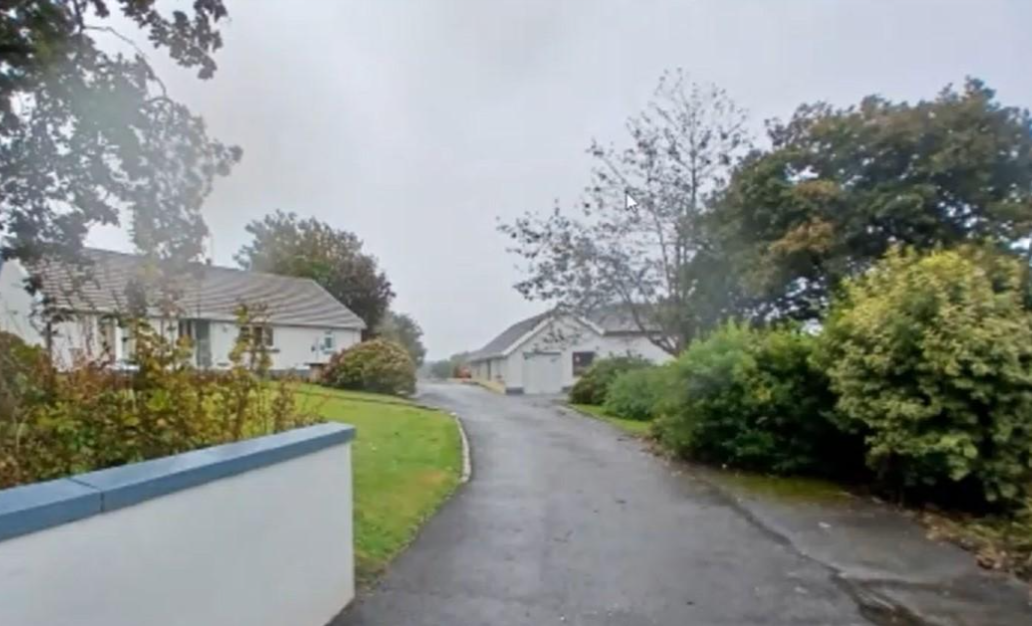
A CALL to convert a former vineyard restaurant in rural Pembrokeshire to holiday lets as a form of small farm diversification has been refused.
In an application recommended for refusal at the March meeting of Pembrokeshire County Council’s planning committee, Barry Cadogan sought permission for a farm diversification and expansion of an existing holiday operation through the conversion of the former Cwm Deri vineyard production base and restaurant to three holiday lets at Oaklea, Martletwy.
It was recommended for refusal on the grounds the proposal “would introduce three new self-catering accommodation units within a countryside location which is not considered to be a proportionate amount of development to support a farm enterprise of limited scale”.
It had previously been recommended for refusal at the December planning committee but was deferred pending a site visit.
An officer report then said that, while the scheme was suggested as a form of farm diversification for the 36-acre farm, no detail had been provided in the form of a business case.

Speaking at that meeting, agent Andrew Vaughan-Harries of Hayston Developments & Planning Ltd, said the former Cwm Deri vineyard had been a very successful business, with a shop and a restaurant before it closed several years ago.
He said Mr Cadogan then bought the site, farming and running a small campsite of 20 spaces, but didn’t wish to run a café or a wine shop; arguing it would easily convert to holiday let use.
Speaking again at the March meeting, he said his applicant had now produced a business case, expecting the proposal would generate half the farm income, saying of the recommendation of refusal: “It almost seems like my client is punished for being a small farmer.”
He later added: “compared to a lot of farms in Pembrokeshire it is small; I think it’s very difficult to make a living out of 36 acres, he’s just a businessman trying to use a building.”
The business figure was debated, with estimations of the income ratio being closer to three-to-one in favour of the tourism side raised.
However, calls to go against officer recommendations and approve the scheme were moved by Cllr Brian Hall, who said the tourism operation was “the only thing that’s keeping him going at the moment,” adding: “I think we should give this applicant a chance; I think if we don’t do this a lot of these smallholdings are going to go out of business.”
Cllr Nick Neumann said the building not being used “doesn’t sit well with me,” warning: “I fear we are just making another building in our county redundant.”

Cllr Michael Williams, who had previously warned of the dangers about going against officer recommendations, saying it was time for a “reality check,” adding: “We have to determine this application as it is before us, not to look for ways round it; that’s the agent’s job.”
Committee chair Cllr Mark Carter, who had previously raised the three-to-one concern, said the business plan as received “doesn’t really stack up to show a form of farm diversification,” adding: “This new proposal with three units of holiday accommodation could well outstrip anything on the farming side by three-to-one.”
Cllr Hall’s call for approval was defeated by six votes to four, with the recommendation of refusal then taken, passing, also by six votes to four.



Education8 hours ago
Manorbier school closure approved while insurance claim still unresolved
Council confirms negotiations with insurer ongoing following 2022 fire PEMBROKESHIRE COUNTY COUNCIL has confirmed that negotiations with its insurer over...


Crime1 day ago
‘Knife attack’ at Spittal property leaves man in hospital
POLICE have arrested a woman following what is being described as a ‘knife attack’ at a property in Spittal on...


Community1 day ago
Pembrokeshire to receive its first banking hub in Pembroke Dock
LINK, the UK’s Cash Access and ATM network, has today announced local people and businesses in Pembroke Dock will benefit from a new banking...


Health2 days ago
Future of Withybush Hospital petition sparks urgent call for Senedd debate
CALLS have been made for an urgent debate in the Senedd over the future of services at Withybush Hospital as...


Crime3 days ago
Man jailed after threatening to chop teen’s ears off in drunken phone call
17-year-old victim said she feared for her life after a series of threats A MAN who threatened a teenage girl...


Sport3 days ago
Sean Bowen set for historic Welsh clash at Cheltenham Gold Cup
PEMBROKESHIRE jockey Sean Bowen could be part of a historic all-Welsh showdown when he lines up in the Cheltenham Gold...


Community3 days ago
Tenby still waiting as Wales hits 50 rural mobile mast upgrades
Seaside town plagued by signal congestion again absent from latest government-backed coverage improvements A NEW milestone in the UK Government’s...


Crime4 days ago
Man raped 15-year-old girl in caravan while she was on family holiday in west Wales
Jury convicts Pendine man after court hears he raped intoxicated teenager in caravan during family holiday A MAN who raped...


Community4 days ago
Crash sparks fresh questions over future of former Haverfordwest library
CONCERNS have been raised about the future of a distinctive Haverfordwest building after a car crashed into it last week,...


Community5 days ago
Councillors vote to close Ysgol Clydau despite community concerns
Petition and protests fail to prevent closure of small rural school near Tegryn PEMBROKESHIRE COUNTY COUNCIL has voted to close...
-

 Local Government1 day ago
Register now to vote in May’s Senedd election
-

 Health4 days ago
Women’s health services ‘expanding’ across mid and west Wales says Health Board
-
Community5 days ago
Councillors vote to close Ysgol Clydau despite community concerns
-

 Education6 days ago
New partnership launched to tackle Wales’ growing student support gap
-

 Comment5 days ago
Manorbier deserved honesty — not false hope
-

 Charity6 days ago
RSPCA responds to Reform UK Wales manifesto on animal welfare
-

 News6 days ago
Mother’s Day treats by the coast at Milk Wood House
-

 Crime3 days ago
Former Pembrokeshire Army officer stripped of MBE after fraud conviction