


Local Government
Dramatic U-turn: Full council to decide 2026 rent rises after Stoddart revolt


PEMBROKESHIRE COUNTY COUNCIL has executed a humiliating climbdown over who gets the final say on council house rents. Cabinet this morning formally agreed to hand the decision back to full council on 11 December, explicitly admitting that earlier legal advice – which said Cabinet could impose the rise alone – was wrong.
The reversal comes after weeks of fierce criticism led by Independent warhorse Cllr Mike Stoddart.
Cabinet member for Housing, Cllr Michelle Bateman, opened the crucial item at this morning’s (1 December) meeting with a candid admission that will delight backbench rebels.

“At the time of the Policy & Precepts Scrutiny Committee the advice was that this was a Cabinet decision,” she told members. “This advice has now changed, and today Cabinet are asked to make a recommendation to council for a decision at the December council.”
The climbdown ends a bitter row that erupted when senior officers first proposed that Cabinet alone should set rents for 2026–27, effectively sidelining the other 50-plus councillors who do not sit in the ruling group.

Independent councillor Mike Stoddart, who represents a ward with one of the highest proportions of council tenants in the county, led the fightback. He branded the original plan “a disgrace” at last month’s Scrutiny Committee and fired off a strongly-worded letter to the council’s Monitoring Officer warning that a Cabinet containing few or no members with significant numbers of council tenants could set rents with zero democratic accountability.
Speaking exclusively to The Pembrokeshire Herald minutes after Cabinet rubber-stamped the U-turn, Cllr Stoddart said: “I’m absolutely delighted that Cabinet has finally come round to my point of view. “It could never be right that members like me, with a high proportion of council tenants in their wards, should be deprived of any real say in the amount of rent their constituents were being called upon to pay. At Scrutiny I called it a disgrace that members were being denied the opportunity to determine their constituents’ rents, and I’m glad common sense has prevailed.”
Cabinet unanimously backed Cllr Bateman’s six recommendations, which now go forward to full council on 11 December. They are:
- A base “compliant” option: standard rents up by 3.6% plus up to £2.55 per week for any tenancy currently below the council’s target “standard rent”.
- Cllr Bateman’s preferred “aspirational” option (subject to Welsh Government dispensation): 4.3% across the board plus up to £5 per week on lower rents. Cabinet indicated support for pushing this higher figure.
- Garage rents to rise 4.3% from 1 April 2026.
- Properties upgraded to the highest energy ratings (EPC A or B) to move progressively to a new higher “improved homes” rent band, agreed case-by-case.
- All changes to be collected over 48 weeks, with existing tenancies starting 1 July 2026 and new ones from 1 April 2026.
- Minor drafting amendments allowed before full council.
Cllr Bateman told the meeting that Pembrokeshire’s historic rent anomalies – some identical properties differ by tens of pounds a week – combined with Welsh Government’s strict overall income cap, are preventing the authority from achieving fair “convergence” without falling behind other councils and housing associations.

She revealed she has already spoken directly to Wales’ Cabinet Secretary for Housing and that officers are in active talks seeking special dispensation to breach the income cap for at least 12 months.
Both the HRA Working Group and the Policy & Precepts Scrutiny Committee had backed the recommendations, she added.
The decision means every one of Pembrokeshire’s 60 councillors will now vote on exactly how much extra the county’s roughly 5,800 council tenants will pay from next spring – restoring the democratic link that Cllr Stoddart and others insisted must never be broken.

Reacting to the outcome, Cllr Stoddart said: “This was always about basic democracy. Council tenants deserve to know their local councillor still has a proper voice on their weekly budget – and today we’ve won that back.”
The Pembrokeshire Herald first revealed the controversial attempt to centralise rent-setting powers earlier this autumn, prompting the Scrutiny Committee showdown that ultimately forced today’s reversal.
Full council meets in December to make the final call.

Community
Senior councillors to consider call for ‘impartial investigation’ into Manorbier school closure

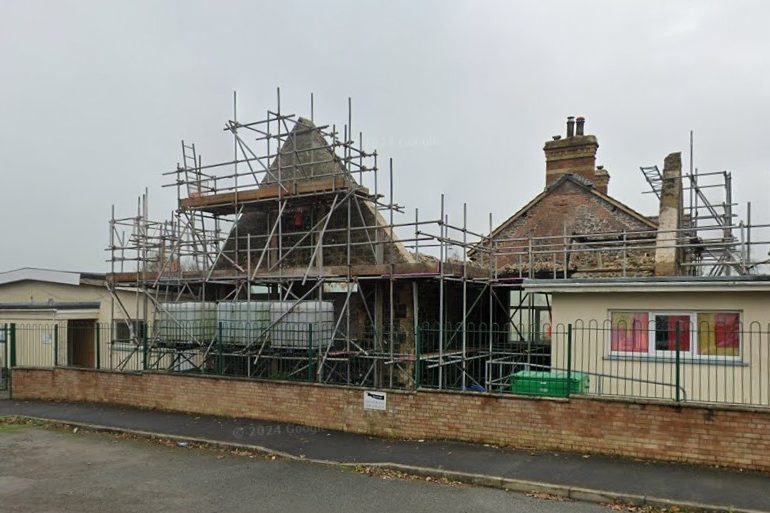
A CALL for an impartial investigation into the contentious closure of Manorbier school, is to be heard by senior councillors.
Back in June, the final decision to close fire-ravaged Manorbier school was given the go-ahead, despite a heartfelt last-minute plea by local councillor Phil Kidney to keep it open.
Manorbier Church in Wales VC School and its adjoining schoolhouse was severely damaged by a fire in October 2022, which broke out in the school roof space.
After that, a ‘school from school’ was set up in Jameston Village Hall.
It had been hoped the school would be rebuilt, but last year councillors backed a statutory consultation on proposals to discontinue Manorbier Church in Wales Voluntary Controlled School.
The decision attracted strong local opposition, with more than 1,500 people signing a petition on the council’s own website calling for the school to be rebuilt.
At a special extraordinary council meeting held on June 15, members made the final decision on discontinuation of the school, backed by 30 votes to 23, with four abstentions.
At the meeting, local councillor Phil Kidney, who has been a staunch supporter of keeping the school open, said: “We’ve all let these people down, the way this council has handled this situation is appalling; from day one not one of the executives came up to see these children, no-one came out; if that was Haverfordwest or Tenby they’d be all over the place.”
Following that decision, issues around the contentious closure were heard at the July 16 meeting of the council.
In a notice of motion before councillors, Cllr Kidney proposed: “That council considers a full impartial investigation into the process of closing Manorbier school, specifically the time it has taken, broken promises, inadequate insurance, and the involvement of HR department.”
A supporting statement for his motion said: “The review should be carried out by someone not employed by the authority, with powers to recommend disciplinary action if they deem necessary.
“A full impartial review should hopefully stop another school being treated so appallingly.”

Cllr Kidney also, in a submitted question, sought an apology from the deputy leader, who now has responsibility for education: “Would the Cabinet Member for Education [Cllr Paul Miller] like to apologise to the staff and parents of Manorbier School for his comments at the last council meeting, where he stated children would get a better education in St Florence and children in Manorbier were being taught in one room?
“This is both factually wrong and insulting to staff, who have worked tirelessly to provide teaching of an excellent standard, and if he had taken the time to read the last Estyn report, he may not have made these derogatory comments.”
Members agreed Cllr Kidney’s notice of motion would be heard at a future Cabinet meeting.
In response to Cllr Kidney’s question, said he “had no intention of insulting staff,” who were “doing a great job in very difficult circumstances”.
He went on to say that if he had said the words quoted by Cllr Kidney, he would apologise for them but stressed: “I do believe it will be better for them [the pupils] to be in a larger school.”
On July 16, with the summer holidays approaching, the doors of Manorbier Church in Wales Primary School closed for the final time.
Friends of Manorbier School posted on social media: “This isn’t the ending that our children, families, staff, and community hoped for. Yet as we reach this difficult milestone, we are reminded that Manorbier School has always been so much more than a building. For generations, it has been a place filled with friendship, laughter, learning, kindness, and unforgettable memories.”
It added: “As we say goodbye, we do so with immense gratitude and pride.
“Thank you, Manorbier School, for the memories, the laughter, the kindness, and the community you created.”

Final decision removed from Pembrokeshire County Council after minister concludes scheme raises national security and national planning issues
THE WELSH GOVERNMENT has taken control of the decision over controversial plans for a major military radar installation in Pembrokeshire.
Siân Gwenllian MS, Cabinet Secretary for Local Government, Housing and Planning, has called in the planning application for the proposed Deep Space Advanced Radar Capability development at Cawdor Barracks, Brawdy.
The intervention means Pembrokeshire County Council will no longer decide whether the scheme should be granted planning permission.
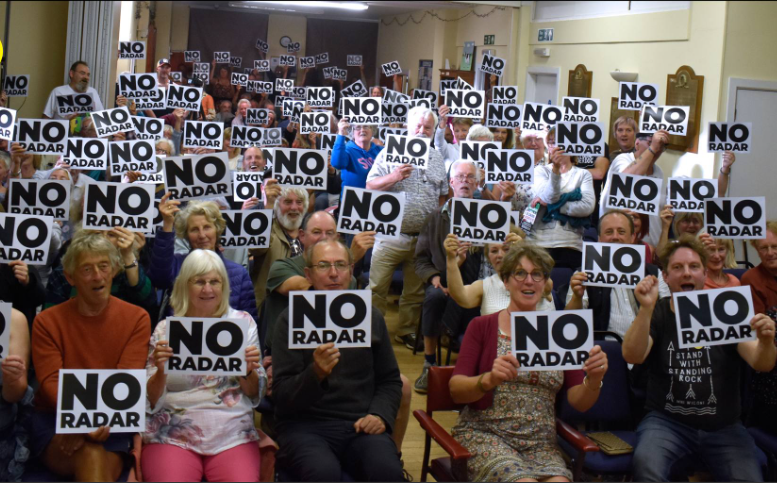
The council’s planning committee had been expected to consider application 25/1101/PA on Tuesday, July 28, following one of the largest local campaigns against a development seen in Pembrokeshire for years.
The call-in represents a major procedural victory for PARC Against DARC, which has spent two years campaigning for the decision to be taken at Welsh Government level.
However, it does not mean that the radar development has been refused.
The application will now enter a national planning process, with the evidence likely to be examined by an independent planning inspector before a recommendation is made to Welsh Ministers.
PARC Against DARC described the intervention as a “seismic and significant step” and welcomed what it said was a decision to recognise the national and international implications of the project.
A campaign spokesperson said: “Siân Gwenllian has made the right decision here, and DARC is far from a typical infrastructure project.
“Its national and international scope and implications mean it raises issues that go well beyond the local planning process, demanding consideration at Welsh Government level.”
The proposed development would involve the construction of 27 large radar dishes, consisting of six transmitters and 21 receivers, together with associated buildings, power supplies, security infrastructure and landscaping.
The Pembrokeshire installation would form the UK element of an international radar network being developed with the United States and Australia.

The Ministry of Defence says the system would track objects in deep space and help protect satellites and other critical infrastructure.
Opponents argue that the development would industrialise a sensitive rural landscape close to the Pembrokeshire Coast National Park, damage tourism and wildlife, and increase the militarisation of space.
According to the ministerial call-in letter, the proposed development raises national security issues because of its strategic defence purpose and represents a novel planning matter.
The letter also states that the scheme could conflict with national planning policy relating to landscape, ecology, sustainability and placemaking.
It adds that the application is likely to be controversial beyond the immediate area and has already attracted considerable public interest.
The minister concluded that the proposal was therefore of more than local importance and should be determined by Welsh Ministers.
Pembrokeshire County Council must now forward the planning application, consultation responses, public representations and other relevant documents to the Welsh Government.
The council will still be able to provide evidence and its assessment of the development, but its planning committee will not make the final decision.
The decision comes days after former Labour leader Jeremy Corbyn publicly supported calls for the application to be taken out of the council’s hands.
Mr Corbyn addressed campaigners during a political gathering in Wales on Saturday, where opposition to DARC and the wider militarisation of Wales formed part of the programme.
PARC says a Freedom of Information response revealed that 1,121 objections were submitted during the council’s consultation process, compared with one representation in support.
Almost 20,000 people have also signed a petition opposing the radar project.
Campaigners said the level of opposition demonstrated that the dispute had developed into something far larger than an ordinary disagreement over a planning application.
PARC said: “This is not just a group of residents objecting to a development. It is a mass movement of public opposition.
“Our national parks should not be sacrificed to military expansion. Our communities should not be ignored when they speak with such a clear and overwhelming voice.”
Plaid Cymru has repeatedly expressed opposition to the DARC proposal.
Party representatives have tabled a statement of opinion in the Senedd, while an Early Day Motion opposing the development was presented at Westminster. Plaid Cymru members also voted unanimously at the party’s 2024 conference to oppose the scheme.
Campaigners said the call-in showed that the new Plaid Cymru-led Welsh Government had listened to concerns raised by residents.
The application could now become the focus of a significant political dispute between the Welsh and UK governments.
The Ministry of Defence has promoted Brawdy as its preferred location for the UK DARC installation, while campaigners are calling on Welsh Ministers to reject the application on planning, environmental and landscape grounds.
PARC has also highlighted what it described as a historical twist involving the newly appointed Welsh Secretary, Stephen Kinnock.
The group says it has a letter sent by his father, former Labour leader Neil Kinnock, supporting campaigners who opposed a similar radar proposal in Pembrokeshire during the 1990s.
The campaign is now asking whether Stephen Kinnock will support the current Ministry of Defence proposal or reflect his father’s earlier opposition.
A demonstration had been planned outside County Hall in Haverfordwest ahead of the council planning meeting on Tuesday, July 28.
Organisers say the gathering will still take place from 9am, but will instead be held as a vigil supporting the Welsh Government’s decision to call in the application.
The next stages of the process, including whether the application will be examined through written representations, a hearing or a public inquiry, have not yet been confirmed.
Welsh Ministers will ultimately have the power to approve or refuse the development.
For campaigners, the call-in marks the most significant breakthrough of their two-year fight against DARC. The final battle over whether the radar array can be built at Brawdy, however, is still to come.

Residents are being asked for their views on proposed changes affecting councillor numbers and electoral arrangements in communities across the county
PEMBROKESHIRE COUNTY COUNCIL is inviting residents, organisations and other interested parties to have their say on proposed changes to the electoral arrangements of eight community councils across the county.
The consultation follows recommendations published by the Democracy and Boundary Commission Cymru in January 2025 as part of a wider review of Pembrokeshire’s community boundaries and local electoral arrangements.
The Commission’s review considered whether the county’s existing communities and community wards continued to provide effective and convenient local government.
It examined issues including community boundaries, the number of councillors serving each area, the distribution of councillors between community wards and whether existing arrangements continued to reflect local populations and community identities.
While a number of the Commission’s recommendations involved changes to community boundaries, it also proposed alterations to the electoral arrangements of some community councils where no boundary changes were recommended.
Those particular proposals could not be introduced through the original community review process and must now be considered separately by Pembrokeshire County Council.
The latest consultation concerns the following communities:
- Lamphey
- Llanrhian
- Martletwy
- Nolton and Roch
- Pencaer
- St Dogmaels
- Stackpole and Castlemartin
- Wolfscastle
The proposals could affect matters such as the number of councillors elected to individual community councils and how council seats are distributed between community wards.
Community and town councils form the most local tier of elected government. They represent the interests of their communities and may be responsible for services and facilities including public spaces, community buildings, play areas, noticeboards and local events.
The County Council said it was seeking views from residents and organisations with connections to the communities affected to ensure that local perspectives were considered before any decisions were made.
The consultation will open on Tuesday, July 28, and close on Friday, September 11, 2026.
Full details of the proposed changes and supporting documents will be available through Pembrokeshire County Council’s Have Your Say consultation portal.

Residents will be able to review the proposals affecting their community and submit comments online.
Paper copies of the consultation documents can also be requested by contacting the Council’s Customer Contact Centre on 01437 764551 or emailing [email protected].
Anyone with questions about the proposals or the review process is encouraged to contact the Council’s electoral services team.



Crime2 hours ago
Women jailed after man chased through Milford home and attacked with knives
Kelly Rees receives further 27-month sentence while already serving prison term for notorious taxi robbery TWO women have been jailed...


Crime3 hours ago
Mother headbutted and clawed police officers after threatening social worker
Court shown body-worn footage of violent confrontation at Goodwick property A COURT has been shown police body-worn footage capturing the...


Crime21 hours ago
Man, 37, found dead following major police response in Pembroke Dock
Death not being treated as suspicious as police make statutory referral to IOPC following active investigation A 37-YEAR-OLD man has...


Community1 day ago
Household Cavalry drum horse returns home to Pembrokeshire for final farewell
Dyfed Willa Rose, who became Major Juno and the first mare to serve as a Household Cavalry Drum Horse, was...


News2 days ago
Jo Stevens out as Welsh Secretary as Burnham reshapes government
Cardiff East MP repeatedly visited Pembrokeshire to champion clean energy jobs, but her successor inherits unresolved questions over Milford Haven’s...


Crime2 days ago
Teen cleared of attempted murder but guilty of GBH after Milford teacher stabbed
Jury returns 11-1 majority verdict on charge of causing grievous bodily harm with intent, with sentencing set for September 3...


Community2 days ago
French troops march through Fishguard as Britain’s last invasion returns to life
Battle scenes, cavalry displays and a surrender procession brought one of Pembrokeshire’s most extraordinary stories back to the streets MUSKET...


News2 days ago
Andy Burnham promises new politics as he enters Downing Street
New Prime Minister admits politicians have “not been good enough” as he sets out a ten-year plan for Britain and...


Health3 days ago
Two new surgeons appointed as Hywel Dda admits orthopaedic waits remain too long
Health board says it is increasing capacity after figures revealed hip replacement patients waited an average of 64 weeks HYWEL...


Community4 days ago
84-year-old man rescued after falling overboard near Tenby
A MAYDAY call sparked a major nighttime rescue after an 84-year-old man fell from a tender and was swept towards...
-

 Crime3 hours ago
Drunken rail passenger tried to headbutt police after being refused travel
-

 featured21 hours ago
From a father-and-son project to an award-winning campervan business
-

 Crime2 days ago
What the Milford Haven School stabbing verdict really means
-
Community1 day ago
Household Cavalry drum horse returns home to Pembrokeshire for final farewell
-
Crime2 days ago
Teen cleared of attempted murder but guilty of GBH after Milford teacher stabbed
-
Crime3 hours ago
Mother headbutted and clawed police officers after threatening social worker
-

 Crime2 days ago
Hakin man jailed after driving while banned and over alcohol limit
-
Crime2 hours ago
Women jailed after man chased through Milford home and attacked with knives