


News
Reflection on 2025: Challenge, resilience and community resolve


AS 2025 draws to a close, The Pembrokeshire Herald’s reporting tells the story of a county under sustained pressure — socially, economically and institutionally — but also one marked by resilience, civic engagement and a strong sense of community identity.
Across the past twelve months, our coverage repeatedly returned to a handful of defining themes: crime and public safety, strain within health and social care, political and economic tension in rural Wales, and the enduring strength of local communities. While many of the year’s biggest stories were troubling, they were frequently balanced by moments of progress, collective action and determination to bring about change.
More than anything, 2025 demonstrated the continuing importance of local journalism — not just in reporting events, but in prompting scrutiny, amplifying community concerns, and, in some cases, helping to drive tangible outcomes.
Crime and public safety: Unease — and accountability

Crime was an unavoidable feature of the news agenda throughout 2025. Court reports, police appeals and community warnings reflected widespread concern about violence, drugs and safeguarding, particularly where alcohol misuse or exploitation of young people was involved.
Among the most shocking cases was the jailing of a woman who stole £245,000 from a Pembrokeshire charity — a crime that went beyond financial loss to represent a profound breach of trust. Elsewhere, stories of youth drug dealing, sexual offences, domestic abuse and organised fraud painted a picture of communities grappling with harm that often occurred behind closed doors.

At the same time, the reporting also highlighted accountability. Investigations into rogue traders, sentencing for repeat offenders and renewed focus on safeguarding failures demonstrated the role of the courts and regulators in restoring public confidence.
One of the most significant long-running stories was the confirmation that the Criminal Cases Review Commission continues to actively review the conviction of John Cooper. That ongoing scrutiny, rooted in earlier investigative reporting, stands as a reminder that justice is not static — and that persistent journalism can play a role in ensuring historic cases are not immune from challenge.
Taken together, the crime coverage of 2025 reflected a sense of unease, but also a demand — from residents and victims alike — for transparency, responsibility and reform.
Health and social care: Under strain, held together by people

Health reporting this year exposed a system stretched to its limits. Emergency departments across Wales recorded some of the worst waiting times on record, with clinicians openly warning that services were “beyond breaking point”.

Behind the statistics were human stories: exhausted staff, patients left waiting in pain, and unpaid carers describing distress as a routine part of life rather than an exception. These accounts illustrated the real-world consequences of under-resourced services and delayed reform.
Yet the coverage also highlighted dedication and progress. Awards recognising frontline staff, the launch of research addressing long-standing gender health inequalities, and continued efforts by Hywel Dda health leaders to celebrate workforce resilience all showed a system held together by commitment as much as funding.
Importantly, some of the most hopeful stories came from community-level solutions. The expansion of grant funding supported by second-home council tax premiums offered practical support for local health, care and accessibility projects — modest interventions, but ones with immediate impact.

Politics, farming and the rural economy: A year of contention — and concessions
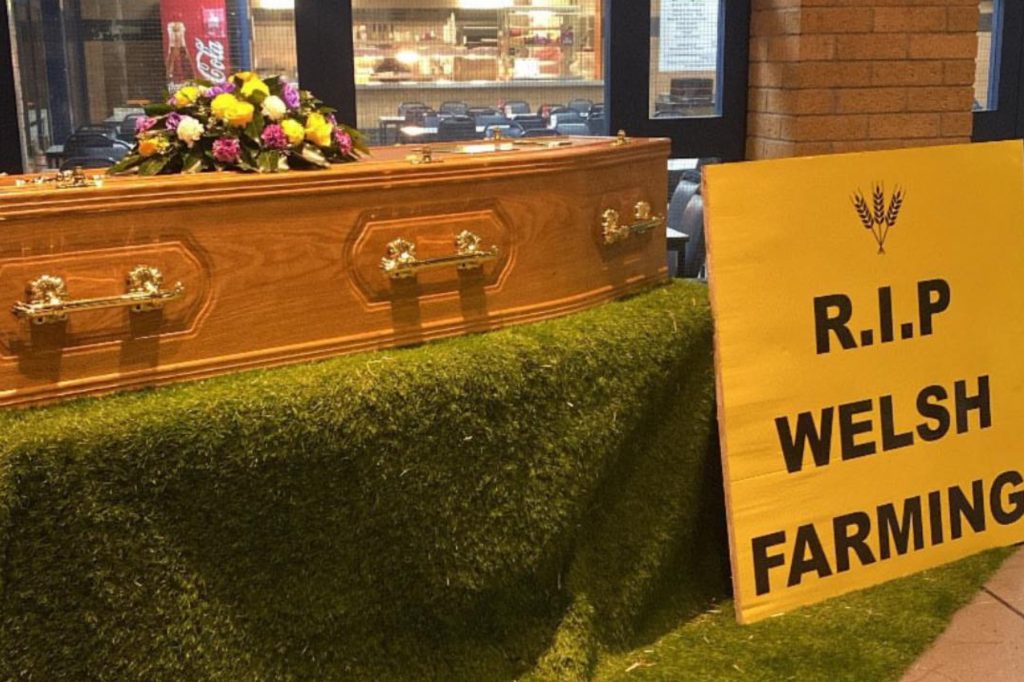
Politics in 2025 was defined by tension between national policy and rural reality. Few issues illustrated this more clearly than farming.
Months of protest eventually led to a major shift in inheritance tax policy, with the threshold for agricultural property relief increased to £2.5 million. For many farming families, this was not just a financial issue but one of survival, succession and identity — and the concession was widely seen as a hard-won victory.
Elsewhere, debates over livestock protection, climate policy, hunting, greyhound racing and rural traditions exposed deep divisions over how Wales balances environmental ambition with economic viability.
Economic pressures were felt far beyond agriculture. Rising business rates, stalled house prices and warnings about town centre decline all featured prominently, reinforcing the sense that many communities are operating close to the edge.
Against that backdrop, practical improvements mattered. One of the most positively received stories of the year was the repair and prevention of tens of thousands of potholes across South West Wales — a reminder that infrastructure investment, however unglamorous, has an immediate effect on safety and daily life.
Community, sport and environment: The county’s backbone

If crime and crisis dominated the hard news, community stories provided the emotional counterweight.
Sport, in particular, offered moments of pride and unity — from local football success to Pembrokeshire’s connections with elite motorsport. Ironman Wales once again placed Tenby on the world stage, combining athletic achievement with fundraising and economic benefit for the area.
Charitable efforts, often small in scale but large in heart, ran throughout the year: festive initiatives for children, support for the homeless, funding for local causes and quiet acts of generosity that rarely seek headlines.
Environmental reporting reflected both beauty and vulnerability — flooding, coastal concerns and wildlife management sparked debate, but also prompted action. Motions brought forward by councillors to address flood risk demonstrated how local pressure can translate into policy attention.
Looking ahead
Taken as a whole, The Pembrokeshire Herald’s coverage of 2025 tells a story of a county facing real and sometimes uncomfortable challenges — but one that continues to respond with resolve.
Fraud, violence, health system strain and economic uncertainty all tested communities this year. Yet so too did we see farmers defend their livelihoods, volunteers step in where systems faltered, and local voices push institutions to act.
As Pembrokeshire moves into 2026, the lessons of the past year are clear: strong communities need strong scrutiny, local solutions matter, and progress is most often driven not by grand promises but by persistent effort.
It is in that space — between challenge and change — that local journalism continues to matter most.


Fire set in shared home left sleeping residents at risk and caused £130,000 damage
A TEENAGER who started a fire in his bedroom while other residents slept has been jailed for four years.
Jack Gornall, aged 18, of no fixed abode, was sentenced at Swansea Crown Court after admitting a series of offences including arson, threats with a knife, assault, and sending malicious communications.
The court heard that in the early hours of Sunday (Nov 17), Gornall deliberately started a fire inside his room at a shared property on Mansel Street, Carmarthen.
He then barricaded the door before climbing out of a first-floor window, leaving others inside the building at risk.
One resident was asleep at the time and had to be rescued by police. Two officers were later treated for smoke inhalation after tackling the incident before firefighters brought the blaze under control.
The fire caused extensive damage to the property, estimated at around £130,000.
Prosecutor Dean Pulling told the court that Gornall had earlier gone out to buy cigarettes and a lighter, and had carried out internet searches relating to accelerants in the days leading up to the fire.
The court also heard details of other offences.
In October 2024, Gornall repeatedly contacted his sister after being blocked, including calling her child’s phone. When she answered, he became abusive and threatened to report her to social services.

On another occasion in January 2025, he approached a car in Llandysul and produced a kitchen knife, waving it at occupants through an open window. The driver sped away and alerted police.
He also admitted stealing alcohol from a supermarket in Carmarthen, during which he became aggressive and assaulted a member of staff.
Gornall pleaded guilty to all offences at an early stage.
Judge Catherine Richards sentenced him to four years’ detention in a Young Offender Institution.
Climate
Port Talbot confirmed as ‘cornerstone’ of wind industry — questions remain for Milford Haven
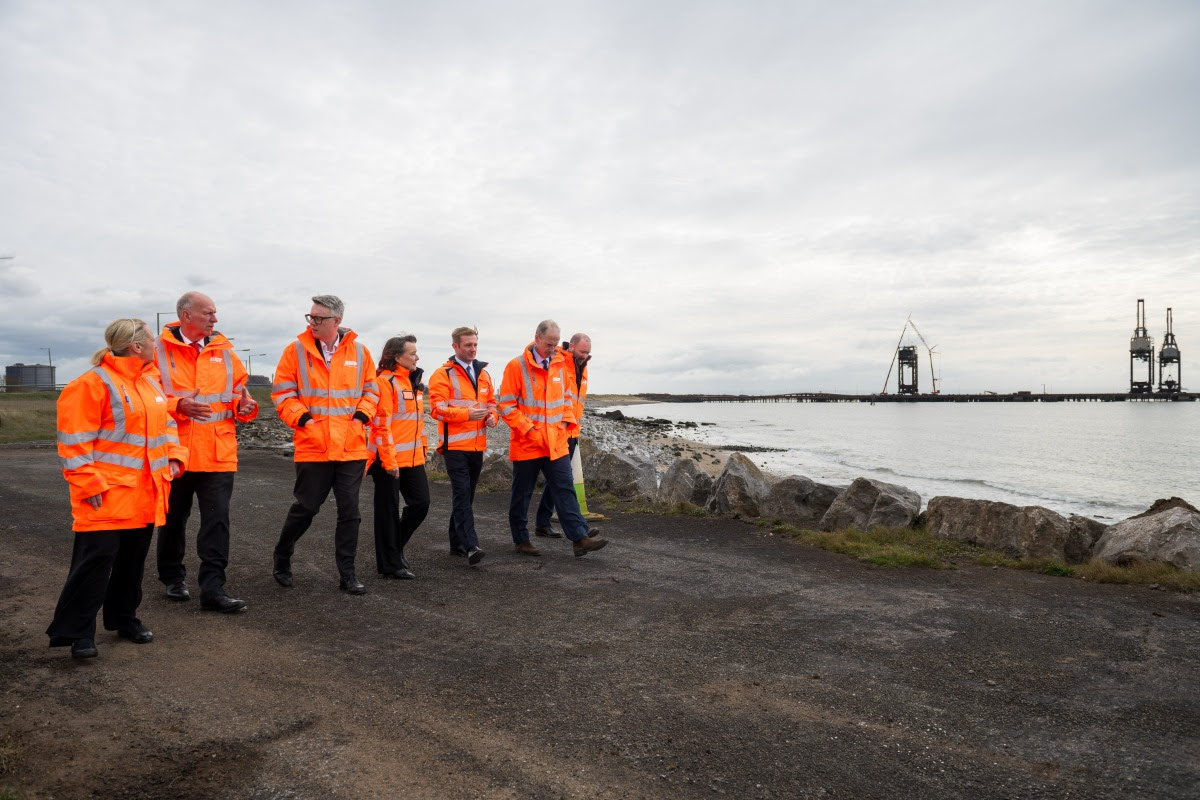
New government-backed deal with ABP reinforces Port Talbot’s central role in Celtic Sea wind plans
PORT TALBOT has been firmly established as the “cornerstone” of the UK’s floating offshore wind ambitions in the Celtic Sea, following a major agreement between the UK Government and Associated British Ports.
The deal confirms government support for the development of large-scale port infrastructure at Port Talbot, enabling manufacturing, assembly and deployment of floating wind turbines for gigawatt-scale projects.
The announcement strengthens Port Talbot’s position as the primary industrial hub for the emerging sector.
Henrik L. Pedersen, Chief Executive of Associated British Ports, said the development would “establish the port as a cornerstone of the Celtic Sea floating offshore wind industry.”
Clear role for Port Talbot
The agreement, subject to final regulatory approval, will support the delivery of major offshore wind projects awarded through the latest Celtic Sea leasing round.
Government ministers visiting the site described the development as a key step in building the UK’s clean energy future.
Energy Secretary Ed Miliband said the project would help Wales “storm ahead in floating offshore wind,” supporting thousands of jobs and driving economic growth.
Secretary of State for Wales Jo Stevens added that the investment would “further cement Port Talbot as a hub of the industries of the future.”
Milford Haven still waiting for detail
The latest announcement comes just days after questions were raised about Milford Haven’s role within the wider Celtic Freeport.
While Port Talbot’s position as a manufacturing and assembly hub is now clearly defined, there has still been no detailed breakdown of what activity will be based in Pembrokeshire.
Industry figures continue to point to Milford Haven’s strengths in operations, maintenance, logistics and servicing of offshore wind projects.
However, no formal commitments have yet been made.

Industry backing grows
Developers involved in Celtic Sea wind projects welcomed the progress at Port Talbot, describing it as essential infrastructure for delivering future schemes.
Ocean Winds said strengthening port infrastructure was “essential” to ensuring regional ports can support the rollout of offshore wind.
The Crown Estate also described the move as a key step towards unlocking the economic potential of the Celtic Sea, which could create thousands of jobs across Wales and beyond.
Growing pressure for answers
With Port Talbot now firmly positioned at the centre of construction and deployment, attention is likely to turn to how other ports—including Milford Haven—fit into the wider strategy.
For Pembrokeshire, the question remains unchanged:
As billions of pounds flow into the Celtic Sea over the coming decade, will Milford Haven secure a defined share of that investment—or continue to wait for clarity?
Pictured above:
From left to right: Cabinet Secretary for Economy, Energy and Planning, Rebecca Evans; David Rees MS for Aberavon; Minister for Energy Consumers, Martin McCluskey; Secretary of State Jo Stevens; Ashley Curnow, Divisional Port Manager (ABP); Julian Walker, Chief Commercial Officer and Regional Director (ABP), Mike Goddard, Head of Programme, Future Port Talbot (ABP)


Local athlete Mogsy Morgan breaks into world top ten in elite ocean discipline
TENBY waterman Gareth “Mogsy” Morgan is making a name for himself on the world stage after breaking into the top ten of one of the most demanding single-handed watersports disciplines.
Morgan has been ranked sixth in the world in the latest Hydrofoil Downwind leaderboard for 2026, based on performance over a 10km ocean swell navigation split—an elite benchmark in the sport.
Hydrofoil downwinding involves riding offshore ocean swells using a board, hydrofoil and paddle, often far from shore and exposed to challenging conditions. Athletes use GPS tracking to log their routes, which are then uploaded to global ranking systems for comparison.
Morgan said he is now competing alongside some of the sport’s biggest names, including Hawaiian world champions John Florence and Nathan Florence.
“I’m right up there in the world rankings,” he said. “I’ve trained hard to get into peak condition, and I’m continuing to improve my performance. The momentum is definitely on my side.”
He added that the sport offers a unique experience: “There’s a real flow state when you’re riding ocean swells—linking one wave to the next. It’s an incredible, almost meditative feeling, even though you’re exposed to real hazards offshore.”
Morgan has spent recent years travelling internationally to develop his skills, bringing that experience back to Wales as he pushes towards even higher rankings.
His recent success builds on a strong 2025, when he placed 69th in the world for the same 10km category and also ranked within the top 100 for shorter sprint distances.
“I’ve already improved on my 2025 results in the first few months of this year,” he said. “My goal now is to break into the top 50 worldwide.”
Morgan was an early pioneer of hydrofoiling in Wales, first adopting the technology during his time competing in the British Kite Racing Circuit, where he secured a third-place podium finish in his division.
He was also invited to take part in Olympic kite racing trials at the British Sailing Academy in Weymouth and has previously been crowned UK Kitesurfing Circuit Wavemaster Champion in his category.
Today, he continues to promote the sport locally by organising hydrofoil events across Pembrokeshire and South Wales, helping to grow interest and develop new talent.
With his sights firmly set on climbing the global rankings, Morgan added: “I’m still getting faster and pushing the limits. Watch this space—Cymru am byth.”



Crime3 hours ago
Teen jailed after starting fire while others slept
Fire set in shared home left sleeping residents at risk and caused £130,000 damage A TEENAGER who started a fire...

Health8 hours ago
GP crisis driving NHS pressure in Wales, Senedd report warns
Falling GP numbers and funding gaps blamed for worsening hospital delays THE NHS crisis highlighted earlier this week is being...


News1 day ago
Reform reveals west Wales candidates for Senedd battle
Monkton councillor tops Pembrokeshire list as party confirms Carmarthenshire names and includes Haverfordwest councillor in unwinnable Swansea spot REFORM UK...


Health1 day ago
Clash over Withybush Hospital services as Paul Davies challenges First Minister
A HEATED exchange in the Senedd has laid bare growing tensions over the future of hospital services in west Wales....


Crime2 days ago
Police stop car in Pennar as three arrested in drugs investigation
Suspected drug driver report leads to major police response and multiple arrests DRAMATIC scenes were reported in Pennar on Monday...


Business2 days ago
New pilot vessel Llanion arrives at Milford Haven
State-of-the-art 22-metre craft marks reset after £3.6m pilot boat controversy THE PORT OF MILFORD HAVEN has taken delivery of a...


Community3 days ago
Sycamore Gap legacy tree to take root in Pembrokeshire landscapes
A SAPLING grown from the famous Sycamore Gap tree is set to become part of Wales’ protected landscapes — with...


Business3 days ago
Could Primark be coming to Haverfordwest? Major retailer in talks for former Wilko site
Council confirms advanced discussions as speculation grows over high street boost HAVERFORDWEST could soon see a major high street revival,...


Business3 days ago
Rail investment ‘could unlock 40,000 jobs and £11bn for Wales’ says new report
RAILWAY stations across Wales could help unlock around 40,000 jobs and more than £11 billion for the economy by 2036,...


Local Government3 days ago
Milford Haven set for £200m investment with schools, leisure centre and rail upgrade
Council outlines major plans for town with backing from Welsh Government MILFORD HAVEN is set for a major transformation with...
-

 Crime6 days ago
Pembroke man remanded in custody over knife threat, assault and damage allegations
-

 Crime6 days ago
Broad Haven man remanded in custody over sexual harm prevention order breach
-

 Crime6 days ago
Publican jailed for six years for supplying cocaine and cannabis
-
 Business7 days ago
Plans to rebuild arson hit building at farm with one of largest sheep flocks in Wales
-
Business3 days ago
Could Primark be coming to Haverfordwest? Major retailer in talks for former Wilko site
-
 Business7 days ago
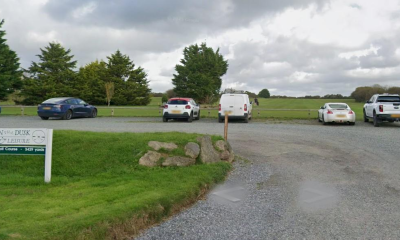
Rosemarket Dawn Till Dusk golf club 18-hole plans lodged
-

 News6 days ago
Pembrokeshire’s Muslims gather to celebrate Eid al-Fitr as Ramadan ends
-

 Crime6 days ago
Carmarthen man denies coercive control allegations