


Climate
Petition opposing climate emergency reaffirmation and ‘tax hikes’ to be heard


A PETITION call for backing for a Pembrokeshire council group looking at its previous climate change commitment will be heard by councillors.
Last July, councillors agreed to set up a group to review its own decision to declare a climate emergency some six years ago.
In May 2019, the council declared a climate emergency following a notice of motion by Cllr Joshua Beynon, committing to becoming a zero-carbon local authority by 2030.
At the July 2025 meeting of Pembrokeshire County Council, a successful notice of motion by the late Cllr Mike Stoddart called for the establishment of a working group to review that decision.
That led to a recent petition, by Lynda Duffill of West Wales Climate Coalition, which attracted 725 signatures, calling on the council to reaffirm its Declaration of a Climate Emergency, and retain the ambition to deliver Net Zero Council operations by 2030.

That petition was considered at the October meeting of full council; members agreeing the working group be asked to ensure the petition is included as evidence in its consideration of the matters referred to it by the council resolution in July 2025.
This led to a further petition, concerned at a potential increase in council tax from a re-affirmation of a Declaration of a Climate Emergency.
The latest e-petition, on the council’s own website, created by Carolyn Ellis, reads: “We call upon all elected members of Pembrokeshire County Council to support and to take seriously the working group tasked with the review of the ‘climate emergency’ called in 2019 (by the-then 21-year-old councillor Joshua Beynon) and to question the hefty funds needed to spend on ‘net zero’.
“We refer to the recent petition by the West Wales Climate Coalition which purports to speak for the residents and council tax-payers of Pembrokeshire.

“There is potentially a far higher number of residents who do not share this unsubstantiated view and who are extremely concerned about the potential for huge hikes in council tax, especially if this tax is linked in future to the carbon efficiency of homes and businesses.
“This was hinted at as a possible lever for encouraging ‘compliance’ with decarbonising homes in the ‘Better Homes, Better Wales, Better World’ report. Therefore, not only could we be faced with more taxes, but also inevitable deterioration in service provision by PCC.”
The current petition runs to March 26, and has attracted 253 signatures to date.

Any petition of between 100 and 499 signatures triggers a debate at one of the council’s Overview and Scrutiny Committees, and any over 500 a debate at full council.












Major investment expected to boost low-carbon industry and create skilled jobs in West Wales
A MAJOR green hydrogen project planned for the Milford Haven Freeport tax site has taken a significant step forward after developers approved the final investment decision.
Energy company MorGen Energy has confirmed it will proceed with the West Wales Hydrogen project, one of the first schemes backed through the UK Government’s Hydrogen Allocation Round (HAR1) to reach this stage.
The facility will be built within the Milford Haven Tax Site, part of the Celtic Freeport zone covering Pembrokeshire and Neath Port Talbot.
Construction is expected to begin in 2026, with the plant scheduled to become operational in early 2028.
Once completed, the site is expected to produce around 2,000 tonnes of low-carbon hydrogen each year, meeting the UK’s Low Carbon Hydrogen Standard.

The hydrogen produced will support a range of industries, including port operations, manufacturing and industrial heating, as well as use as a chemical feedstock.
Supporters say the development will help reduce carbon emissions while strengthening Milford Haven’s role in the UK’s emerging hydrogen economy.
The project is also expected to create skilled jobs and provide work for local contractors during the construction phase.
Further expansion may be possible in future phases as demand for hydrogen grows, potentially helping establish Milford Haven as a major hub for low-carbon energy production serving South Wales and beyond.

Luciana Ciubotariu, Chief Executive of Celtic Freeport, said the decision marked another milestone for the region.
She said: “MorGen Energy’s decision is another major step forward for the hydrogen economy in South West Wales.
“Projects like this within the Milford Haven Tax Site show how the Celtic Freeport is accelerating decarbonisation while creating high-value jobs.”

The UK Government’s Hydrogen Allocation Round scheme provides revenue support to help scale up the country’s low-carbon hydrogen sector and bring early projects to market.

POLICE appeal for witnesses after man reportedly attacked by group of eight men near Llanddarog junction
Local officers are investigating an alleged assault that took place on the A48 westbound at the Llanddarog junction, before the Nantycaws turn-off, at around 2:30pm on Saturday (Mar 7).
The incident is reported to have involved eight men who had parked Harley-Davidson motorcycles in a lay-by. The group allegedly assaulted a man who was travelling in a car.
The victim sustained moderate injuries and their vehicle was also damaged during the incident.
Anyone with information, or with private CCTV or dashcam footage showing suspicious activity in the area at the time, is asked to contact police in one of the following ways:
Online: https://orlo.uk/KRjzb
Email: [email protected]
Call: 101
Alternatively, information can be passed anonymously to the independent charity Crimestoppers by calling 0800 555111 or visiting crimestoppers-uk.org.
Please quote reference: DP-20260307-227.
Countryside charity welcomes decision but warns over cumulative impact of dozens of schemes across Wales
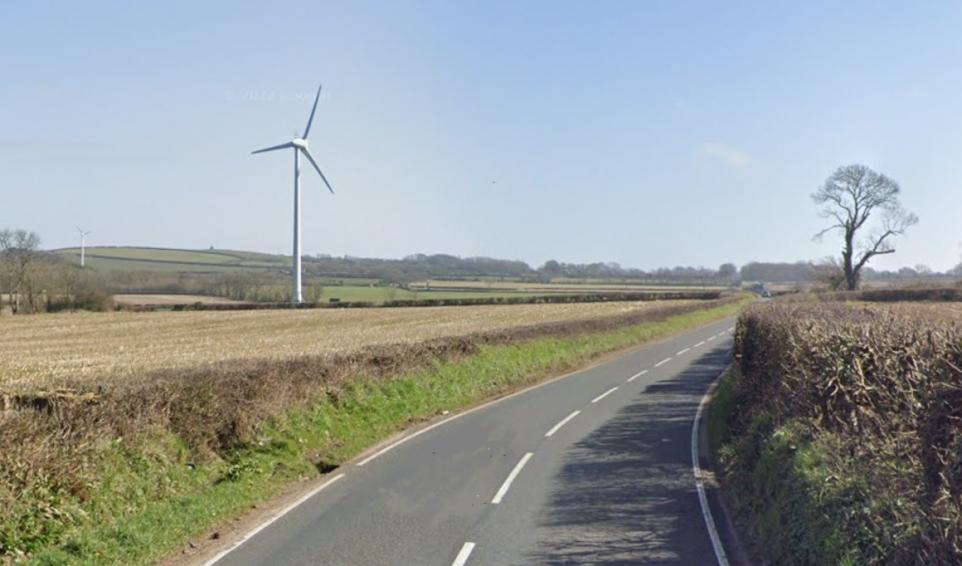
THE WELSH countryside charity CPRW has welcomed the decision by energy developer Bute Energy to withdraw its planning application for the proposed Nant Ceiment Energy Park in Carmarthenshire.
The scheme would have seen up to thirteen large wind turbines constructed in the Teifi Valley landscape.
Bute Energy confirmed the withdrawal following what it described as a detailed review of environmental, land and commercial factors, concluding that the project was not viable in its current form.
Local residents and campaigners had raised concerns about the potential impact of the turbines and the wider cumulative effect of multiple large wind developments being proposed across rural Wales.
CPRW chairman Jonty Colchester said the decision demonstrated the importance of scrutiny and public engagement during the planning process.
He said: “We welcome the withdrawal of the Nant Ceiment proposal. It shows that careful scrutiny and community engagement matter.
“Wales does need renewable energy, but it must be delivered through a strategic and coordinated approach that fully respects our landscapes, biodiversity and rural communities.”
The charity says it is currently monitoring more than seventy wind energy proposals progressing through the planning system across Wales.
These include major schemes such as Lan Fawr, Banc y Celyn, Gaerwen, Nant Mithil, Mynydd Maen and projects being promoted by the publicly owned developer Trydan Gwyrdd Cymru.

CPRW warned that several developments in south Wales highlight growing concerns about cumulative impact.
Planning decisions are still pending for schemes including Mynydd Maen, proposed by RES, and Trecelyn, promoted by Pennant Walters. Both developments are linked to the recently approved 92-acre Cil-lonydd solar farm.
Further proposals include four turbines at Rhyswg, while hearings are due to consider the Mynydd Llanhilleth scheme, which would involve seven turbines standing up to 180 metres high.
Campaigners say that when these projects are considered together, they raise concerns about the gradual expansion of large-scale energy infrastructure and the potential industrialisation of wide areas of upland Wales.
While supporting the transition to renewable energy, CPRW says it wants to see a more strategic approach to development that balances the need for green power with protection for landscapes, biodiversity and tourism.
The organisation is calling for a national renewables strategy that takes cumulative impacts into account, with greater emphasis placed on offshore wind projects. It is also urging improved transparency and stronger community involvement earlier in the planning process, alongside robust environmental standards to prevent unsuitable developments going ahead.
Further information on onshore wind proposals across Wales is available on the CPRW website.



Education32 minutes ago
Manorbier school closure approved while insurance claim still unresolved
Council confirms negotiations with insurer ongoing following 2022 fire PEMBROKESHIRE COUNTY COUNCIL has confirmed that negotiations with its insurer over...


Crime20 hours ago
‘Knife attack’ at Spittal property leaves man in hospital
POLICE have arrested a woman following what is being described as a ‘knife attack’ at a property in Spittal on...


Community21 hours ago
Pembrokeshire to receive its first banking hub in Pembroke Dock
LINK, the UK’s Cash Access and ATM network, has today announced local people and businesses in Pembroke Dock will benefit from a new banking...


Health2 days ago
Future of Withybush Hospital petition sparks urgent call for Senedd debate
CALLS have been made for an urgent debate in the Senedd over the future of services at Withybush Hospital as...


Crime3 days ago
Man jailed after threatening to chop teen’s ears off in drunken phone call
17-year-old victim said she feared for her life after a series of threats A MAN who threatened a teenage girl...


Sport3 days ago
Sean Bowen set for historic Welsh clash at Cheltenham Gold Cup
PEMBROKESHIRE jockey Sean Bowen could be part of a historic all-Welsh showdown when he lines up in the Cheltenham Gold...


Community3 days ago
Tenby still waiting as Wales hits 50 rural mobile mast upgrades
Seaside town plagued by signal congestion again absent from latest government-backed coverage improvements A NEW milestone in the UK Government’s...


Crime4 days ago
Man raped 15-year-old girl in caravan while she was on family holiday in west Wales
Jury convicts Pendine man after court hears he raped intoxicated teenager in caravan during family holiday A MAN who raped...


Community4 days ago
Crash sparks fresh questions over future of former Haverfordwest library
CONCERNS have been raised about the future of a distinctive Haverfordwest building after a car crashed into it last week,...


Community5 days ago
Councillors vote to close Ysgol Clydau despite community concerns
Petition and protests fail to prevent closure of small rural school near Tegryn PEMBROKESHIRE COUNTY COUNCIL has voted to close...
-

 Community7 days ago
Whitland Post Office re-opens under new management
-

 Local Government22 hours ago
Register now to vote in May’s Senedd election
-

 Health4 days ago
Women’s health services ‘expanding’ across mid and west Wales says Health Board
-

 Crime7 days ago
Man who threatened to kill police during Milford Haven standoff avoids jail
-

 News7 days ago
Reform energy policy raises questions for Milford Haven and Celtic Freeport ambitions
-

 Education7 days ago
Haverfordwest student turns fitness passion into exciting new career plan
-

 Education7 days ago
Future of Pembrokeshire school destroyed by fire hangs in the balance
-

 News7 days ago
Plaid Cymru ‘one hundred days’ document promises a ‘new direction’ for Wales