


Crime
New national police force planned in biggest shake-up for generations

Ministers promise “British FBI” to take on terrorism, fraud and organised crime as forces face new performance targets and intervention powers
A NEW national police force for England and Wales is to be created under plans described by ministers as the biggest structural change to policing in generations.
The Home Office has confirmed that a National Police Service will be established to bring together national and cross-border crime-fighting functions currently split across several organisations. The government says the move will strengthen the response to terrorism, serious organised crime and large-scale fraud, while freeing local forces to focus on neighbourhood policing and the offences that most affect public confidence.
The proposals were announced over the past two days as part of a wider “policing reset” to be set out in a Home Office white paper due on Monday.

What is being created
Under the plan, a National Police Service would be formed to take on work that regularly spans force boundaries, including counter-terrorism policing, serious organised crime and complex fraud investigations.
Ministers have indicated the new body would assume responsibilities currently spread across the National Crime Agency, Counter Terrorism Policing (which is led nationally through the Metropolitan Police), and regional structures that support forces with major investigations.

A National Police Commissioner would be appointed as the most senior police leader in the country, overseeing the new service and providing a single point of command for national threats.
Why the government says change is needed
The Home Office argues that crime has changed faster than policing structures have kept up.
Ministers say criminals operate across borders and online, and that cyber-enabled fraud and organised crime do not respect force areas. They contend that asking 43 separate forces to maintain the same level of specialist capability is inefficient and, in some areas, no longer realistic in the face of recruitment pressures and rising demand.
The government’s central claim is that the current system pulls local forces into complex national work, leaving fewer officers available for visible policing and “everyday” crime such as shoplifting, antisocial behaviour, vehicle crime and phone theft.
How it would work in practice
The National Police Service would be introduced in stages during a transition period, rather than via an overnight switch.
The government has stressed that the new service would still rely on local policing for intelligence and community engagement, and that neighbourhood teams will remain central to preventing extremism, disrupting organised crime and safeguarding vulnerable people.
Technology and capability
One of the most significant shifts under the plan is national control over specialist technology and procurement.

Ministers say the new structure will allow faster rollout of tools and systems across all forces, including better data sharing and modern investigative capabilities. The government has also indicated it wants to expand live facial recognition and other digital policing technologies more widely, arguing it can help identify suspects and protect the public.
Critics have already signalled that technology will be a major battleground, with concerns expected over privacy safeguards, oversight, and how such tools are governed and deployed.
Force performance ‘dashboard’ and intervention powers
Alongside the creation of the National Police Service, the Home Office has also announced tougher national oversight of local forces.
Plans published on Friday include a public performance “dashboard”, with forces rated on measures such as 999 response times, victim satisfaction and public confidence. Poorly performing forces would be “named and shamed”, and ministers want stronger powers for the Home Office to intervene.
Those intervention options include sending in specialist support teams and, in serious cases, taking steps to remove chief constables judged to be failing. Police leaders have warned that target-driven regimes can create perverse incentives, but ministers insist that stronger accountability is necessary to raise standards.
Possible mergers and fewer forces
The government has also signalled support for further consolidation of police forces in England and Wales, potentially reducing the number of forces into larger regional units.
While no definitive map has been published, the direction of travel is towards fewer, bigger forces, with the National Police Service sitting above them to handle national threats and cross-border crime.
Professional standards and a proposed ‘licence to practise’
Another element announced alongside the structural changes is a professional standards reform package, including proposals for a mandatory “licence to practise” for officers in England and Wales.
Ministers say this would ensure continuing competence and help rebuild public trust after high-profile misconduct cases in recent years. The Police Federation and other staff representatives have raised concerns about workload pressures and the practicalities of introducing new requirements without significant investment in training and support.
Political reaction and policing response
Labour has presented the plan as a modernisation project to rebuild policing capability and restore confidence in the criminal justice system.
Senior policing bodies have welcomed the idea of stronger national coordination for modern threats, while stressing that the success of any national body will depend on preserving strong links with local forces and neighbourhood policing.
Opposition parties are expected to press ministers on costs, governance, civil liberties issues around technology, and whether centralisation risks weakening local accountability.
What happens next
The Home Office white paper, expected on Monday, is due to provide further detail on the structure of the National Police Service, the role and powers of the National Police Commissioner, the transition timetable, and the legislative changes required to bring the reforms into force.
The scale of the plans means the changes are likely to take years to complete, with ministers facing scrutiny over whether the overhaul can improve the fight against fraud, terrorism and organised crime while also delivering the promised improvements to visible policing and the “everyday” crimes that shape public confidence.












DYFED-POWYS POLICE has reaffirmed its commitment to protecting rural communities with the launch of a new rural and wildlife crime strategy aimed at increasing patrols and strengthening engagement with local people.
The strategy will see rural crime officers increase their visibility across the force area, while building closer relationships with farming communities, landowners and residents. Officers will also attend more community events and offer additional crime prevention visits.
Covering the largest and most rural police force area in England and Wales, Dyfed-Powys Police’s rural crime team works across vast areas of countryside, coastline and farmland. Their work focuses on tackling offences that affect farms, smallholdings, wildlife and historic sites.
Greater visibility by officers is expected to encourage more people to report incidents and share information, helping police gather intelligence and target patrols where they are needed most.
Inspector Matthew Howells of Dyfed-Powys Police said: “Rural crime can often go unreported. We want to strengthen our presence and expand both Farm Watch and Rural Watch schemes to encourage reporting. This will give us better data to shape our patrols and disrupt criminal activity.

“Our rural crime officers will also promote property marking and security measures to help reduce repeat victimisation and deter offenders.”
During 2025, Dyfed-Powys Police recorded 49 reports of livestock theft, along with 42 reports of quad bike theft and 60 reports of heritage crime.
Heritage crime includes offences that damage or exploit historic sites and assets, such as illegal metal detecting, looting or off-roading on protected land.
The most commonly reported rural offence last year was livestock worrying, with 60 incidents reported across the force area.

Chief Constable Ifan Charles recently met members of the farming community to discuss the new strategy and recent updates to livestock worrying legislation.
He was joined by Police and Crime Commissioner Dafydd Llywelyn and members of the rural crime team at a farm owned by Anwen Hughes, regional vice-president of the Farmers’ Union of Wales. Also present was Rob Taylor, the Rural and Wildlife Crime Co-ordinator for Wales.
During the visit, the group heard about Ms Hughes’ recent loss of three lambs following a livestock attack and discussed the need to raise awareness of changes to livestock worrying laws. They also explored how the new rural and wildlife crime strategy could better support rural communities.

Chief Constable Ifan Charles said: “The impact of these crimes on rural communities cannot be underestimated. For many people, their homes and livelihoods are closely linked.
“This new strategy puts rural communities at its heart. Policing such vast rural areas presents very different challenges to urban policing, and our rural crime teams will continue working closely with local people to understand those challenges and keep communities safe.”
Rural, wildlife and heritage crime can be reported by calling 101 or online via the Dyfed-Powys Police website. In an emergency, always dial 999.

POLICE have arrested a woman following what is being described as a ‘knife attack’ at a property in Spittal on Monday night (Mar 10).
Emergency services were called to the domestic incident shortly before 8:30pm after the ambulance service requested assistance from Dyfed-Powys Police.
Officers and paramedics attended the property where a man and a woman were both found with injuries. The man was taken to hospital by ambulance for treatment.
A 30-year-old woman was arrested at the scene on suspicion of inflicting grievous bodily harm with intent and assaulting an emergency worker. She remains in police custody while enquiries continue.
Witnesses reported seeing police and ambulance crews at the property during the evening, prompting concern among local residents about what had happened.
Dyfed-Powys Police confirmed that officers remain at the scene while investigations are ongoing.
A spokesperson said there is no ongoing risk to the wider community and described the incident as isolated.

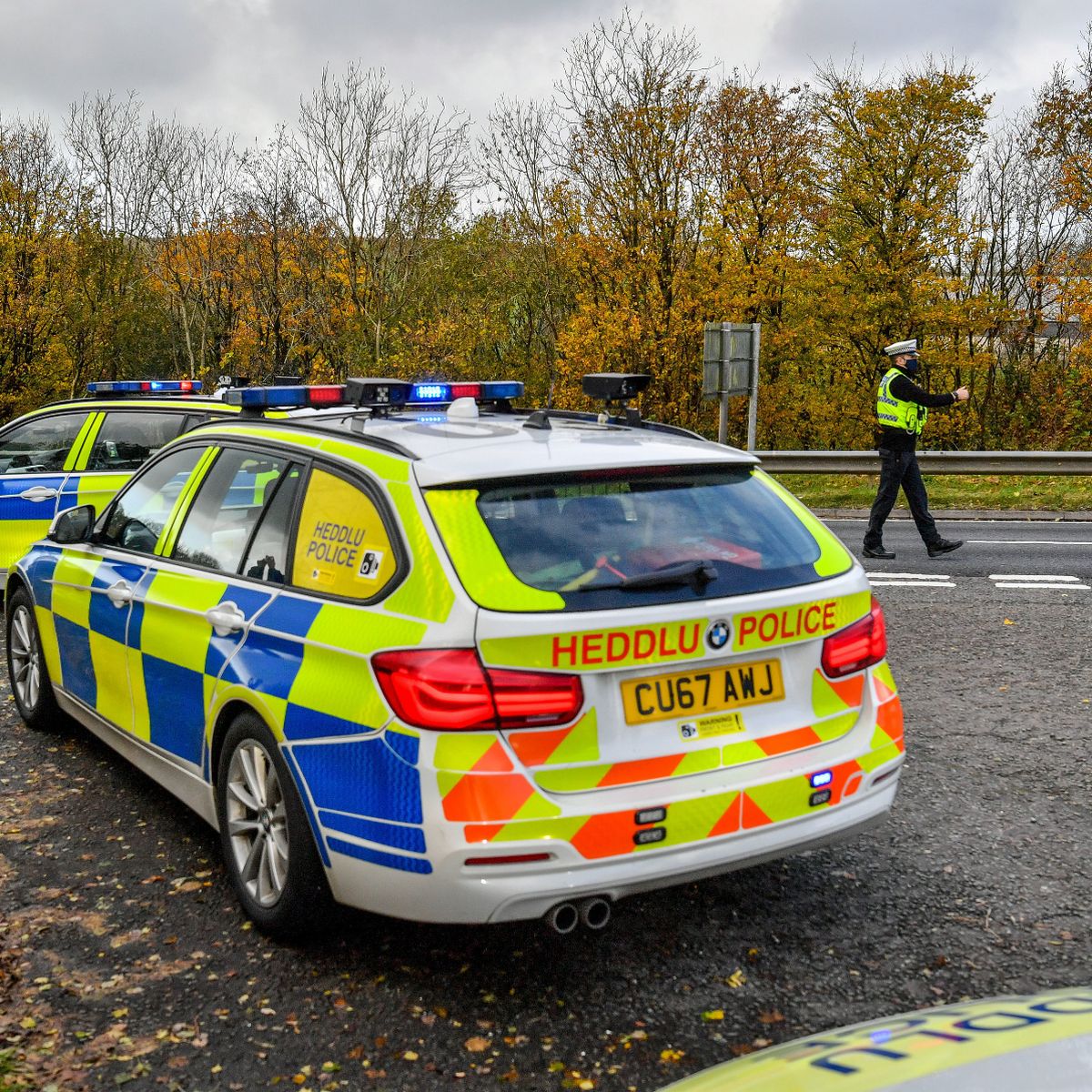
Tenby stop check revealed cocaine and cannabis in motorist’s blood
ATTEMPTS to take his vehicle for its annual MOT has backfired after the vehicle’s owner was found to be driving with a cocktail of illegal drugs in his system.
Bradley Bostock, 27, was stopped by officers on December 16 as he drove his Ford Fiesta along Heywood Lane, Tenby.
But further investigations by officers confirmed he had 108 mcg of benzoylecgonine in his system together with 17 mcg of cocaine and 2.4 mcg of Delta-9 tetrahydrocannabinol. The legal limits are 50, 10 and 2 respectively.
“There’s no detail of the rationale behind why he was stopped, but three drugs were noted in his blood,” said Crown Prosecutor Sian Vaughan when Bostock appeared before Haverfordwest magistrates this week.
Bostock pleaded guilty to three charges of drug driving and was represented in court by Jess Hill.
“He was taking his vehicle to Tenby for an MOT that day but was stopped by officers for a stop check,” she said.
“He’s from Yorkshire and often feels isolated here as he has no family and uses drugs to help deal with his loneliness.”
Bostock, of Corston Cottages, Axton Hill, Pembroke was sentenced to a 12 month community order during which he must complete 10 rehabilitation activity requirement days and 90 hours of unpaid work.
He was disqualified from driving for 17 months and ordered to pay a £114 court surcharge and £85 costs.



Education4 hours ago
Manorbier school closure approved while insurance claim still unresolved
Council confirms negotiations with insurer ongoing following 2022 fire PEMBROKESHIRE COUNTY COUNCIL has confirmed that negotiations with its insurer over...


Crime24 hours ago
‘Knife attack’ at Spittal property leaves man in hospital
POLICE have arrested a woman following what is being described as a ‘knife attack’ at a property in Spittal on...


Community1 day ago
Pembrokeshire to receive its first banking hub in Pembroke Dock
LINK, the UK’s Cash Access and ATM network, has today announced local people and businesses in Pembroke Dock will benefit from a new banking...


Health2 days ago
Future of Withybush Hospital petition sparks urgent call for Senedd debate
CALLS have been made for an urgent debate in the Senedd over the future of services at Withybush Hospital as...

Crime3 days ago
Man jailed after threatening to chop teen’s ears off in drunken phone call
17-year-old victim said she feared for her life after a series of threats A MAN who threatened a teenage girl...


Sport3 days ago
Sean Bowen set for historic Welsh clash at Cheltenham Gold Cup
PEMBROKESHIRE jockey Sean Bowen could be part of a historic all-Welsh showdown when he lines up in the Cheltenham Gold...


Community3 days ago
Tenby still waiting as Wales hits 50 rural mobile mast upgrades
Seaside town plagued by signal congestion again absent from latest government-backed coverage improvements A NEW milestone in the UK Government’s...


Crime4 days ago
Man raped 15-year-old girl in caravan while she was on family holiday in west Wales
Jury convicts Pendine man after court hears he raped intoxicated teenager in caravan during family holiday A MAN who raped...


Community4 days ago
Crash sparks fresh questions over future of former Haverfordwest library
CONCERNS have been raised about the future of a distinctive Haverfordwest building after a car crashed into it last week,...


Community5 days ago
Councillors vote to close Ysgol Clydau despite community concerns
Petition and protests fail to prevent closure of small rural school near Tegryn PEMBROKESHIRE COUNTY COUNCIL has voted to close...
-

 Community7 days ago
Whitland Post Office re-opens under new management
-

 Local Government1 day ago
Register now to vote in May’s Senedd election
-

 Health4 days ago
Women’s health services ‘expanding’ across mid and west Wales says Health Board
-

 News7 days ago
Reform energy policy raises questions for Milford Haven and Celtic Freeport ambitions
-

 Crime7 days ago
Man fined after vessel collision in Milford Haven
-

 News7 days ago
Plaid Cymru ‘one hundred days’ document promises a ‘new direction’ for Wales
-

 News7 days ago
Welsh Labour promises right to read and play for every child in Wales
-
Community5 days ago
Councillors vote to close Ysgol Clydau despite community concerns