


Comment
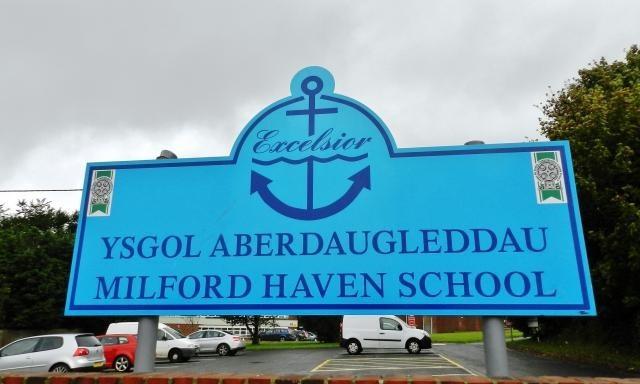
Opinion: How Milford Haven school reached this point

by Tom Sinclair, Editor
YESTERDAY afternoon (Feb 5), something happened at Milford Haven School that many parents here never expected to see in their lifetime — let alone as the second item on the BBC News at Ten.
Police cars.
Dog units.
Armed officers at the scene.
Not in London. Not in Cardiff. In Milford.
At the end of the school day, phones lit up with messages. Rumours raced around social media faster than facts. For a few uneasy hours, our quiet Pembrokeshire town felt like somewhere else entirely.
And this morning, the aftermath was just as telling.
With the school closed, there were no children walking up the hill, no parents idling at the gates, no buses pulling in. Milford Haven felt unnaturally quiet — less like a weekday and more like a Sunday, or one of those strange mornings during lockdown when the town seemed to hold its breath.

For a place built around its schools and families, that silence said more than any headline.
It is now the second serious school incident in west Wales in recent years, following the stabbing at Ysgol Dyffryn Aman in Ammanford.
That alone should make us pause. Because this cannot become normal.
But here is the uncomfortable truth: what happened yesterday afternoon did not start at 3:20pm.
It didn’t start with one pupil.
And it didn’t start with the police.
It started years ago.

When Estyn inspected the school in November 2025, it placed it in special measures — the formal category reserved for providers facing serious, systemic weaknesses.
Inspectors identified important shortcomings in a significant minority of lessons. Pupils were not making enough progress. Literacy and numeracy were not embedded strongly enough across subjects. Attendance was well below that of similar schools, and persistent absence too high. Leadership was not evaluating performance sharply enough. There was also a growing budget deficit.
None of those issues is headline-grabbing on its own. But taken together, they tell a story — not of one bad day, but of slow, cumulative erosion.

Several factors have likely contributed to that decline. Changes in leadership over time, the long shadow of the pandemic, and the reality of serving a community with higher-than-average deprivation have all piled pressure on staff and pupils alike.
When improvements aren’t embedded, small problems grow. Attendance slips. Teaching becomes inconsistent. Staff burn out. Pupils fall behind.
None of this suggests crisis or safeguarding failures — but it does help explain how steady erosion can eventually lead to special measures.
To be fair, inspectors also recognised real strengths: a caring and inclusive community, a broad curriculum, positive behaviour in many areas, and pupils who generally say they feel safe, with bullying dealt with when it is reported.
None of this means inspectors were wrong.
But it does mean that short inspection visits can miss what families and staff live with every single day.
Over the past weeks, the Herald has received hundreds of messages and comments from parents describing a very different picture: persistent low-level disruption in corridors and classrooms, intimidation that leaves children anxious, behaviour issues that quietly wear teachers and pupils down day after day. These are not dramatic incidents that make the news — but they are the background hum that makes school feel less safe, less settled, less fair.
There are wider pressures too.
The county’s specialist pupil referral provision in Neyland — designed to support children who struggle in mainstream settings: is itself under strain. When alternative provision is stretched thin, mainstream schools inevitably absorb more complexity. Teachers are expected to be educators, counsellors, mediators and sometimes de facto security all at once.
That is not sustainable — and it isn’t fair on staff, pupils or families.
None of this is about blaming children. Or teachers. Or one headteacher. It is about systems.
Because when teaching becomes inconsistent, attendance slips, support services are overstretched and families feel unheard, problems do not disappear. They accumulate. Until one day the blue lights are outside the gates.
Milford Haven is not a city. It is a small town where everyone knows everyone. Parents should not feel anxious dropping their children off at school. Teachers should not feel they are firefighting every lesson. Pupils should not feel that disruption or intimidation is simply something you have to put up with.
School leaders and Pembrokeshire County Council have accepted the inspection findings and promised rapid improvements. That commitment matters. But delivery matters more.
Special measures should be a wake-up call, not a stigma. The question now isn’t “who is to blame?” It is much simpler, and much harder:
Where has it gone wrong, and what are we, together, going to do about it? Because armed police at a Pembrokeshire school must never feel routine.
Not here. Not ever.


THE IMAGES from Golders Green this week should stop all of us in our tracks.
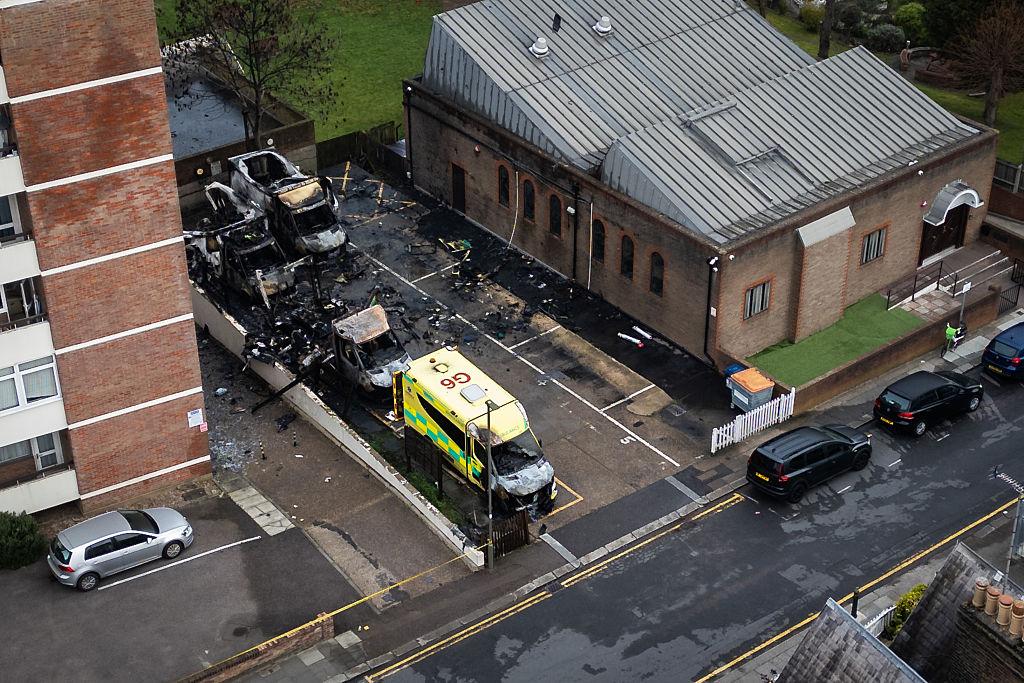
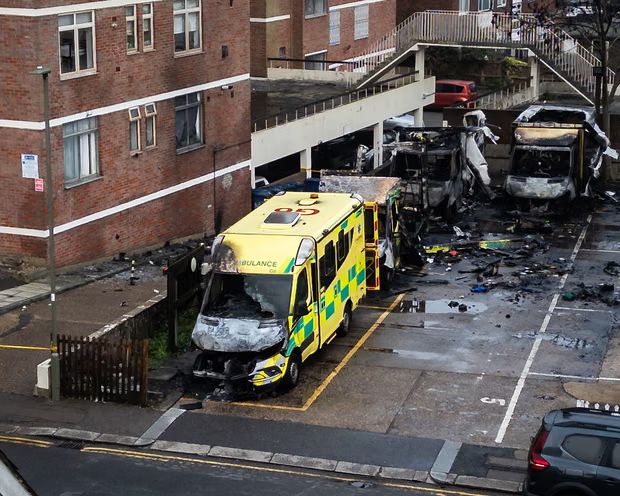
Ambulances, not symbols of power, not political offices, not even property tied to profit, but ambulances, vehicles dedicated to saving lives, were set alight in the early hours of the morning. Oxygen tanks exploded. Families were forced from their homes. Volunteers who give their time freely to help others were targeted.
If that does not cross a line, then we have lost sight of where the line is.
Police are treating the attack as antisemitic. It is hard to see it as anything else. And it should be said plainly: there is no cause, no grievance, no anger about events abroad that can justify targeting Jewish communities in Britain, least of all those providing emergency care.
But if we are honest, this did not come out of nowhere.
Across Europe, and yes, in parts of the UK, tensions linked to the Israel-Gaza conflict have been bleeding into our streets, our conversations, and increasingly, our behaviour. What begins as outrage about war risks mutating into something darker: collective blame, dehumanisation, and eventually violence.
We have seen this pattern before in history. It never ends well.
At the same time, we cannot pretend that outrage only travels in one direction. Reports from the West Bank of settler violence, homes torched, communities terrorised, are deeply disturbing. Innocent people are suffering there too, often with little protection and even less accountability.
These are different situations, with different causes and different responsibilities. But they are connected by one dangerous thread: the erosion of empathy.
When people stop seeing individuals and start seeing “sides”, everything becomes easier to justify.
Burning an ambulance becomes, in someone’s mind, an act of resistance.
Torching a home becomes, in someone else’s mind, a matter of security.
Both are wrong.

And both depend on the same lie, that the person on the receiving end somehow deserves it.
Britain now faces a choice.
We can import the hatred of a conflict thousands of miles away, allowing it to fracture communities that have lived side by side for generations. Or we can draw a firm line and say: not here.
That means something uncomfortable for everyone.
Those who stand with Israel must be willing to speak out when Palestinians are attacked unjustly. Silence in those moments undermines credibility and fuels resentment.
Those who stand with Palestine must be equally clear in condemning antisemitism, not hedging it, not contextualising it, not quietly ignoring it when it appears on “their side”.
Because once you start excusing hatred when it suits your position, you are no longer arguing for justice, you are just choosing your victims.
The attack in Golders Green is not just about four burnt-out vehicles. It is a warning sign.
If ambulances are fair game, what is not?
Britain has long prided itself on being a place where different communities can live together, disagree, protest, and still recognise each other’s humanity. That tradition is under strain.
The truth is, anger is easy. Outrage is easy. Social media makes both effortless.
Restraint is harder. Nuance is harder. Refusing to hate, especially when confronted with images of suffering, is one of the hardest things we can ask of people.
But it is also the only thing that prevents society from sliding into something far worse.
The flames in Golders Green were put out.
What matters now is whether we put out the ones that lit them.
WHEN I was studying law at university, constitutional law lectures were easily the most boring part of the course.
Dry cases. Ancient statutes. Endless discussion about parliamentary powers, constitutional conventions and obscure historical arrangements that seemed far removed from everyday life.
At the time, I thought it was all terribly dull.
Looking back now, I realise I had completely missed the point.
Constitutional law is not simply about legal rules. It is about the story of how Britain came to govern itself. Every institution, every convention and every reform is part of a long historical journey stretching back centuries.

This week marks one of those rare moments when that history visibly turns a page.
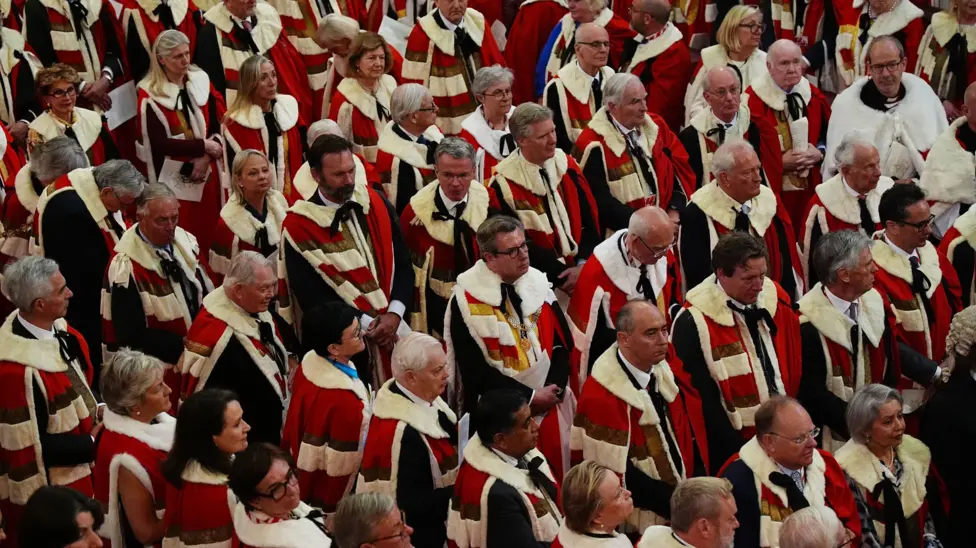
The remaining hereditary peers in the House of Lords are set to lose their automatic right to sit and vote in Parliament. When that happens, a constitutional principle that has shaped British law and government for more than seven hundred years will finally come to an end.
The origins of the Lords lie in the medieval councils summoned by Edward I of England, when nobles and bishops were called together to advise the Crown. Over time, attendance at Parliament became tied to noble titles, and those titles were inherited.
From that point onward, birth carried political power. If your family held a peerage, you could sit in Parliament and help shape the laws of the kingdom.

For centuries that arrangement formed one of the pillars of Britain’s constitutional structure. It survived civil war, revolution, reform acts and the expansion of democracy.
Even the great wave of reform in 1999 only reduced the number of hereditary peers rather than eliminating them entirely.
Now the final remnants of that system are set to disappear.

For critics, the change is long overdue. The idea that someone should help make the law purely because of who their parents were sits uneasily with modern democratic principles.
But the hereditary peers also represented something else — a direct and living connection to the deep historical roots of the British constitution.
Many of those who remained after the reforms of the late twentieth century became respected contributors to parliamentary scrutiny. They were part of the institutional memory of Parliament, carrying with them traditions that stretched back through generations.
The removal of hereditary membership will not fundamentally alter the role of the House of Lords. It will remain a revising chamber that scrutinises the work of the House of Commons.
But symbolically, something important is ending.
A constitutional principle that endured for more than seven centuries — longer than most political systems anywhere in the world — is finally passing into history.
Those constitutional law lectures I once found so dull were not just about dusty legal doctrines.
They were about the slow evolution of the British state itself.
And this week, that story takes another step forward.
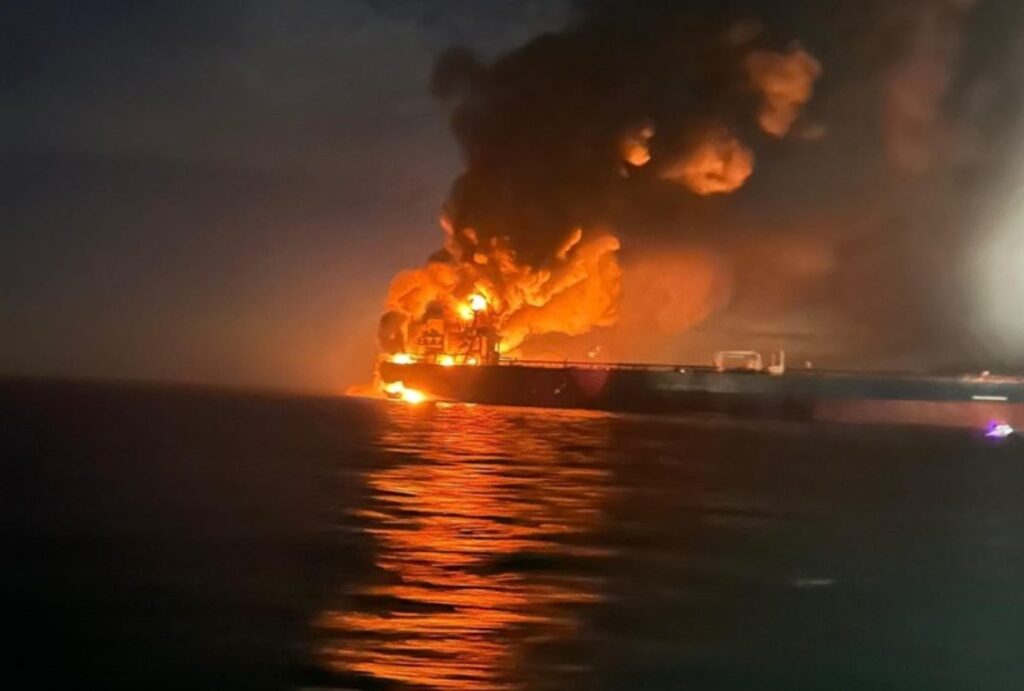
IN THE FIRST weeks of the latest confrontation between the United States and Iran, headlines have focused on airstrikes, missile exchanges and the destruction of Iranian launch sites. Some commentators have rushed to declare that Tehran is already on the back foot.
That conclusion is dangerously premature.
Iran is not Iraq in 2003, nor Afghanistan in 2001. It is a large, heavily populated state with a formidable military doctrine built around survival, endurance and retaliation. Even after weeks of strikes, Iran retains several advantages that make the idea of a quick victory highly doubtful.
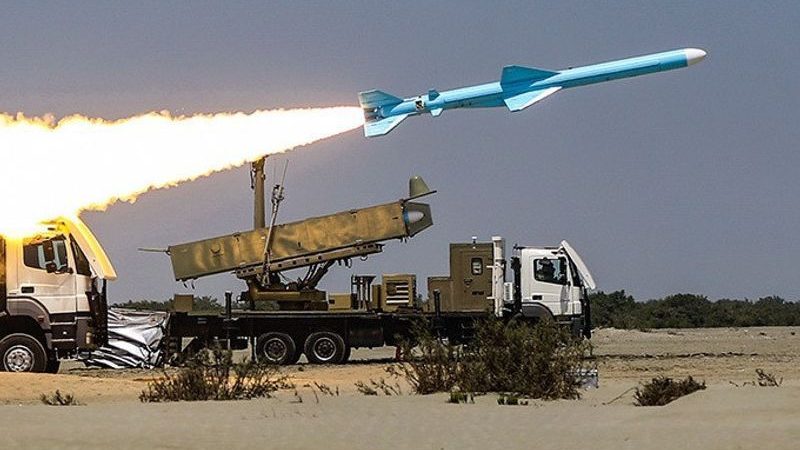
A major factor is the sheer scale of Iran’s military resources. The country possesses one of the largest missile arsenals in the Middle East, with hundreds of ballistic missiles capable of striking targets across the region. Alongside this, Iran has developed a substantial drone programme and a wide range of rockets and cruise missiles designed specifically to overwhelm sophisticated Western air defence systems.
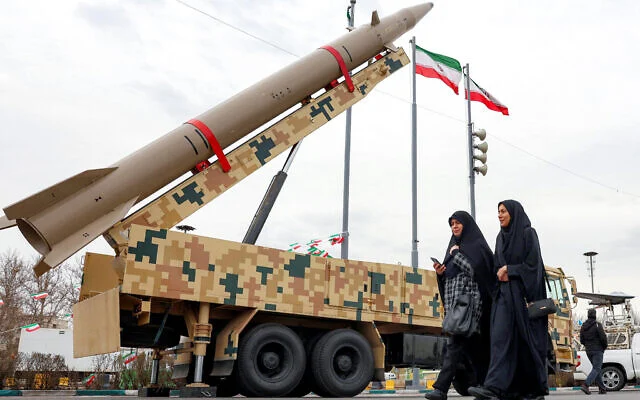
These weapons form part of a layered strategy developed over decades. Iran has constructed underground facilities, often referred to as “missile cities,” where large quantities of drones, missiles and other weapons are stored in tunnels beneath mountains and desert terrain. Even if airstrikes destroy some launchers or storage sites, the system is designed to survive and regenerate.
Geography also makes Iran one of the most difficult countries on earth to invade.
The Zagros Mountains stretch for roughly 1,500 kilometres along Iran’s western frontier — precisely the direction any land invasion from Iraq would likely take. These mountains create narrow passes, chokepoints and defensive high ground that strongly favour defenders and slow mechanised armies.
Iran is also vastly larger than the countries the United States has fought in recent decades. It is almost four times the size of Iraq and has a population of more than eighty million people. Any ground war there would not resemble the rapid march to Baghdad in 2003. It would almost certainly become a grinding and prolonged campaign.
History offers a warning about underestimating Iran’s ability to absorb invasion.
In 1980, Saddam Hussein’s Iraq — backed by many Western and regional powers — launched a full-scale invasion of Iran. The conflict lasted eight brutal years. Despite suffering enormous casualties and economic damage, Iran ultimately survived the war and forced Iraq into a costly stalemate.
That experience shaped Iran’s entire modern military doctrine. The country has built its defence strategy around endurance, attrition and the ability to mobilise large numbers of fighters if necessary.
Iran also holds one of the world’s most powerful economic pressure points: the Strait of Hormuz.
Roughly a fifth of the world’s oil shipments pass through this narrow waterway linking the Persian Gulf to global markets. Iran’s naval strategy focuses on the ability to disrupt or potentially close that route using sea mines, fast attack boats, anti-ship missiles and drones. The geography of the strait, with narrow shipping lanes running close to Iran’s coastline, makes it particularly vulnerable to such tactics.
Even limited disruption to shipping there can push global oil prices sharply higher and trigger wider economic shocks. In other words, Iran does not necessarily need to defeat the United States militarily to inflict serious damage on the world economy.
There is also the wider geopolitical picture to consider.
While Russia and China are unlikely to intervene directly in the conflict, both powers have strategic reasons to see the United States tied down in a prolonged Middle Eastern war. Russia benefits from higher energy prices and from American military attention being diverted elsewhere. China relies heavily on Gulf energy supplies and has developed increasingly close economic ties with Tehran.
Neither country is likely to support a scenario in which Iran is completely defeated or the regional balance shifts decisively in Washington’s favour.
For that reason alone, the conflict is unlikely to remain a simple bilateral confrontation (or trilateral including Israel).
The economic consequences of the conflict could also reshape the political landscape in the United States itself. Rising oil and gas prices are already beginning to feed into inflation and household costs, and history shows that wars which drive up energy prices rarely remain popular for long. If disruption in the Strait of Hormuz continues, American motorists and businesses will feel the effects within weeks.
With mid-term elections approaching, the political pressure on Washington could grow rapidly. Voters are already asking two simple questions: why are we fighting this war, and what exactly is the endgame?
Military technology may give the United States overwhelming air superiority, but wars are not won from the air alone. Iran’s strategy has never been about defeating the United States in a conventional battlefield clash. Instead, it is about making victory so costly — economically, politically and militarily — that outside powers eventually conclude the war is not worth continuing.
That strategy helped Iran survive the Iran-Iraq war in the 1980s.
It may yet shape the outcome of this conflict as well.
For now, the early headlines suggesting Iran is already beaten say far more about wishful thinking than about the realities of war. The uncomfortable truth is that this conflict may only just be beginning — and the question facing the world is no longer how it started, but how it ends.



Charity9 hours ago
Milford Haven charity honoured with King’s Award for voluntary service
A PEMBROKESHIRE charity supporting vulnerable young people has received one of the highest honours in the UK for voluntary work....


News1 day ago
Plaid Cymru launches bid to lead next Welsh Government
Party positions itself as ‘government-in-waiting’ ahead of May election PLAID CYMRU has formally launched its campaign for the 2026 Senedd...


Crime1 day ago
Police appeal after attempted child abduction in Haverfordwest
DYFED-POWYS POLICE has launched an appeal for witnesses following a reported attempted abduction of a 12-year-old girl in Haverfordwest. The...

Crime2 days ago
Gunshot fired by police during incident in Milford Haven
A POLICE officer discharged a firearm during an incident in Milford Haven on Saturday evening (March 28), prompting an investigation...


Community3 days ago
Three Amigos Easter Run roars through Pembrokeshire
MOTORCYCLE enthusiasts turned out in force today (Saturday, March 28) as the popular Three Amigos Easter Run returned to the...


Education4 days ago
Ysgol Henry Tudor reassures parents over Sikh ceremonial kirpan
School says religious item worn by pupil is secured, symbolic and non-functional YSGOL HENRY TUDOR has moved to reassure parents...


Crime5 days ago
Teen jailed after starting fire while others slept
Fire set in shared home left sleeping residents at risk and caused £130,000 damage A TEENAGER who started a fire...

Health5 days ago
GP crisis driving NHS pressure in Wales, Senedd report warns
Falling GP numbers and funding gaps blamed for worsening hospital delays THE NHS crisis highlighted earlier this week is being...


News6 days ago
Reform reveals west Wales candidates for Senedd battle
Monkton councillor tops Pembrokeshire list as party confirms Carmarthenshire names and includes Haverfordwest councillor in unwinnable Swansea spot REFORM UK...


Health6 days ago
Clash over Withybush Hospital services as Paul Davies challenges First Minister
A HEATED exchange in the Senedd has laid bare growing tensions over the future of hospital services in west Wales....
-
 News6 days ago
Welsh Government outlines progress on flood resilience plans
-
 Community5 days ago
Hero female officer keeps job after sexual touching finding
-
Education4 days ago
Ysgol Henry Tudor reassures parents over Sikh ceremonial kirpan
-

 Business5 days ago
Popular Italian restaurant hit with £278,000 tax bill plus £186,000 fine
-
Health6 days ago
Clash over Withybush Hospital services as Paul Davies challenges First Minister
-

 Crime6 days ago
Hakin motorist banned after drink-drive crash
-

 Sport6 days ago
Record-breaking disability swim gala celebrates success in Fishguard
-

 Farming6 days ago
Experts warn Senedd of ‘systemic failure’ to enforce animal welfare laws in Wales