


Farming
Growing fodder beet could be attractive option after difficult 2025 forage season

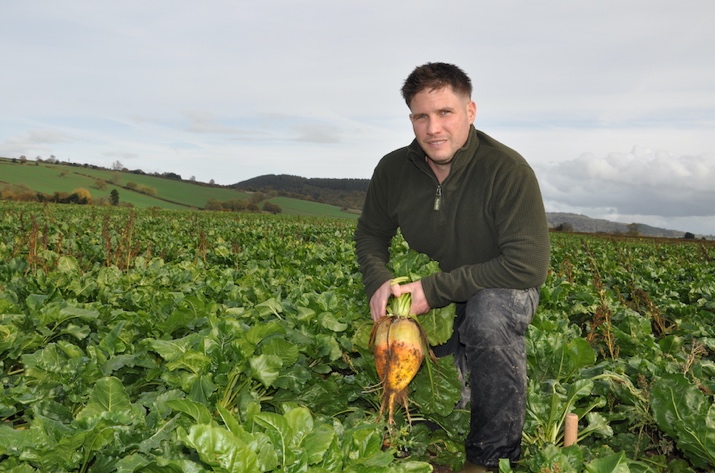
AFTER the lack of forage in many areas in 2025 due to the drought, this season could see increased interest in growing fodder beet on livestock farms, believes ProCam agronomist, Nick Duggan.
Once fodder beet gets its roots down, it can be quite drought tolerant, says Nick, so it could appeal to farmers looking to diversify forage crops to mitigate risk.
“Although inputs can be quite high, fodder beet does offer a big crop of energy,” explains Nick, who operates in Herefordshire, South Shropshire, Powys and the Cotswolds.
“Compared with stubble turnips yielding about 4-6t of dry matter/ha (DM/ha), fodder beet might yield 20t DM/ha. And, at around 12.5ME, the energy content of its roots is similar to grass.
“There’s also the flexibility to feed fodder beet to sheep, beef or dairy, and to lift or graze it, although it’s important to ‘wean’ livestock onto it gradually, especially cattle, because its high energy content can cause acidosis,” he adds.

To help ensure that farmers grow the right varieties for their situation based on robust data, Nick says ProCam has been evaluating the performance of fodder beet varieties over multiple seasons, with on-farm trials conducted in the North and West of the country as well as other locations country wide.
“We test a range of varieties,” he continues. “These range from low DM beets for grazing, to high energy types for lifting and chopping for livestock, or for use in anaerobic digestion (AD) plants.
“Typically, 20 or so varieties might be tested annually in these replicated trial plots, with 4-5 new varieties included each year. But a lot of the established varieties have been in the trial for maybe six years – so we have long term data and can robustly benchmark new varieties.”
Assessments begin with variety emergence and vigour, and conclude at harvest by measuring yields, says Nick, with beets lifted and tops and roots weighed separately. Yields per hectare are then calculated, corrected for %DM.

“Also at harvest, each variety is assessed for disease resilience, and for the amount of root protruding above the soil. More root protruding is helpful if grazing. If lifting beet, you want more root in the ground for protection from frost.
“Agronomically, we encourage all farmers to keep the tops as healthy as possible with a summer nutrition programme. As well as helping to protect roots from frost, a healthy canopy helps sustain the crop into winter. This helps if growing for energy for AD plants, but also tops have good feed value, at about 17% crude protein, and can provide 2-2.5t DM/ha.”
In addition to evaluating varieties, ProCam also evaluates the performance of primed seed, says Nick, which is available with certain fodder beet varieties. Primed seed is pre-germinated for faster emergence, and tends to produce more uniform plants at the cotyledon stage, he notes.

“Faster establishment, in turn, helps with weed suppression, and once fodder beet reaches 12 leaves, it becomes more tolerant to virus yellows.
“Plus, primed seed can deliver higher yields. Results can vary, but in five years of trials on the variety Geronimo we saw a yield uplift of approximately 1.5t DM/ha from Active Boost primed seed compared with conventional seed.
“With the unpredictable spring weather we get nowadays, I think primed seed is extremely useful technology for fodder beet growers.”
Photo caption: Fodder beet offers a big crop of energy, and once it gets its roots down it can be quite drought tolerant, says ProCam agronomist, Nick Duggan


Funding formula and visa rules among key issues discussed ahead of Senedd election period
THE WELSH Government has voiced concerns over fishing funding allocations, farm policy, and potential labour shortages during a recent UK-wide ministerial meeting on rural affairs.
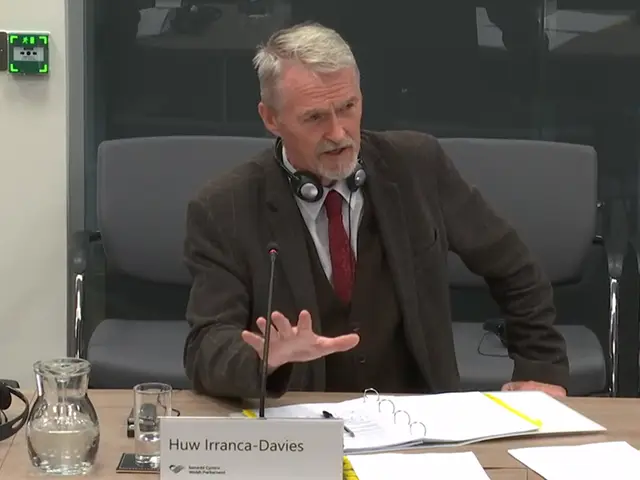
Deputy First Minister and Cabinet Secretary for Climate Change and Rural Affairs, Huw Irranca-Davies, attended the latest Inter-Ministerial Group for Environment, Food and Rural Affairs meeting on Wednesday (Feb 5), alongside ministers from the UK, Scottish and Northern Ireland governments.
One of the main topics was the UK Fishing and Coastal Growth Fund. Ministers from devolved administrations expressed disappointment that the Barnett formula had been used to determine allocations, arguing it failed to reflect the size and importance of the fishing sector in each nation or previous funding levels.
Talks also covered progress on negotiations for a UK-EU sanitary and phytosanitary (SPS) agreement, which could affect cross-border trade in food, plants and animals. Devolved governments welcomed engagement from the UK Government so far but stressed the need for continued cooperation, particularly around biosecurity and the legislative process required to implement any agreement across the UK.
Ministers also discussed the UK Government’s Farm Profitability Review — known as the Batters Review — and the emerging UK Food Strategy. Although these policies apply mainly to England, ministers noted they could still have implications for Wales and other devolved nations, highlighting the need for collaborative working.
A joint approach to banning peat use in horticulture was also agreed in principle, with the Department for Environment, Food and Rural Affairs (Defra) expected to set out possible timelines.
Concerns were also raised about proposed changes to UK work visa rules, which ministers warned could worsen shortages of seasonal agricultural workers, particularly sheep shearers. UK Government ministers acknowledged the risks and said discussions were ongoing.
The next meeting of the Inter-Ministerial Group is scheduled for March 2026, ahead of the upcoming elections in both Wales and Scotland.

Calls for stability, fair funding and stronger rural voice ahead of next Senedd election
NFU CYMRU and the Farmers’ Union of Wales (FUW) have presented a joint vision for the future of Welsh farming during a fringe event at the Welsh Conservative Party conference in Llandudno.
The event brought together politicians, prospective candidates and party members to hear the unions’ priorities for the next Welsh Government and Senedd, with both organisations urging long-term stability, fair funding for agriculture and a stronger voice for rural communities in policymaking.
Opening the session, Welsh Conservative Shadow Cabinet Secretary for Economy, Energy and Rural Affairs Sam Kurtz MS welcomed delegates before FUW President Ian Rickman and NFU Cymru President Abi Reader outlined seven shared ambitions forming the basis of their respective manifestos.
A central focus of the discussion was the proposed Sustainable Farming Scheme (SFS), with both unions stressing the need for long-term funding certainty to allow farmers to plan confidently for the future.
They also called for the creation of a Welsh Food Plan to support domestic production and strengthen national food security.
Other priorities included reducing bureaucracy on farms, implementing a science-led approach to eradicate bovine tuberculosis, and addressing ongoing concerns about Nitrate Vulnerable Zone (NVZ) regulations, which the unions say continue to have unintended consequences for family farms.
Both organisations also highlighted the importance of achieving a balanced approach to land use that supports environmental goals while maintaining viable farming businesses and rural communities.
Speaking after the event, FUW President Ian Rickman said: “The Sustainable Farming Scheme has the potential to support Welsh farming to deliver for our environment, economy and communities. The next Welsh Government and Senedd must commit to developing it further and ensure it delivers fair rewards for the work farmers do every day.”
The unions also thanked the Welsh Conservatives for their support during the dispute with the UK Government over proposed inheritance tax changes affecting agricultural businesses.
NFU Cymru President Abi Reader said: “After a long, hard-fought campaign, a positive outcome was secured in December when we saw the threshold at which inheritance tax applies raised significantly. While taxing business assets as if they are personal wealth remains misguided, the changes now place most family farms in Wales outside the reach of this highly damaging tax, and that is something we welcome.”
She added that farming remains vital to the wider Welsh economy and society.
“Every single person in Wales depends on the future of Welsh farming, whether for the food on their plate or the livelihoods sustained by the industry. Farmers want to continue playing their part in a strong, sustainable and successful Wales, but they need the support and stability to do so.”

Ian Rickman concluded: “We want to work constructively with the next Welsh Government and Senedd, whatever its composition, to ensure farming continues to be the beating heart of rural Wales, supporting our economy, our language and our communities.”
Both unions also thanked Sam Kurtz MS for his advocacy on behalf of the sector.
Photo caption: Gareth Parry, FUW Head of Policy; Ian Rickman, FUW President; Sam Kurtz MS; Abi Reader, NFU Cymru President; Huw Thomas, NFU Cymru Political Adviser (Pic: Supplied).

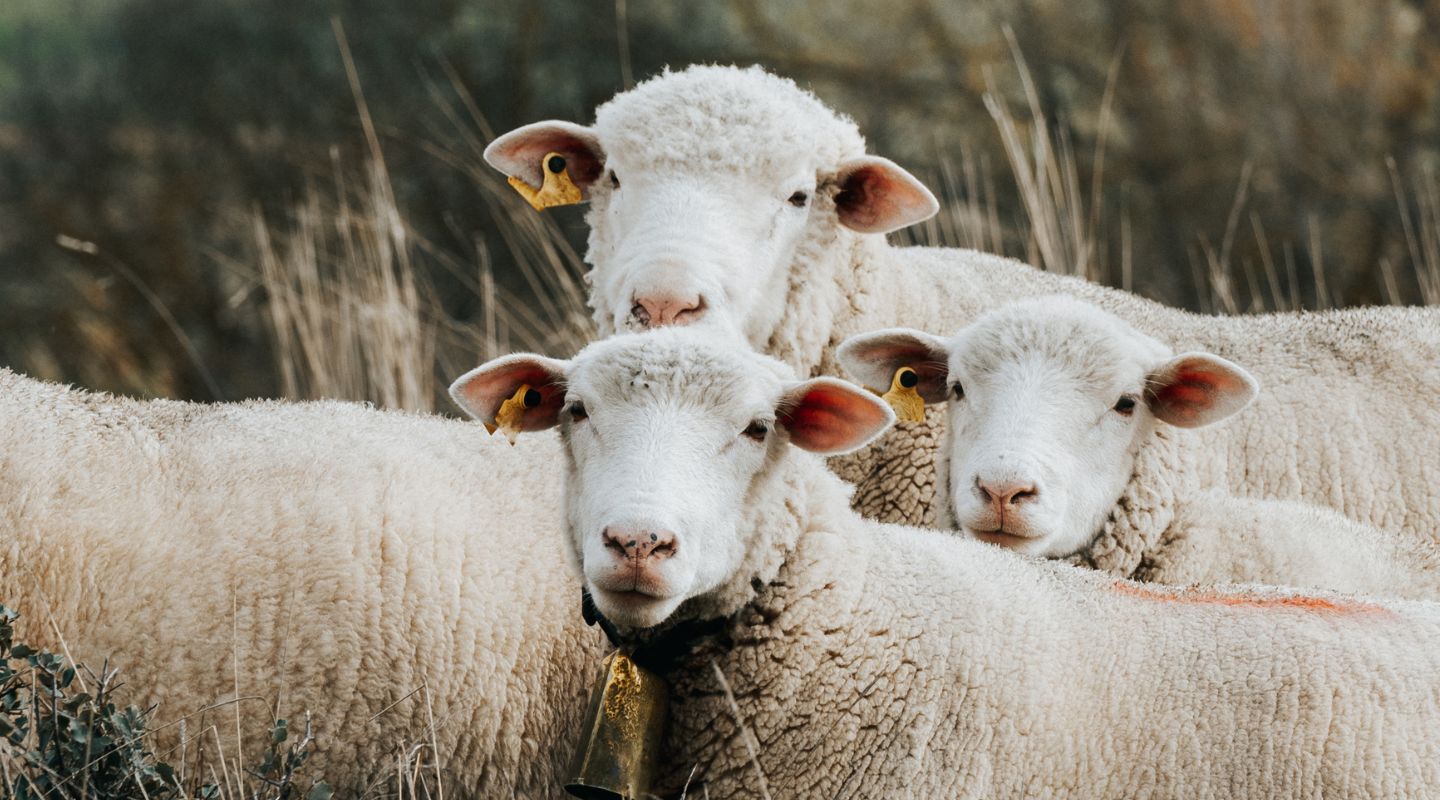
LAMB viability and survival rates in outdoor lambing flocks will be significantly impacted by the quantity and quality of ewes’ colostrum, irrespective of the wider seasonal management factors such as shepherding, mob size, shelter and available grazing.
So says Rumenco Technical Services Manager Dr Alison Bond, who points to pre-lambing nutrition as the key to ensuring ewes are equipped to provide their lambs with the best possible start in the critical hours and days after lambing.
“We’re seeing a trend towards outdoor lambing in some areas, with a shift to later, easier lambing genetics,” she says, “and this can be an effective way to reduce infrastructure, labour and feed costs.
“There are some important seasonal management factors, such as resting winter pastures to ensure adequate grazing and optimising mob size to minimise issues such as mis-mothering, but the first consideration must be colostrum.
“Ensuring ewes receive the right balanced nutrition in the lead up to lambing is vital, and in many cases this will mean supplementing the ration to provide the energy and protein to support lamb development as well as colostrum and milk production.
“There can never be any guarantees as to what the weather will do, so getting ewes in the best condition to supply ample high quality colostrum should be a priority in the weeks before lambing.”
Dr Bond advises feeding a specialist pre-lambing supplement such as Lifeline Lamb and Ewe buckets or blocks in the six weeks prior to lambing. In addition to supplementing protein and energy requirements, this can also help with forage utilisation, preventing loss of body condition.
“Lifeline Lamb and Ewe is a multi-purpose supplement that will also provide other essential nutrients like minerals, vitamins and trace elements,” she adds. “It also contains a blend of functional nutrients, including lactose, mannan-oligosaccharides and beta-glucans, which independent research has shown will support a ewe’s immune function and enhance colostrum immunoglobulin content by up to 25%.
“When outdoor lambing is underway, there will be factors like the weather that cannot be controlled, but knowing that ewes have had the right preparation, not least in terms of nutrition, should be a great reassurance and help keep losses to a minimum.”



News15 hours ago
Council tax to rise again as Pembrokeshire sets new budget
Schools and social care receive extra funding in 2026–27 spending plans PEMBROKESHIRE COUNTY COUNCIL has approved its budget for the...


Health15 hours ago
Stroke patients to be transferred to Carmarthen under new health plan
Withybush to provide initial treatment before specialist care elsewhere PEMBROKESHIRE patients who suffer a stroke are set to be transferred...


Health1 day ago
Health board confirms major hospital changes across west Wales
Emergency surgery centralised as Withybush role shifts toward planned care MAJOR changes to hospital services across west Wales have been...


Health2 days ago
Withybush loses emergency surgery in shock health board decision
Paul Davies vows Senedd fight as fears grow over travel times and patient safety PEMBROKESHIRE patients will be forced to...


Business2 days ago
Mounting complaints: More Computer Solutions Wales customers claim losses
Business owner issues legal threats and IPSO complaint to this newspaper while refusing to answer detailed questions about customers who...


Local Government2 days ago
Milford Haven Hakin by-election candidates confirmed
THE LIST of candidates standing in the upcoming Pembrokeshire County Council by-election for the Milford Haven: Hakin ward has been...


Crime3 days ago
Telecom vandal admits causing £33,000 damage to Pembroke Dock network
Fibre cables cut in early-morning incident that triggered major service disruption A PEMBROKE DOCK man has admitted causing more than...


Community4 days ago
Smiles all round for Pancake Day celebrations in Tenby
TENBY was filled with laughter, cheers and the smell of freshly cooked pancakes on Tuesday (Feb 17) as the town’s...


Crime4 days ago
Man charged with GBH with intent following incident involving ‘Pembrokeshire Patriot’
Defendant remanded in custody as case linked to police raids on Friday A MAN has been charged with causing grievous...


Business4 days ago
Svitzer crews at Milford Haven vote for industrial action in pay dispute
Union ballot raises concerns over potential disruption at key UK energy port SVITZER crews working in the Port of Milford...
-
Health2 days ago
Withybush loses emergency surgery in shock health board decision
-
Health1 day ago
Health board confirms major hospital changes across west Wales
-

 Health1 day ago
Health board: Changes will bring “resilience and sustainability” to West Wales services
-

 Business4 days ago
MS’s host business advice surgery following demand from Business Rates Online Forum
-
Community5 days ago
Hywel Dda hospital services decisions will be made next week
-

 Community6 days ago
Second Milford Haven webcam launched after 1.3m views and US TV feature
-

 Health4 hours ago
Concerns grow over Bronglais stroke plans as politicians demand clarity
-
Business4 days ago
Svitzer crews at Milford Haven vote for industrial action in pay dispute