


Community
Lottery funding opens up play therapy support for Pembrokeshire children


Teulu Wellbeing will offer free and reduced-cost sessions to families facing anxiety, bereavement, trauma and other emotional challenges
CHILDREN and young people across Pembrokeshire will be able to access free and subsidised play therapy following a National Lottery Community Fund award.
Teulu Wellbeing & Child Therapy CIC says the funding will help remove financial barriers for families who may otherwise struggle to access specialist therapeutic support.

The project will support children experiencing anxiety, bereavement, trauma, family change, emotional difficulties and other challenges affecting their mental health and wellbeing.
Teulu Wellbeing was founded by qualified play therapists Beth Job, Harriet Carr and Jackie Burns with the aim of making early therapeutic intervention available to children regardless of their family’s financial circumstances.
The Pembrokeshire-based community interest company works with children, parents, carers, schools and other professionals to help young people build resilience, confidence and emotional wellbeing.

Play therapy uses play as a way for children to communicate feelings, process difficult experiences and develop healthier coping strategies in a safe and supportive environment.
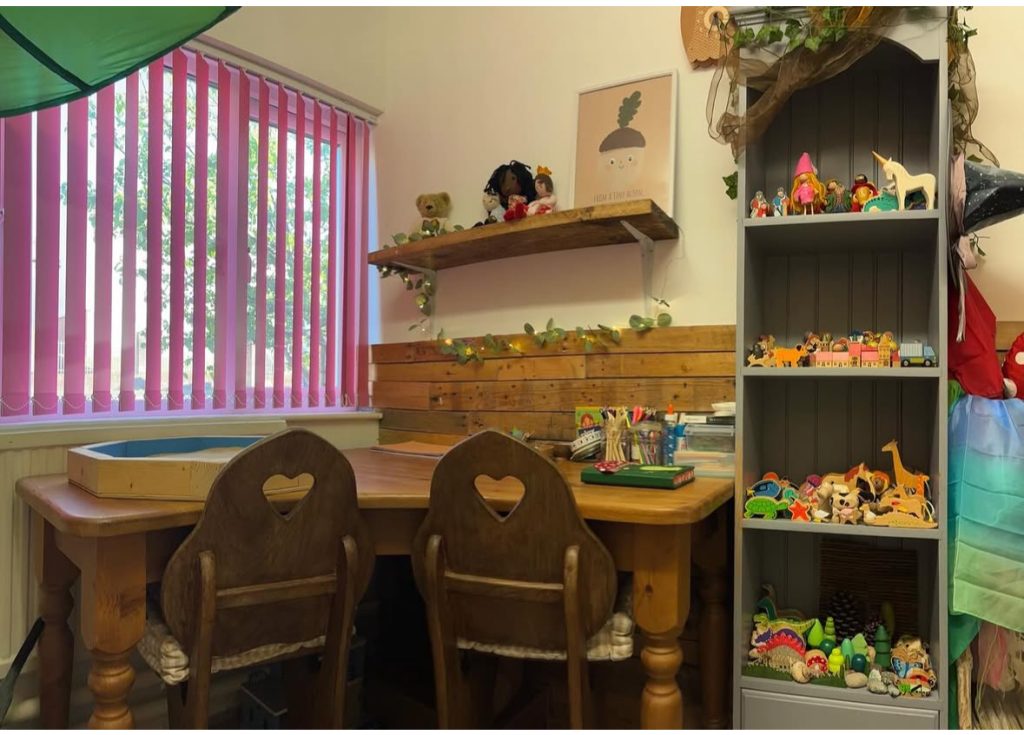

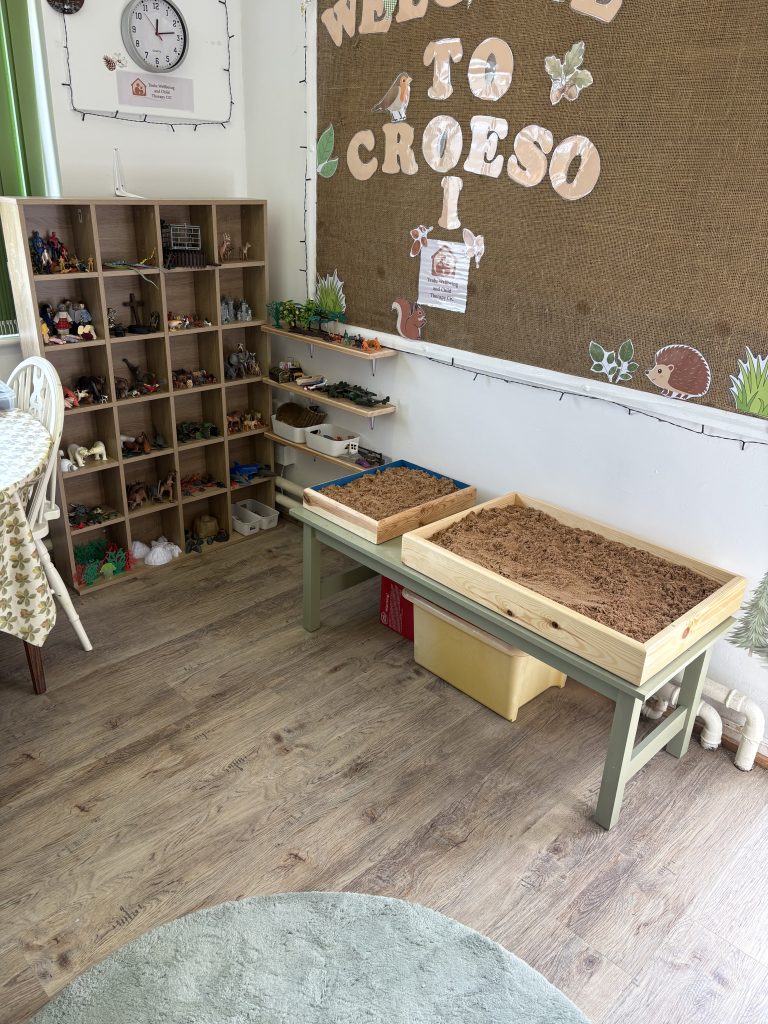
A spokesperson for Teulu Wellbeing said: “We know that many families are facing increasing pressures, and accessing mental health support can often feel out of reach.
“Thanks to National Lottery funding, we are able to remove financial barriers and offer children the opportunity to receive specialist therapeutic support when they need it most.
“Our vision is simple: every child deserves the chance to feel safe, heard and understood.

“This funding means we can reach more children at the earliest opportunity and provide support that can make a lifelong difference for children, young people and their families.”
The organisation hopes the scheme will improve children’s emotional wellbeing, strengthen family relationships and reduce inequalities in access to mental health support across Pembrokeshire.
Families are being encouraged to contact Teulu Wellbeing to enquire about funded or subsidised sessions.

Fully funded places will be limited and subject to an eligibility assessment to ensure support reaches children and families with the greatest need.
Reduced-cost sessions will also be available to families who do not meet the criteria for fully funded therapy.
Teulu Wellbeing thanked National Lottery players for making the project possible.


Eyewitnesses reported hearing an explosion before flames spread into dry vegetation on the wooded coastline
FIREFIGHTERS have responded to a blaze on the coastline near Saundersfoot Harbour this evening, Sunday (Jul 26).
Smoke could be seen rising from the wooded area around Glen Beach, to the west of the harbour, as crews made their way to the scene.


Pictures supplied to The Herald show a fire engine accessing the area along a narrow track, while a visible pocket of flames continued to burn among vegetation close to the shoreline.
One eyewitness claimed that a barbecue had been taking place on the beach before an explosion was heard and the fire began spreading up the cliff in the direction of Rhodewood. That account has not yet been officially confirmed.
Two fire appliances were reported to be in attendance, with residents praising the speed of the emergency response.
The ground across Pembrokeshire remains exceptionally dry, increasing the risk of vegetation fires spreading rapidly.
There have been no confirmed reports of injuries.
The Herald has approached Mid and West Wales Fire and Rescue Service for further information. No official incident statement was visible on the service’s online newsroom when checked.
Pictures: Karen Morey

Businesses in two of Wales’s busiest resorts say unreliable mobile coverage is disrupting payments, bookings and everyday life
TWO of Wales’s best-known seaside towns, separated by more than 150 miles of coastline, are facing strikingly similar complaints about unreliable mobile phone coverage.
Residents and businesses in Llandudno have described struggling with weak or non-existent signals, failed card payments and difficulties using essential online services.
The complaints echo the long-running situation in Tenby, where traders, residents and visitors have repeatedly warned that the town’s mobile networks are unable to cope, particularly during the busy tourism season.
In both resorts, the problem is no longer being dismissed as a minor inconvenience. Businesses say poor connectivity is costing them money, while residents have raised concerns about missed medical calls and the ability to contact emergency services.

‘Unacceptable in 2026’
Llandudno Town Councillor Gareth Probert has called on mobile network operators to invest urgently in the town.
He said residents, businesses and visitors continued to encounter unreliable and sometimes non-existent mobile signals.
“This is unacceptable in 2026, and it is time that mobile network operators urgently invest in Llandudno’s infrastructure so that the community finally receives the level of service it deserves,” he said.
Conwy County Borough Council has described the problem as longstanding.
Businesses in the Victorian resort previously told the Local Democracy Reporting Service that failing connections were preventing card terminals from processing payments, leaving some customers unable to complete purchases.
The experience will sound familiar to traders in Tenby.
More than 500 Tenby complaints
In April, The Herald reported that more than 500 comments had been submitted after Tenby Chamber of Trade and Tourism and Around Tenby appealed for evidence about the town’s mobile coverage.
Complaints were received from customers using EE, Vodafone, O2, Three and numerous smaller providers operating through the four main networks.

Problems were reported across the town centre, High Street, harbour, beaches, the Esplanade, Frog Street, The Green, Tenby’s multi-storey car park and surrounding communities including Penally, New Hedges, Lydstep and Saundersfoot.
Traders said they were losing bookings because customers could not get through by telephone. Others reported failed mobile card payments, difficulties arranging taxis and problems communicating with delivery drivers.
Visitors also complained that they were unable to use parking applications, access maps, activate electric vehicle chargers or contact members of their group after becoming separated.
Some described having a better mobile signal on Caldey Island than in Tenby itself.
Safety concerns
The consequences reported in Tenby went beyond lost sales.
One person working from Tenby’s ambulance station said the signal problems had affected elements of ambulance operations. Another visitor said a group had struggled to communicate with an emergency call handler when an ambulance was needed on the beach.
The Herald previously spoke to a disabled Tenby resident who said unreliable coverage had caused him to miss calls from his doctor and the ambulance transport service regarding hospital appointments.
A local tradesman also reported losing work because prospective customers were unable to reach him.
The signal was described by one resident as being “worse than the 1990s”.
Tourist numbers expose weak networks
Both towns appear to experience problems that become considerably worse when visitor numbers increase.
Mobile coverage maps may show that a town has a signal, but that does not necessarily mean the network has enough capacity to serve thousands of additional users during school holidays, festivals and major events.
In Tenby, residents have frequently reported that phones display several signal bars while calls, messages and mobile data still fail.
Some users say the service is adequate during quieter winter months but deteriorates rapidly during the spring and summer.
This is an important distinction. Many government-backed programmes are designed to eliminate complete rural “not-spots”, where no mobile service exists.
Tenby’s problem is often one of congestion and insufficient capacity rather than the total absence of coverage. That has meant the town has repeatedly been left out of programmes such as the Shared Rural Network, despite the serious problems experienced on the ground.

Hope for Llandudno
There may now be some progress in Llandudno.
Mobile infrastructure company Cornerstone has secured permission for new telecommunications equipment at Venue Cymru on the town’s promenade.
The plans include six antennas on steel frames, transmission dishes, radio equipment and associated cabinets on the roof of the prominent council-owned building.
Conwy’s official planning record shows the application received final approval with conditions in October 2025.
Janet Finch-Saunders, the Senedd Member for Bangor Conwy Môn, said she had been holding discussions with Mostyn Estates and mobile providers about the town’s connectivity problems.
She said Vodafone had been the only major provider to bring forward a meaningful proposal and indicated that work connected with the Venue Cymru equipment was progressing.
The council has also explored allowing mobile operators to install smaller communications devices on streetlights and other publicly owned electrical infrastructure.
These “small cells” can provide additional capacity in busy town centres without requiring a large conventional mast.

Tenby still waiting
Tenby does not yet appear to have such a clear route towards resolving its problems.
Mid and South Pembrokeshire MP Henry Tufnell wrote to BT Group in April seeking an update on plans for a replacement telecommunications mast at Petals Plant Nursery on Strawberry Lane, Penally.
Pembrokeshire County Council has approved proposals to replace an existing 13-metre mast with a 20-metre structure intended to improve coverage for EE and Three customers.
Mr Tufnell also raised reports that a mast at Slippery Back Lane in Tenby had been removed without being replaced, leaving the town with severely reduced coverage.
He called for an urgent timetable for improvements before the summer season, warning that residents, businesses and tourists were being failed.
However, unlike Llandudno’s Venue Cymru scheme, there has yet to be a publicly confirmed date for a major improvement to become operational in Tenby.
A problem across coastal Wales
The similarities between Tenby and Llandudno suggest that poor mobile connectivity is not simply a rural Wales problem.
Historic seaside towns present particular challenges. Their narrow streets, protected buildings, sensitive landscapes and conservation areas can make it difficult to find suitable locations for large telecommunications structures.
At the same time, their populations can increase dramatically during the tourism season, placing intense pressure on infrastructure that may have been designed around the number of permanent residents.
Modern tourism also depends increasingly on mobile connectivity.
Visitors expect to use phones to reserve tables, book accommodation, pay for parking, order taxis, navigate unfamiliar streets and keep in contact with family members.
Businesses rely on the same networks for card machines, bookings, deliveries and communication with staff.
A poor signal can therefore damage the reputation of an entire destination, even where its beaches, attractions and hospitality businesses are otherwise performing well.
Llandudno may now be moving towards a practical solution through rooftop antennas and smaller street-level equipment.
For Tenby, the question remains whether mobile providers will deliver a similar coordinated response before another summer of congestion, failed payments and frustrated visitors.
The technology needed to improve coverage exists. What both towns have lacked is sufficient investment, infrastructure and urgency from the companies charging customers for a service they are too often unable to use.
Additional reporting by Richard Evans, Local Democracy Reporter.

Crowds lined the streets for an afternoon of floats, fancy dress, music and family entertainment at one of Pembrokeshire’s longest-running carnivals
NARBERTH was transformed into a sea of colour, costumes and smiling faces on Saturday (July 25) as the town’s annual carnival brought its week-long civic celebrations to a spectacular conclusion.
Families began gathering along the route well before the procession set off, securing their places to watch one of the town’s most eagerly anticipated events of the year.
With music echoing through the streets and carnival entrants preparing their costumes and decorations, excitement steadily built before the grand parade began at 2pm.


Floats and walking groups had assembled around Station Road from midday, ready to make their way through the town before joining the celebrations at the Carnival Field.
The parade once again demonstrated the imagination and community spirit for which Narberth Carnival has become known. Colourfully decorated vehicles were joined by fancy-dress entrants of all ages, with children and adults enthusiastically waving to the crowds lining the route.
Spectators responded with cheers and applause as each new entry appeared, while youngsters watched from pavements, doorways and vantage points throughout the town centre.
The procession offered plenty for Gareth Davies’ camera to capture, from carefully prepared costumes and decorated floats to the expressions of those taking part and the families enjoying the spectacle.












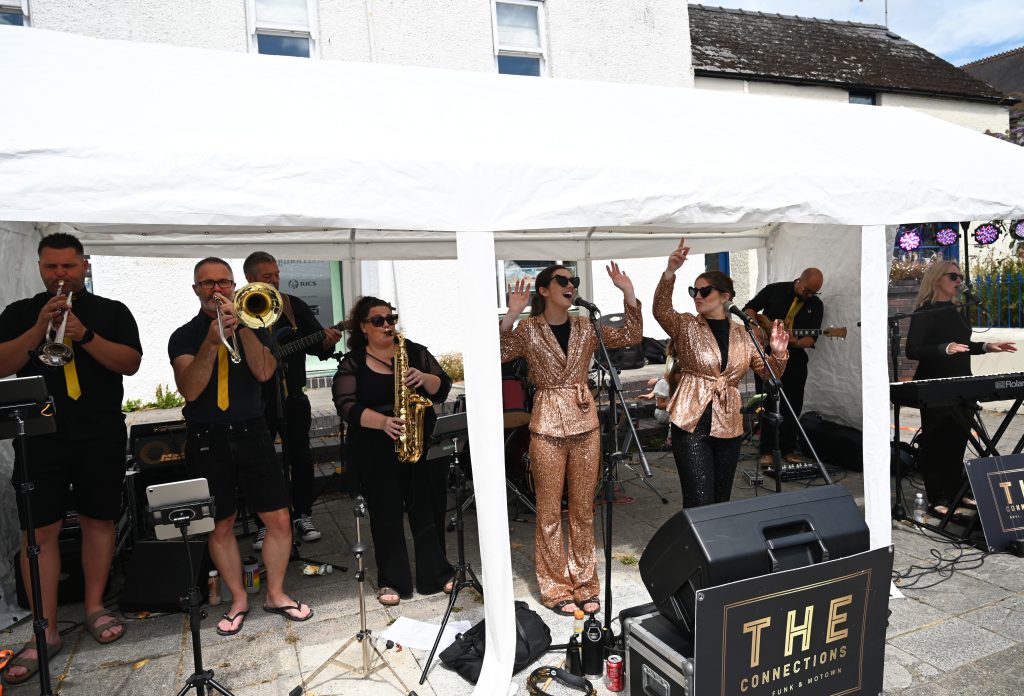













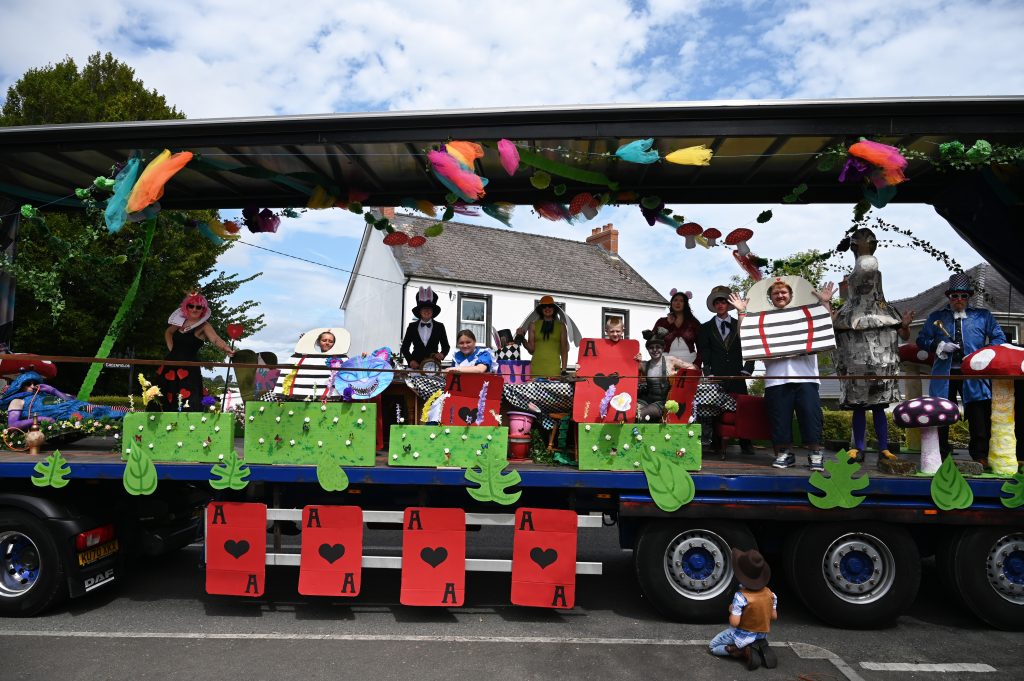

Narberth Carnival is regarded as Pembrokeshire’s longest-running carnival and remains the traditional finale of the town’s annual Civic Week. This year’s programme ran from Sunday, July 19, until Saturday, July 25, with competitions, children’s activities, entertainment, community events and live music taking place across the town.
Once the procession had passed through the streets, the attention moved to the Carnival Field, where visitors were able to enjoy food stalls, fairground rides, music and an afternoon of family entertainment.
The carnival provided an opportunity for generations of Narberth families to come together, while also attracting visitors from surrounding towns and villages and holidaymakers staying in Pembrokeshire.
For younger participants, the afternoon offered the excitement of dressing up, riding through the town and receiving cheers from the crowd. For many older residents, it continued a community tradition they have supported since childhood.
The event also gave local organisations, clubs, businesses and groups an opportunity to showcase their work and play their part in one of the biggest dates on Narberth’s summer calendar.

Among those present at the Carnival Field was the Narberth Eisteddfod Fundraising Committee, which recently celebrated reaching its £8,000 target ahead of Eisteddfod y Garreg Las.
The committee held its final fundraising event during the carnival, offering locally produced and hand-printed Eisteddfod T-shirts as excitement continues to build ahead of the festival’s return to Pembrokeshire.
Saturday’s celebrations marked the culmination of months of preparation by the Narberth Civic Week committee and its supporters.
Behind the colourful procession was a considerable amount of work involving road closures, licences, traffic management, risk assessments, fundraising, sponsorship and the coordination of dozens of volunteers and participating organisations.
Civic Week chairman Chris Walters thanked everyone who had contributed to this year’s programme, including committee members, volunteers, sponsors, advertisers, venues and local businesses.
He said: “It’s been a huge team effort, and I’m incredibly proud of everyone involved.”
The successful afternoon once again underlined the importance of traditional community events in bringing people together.
While many towns have struggled to maintain their annual carnivals, Narberth has continued to support its celebration through the dedication of volunteers, organisations and businesses prepared to invest their time and energy.
The result was another memorable day of laughter, music and community pride, with the streets packed as residents and visitors came together to celebrate everything that makes Narberth special.
As the final floats completed the route and the festivities continued at the Carnival Field, the carnival brought another busy Civic Week to a fitting conclusion.
Organisers have thanked everyone who took part, volunteered, sponsored an event, decorated an entry or simply came along to support the procession.
For those who lined the streets, Saturday’s carnival delivered the sights, sounds and atmosphere of a much-loved Pembrokeshire tradition.
Pictures: Gareth Davies Photography



Community2 hours ago
From Tenby to Llandudno: Wales’ seaside towns face the same signal crisis
Businesses in two of Wales’s busiest resorts say unreliable mobile coverage is disrupting payments, bookings and everyday life TWO of...


Crime3 hours ago
Judge orders Dyfed-Powys Police review after £3,912 fraud error
Force responsible for policing Pembrokeshire criticised after an officer understated the amount stolen from a vulnerable care-home resident A JUDGE...


Community1 day ago
Narberth bursts into colour as carnival brings Civic Week to spectacular close
Crowds lined the streets for an afternoon of floats, fancy dress, music and family entertainment at one of Pembrokeshire’s longest-running...


Community1 day ago
More than 100 racers take to Castle Pond for Paddle West’s inaugural regatta
Successful community event raised money for Forever11 and launched three consecutive weekends of waterside activity in Pembroke MORE than 100...


News1 day ago
NASA chief meets west Wales scientist helping search for life on Mars
Aberystwyth-led technology will guide Europe’s first Mars rover as it drills beneath the planet’s surface, while the proposed DARC radar...


News2 days ago
Princess Royal celebrates Pembrokeshire craftsmanship at family-run weaving mill
A Pembrokeshire business that began after a mother grew tired of waiting three weeks for her children’s name tapes has...


Local Government2 days ago
Burger King could be coming to Haverfordwest as plans submitted
Plans have been lodged for a Burger King outlet at the Morrisons petrol station on Bridge Meadow Lane BURGER KING...


Crime3 days ago
Murder investigation launched into death of Pembrokeshire man in 1991
A 67-YEAR-OLD man has been arrested on suspicion of murder after new potential evidence emerged in connection with a death...


Community3 days ago
‘Paying £29 to reach a cashpoint is absurd’: Narberth’s urgent ATM appeal
Residents, businesses and visitors are being urged to provide evidence after two High Street cash machines were removed, leaving the...


Crime4 days ago
Haverfordwest man jailed for seven years for historic rape and sexual assault of girl
A HAVERFORDWEST man has been jailed for seven years after being convicted of raping and indecently assaulting a girl during...
-

 Community1 day ago
Pembrokeshire biker, 75, keeps exploring with wheelchair in tow
-

 Health1 day ago
Mental health crisis ‘place of safety’ could be centralised in Carmarthen
-

 Business2 days ago
Retrospective call to keep glamping pod at caravan site
-
Community1 day ago
Narberth bursts into colour as carnival brings Civic Week to spectacular close
-
News1 day ago
NASA chief meets west Wales scientist helping search for life on Mars
-

 Health5 hours ago
Welsh NHS executive pay revealed as patients face lengthy waits
-
Community1 day ago
More than 100 racers take to Castle Pond for Paddle West’s inaugural regatta
-

 News3 hours ago
Landmark rural law could reshape public services across west Wales